A child’s day is filled with seemingly ordinary moments – but those moments are more meaningful than we realize. The simple and ordinary moments that take place during daily routines form the very foundation of learning and connection during a crucial time for brain development.
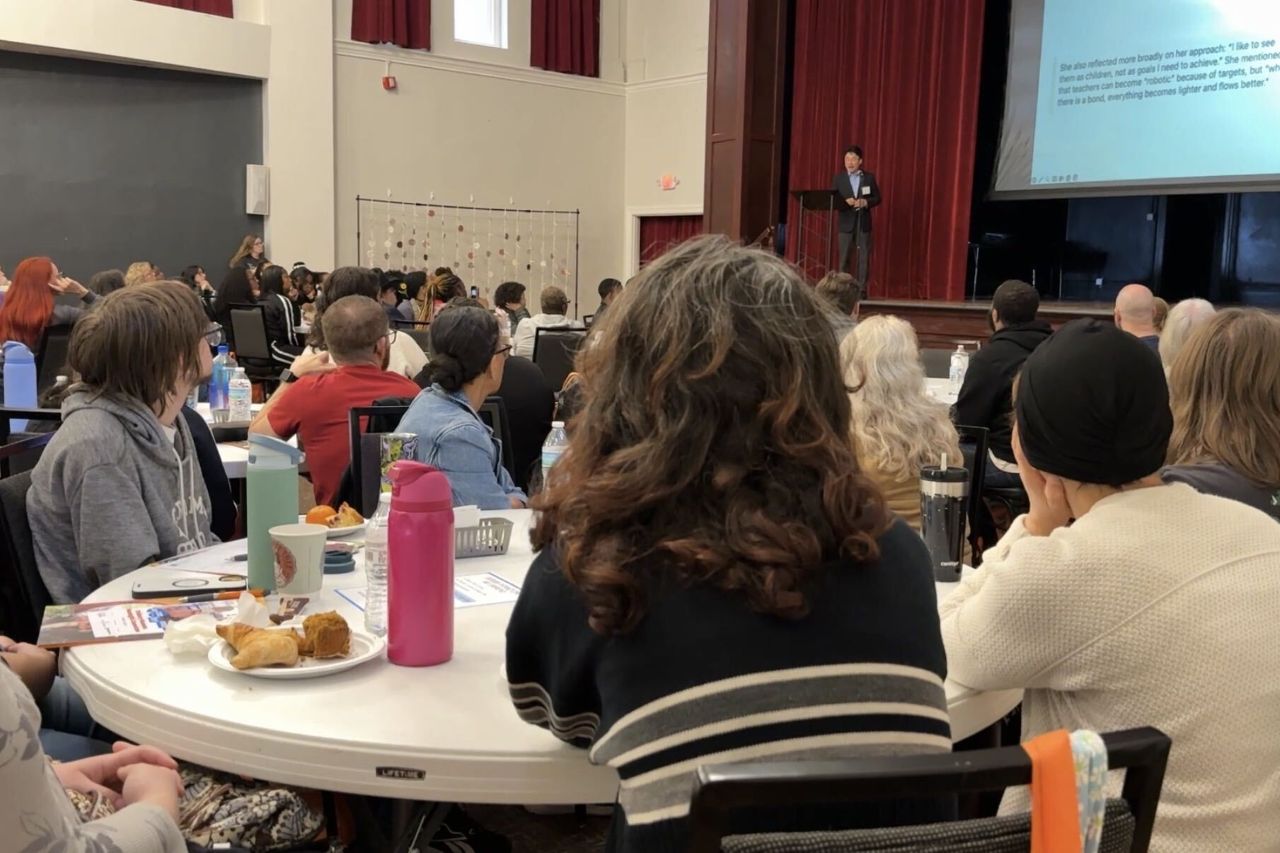
On October 12, early care and education professionals attended UnConference: Ordinary Moments, Meaningful Connections to deepen their understanding on how to cultivate environments where every child—and every adult—feels seen, heard, and valued.
The UnConference highlighted how connection, inclusion, opportunities for growth, and meaningful learning occur within everyday moments between adults and children.
Noticing the Extraordinary
The UnConference kicked off with a keynote address from Dr. Junlei Li, Saul Zaentz Senior Lecturer in Early Childhood Education at the Harvard Graduate School of Education and creator of the Simple Interactions approach.
Dr. Li is a valued friend and partner of Trying Together whose work has profoundly influenced how we think about relationships, human connection, and the everyday moments that shape children’s lives.
Everyday Interactions Matter, the early childhood arm of Simple Interactions in Pittsburgh, was developed in partnership with Trying Together and the Fred Rogers Institute and is rooted in the work of Fred Rogers and Dr. Li.
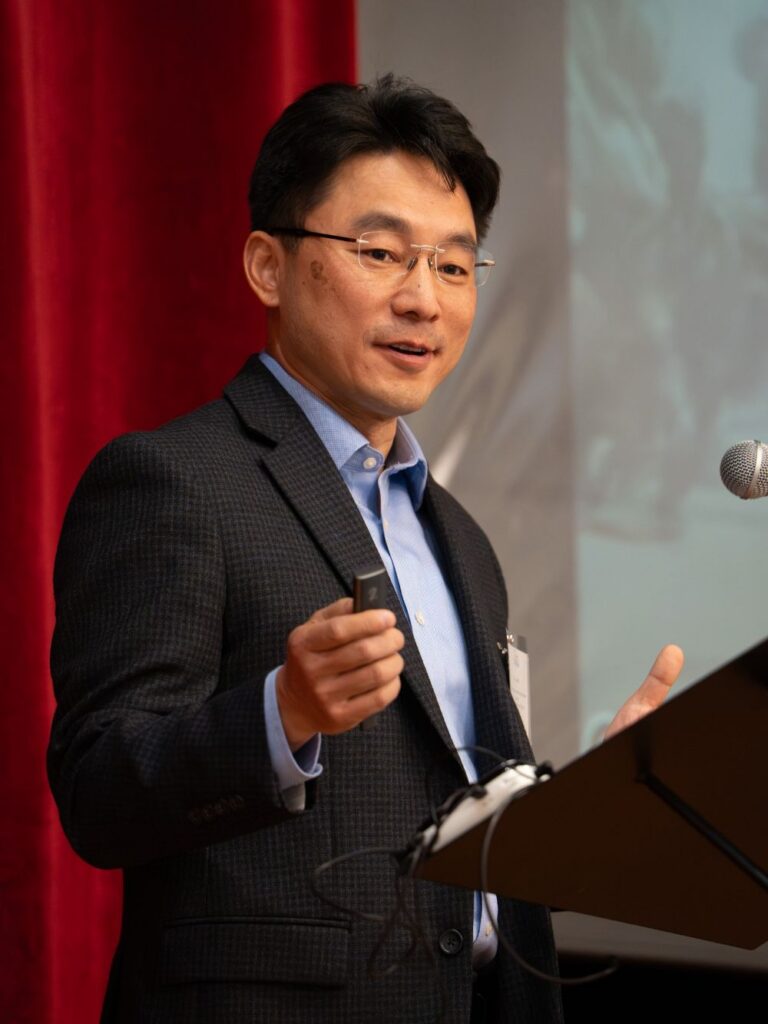
“When we constructed Simple Interactions, we tried not to assume there’s a value in certain interactions,” Li said. “The tool was designed not to presuppose what we should see in a moment, but let the moment teach us what it means to be a teacher or caregiver.”
In his keynote speech, Dr. Li focused on the practice of noticing.
“The more you pause, the more you have the opportunity to allow something extraordinary to come out,” Dr. Li said. “That’s where you find the things you want to notice.”
Li said that 90% of early childhood education research comes from industrialized and wealthy western countries, and that the vast majority of U.S. children live in multicultural environments, so educators can’t presume to understand them based solely on research.
“Young children all around the world have developmental needs – such as being loved or being held,” he said. “Researchers have a phrase about how care is different around the world: Universality without uniformity. Not everyone has to do it the same way across every home, school, or community.”
Li’s message set the tone for workshops that followed that focused on connection, inclusion, and creating meaningful moments between children and educators or caregivers.
Cultivating Connected, Inclusive, and Meaningful Interactions
Following the keynote, participants broke into smaller workshops to delve deeper into topics relevant to their own work. Workshops included:
-
- Building Rapport & Play Skills with Early Learners with Autism with Katie Hirsh, Better View Consulting
- Seen, Heard, and Valued: Building Educator Resilience to Create More Connected Classrooms with Alichia Parker, A PAR EDU
- Reducing Hidden Effort: Building Classrooms Where Diverse Learners Can Thrive with Dana Pettygrove, System 1-2-3
- Read-Alouds as a Bridge to Inclusion and Belonging: A Disability Case Example with Jennifer Briggs and Caitlin Spear, University of Pittsburgh School of Education Office of Child Development
- Creating Classrooms Where Everyone Belongs: Fostering Connection, Inclusion, and Student Growth with Khari Hicks, Hosanna House
- Building Relationships Through Fred Rogers’ Six Fundamentals of Learning and Growing with Annie White, Fred Rogers Institute
About Simple Interactions
Dr. Junlei Li said Simple Interactions was started nearly a decade-and-a-half ago to capture and reflect back to children’s helpers the extraordinary work they do each day, and to advocate for respect and recognition for early education professionals.
“The Simple Interactions approach is a way of seeing, recognizing, and thinking about human relationships from the lens of everyday, ordinary interactions that adults and caregivers have with children,” Li said.
He noted that the approach offers a framework and visual language to help educators reflect and recognize the most essential elements of their daily work, and that it creates opportunities to include administrators and policymakers in understanding what’s most important in this work.
The four tenets of Simple Interactions are connection, reciprocity, inclusion, and opportunity to grow, which are described on the tool’s website.
The approach benefits children because it takes big developmental milestones and breaks them down into the small moments where everyday developmental needs are met with care and support from adults, Li added.
Li said the tool’s aim is to notice what is happening inside the small moments and what educators are already doing well. Then, it engages educators to reflect and learn together in a community of peers to develop a shared practice as professionals. Last, it pushes the systems that provide support to educators and families to recognize that these small moments are what really matters in the work of care and education.
“There isn’t one single way of using it, and our colleagues all around the country and world have been using it in their own way,” Li said.
In terms of results, Li said the most important one for front-line educators is encouragement by offering an affirmation of what they do and what they believe. A secondary result is reminding leaders who are distanced from the frontline that relationships are at the core of education and care work and that administrative systems and policies ought to strengthen – not diminish – such relationships.
Li said the Simple Interactions tool is continuously updated and translated with the help of colleagues and volunteers. The most up-to-date tool and its translations are accessible for free on the Simple Interactions website.