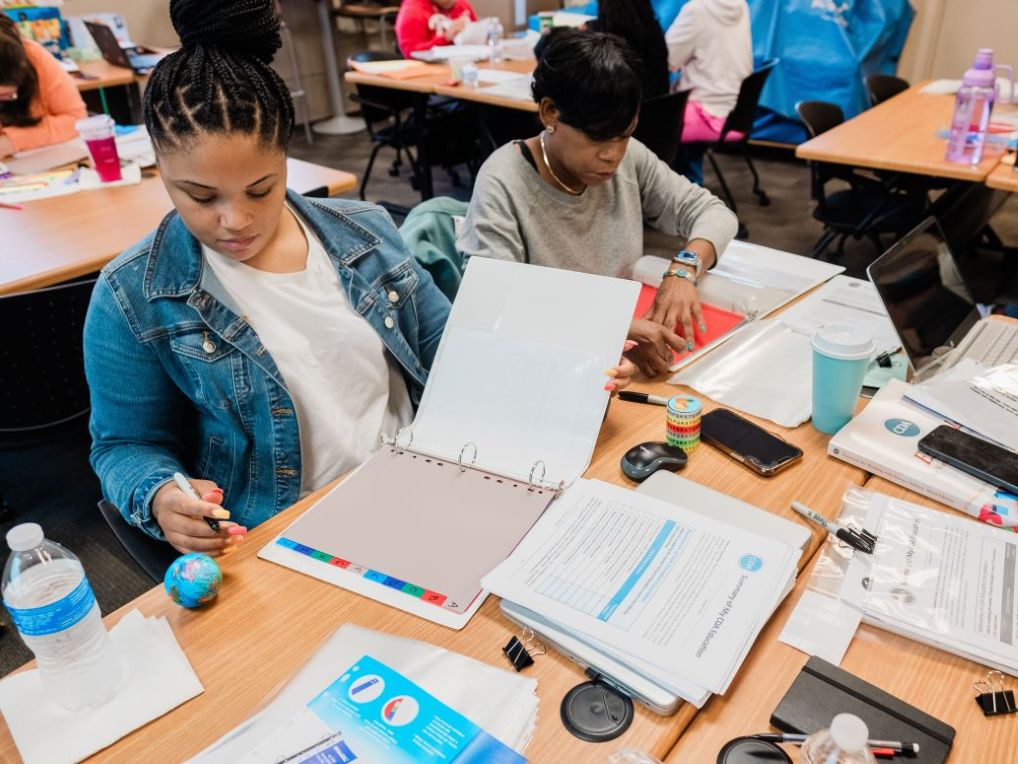
February 2, 2026 PennAEYC’s New CDA Course Will Begin on February 16 Classes for Pennsylvania’s Association for the Education of Young Children’s (PennAEYC) new Child Development Associate (CDA) course will begin on Monday, February 16. Learn More Pennsylvania’s early childhood educators who work at least 25 hours per week providing care to infants, toddlers, and preschoolers in a certified program can complete CDA coursework that will provide them for the CDA Credential exam. Instruction in the classes, books, and supplies are provided at no cost for qualifying students through PennAEYC and the Early Childhood Education Professional Development Organization at PASSHE. Students will also receive support to help them navigate the process to obtain their CDA Credential from the Council for Professional Recognition. The course is available to students in the PASSHE PDO Central Region service area only. The course offers instruction in a live, virtual classroom using Zoom in a cohort structure of three hours per class. Upon completion of all classes, it will provide the 120 classroom instruction hours required for the CDA team preparation. Those interested in the course should: Tell their employer they want to pursue the CDA with PennAEYC. Apply for ECEPDO@PASSHE to tuition and educational costs covered. A PD coordinator will verify the ECE PDO acceptance and advise on funding status. If approved for funding, applicants will be connected with Rose Snyder to register for the CDA class. Applicants will receive an email from Snyder within a week that provides a link to register for the cohort. A class link and login information will be sent from the instructor a few days prior to the class. For any additional questions, contact Snyder, PennAEYC’s senior director of education and operations, at rsnyder@pennaeyc.org.
January Recalls on Children’s Products Parents and caregivers should be aware of several child-related products recalls. Learn More Below is a list of January recalls collected from the following major federal agencies: the Consumer Product Safety Commission, the Food and Drug Administration, and the National Highway Traffic Safety Administration. Marcus Adler Glove recalled its Julie and Judah pajama pants and shorts because the products violate mandatory standards for flammability for children’s sleepwear. The pants and shorts pose a risk of burn injuries to children. The Kalencom Corporation recalled its SARO braided crib bumpers because they violate the federal ban on crib bumpers, which can obstruct an infant’s breathing and pose a risk of serious injury or death due to suffocation. Joyful Journeys recalled its baby loungers due to entrapment and fall hazards posed by the products. The loungers violate mandatory safety standards for infant sleep products because the sides are too low to contain an infant and the enclosed openings at the foot of the loungers are wider than allowed, posing risks of fall and entrapment. Kori Gey recalled its water toy kits because they violated mandatory standards for toys containing button cell batteries. The compartment that holds the batteries can be easily accessed and opened by children, posing an ingestion hazard to children. When button cell and coin batteries are swallowed, they can cause serious injuries, internal chemical burns, and death. Pounding Toys were recalled because they contain high-powered magnets that can detach and pose an ingestion hazard to children. When high-powered magnets are swallowed, they can attract each other, or other metal objects, and become lodged in the digestive system. This can cause perforations, twisting or blocking of the intestines, blood poisoning, and death. Rattan recalled its six-drawer dressers due to risk of serious injury or death to children if the drawers tip over and entrap them. The dressers are unstable if they are not attached to the wall. Infant Innovations recalled its BabyBond retractable safety gates, which violate the mandatory standard for expansion gates and expandable enclosures. A child’s torso can fit through the opening between the gate and the floor, becoming entrapped and posing a risk of serious injury or death. Vasicar recalled its 18-drawer dressers due to the risk to children of serious injury or death if the dressers tip over and entrap them. The dressers are unstable if they are not anchored to the wall. NFSVLB recalled its baby bath seats because they violate mandatory standards for infant bath seats. The seats are unstable and can tip over while in use, and have leg openings that allow the child to slip down until the child’s torso can become entrapped, posing a risk of serious injury or death due to drowning and entrapment. RootStim recalled its beard growth serum spray bottles. The serum contains minoxidil but is not in child-resistant packaging as required by law. The serum poses a risk of serious injury or death from poisoning if the contents are swallowed by young children. Ruahouine recalled its hair growth serum bottles. The serum contains minoxidil but is not in child-resistant packaging as required by law. The serum poses a risk of serious injury or death from poisoning if the contents are swallowed by young children. Morgan Lane recalled its children’s pajama sets because they violate mandatory standards for flammability of children’s sleepwear.The pajamas pose a risk of serious injury and deadly burn hazards to children. Greatale recalled its self-feeding pillows due to risks posed by death from aspiration and suffocation. The pillows hold the bottle at an unsafe angle while keeping it fixed in place so the infant cannot pull away. This can lead to aspiration of milk or formula and posed a risk of suffocation. Yixing Trading recalled its KEAWIS crib mattresses due to entrapment and suffocation hazards. The aftermarket mattresses may not adequately fit certain play yards of non-full-sized cribs, which could create gaps and pose a deadly entrapment hazard. Babies can face a risk of suffocation in gaps between an undersized mattress, or extra padding, and side walls of a product, especially when the infant’s face becomes trapped against the side and the mattress, preventing the child from breathing. BBWOO recalled its baby loungers due to entrapment and fall hazards. The sides of the loungers are too low to contain an infant and the enclosed openings at the foot of the loungers are wider than allowed, posing risks of fall and entrapment hazards to infants. The loungers also do not have a stand, posing a fall hazard if used on elevated surfaces. Mikario Trading recalled its convertible baby gyms due to suffocation risks. The floor mats of the baby gym can obstruct an infant’s breathing, posing a serious risk of injury or deadly suffocation hazard. Iristar recalled its minoxidil spray bottles for hair and beard growth. The bottles contain minoxidil but are not in child-resistant packaging as required by law. Children can be poisoned by the contents if swallowed. Aborder Products recalled its Cumbo retractable safety gates due to entrapment hazards. A child’s torso can fit through the opening between the gate and the floor, posing a risk of serious injury or death due to entrapment. Vndueey recalled its Magnetic Men toy sets due to the risk of injury or death from magnet ingestion. The stick figure toy sets contain loose magnets, posing an ingestion hazard to children. When high-powered magnets are swallowed, they can attract each other, or other metal objects, and become lodged in the digestive system. This can result in perforations, twisting, and blocking of the intestines, blood poisoning, and death. Based Online recalled its fidget magnet ball toys due to the risk of injury or death from magnet ingestion. When high-powered magnets are swallowed, they can attract each other, or other metal objects, and become lodged in the digestive system. This can result in perforations, twisting, and blocking of the intestines, blood poisoning, and death. Yetonamr recalled its pull string teething toys due to the risk of injury or death from choking. The silicone strings on the toys are smaller than permitted and can reach the back of the throat and become lodged, posing a risk of respiratory distress, serious choking hazard, and death. Topkay recalled its lighters because they do not have child-resistant mechanisms, posing a risk of serious injury or death from fire and burn hazards. Gagaku recalled its children’s ice cream toy playsets because they contain high-powered magnets that can loosen and death, posing an ingestion hazard to children. When high-powered magnets are swallowed, they can attract each other, or other metal objects, and become lodged in the digestive system. This can result in perforations, twisting, and blocking of the intestines, blood poisoning, and death.
January 30, 2026 Trying Together Calls for Presentation Proposals for June UnConference Trying Together invites those interested in presenting at its June 11 UnConference, “Out-of-School Time,” to submit proposals for presentations relating to that topic by Friday, March 6. Learn More Trying Together’s UnConference is an innovative, hands-on professional development training format where a deeper experience is provided around a particular theme related to early childhood education. Speakers are invited to present and participants are encouraged to engage hands-on in the workshops. Trying Together, in partnership with APOST and Allegheny County DHS, will host UnConference: Out-of-School-Time, on Thursday, June 11. More details will follow on the location and time. PQAS and Act 48 credits will be available for attendees. Presentation Topics Trying Together is seeking a focused range of topical presentations for the UnConference, which will focus on the topic of out-of-school-time. The audience for the UnConference will be educators, staff, and administrators working with children in summer programs, engaged parents and caregivers, and early childhood education and out-of-school time advocates. Those submitting proposals should design them to fit a 90-minute session. Appropriate topics include – but are not limited to: Mental health and social-emotional well-being Poverty responses Trauma-informed practices for OST programs Positive behavior management Game-based learning strategies Project-based learning for after school and summer programs Managing interpersonal conflict among staff Parent and family engagement for OST programs The importance of play Proposals will be selected based on a variety of criteria, including the extent to which the proposal targets and is relevant to the ECE workforce, experience or expertise of presenters, definition and focus of the topic, ability to engage participants in discussion and hands-on learning experiences, practical application of material and takeaways, and timeliness and importance of the topic. Each workshop proposal should encourage active learning; present culturally inclusive ideas, practices, and/or relevant research aimed at positioning attendees as leaders at the early learning programs in which they work; offer strategies for effective implementation of information acquired; include presenters who have significant expertise in the topic area; and cover a 90-minute block of time. Submitting a Proposal Trying Together will offer a stipend of $250 for any organization or individual whose proposal is chosen to be presented at the UnConference. Proposals will be due on March 6 and, on March 16, applicants will be notified about the status of their proposal. Presentation slides and materials as well as an overview of the presentation will be due on May 28. To submit a proposal, applicants should download the submission form and save it to their desktop. Then, submit the proposal as an attachment to learning@tryingtogether.org with the subject line “June 2026 UnConference Proposal” no later than 11:59 p.m. on March 6. For more information on submitting proposals for Trying Together’s UnConference, check out this flyer. Trying Together recognizes that summer programs may not have hired their summer staff yet. If you know how many staff you plan to send to the UnConference, we strongly encourage you to reserve their spots now. We will follow up later to get staff contact information. To reserve spots for your staff, email Gabby Lisella at gabby@tryingtogether.org.
January 29, 2026 Advocacy Fellows Connect During Kickoff Meeting Trying Together’s 2026 advocacy fellows met for the first time on January 27 to kick off their immersive, yearlong advocacy journey. Learn More The meeting – which was held virtually due to Pittsburgh weather conditions, but will be held in person in subsequent months – introduced the fellows to Trying Together’s policy team and each other. “Over the course of the year, we see our fellows develop a lot of growth and confidence in using their voices to support their own work,” said Executive Director Cara Ciminillo during her introduction to the fellows. “Our job is to help you all feel good about what you do and have the necessary tools, skills, and knowledge to get the recognition and the investments for the work you’re doing every day.” The fellows represent a wide variety of careers and experience in the early childhood education field – including educators, child care program owners, administrative professionals, researchers, early learning consultants, parents, and more. Many of the new fellows expressed interest in elevating child care as a profession and working to help policymakers learn how they can help child care programs. Following introductions, attendees learned about the history of early childhood education and the various investments achieved over the decades, including the $25 million in additional funding that was allocated for early childhood education in the most recent Pennsylvania state budget as a result of advocacy. During the course of the fellowship, participants will work their way through an advocacy workbook by mapping out their advocacy journey, reflecting on goals, practicing real strategies, tracking their progress, and building toward their final projects. Their final presentations will conclude with a gallery walk in November.
January 28, 2026 Resources for February Observances Various organizations, states, and nations recognize observances each month. Resources help parents, caregivers, and child care professionals acknowledge and navigate them. Here is a list of resources for February observances. Month-Long Observances BLACK HISTORY MONTH Let’s Celebrate Black History Song!, Sesame Street I Am the Dream, Mr. Pete’s Playhouse Race and Social Justice Books for Kids, Carnegie Library of Pittsburgh Anti-Racism Tools, Trying Together February is Black History Month, BlackHistory.gov 2026 Theme: A Century of Black History Commemorations, Association for the Study of African American Life and History 13 Meaningful Black History Month Activities for Kids to Add to Your Lesson Plans, TeachStarter LIBRARY LOVERS MONTH Buzzwords & Activities, Buzzword Pittsburgh Locations, Carnegie Library of Pittsburgh Supporting Families to Foster a Love of Reading, Reading Ready Pittsburgh NATIONAL CHILDREN’S DENTAL HEALTH MONTH The Tooth Brushing Song, Queensland Health February is National Children’s Dental Health Month: Posters & Planning Guides, American Dental Association How to Look After Your Baby’s Teeth: Info & Tips, NHS Week-Long Observances FEBRUARY 14-20 IS RANDOM ACTS OF KINDNESS WEEK Try a Little Kindness, Tori Kelly & Sesame Street Kindness is a Muscle, Peacock Jr. Make Kindness the Norm, Random Acts of Kindness Foundation Random Acts of Kindness, Mental Health Foundation Day Observances FEBRUARY 2 IS GROUNDHOG DAY Happy Groundhog Day!, Sesame Street Groundhog Day, Curious George Free Groundhog Day Activities, Teachers Pay Teachers FEBRUARY 4 IS NATIONAL GIRLS AND WOMEN IN SPORTS DAY S is for Sports with Chloe Kim and Big Bird, Sesame Street National Girls and Women in Sports Day, Women’s Sports Foundation 7 Reasons to Get Your Daughter Involved in Sports, According to Science, Penn State PRO Wellness Why National Girls & Women in Sports Day Matters More Than Ever, RCX Sports Foundation FEBRUARY 7 IS TAKE YOUR CHILD TO THE LIBRARY DAY Locations, Carnegie Library of Pittsburgh Take Your Child to the Library Day, Take Your Child to the Library Day Take Your Child to the Library Day Registration Continues to Grow, Every Library FEBRUARY 11 IS NATIONAL MAKE A FRIEND DAY Billy Porter Sings About Making Friends, Sesame Street This is the Way We Make Friends, Super Simple Kids Songs SHARE Activity Book, Buzzword Pittsburgh FEBRUARY 20 IS WORLD SOCIAL JUSTICE DAY World Day of Social Justice, United Nations What is Social Justice? Kids’ Garden Video, Aspen Foundation HUMAN Activity Book, Buzzword Pittsburgh Race and Social Justice Books for Kids, Carnegie Library of Pittsburgh Public Policy Agenda, Trying Together Early Childhood Funding Map, Trying Together FEBRUARY 21 IS LANGUAGE DAY Buzz Word Explains Why Language is Important, Sesame Street Spanish Me, English Me Song, Sesame Street Hello Around the World, JunyTony How to Support Language Development in Bilingual Children, Lorilet M, Bilingual Speech Language Pathologist 5 Simple Language Play Ideas for Language Development, Hands On As We Grow
January 27, 2026 Child Mind Institute Provides Resources for Caregivers of a Bullied Child Bullying can be a hard situation for a child to handle, and a challenging one for a caregiver to navigate – especially if children do not want to talk about it. The Child Mind Institute has put together a list of resources for caregivers whose children are being bullied, but do not want to discuss it. Learn More There are a number of reasons why children might avoid telling adults that they are being bullied – they might be embarrassed about it or concerned that a caregiver might get involved and, in the process, make the situation worse. Among the Child Mind Institute’s resources are an article on what to do if a caregiver suspects that their child is being bullied – online or in person – but won’t admit it. The resources discuss how to coax children to talk about what is happening, coach them on how to handle bullies, and figure out if and when to get the school involved. There is an article on how to determine when ordinary teasing becomes bullying or what to do if a caregiver’s child is bullying others. The resources also include ways to support children who are struggling socially, which can make them vulnerable to bullying. Below are the Child Mind Institute’s resources: What to Do When Your Child is Being Bullied – and Won’t Talk About It How to Know If Your Child is Being Bullied How to Arm Your Child Against Bullying How to Help Kids Deal with Cyberbullying My Child is Bullying Others: What Should I Do? Kids Who Need a Little Help to Make Friends What is Social and Emotional Learning?
Blog Lists 100 Employee Engagement Ideas for Child Care Programs A new Brightwheel blog post contends that when a child care program’s staff feels connected, motivated, and valued, it directly reflects the care and learning experiences that the program offers. Learn More In the post, Brightwheel put together a list of 100 employee engagement ideas for child care programs that can increase staff satisfaction, productivity, and the overall performance of programs or preschools. The 100 suggestions are broken down into a variety of categories, including career development, appreciation and recognition, team building, and others. The post notes that it is not enough that employees show up and do their jobs if program directors want to provide the best possible care for children. Employees must also be engaged and highly-motivated. Employee engagement, the article contends, improves the quality of care at a program, boosts employee retention and reduces turnover, and helps to achieve business goals. Below are several of the ideas listed under each category. Invest in staff’s career development Have regular 1:1 check-ins so staff can share highlights, challenges, and areas where they need more training or support. Encourage staff members to self-reflect on their own career goals throughout the year. Offer tuition assistance or reimbursement for staff furthering their education in early childhood. Show appreciation and recognition regularly Plan staff outings and offsite events. Practice active listening and implement an open-door policy. Work with staff members’ individual needs to offer flexible scheduling if possible. Provide team-building opportunities Start every staff meeting with a fun icebreaker that helps staff get to know each other better. Play fun games on your next training day. Celebrate special holidays, milestones, and birthdays as a team. Support your staff’s well-being and mental health Model healthy behavior in the workplace and remember to take care of yourself. Implement Teacher Wellness Days so staff can have time to recharge. Post a list of community mental health resources in your staff break room. Engage veteran staff members Ask veteran staff members to mentor newly-hired staff members. Have them lead discussions during professional development meetings. Celebrate veteran staff members’ career milestones. To read all 100 employee engagement ideas for early childhood education staff, visit Brightwheel’s blog post.
January 26, 2026 Pittsburgh Operating Warming Centers to Combat Frigid Temperatures on Monday Pittsburgh will keep warming centers open on Monday, January 26 at seven locations until 6 p.m. to 8 p.m., depending on the center, as the city is plunged into freezing temperatures following Sunday’s snowstorm. Learn More CitiParks will activate four Healthy Active Senior Centers in the city, while three additional CitiParks Recreation Centers will also be open for those trying to escape the cold today. According to the weather forecast, Monday’s high will be 18 degrees, while 1 degree is its low. Through Friday, temperatures are expected not to exceed 18 degrees, while the lows range from -2 to 1 degrees. For Monday, CitiParks will open the following Healthy Active Living Senior Centers: Beechview Healthy Active Living Community Center (1555 Broadway Avenue, until 6 p.m.) Greenfield Healthy Active Living Community Center (745 Greenfield Avenue, until 6 p.m.) Sheraden Healthy Active Living Community Center (720 Sherwood Avenue, until 6 p.m.) South Side Market House Healthy Active Living Community Center (12th & Bingham Streets, until 7 p.m.) CitiParks’ Healthy Active Living Senior Centers at Glen Hazel, Hazelwood, Homewood, Lawrenceville, Morningside, Mount Washington, and West End will be closed. CitiParks’ Recreation Centers that will be open include: Magee (745 Greenfield Avenue, until 8 p.m.) Phillips (201 Parkfield Street, until 7 p.m.) Warrington (329 Warrington Avenue, until 7 p.m.) All other CitiParks Recreation Centers – Ammon, Arlington, Brookline, Jefferson, Ormsby, Paulson, and West End – will be closed. Visit the City of Pittsburgh’s website for updates on warming centers for the rest of the week.
NAEYC Opens Its 2026 ECE Workforce Survey The National Association for the Education of Young Children (NAEYC) has opened its 2026 ECE Workforce Survey. Learn More Participation in the survey ensures that the realities educators face is visible to policymakers, advocates, and leaders making decisions that affect providers’ work and programs. The survey is intended to shed light on challenges related to staffing, compensation, and working conditions, and reflect what is taking place in early childhood education today. Responses to the survey help to: Surface challenges that affect educators Strengthen advocacy for improved policies and investment Ensure that state and local experiences are represented and not overlooked The survey is open to all early childhood educators and is available in English and Spanish. It takes about 10 to 15 minutes to complete. State data will be available in February. Respondents to the survey will be entered for a chance to win one of 10 $100 gift cards. Those interested can take the ECE Workforce Survey online.
Carnegie Mellon CyLab Director’s Children’s Book Tackles the Topic of Privacy A new book by the director of CyLab, Carnegie Mellon University’s privacy and security research institute, introduces children between the ages of 4 and 6 to the concept of privacy. Learn More CyLab director Lorrie Cranor’s “Privacy, Please!” features a story that gives caregivers an entry point for talking with children about such things as personal boundaries, independence, and digital safety. Cranor, who is an expert on the science of privacy and a mother, said that her book encourages children to recognize and ask for privacy in ways that feel safe, healthy, and age-appropriate. “A lot of my research is on digital privacy,” Cranor told Kidsburgh in a recent article on her book. “And as I started thinking about, well, ‘What should I teach 4-year-olds about privacy?’ I realized that digital privacy is probably not the right thing to start with. They’re going to be getting there, and we can’t ignore it. But we need to start with some more basic things.” Inspiration for the Book Cranor told Kidsburgh that she had taken part in a past Data Privacy Day event at the Carnegie Library in Oakland, during which she offered to read to children from a book about privacy. However, the librarians didn’t know of any books on the topic and her research made her realize that it was a subject about which much hadn’t been written. Therefore, she decided to write “Privacy, Please!” As research for the book, she went through a collection of about 500 pictures that people of all ages had drawn regarding privacy that had been part of a project on which she’d worked. She focused on the pictures drawn by children, many of which showed them going to their bedrooms to have their own private space. Others made it clear that the biggest threat to their privacy was their siblings, while some associated bathrooms with privacy. Cranor told Kidsburgh that she knew that 4-year-olds wouldn’t read the book on their own, so she made sure the book would be useful for teachers to read in a preschool or kindergarten setting – or for caregivers to read at home. The website for the book includes a discussion guide with page-by-page suggestions for what to discuss with children about the book and the ways to frame a discussion. It also includes activities – such as a door-tag activity that enables children to print a tag for their door that says “Privacy, Please” on one side and “Let’s Play” on the other. This would alert family members and friends when the child would like a bit of space. For more information on Cranor’s book, read Kidsburgh’s article.