July 1, 2019 ELRC Region 5 Launches in Allegheny County Today, July 1, 2019, the Allegheny County Department of Human Services (ACDHS) officially became the ELRC for Region 5, providing information and services to families and early childhood professionals about high-quality child care in Allegheny County. These services and information provided include: Child Care Works Subsidized Child Care Program (CCW) Keystone STARS Early Learning Programs (like PA Pre-K Counts and Head Start) Early Intervention As is customary for ACDHS, the agency chose two well established partners to facilitate this work including, The Alliance for Infants and Toddlers and Trying Together. The Alliance will provide direct service to families, while Trying Together will provide direct service to early care and education providers in Allegheny County. About ELRC Region 5 CORE VALUES At ELRC Region 5, we recognize the dignity and potential of all people through our interactions with those we serve and the services we seek to deliver, coordinate and align. We commit to: Meeting and honoring the child, family and early care and education professional where they are on their developmental journey. Recognizing that children are best supported in the context of their family, culture, neighborhood, and community. Recognizing (or realizing) we have much to learn from children, families and early care and education professionals and seek to bring this learning to our work. Collaborating in partnership across sectors and expertise to deliver services that build on the inherent strengths of children, families, and the early care and education professional. Building familial, professional and partner relationships with open and honest communication. Services Available FAMILIES Community members may call or visit one of several ELRC sites to receive information or initiate services. Families will be greeted and connected to a Family Navigator for on-going assistance. The Navigators will help their clients understand and navigate the early care and education system, including supporting them through the process to apply for and enroll to receive a child care subsidy, while simultaneously assessing for and connecting them with other supports and services that meet their needs. Once a family has completed the initial application process, they are connected to a Family Specialist for the ongoing management of their child care subsidy. EARLY CHILDHOOD PROFESSIONALS Early childhood professionals first will connect with an Early Learning Program Engagement Specialist and subsequently a Quality Coach – all of whom are assigned to regions so that providers can turn to a consistent staff person in their community. The Early Learning Program Engagement Specialist will serve as the professional’s initial point of contact and will help to identify the initial needs of the provider, such as enrollment in Child Care Works (CCW – the child care subsidy program) and the Child and Adult Care Food Program (CACFP) or support to participate or increase quality in the Keystone STARS program. They are responsible for recruiting, establishing eligibility, and enrolling providers of all types in Child Care Works. Quality Coaches will complete a full needs assessment with the program staff, and based on individualized plans, the coaches will use a variety of methods to support continuous quality improvement. The assigned Quality Coach will serve as the provider’s single point of contact, helping to coordinate support from the full team available to assist providers with a variety of tasks, specialized needs, or challenges (STARS designations, CCW billing, etc.). Service Offerings Supplemental services will vary by location, but core services available at each site include: Assistance with understanding, identifying, and enrolling in high quality child care Connection to an appropriate home visiting program, including Early Head Start Information about the Family Support Centers Public benefits enrollment through Compass Voter registration Support for Early Care and Education Providers Provider enrollment in CCW Provider enrollment in Child and Adult Care Food Program Provider support for continuous quality improvement through individualized coaching to obtain higher STAR levels Support for Relative Provider certification (health and safety) Referrals and connections to community-based services covering a full range of human services Frequently Asked Questions (FAQs) Where are the ELRC Region 5 offices located and how do I contact them? Main Office: ELRC Region 5 304 Wood Street, STE 400 Pittsburgh, PA 15222-1928 Satellite Offices: (Beginning August 1, 2019) Kingsley Association 6435 Frankstown Avenue Pittsburgh, PA 15206 Hosanna House 807 Wallace Avenue Pittsburgh, PA 15221 Human Services Center 519 Penn Avenue Turtle Creek, PA 15145 South Hills Interfaith Movement 41 Macek Drive Pittsburgh, PA 15227 Providence Family Support Center 3113 Brighton Road Pittsburgh, PA 15212 Focus on Renewal Learning Center 500 Chartiers Avenue McKees Rocks, PA 1513 Phone: 412.350.3577 Toll-Free: 1.888.340.3572 Fax: 412.350.3575 E-mail: elrc5@alleghenycounty.us Website: https://elrc5.alleghenycounty.us Facebook: @ELRCregion5 Twitter: @ELRCregion5 What are the hours of operation? Monday–Friday 8:30 a.m.–5:00 p.m.* *Walk-ins accepted until 4:30 p.m. Tuesday 8:30 a.m.–7:00 p.m.** **5:00–7:00 p.m. by appointment only Who manages ELRC Region 5? The Allegheny County Department of Human Services (ACDHS) partners with the Office of Child Development and Early Learning (OCDEL) to support Early Learning Resource Center (ELRC) Region 5 in partnership with The Alliance for Infants and Toddlers and Trying Together. In spring of 2018, the Pennsylvania Office of Child Development and Early Learning (OCDEL) announced that the state was moving towards a new service model called an Early Learning Resource Center (ELRC). This change was made to consolidate family and early learning provider services to better meet the needs of young children, their families, and the early childhood professionals who interact with them.
May 23, 2019 Addressing Domestic Violence in ECE Programs Join Promising Futures on May 30 for a webinar exploring ways in which early childhood professionals and programs can support children and families affected by domestic violence. About Domestic violence harms many families with young children. However, early childhood teachers and caregivers can help children heal. Further, early childhood programs can support healthy development and work to stop domestic violence in their communities. Join Promising Futures for this upcoming webinar to learn how early childhood programs can help families affected by domestic violence. Presenters will share strategies, tools, and resources created in partnership with The National Center on Parent, Family and Community Engagement. Presenters: Virginia Duplessis, MSW, Program Director, Futures Without Violence Mie Fukuda, MA, Senior Program Specialist, Futures Without Violence Registration To register for this event, visit their webinar page. Questions For more information, contact Graciela Olguin at golguin@futureswithoutviolence.org. Share this flyer with your network.
April 3, 2019 2019 P-3 Governor’s Institute Encourages Applications The Pennsylvania Department of Education Office of Child Development and Early Learning announced the 2019 Prenatal to Grade 3 (P-3) Governor’s Institute: P-3 Collaboration – Working Together for Student Success. Purpose The purpose of Pennsylvania’s P-3 Governor’s Institute is to help school districts, early learning providers, and community organizations throughout the Commonwealth make the vital connections and collaborations necessary for student success from prenatal through grade 3. The 2019 P-3 Governor’s Institute is being offered June 24- 25, 2019 in Hershey, PA. Application Details Participation in the 2019 Institute is limited to 22 teams that have not previously attended a P-3 Governor’s Institute. Participating teams will be selected through an application process. School districts, birth-5 early learning programs, and community organizations may submit an application. Applications may be submitted for more than one team from the same organization if each applying team represents a different elementary school and birth-5 feeder school/program. Teams should be built around a specific elementary school(s), its feeder early learning programs, and the local community. Selected teams will participate in this two-day event. Professional development will be offered to support team specific implementation of P-3 efforts. Most expenses, except meals, will be covered for participating teams using Preschool Development Grant funds. Act 48, and Act 45/PIL professional development credits and Pennsylvania Quality Assurance System (PQAS) hours will be offered. Required Agreements To be considered for participation in this event, participating teams must agree to the following: Participate in pre-conference assignment, webinar or call; Attend and actively engage in the entire two-day event; Bring a core team of no less than four educators (maximum participating team of eight members): a birth-5 administrator, a birth-5 teacher, a K-3 administrator, and a K-3 teacher. Preference will be given to applicants who include up to four of the following: family leader or family representative, Early Intervention representative, out of school time professional, community member, librarian, curriculum specialist, higher education partner, IU representative, Home Visiting, and Family Support; Applying team has not attended a past P-3 Governor’s Institute; Engage in continuous improvement via sharing and implementation of strategies/programs that will enhance student achievement; and Maintain an active role in the Governor’s Institute cohort subsequent to the event (e.g., professional learning community, webinars, monthly follow up). Application & Deadline Applications are being accepted via the Governor’s Institute P-3 2019 Application link until the April 30, 2019 deadline. Selected applicants will be notified via email by May 10, 2019. Questions For questions, contact Jolie Phillips at jolphillip@pa.gov. *Information provided by OCDEL’s PA Early Ed Newsletter
March 7, 2019 2019 National Survey of Early Care and Education Underway Overview Data collection for the 2019 National Survey of Early Care and Education (NSECE) has begun. The Administration for Children & Families, Office of Child Care is now collecting new, nationally representative information about all parts of early care and education and families’ needs for ECE services, including child care, Early Head Start and Head Start, and pre-k programs. Goals A key aim of the 2019 surveys is to provide updated profiles of individuals and programs providing ECE and to describe ECE use in households across the United States. This information provides a more representative sample that will better inform future policy and research. All data provided by households and providers will be used only for statistical purposes, and the identities of individuals and programs will not be disclosed. Participation The Administration for Children and Families has contracted with the National Opinion Research Center (NORC) at the University of Chicago to conduct the 2019 NSECE. NORC has sent mailings to selected providers and households throughout the country, inviting them to participate in the study. We are writing you to ask your support for this critical data collection effort. If you are contacted by providers, households, teachers and caregivers, or other members of the public, please emphasize and reassure those individuals that the 2019 NSECE is a legitimate and vital effort for our programs and our ability to help all children get access to high-quality ECE programs. Learn More Read more about the survey and access findings from the 2012 survey.
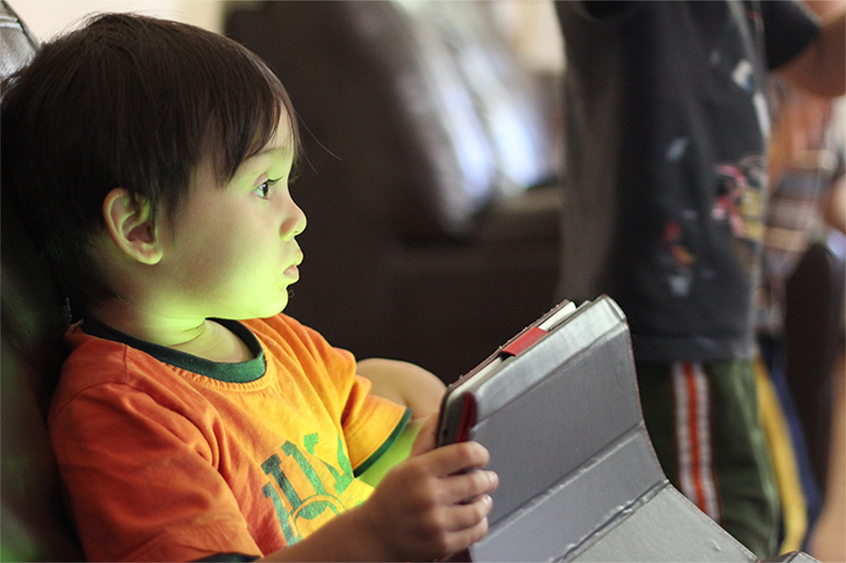
February 14, 2019 2019 UnConference: Young Learner’s Guide to Tech In partnership with Carlow University and Avonworth Primary Center, join us Saturday, March 30, 2019 from 8:00 a.m. – 1:00 p.m. at Avonworth Primary Center for a day of professional development and explore how we, as early childhood educators, after-school providers, and families can harness the good that comes from the advances made in media and technology for young children. The day features Jennifer Ehehalt, Pittsburgh Regional Manager at Common Sense Media, highlighting the findings in their research report The Common Sense Census: Media Use by Kids Age Zero to Eight, along with a panel discussion and audience Q&A. Then, attendees will participate in a hands-on workshop and an open session to interact with various displays, technology and media. After you register, we will email you for your workshop preferences. Registration for UnConference: Young Learner’s Guide to Tech is now closed.
Registration Open for 2019 UnConference In today’s digital world, learning has found new paths with the advanced development of media and technology. There is a lot of the excitement about the power of technology for learning with a focus on apps and games, but what do we really know about the effectiveness of media and technology on young children? How are they spending their time? And, even with lots of tech, what are low tech (or maybe even no tech) ideas that help children create and develop critical 21st century skills? Simply, what is age-appropriate? About In partnership with Carlow University and Avonworth Primary Center, join us Saturday, March 30, 2019 from 8:00 a.m. – 1:00 p.m. at Avonworth Primary Center for a day of professional development and explore how we, as early childhood educators, after-school providers, and families can harness the good that comes from the advances made in media and technology for young children. The day features Jennifer Ehehalt, Pittsburgh Regional Manager at Common Sense Media, highlighting the findings in their research report The Common Sense Census: Media Use by Kids Age Zero to Eight, along with a panel discussion and audience Q&A. Then, attendees will participate in a hands-on workshop and an open session to interact with various displays, technology and media. After you register, we will email you for your workshop preferences. How to Register Register now to reserve your space! When the workshops are finalized, you will receive an email from Yu-Ling to select your preferred workshops. We will do our best to place you in your requested workshop, but this is not guaranteed. There is limited space in each workshop and workshop placement is based on the date of your registration, so we recommend you register early. Please register by 5:00 p.m. on Thursday, March 21, 2019. For groups of six or more people, there is a 10% discount. Please email Yu-Ling at conference@tryingtogether.org for more information. To learn more about this event, visit this link. Share this flyer with your network.
December 13, 2018 DHS Releases Request for Information The Department of Human Services (DHS) recently released a Request for Information (RFI) to explore existing individual or family needs assessments, methods of connecting individuals and families to community resources, and models for providing whole-person or whole-family case management. Purpose The department recognizes the frustration individuals and families may experience while trying to access much-needed services in a timely manner when receiving case management from multiple agencies. DHS wants to make it easier for individuals to obtain meaningful information and access to the services they need to achieve overall wellbeing, positive health outcomes, and financial self-sufficiency. Their goal is to build a system that addresses each family’s needs and amplifies the work of health care providers and community organizations. Submissions and Deadlines If your organization has experience in any of the areas outlined in this RFI, respond by January 18, 2019 by visiting the Pennsylvania eMarketplace website. *Information provided by PA Early Ed News
November 19, 2018 2019 Changes to the PA One Book Program In 2019, the Pennsylvania One Book Program will adapt to meet the increasing need to support early literacy to Pennsylvania’s youngest learners. These changes include a shift in focus to get more books into the hands and homes of more children. Available Books There will be two books available for purchase: “Barnyard Banter” by Denise Fleming For infants and toddlers (available in English). “Not a Box” by Antoinette Portis For children ages three to five (available in English and Spanish). There are no minimum or fixed quantities required. Early learning providers, library staff, and community partners can purchase the exact number of books needed. To keep costs more affordable, paperback options are the only available option. Purchasing Details Purchasing of the two titles are through Scholastic Publishing Family and Community Engagement (FACE) program. If your organization already participates in the FACE or Scholastic Literacy Partners Program, you will just need to complete the order form available from Scholastic Publishing. Click here for the order form. A two-page Family Fun Guide for both titles will be available on the PA One Book website (www.paonebook.org) by January 2019. Other guides aligned with the Pennsylvania Standards for Early Childhood will also be available with activities for use by early childhood educators and families. With this change, copies of the One Book titles will no longer be mailed to early learning programs, however, anyone may purchase and donate copies to child care homes and centers, as well as families. *Information provided by NAEYC*
OCDEL Releases Four New Vodcasts The Pennsylvania Office of Child Development and Early Learning (OCDEL) Bureau of Certification released four new vodcasts containing important information about operating a child care facility. These 10-15 minute videos can easily be shared with early learning staff, linked within an email or on a website, or shared via social media. Vodcast Topics Child Protective Services Law Vodcast This video details the requirements for child care providers in meeting the Child Protective Service Law (CPSL) and the importance of these requirements. Child care providers and other employees who have contact with children are responsible for obtaining the proper clearances and ensuring that clearances are obtained within the proper time frame. Requirements for an Effective Director of Child Care Center Vodcast Child care directors are responsible for the overall management of a successful child care center. This video explains the commitments directors must make to ensure proper communication with staff and parents, maintain up-to-date child and staff files, have knowledge of the Pennsylvania child care regulations, and provide oversight for the overall health and safety of children in care. Supervision Vodcast Supervision is the most critical requirement in keeping children healthy and safe while they are in care. Staff must always be able to see, hear, direct and assess children at all times in order to provide proper supervision. This video is helpful in providing a more in-depth look at supervision, as well as guidance to help staff meet this requirement. Writing a Plan of Correction Vodcast All certified child care facilities are required to undergo an annual inspection. Many times, a facility is in full compliance with all the regulations. However, there are occasions when the Legal Entity has to be cited for non-compliance with one or more of the child care regulations. This video explains the process for writing and submitting a plan of correction for regulatory violations that your certification representative may cite during a licensing inspection. Visit the Pennsylvania Department of Human Services website for the complete listing. *Information provided by NAEYC*
November 1, 2018 Deadline Extended for RFP: Child Care Funding and Finance in PA The deadline has been extended to November 9, 2018 for the Request for Proposal, Child Care Funding and Finance in Pennsylvania: The True Cost of Quality Part II. The Berks County Intermediate Unit (BCIU), in coordination with the Office of Child Development and Early Learning (OCDEL) and the Pennsylvania Early Learning Investment Commission (PAELIC), released the RFP for submission of proposals to investigate the cost of providing high-quality early care and education across Pennsylvania. Part I Conclusions Part I of this project, CHILD CARE FUNDING & FINANCE IN PENNSYLVANIA: Budgeting for Survival or Paying for the True Cost of Quality? conducted by Research for Action found that: Infant and toddler care is more expensive than pre-K or school-age care. Current revenue streams and reimbursement rates are inadequate to cover the cost of infant and toddler care and, as a result, child care providers opt to serve more preschoolers and fewer infants and toddlers. Low compensation in child care programs leads to significant staff turnover and hiring of less-qualified staff. Part II Overview Knowing that the cost of infant and toddler child care is high, and the current public financing system is inadequate to cover the costs of quality in Pennsylvania, particularly teachers’ wages, leading to turnover and a less qualified workforce, Part II of this study aims to answer the question ‘What does it cost to support high-quality child care across Pennsylvania?’ Part II will build upon the previous work conducted in Part I, using a more robust data set to estimate the true cost of high-quality child care, as compared to child care that meets only regulatory standards, and how those costs vary across regions in the commonwealth. The findings from Part II will inform the evolution of Pennsylvania’s child care financing and quality systems to enable the greatest access to high-quality child care for the most at-risk children. Deadline The Request for Proposal represents the requirements for an open and competitive process. Proposals will be accepted until 5 pm EST, Friday, November 9, 2018. See the RFP for more information, including proposal guidelines, project description, project timeline and more. Information provided by PA Early Ed News.