News

April 20, 2026

Resources for Celebrating National Home Visiting Week from April 20 to 24

The Institute for the Advancement of Family Support Professionals has provided resources to celebrate and recognize home visitors and the impact they make on maternal and child health during the second annual observance of National Home Visiting Week.

Learn More

The institute – an organization focused on strengthening home visiting and human service programs across the country – launched National Home Visiting Week in 2025. This year, the celebration runs from Monday, April 20 to Friday, April 24.

The week honors home visiting professionals and raises awareness about the field as well as highlights the impact on family well-being, trust, and child development.

To celebrate the week, the institute has provided a variety of resources, including:

The institute’s toolkit provides resources for messaging tips, templated materials, and promoted assets. 

More resources on how to celebrate National Home Visiting Week can be found on the Institute for the Advancement of Family Support Professionals’ website

News

April 17, 2026

City Recreation Centers Will Offer Programming for Children During NFL Draft

Pittsburgh’s Department of Parks and Recreation will host a series of fun, engaging programs for youth and families at City Recreation Centers next week as the city hosts the NFL Draft.

The center will offer extended hours and Draft parties at two of its centers.

Learn More

From Wednesday, April 22 through Friday, April 24, all CitiParks recreation centers will open early for youth and remote learning students. Attendees will have access to the internet, supplies, activities, breakfast and lunch during the school day.

The 10 recreation centers will be open from 8 a.m. to 8 p.m. on those three days, with the exception of Jefferson Recreation Center, which will be open from 8 a.m. to 4 p.m.

On April 23 and 24, youth are invited to join the CitiParks Draft Parties from 6 p.m. to 9 p.m. at the Ammon Rec Center and Magee Rec Center. The parties will include food and activities, such as:

  • Thursday: punt, pass, and kick games; flag football; skills challenges; and raffles
  • Friday: flag clinic with Pittsburgh Flag Football League

The draft parties will culminate with flag football games on Saturday, April 25 from noon to 3 p.m. at Ammon Rec Center and Magee Rec Center. Registration is not required.

The city’s recreation centers include:

  • Ammon Recreation Center (2217 Bedford Avenue)
  • Arlington Recreation Center (2201 Salisbury Street)
  • Brookline Recreation Center (1400 Oakridge Street)
  • Jefferson Recreation Center (605 Redknap Street)
  • Magee Recreation Center (745 Greenfield Avenue)
  • Moore Park Building (1801 Pioneer Avenue)
  • Ormsby Recreation Center (79 S. 22nd Street)
  • Paulson Recreation Center (1201 Paulson Avenue)
  • Phillips Recreation Center (201 Parkfield Street)
  • Warrington Recreation Center (329 E. Warrington Avenue)
  • West Penn Recreation Center (450 30th Street)

News

April 15, 2026

State Offering Free Water Sampling Program for Child Care Facilities

The Shapiro Administration is launching a free water sampling program for eligible schools and child care facilities to test for lead in drinking water.

Learn More

The initiative – through the state’s Department of Environmental Protection (DEP) – is funded by the Water Infrastructure Improvements for the Nation (WIIN) Act’s Voluntary School and Child Care Lead Testing and Reduction Grant Program. 

The program – which is in partnership with Terraphase Engineering – offers no-cost water testing and, for those with elevated lead levels, grant funding to support lead-reduction activities, such as installing hydration stations.

Eligible applicants could receive up to $3,000 per installed hydration station. The program’s aim is to protect children’s health and make sure they’re drinking safe water.

Schools and child care centers that meet the criteria are encouraged to apply. Applications must be submitted online through the state’s electronic application. Enrollment is open and will remain so until funds are exhausted.

More information can be found on the DEP’s website.

News

April 14, 2026

TEACH Scholarship Application Available for Fall Semester

Early childhood educators who want to advance their education while continuing to work can now apply for the TEACH scholarship for the fall.

Learn More

The scholarship is aimed at supporting both staff retention and program quality by enabling working educators to advance their education.

Those interested in receiving a scholarship for the fall semester, which begins in mid- to late August, should apply by Friday, July 11.

Applications are accepted on a rolling basis, but priority consideration is given to complete applications that are submitted by the deadline. Late or incomplete applications may experience processing delays.

TEACH is supported by the state’s Office of Child Development and Early Learning (OCDEL) and the state’s Department of Education. The licensed program is administered by the Pennsylvania Child Care Association (PACCA).

For information on eligibility, program requirements, how to apply, and how to download an application can be found on PACCA’s website.

News

Pitt Launches Online Graduate Certificate in Infant Mental Health

The University of Pittsburgh’s School of Education has launched a new fully online graduate Certificate in Infant Mental Health

The certificate, which is designed for working professionals, is aimed at addressing a nationwide shortage of trained infant and early childhood mental health professionals.

Learn More

Nearly 50,000 infants and toddlers were served through early intervention in Pennsylvania between 2022 and 2023, but a 2025 analysis by Pennsylvania Partnerships for Children found that mental health and behavioral services remain a significantly underutilized component of that care. This gap was described as “concerning considering the growing emphasis on mental health.”

Addressing the shortage requires a trained workforce that is equipped with specialized knowledge and skills to support the social-emotional well-being of young children and their families, the University of Pittsburgh noted. The state’s early intervention and home-visiting programs are seeking practitioners trained in relation-ship based, attachment-focused approaches to supporting infants, toddlers, and their families.

“Our new online certificate in infant mental health equips Pennsylvania’s early childhood workforce with accessible training that integrates both cutting-edge research and best practices to strengthen families and their communities,” said Eboni M. Zamani-Gallaher, the Renee and Richard Goldman dean of Pitt’s School of Education. “Drawing on our faculty’s deep expertise and our long-standing commitment to early childhood education, we are addressing a growing statewide need and enhancing outcomes for all children through evidence-based research and practical application.”

The Infant Mental Health certificate is a fully online, graduate-level credential. Online programs at the university are developed and supported by the University Center for Excellence in Digital Education, which partners with Pitt schools and units to ensure that online students receive the same high-quality academic experience as those on campus.

The certificate’s curriculum is aligned with the learning domains required for endorsement through the Pennsylvania Association for Infant Mental Health and the Alliance for the Advancement of Infant Mental Health. 

Tuition for the certificate is $750 for credit hour. More information on the certificate is available on the University of Pittsburgh’s website.

News

April 13, 2026

Child Mind Institute Resources Focus on Executive Function Issues in Children

Executive functions are mental skills such as organization, problem-solving, and planning that we use daily. 

However, some children struggle with them, which can result in their having trouble keeping track of their schoolwork or items (such as bags or jackets), remembering assignments, or following directions.

Learn More

In a series of new resources, the Child Mind Institute notes that it is important to investigate the root cause of why some children can become distracted or disorganized. 

Executive function issues are most common in children with ADHD, the Child Mind Institute notes, but children without that diagnosis can have them as well. 

The institute offers support for children who struggle with staying organized in school and those who need help with working memory – or, keeping track of the information they need to finish a project or solve problems.

The institute’s resources explore whether a child’s disorganized behavior could indicate other underlying issues, such as anxiety, depression, or a learning disorder. 

Strategies for staying organized can’t address an undiagnosed learning disorder or help children who have experienced trauma. These children may appear forgetful or distracted, but may need different types of support, such as a neuropsychological examination.

The Child Mind Institute’s resources include:

News

Thriving Kids Episode Focuses on Building Stronger Relationships with Children

To build a stronger relationship with a child, caregivers should slow down and reflect on their own history and motivations as a caregiver.

The latest Thriving Kids podcast episode suggests that doing so can often yield better results than giving in to the temptation of jumping straight into skills and communication strategies.

Learn More

In the latest Thriving Kids, Dave Anderson, PhD, senior psychologist and vice president of public engagement and education at the Child Mind Institute, discussed the topic of building stronger bonds with children with Ruben Parra-Cardona, PhD, a family therapist and the Roger and Carol Nooe-endowed chair and professor in the College of Social Work at the University of Tennessee. 

The discussion focuses on the ethics of raising another person, why encouragement can be harder to give than one might think, and how the process of learning to parent differently can also be a process of personal healing. Another topic is the balance of nurturing a child and holding them accountable.

Some of Thriving Kids’ tips for building a stronger relationship between caregivers and children include:

  • Be a good listener; often, children just want a caregiver who will give them undivided attention.
  • Make family time fun and make activities such as game nights, movies, or other activities routine.
  • Talk openly and honestly, but also set boundaries, so that children will feel safe and supported, all the while learning how to make responsible choices.
  • Respectfully agree to disagree. Acknowledge a child’s thoughts and feelings, even when you don’t agree. Showing respect for their opinions helps to build trust.

The Thriving Kids episode is available on the Child Mind Institute’s website.

News

April 10, 2026

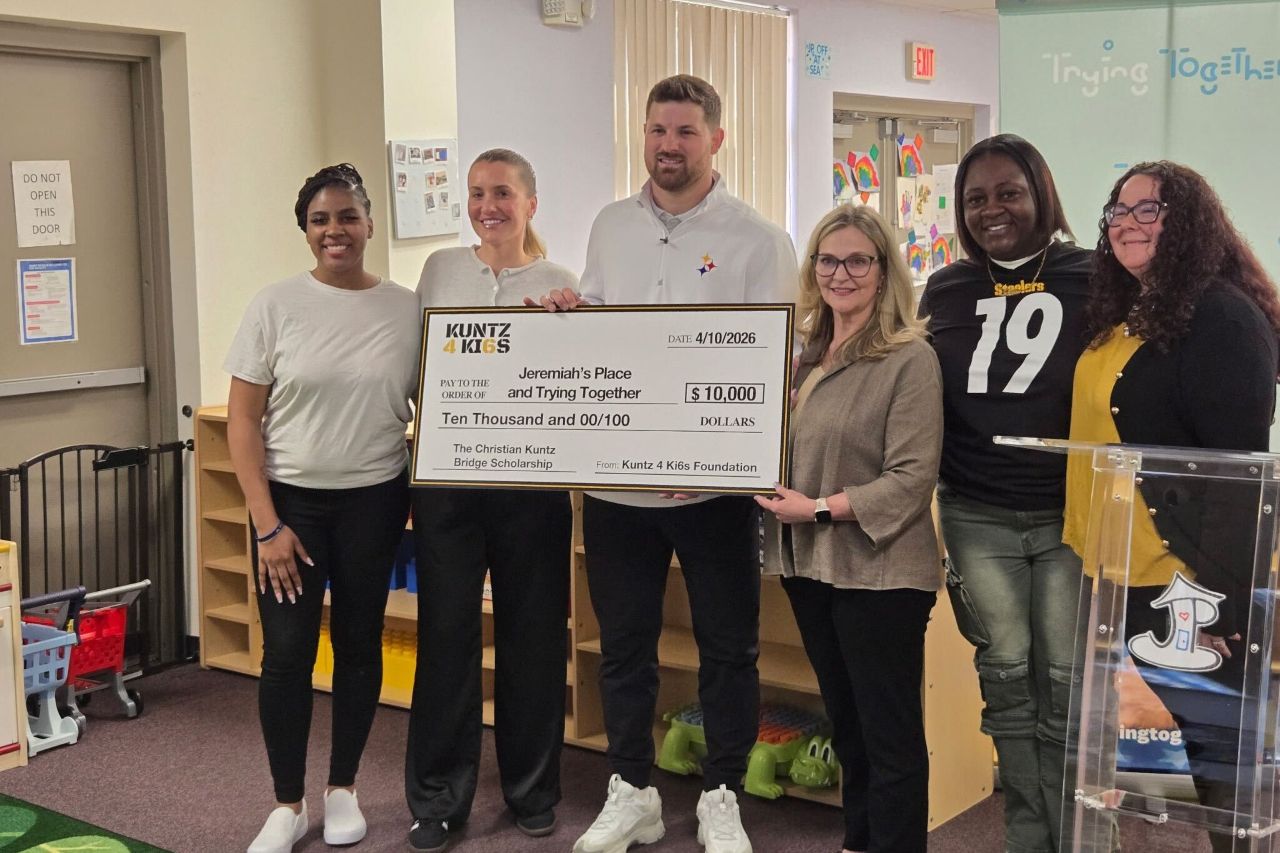
Christian Kuntz Foundation Provides $10K Scholarship to Jeremiah’s Place

The Kuntz 4 Ki6s Foundation provided a $10,000 scholarship on Friday to the bridge scholarship program for Jeremiah’s Place, a 24-7 crisis center for single mothers, and Trying Together. 

Learn More

The foundation – which is operated by Steeler Christian Kuntz and his wife, Heather – promotes youth leadership and engagement, fosters mentoring relationships, and supports underserved communities. It also provides holiday joy to single mothers and their children.

While providing a check for the scholarship on Friday, Christian Kuntz told the Big News Network that he had a soft spot for Jeremiah’s Place, which is the city’s only 24-hour crisis nursery that provides emergency child care for families in need.

“We got linked with them a couple years ago through the Steelers for our nonprofit and we’re providing a scholarship of $10,000 that will act as a bridge for the moms to be able to go on job interviews and pursue opportunities that they wouldn’t be able to pursue because of their situation,” Kuntz said.

Kuntz, who grew up with a single mother, added that the scholarship would help about 50 mothers and children.

“With these bridge scholarships from the Kuntz 4 Ki6s Foundation, we hope they are just the kick-off to working together to support more young children and their families,” said Maria Pisano, Trying Together’s director of community relations. “As the lead organization for the Homewood Early Learning Hub & Family Center on Kelly Street, we know first-hand the positive difference that wrap-around supports make for families. As an early childhood advocacy organization, we also work daily to increase access to high-quality child care in our region and statewide.”

The bridge scholarship will be administered based on individual family needs to provide:

  • Immediate access to safe care
  • Gap funding for child care coverage
  • Wraparound stabilization support

“Access to high-quality child care is an ongoing constraint to the stability of families,” said Cara Ciminillo, Trying Together’s executive director. “While public subsidies exist, the process to apply, be approved, and find child care can be lengthy. In the meantime, caregivers often must pause their careers, resulting in delayed or missed job opportunities that contribute to financial instability, and inconsistent care and education arrangements that do not best support their children’s healthy development.”

To learn more, read the Big News Network’s full story.

News

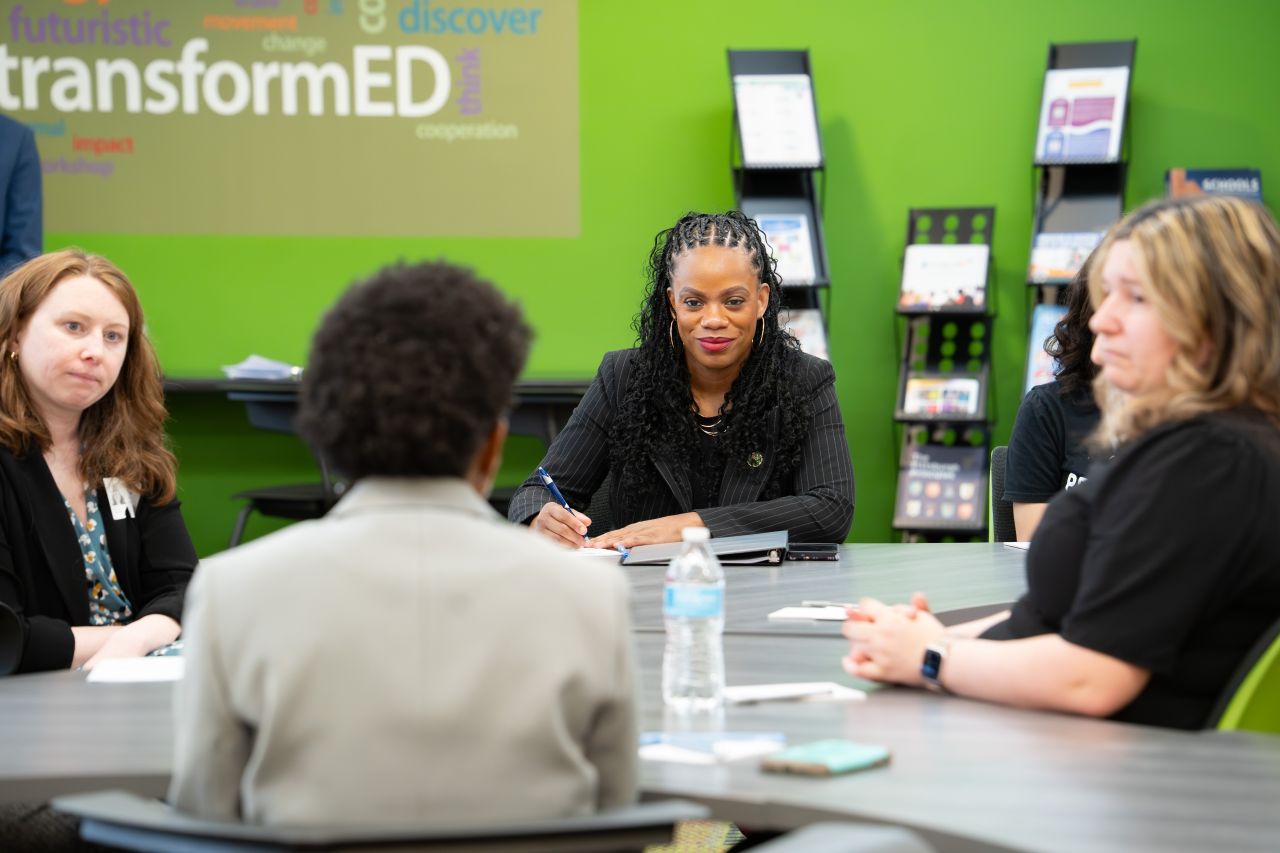
Rep. Lee Hosts Roundtable Discussion on the Importance of Head Start

U.S. Rep. Summer Lee (D-12th) hosted a roundtable discussion Friday on the importance of Head Start with educators, parents, providers, and early childhood advocates. Emily Neff, Trying Together’s director of public policy, helped facilitate the discussion, which was held at the Allegheny Intermediate Unit at The Waterfront in Homestead.

Learn More

At the event, Lee discussed the need to expand access to high-quality early childhood education for working families and highlighted her recently introduced Head Start for America’s Children Act, which would dramatically expand the program nationwide, raise wages for educators, and strengthen support services for families. 

“Every child deserves not just a chance to survive, but a real chance to survive,” Lee said. “Head Start has opened doors for generations of children, giving them a strong start in the classroom and an even stronger foundation in life. In the richest country in the world, early childhood education cannot be a luxury for a lucky few. It must be treated like the public good it is.”

The event also included a tour of a local Head Start classroom.

The roundtable included representatives from early childhood education programs, public schools, advocacy organizations, and families directly affected by Head Start. Participants shared stories about the vital role the program plays in preparing children for school, connecting families to critical supports, and sustaining communities across the region.

“For 60 years, Head Start has served as a cornerstone program within the early childhood system, providing the essential education, care, and resources that families and young children need to thrive,” Neff said. 

Neff noted that Friday’s roundtable was timely as early childhood educators prepare for the Week of the Young Child and Trying Together celebrates the Month of the Young Child in April.

“It is vital that we honor the educators who create high-quality early learning experiences and take steps toward investing in the critical work they do for our youngest children,” said Neff, who added that Lee’s Head Start for America’s Children Act takes necessary steps to prioritize competitive compensation for early childhood professionals.

Over the past 60 years, Head Start programs have provided high-quality early education and comprehensive services to more than 40 million children and families nationwide. Today, nearly 800,000 children receive early education, health and dental care, and nutritious meals through the program, while families also gain access to referrals for job training, adult education, nutrition services, and housing support.

Lee’s bill – which was introduced with U.S. Rep. Rashida Tlaib (D-Mich.) as the House companion to legislation by U.S. Sen. Bernie Sanders (I-Vt.) – would expand the program to serve more than 11 million eligible young children nationwide.

The Head Start for America’s Children Act would:

  • Fully fund Head Start for eligible children
  • Align program hours with working families’ schedules
  • Raise Head Start educator pay to at least $60,000 per year
  • Strengthen recruitment and retention
  • Expand partnerships with child care providers and college campuses
  • Improve mental health services
  • Invest in facility upgrades, including the removal of lead contamination in paint and water

Lee serves on the House’s Committee on Oversight and Government Reform and the Committee on Education and Workforce.

News

April 8, 2026

Thriving Kids Podcast Episode Focuses on Children’s Social Media Use

Adolescence has long been thought of as a time when friendships, social status, and identity are important to young people. But unlike previous generations, many of those experiences are playing out online.

The latest Thriving Kids podcast episode examines how social media affects children in these and other areas.

Learn More

In the episode, Dave Anderson, PhD, senior psychologist and vice president of public engagement and education at the Child Mind Institute, joins Linda Charmaraman, PhD, a senior research scientist at the Wellesley Centers for Women and founder and director of the Youth, Media & Wellbeing Research Lab, for a discussion on the matter.

Charmaraman’s research tracks children from middle school through high school and how social media shapes their lives over time. During the podcast, the discussion focuses on what young people say about how social media affects their well-being – from the ways it can help them find support and community to the pressures it can create around comparison, exclusion, and self-esteem.

Anderson and Charmaraman also talk about why prohibiting social media use entirely may not prepare children to manage online spaces later, and how caregivers can set limits while keeping communication open.

Strategies

Thriving Kids also provided some strategies that caregivers can use for helping young people navigate social media in a healthy manner.

  • Caregivers should model healthy behavior when it comes to devices. Children should be used to seeing their faces – not the top of their heads bent over a screen. Try to establish tech-free zones and hours in the home that apply to everyone, including caregivers.
  • If a child is on social media, it is reasonable to follow their accounts, but experts caution against going through texts without good reason. Starting from a place of trust strengthens a relationship and makes it more likely that a child will approach a caregiver when something goes wrong.
  • Activities that help children develop real-world skills – such as sports, music, volunteering, or creative projects – help to build a sense of self that doesn’t depend on likes or followers. When children feel good about what they do, rather than how they look online, they’re better prepared for challenges.

To learn more, watch the Thriving Kids podcast episode.