News

June 11, 2026

Chambers of Commerce Coalition Asks State Assembly to Continue Investing in Child Care Workforce

A coalition of 81 local chambers of commerce from across Pennsylvania is urging the Pennsylvania State Assembly to continue investing in the child care workforce as part of the 2026-27 state budget.

Learn More

The coalition, led by the Schuylkill Chamber of Commerce, delivered a sign-on letter to state policymakers calling for additional investments in the Child Care Staff Recruitment and Retention Program, Pennsylvania Pre-K Counts, and the Head Start Supplemental Assistance Programs.

Other chambers of commerce to join the coalition included the Pittsburgh Airport Area Chamber of Commerce, Greene County Chamber of Commerce, Butler County Chamber of Commerce, Beaver County Chamber of Commerce, Indiana County Chamber of Commerce, Westmoreland County Chamber of Commerce, Fayette Chamber of Commerce, Greater Connellsville Chamber of Commerce, and Three Rivers Business Alliance.

The letter emphasizes that the state’s child care crisis is not only a family issue, but also a workforce and economic development challenge. Employers around the state continue to report that working caregivers are struggling to find and afford quality child care, making it harder to fill open positions, maintain productivity, and support economic growth.

“In Indiana County and communities like ours across Pennsylvania, employers need reliable access to talent and parents need reliable access to child care,” said Mark Hilliard, president of the Indiana County Chamber of Commerce. “When child care providers cannot hire and keep staff, businesses feel the impact through absenteeism, turnover, and unfilled jobs. A stronger investment in recruitment and retention is an investment in workforce stability.” 

The Child Care Staff Recruitment and Retention Program, the letter notes, was created as a first step to help child care providers address severe staffing shortages by supporting teacher recruitment and retention. Chamber of commerce leaders said that growing the program would help providers to better compete in a tight labor market, stabilize classrooms, and expand access for working families. 

The letter states that providers continue to struggle to compete with other sectors that offer higher wages, while the average child care teacher in the state earns just over $15 per hour. As a result, providers have been forced to close classrooms, limit enrollment, and maintain long waitlists despite strong demand.

The chambers are also calling for increased investments in Pre-K Counts and Head Start to help providers address inflationary pressures and workforce shortages. The letter noted that the state’s child care crisis costs working families and employers approximately $6.5 billion annually in lost wages and productivity. 

For more details, read the coalition’s letter.

News

June 10, 2026

OCDEL Makes Clarification About Program Licensure Requirements

The Pennsylvania Office of Child Development and Early Learning (OCDEL) has made a clarification regarding program licensure requirements.

Learn More

OCDEL’s Bureau of Policy and Professional Development and Bureau of Certification Services (BCS) have released an announcement to clarify the applicability of program licensure requirements. 

BCS is responsible for receiving applications, conducting inspections, and issuing a certificate of compliance to certified child care facilities in Pennsylvania. The certificate is a document issued by the state to a legal entity permitting it to operate a specific type of facility at a specific location for a specific period of time according to department regulations. 

Under the state code, certified child care facilities in Pennsylvania fall under one of the three categories – child care center, group child care home, or family child care home. 

The state code requires that legal entities must obtain a valid certificate of compliance to operate at a specific location. Upon meeting the requirements, the certificate of compliance will be issued by the state to a legal entity prior to commencement of operation at a specific location. 

For more information and to find details on programs subject to the requirements, read OCDEL’s announcement.

News

Trying Together, Educators Advocate in Harrisburg for Early Childhood Education Investments in State Budget

Trying Together traveled with 40 early childhood education teachers and administrators as well as caregivers of young children to Harrisburg on Tuesday, June 9 to meet with policymakers and advocate for investments in the early care and education workforce in the 2026-27 budget.

Learn More

The teachers, administrators, and parents represented five counties – Allegheny, Westmoreland, Fayette, Washington, and Beaver – and were members of Trying Together’s advocacy fellowship program. They met with their state representatives and senators to tell their early childhood education stories.

“Early care and education is a critical issue for families and economic development in every community – rural, suburban, and urban alike,” said Emily Neff, Trying Together’s director of public policy. “The fact that nearly 40 early childhood educators from five counties traveled to Harrisburg and back in a single day demonstrates the urgency of this issue.”

Neff said the group met with policymakers from both parties and both chambers – a total of 19 state representatives and 10 senators – to advocate for increased investments in child care, pre-k, and early intervention in the state budget. 

“There is no way around it: continued public investment in early care and education is essential,” Neff said.

Meetings with Policymakers

The group discussed with policymakers the importance of including proposed investments in the early care and education workforce in the 2026-27 state budget, including:

  • A $10 million increase for the Child Care Staff Recruitment and Retention Program
  • A $2 million increase for the Head Start Supplemental Assistance Program
  • A $7.5 million increase for Pre-K Counts

Participants in the day of advocacy said it was a positive experience. Anna Dolter, a Pittsburgh Public Schools pre-k teacher, said the trip was her first time to Harrisburg. She met with state Reps. Dan Frankel (D-23rd) and Lindsay Powell (D-21st) and state Sen. Jay Costa (D-43rd).

“My message to them was the importance of early education and keeping it accessible and equitable to all families in our city and state,” she said. “It was good to meet with representatives, so we can take information back to our colleagues in terms of what we can do to advocate to get early education in the budget.”

Wes Garis, the senior director of professional and child development at Braddock’s Heritage Community Initiatives, said his job involves supporting educators and providing classroom support.

“I’ve tried to bolster recruitment and retention, but we need to have teachers long enough to grow them and keep them in the field,” he said.

He said although some of the policymakers he met with on Tuesday were already on board with proposed investments, he thought it was important to provide them with context.

“It was good that we did it as a group,” he said. “We had our stories bounce off each other – it shows the connection and makes the stories and data come to life.”

Dayna Jones, the owner and CEO of Highland Park’s Simply Kidz Zone Early Learning Center, said that the trip to Harrisburg was a great opportunity to advocate for investments to the field.

“I wanted to advocate that we struggle with financially supporting our staff to be able to embrace high-quality child care,” she said. “We want to pay staff what they deserve and allow parents to be able to afford child care and be able to work. We want to send a message that (early childhood educators) are essential. I don’t think child care is taken seriously enough.”

The group met with state Reps. Dan Frankel (D-23rd), Lindsay Powell (D-21st), Eric Nelson (R-57th), Daniel Deasy (D-27th), Arvind Venkat (D-30th), Timothy J. O’Neal (R-48th), Joshua Kail (R-15th), Jim Rigby (R-71st), Jessica Benham (D-36th), Aerion Abney (D-19th), Andrew Kuzma (R-39th), Emily Kinkead (D-20th), Bud Cook (R-49th), Natalie Mihalek (R-40th), Eric Davanzo (R-58th), and Anita Kulik (D-50th), La’Tasha Mayes (D-24th), Mandy Steele (D-33rd), and John Inglis III (D-38th), and state Sens. Jay Costa (D-43rd), Kim Ward (R-39th), Joe Pittman (R-41st), Camera Bartolotta (R-46th), Wayne Fontana (D-42nd), Elder Vogel (R-47th), Patrick Stefano (R-32nd), Lindsey Williams (D-38th), Wayne Langerholc (R-35th), and Devlin Robinson (R-37th).

News

June 9, 2026

Application Process Open for Scholarships to Conference Focusing on Autism and Sensory Disabilities

Those interested in attending the Building Knowledge to Know How Conference can apply for a scholarship, which provides free registration and lodging.

The conference highlights best practices, research, and strategies with a special focus on autism, sensory disabilities, secondary transition, and complex instructional needs.

Learn More

Those interested in obtaining a scholarship to attend the conference should apply by Monday, June 15. 

The scholarships are provided by the state’s Department of Education, Bureau of Special Education, and PaTTAN. The conference runs from August 4 to 7 at the Lancaster County Convention Center.

This year’s theme is “Empowering Pennsylvania Educators and Partners.” The conference will provide an opportunity to learn and engage with nationally recognized presenters as well as educators and families from across the state.

The conference also includes:

  • Youth experiences for young people, ages 4 to 21
  • Poster sessions on successful approaches, programs, and collaborations from state educational agencies
  • Exhibitors and vendors
  • Networking opportunities and evening activities

Family scholarships – full, partial, and virtual – are available to Pennsylvania residents who have children between the ages of 4 and 21. Applicants should:

  • Have a current IEP/IFSP
  • Receive supports and services through an infant toddler or preschool early intervention program
  • Be in the evaluation/assessment process for eligibility to receive support and services from a state public or approved private school

More information about the scholarships is available online.

News

Application Process Open to Serve on PA State Advisory Council Subcommittees

The Pennsylvania State Advisory Council (SAC) is accepting applications for family and professional leaders who are interested in serving on one of the council’s five supporting subcommittees. 

Learn More

Participation on a SAC subcommittee is an opportunity for participants to help shape discussions, provide feedback, and support initiatives that affect the state’s early childhood education system, children, and families.

The subcommittees serve as focused workgroups that provide specialized expertise, develop recommendations, and support the implementation of initiatives aligned with the council’s broader goals and priorities.

The SAC advises the state’s Office of Child Development and Early Learning (OCDEL) on planning for the expansion and coordination of effective early learning and development services for young children and their families.

Family members, early childhood education professionals, advocates, community partners, and system leaders are encouraged to apply to serve on a subcommittee.

The application can be completed online. To learn more about the State Advisory Council, visit the organization’s website.

News

June 8, 2026

Child Mind Institute Provides Resources on How to De-Escalate with Autistic Children

Allowing a child’s temper tantrum to run its course is often a method employed by many caregivers, but tantrums from children with autism might need a different approach.

In a new set of resources, The Child Mind Institute discusses how to de-escalate when children with autism are having a meltdown.

Learn More

Meltdowns, the institute writes, are similar to tantrums in that they share such traits as crying, screaming, door slamming, and harsh words. But they differ in that they are an intense involuntary response to outside stimuli, such as stress, powerful emotions, or sudden changes.

Meltdowns can go on for hours and have the potential to become dangerous to the child and others if not effectively defused.

Among the Child Mind Institute’s resources are an article that covers the different stages of an autistic meltdown as well as the dos and don’ts on how to de-escalate.

There is also an article on the sensory processing issues that can trigger extreme behavioral responses from children with autism or other developmental disorders. There are also some tips on how to help autistic children to build communication skills and manage responsibility.

Another resource discusses common causes of behavior problems in children – such as anxiety and ADHD – and how to help them regulate strong emotions or impulsive urges.

The Child Mind Institute’s resources include:

News

Pittsburgh Foundation Offering Help to Submit Comments About Paid and Parental Sick Leave Amendment

The Pittsburgh Foundation will host open office hours on Thursday, June 11 to help Allegheny County residents craft and submit comments about the county Health Department’s Paid and Parental Sick Leave.

Learn More

In May, the Health Department proposed an amendment to Article XXIV – Paid and Parental Sick Leave – to expand paid sick time and include paid parental leave for employees across the county. The department is requesting feedback on the proposal through a public comment process.

The Pittsburgh Foundation will host open office hours from 11 a.m. to 3 p.m. on June 11 at its offices at 912 Fort Duquesne Boulevard. Those who stop by can receive assistance in crafting and submitting comments to the Health Department.

For accommodation requests, contact Maura Jacob at jacobm@pghfdn.org

News

Thriving Kids Podcast Focuses on How Anxiety Can Affect the Brain

The latest Thriving Kids podcast episode is a discussion on how anxiety can affect the brain and how children who suffer from it often fly under the radar.

Learn More

In the podcast, Dave Anderson, PhD, senior psychologist and vice president of public engagement and education for the Child Mind Institute, joins neurosurgeon Brian Hoeflinger, MD, for a discussion on anxiety.

They discuss a scenario involving a boy who went from being the seventh grade class president to slipping out of class with his heart racing and thinking he was going to die. The boy started skipping school, his parents never noticed, and his teachers never asked why. For the next 20 years, anxiety controlled his life.

In the podcast, Hoeflinger said it shouldn’t have taken the boy so long to get help, and explains how anxious children can go unnoticed by parents, teachers, and counselors.

The podcast’s topics include what panic attacks feel like from the inside and how to face them and what parents should know about head injuries and helmets.

Tips for recognizing signs of anxiety in children and offering support include:

  • Know that anxiety often hides in plain sight; anxious children are often quiet, well-behaved, and outwardly OK, which is why their struggles can go unnoticed.
  • Watch for avoidance, not just worry. A child who skips school, dodges social situations, or finds reasons to opt out of doing things may not be lazy. Anxiety often shows up as avoidance.
  • Learn what a panic attack feels like – racing heart, trouble breathing, sweating, trembling, or a sense of dread.
  • Don’t help a child avoid what they are afraid of; avoidance feels better in the moment, but makes anxiety worse over time. Prioritize gradual exposure to the thing they are anxious about.
  • Validate the feeling without amplifying it; saying “I know you’re scared, and I know you can handle this” works better than dismissing the fear or promising nothing bad will happen.

For more information, listen to the Thriving Kids podcast.

News

June 4, 2026

Advocates Screen Make a Circle Documentary, Reflect on Path Forward


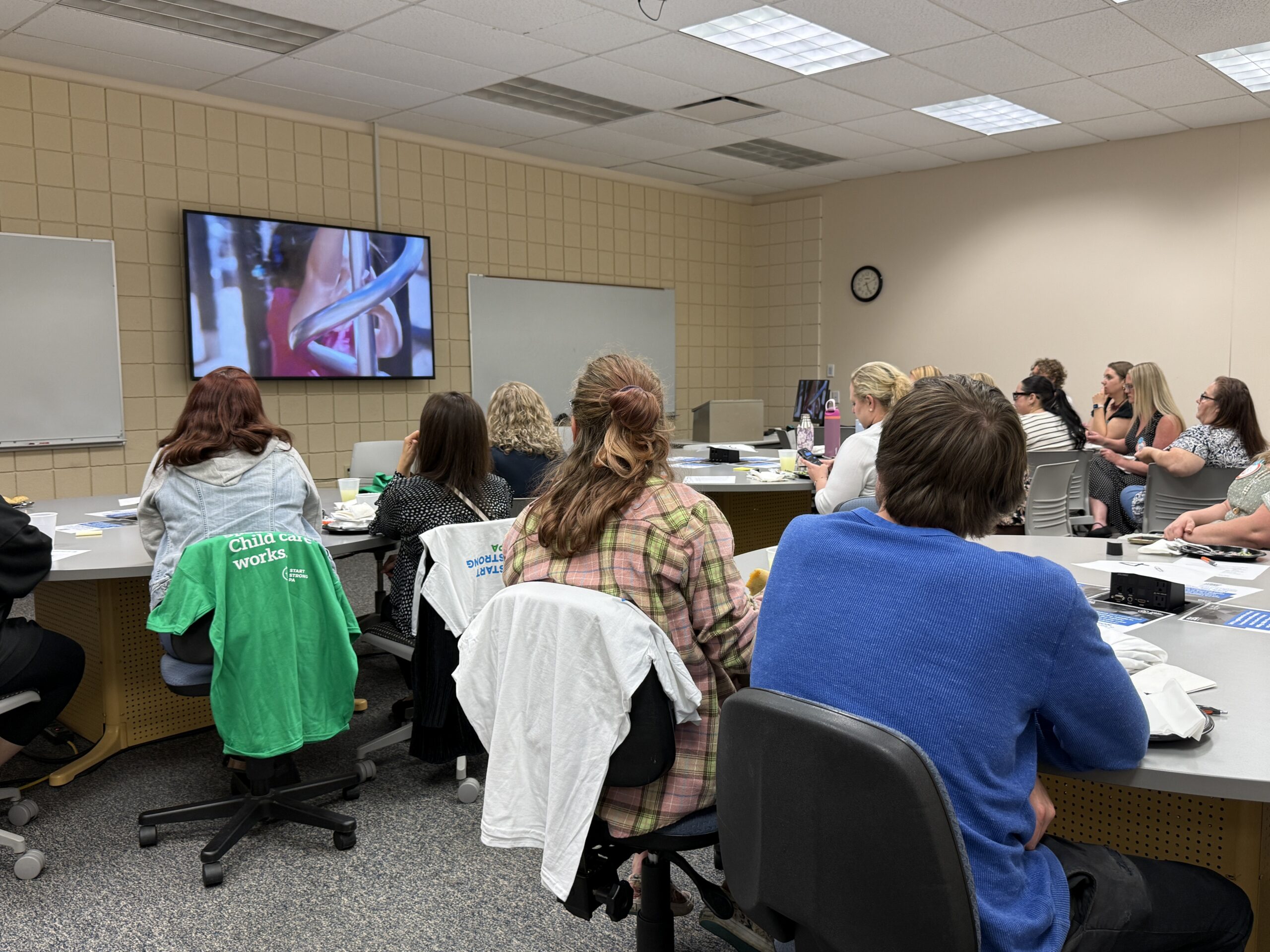
On June 1, Trying Together and Westmoreland County Community College hosted a screening of the documentary film Make a Circle with early care and education teachers, program directors, administrators, and higher education professionals. After dinner and a 60-minute viewing, the group engaged in impactful conversations and shared reflections on a path forward. 

About Make a Circle

Make a Circle follows early care and education providers from California, highlighting their joys, challenges, and collective advocacy efforts. The film demonstrates through compelling storytelling how early childhood education is historically undervalued and underfunded despite its critical importance. While the film takes place in California, the stories and universal experiences resonated with the ECE professionals representing Allegheny, Beaver, Fayette, Greene, Washington, and Westmoreland counties who came to view and discuss the film.

Throughout the screening, the audience nodded along in recognition of the challenges, laughed at relatable interactions between children and educators, and shed tears during heartbreaking moments that felt all too familiar. 

Group Discussion

Focusing on the experiences of early care and education professionals in Southwestern Pennsylvania, the group shared their own stories, emphasizing the deep fulfillment that comes from helping children grow, witnessing moments of curiosity, and building the foundation for all future learning. 

Despite the joys of working in the field, the group recognized universal challenges: difficulty hiring and retaining staff; the daily struggle to provide coverage; the hard decision to close classrooms; and more.

At the forefront were anecdotes about those who continue to make heartbreaking decisions to leave their passion behind for higher paying jobs, including those in K-12 settings. According to Start Strong PA and PreK for PA, kindergarten teachers in Pennsylvania make an average salary of $64,270 compared to $35,250 for preK teachers and $29,510 for child care teachers. 

“I left direct care too because I couldn’t provide a living for myself,” said one participant, reacting to a story from the film about an educator leaving his job in child care because he could no longer afford to remain. “I love working with kids and being in the classroom with the little ones… I miss it a lot.”

While much of the discussion focused on the challenges faced by educators, the group also recognized the difficulties faced by families. Often, parents shoulder a financial burden when child care programs are forced to raise tuition rates. Without public investment, it becomes more and more difficult for programs to keep their doors open. In turn, families lose access to high-quality child care which can hinder their ability to work. 

Takeaways

The film highlights the importance of advocacy – from creating spaces to have important conversations and connect with our communities, to organizing and elevating unified messages. 

It is unfortunately common for early educators to dedicate multiple decades of advocacy to make small strides in public investments. Emily Neff, director of public policy for Trying Together, encouraged the group to keep speaking up for change. “Persistence matters!”

In the 2025 – 2026 State Budget, PA saw the development of a new early childhood line item for the first time in nearly 20 years. For many early educators, this was a moment of celebration and of feeling heard. The $25 million investment in the new Child Care Recruitment and Retention line item demonstrated that policymakers heard advocate’s voices and took the first step in solving the child care crisis and investing in the workforce.

Last year’s new investment in the child care workforce was an important first step, but there’s still more to do. 

“All the work our advocates have done is phenomenal, and we’ve achieved a lot of things,” one participant reflected. “But we’re still in the trenches. We’re not even above water yet.”

Early childhood supporters in Pennsylvania are currently actively advocating for the 26-27 budget to include the proposed investments in the early care and education workforce (at a minimum):

    • $10M increase for the Child Care Staff Recruitment and Retention Program.
    • $2M increase for the Head Start Supplemental Assistance Program.
    • $7.5M increase for Pre-K Counts. 

The early education professionals who attended the screening ended the evening by completing post cards to send to their elected officials and signing action alerts urging elected officials to invest public dollars in ECE.

As conversations closed for the evening, folks left with a spark of optimism and renewed sense of hope that we can continue to grow awareness of the value of early care and education, along with elevating the need for increasing public investments.


News

June 3, 2026

Trying Together’s Lending Library Offers Materials to Providers to Inspire Love of Learning

Early learning providers can find a variety of materials to borrow from Trying Together’s ECE Lending Library that support and recognize learning abilities, promote cultural diversity, and cover everything from health to safety.

Learn More

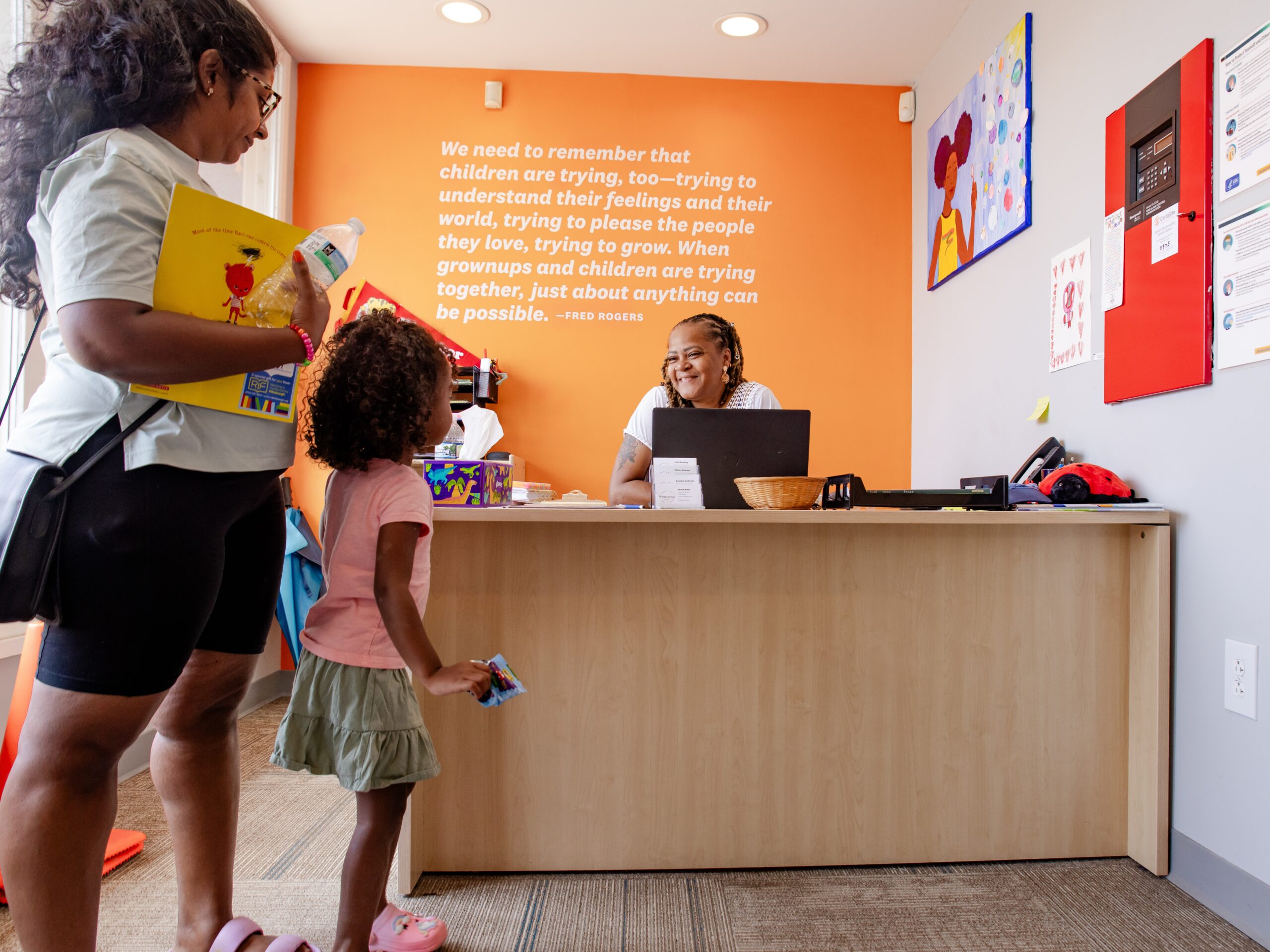
The library, which is located at Trying Together’s offices at 5604 Solway Street, was created to be a community space for child care providers in Allegheny County to borrow learning materials as well as teacher and curriculum resources.

“The benefit for teachers is that they are able to rotate materials in their programs without having to worry about storage or extra added costs,” said Allison Robinson, a leadership development strategist for ELRC Region 5. “It gives them the opportunity to try new things – a new material they might like to try before purchasing it.”

Teachers can borrow materials for 30 days on the first Saturday of the month or on Tuesdays or Thursdays.

“We want teachers to see it as a beneficial place where they can come monthly to change out the learning materials for their classrooms,” Robinson said.

What the Library Offers

Robinson said the library’s most popular items are its theme boxes – such as boxes focusing on farm animals or other topics – as well as its infant-toddler boxes and book bundles.

The materials in the library can help children learn about a variety of topics, Robinson said.

“We’ve got a number of STEAM and STEM materials, so these can give them a start in science, technology, and engineering, which is important because that’s where so many of the jobs these days are focused. We have materials for math and basic reading skills and a wealth of new social-emotional materials.”

Robinson said that Trying Together is currently undergoing an equity audit for the library, and that it intends to stock additional diverse materials.

“We’re excited for the opportunity to get more representation in place,” she said.

Robinson said that the intention of the library is to help get children more interested in what they are learning.

“We talk about behavior issues in the classroom, but it’s often that children are uninterested in what’s going on in the classroom,” she said. “By coming to the lending library monthly, teachers can get them more interested. It’s not a magic wand, but it helps them to develop a love for learning.”

More Details

The library’s materials include:

  • Books for infants, toddlers, and preschoolers
  • Infant social-emotional support kits
  • Toddler dress up trunks
  • Puppet sets
  • STEM and coding kits
  • Active play kits
  • Storytelling kits
  • Sensory items and kits
  • Musical instruments
  • Leadership resources
  • Resources related to early childhood education and interactions with children
  • Die cut machines
  • Inspire Interactive Panels

The library is located in Room 204 of Trying Together’s office on Solway Street. It is open on the first Saturday of the month from 10:30 a.m. to 12:30 p.m., and from 11:30 a.m. to 3 p.m. on Tuesdays and Thursdays.

For details about how to access the library, how to check out items, and to view a full list of available items, visit the ECE Lending Library website.