News

July 12, 2026

Investments in Early Care and Education Included in the 2026-27 State Budget

Pennsylvania lawmakers passed a $50.8 billion budget on Sunday, July 12 that includes modest investments that build on last year’s historic funding for child care and a small increase for Pre-K Counts and Head Start.

State Budget Delivers Modest Gains for the Early Learning Workforce but Leaves Out Critical Supports for Pennsylvania’s Youngest Children

Early Learning PA (ELPA), of which Trying Together is a principal partner, released a statement following the budget’s passage that expressed appreciation for some small steps forward in addressing early education workforce shortages in the 2026–27 state budget. It also emphasized that the state must do far more to support programs such as infant and toddler Early Intervention to ensure that every Pennsylvania child from birth to age 5 has access to affordable, high-quality early care and education by 2030. Read the full statement from Early Learning PA.

Cara Ciminillo, executive director for Trying Together, shared her perspective: “Pennsylvania’s youngest children need a comprehensive system of care, which includes various options to meet families needs. Lasting progress requires investing in and strengthening every part of the system from home visiting and Early Intervention to child care and pre-k. We can not expect one program to absorb cuts while another receives modest gains. Families do not experience these programs in silos and a comprehensive approach is necessary to realize the full potential of early learning experiences.”

Recruitment and Retention

In the joint statement, Start Strong PA noted the incremental progress this budget makes to support the child care workforce by building on the $25 million recurring Child Care Recruitment and Retention Program funding with an additional $5 million investment. These funds will support programs in recruiting high-quality applicants and retaining experienced educators.

“Child care is an economic development strategy, workforce participation strategy, and education success strategy,” the statement read. “These investments will encourage teachers to remain in the field, allowing more parents to work, prepare more Pennsylvania children for school and build a stronger and more prosperous commonwealth.”

Start Strong PA also noted that while this increase is a step in the right direction, there is much more that can be done to help families find and afford child care. It called on Pennsylvania to continue to build a robust early learning sector while working to improve system quality and stability.

“We are encouraged that the enacted 2026-2027 will increase the Child Care Staff Recruitment and Retention program by $5 million, bringing the total to $30 million,” said Emily Neff, director of public policy for Trying Together. “It’s clear that the bonuses had a meaningful impact on early childhood educators, bringing some to tears when they received them.”

“A modest growth to the program is the next right step. However, we must think bigger and bolder to truly transform the early care and education system. We look forward to continuing to work with the governor, lieutenant governor, and the bipartisan group of ECE champions in the General Assembly to strengthen state investments and policy for early care and education.”

Budget Gives a Slight Boost to Pre-K Counts and Head Start

Additionally, Pre-K for PA responded to the passage of the 2026-27 budget, in particular the $3.75 million in new state funding for Pre-K Counts and $1.043 million for the Head Start Supplemental Assistance Program. They noted that this investment will help to stabilize early learning providers by increasing per-child rates – an important investment to help programs facing rising costs and persistent staffing shortages due to low wages.

While Pre-K for PA acknowledged that these funding increases are a meaningful step forward, they fall short of the level needed to fully address the challenges facing Pennsylvania’s early learning systems.

To meet the growing needs of children and families, they urged policymakers to invest additional funding to strengthen and expand these programs.

“We remain committed to working with policymakers to build on this progress through sustained investments that strengthen the early childhood workforce, address the ongoing teacher recruitment and retention crisis and ensure high-quality early learning programs remain strong, stable and accessible to families across the commonwealth,” Pre-K for PA said in the statement.

Early Intervention Funding Cut Creates Uncertainty for Families and Providers

Early Learning PA expressed concern over the $5.2 million cut to infant and toddler Early Intervention in the Department of Human Services budget. It noted that while policymakers have indicated they intend to use remaining funds from the current fiscal year to prevent service reductions, the 2.6% decrease creates confusion and uncertainty for families and providers alike.

“Early Intervention is a critical, federally required component of the early care and education continuum,” Early Learning PA’s statement read. “Children from birth through age 5 with developmental delays, regardless of family income, must be identified, referred to and provided the services they need to help them and their families reach their fullest potential.”

Early Learning PA referenced OCDEL’s Early Intervention Rate Methodology Study, which found that infant and toddler rates were underfunded by more than $71 million – nearly 40% – in fiscal year 2022-23. It noted that this deficit has continued to grow in the years since and is now upwards of $116 million. The ongoing rate deficit leads to workforce shortages, which severely constrains providers and ultimately affects families seeking services. 

“Early Intervention programs continue to see significant annual increases in the number of children needing these critical services,” the statement concluded. “Moving forward, we will focus our efforts on ensuring families can continue to access the supports their children need.”

2026-27 PA State Budget Includes:

  • $5 million in additional funding for the Child Care Staff Recruitment and Retention Program.
  • $3.75 million in additional funding for the Pre-K Counts program.
  • $1.043 million in additional funding for the Head Start Supplemental Assistance Program.
  • $1.129 million for the Child Care Assistance line item.
  • Level funding for the Child Care Services line item.
  • A $5.2 million reduction in funding for the infant and toddler Early Intervention program in the Department of Human Services budget. The department is using prior-year funds to keep the program whole and maintain the rate increase provided in fiscal year 2025-26.
  • $41.221 million in additional funding for preschool Early Intervention in the Department of Education budget.
  • Level funding for evidence-based home visiting in the Community-Based Family Center line item, with a small reduction in the Nurse-Family Partnership line item due to a change in federal matching rates.

News

July 10, 2026

Family Swim to Return to Pittsburgh Pools Starting on July 13

Family Swim will return to neighborhood pools citywide as part of the city’s summer aquatics program starting on Monday, July 13.

Learn More

Family Swim will take place from 5 p.m. to 7 p.m. on Monday through Friday and during all weekend pool hours.

This provides children under the age of 15 with the opportunity to enjoy the pool alongside a parent, guardian, or other adult age 21 or older during a dedicated Family Swim session.

Similar to Adult Lap Swim, which offers designated time for adults only to swim for fitness and exercise, Family Swim provides a dedicated opportunity for families to enjoy the pool together.

City Pool schedules are available online, but operating schedules – including weekend hours – may vary by location. Poolgoers should check with their local pool for days of operation and complete daily schedules.

News

July 8, 2026

Child Mind Institute Resources Focus on Children’s Summer Anxieties

For many children, summer is a relaxing time during which they can take a break from homework or getting up early in the morning – but the season can also bring its own stressors.

The Child Mind Institute has released some resources on some of the things that stress children during the summer, whether it’s summer camp, unpredictable schedules, or travel.

Learn More

Changes in routine can cause worry about the unknown, especially for children who struggle with mental health challenges such as ADHD or anxiety.

The Child Mind Institute’s resources include a discussion on how to support children who might be feeling anxious about summer activities. They feature some suggestions for children who are nervous about camp, whether it’s apprehension about meeting new people or fear of being separated from their caregivers for longer than they’re used to.

The resources also include a piece in which experts weigh in on how to make travel easier for children with mental health challenges and how to support children who are easily upset by sensor surprises, such as hot sand or loud firecrackers.

Lastly, the resources include an article on how to manage boredom and use it to help children develop independence.

The Child Mind Institute’s resources include:

News

July 7, 2026

Resources Provide Tips on Monitoring Children’s Summer Screen Time

While some might consider summer fun to be swimming, barbecuing, or taking part in an adventure outdoors, many children would prefer the extra time to play their favorite video game or spend time on TikTok.

In a new set of resources, the Child Mind Institute notes that loosening the rules for screen time might seem fair when school’s out – however, a lack of rules will not work.

Learn More

The institute’s strategies for summer screen time rules include information on how to offer children more freedom to play games or connect with friends online without encroaching on what they need to do to stay healthy during the summer months.

The beginning of the season is a good opportunity to assess a child’s tech use, identify the risks you want to avoid, and make a practical plan.

The resources also include an article on screens and neurodivergent children, including those with autism, ADHD, or a learning disorder. It focuses on how these children might be able to get an additional benefit from online engagement, but also be more vulnerable to addictive or unsafe behaviors.

One article addresses the issue of when children are ready for social media use, while another discusses how to create a structure for the summer that makes children feel comfortable. There are also pieces on how to get children to spend more time outdoors and how building chores into their lives helps to teach them responsibility and feel the value of contributing to the family.

The Child Mind Institute’s resources include:

News

Thriving Kids Podcast Episode Tackles Effects of Smartphones and Social Media on Children

Although smartphones and social media are often cited as significant factors that contribute to the youth mental health crisis, a new episode of the Thriving Kids podcast discusses how research on the matter isn’t as cut and dry.

Learn More

In the podcast episode, Dave Anderson, PhD, the Child Mind Institute’s senior psychologist and vice president of public engagement and education, discusses this topic with Candice Odgers, PhD, a professor of psychology at the University of California who is one of the leading researchers studying technology and adolescent mental health.

For more than 20 years, Odgers has tracked young people’s daily lives, often through their own phones, to understand what shapes their well-being. In the podcast episode, she explains that data shows social media to be one of the weakest predictors of children’s mental health, how correlation can get mistaken for causation, and what evidence shows about phone bans in schools.

She also emphasizes that family relationships, quality friendships, sleep, and the well-being of adults in their lives are what really matters when it comes to supporting children’s mental health.

Some tips provided during the podcast for supporting a child’s mental health without making the phone the entire conversation include:

  • Look at the whole picture, not just the screen: When something feels off, resist the urge to blame the phone first. Make sure a child is getting the basics that protect mental health – real-world social connection, enough sleep, and activities that help to build identity and self-confidence.
  • Keep the line of communication open: Think of your role as scaffolding – give children age-appropriate independence while keeping a line of open communication so they feel that they can come to you. Children are more likely to tell a caregiver when something goes wrong online if they respond to problems calmly and without judgment, and not immediately resorting to taking a device away.
  • Pay closer attention to children who are already struggling: Children going through a difficult time or under stress are more vulnerable to the downsides of social meda. Keep an eye on how a child seems after they have been on their phone. If they are withdrawn, upset, or showing signs of anxiety or depression, it’s worth a closer look and, if necessary, a conversation with a mental health professional.
  • Model the balance you want to see – especially with sleep: Children notice how the adults around them use their phones. Set an example with phone-free dinners and family time, and protect sleep with a no-phones in the bedroom policy after a set time. Sleep deprivation is among the most common contributors to low mood in teens.

For more information, listen to the Thriving Kids podcast.

News

July 6, 2026

A+ Schools Asks Programs Serving Children to Take Transportation Survey

A+ Schools is asking Pittsburgh nonprofits that serve children or youth to take a survey regarding the costs involved for the transportation of children to their programs.

Learn More

A+ Schools notes that transportation is often cited as a barrier for why children don’t take advantage of programs that support their academic or social-emotional growth. However, many programs in the Pittsburgh region provide free transportation, whether it’s in the form of Pittsburgh Regional Transit bus passes or vans or shuttles.

A+ Schools created a survey to help better understand the transportation costs for youth-serving nonprofits in Pittsburgh. The goal is to increase funding for youth Pittsburgh Regional Transit access that would help them get to school, sports, tutoring, mentoring, and other out-of-school time activities.

The survey only takes about two minutes to complete. A+ Schools will not share any participating organization’s name or information that it provides without permission.

Questions in the survey include:

  • The monthly cost for transportation for students in the program
  • How much of that cost is related to buying Pittsburgh Regional Transit bus passes
  • How much a program would anticipate saving if students had a monthly bus pass that would allow them unlimited rides

News

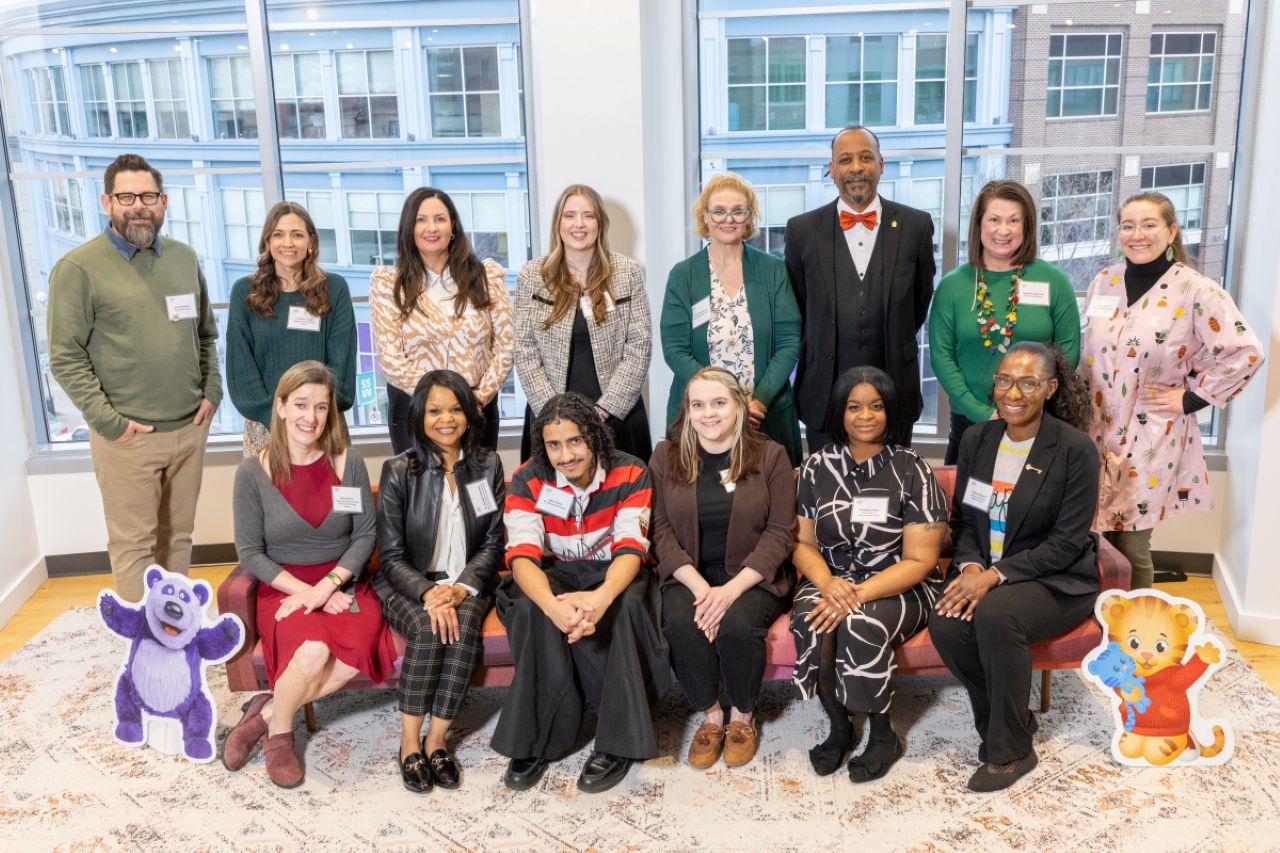
Fred Rogers Productions Names Trying Together Early Childhood Intervention Coordinator to Advisory Board

Fred Rogers Productions has named an early childhood intervention coordinator for Trying Together to its recently launched Education Impact Advisory Program.

Learn More

In April, the nonprofit children’s media company named after the iconic TV personality Mister Rogers kicked off the new initiative, which is composed of education professionals who provide insights into early childhood learning contexts, offer feedback on the media company’s content and resources, and co-create new educational engagement activities that are aligned with the company’s mission.

Kelly Palko, an early childhood intervention coordinator for Trying Together, was recently added to the 15-member cohort.

“Being a part of the Fred Rogers Productions Education Impact Advisory is both an honor and an incredible opportunity to continue the legacy of a person who believed deeply in the power of meaningful connections,” Palko said. “As an educator and a parent, I am inspired by Mister Rogers’ commitment to helping children feel seen, valued, and understood – and I am grateful to play even a small role in carrying those values forward.”

Advisors in the program will serve through July 2027. The cohort will interact with the teams behind the company’s award-winning series, such as “Daniel Tiger’s Neighborhood,” “Donkey Hodie,” and “Alma’s Way” to ensure the company’s content meaningfully connects with and supports children, caregivers, and educators.

Advisory members include professional teachers and principals, curriculum experts, early childhood education specialists, librarians, and child care providers.

The advisory board will:

  • Take a deep dive into the company’s series and educational frameworks
  • Share real-time insight from their own professional experiences
  • Co-create new activities and resources inspired by the company’s content
  • Serve as ambassadors for Fred Rogers Productions’ content in their respective communities

Other advisory board members from the Pittsburgh region include Grace Evans, SOY Pittsburgh coordinator at the Latino Community Center; Tiffany Harkleroad, youth services manager at the Butler Area Public Library; and Caitlin Lucas, kindergarten teacher at Keystone Oaks School District.

Photo by Jorge Santiago, courtesy of Fred Rogers Productions.

News

July 2, 2026

Trying Together Names TT’s Toy Box Owner as June Advocate of the Month

Trying Together has selected Natika Proctor, owner of TT’s Toy Box in McKees Rocks, as its June advocate of the month.

Learn More

TT’s Toy Box is an early care and education program that also offers after-school and summer camp programs.

Proctor was recommended as Advocate of the Month by Larette McCoy, who works for Pittsburgh Area Community Schools at Sto-Rox Primary Center, because of her commitment to adding support at her program for children with developmental delays and disabilities.

She was also cited for her presence at community events, personal investment in her work, sending her staff to local events, engaging local legislators, leading with kindness, working well with parents, and being a community leader.

“Natika does an amazing job championing joy in her program, whether it’s preschool graduation or the yearly kids’ ‘prom,’” said Valerie Williams, Trying Together’s kindergarten transition program director. “Natika is constantly thinking of new ways to connect with the community, welcome families, and foster joy and play in her school community.”

Proctor said she became an advocate because she was a single mother of three children who believed that the care they were receiving wasn’t adequate. She said that TT’s Toy Box aims to provide a quality education for every child and family who pass through its doors.

“We advocate for every child’s right to learn, grow, and succeed,” she said. “We are committed to supporting your children and families by fostering inclusion, promoting equality, and also ensuring access to resources that help each child to their fullest potential.”

News

July 1, 2026

OCDEL Announces Requirements for Programs Using Keystone STARS – Alternate Pathways

Pennsylvania’s Office of Child Development and Early Learning’s (OCDEL) Bureau of Policy and Professional Development has released an announcement regarding requirements for programs using an OCDEL-approved Alternate Pathways in Keystone STARS.

Learn More

The announcement includes guidance on:

  • Changes to the requirements for OCDEL-approved Keystone STARS – Alternate Pathways programs
  • Addition of Cognia as an OCDEL-approved Keystone STARS – Alternate Pathway
  • Initial steps for programs using an OCDEL-approved Keystone STARS – Alternate Pathway
  • Designation requirements for OCDEL-approved Keystone STAR Alternate Pathway programs
  • Reminders for OCDEL-approved Keystone STARS-Alternate Pathway programs
  • Next steps

Keystone STARS, the state’s quality rating and improvement system, promotes quality in early childhood education programs for children and families. OCDEL recognizes that there are state and national accrediting organizations that similarly serve to ensure early childhood education programs provide high quality and enriching programming to children and families.

To give credence to these organizations and their accreditation standards of quality, OCDEL offers several approved Keystone STARS – Alternate Pathways. Programs that are accredited  through an OCDEL-approved Alternate Pathway and wish to use the pathway for a Keystone STARS designation must apply for an initial Alternate Pathway designation in the Professional Development (PD) Registry system.

Additionally, these programs are required to complete annual renewals of their Alternate Pathway designation in the registry system. Failure to do so will result in the program dropping to a STAR 1.

The full announcement is available on The Pennsylvania Key.

News

June Recalls on Children’s Products

Parents and caregivers should be aware of several child-related products recalls.

Learn More

Below is a list of June recalls collected from the following federal agencies: the Consumer Product Safety Commission, the Food and Drug Administration, and the National Highway Traffic Safety Administration.

  • Nara Organics recalled all lots of its Nara infant formula because of a possible health risk or Clostridium botulinum contamination. Infant botulism is a rare but potentially fatal illness that presents a serious threat when spores are ingested and colonize the intestinal tract, producing botulinum neurotoxins in the immature gut of infants. Affected infants can present the following signs: constipation, poor feeding, drooping eyelids, sluggish pupils, low muscle tone, difficulty sucking and swallowing, weak or altered cry, generalized weakness, respiratory difficulty, and respiratory arrest.
  • Little Grape Land recalled its nursing pillows due to risk of suffocation for infants. The pillows violate mandatory safety standards for nursing pillows and infant support cushions because they can obstruct an infant’s breathing, posing a serious risk of injury or death from suffocation.
  • Tiny Land recalled its children’s play tents because the tents’ fiberglass poles can shed fibers, posing an injury risk of skin and eye irritation. Consumers can contact Tiny Land to receive a free repair kit with a set of four plastic replacement poles, including shipping.
  • TOMY recalled its Boon NURSH 8 oz reusable baby bottles because they pose a choking hazard. The hard plastic outer shell can buttle or partially peel off, resulting in loose pieces of film-like plastic that pose a choking hazard.
  • LiKee recalled its pull-string teething toys because they pose choking hazards. The toys have silicone strings that are smaller and longer than permitted. The strings can reach the back of children’s throats and become lodged, posing a serious risk of respiratory distress and choking.
  • The Black Sheep Fam recalled its children’s pajamas due to potential burn hazards. The pajamas violate mandatory flammability standards for children’s sleepwear, posing a risk of serious burn injuries or death to children.
  • Timechee recalled its changing table dressers because they pose a risk of injury or death from tip-over or entrapment. The dressers are unstable if not anchored to the wall and violate mandatory safety standards.
  • School Specialty recalled its tip restraint kits that are included in Childcraft Furniture because they pose a risk of injury or death from tip-over. The kits can break or degrade, posing tip-over and entrapment risks. 
  • Joyin recalled its Sloosh dive sticks because they pose a serious risk of injury from impalement. The sticks violate a federal ban because they exceed the compress limit. In shallow water, children may fall or land on a dive stick, resulting in serious piercing injuries. Facial and eye injuries are also possible when children attempt to retrieve the sticks underwater.
  • 7-Drawers recalled its dressers due to risks posed by tip-over and entrapment. The dressers are unstable if they are not anchored to the wall, posing risk of serious injuries or death to children.
  • GOPO Toys recalled its pull-string teething toys because they pose a risk of injury or death from choking. The toys’ silicone strings are smaller and longer than permitted, and can reach the back of children’s throats, becoming lodged and posing a serious risk of respiratory distress or choking.
  • Joolz recalled its car seat adapters can fail to properly attach to the stroller, which may allow the car seat to fall and poses a risk of serious injury from a fall.
  • SHEIN Distribution Corporation recalled its Michley children’s pajamas because they violate mandatory flammability standards for children’s sleepwear, posing a risk of serious burn injuries or death.
  • BABESIDE recalled its doll and stroller children’s toys because they pose a risk of choking. The toys violate a small parts ban because they are intended for children under age 3 and the small pacifier poses a deadly choking hazard to young children. Additionally, the eyes on the plush bear can detach and pose a choking hazard.
  • Veseacky recalled its pajama sets because they violate mandatory safety standards for children’s sleepwear, posing a risk of serious injury or death to children from burns.
  • CooCooBaby recalled its baby loungers because they pose a risk of suffocation and fall hazards. The loungers violate mandatory standards for infant sleep products because the sides are shorter than the minimum side height limit to secure the infant, the sleeping pad’s thickness exceeds the maximum limit and poses a suffocation hazard, and an infant could fall out of an enclosed opening at the foot of the lounger or become entrapped. The loungers do not have a stand, posing a fall hazard.
  • Montessori has recalled its Busy Board toys because they have magnets that can detach, posing a deadly ingestion hazard. When the high-powered magnets are swallowed, they can attract each other and other metal objects and become lodged in the digestive system. This can result in perforations, twisting, blocking the intestines, blood poisoning, or death. 
  • Raychy recalled its children’s light sneakers because they pose a risk of battery ingestion by children. The sneakers’ lithium coin batteries can be easily accessed by children, posing an ingestion hazard. The packaging and product also do not have required warnings. When button cell or coin batteries are swallowed, they can cause serious injuries, internal chemical burns, or death.
  • Shield Line has recalled its MedPride baby oil bottles because they pose a risk of child poisoning. The baby oil contains low-viscosity hydrocarbons but are not in child-resistant packaging as required by law. If ingested, there is a risk of serious injury or illness from poisoning. Also, petroleum distillates can get into the lungs, causing chemical pneumonia or pulmonary damage, which can be fatal.
  • Yamazuki recalled its youth all-terrain vehicles (ATVs) because they are missing brake lights, reducing visibility of the ATV to other vehicles, posing a deadly crash hazard.
  • Honlyne recalled its LED party favors because they pose a risk of battery ingestion. The battery compartment within the light-up products contains button cell batteries that can be easily accessed by children. When button cell or coin batteries are swallowed, they can cause serious injuries, internal chemical burns, and death.
  • Kith Retail recalled its children’s loungewear sets because they violate mandatory flammability standards for children’s sleepwear, posing a risk of serious burn injuries.