Child Mind Institute Resources Address Promoting Good Sleep Habits for Children

News

October 12, 2026

Child Mind Institute Resources Address Promoting Good Sleep Habits for Children

There are many health-related habits that are debated upon regarding children’s well-being – but it is agreed upon across the board that a good night’s sleep is very important.

The Child Mind Institute has put together a series of resources on the importance of promoting good sleep habits for children and includes a discussion on how caregivers are increasingly turning to melatonin to help children who have trouble falling asleep.

Learn More

In the resources, the institute discusses how frustrated parents are using melatonin with more frequency to help children fall asleep. The sleep aid is available in drug stores without a prescription, is marketed as “natural,” and appears to offer a low-risk solution. It can be especially helpful for children with autism or ADHD and has few side effects.

However, experts caution that there is little data on long-term use and, as a supplement, it is not tightly regulated. Also, studies have shown that many of the pills and gummies contain substantially more (or less) melatonin than what it says on the bottle.

The Child Mind Institute’s resources discuss how sleep aids would not likely be helpful if sleep trouble is a symptom of anxiety or depression, which would need to be addressed separately. There is also an article about the importance of establishing consistent evening routines to help children learn to calm down before bedtime.

The Child Mind Institute’s resources include:

More than 40,000 Speak Up for Head Start!

News

October 9, 2026

More than 40,000 Speak Up for Head Start!

In early August, early childhood education advocates sounded the alarm that Head Start was facing its greatest threat in decades. 

The federal government proposed significant changes to Head Start that would affect class sizes, staffing standards, support for children with disabilities, and more. These changes would impact approximately 700,000 children and families who benefit from this program and make access to Head Start more challenging. 

In a little over two months since these proposed changes were announced, an incredible 40,087 public comments were posted in response. This sends a message loud and clear: our communities depend on Head Start. Backed by more than 60 years of proven success, Head Start provides quality, comprehensive care and education that has lasting impact for children, families, and communities. 

Thank you to every educator, parent, and concerned community member who took the time to share their story and speak up on behalf of Head Start. Your voice matters!

Trying Together submitted a public comment in strong opposition to the proposed changes, encouraging the Department of Health and Human Services to withdraw the proposal in its entirety and preserve the Head Start Program Performance Standards.

Our Response

We invite you to read our full comments. Here are some highlights that demonstrate why we are opposed to the proposed changes: 

  • The proposed changes diminish the quality and safety of the programs and wither the trust and security of families.
  • Making such sweeping changes to the Head Start program without adequately consulting with Head Start families, program leaders, local governments, or experts, demonstrates an alarming lack of concern for people who will be most impacted by the Proposed Rule.
  • Larger class sizes would: 
    • Result in fewer adult-child interactions and less individualized attention.
    • Increase safety risks
    • Worsen working conditions for early educators.
  • Children with disabilities would have fewer federal protections.
  • Some families would experience new barriers to access.
  • Fewer consistent comprehensive health requirements means delays in health and developmental screenings, health disparities, and inconsistent information and support for families.
  • The health of pregnant women would be undermined and existing inequities exacerbated
  • Early Head Start home visiting services would be reduced in quality and scope.
  • Dual language learners would lose multilingual support with English-only requirements.
  • There would be less consistency from community to community. 

Before any action is taken, all substantive comments must be reviewed. Check back for more information.  

OCDEL to Award Funds for Implementation or Continuation of Family Support Programs

News

October 7, 2026

OCDEL to Award Funds for Implementation or Continuation of Family Support Programs

Pennsylvania’s Office of Child Development and Early Learning’s (OCDEL) Bureau of Early Intervention Services and Family Supports has announced a request for applications to award funds to qualified applicants for the implementation or continuation of Family Support Programs.

The programs consist of community-based, high-quality evidence-based home visiting (EBHV) services as well as three categories of enhancements to these services:

  • Evidence-informed programs
  • EBHV model enhancements
  • Program enhancements 

Family Support Programs help families to access a variety of supports and services, including formal supports (EBHV and parenting classes), informal supports (providing resources and connecting families to services in the communities), and a community system of services that promote the well-being of families and their children. 

Such services can take many forms, depending on the family’s strengths and needs, but the goal is to help caregivers to enhance their skills and resolve problems to promote optimal child development.

Applicants must apply to implement at least one EBHV model, and may apply to implement one or more enhancements. For more information, visit the eMarketplace website.

Map Your Early Care and Education Career with New Interactive Tool

News

Map Your Early Care and Education Career with New Interactive Tool

Early care and education professionals can now map out their own unique career trajectory through a new interactive tool from Trying Together designed to simplify career pathways in early childhood education.

Developed through the Institute for Early Childhood Career Pathways, the Southwest Pennsylvania Child Care Career Map enables users to learn more about jobs in the field and determine their next career steps. Each career description included on the map details salary, skills and requirements, and training programs to help professionals reach their career goal. 

The map is useful for professionals at all stages of their career – from students and new-to-the-field educators to directors and career advisors.

Early learning programs can benefit from using the career map with staff. Helping staff map out their career not only benefits the educator, but can also strengthen a program as a whole. 

When programs support the career goals of their staff, they can:

  • Improve staff retention
  • Increase employee engagement
  • Strengthen succession planning
  • Determine who is interested in moving into leadership roles and how can they can get there
  • Encourage continuing education
  • Create transparent career pathways
  • Foster a culture of professional growth

To begin mapping your career, visit Trying Together’s interactive tool. For questions on how to use the map, email institute@tryingtogether.org. 

About the Institute for Early Childhood Career Pathways

The Institute for Early Childhood Career Pathways connects early educators to professional learning partners; certification, credentialing, degree, mentoring, and workforce development programs; and a variety of other advancement opportunities as they work their way through Pennsylvania’s Early Childhood Education (ECE) Career Pathway.

Through the institute’s offerings, Trying Together is dedicated to supporting new and current early care and education professionals in Southwestern Pennsylvania by centralizing workforce recruitment, placement, retention, and ongoing professional development.

APOST Accepting Applications for 2026-27 Managers Cohort Through October 20

News

APOST Accepting Applications for 2026-27 Managers Cohort Through October 20

Those interested in taking part in Allegheny Partners for Out-of-School Time’s (APOST) 2026-27 managers cohort must submit an application by 5 p.m. on Tuesday, October 20.

APOST offers the cohort to out-of-school time program managers who are looking to gain knowledge and skills that will allow them to expand their impact within their organization and advance professionally within the field. 

Over the course of six months, cohort members participate in monthly workshops focused on various topics relating to out-of-school time program leadership. 

The program culminates with participants sharing an impact project, which is a presentation on their reflections, takeaways and action steps from their time in the program, and how they intend to bring it back to their organizations.

Participants will:

  • Develop leadership skills that focus on growth within the field
  • Strengthen professional networks through mentorship and peer collaboration
  • Gain access to resources, tools, and templates from subject area experts and collaboration among cohort members

The program runs from the late fall through the spring and is intended for individuals who identify as newer managers within out-of-school time programs. Cohort learning consists of several sessions, including a closing celebration, covering a variety of topics.

Applications are available on APOST’s website.

Sesame Workshop Shares Tips for Reading to Children That Build Language and Promote Bonding

News

October 6, 2026

Sesame Workshop Shares Tips for Reading to Children That Build Language and Promote Bonding

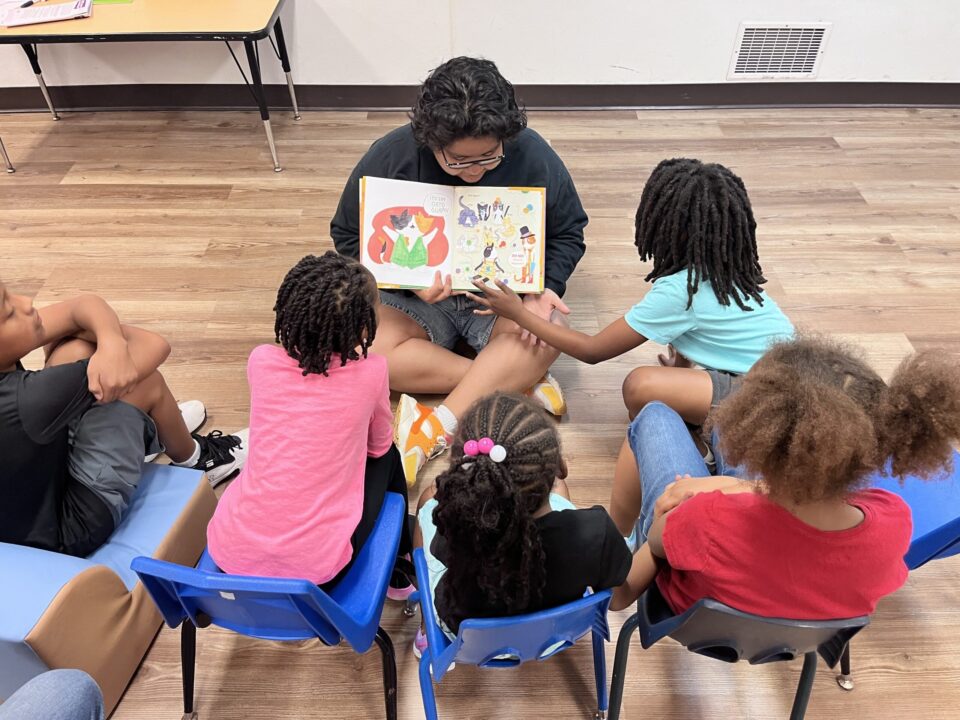
Reading with a young child is not only an opportunity to help build their language and literacy skills, but also a time for caregivers to bond with their child.

Sesame Workshop has shared some tips for shared reading with children from birth to age 3.

Learn More

Sesame Workshops’s tips include everything from creating a reading ritual and building good reading habits in children to letting children lead the way during reading time.

Caregivers should create a reading ritual to help children feel safe and connected. This includes:

  • Choosing a consistent reading time – such as every night before bed – so reading together brings comfort and connection.
  • Choosing a special reading spot, which can be as simple as a dedicated space for reading but can also include such items as pillows or stuffed animals.

To build good reading habits, caregivers should let children see them read and interact with books the way good readers do. Tips include:

  • Showing a child how to interact with books and emphasizing the way you turn each page, run your finger under the words as you read, and notice fun details in the picture.
  • Showing how you make reading fun by reading with funny voices and using gestures to mimic or act out what characters are doing.
  • When you read familiar books, invite your child to say the words that they know along with you.
  • Choosing books that can help your child build the reading skills they’ll need later. Rhyming books help children to hear the sounds in words, while books with vibrant, detailed pictures help them learn to pause and notice what’s in a book.

To allow a child to lead the way during reading together, caregivers should honor their child’s unique reading preferences and interests. Some tips include:

  • When it’s reading time, provide lots of book options and let your child grab for an old favorite or one that catches their eye.
  • Give your child time to explore the pictures on each page and notice the details that interest them. Name and describe those details – and make sure to share in their excitement.
  • Point out how parts of the book are like what they’ve seen and experienced. Are there characters that remind you of people you know? Or have they ever been in the same situation or felt the same feelings as the characters? Talk to your child about these connections.

To learn more, read Sesame Workshop’s Tips for Shared Reading with Children Birth to Three.

Report: Most Caregivers of Allegheny County Afterschool Students Say Programs Offer STEM Learning

News

October 5, 2026

Report: Most Caregivers of Allegheny County Afterschool Students Say Programs Offer STEM Learning

A recent report by Allegheny Partners for Out-of-School Time (APOST) and the Afterschool Alliance found that 92% of caregivers of Allegheny County afterschool students said their child’s afterschool program offers STEM (science, technology, engineering, and math) learning.

This number is up from 76% of caregivers who said the same thing in 2014. Additionally, 51% of those whose child’s program offers STEM reported that their child engages in STEM learning after school at least twice per week. However, nearly four in five Allegheny County children – or 92.451 children – whose parents want afterschool programs for them are not enrolled.

STEM Report

The report, Afterschool STEM Takes Off in Allegheny County, is based on survey responses from 30,515 U.S. households, with 456 households with 682 Allegheny County children screened.

Afterschool programs in the county are educating students on a variety of STEM topics, according to caregivers, including:

  • 89% said their child’s program offers engagement in math
  • 83% science
  • 81% engineering
  • 79% computer science
  • 78% tech

Five in six caregivers said afterschool programs help children to gain skills and interest in STEM, such as Tree Pittsburgh’s youth programs, which offer environmental education programming focused on educating youth and families about the benefits of trees in their communities.

Support for afterschool programs in Pennsylvania has increased through the Building Opportunity Through Out-of-School Time (BOOST) program. In 2024, the state invested $11.5 million in OST programs to 46 providers across the state, 10 of which were located in Allegheny County. The investment was renewed at $11.5 million in the 2025-26 state budget.

National Findings

In most respects, Allegheny County findings mirrored national survey findings, such as:

  • Increases in STEM in afterschool from 2014 to 2025 were seen in every state.
  • Children in families with low incomes are less likely to have multiple exposures to STEM in afterschool each week than those whose families have higher incomes.
  • Rural caregivers report fewer computer science and technology opportunities in afterschool.
  • Two in three parents with children in afterschool programs (65%) value STEM extremely or somewhat when selecting a program – but there are differences by race: Native American parents (73%), Black and Hispanic parents (70%), and Asian-American caregivers (68%) place greater importance on STEM in afterschool than White families (62%).
  • Caregivers of boys and girls report similar levels of access to STEM in their child’s afterschool program, but caregivers of girls prioritize computer science, technology, and engineering less than caregivers of boys.
  • Caregivers prioritize STEM, and specifically computer science, more as their children age.

“This study has really good news for Allegheny County,” said APOST Executive Director Karen Dreyer. “In an age when science and technology continue to shape and reshape our lives, we must invest in programs to support young people to learn, explore, and create in the STEM fields, so they gain the skills and experience needed to lead our communities into the future.”

Resources Discuss How Strep Throat Can Trigger OCD in Children

News

Resources Discuss How Strep Throat Can Trigger OCD in Children

A child developing strep throat or other infections is stressful enough for caregivers – but many are unaware that such illnesses can occasionally cause a child to develop severe obsessive-compulsive disorder (OCD) or other debilitating symptoms overnight.

In a new series of resources, the Child Mind Institute discusses conditions known as PANS and PANDAS that can cause children as young as 3 or 4 years of age to refuse to eat or develop tics, depression, extreme rage, or even suicidal thoughts and behaviors.

Learn More

The link between strep infections and these acute-onset symptoms was identified about three decades ago and thought to be caused by the immune system erroneously attacking healthy brain cells. But many in the medical establishment still regard the connection with skepticism.

As a result, caregivers might face terrifying changes in their children and struggle to find effective treatment or doctors who even believe them.

The Child Mind Institute’s resources on PANS and PANDAS discuss how both conditions share the same systems, but the term PANDAS is used if a strep infection is involved and PANS if it is associated with other types of infections, such as mono, the flu, or pneumonia, or in cases where no cause is identified.

The resources provide the list of symptoms, a discussion on the debate in the scientific community, and the latest information on treatment. There are also resources on OCD, including a piece on how it can show up in school as children try to hide compulsive behaviors.

The resources include:

Application Process Open for Trying Together’s 2027 Home-Based Child Care Course

News

October 1, 2026

Application Process Open for Trying Together’s 2027 Home-Based Child Care Course

For those interested in opening a home-based child care business, Trying Together is offering a course starting in January that includes information about best business practices, opening a small business, child care licensing, Keystone STARS, and developmentally appropriate practices.

About

The Home Based Child Care Course will begin January 2027. While exact dates are not yet available, those interested are encouraged to apply. The cohort will meet weekly from 6:30–8:30 p.m. in a hybrid format – some in person and others virtual – but specific dates are yet to be determined. 

Course participants will receive:

  • Start-up mini-grants
  • Peer mentoring from local child care business owners
  • Support to become state licensed and participate in Keystone STARS

Apply now for the 2027 course. Questions about the program, applications, or eligibility should be directed to HBCC@tryingtogether.org.

PA DHS Announces Increase to SNAP Income Limits and Maximum Benefits

News

PA DHS Announces Increase to SNAP Income Limits and Maximum Benefits

Pennsylvania’s Department of Human Services (DHS) announced increases to the Supplemental Nutrition Assistance Program’s (SNAP) income limits and maximum benefits starting on October 1 following an annual adjustment to account for food costs and inflation.

The changes will benefit all SNAP recipients and there will be no decrease in benefits because of the updates, the DHS said.

The USDA’s Food and Nutrition Administration (FNA) made the changes as part of an annual reevaluation of SNAP’s income eligibility standards, the maximum benefit amount, and the minimum benefit amount. The adjustment is a routine, annual process.

The average increase for most SNAP recipients will be $18. 

“SNAP is the nation’s most important anti-hunger program,” state DHS Secretary Dr. Val Arkoosh said. “SNAP helps more than 1.7 million Pennsylvanians afford food for themselves and their families, and PA DHS will always help Pennsylvanians facing food insecurity keep food on their tables.”

The new SNAP federal poverty income guideline income limits and maximum benefit amounts a household can receive effective October 1 through September 30, 2027 are:

  • Household of 1: $2,660 (maximum monthly income), $306 (maximum benefit amount)
  • Household of 2: $3,608 (maximum monthly income), $562 (maximum benefit amount)
  • Household of 3: $4,554 (maximum monthly income), $808 (maximum benefit amount)
  • Household of 4: $5,500 (maximum monthly income), $1,023 (maximum benefit amount)
  • Household of 5: $6,448 (maximum monthly income), $1,217 (maximum benefit amount)
  • Household of 6: $7,394 (maximum monthly income), $1,463 (maximum benefit amount)
  • Household of 7: $8,340 (maximum monthly income), $1,616 (maximum benefit amount)
  • Household of 8: $9,288 (maximum monthly income), $1,841 (maximum benefit amount)
  • Household of 9: $10,236 (maximum monthly income), $2,066 (maximum benefit amount)
  • Household of 10: $11,184 (maximum monthly income), $2,291 (maximum benefit amount)
  • Each additional member (through household of 17): + $948 (maximum monthly income), + $225 (maximum benefit amount)

Factors that could contribute to a household’s higher SNAP allowance and income limits in Pennsylvania include household size and monthly income. More information on these benefit levels is available on the DHS’ website.

Changes to SNAP Utility Allowances

As of February 9, due to updated federal requirements, SNAP applicants and recipients must provide proof of their shelter costs and utility responsibility for their current residence. Applicants and recipients must provide proof of these costs at application and renewal if they are not already on file with the DHS. 

SNAP households will need to submit new documentation if they move to a different residence or if the costs or their responsibility to pay changes.

Certain SNAP recipients are now subject to SNAP work requirements and time limits. Pennsylvanians need to comply with work requirements to continue to receive SNAP unless they meet an exemption. The expanded work requirements apply if someone:

  • Is between 18-64 years old
  • Does not have a dependent child under 14 years old
  • Is considered physically and mentally able to work

Additionally, being a veteran or a current or former foster youth, ages 18-24 will no longer be an exemption from work requirements.

For more information on documentation and work requirements, view the state’s SNAP update announcement.