Pennie Enrollment Deadline for Jan. 1 Coverage This Week

News

December 10, 2024

Pennie Enrollment Deadline for Jan. 1 Coverage This Week

Pennie’s open enrollment for health insurance will remain open until mid-January – however, those who need coverage for January 1 must enroll no later than December 15.

Learn More

Pennie’s open enrollment began in early November and will close on Wednesday, January 15. Those who do not sign up during the enrollment period would have to wait until the next period, except in limited circumstances known as special enrollment periods. 

Special enrollment periods include qualifying life events – such as losses of coverage, changes in households (including getting married or divorced, the birth of a child, or a death in the family), changes in residence, or other events (gaining immigration status, for example).

Those who want their coverage to begin on Wednesday, January 1 would need to sign up by Sunday, January 15.

For more information on eligibility, required documents, and how to enroll, visit Pennie’s website.
Trying Together Community Honors Advocacy Fellows

News

Trying Together Community Honors Advocacy Fellows

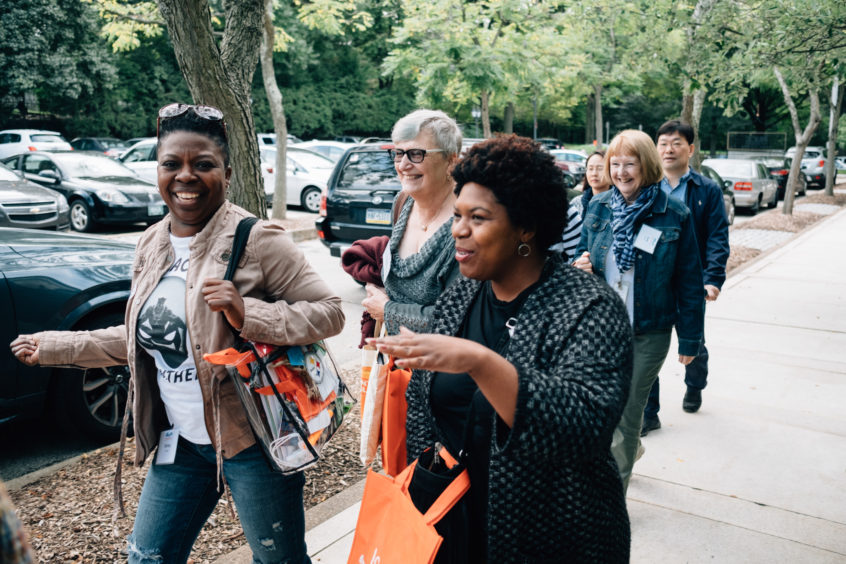
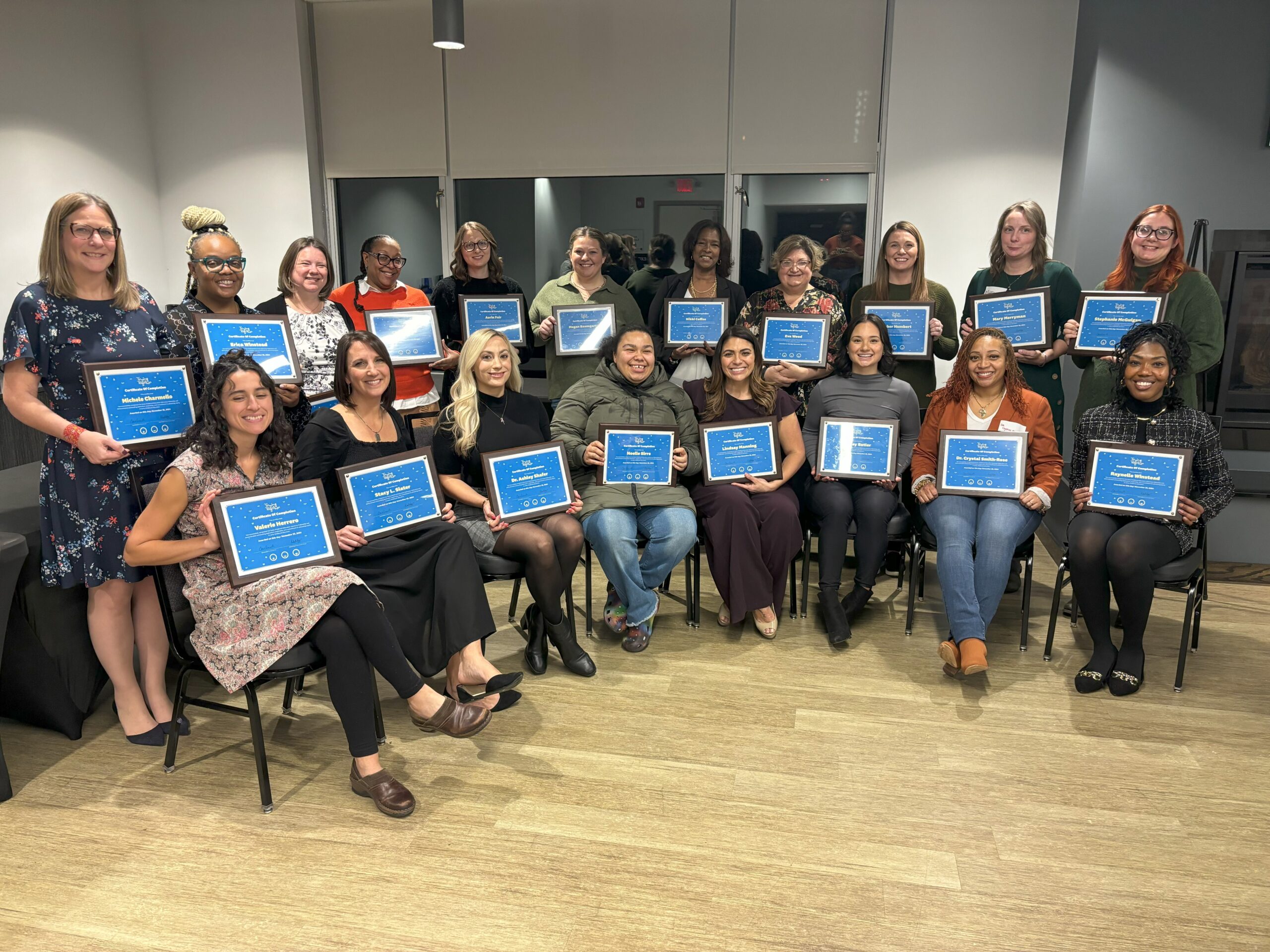
The Trying Together community recently held an event to honor the 22 fellows who completed their 11-month journey of advocacy, creativity, and dedication through the Early Childhood Education Advocacy Fellowship. 

A total of 77 attendees gathered to celebrate the fellows’ accomplishments and reflect on their work. The fellows showcase projects that addressed early intervention, staffing recruitment, child care advocacy, mental health support, and more.

The fellows demonstrated their creativity and commitment to driving change through posters, brochures, and PSA videos they created. They also shared their next steps in advocacy, highlighting how their passion and hard work will continue to make an impact beyond the fellowship.

“A huge ‘thank you’ to our fellows for their unwavering dedication and to everyone who made this night so memorable,” said Hailee B. Roye, Trying Together’s policy and practice manager. “Your efforts have shown the power of advocacy and the importance of building a brighter future for children, families, and educators.”

About the Fellowship

The Early Childhood Education Advocacy Fellowship is committed to equipping early childhood professionals, parents, families, and caregivers of young children with the knowledge, skills, and resources to effectively advocate for policies that enhance the quality and accessibility of early care and education. 

Representative from Rep. Abney’s Office Discusses Early Childhood Needs at The Learning Loft

News

Representative from Rep. Abney’s Office Discusses Early Childhood Needs at The Learning Loft

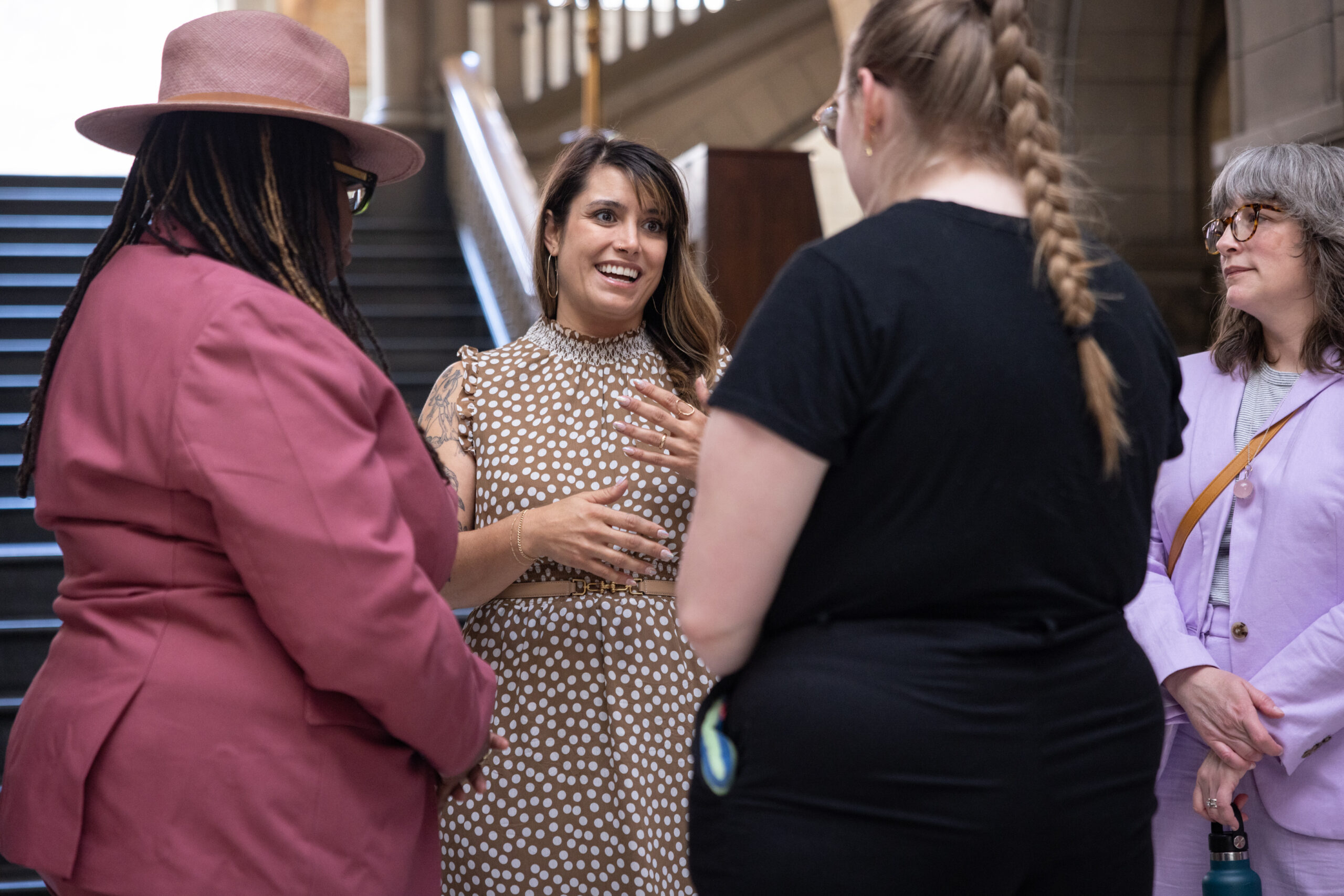
A representative from the office of state Rep. Aerion Abney, D-19th, visited The Learning Loft this week to discuss the role of early childhood education.

Learn More

Natali Lara-Jimena, Abney’s constituent services advisor, visited the early childhood education on Centre Avenue, which is in the state representative’s district.

Her visit provided a first-hand glimpse into the vital role that early childhood educators play as the “workforce behind the workforce.” Amid an ongoing state staffing crisis and capacity challenges for early childhood education, Lara-Jimena’s engagement underscored the critical need for action and support.

Lara-Jimena met with educators, who discussed balancing the needs of children and families while navigating consistent underfunding and workforce shortages. 

The visit highlighted the importance of a proposed $284 million recruitment and retention initiative to help providers offer competitive wages and ensure the long-term sustainability of the early childhood workforce. 

The proposed funds would help to stabilize and strengthen the field by addressing urgent staffing needs, retaining skilled educators, and ensuring that children and communities could rely on getting high-quality care.

A+ Schools Releases Annual Report to the Community on Public School Progress

News

A+ Schools Releases Annual Report to the Community on Public School Progress

A+ Schools Pittsburgh has released its 2024 Report to the Community on Public Schools Progress. The report tackles issues that prevent every child from being successful in schools and covers such topics as racial economic segregation, absenteeism, unequal access to resources, and more.

Skills for Success

A+ Schools notes that children need knowledge and skills that will help them succeed in college or careers. It lists several conditions that must be met for this to occur:

  • Every community has a place where children can get to school safely and on time.
  • Every family has what they need – from healthcare and child care to housing and work – so children can come to school ready to learn.
  • Every school is a place where all students and staff feel they belong and are excited to be.

Executive Summary

In its executive summary, A+ Schools cites racial economic segregation, unequal access to resources, and disparate opportunities for enrichment and academic success as issues that prevent children from succeeding.

Additionally, system issues that impact state and local measures of school success include:

  • Chronic absenteeism (how many students miss more than 10% of school days)
  • Suspensions (how many students miss school due to disciplinary practices)
  • Academic growth (how many schools grew student achievement as measured by the Pennsylvania Value-Added Assessment System)
  • Academic proficiency (or, how many students meet state and national grade level standards on tests)

Next Steps

The report also examines student readiness for college or careers once they graduate. The measures it lists that provide a sense of whether students will be ready for the next step include:

  • College-ready GPA (how many students have a GPA of 2.8 or higher)
  • AP exam taking and AP and SAT scores
  • Graduation (how many students complete high within four years)
  • College and trade school completion (how many students complete one of these schools within six years of graduation from high school)

Figures

The report’s executive summary breaks down the numbers on some of the aforementioned issues. 

Some of the key findings in the report relating to system issues, measures for success or readiness include:

  • Approximately 2,402 Pittsburgh public school students have been suspended at least once.
  • The ratio of students to teachers is 11:1
  • A total of 80% of teachers believe that their school is a good place to work and learn.
  • Only 14% of public school teachers are teachers of color.
  • About 32% of students are chronically absent.
  • In 2023, 86% of students had graduated within four years.
  • About 27% of 2018 graduates completed a college or trade school program within six years of graduating.

The entire report is available on A+ Schools Pittsburgh’s website.

OCDEL Announces CCW Base Payment Rate Increase for DHS Certified Providers

News

December 9, 2024

OCDEL Announces CCW Base Payment Rate Increase for DHS Certified Providers

The Pennsylvania Office of Child Development and Early Learning’s (OCDEL) Bureau of Policy and Professional Development has released an announcement on an increase to Child Care Works (CCW) base payment rates for Department of Human Services (DHS) certified providers.

Learn More

Effective January 1, the subsidy base rates – also known as the Maximum Child Care Allowance (MCCA) – will be increased to the 75th percentile. The base payment rate increase applies to: 

  • All DHS certified child care providers
  • Early Learning Resource Centers (ELRCs)
  • OCDEL Early Learning Resource Center program representatives

The announcement replaces ELRC Announcement 23 #01 – Increase to Child Care Works Base Payment Rates.

Background

The CCDBG Act requires lead agencies to certify that rates are sufficient to ensure eligible children have equal access to child care services. The benchmark for equal access established by the Administration for Children and Families Office of Child Care (ACF OCC) is the 75th percentile of the current child care market. OCC considers payment rates set at the 75th percentile or higher as providing equal access.

Increasing the CCW base rate incentivizes additional provider participation in CCW. It also helps child care providers who participate in the program enhance services, invest in staff development, compensation, and promote overall quality in child care programs. 

Next Steps

The next steps for DHS certified child care providers on updating pay rates include:

  • Updating and communicating private rate pay changes on family agreements or contracts, website, and handbooks as applicable
  • Completing Appendix C-1 ELRC Subsidized Child Care Provider Reported Rates
  • Sending the completed Appendix C-1 along with verification of the DHS certified child care provider’s published rates to your ELRC by January 31 to receive the update rate
  • Directing any questions to your ELRC

The next step for ELRCs include:

  • Reviewing and sharing this information with appropriate staff
  • For any DHS certified child care providers returning completed Appendix C-1 and their published rates, entering updated rates into PELICAN CCW and converting rates for all DHS certified child care providers with an effective date of January 1 if verification is received by January 31.
  • Generating and sending all DHS certified child care providers Appendix C-2 ELRC Subsidized Child Care Provider Payment Rates
  • Directing any questions to your program representative

More information on the increased rates can be found on The Pennsylvania Key website. Information on Pennsylvania’s Maximum Child Care Allowance daily rates are also available on that website.

Mothers Encouraged to Apply for New Beacons of Hope Community Leaders Program

News

Mothers Encouraged to Apply for New Beacons of Hope Community Leaders Program

Mothers and caregivers who are looking to make positive changes for their families and communities are encouraged to apply for the 2025 Volunteer New Beacons of Hope Community Leaders Program.

Learn More

The leadership program is aimed at mothers and caregivers who will join with MomsRising to build on-the-ground power and enact positive change for their families, communities, and the future of the United States.

The volunteer program develops confidence and advocacy skills as each participant mobilizes her local community to take action. New Beacon leaders will receive training and other skills as they join a national network of mothers who coordinate with and support each other to influence policy making and fight for change.

Each volunteer will:

  • Build and lead her own “hub” of volunteers, drawing from personal networks of family, friends, and neighbors
  • Organize one or more in-person or online events or actions from a list of suggested activities or in consultation with MomsRising; examples include postcard writing parties, constituent meetings with members of Congress, or tabling at a farmer’s market
  • Undergo a program orientation for education and networking as well as participate in monthly meetings for additional training and community building
  • Receive a toolkit with items to help them build their hubs 
  • Offered a small advance volunteer reimbursement stipend to defray volunteering costs
  • Awarded a certificate of achievement at the successful completion of the program

The deadline to apply is Monday, Jan. 6. MomsRising will begin to review applications in December with follow-up interviews. Acceptances will be decided by late January.

Those interested in the initiative can apply online.

Allegheny County Council Passes Negotiated Budget, Crucial Funding Preserved

News

December 4, 2024

Allegheny County Council Passes Negotiated Budget, Crucial Funding Preserved

County Executive Sara Innamorato and Allegheny County Budget Chairman Robert Palmosina announced December 3 that they had jointly agreed on a negotiated budget that will result in a 1.7 millage increase and a balanced budget for 2025.

The County Council voted 10-5 to pass the negotiated budget agreement. This included preserving funding for child care services such as the Allegheny Child Care Matters (ACCM) program to help families pay for child care and for many other crucial human services such as family support centers.

Trying Together is deeply grateful for the support of our community – your quick action and advocacy highlighted the need to continue investing in child care for the well-being of our children, families, and the economic growth of our region. Today, we celebrate a significant win for children and families in our community. A heartfelt thank you to our county executive and the county council members who worked tirelessly to ensure the budget passed without cuts to human services.

Please take a moment to send a thank-you email to the county council members who voted yes for the budget:

Allegheny Council District Council Member Email 
At Large Bethany Hallam Bethany.Hallam@alleghenycounty.us 
District 1 Jack Betkowski Jack.Betkowski@alleghenycounty.us 
District 3 Anita Prizio Anita.Prizio@AlleghenyCounty.us
District 5 Dan Grzybek Daniel.Grzybek@alleghenycounty.us 
District 6 John F. Palmiere John.Palmiere@alleghenycounty.us 
District 7 Nicholas Futules Nicholas.Futules@alleghenycounty.us 
District 8 Michelle Naccarati-Chapkis Michelle.Chapkis@alleghenycounty.us 
District 10 DeWitt Walton DeWitt.Walton@alleghenycounty.us 
District 11 Paul Klein Paul.Klein@alleghenycounty.us 
District 12 Robert Palmosina Robert.Palmosina@AlleghenyCounty.us

Learn More

In addition to the increase, Innamorato and Palmosina agreed on several other items for the 2025 budget, including:

  • No layoffs of county employees
  • No cuts to county public safety departments or public works
  • Fully funding the Department of Human Services (including contributions from the county that will fully draw down every available state matching dollar)
  • Preserving funding for Emergency Rental Assistance and childcare programs that support working families 
  • Replenishing the county reserve funds to a serviceable level
  • A commitment from the administration or council to work together through 2025 to continue to identify efficiencies and ensure long-term financial sustainability

The budget also makes investments in education, transportation, and economic development by funding CCAC, PRT, and ACED programs for Main Streets, blight removal, attracting new companies, workforce development, first-time home buyers, and affordable housing.

For more information on the millage increase, read the press release from Allegheny County.

Trying Together Releases 2022-24 Donor Impact Report

News

Trying Together Releases 2022-24 Donor Impact Report

Trying Together released a donor impact report for 2022-24 that discusses various initiatives donors have helped support over the past two years. The report also highlights stories of impact and information on giving opportunities.

Strategic Goals

Trying Together’s mission is to support high-quality care and education for young children by providing advocacy, community resources, and professional growth opportunities for the needs and rights of children, their families, and the individuals interacting. It works in Southwestern Pennsylvania and takes its expertise and models to statewide and national models.

The donor impact report outlines numerous strategic goals that Trying Together has met over the past few years, including:

  • Expanding the Buzzword early literacy initiative in Allegheny County
  • Providing developmentally appropriate resources to caregivers of young children on various topics
  • Providing free diapers and infant formula to families in need
  • Launching The Institute for Early Childhood Career Pathways to support new and current early care and education professionals in achieving goals
  • Providing 9,670 hours of professional development to nearly 3,500 educators
  • Supporting 44 teachers to achieve their Level II Teacher Certification
  • Providing immediate support to families and early educators through the Rapid Response Team if a child is in danger of suspension or expulsion
  • Consulting with private industries to remove barriers such as child care access
  • Collaborating to increase investment in local child care programs
  • Starting the state’s first Provider Advisory Board with 40 early care and education professionals
  • Facilitating a fellowship for 22 early educators to train them in advocacy for the early childhood field and profession
  • Advising on legislation updates, resulting in fewer operational barriers for home-based child care providers in Pittsburgh
  • Implementing a multi-year development and fundraising plan increasing individual giving by 540%
  • Meeting and exceeding its Highmark Walk for a Healthy Community fundraising goal for the first time 
  • Having 100% Board of Directors participation in giving to Trying Together

Individual Giving

The report also provides information on how to donate to Trying Together. It lists the three donation levels:

  • Early Childhood Supporter: $5 per month or $60 annually
  • Early Childhood Sustainer: $10 per month or $120 annually
  • Trying Together Champion: $83.33 per month or $1,000 annually

Download the Donor Impact Report to see how Trying Together’s initiatives have impacted the community.

PD Registry Now Offering Spanish, Somali Translation

News

PD Registry Now Offering Spanish, Somali Translation

Pennsylvania’s Professional Development (PD) Registry is now offering translations in Spanish and Somali.

Learn More

To translate language on the website into Spanish or Somali, users can click on the dropdown menu beside their user’s name when they log in. When the user clicks on one of these languages, the PD Registry will translate to this language.

Not everything on the site will translate immediately due to the fact that AI would have to learn to translate it. The more users click on different areas of the site in a different language, the faster it will learn to translate.

About the PD Registry

The PD Registry is a technology system that functions as a workforce registry and increases the number of high-quality early childhood education programs by helping to develop and track a knowledgeable and skilled early childhood workforce.

The registry tracks an individual’s professional achievements and provides important data about the early childhood workforce to help raise the status and compensation for early childhood educators.

Any questions about the new translation services should email the PD Registry Help Desk at registry@pakeys.org. 

Nominate an Organization for the Engage Every Student Recognition Program

News

December 3, 2024

Nominate an Organization for the Engage Every Student Recognition Program

Those who benefit from out-of-school time programs can nominate an organization for the 2024-25 Engage Every Student Recognition Program.

Learn More

In 2023, the U.S. Department of Education and partnering organizations designed the Engage Every Student Recognition Program in regard to the Engage Every Student initiative. 

The initiative’s aim is to ensure that every student who wants a spot in a high-quality out-of-school time program gets one. High-quality is defined as meeting students’ social, emotional, mental, and physical health as well as their academic needs. 

Out-of-school programs – which take place after the school day or outside of the regular school year – include everything from comprehensive afterschool or summer-learning and enrichment programs to vacation academies, work-based learning programs, youth development programs, and experiential or service-learning programs.

Criteria

For an organization to be eligible for a nomination, it must be a:

  • Nonprofit organization working in collaboration with local education agencies
  • City municipality or local government entity working in collaboration with local education agencies
  • Local education agency working with a nonprofit organization or city/municipality or local government entity

Additional criteria can be found on the Engage Every Student Recognition Program page.

Those interested in nominating an organization must do so by Jan. 31. Eligible entities can self-nominate or be nominated.