NAEYC Releases Advocacy Toolkit Ahead of November Election

News

August 26, 2024

NAEYC Releases Advocacy Toolkit Ahead of November Election

The National Association for the Education of Young Children has released an Electoral Advocacy Toolkit that includes resources aimed at supporting and advancing nonpartisan advocacy efforts.

Learn More

The U.S. general election will be held on Tuesday, Nov. 5. On its website, NAEYC notes that early childhood educators play an important role in ensuring that child care and early learning are priorities for voters and candidates.

The association has released a toolkit that includes resources to support and advance nonpartisan electoral advocacy efforts. These include everything from signs to take to candidate town halls to ideas to help “get out the vote” in support of early childhood education and educators.

November Election

The toolkit notes that 33 U.S. Senate seats, 11 gubernatorial elections, thousands of state and local elections, and 435 U.S. House of Representatives seats will be on the ballot in November. As a result, more than 40 million children will be impacted by the election’s results.

On the toolkit’s web page, visitors can:

  • Register to vote
  • Discover what’s on the ballot
  • Find information about voting in each state
  • Check on voter registration status
  • Pledge to vote

To view the Electoral Advocacy Toolkit, visit NAEYC’s America for Early Ed website.

Other Resources

America for Early Education Nonpartisan Electoral Advocacy has also provided some resources to assist with Get Out the Vote efforts. These include:

Oct. 21 is the last day to register to vote before the election. You can register to vote, update registration and find information about voting on the state’s webpage.

Applications for a mail-in or absentee ballot must be received by your county election office by Oct. 29 at 5 p.m. County election offices must receive completed mail ballots by 8 p.m. on Nov. 5. A postmark by 8 p.m. on that date is not sufficient.

CDC Issues Update on Spread of Parvovirus B19 in United States

News

CDC Issues Update on Spread of Parvovirus B19 in United States

The Centers for Disease Control and Prevention (CDC) has issued an update on Parvovirus B19 activity in the United States.

Learn More

Parvovirus B19 is a respiratory virus that is transmitted through respiratory droplets. Infection usually causes no symptoms or mild illness, such as flu-like symptoms, rash, and joint pain. However, it can cause serious complications for high-risk groups.

The CDC has issued a health alert to notify healthcare providers, public health authorities, and the public about the increases in parvovirus B19 activity around the nation.

People who are pregnant, have a weakened immune system, or have certain blood disorders – such as sickle cell disease – should talk to their healthcare provider if they experience flu-like symptoms or might have been exposed to someone with parvovirus B19.

Prevention

The CDC recommends several preventative strategies to avoid the virus:

NAEYC Encourages Early Childhood Education Experts to Become Subject Matter Experts

News

NAEYC Encourages Early Childhood Education Experts to Become Subject Matter Experts

Early childhood education experts are encouraged to share their knowledge and expertise in the field by becoming a subject matter expert (SME) for the National Association for the Education of Young Children (NAEYC).

Learn More

NAEYC is expanding its pool of SMEs to support creating professional development, training, and webinars for early education leaders and educators. It aims to bridge the gap between theory and practice by drawing on the insights of SMEs in regard to practical applications, best practices, and lessons learned in the field.

A subject matter expert is defined as someone who has mastery of a particular early education topic, hands-on experience and the ability to translate both to support early education professionals. The SMEs should know how to implement realistic and practical strategies for creating culturally relevant and developmentally appropriate experiences for young children.

To become an SME for NAEYC, the following criteria is required:

  • Hold a master’s degree or doctorate in early childhood education, developmental psychology, child development and family studies, early childhood special education, elementary education, or other related degree
  • Have experience as an early childhood professional, preferably as a direct service provider – program administrator, teacher, or family childcare provider – or ability to adapt a specific knowledge base to an early childhood audience
  • Have knowledge of adult learning theory

Applying and the Selection Process

To apply, complete the NAEYC SME Pool Application and attach a resume, cover letter, and writing sample. Incomplete applications will not be considered.

Candidates who meet the SME criteria will be added to the SME pool. When NAEYC seeks expertise, candidates will be selected and retained on a contractual basis. Applications will be active for two years; after that time, a new application will be required to maintain active status.

NAEYC is seeking SMEs on the following topics:

  • Advocacy/public policy
  • Art
  • Child Development
  • Children with disabilities and/or early intervention
  • Cognitive development
  • Community partnerships
  • Curriculum theories and approaches
  • Diversity, equity, inclusion, and belonging
  • Emergent bilingual/multilingual learners
  • Family engagement
  • Guidance or classroom management
  • Health and safety
  • Infant/toddlers
  • Kindergarten
  • Leadership
  • Learning environments
  • Language and literacy
  • Mathematics
  • Observation and assessment
  • Physical development
  • Play
  • Professionalism and ethics
  • Program administration
  • Science
  • Social and emotional development
  • Social studies
  • Teaching and instructional practices
  • Technology 

For more information, visit NAEYC’s website.

Pennsylvania’s Professional Development Registry Debuts Training Organization Directory

News

August 21, 2024

Pennsylvania’s Professional Development Registry Debuts Training Organization Directory

The state’s Professional Development (PD) Registry has launched a Training Organization Directory for finding organizations approved by the Pennsylvania Quality Assurance System (PQAS).

Learn More

Providers seeking professional development can use the directory to find and contact PQAS-approved organizations to schedule events. 

To access the directory, visit the PD Registry website. Once there, click on “Search Training Organization Directory” within the left-hand menu.

Visitors can search for an organization by name or region (at this time, qualifications will appear blank). To email an organization, click on its name or email icon.

To view any professional development events the organization may have scheduled, click on the calendar icon.

PQAS-approved training organizations that are interested in listing themselves in the Training Organization Directory should complete the steps in a tipsheet on the Pennsylvania Keys’ website.

Any questions should be emailed to pqas@pakeys.org. 

Buzzword to Explore ENTERTAINMENT at Family-Friendly Event in September

News

August 20, 2024

Buzzword to Explore ENTERTAINMENT at Family-Friendly Event in September

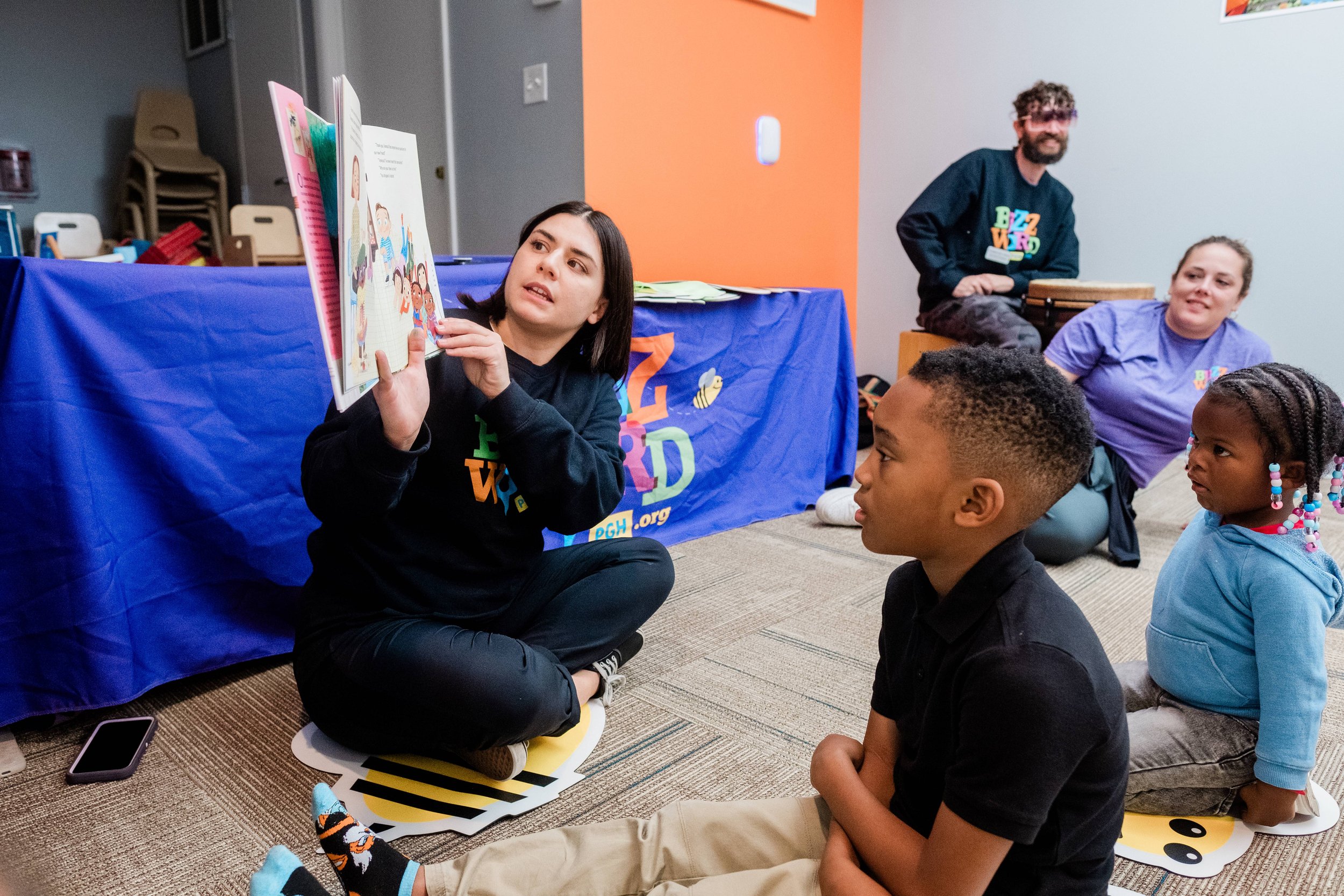
As part of Buzzword’s programming, we distribute our signature “BUZZ Boxes” to local families to help excite children from birth to age five as well as their caregivers about new words that are all around them. These family engagement kits come complete with a high-quality children’s book and enriching activities that support early literacy skills and development.

Learn More

This month’s Buzzword is ENTERTAINMENT, which means being provided with amusement or enjoyment. Our ENTERTAINMENT Activity Book will give children – ages birth to five – and their caregivers the opportunity to connect through science, art, music, and early literacy skills.

Buzzword will explore its latest buzzword during a celebratory, music-focused, and family-friendly event on Wednesday, Sept. 4. The event will run from 5:30 p.m. to 7 p.m. at the Clairton Family Center, located at 734 Miller Ave. in Clairton.

During the event, children and their caregivers will engage with each other to create meaningful moments through interactive activities provided by the Pittsburgh Festival Opera. Each family will take a BUZZ Box home with them and dinner will be provided.

Registration is required to attend.

More Information

Be sure to check back soon for more information on the ENTERTAINMENT Activity Book and other Buzzword materials for September.

Want to learn more on how to get involved with Buzzword? Ask your local Allegheny County Family Center about the program, or email us at buzzword@tryingtogether.org. 

Pennsylvania to Discontinue PA Position Statements for Environment Rating Scales

News

Pennsylvania to Discontinue PA Position Statements for Environment Rating Scales

As of Aug. 1, the state has discontinued the use of PA Position Statements for the Environmental Rating Scale (ERS) and School-Age Environment Rating Scale (SACERS).

Learn More

The sunsetting of the scales was part of an effort to simplify guidance and strengthen consistent use of program observation instruments for continuous quality improvement.

Programs may continue to use ERS, third editions, and SACERS-U as a quality assessment tool without the position statements.

State Department of Human Services regulations are the foundation of all quality work and compliance is required for all certified programs.

If variance occurs between ERS quality expectations and PA DHS Certification regulations, programs must ensure that regulations are met. Programs utilizing the most updated ERS or SACERS are encouraged to review PA DHS Certification regulations around the following to ensure compliance with regulations:

  • Use of hand sanitizer
  • Handling of soiled diapers
  • Placement of nap equipment
  • Mandated Reporter training and policies
  • First Aid training

ERS and SACERS

ERS focuses on the typical daily experiences of children in early childhood and school-age settings. The assessment considers how teacher engagement, the spaces and equipment used by the children, accessible play materials, and children’s activities combine to enhance learning. It includes a variety of factors, including indoor and outdoor space and furnishings as well as supports for parents and staff, and personal care routines, including health and safety practices.

SACERS is a tool used to evaluate group-care programs for children, ages 5 to 12. It consists of 49 items that are organized into seven subscales. Items include everything from space and furnishings to health and safety.

More information on Program Quality Assessment can be found on The Pennsylvania Key website.

Allegheny County Opens Four Low-Vision Tennis Courts

News

August 19, 2024

Allegheny County Opens Four Low-Vision Tennis Courts

Allegheny County Executive Sara Innamorato recently announced the opening of the county’s first Blind and Visually Impaired (BVI) tennis courts at four local parks.

Learn More

The courts debuted in July at four Allegheny County parks – Boyce, North, Settlers Cabin, and South Park. The courts are designed to accommodate athletes with low vision as well as fully-sighted players and promote inclusivity in the community.

Low-vision, or “sound ball” tennis, is played on a slightly smaller court with a slower, foam sound ball that has a rattle inside of it. Players track the ball by sound and, if they have partial vision, using the vision they have. 

The new courts enable athletes to walk on the court without bringing temporary tape lines each time.

Low-Vision Tennis

A recent study by Carlow University examined how blind or visually impaired athletes react to different sounds emitted by specialized tennis balls. Psychology professor Jennifer K. Roth, who led the study, is also involved with local and national tennis associations that are drawing attention to the sport and expanding access for low-vision players.

The United States Blind Tennis Association, which is based in Pittsburgh, is at the forefront of integrating blind and visually impaired tennis into mainstream sports. Since its inception, the association has conducted training and introduced programming across multiple states.

“When I talk about building a county for all, that means places people feel connected to their neighbors and communities and parks for everyone to enjoy, and this project really embodies that ethos,” Innamorato said.

OCDEL, Penn State Project ECHO to Host Series for Spanish-Speaking Families

News

OCDEL, Penn State Project ECHO to Host Series for Spanish-Speaking Families

The Pennsylvania Office of Child Development and Early Learning (OCDEL) and Penn State Project ECHO will release a new series this fall that features the Centers for Disease Control and Prevention (CDC) and focuses on the needs of Spanish-speaking families.

Learn More

The Extension for Community Healthcare Outcomes (ECHO), which launches in the fall, will feature the CDC’s Learn the Signs. Act Early program, which is aimed at serving Spanish speakers.

The CDC’s tools and resources allow families and early care providers to jointly engage in the early identification of developmental delays and disabilities among children from birth through age 5.

Participants in the series will learn how to help support families with developmental milestone monitoring. It will highlight the utilization and promotion of the CDC’s Milestones Tracker App, which is a free developmental tracker resource offered in English and Spanish.

The series is for early care providers only and registration is not limited to those who work only with Spanish-speaking families.

The series will run from 10 a.m. to 11 a.m. on the following Wednesdays:

  • Sept. 25
  • Oct. 9
  • Oct. 23
  • Nov. 6
  • Nov. 20
  • Dec. 4

More details and registration information will be announced in the September Early Ed News. Any questions should be sent to Ilecia Voughs at ivoughs@pattan.net.

Report, Webinar to Inform Early Educators on Affordable Care Act Benefits

News

August 14, 2024

Report, Webinar to Inform Early Educators on Affordable Care Act Benefits

A report by nonprofit Opportunities Exchange and an upcoming webinar aim to inform early educators of the benefits of the Affordable Care Act (ACA).

The Report

According to the report “Health Insurance for the Early Childhood Workforce,” early educators’ poor compensation – and, specifically, their ability to access health insurance – can have dire implications for their own health and well-being as well as for the children and families they serve.

The report, written by nonprofit Opportunities Exchange, notes that tax credits available through the ACA Marketplace make it possible for every early child educator to access health insurance plans. However, the report says, this resource is vastly underutilized. 

The report highlights both the Individual Marketplace and the Small Business Health Options Program (SHOP) as viable alternatives to the private health insurance route. It offers examples of health care models, ancillary medical benefits, public sector strategies, and resources on finding a benefits broker.

The Webinar

An upcoming webinar titled “Solving the ECE Compensation Crisis: The Affordable Care Act is a Critical Piece of the Puzzle” will address issues raised in the report.

The webinar will run from noon to 1 p.m. EDT on Tuesday, Aug. 13. Those interested in attending the webinar should fill out the registration form online.

Department of Human Services Warns of EBT Card Scams

News

August 13, 2024

Department of Human Services Warns of EBT Card Scams

Pennsylvania’s Department of Human Services is warning that scammers are skimming electronic benefit transfer (EBT) cards to steal benefits from state residents.

Learn More

DHS is warning EBT card users not to use third party apps to check balances. Those who believe their EBT card has been compromised should reach out to their local County Assistance Office to report suspected fraud and replace their card. A list of County Assistance Offices can be found online.

EBT balance and transfer inquiries and card replacements can be requested from DHS’ EBT contractor,Conduent, at 888-328-7366.

Those who have Supplemental Nutrition Assistance Program (SNAP) benefits stolen can have them replaced by filling out a benefit theft claim within 60 days of the incident. Claim forms can be found on DHS’ website.

ATM and Point-of-Sale Terminal Skimming

DHS has provided tips involving ATMs or Point-of-Sale (POS) terminals when using EBT cards:

  • Inspect POS terminals, ATMs, and other card readers before using. Look for anything loose, crooked, damaged or scratched. Don’t use a card reader if you notice anything unusual.
  • Pull at the edges of the keypad before entering your PIN. If it comes loose or reveals another keypad underneath, do not use as it might be a skimming device.
  • Cover the keypad when you enter your PIN to prevent cameras from recording your entry.
  • Use ATMs in well-lit, indoor locations, which are less vulnerable targets.

Be alert for skimming devices in tourist areas, which are popular targets.