Home Grown Accepting Applications for Family Child Care Cohort

News

July 29, 2024

Home Grown Accepting Applications for Family Child Care Cohort

Home Grown is accepting applications for the inaugural cohort of the Enriching Public Pre-K Through Inclusion of Family Child Care (EPIC FCC) initiative. 

Facilitated by the National Institute of Early Education Research, the EPIC FCC seeks to support state, city, county, and tribal government leaders in expanding the participation of family child care educators in their pre-k systems. It also aims to engage family child care educators in these pre-k systems for the first time.

Learn More

Home Grown’s initiative aims to ensure that home-based child care providers can fully participate in well-resourced early childhood initiatives. 

Government partners participating in the initiatives are eligible for:

  • Flexible planning grants of $25,000 to support implementation planning
  • Support of an expert planning navigator with experience in administration of early childhood systems from the National Institute of Early Education Research
  • Learning community with fellow states and local government agencies on such topics as program design and pre-k program standards, pre-k supports, equitable financing, and state/local sector oversight and governance
  • Access to guidance documents and resources, including implementation plans, a compendium of programs and toolkit, and more

Upon completion of the planning period, there may be an opportunity to apply for additional implementation funds.

The deadline to submit an application is 4 p.m. EST on Wednesday, August 21. Those interested in learning more can register for an information session on Wednesday, July 31 from Noon to 1 p.m. The session will help government agencies and partners assess whether the initiative is a good fit for them.


Trying Together Offering Fall CDA Credential Cohorts

News

July 24, 2024

Trying Together Offering Fall CDA Credential Cohorts

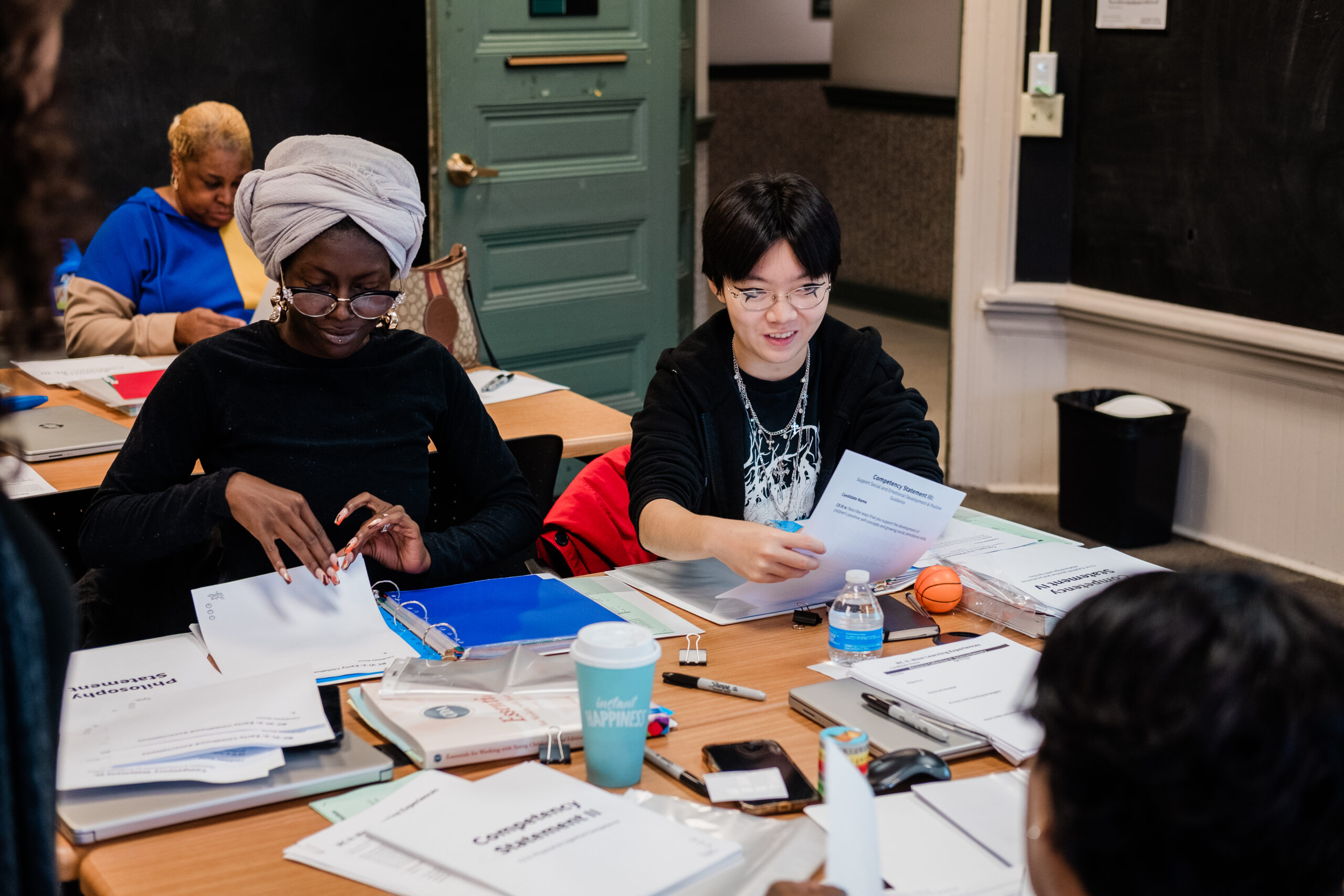
Looking to receive a Child Development Associate (CDA) Credential? Trying Together is offering a CDA program at no cost to eligible early childhood professionals in Pennsylvania.

A CDA Credential is the most widely recognized credential in the early childhood field and is a key stepping stone on the path to career advancement. The credential enables professionals to work in Head Start and Early Head Start classrooms, in addition to early learning programs across the United States, and provides opportunities for increased pay.

Learn More

Trying Together is offering two Fall CDA program cohorts beginning in September.

Cohort 1 begins September 3 and will be held every other Tuesday at 6 p.m. via Zoom

Cohort 2 begins September 14. It will be held one Saturday a month from 10 a.m. to 3 p.m. at a Northside location that will be determined at a later date.

About CDA

Participants can matriculate CDA program coursework into 9-12 college credits at Carlow University, CCAC, or Westmoreland County Community College (WCCC).

Educators in the community based CDA program:

  • participate in distance learning through in-person, online self-paced Schoology, and Zoom sessions

  • complete 135 hours of professional development over six to nine months focused on the practice knowledge and skills needed to get credentialed

  • receive individualized support from experienced instructors

  • review current early childhood health and safety standards, ECE literature and resources, strategies on building positive relationships, strategies for implementing observations and assessments, etc.

  • focus on the completion of CDA Credential Portfolio requirements, preparing for the exam, and completing the application process

  • explore current early childhood theories, research, and best practices

  • have access to laptop lending

Apply

Those interested in Trying Together’s CDA Credential Preparation Program should complete the  CDA Credential Program Interest Form. NOTE: This form is for inquiry purposes only and is only available to professionals in Pennsylvania.

After completing the form, a member of the Trying Together staff will contact you to determine your eligibility and identify a CDA pathway that works best for you.

LEARN MORE

More information about the program and eligibility requirements can be found on Trying Together’s CDA webpage.

Changes Announced for DOH Staff Visits to Child Care Providers

News

Changes Announced for DOH Staff Visits to Child Care Providers

The Pennsylvania Department of Health and the Office of Child Development and Early Learning (OCDEL) will continue their collaboration regarding immunizations for children and staff at child care providers. However, there will be some changes this year regarding visits to providers and the reporting of each child’s immunization status.

Learn More

A letter from OCDEL to child care providers states that, beginning in July, DOH field nurses and local Municipality Department of Health field staff will visit randomly selected providers to offer immunization education and resource materials for staff and parents or caregivers. A review of child immunization records can be provided if requested by the child care provider. 

Providers will be able to ask questions and request specific educational resources from the field nurses and staff who visit their facilities. 

Additionally, the DOH will send out electronic surveys to all child care providers regarding the immunization status of every enrolled child at their facility. These surveys will serve as the mandatory reporting requirements for child care settings outlined in DOH regulations. The surveys are expected to be sent out later this summer.

Child care providers who are randomly scheduled for a visit should expect a phone call or email from DOH or the local municipality. Any questions or concerns should be addressed to the DOH’s Janine Strick at 717-878-5681.

Report: Hundreds of Thousands Suffer from Food Insecurity in Allegheny County

News

July 23, 2024

Report: Hundreds of Thousands Suffer from Food Insecurity in Allegheny County

More than 140,000 people in Allegheny County are struggling with food insecurity, which is defined as a lack of access to adequate food that prevents individuals from leading a healthy life, according to a report by Feeding America.

Learn More

According to the report, food insecurity is associated with numerous social and health outcomes and is considered a critical public health issue. Key drivers of food insecurity include unemployment, poverty, and income shocks – or, a sudden decrease in a household’s income – which can prevent adequate access to food.

A total of 142,190 Allegheny County residents – or 11.4% – were found to struggle with food insecurity, according to the report. Additionally, 44% of county residents were found to be above the Supplemental Nutrition Assistance Program (SNAP) threshold, while 56% were below the threshold of 200%.

The report’s map includes estimated food insecurity by race and ethnicity for select populations and places. The report’s methodology and data are also available.

More Details

More information on SNAP can be found on the state’s Department of Human Services website. Residents can apply online at COMPASS, via phone at 1-800-692-7462, or at a local county assistance office, which can be found online.

Those applying for assistance will need to provide their name, birthday, address, gross income, and Social Security number.

Also, the U.S. Department of Agriculture, Greater Pittsburgh Community Food Bank, and Carnegie Library of Pittsburgh are offering food programs to provide free meals for children while they are out of school this summer.

The Homewood Early Learning Hub & Family Center operates a walk-in food distribution program every Monday.

Nomination Process Open for Award Recognizing Non-Teaching School Employees

News

July 22, 2024

Nomination Process Open for Award Recognizing Non-Teaching School Employees

The nomination process is open for the Recognizing Inspiring School Employees (RISE) Award, which honors full- or part-time non-teaching school employees.

Learn More

The award was created in 2019 to recognize and promote the commitment and excellence exhibited for full- or part-time school employees who provide exemplary service to students in prekindergarten through high school. 

Among those who can be nominated for the award include full- or part-time non-teaching school employees or public pre-k or nonprofit private or non-public nursery-12th grade institution employees in the following positions:

  • Paraprofessionals
  • Clerical and administrative services
  • Transportation services
  • Food and nutrition services
  • Custodial/maintenance services
  • Security services
  • Health and student services
  • Technical services and skilled trade

Those who can nominate include educational agencies, school administrators, professional associations, labor organizations, educational service agencies, nonprofits, parents, and students.

Information that is necessary to include in a nomination includes:

  • Nominator’s name, connection to nominee, phone number, and email address
  • Nominee’s name, position, phone number, and email address
  • Reasons for nomination
  • Nominee’s employer information: local education agency’s name, school’s name, school’s address, chief school administrator’s and principal’s names, phone numbers, and email addresses

For more information on how to nominate someone for the RISE Award, visit the Department of Education’s website.

Rising STARS Tuition Assistance Program Covers Most Costs and Fees for Early Learning Professionals

News

Rising STARS Tuition Assistance Program Covers Most Costs and Fees for Early Learning Professionals

Eligible early learning professionals can get most of their tuition costs and fees for courses covered by applying to the Rising STARS Tuition Assistance Program.

Learn More

The program pays 95% of tuition costs and fees for eligible college coursework taken by early learning professionals. There’s a maximum benefit of $8,000 per individual each fiscal year, which runs from July 1 through June 30.

Tuition costs and fees obtained through other funding sources – such as scholarships, stipends, discounts, or grants, with the exception of the Pell Grant – are used to determine the amount of assistance. Those interested in applying are recommended to do so at least four weeks prior to the start of the course, or prior to the tuition due date – whichever comes first.

Eligibility 

To be eligible for consideration, applicants must meet the following requirements:

  • They must be a Pennsylvania resident.
  • They must work a minimum of 20 hours weekly in a classroom setting or as a director, assistant director, or education coordinator.
  • They must work in a child care facility that holds a current Child Care License under the Department of Human Services (DHS) and demonstrate continuous employment for at least 12 months.
  • They must agree to continue to work in a Keystone STARS facility for two months for every credit supported by the Rising STARS Tuition Assistance Program with two months beginning at the conclusion of the course for which funding was received. Total time due will not exceed 24 months following the conclusion of the most recent course completed.
  • If they are child care center directors, assistant directors, family or group child care home owners/operators, they must earn less than $25 per hour or $52,000 annually.
  • If they are aides, assistant teachers, or teachers, they must earn less than $21.63 per hour or $45,000 annually.
  • They must be enrolled in credit-bearing courses at an in-state accredited institution toward an approved credential.
  • They must maintain a 3.0 GPA for the credit-bearing coursework toward a credential in which the student is enrolled.

For more information, including the required documents for applying, visit Keystone STARS’ Rising STARS Tuition Assistance Program website.

Applications Available for Federal Summer Child Nutrition Program

News

July 16, 2024

Applications Available for Federal Summer Child Nutrition Program

Applications are now open for a new federal child nutrition program known as SUN Bucks that aims to keep children fed during the summer months when they are not in school. Eligible children can receive an EBT card through the program, also known as Summer EBT, that can be used to purchase groceries.

Learn More

For the program’s first year, paper applications are available for children who are not automatically eligible. Benefits will be issued to all eligible children by October.

The program provides households with a one-time payment of $120 for each eligible child to buy food while school is out. Benefits can be used at local participating retailers to purchase groceries.

Many children will receive these benefits automatically, but some households will need to apply. The benefits will be added to an existing Supplemental Nutrition Assistance (SNAP)/Temporary Assistance for Needy Families (TANF) EBT card or a newly-issued Summer EBT card.

Eligibility

Children who applied and were approved for free or reduced-price school meals or who receive SNAP or TANF are automatically eligible for SUN Bucks.

Most children who receive Medicaid are also eligible because their income level is under the level for the National School Lunch or School Breakfast Program. Children who get Medicaid through the Children with Special Needs category (PH 95) and those who are in the Children’s Health Insurance Program (CHIP) will have to apply for SUN Bucks.

Children are automatically eligible and do not need to apply for the program if:

  • Their household received SNAP or TANF between July 1, 2023 and Aug. 31, 2024 and the child is enrolled in a school that participates in the National School Lunch or School Breakfast Program; or if they are not enrolled in a school that participates in the programs but were between the ages of six and 18 during the timeline
  • The child received Medicaid with qualifying income for the lunch or breakfast program between July 1, 2023 and Aug. 31, 2024 and the child is enrolled in a school that participates in the school lunch or breakfast programs; or if the child is not enrolled in a school that participates in the programs but is between the ages of six and 18 during the timeline
  • The child is in Head Start, is homeless, in foster care, or is a runaway and the child is enrolled in a school that participates in the school lunch or breakfast programs
  • The child applied for and was determined eligible for free or reduced-price meals through the school or breakfast program

How to Apply

Most eligible households will get SUN Bucks automatically if they are receiving other benefits. Other households can use the Eligibility Navigator to determine if their child is eligible.

Those who are not automatically enrolled can fill out an application in English or Spanish.

Applications received on or before August 31 will be considered for SUN Bucks benefits. Those received after that date will be considered for benefits during the 2025 application period next summer.

For more information, visit the SUN Bucks website.

NAEYC Report Highlights Low Compensation Impact on Early Childhood Education

News

NAEYC Report Highlights Low Compensation Impact on Early Childhood Education

The National Association for the Education of Young Children (NAEYC) has released a report that highlights the inadequate and inequitable compensation in early childhood education that affects educators, children, families, businesses, and the economy.

Learn More

NAEYC’s “Compensation Means More Than Wages” argues that low compensation drives educators away from the field and keeps others from entering it. Additionally, it undermines quality and creates staffing crises that limit the supply of child care that families and businesses need.

The report discusses how in recent years, effective efforts have focused not only on increasing wages, but also on expanding access to benefits, especially for educators in child care centers and family child care homes.

These efforts align with needs expressed by early childhood educators, such as health insurance, retirement benefits, and paid leave. The report also cited the importance of a more expansive understanding of benefits, including loan forgiveness and scholarships, housing, and child care assistance.

NAEYC’s report cited several reasons why access to benefits is significant for early childhood educators. It said that benefits:

  • Support early childhood educator well-being and program quality
  • Promote gender and racial equity
  • Support recruitment and retention of early childhood educators
  • Bring in additional funding sources to support educators

For more information, read the NAEYC’s report.

Report Touts States With Initiatives to Improve Teacher Recruitment and Retention

News

July 15, 2024

Report Touts States With Initiatives to Improve Teacher Recruitment and Retention

Start Strong PA has released a new report that describes how other states are tackling the child care teacher shortage by funding initiatives that improve recruitment and retention of staff.

Learn More

“Solving the Child Care Teacher Shortage Through State Recruitment and Retention Investments” discusses how 16 states are directly investing in recruitment, retention, and other wage-impacting strategies to ensure that the supply of child care teachers can meet the demand and keep classrooms open.

Issued by Start Strong PA and the Pennsylvania Association for the Education of Young Children (PennAEYC), the report notes that some of the states it references also have a child care subsidy reimbursement rate at or above the 75th percentile. 

The report comes in the wake of a September 2023 survey conducted by the Children’s Hospital of Philadelphia’s PolicyLab on behalf of Start Strong PA to demonstrate Pennsylvania’s child care crisis. 

The survey found that nearly 26,000 additional children could be served at child care programs if fully staffed. Additionally, it found that 2,395 open positions have resulted in the closure of 934 classrooms, and that providers’ inability to recruit and retain staff is having a direct impact on the quality of programming.

As part of the 2024-25 proposed state budget, Gov. Josh Shapiro proposed to utilize federal funding to increase the child care subsidy reimbursement to the 75th percentile of the current market price of child care services. However, while this increase would alleviate some of the inflationary pressures that subsidized providers are facing, it likely wouldn’t be sufficient to make the level of workforce investments necessary to solve the teacher shortage, the Start Strong PA report found.

The report recommends that the state establish and fund a program that will help providers better recruit and retain staff and, as a result, keep classrooms open.

For more information, read Start Strong PA’s report.

ELRC Formula, Diaper Banks Announce New Closing Time

News

ELRC Formula, Diaper Banks Announce New Closing Time

The Early Learning Resource Center’s formula and diaper banks in downtown Pittsburgh have announced a new closing time of 4:30 p.m.

Learn More

The main office of the ELRC is an infant formula bank location of the Greater Pittsburgh Infant Formula Bank and also acts as a diaper bank.

The office’s address is:

304 Wood St., 4th Floor
Pittsburgh, PA 15222
412-350-3577

Greater Pittsburgh Infant Formula Bank

Managed by Beverly’s Birthdays and their baby division, Beverly’s Babies, the Greater Pittsburgh Infant Formula Bank is a resource to support families in need of baby formula during a personal, situational, or financial emergency or crisis.

A baby can receive up to 12 cans of formula or the liquid (RTF) equivalent in his or her first year.

ELRC’s Diaper Bank

Emergency diapers and wipes are available at the ELRC Region 5. Families can receive up to 50 diapers and two packs of wipes per month.

Opened diapers and wipes may not be returned or exchanged.

Other Formula Bank Locations

There are six other regional formula banks available for the public to directly access for support:

The Homewood Early Learning Hub & Family Center
7219 Kelly Street
Pittsburgh, PA 15208
412.545.5039

McKeesport Family Center
339 5th Avenue
McKeesport, PA 15132
412.672.6970

Hilltop Family Center
1630 Arlington Avenue
Pittsburgh, PA 15210
412.432.1635

Beverly’s Birthdays
11065 Parker Drive
North Huntingdon, PA 15642
724.590.5106

Highlands Family Center
415 Fourth Avenue
Tarentum, PA 15084
724-224-9006

Monessen Family Center
412 Reed Avenue
Monessen, PA 15062
724.684.4370

Find location hours and details on the Beverly’s Birthdays website. Details about the program are available online. Families in need can call 724-590-5106 or text pghformula to 844-511-1544.