News

May 23, 2019

Buzzword: Talk & Play Series 3

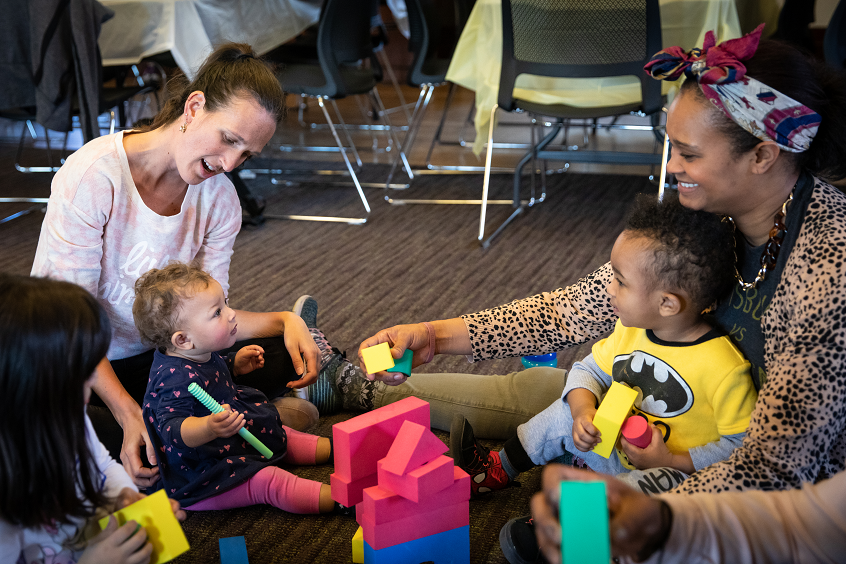
Join Buzzword every Wednesday from May 15 to June 12 for Talk & Play Series 3! All events are free for learners ages five and under, with their caregivers, and will include activities that enhance vocabulary and literacy skills.  A light dinner will be provided.

Program Schedule

The schedule of events is as follows:

    • Wednesday, May 15 • Word of the Day: DECOMPOSE
      with Pittsburgh Parks Conservancy and Carnegie Science Center
    • Wednesday, May 22 • Word of the Day: TOPSOIL
      with Pittsburgh Parks Conservancy and Pittsburgh Ballet Theatre
    • Wednesday, May 29 • Word of the Day: COLONY
      with Pittsburgh Parks Conservatory and Children’s Museum of Pittsburgh
    • Wednesday, June 5 • Word of the Day: LAVA
      with Pittsburgh Parks Conservatory and Pittsburgh Festival Opera
    • Wednesday, June 12 • Word of the Day: FOSSIL
      with Pittsburgh Parks Conservatory and Pittsburgh Cultural Trust

More Information

For more information, contact Jan Jones at jan@tryingtogether.org.

News

May 13, 2019

Lunch & Learn: Sensory Learning & the Autism Spectrum

Join Parents in Toto Autism Resource Center, Seneca Valley School District, and Remake Learning to discuss the importance of sensory learning for youth on the autism spectrum, benefits of this learning, and the parent resources that are available.

About

Educators, administrators, community organization leaders, and parents are highly encouraged to attend and take part in this important conversation surrounding differently-abled youth in the region. Lunch will be served. More details and accessibility will be noted in an email closer to the event.

For any dietary restrictions or requests, email Allie at allie@remakelearning.org. The deadline for restriction requests is June 19, 2019.

Registration

This event is free and open to the public. To RSVP, visit the event webpage.

For questions about the event or accessibility, email Allie at allie@remakelearning.org.

News

May 3, 2019

Call for Nominations: 2019 PACCA Awards

PACCA is accepting nominations for the 2019 Educator of the Year and the Award of Excellence. The awards recognize contributions made by PACCA members to the early care and education profession. Members and non-members may make nominations.

About the Awards

The Educator of the Year Award

The Educator of the Year Award honors outstanding service and accomplishments in the delivery of services to children. It is given to an individual at a PACCA member agency who has contributed significantly to the direct care and education of young children. We are seeking nominations for both center-based and family child care educators. It is suggested that the person has been a teacher for at least three years.

The Award of Excellence

The Award of Excellence honors outstanding service and accomplishments in the field of administration. The award is presented to a member of PACCA who has demonstrated qualities of vision (ability to see possibilities for making things happen and communicating this vision to others), teamwork (ability to work with and support others) and leadership (willingness to reach out to benefit the child care community). It is suggested that the person has been a director, executive director, administrator, or owner for three years.

Eligibility

In order to receive an award, nominees must meet specific eligibility guidelines that vary by award. To see these guidelines, visit PACCA’s website.

Benefits

In addition to receiving the award, awardees will receive the following benefits:

  • Complimentary registration and hotel accommodations for the Early Childhood Education Summit, October 21-23, 2019 in State College
  • Honored during the official awards presentation at the 2019 Early Childhood Education Summit
  • Recognition in PACCA’s newsletter, website, and Facebook page

How to Nominate

To nominate a colleague, complete the nomination form and include a written description of why this person deserves the award. PACCA encourages testimonials from children, fellow staff, colleagues, and parents to illustrate your nominee’s exceptional work. Nomination Deadline: June 30, 2019

More Information

For more information on the awards, nominating, and eligibility, visit PACCA’s website.

*Information provided by PACCA

News

April 18, 2019

PA Pre-K Counts Announces Request for Applications

Pennsylvania’s fiscal year (FY) 2019-20 proposed budget continues to build on the governor’s commitment to high-quality early learning services and includes more than $1.1 billion in state and nearly $850 million in federal support for Office of Child Development and Early Learning (OCDEL) programs. This proposal represents the further steps toward achieving the goal of universal access to high-quality pre-k programs.

With new investments in Pennsylvania Pre-K Counts ($40 million) and the Head Start Supplemental Assistance Program ($10 million), the state will be able to increase the number of children served in high-quality pre-k. Due to this proposed funding, the Pennsylvania Department of Education (PDE) is seeking applicants for PA Pre-K Counts.

About Pre-K Counts

PA Pre-K Counts provides children with the opportunity to experience a high-quality pre-kindergarten program. The program standards ensure a high return on the investment in the preparation of young children for school and will help to close the achievement gap. Early education through PA Pre-K Counts can open the doors of opportunity for every child to do well in school, the workforce, and life.

About the Request for Applications (RFA)

PDE is issuing this RFA to support providers in preparing to serve children and to be ready for September enrollment. The department recognizes that providers need to conduct outreach to families; recruit, hire and train staff; and do all of the planning necessary to successfully implement the program pending approval of proposed funding.

Information on the application process can be accessed at PKC How to Apply.

Eligible Applicants

Pennsylvania continues to be committed to a mixed delivery system. As such, eligible applicants include existing PA Pre-K Counts grantees and new applicants from five eligible entity categories:

  1. School districts;
  2. PDE Licensed nursery schools;
  3. Head Start grantees;
  4. Child care centers and group child care homes designated at Keystone STAR 3 or 4; and
  5. A third party entity applying for Pennsylvania Pre‐K Counts funding to administer the lead agency responsibilities for entities that are eligible to provide the classroom services under the categories listed above.

PDE encourages all eligible entities to assess community need and apply for funding to support eligible children in their communities. There is no limit to the number of slots that may be requested through this application process.

Eligibility Criteria

Age (three and four-year-old children) and family income (at or below 300 percent of the Federal Poverty Guidelines) are the primary eligibility criteria for participation in PA Pre-K Counts. Additional priorities for enrollment should be developed at the local level and may include:

  • teen parents,
  • migrant or seasonal students,
  • children of a family experiencing homelessness,
  • children involved in the child welfare system,
  • siblings of children already enrolled in the program,
  • English language learners,
  • children of an incarcerated parent, or
  • children receiving early intervention or behavioral health supports.

Required Documentation

Applicants must have the following in place to complete an application: a Letter of Intent, a vendor number (SAP #), an administrative unit number (AUN), a master provider index number (MPI), and a federal ID number or tax ID number.

PA Pre-K Counts Statute, Regulations, and Guidance

Any applicant should thoroughly review PA Pre-K Counts Statute, Regulations, and Guidance prior to submission of a letter of intent to apply to ensure an understanding of the program requirements and expectations of compliance if an application is successful. The application review process will include evaluation of the extent to which the applicant demonstrates knowledge and understanding of the PA Pre-K Counts Statute and Regulations.

Required Letter of Intent

Because of the need to establish access to eGrants procurement system, eligible organizations must submit a completed Letter of Intent to apply for funds. The template posted at PKC How to Apply must be used. The Letter of Intent represents intent to apply for PA Pre-K Counts funding and includes the legal name of the eligible agency that will apply, the AUN associated with the applying legal entity, preliminary information about requested funding, program model, provider type, and area to be served. Except for the legal entity and AUN, information submitted in the Letter of Intent may be modified in the final eGrants application.

Programs interested in applying must submit a fully completed Letter of Intent by 3 pm on May 8, 2019 to RA-PAPreKCounts@pa.gov. Programs that do not submit a timely Letter of Intent will not be able to apply in the eGrants system. Late submissions will not be accepted. Those agencies submitting a fully complete Letter of Intent by the due date will be notified when the PA Pre-K Counts application is open in eGrants.

Administrative Unit Number (AUN Number)

PA Pre-K Counts applicants will need to supply a valid AUN number within the Letter of Intent. A Letter of Intent without a valid AUN that matches the legal name of the applying entity will not be accepted. To verify your AUN number or to check to see if you have one assigned to your agency, visit EDNA. If you are an Intermediate Unit, select Search for Intermediate Units. If you are not an Intermediate Unit, select Advanced Search, and search for your agency.

Applicants that are not already licensed by PDE and therefore do not have an AUN number should contact Brian Bell (bribell@pa.gov, 717.346.0038) or James Redd (jaredd@pa.gov) at OCDEL.

Vendor Number (SAP #)

The supplied vendor number MUST align with the legal name and address provided in the application. A vendor number and account can be set up by registering at Vendor Number Registration selecting the Non-Procurement Registration Form. All agencies applying for PA Pre-K Counts grants must be pre-registered. The Central Vendor Management Unit is a storage database. The Comptroller uses this account to store direct deposit information.

If you have any questions about vendor numbers, please contact Brian Bell (bribell@pa.gov, 717.346.0038) or James Redd (jaredd@pa.gov) at OCDEL.

Master Provider Index (MPI #)

The supplied MPI number MUST align with the legal name and address provided in the application. All PA Pre-K Counts applicants will need an MPI number if the application is successful. The number is requested as part of the application process to ensure timely contracting for approved applications. MPI numbers are used by the PA Department of Human Services to identify legal entities and service locations that participate in any of its programs. As such, they are used in PELICAN as a common identifier for all OCDEL programs, including child care licensing, Early Intervention, PA Pre-K Counts, Head Start Supplemental Assistance Program, and Keystone STARS.

Legal entities are assigned a unique nine-digit MPI number. In addition, service locations are assigned a unique 13-digit MPI number, which is created by adding a four-digit extension to the nine-digit MPI of the legal entity. Legal entities and service providers currently participating in any of these programs should have an MPI number.

Applicants that are not currently participating in any of these programs should contact the Early Learning Network (ELN) Help Desk at 877.491.3818 and provide their Federal Tax ID to determine their MPI numbers. MPI numbers will not be provided without a Federal Tax ID number.

Tax ID Number or Federal ID Number

This is the number that an agency uses on its federal W-9 form. Applicants for PA Pre-K Counts funds should consult with the person who handles tax, legal, or accounting matters for the agency to determine the federal ID number. Use the number that aligns with the legal name and address provided in this application. The correct number must be provided when requested in order to process an application. Failure to do so will result in significant delays in funding approved applicants for FY 2019-20. This number is often referred to as the “FEIN number” by OCDEL staff.

Pre-application recorded webinar

An asynchronous pre-application webinar will be posted at PKC How to Apply after April 23, 2019 to assist interested applicants in the completion of the application. The webinar will include information on the application process and program requirements.

Questions & More Information

All questions regarding this competitive RFA process should be directed to Project Officer Deborah Wise only, by sending an email to RA-PAPreKCounts@pa.gov.

In order to provide consistent messaging and an equitable application process, ONLY questions sent to RA-PAPreKCounts@pa.gov, will be addressed. Questions and responses not already covered in either Pennsylvania Pre-K Counts Statute, Regulations, and Guidance, or within the Application Guidance document, will be included in an on-going Frequently Asked Questions document posted at PKC How to Apply.

News

April 5, 2019

Learning to Listen: Webinar Series

Join Brazelton Touchpoints Center for the Learning to Listen webinar series, as they celebrate Dr. Brazelton’s enduring legacy by learning from other masterful communicators about what children and parents have taught them through the power of listening.

Available Times & Topics

The series includes three webinars:

  • May 21, 2019, 2:00 PM: Listen With More than Our Ears: Helping Children through Simple, Ordinary Interactions
  • Jun 4, 2019, 12:00 PM: Topic Name Not Listed

To register for these webinars, visit their registration page.

About T. Berry Brazelton, MD

T. Berry Brazelton, MD (1918 – 2018) foresaw the many new challenges facing families today, including the interference of social media and digital technology with family relationships and child development, and their polarizing effects on public debate. Brazelton was a master of the kind of observation and listening so desperately needed today, and helped generations of parents and professionals around the world to learn to listen to babies, children and to each other.

News

March 29, 2019

Hello Robo: Early STEM Robotics

Robots provide unseen services across industries, including transportation, medical, and manufacturing. Early learners need the foundational STEM skills that allow them to imagine and build the robots of the future.

About the Event

Join the Carnegie Science Center Teaching Excellence Academy for a professional development workshop where participants will use resources from NAEYC and other STEM experts to examine developmentally appropriate concepts to prepare students for robotics technologies. Educators will discover hands-on, standards-aligned activities they can do right away, even if they don’t have a robot — yet!

This professional development opportunity is for pre-K through 2nd-grade teachers.

About the Academy

Carnegie Science Center’s Teaching Excellence Academy offers opportunities for educators in all grade levels, with specific workshops in STEM, early learner education, and digital fabrication. Act 48 credit is provided upon successful completion of each workshop. In addition to onsite workshops, the Science Center offers multiple opportunities for professional development to be delivered at local sites throughout the academic year. For more information, visit their website.

Registration & Questions

To register or ask questions, contact Toni Stith at StithT@CarnegieScienceCenter.org or 412.237.1616.

News

March 28, 2019

Work Together Wednesday’s

Join the Carnegie Science Center every Wednesday during the Month of the Young Child (April) from 10:00 a.m. to 12:00 p.m. for a series of collaborative building activities inside of their Little Learner Clubhouse. All Little Learner Clubhouse activities are included with the purchase of general admission.

Children under the age of 2 receive free admission.

About the Little Learner Clubhouse

Aspiring scientists age 6 and under and their families are invited to explore this nature-inspired hub for free-play and hands-on activities! Located on the fourth floor of the Science Center, Little Learner Clubhouse is a colorful gallery featuring a variety of interactive exhibits designed to foster scientific curiosity, including:

  • The Clubhouse
  • The Learning Tree
  • The Water Table
  • The Tomato Stand
  • The Book Cove
  • The Baby Garden
  • The Button Wall

Buy Tickets and Learn More

Individuals interested in purchasing tickets online, learning more about the Little Learner Clubhouse, or viewing available ticket discounts can do so by visiting the Carnegie Science Center website. Discounts are available for Electronic Benefits Transfer (EBT) cardholders, active military members, veterans, and more. Discounts require specific verification. Please see their website for details.

Ticket Costs:
  • General Admission Adult: $19.95
  • General Admission Adult 65+: $14.95
  • General Admission Child: $11.95
  • General Admission Child Under 2: Free
  • Carnegie Science Center Membership Holders: Free

News

February 12, 2019

Fostering Inclusive Spaces for Children of All Abilities

Join APOST at United Way’s Pittsburgh Office for this eye-opening and interactive workshop, tailored to increase awareness about disabilities, and to share different ways to make your program space more inclusive for children with disabilities.

With her firsthand experience living with a disability and parenting a child with a disability too, guest presenter, Michelle Walker, of Lend An Ear Consulting, will be here to help participants navigate this important topic for Out-of-School Time providers. Questions are encouraged.

Objectives of this workshop are:

  • Participants will learn and discuss the various types of disabilities, both visible and invisible.
  • Participants will explore ways to be more inclusive, more accessible and welcoming for all.

Registration

To register, visit their event page.

Questions

For questions, contact APOST at 412.456.6876 or apost@uwac.org.

News

January 3, 2019

Toddler Life: Free Class Series

This seven-class series explores how to enjoy life with a toddler, keep them safe and healthy, and teach them what they are ready to learn.

Parents and expectant parents are invited to learn about and discuss topics that can help their toddlers succeed. By attending, all parents earn points toward baby clothes, toys, equipment, and can receive 50 diapers per month. For expectant parents, there are opportunities to earn a new pack ‘n play, car seat, or high chair by completing seven classes.

This series runs on Tuesdays from January 22 to March 5, 2019.

A light dinner will be provided.

Topics

The following topics will be discussed:

  • Positive Discipline
  • Developmental Stages
  • Sibling Adjustment
  • Toilet Training
  • Stress-Reduction

Registration

Register for these free classes by phone (412.945.7670) or online through the Facebook event page.

Share this flyer with your networks.

News

December 20, 2018

Inclusion Course Series Available on EITA Portal

The Early Intervention Technical Assistance Online Learning Portal now features a five-course professional development session on Collaborating for Inclusive Practices in Early Childhood.

These courses, designed for professionals working across all Pennsylvania Early Childhood and Early Intervention programs, will lead participants through activities and assignments that support the application of learning directly to the early childhood environment.

Courses

The Inclusion Course Series consists of the following courses:

  • Working Together

    This online course provides a framework for successful collaboration to provide quality inclusive opportunities for every child.

  • Focus on Attitudes & Beliefs

    This online course looks at how our actions are shaped by our attitudes and beliefs, and how societal attitudes and beliefs have shaped service systems.

  • Building Relationships to Support All Children

    This session focuses on establishing, building, and maintaining positive relationships to support children in inclusive classroom settings.

  • Universal Design for Learning in Early Childhood Settings

    This session provides early childhood educators with information, insights, and opportunities for practice related to the implementation of universal design in early childhood settings.

  • Individualizing for Meaningful Inclusion

    Participants will be provided with information, tools, and resources to guide them through the process of making adaptations to the classroom environment, routines, and/or activities that support individuals or groups of children who are experiencing challenges. This session requires the completion of activities in an early childhood classroom environment.

Learn More

To learn more about each course and register, visit the Professional Development page of the EITA Portal. These courses are listed under the Collaborating for Inclusive Practices in Early Childhood section.