News

June 9, 2026

Application Process Open to Serve on PA State Advisory Council Subcommittees

The Pennsylvania State Advisory Council (SAC) is accepting applications for family and professional leaders who are interested in serving on one of the council’s five supporting subcommittees. 

Learn More

Participation on a SAC subcommittee is an opportunity for participants to help shape discussions, provide feedback, and support initiatives that affect the state’s early childhood education system, children, and families.

The subcommittees serve as focused workgroups that provide specialized expertise, develop recommendations, and support the implementation of initiatives aligned with the council’s broader goals and priorities.

The SAC advises the state’s Office of Child Development and Early Learning (OCDEL) on planning for the expansion and coordination of effective early learning and development services for young children and their families.

Family members, early childhood education professionals, advocates, community partners, and system leaders are encouraged to apply to serve on a subcommittee.

The application can be completed online. To learn more about the State Advisory Council, visit the organization’s website.

News

May 4, 2026

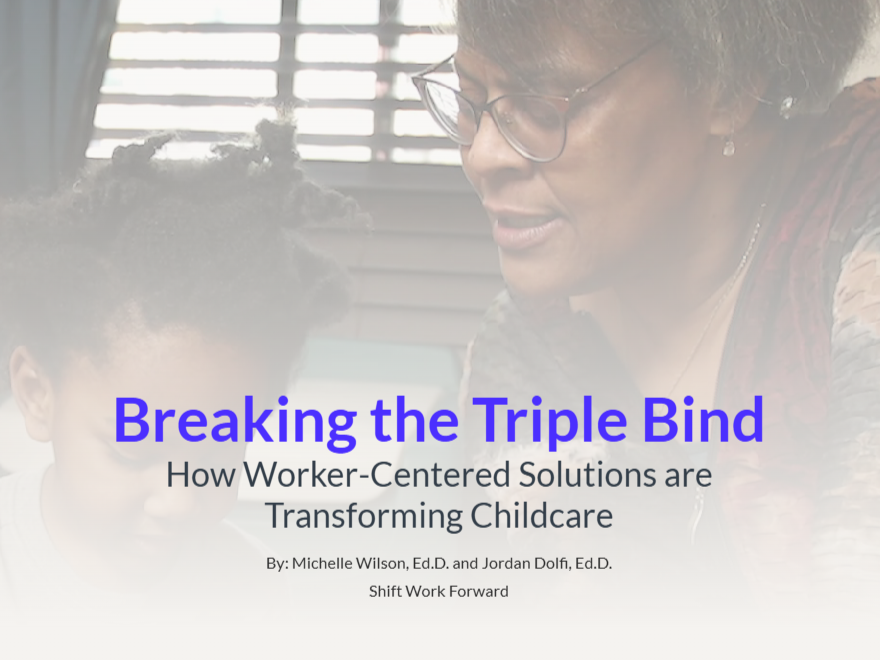
Report Details Trying Together’s Participation in Child Care Sector Quality Initiative

Shift Work Forward – a national organization aimed at redesigning workforce systems to advance racial equity and improve job quality – recently released a report on the national crisis facing the child care sector and the work done in four communities that focused on the workforce.

Learn More

The report, Breaking the Triple Bind: How Worker-Centered Solutions are Transforming Childcare, details the partnerships between Shift Work Forward and organizations from Pittsburgh, Baltimore, Akron, and Des Moines. As part of the Shifting the Childcare Industry initiative, local partners worked in their communities to build or strengthen cross-sector coalitions that took on a shared challenge: improving job quality in childcare by centering the people who do the work.

Each community involved in the initiative approached it from a different starting point and pursued a different intervention that was shaped by local conditions. 

Trying Together was part of a tri-sector coalition in Pittsburgh that also included Partner 4 Work and the Allegheny Department of Children Initiatives. This coalition focused on educator mental health and co-designed workplace-based supports to improve teacher retention and job quality. 

During the project, 168 frontline educators across 10 Pittsburgh programs shared their experiences, providing data for the initiative and helping to shape its direction. These educators identified mental health support as the priority.

The Pittsburgh organizations launched mental health supports with a shared coach across 14 centers and co-created an onboarding passport that standardized onboarding and aimed to ensure that new hires felt capable and confident in doing their jobs.

The coalition also created a Wellness Navigation model designed around how workers experience stress, burnout, and other mental health concerns on the job that was piloted by eight child care centers that embedded mental health support directly into child care workplaces.

Each participating program chose an educator to serve as a wellness navigation champion – a peer who was trained and compensated for their time. Champions provided support to their colleagues, helping them navigate wellness resources and connect to the type of help they needed. The local coalition also partnered with a licensed therapist to develop on-demand, one-on-one mental health coaching support through a team of practitioners for early educators. 

“We ask educators to hold so much – children’s emotions, families’ stress, systems that are under-resourced,” explained Cara Ciminillo, executive director for Trying Together. “This project starts with a simple truth: If we want children to thrive, we have to care for the health of the people who care for them.”

Shift Work Forward supported the coalition through the process with equity-centered coaching and technical assistance that helped the partners navigate their differences and stay focused on job quality as the through-line from design to implementation.

To learn more about the initiative and the work that was accomplished by the Pittsburgh coalition, read Shift Work Forward’s report.

News

April 10, 2026

Rep. Lee Hosts Roundtable Discussion on the Importance of Head Start

U.S. Rep. Summer Lee (D-12th) hosted a roundtable discussion Friday on the importance of Head Start with educators, parents, providers, and early childhood advocates. Emily Neff, Trying Together’s director of public policy, helped facilitate the discussion, which was held at the Allegheny Intermediate Unit at The Waterfront in Homestead.

Learn More

At the event, Lee discussed the need to expand access to high-quality early childhood education for working families and highlighted her recently introduced Head Start for America’s Children Act, which would dramatically expand the program nationwide, raise wages for educators, and strengthen support services for families. 

“Every child deserves not just a chance to survive, but a real chance to survive,” Lee said. “Head Start has opened doors for generations of children, giving them a strong start in the classroom and an even stronger foundation in life. In the richest country in the world, early childhood education cannot be a luxury for a lucky few. It must be treated like the public good it is.”

The event also included a tour of a local Head Start classroom.

The roundtable included representatives from early childhood education programs, public schools, advocacy organizations, and families directly affected by Head Start. Participants shared stories about the vital role the program plays in preparing children for school, connecting families to critical supports, and sustaining communities across the region.

“For 60 years, Head Start has served as a cornerstone program within the early childhood system, providing the essential education, care, and resources that families and young children need to thrive,” Neff said. 

Neff noted that Friday’s roundtable was timely as early childhood educators prepare for the Week of the Young Child and Trying Together celebrates the Month of the Young Child in April.

“It is vital that we honor the educators who create high-quality early learning experiences and take steps toward investing in the critical work they do for our youngest children,” said Neff, who added that Lee’s Head Start for America’s Children Act takes necessary steps to prioritize competitive compensation for early childhood professionals.

Over the past 60 years, Head Start programs have provided high-quality early education and comprehensive services to more than 40 million children and families nationwide. Today, nearly 800,000 children receive early education, health and dental care, and nutritious meals through the program, while families also gain access to referrals for job training, adult education, nutrition services, and housing support.

Lee’s bill – which was introduced with U.S. Rep. Rashida Tlaib (D-Mich.) as the House companion to legislation by U.S. Sen. Bernie Sanders (I-Vt.) – would expand the program to serve more than 11 million eligible young children nationwide.

The Head Start for America’s Children Act would:

  • Fully fund Head Start for eligible children
  • Align program hours with working families’ schedules
  • Raise Head Start educator pay to at least $60,000 per year
  • Strengthen recruitment and retention
  • Expand partnerships with child care providers and college campuses
  • Improve mental health services
  • Invest in facility upgrades, including the removal of lead contamination in paint and water

Lee serves on the House’s Committee on Oversight and Government Reform and the Committee on Education and Workforce.

News

March 17, 2026

PACCA Releases New TEACH Scholarship Tip Sheets for Providers and Early Educators

The Pennsylvania Child Care Association (PACCA) has published several new TEACH Scholarship tip sheets to help make college access and professional development easier to achieve.

The tip sheets include resources for child care providers, early educators, high school students, and early childhood programs.

Learn More

The TEACH (Teacher Education and Compensation Helps) Early Childhood Pennsylvania Scholarship Program offers early learning professionals a debt-free higher education, supporting them while they work to become teachers and earn higher wages.

The new resource for family child care providers is TEACH Scholarships for Family Child Care Providers, which explains how TEACH works and how it can support professional growth with one’s unique needs in mind.

A new resource for early educators, College Enrollment Checklist for ECE Professionals, is a detailed road map to help one get started on their education journey.

High school students interested in early learning careers will soon be able to view the new College Enrollment Checklist for High School Students resource on PACCA’s website. It’s a step-by-step guide to help the next generation plan a career in the early childhood education field.

Making Release Time Work, which is intended for early childhood programs, provides practical strategies to help employers support staff in TEACH and receive financial assistance. Another resource, Sponsoring Staff in TEACH, discusses what employers need to know to invest in their staff with confidence.

All tip sheets are available in English and Spanish. Resources can be found on PACCA’s websites for early educators and employers.

News

February 18, 2026

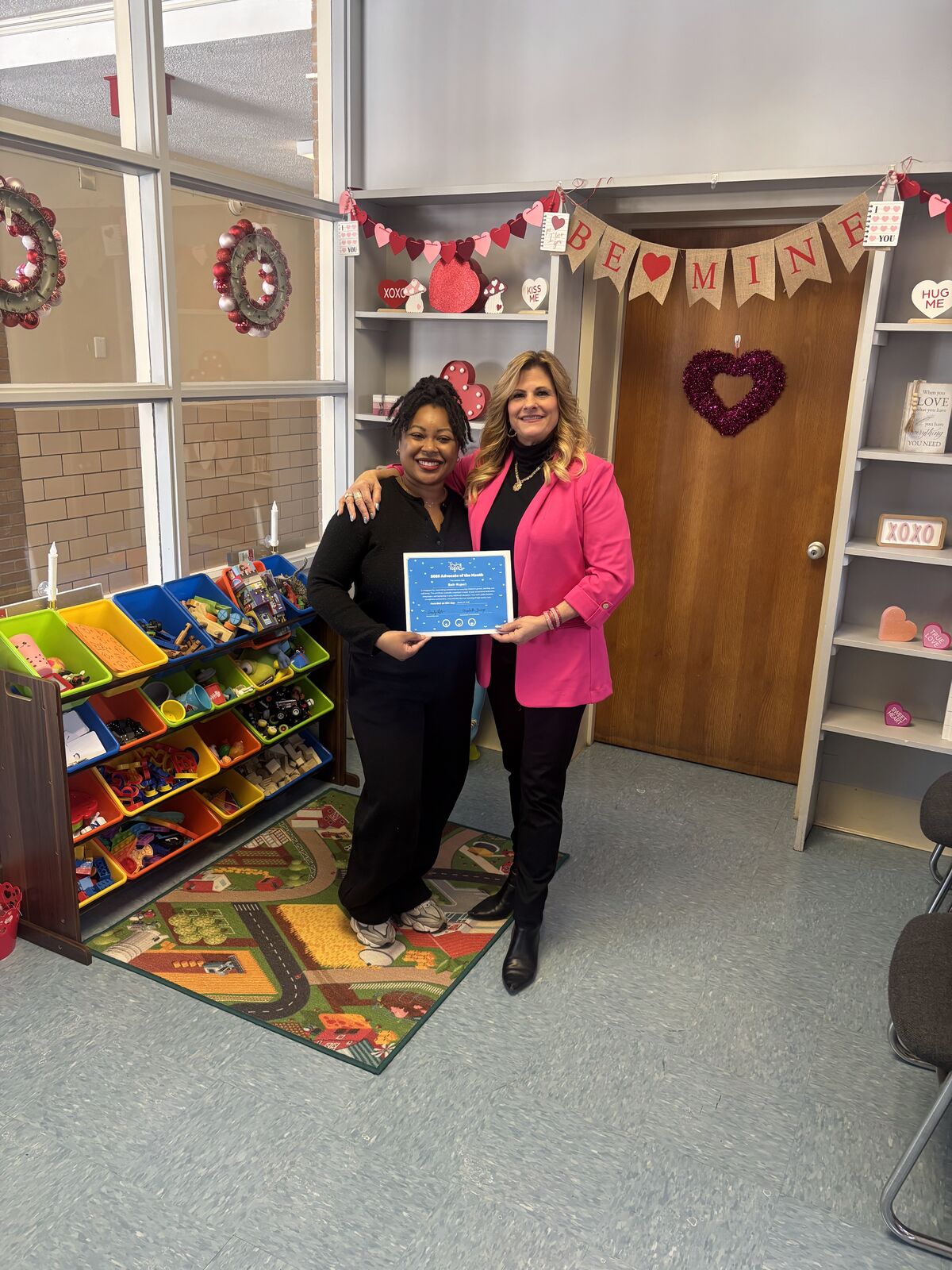
Trying Together Names Solid Foundations Academy Owner as Advocate of the Month

Trying Together has named Beth Rupert, owner of Solid Foundations Academy, as its February 2026 Advocate of the Month.

Learn More

The Advocate of the Month award goes to providers who demonstrate exceptional commitment, compassion, and leadership in the field of early childhood education. Trying Together chose Rupert because of her unique combination of experience, vision, and public influence in the field of early education.

Rupert has worked with children and families in psychiatry for more than 15 years and she understands how early experiences shape lifelong outcomes. Her background as a caregiver, educator, and advocate reflects a lifelong commitment to supporting children and families.

“Early childhood education isn’t just child care or preschool – it’s the foundation of who we become, how we learn, and how we truly see ourselves,” Rupert said. “It’s where confidence is built or broken, where curiosity is nurtured or silenced, and where inequity often begins. Potential isn’t enough without the right support at the right time.”

Rupert is currently starting an education movement focused on the benefits of quality early childhood education. She has been featured on multiple podcasts to discuss the need for systemic change in the broken education system.

Her ongoing advocacy with Trying Together and her pursuit of a doctorate in education demonstrates her dedication to advancing the field. 

“Families depend on early childhood education, so they can go to work, provide for their family, build stability, and give their children the strong educational start they deserve,” Rupert said. “Early childhood education is the backbone of our country. When we get the beginning right, we change everything that comes after.”

April Advocacy Blitz

Are you interested in an advocacy opportunity with Trying Together to use your voice as an early childhood champion? 

Join us for our April Advocacy Blitz, which is designed to elevate your voice in the field and encourage Pennsylvania’s General Assembly to prioritize continued funding that elevates the field of early care and education.

News

February 3, 2026

Shapiro Announces Additional $10M for Child Care Workforce in Proposed 2026-27 Budget

Governor Josh Shapiro announced on Tuesday during a speech before the General Assembly in Harrisburg that he is seeking an additional $10 million in his 2026-27 budget for the child care workforce.

The principal partners of Early Learning Pennsylvania – a statewide coalition of advocates focused on supporting children from birth to age 5 – praised Shapiro’s budget proposal for its focus on children and early education workforce investments, while highlighting the need for additional support in areas such as infant and toddler Early Intervention and home visiting.

Learn More

Shapiro said the additional $10 million would bring the total investment to $35 million for the recurring Child Recruitment and Retention Program. The governor said the investment aims to stabilize and grow the child care workforce amid an ongoing teacher shortage.

“We need more early childhood educators and pre-k teachers – kind, gentle souls who want to get our kids started on the right path, but who have been paid too little for too long,” Shapiro said. “This budget delivers for them.”

Trying Together’s Executive Director Cara Ciminillo lauded this increased investment, saying, “I am pleased to see Governor Shapiro continue to prioritize the child care workforce in his proposed budget. This additional funding demonstrates to educators that their work is vital, valued, and worth investing in.”

The proposed budget also includes an additional $7.5 million for Pre-K Counts and $2 million for Head Start State Supplemental to help providers raise wages and retain staff. Shapiro said he is also calling for an additional $2.5 million for teacher professional development to ensure that educators have the training and tools needed to support students.

In a statement, Start Strong PA praised Shapiro’s budget proposal.

“Child care is an economic development strategy, workforce participation strategy, and education success strategy,” the statement read. “These investments will encourage teachers to remain in the field, allowing more parents to work, prepare more Pennsylvania children for school, and build a stronger and more prosperous commonwealth.”

However, Start Strong PA noted that the reduction in funding of $5.2 million for the infant and toddler Early Intervention program in the Department of Human Services’ budget failed to  recognize needed investments in those areas.

“Early Intervention is a critical and federally-required component of the early care and education continuum, as all children from birth through age 5 with developmental delays, regardless of family income level, must be identified, referred to, and provided necessary services to help them and their families reach their fullest potential,” Start Strong PA’s statement read. “The cut to infant and toddler Early Intervention in the Department of Human Services’ budget is deeply concerning. The reduction of funding will negatively impact the ability to adequately deliver services to more children in Pennsylvania.”

Start Strong PA also noted that stagnant funding reduces home visiting services for pregnant women and families with young children.

To read the governor’s full budget address, visit the governor’s office pressroom website.

Take Action – Thank Governor Shapiro for Prioritizing the ECE Workforce!

Start Strong PA has issued a new action alert encouraging people to send a message to Governor Shapiro thanking him for prioritizing the ECE workforce. See action alert.

News

January 27, 2026

Blog Lists 100 Employee Engagement Ideas for Child Care Programs

A new Brightwheel blog post contends that when a child care program’s staff feels connected, motivated, and valued, it directly reflects the care and learning experiences that the program offers.

Learn More

In the post, Brightwheel put together a list of 100 employee engagement ideas for child care programs that can increase staff satisfaction, productivity, and the overall performance of programs or preschools.

The 100 suggestions are broken down into a variety of categories, including career development, appreciation and recognition, team building, and others.

The post notes that it is not enough that employees show up and do their jobs if program directors want to provide the best possible care for children. Employees must also be engaged and highly-motivated. 

Employee engagement, the article contends, improves the quality of care at a program, boosts employee retention and reduces turnover, and helps to achieve business goals.

Below are several of the ideas listed under each category.

Invest in staff’s career development

  • Have regular 1:1 check-ins so staff can share highlights, challenges, and areas where they need more training or support.
  • Encourage staff members to self-reflect on their own career goals throughout the year.
  • Offer tuition assistance or reimbursement for staff furthering their education in early childhood.

Show appreciation and recognition regularly

  • Plan staff outings and offsite events.
  • Practice active listening and implement an open-door policy.
  • Work with staff members’ individual needs to offer flexible scheduling if possible.

Provide team-building opportunities

  • Start every staff meeting with a fun icebreaker that helps staff get to know each other better.
  • Play fun games on your next training day.
  • Celebrate special holidays, milestones, and birthdays as a team.

Support your staff’s well-being and mental health

  • Model healthy behavior in the workplace and remember to take care of yourself.
  • Implement Teacher Wellness Days so staff can have time to recharge.
  • Post a list of community mental health resources in your staff break room.

Engage veteran staff members

  • Ask veteran staff members to mentor newly-hired staff members.
  • Have them lead discussions during professional development meetings.
  • Celebrate veteran staff members’ career milestones.

To read all 100 employee engagement ideas for early childhood education staff, visit Brightwheel’s blog post.

News

December 22, 2025

Communication is Key to Building Strong Relationships Between ECE Professionals and Caregivers

Having a good relationship with caregivers is essential to an early childhood educator’s ability to guide a child’s development and success. 

A recent article by Brightwheel says that communication is the key to building strong relationships at preschools or child care centers.

Learn More

For many caregivers, Brightwheel writes, their child’s entry into preschool or a child care center will be the first time that they’ve trusted their child with someone other than family or friends.

Therefore, it is important for early childhood education professionals to understand how to inform families about a program’s goals, their child’s progress, and daily activities.

Effective communication is the means through which educators can build trust and create good relationships with caregivers. And establishing a respectful relationship is an essential component.

To develop a respectful relationship, early childhood educators should gather the following information:

  • Religious and cultural background, values, and beliefs
  • Family dynamics and home arrangements
  • Preferred languages
  • Disabilities or health issues or concerns
  • Learning styles

Understanding communication preferences is also important. This can include knowing which days and times are best to reach caregivers and whether they prefer to communicate over the phone, through email, or in person. Educators should also communicate to caregivers the same information about themselves.

Other effective means of communicating with caregivers include:

  • Monthly newsletters that cover school-wide announcements, updates, or events
  • Apps that help educators remain in touch with caregivers as well as track daily events and activities
  • Social media pages that give caregivers a glimpse into daily activities
  • Blogs that keep families up-to-date on current events in early childhood education

For more information – including such topics as how to have difficult discussions and active listening – read Brightwheel’s article.

News

December 8, 2025

OCDEL Creates Internal Evaluation Process for ECE Professionals with Foreign Degrees

Pennsylvania’s Office of Child Development and Early Learning (OCDEL) and The Pennsylvania Key have developed an initiative to support early childhood education professionals who obtained education outside of the United States by creating an internal process for foreign degree evaluations.

Learn More

The new resource will help to reduce administrative and financial burdens to early childhood education professionals and limit out-of-pocket expenses.

As of December 1, foreign degree evaluations for individuals applying for placement on OCDEL’s career pathway will occur seamlessly through services provided by education credential evaluators.

As part of the initiative, each applicant will receive support during the evaluation process with evaluators and have their documents linked in their Pennsylvania PD Registry account. This will allow applicants and other support teams to obtain evaluated educational documents as needed.

The service is available at no cost for the duration of the current fiscal year. After this fiscal year, the service will be available at a substantial discount. Participants are encouraged to share their experiences with OCDEL to help inform future implementation and improvements.

For applicants seeking reimbursement for previously evaluated documents, the foreign degree voucher program will continue reimbursements through December 31, after which all ECE Career Pathway applicants will be encouraged to seek evaluations through the new process.

More information can be found on the Pennsylvania Key’s internal education evaluation webpage

News

November 21, 2025

Providers Charging Private Pay Rates Urged to Complete Market Rate Survey by Dec. 8

The Pennsylvania Office of Child Development and Early Learning (OCDEL) is reminding licensed child care providers who charge private pay tuition rates to complete the annual Market Rate Survey by Monday, December 8.

Learn More

OCDEL is required to collect up-to-date information from all licensed providers every three years. The 2025 Child Care Market Rate Survey helps OCDEL to set child care subsidy payment rates that are reflective of the private pay market.

Even programs that don’t accept subsidies should fill out the survey. When all providers complete the survey, the date gives a more accurate picture of child care tuition rates in Pennsylvania.

Filling out the survey helps to set payment rates for child care subsidies over the next four years and supports policies that better reflect the real structure and value of child care services statewide. When more providers respond, rates are fairer and reflect real tuition rates. It also strengthens the case for public investment in child care for everyone.

The survey is being conducted by the Institute of State and Regional Affairs at Penn State Harrisburg in partnership with OCDEL and The Pennsylvania Key. The survey should be filled out no later than December 8.

Below, watch a video in which Shante Brown, deputy secretary at OCDEL, calls on providers to take part in the survey.