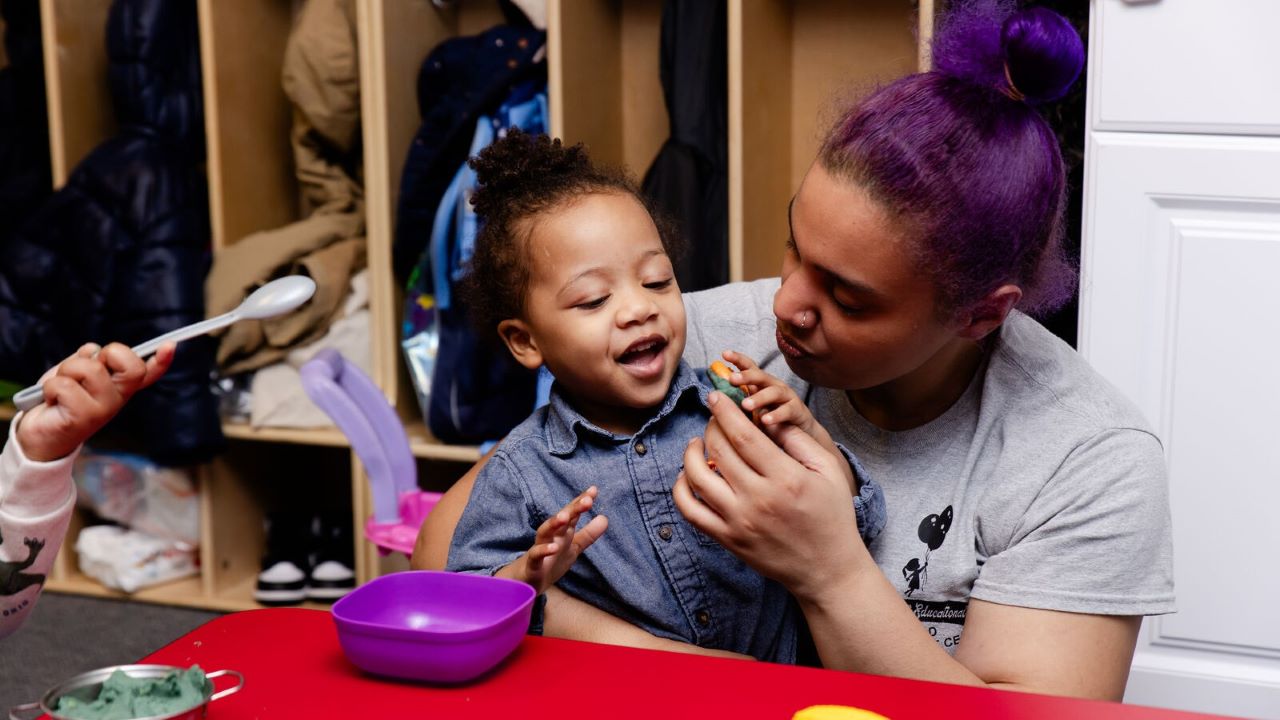
In partnership with Home Grown and the United Way of Southwestern Pennsylvania, Trying Together is participating in a pilot program to provide direct cash payments to select home-based providers.
About the Program
The Thriving Providers Project (TPP) – a national initiative spearheaded by Home Grown – seeks to demonstrate how direct cash payments to providers will have positive results for relatives who provide child care to young children. The goal is to reform child care payment policies and influence future decisions around compensation for home-based child care providers. TPP provides pre-selected caregivers with a direct cash payment of $500 monthly, understanding that the support to providers reduces financial stress and ultimately improves the early learning experiences of the children and families they serve.
“I can afford to take the children on field trips,” shared Relative Provider Tywanda Powell. “I bought them school supplies and better toys. I was able to just do extra for the children.”
Program Participants
Communities with limited access to resources such as affordable child care, transportation and healthcare, were prioritized to ensure support reached families with the greatest need.
Within these neighborhoods, participant selection emphasized caregivers whose roles have had a significant impact on child and family well-being.
- Grandparents and great-grandparents raising grandchildren were prioritized for the stability, intergenerational connection, and nurturing environment they provide, often while managing limited financial resources.
- Caregivers of children under age five were included given the critical importance of the early years for child development, when consistent care and support have the greatest long-term benefits.
- Caregivers providing care during nontraditional hours were also prioritized, as they help families balance essential work responsibilities with the challenge of securing reliable care outside of standard availability.
By centering these caregiving strengths, the program directs resources to families whose dedication and resilience most directly influences children’s growth and stability, ensuring funds provide both immediate relief and long-term community benefit.
“The program not only supports caregivers who are often underrecognized and underpaid but also improves access to reliable, nurturing care for families, particularly in underserved communities,” explains Bliss Letang, director of equity initiatives at Trying Together.
“Additionally, TPP generates valuable evidence on the impact of direct cash payments, informing future policies and reforms around fair compensation for home-based providers, while fostering stronger connections between children, families, and their caregivers.”
The Thriving Providers Project’s philosophy is based on a belief that people should be trusted to make decisions for themselves. Drawing on learning from guaranteed income initiatives around the nation and best practices in early childhood education, the program’s mission is to support and stabilize caregivers and, in the process, improve the availability and quality of care for children and families. The transfers enable providers to make decisions that are best for the children and families they serve.
Home-based Child Care Statistics
Home-based child care providers are the largest population of caregivers serving the largest number of children, ages five and below. A total of 30% of infants and toddlers attend home-based child care as their primary care arrangement, compared to just 12% in centers, according to the program.
However, home-based care providers receive little public support, which makes them more vulnerable to financial emergencies or crises. On average, family child care providers work 56 hours per week and earn around $29,000. About 30% of them rely on at least one other job.
For more information, see the Thriving Providers Project Fact Sheet.