Centering the Identity of the Black Child through African Culture

News

May 13, 2019

Centering the Identity of the Black Child through African Culture

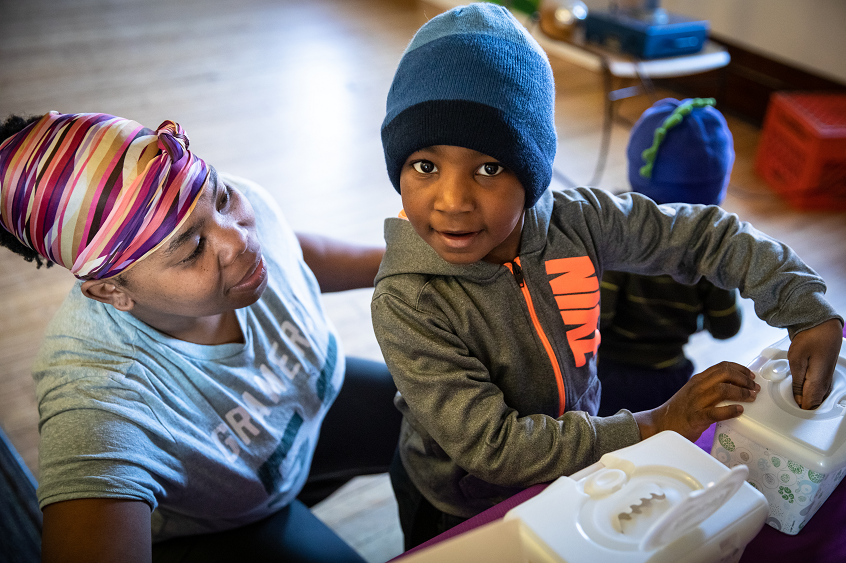
Join the 2nd Annual Centering the Identity of the Black Child through African Culture conference to explore African-centered parenting and guardianship, psychology, and tools to heal vitality. Child care is provided.

About

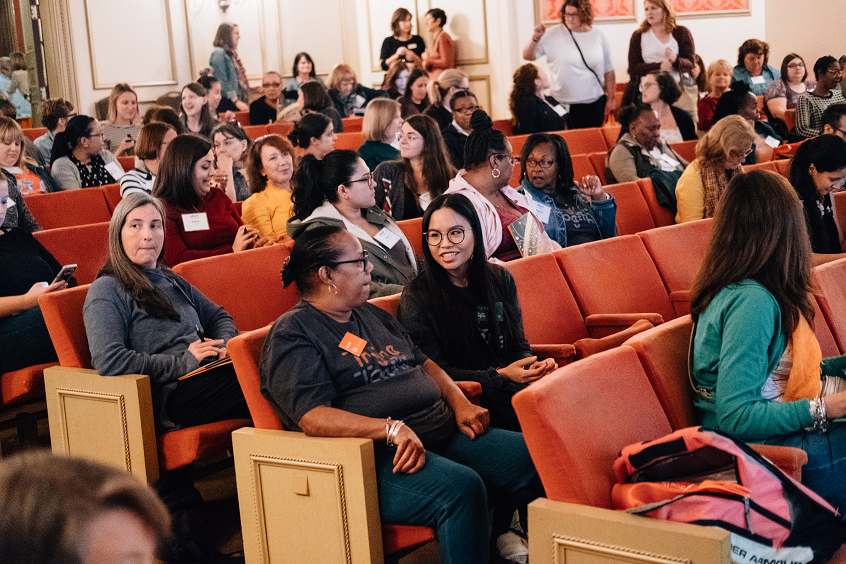
Bringing together parents, caregivers, the Association of Black Psychologies, health experts, creatives, and learning leaders, the 2nd Annual Centering the Identity of the Black Child through African Culture conference will highlight health and education as a central focus to optimize energy, development milestones, and success. Attendees can expect to leave the conference with tools to latch onto the high teachings that have been preserved by the knowledge bearers to help families and communities understand the role of African Culture in the development of black children.

Registration

To RSVP, visit the event webpage.

For questions, contact 412.689.2812 or eyberscrae@gmail.com.

Lunch & Learn: Sensory Learning & the Autism Spectrum

News

Lunch & Learn: Sensory Learning & the Autism Spectrum

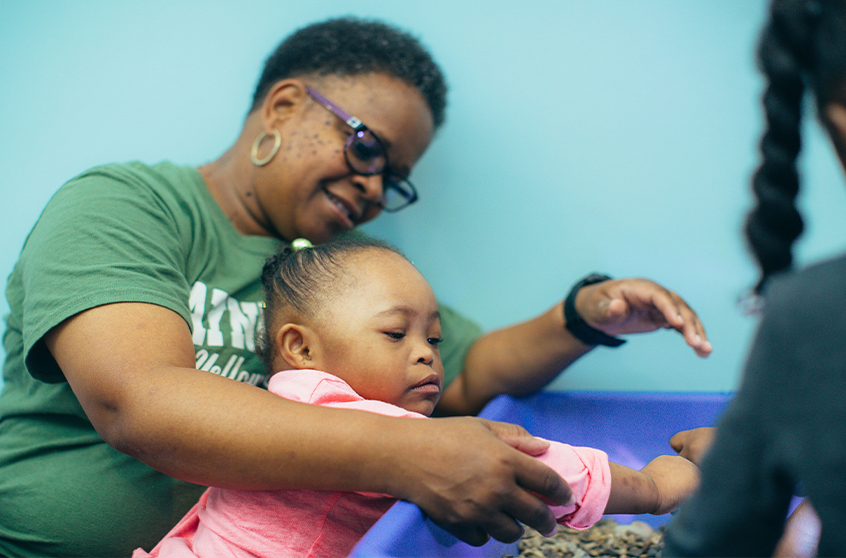
Join Parents in Toto Autism Resource Center, Seneca Valley School District, and Remake Learning to discuss the importance of sensory learning for youth on the autism spectrum, benefits of this learning, and the parent resources that are available.

About

Educators, administrators, community organization leaders, and parents are highly encouraged to attend and take part in this important conversation surrounding differently-abled youth in the region. Lunch will be served. More details and accessibility will be noted in an email closer to the event.

For any dietary restrictions or requests, email Allie at allie@remakelearning.org. The deadline for restriction requests is June 19, 2019.

Registration

This event is free and open to the public. To RSVP, visit the event webpage.

For questions about the event or accessibility, email Allie at allie@remakelearning.org.

Historic Increases for Early Learning & Development Programs

News

May 9, 2019

Historic Increases for Early Learning & Development Programs

The House Appropriations Committee recently approved the Labor, Health and Human Services, and Education spending bill for FY2020, which outlines funding for early care and learning programs critical to babies’ development. The first three years are a time in development unmatched by any other later point in life. But the recently released State of Babies Yearbook: 2019 reveals troubling early warning signs that too many young children face conditions that place their development – and our future – at risk.

About the Bill

The bill includes historic increases to key early learning and development programs that can help to reverse this path we have set for our future, including:

    • An increase of $2.4 billion for the Child Care and Development Block Grant;
    • $525 million increase in the set-aside for the expansion of Early Head Start, including through EHS-Child Care Partnerships;
    • Doubling of the Infant and Early Childhood Mental Health Grant Program, to a total of $10 million; and
    • An increase of $21.3 million for Part C Early Intervention.

By laying the foundation today for 12 million infants and toddlers living in the U.S., we are investing in our society’s future.

Learn More

To learn more, see Zero to Three’s full statement.

*Information provided by Zero to Three

Behaviors: Ours & Theirs | WCCC Mini-Conference

News

May 8, 2019

Behaviors: Ours & Theirs | WCCC Mini-Conference

On behalf of OCDEL and hosted by WCCC’s Early Childhood Education/Pre-K – Grade 4 Program, the “Behaviors: Ours & Theirs” mini-conference will focus on improving practitioners’ knowledge and skill to support children’s social and emotional development through culturally relevant practices, as well as exploring how to apply these skills to practitioners’ CQI plans.

About

Early childhood professionals are invited to attend a personalized mini-conference experience. Attendees will split into two groups and presenters will offer each session two times so that each group will have an opportunity to participate in both sessions. Participants will be provided with a continental breakfast, welcome and introduction, two educational sessions (each including a bound notebook of instructional materials), and a tour of WCCC’s NAEYC accredited Campus Children’s center.

This event includes 3 credit hours; PQAS approved. Participants should be familiar with the ECERS and other Keystone STARS CQI tools such as CLASS, PAS, and Good, Better Best.

Learning Objectives

Attendees will be able to:

  • Discuss and recognize positive observation and interactions with children and families,
  • Examine and organize their understanding of culture and how positive interactions can lead to solid  relationships with children and families,
  • Review commonly used Keystone STARS CQI tools to determine areas where changes or improvements can be made in their programs,
  • Explain why these changes will enhance the positive social and emotional development of children, and
  • Discuss how these changes will also help them recognize and value cultural diversity.

Registration

To register for this event, visit the registration document!

Registration is required and is $15 for the first 50 registrants! This fee is due (paid by check) on the day of the event, June 1, 2019. To learn more about the event, visit the PD Registry website.

Questions

For questions, contact Vicki Hricik at hricikv@westmoreland.edu or 724.925.4023.

Share this flyer with your network.

Positive Racial Identity Development in Early Education

News

May 6, 2019

Positive Racial Identity Development in Early Education

Join the Positive Racial Identity Development in Early Education (P.R.I.D.E.) program for a professional development training centered on exposing directors to strategies that promote positive racial identity in African American children. This session will offer 6 credit hours; PQAS approved.

Training Objectives

Upon completion, the learner will be able to:

  1. Describe racial awareness (i.e., the ages and stages at which children develop an awareness of physical characteristics related to existing social categories of race in America),
  2. Display awareness of the role of early educators in supporting children’s healthy understanding of race, and
  3. Illustrate techniques for working with staff and families to integrate conversations and activities that support children’s racial awareness and positive racial identity.

Registration

To register for this training, visit the Pennsylvania PD Registry website.

Questions

For registration questions, contact Emily Bengel at 412.255.1453 or ebengel@ywcapgh.org.

For course questions, contact Aisha White at 412.383.7372 or aiw9@pitt.edu.

Share this flyer with your network.

STEM All Hands on Tech: Robot Playground

News

May 1, 2019

STEM All Hands on Tech: Robot Playground

Join the Carnegie Library of Pittsburgh Carrick branch for a day of experimentation, play, and learning by exploring interactive technology and a variety of robots. STEM All Hands On Tech programs support learning and literacy by introducing children to technology. This event is intended for children in grades pre-k to 5.

Questions

For questions, contact Jon Antoszewski at 412.381.6543 or antoszewskijo@carnegielibrary.org.

This location is handicap accessible. See the event page.

Carnegie Library’s 2019 List of Best Books for Babies

News

Carnegie Library’s 2019 List of Best Books for Babies

For the twentieth time since 2000, a group of local librarians and child development experts has sorted through the previous year’s publications to select and promote the 10 Best Books for Babies.

About Best Books for Babies

The Best Books for Babies project is intended to encourage reading beginning at birth and recognize publishers who create excellent books for the very youngest listeners. The books selected, from sturdy board books to fun lift-the-flap titles to charming picture book portraits of young families, will delight and engage babies age birth through 18 months and the adults who care for them.

See the List

Families and caregivers can view the full list by visiting the Library’s PDF.

Where to Find Them

Pick up one or more of these books at a Carnegie Library of Pittsburgh branch near you. In addition to spending some cozy time together, you’ll be preparing baby’s brain to learn and grow.

*Information provided by the Carnegie Library of Pittsburgh

Foundations Urged to Unite to Reinforce Early Learning

News

April 22, 2019

Foundations Urged to Unite to Reinforce Early Learning

In a recent article in the Chronicle of Philanthropy, Gregg Behr and Kristen Burns, both Executives of the Grable Foundation, discuss the topic of early childhood programs and explore the increasing general awareness of the important role of early learning experiences.

Overview

Data has repeatedly shown that “kids who participate in high-quality programs develop a greater capacity for cognitive and social-emotional skills like collaboration, communication, and perseverance — skills that improve school attendance, grades, and more.”

However, with the current levels of early childhood funding, only “two-thirds of American four-year-olds are enrolled in early learning programs…with less than a quarter of those programs being considered high-quality.” Because of this, advocates are calling for grantmakers and foundations to step up, as many have, to reinforce the positive impact of early childhood programs.

Toxic Stress and Trauma

In the article, Behr and Burns discuss the negative impacts of sustained exposure to toxic stress and trauma. Because of this, disadvantaged kids may be taking the brunt of the impact with greater risks for developmental delays linked to problems such as “poor academic achievement, substance abuse, and diabetes.” However, studies show that even if a young child is exposed to toxic stress and trauma, many of the negative impacts may be reduced if the child has access to a positive, safe, and supportive early learning experience. By advocating for increased investments in early childhood, foundations are advocating to support the healthy development and success of our nation’s children.

Current Funding

Behr and Burns state that “among the 91 grantmakers surveyed, one-third reported funding [efforts related to early childhood programs]. Of those, well over half anticipated increased support in the next two years.” However, despite wide and growing support for the cause, early childhood spending gets just four percent of foundation dollars. Because of this, advocates are calling on grantmakers and foundations to unite in an effort to support the benefits of early childhood programs. While philanthropy cannot take the place of adequate government funding, any supportive effort today “may lead to better public policy tomorrow.”

Learn More

To read the full article, including clear examples highlighted in the Grantmakers for Education report, visit the website.

Gregg Behr is executive director of the Grable Foundation and chairman of Grantmakers for Education. Kristen Burns is associate director of Grable.

How to Run a Profitable Child Care Business

News

April 18, 2019

How to Run a Profitable Child Care Business

Through this four-week online session, participants learn the basic principles of operating the business of a child care program.

With a focus on maximizing profits, Trying Together will present opportunities to minimize expenses and illustrate ways that various public funding sources and Keystone STARS participation may affect program revenue. Primarily intended for child care program administrators, owners, and operators, this course provides valuable resources for those interested in applying for Pre-K Counts, or for family and group child care program leaders who are interested in learning more about operating profitably.

This online course occurs over the timeline of four weeks (Start Date: Monday, May 27 through Thursday, June 27, 2019), and will be offering four hours of professional development credits after completion of the session.

Registration

To register for this course, visit the event website.

Questions

For more information and questions, contact Jasmine Davis at 412.421.3889 or jasmine@tryingtogether.org.

Share this flyer with your network.

PA Pre-K Counts Announces Request for Applications

News

PA Pre-K Counts Announces Request for Applications

Pennsylvania’s fiscal year (FY) 2019-20 proposed budget continues to build on the governor’s commitment to high-quality early learning services and includes more than $1.1 billion in state and nearly $850 million in federal support for Office of Child Development and Early Learning (OCDEL) programs. This proposal represents the further steps toward achieving the goal of universal access to high-quality pre-k programs.

With new investments in Pennsylvania Pre-K Counts ($40 million) and the Head Start Supplemental Assistance Program ($10 million), the state will be able to increase the number of children served in high-quality pre-k. Due to this proposed funding, the Pennsylvania Department of Education (PDE) is seeking applicants for PA Pre-K Counts.

About Pre-K Counts

PA Pre-K Counts provides children with the opportunity to experience a high-quality pre-kindergarten program. The program standards ensure a high return on the investment in the preparation of young children for school and will help to close the achievement gap. Early education through PA Pre-K Counts can open the doors of opportunity for every child to do well in school, the workforce, and life.

About the Request for Applications (RFA)

PDE is issuing this RFA to support providers in preparing to serve children and to be ready for September enrollment. The department recognizes that providers need to conduct outreach to families; recruit, hire and train staff; and do all of the planning necessary to successfully implement the program pending approval of proposed funding.

Information on the application process can be accessed at PKC How to Apply.

Eligible Applicants

Pennsylvania continues to be committed to a mixed delivery system. As such, eligible applicants include existing PA Pre-K Counts grantees and new applicants from five eligible entity categories:

  1. School districts;
  2. PDE Licensed nursery schools;
  3. Head Start grantees;
  4. Child care centers and group child care homes designated at Keystone STAR 3 or 4; and
  5. A third party entity applying for Pennsylvania Pre‐K Counts funding to administer the lead agency responsibilities for entities that are eligible to provide the classroom services under the categories listed above.

PDE encourages all eligible entities to assess community need and apply for funding to support eligible children in their communities. There is no limit to the number of slots that may be requested through this application process.

Eligibility Criteria

Age (three and four-year-old children) and family income (at or below 300 percent of the Federal Poverty Guidelines) are the primary eligibility criteria for participation in PA Pre-K Counts. Additional priorities for enrollment should be developed at the local level and may include:

  • teen parents,
  • migrant or seasonal students,
  • children of a family experiencing homelessness,
  • children involved in the child welfare system,
  • siblings of children already enrolled in the program,
  • English language learners,
  • children of an incarcerated parent, or
  • children receiving early intervention or behavioral health supports.

Required Documentation

Applicants must have the following in place to complete an application: a Letter of Intent, a vendor number (SAP #), an administrative unit number (AUN), a master provider index number (MPI), and a federal ID number or tax ID number.

PA Pre-K Counts Statute, Regulations, and Guidance

Any applicant should thoroughly review PA Pre-K Counts Statute, Regulations, and Guidance prior to submission of a letter of intent to apply to ensure an understanding of the program requirements and expectations of compliance if an application is successful. The application review process will include evaluation of the extent to which the applicant demonstrates knowledge and understanding of the PA Pre-K Counts Statute and Regulations.

Required Letter of Intent

Because of the need to establish access to eGrants procurement system, eligible organizations must submit a completed Letter of Intent to apply for funds. The template posted at PKC How to Apply must be used. The Letter of Intent represents intent to apply for PA Pre-K Counts funding and includes the legal name of the eligible agency that will apply, the AUN associated with the applying legal entity, preliminary information about requested funding, program model, provider type, and area to be served. Except for the legal entity and AUN, information submitted in the Letter of Intent may be modified in the final eGrants application.

Programs interested in applying must submit a fully completed Letter of Intent by 3 pm on May 8, 2019 to RA-PAPreKCounts@pa.gov. Programs that do not submit a timely Letter of Intent will not be able to apply in the eGrants system. Late submissions will not be accepted. Those agencies submitting a fully complete Letter of Intent by the due date will be notified when the PA Pre-K Counts application is open in eGrants.

Administrative Unit Number (AUN Number)

PA Pre-K Counts applicants will need to supply a valid AUN number within the Letter of Intent. A Letter of Intent without a valid AUN that matches the legal name of the applying entity will not be accepted. To verify your AUN number or to check to see if you have one assigned to your agency, visit EDNA. If you are an Intermediate Unit, select Search for Intermediate Units. If you are not an Intermediate Unit, select Advanced Search, and search for your agency.

Applicants that are not already licensed by PDE and therefore do not have an AUN number should contact Brian Bell (bribell@pa.gov, 717.346.0038) or James Redd (jaredd@pa.gov) at OCDEL.

Vendor Number (SAP #)

The supplied vendor number MUST align with the legal name and address provided in the application. A vendor number and account can be set up by registering at Vendor Number Registration selecting the Non-Procurement Registration Form. All agencies applying for PA Pre-K Counts grants must be pre-registered. The Central Vendor Management Unit is a storage database. The Comptroller uses this account to store direct deposit information.

If you have any questions about vendor numbers, please contact Brian Bell (bribell@pa.gov, 717.346.0038) or James Redd (jaredd@pa.gov) at OCDEL.

Master Provider Index (MPI #)

The supplied MPI number MUST align with the legal name and address provided in the application. All PA Pre-K Counts applicants will need an MPI number if the application is successful. The number is requested as part of the application process to ensure timely contracting for approved applications. MPI numbers are used by the PA Department of Human Services to identify legal entities and service locations that participate in any of its programs. As such, they are used in PELICAN as a common identifier for all OCDEL programs, including child care licensing, Early Intervention, PA Pre-K Counts, Head Start Supplemental Assistance Program, and Keystone STARS.

Legal entities are assigned a unique nine-digit MPI number. In addition, service locations are assigned a unique 13-digit MPI number, which is created by adding a four-digit extension to the nine-digit MPI of the legal entity. Legal entities and service providers currently participating in any of these programs should have an MPI number.

Applicants that are not currently participating in any of these programs should contact the Early Learning Network (ELN) Help Desk at 877.491.3818 and provide their Federal Tax ID to determine their MPI numbers. MPI numbers will not be provided without a Federal Tax ID number.

Tax ID Number or Federal ID Number

This is the number that an agency uses on its federal W-9 form. Applicants for PA Pre-K Counts funds should consult with the person who handles tax, legal, or accounting matters for the agency to determine the federal ID number. Use the number that aligns with the legal name and address provided in this application. The correct number must be provided when requested in order to process an application. Failure to do so will result in significant delays in funding approved applicants for FY 2019-20. This number is often referred to as the “FEIN number” by OCDEL staff.

Pre-application recorded webinar

An asynchronous pre-application webinar will be posted at PKC How to Apply after April 23, 2019 to assist interested applicants in the completion of the application. The webinar will include information on the application process and program requirements.

Questions & More Information

All questions regarding this competitive RFA process should be directed to Project Officer Deborah Wise only, by sending an email to RA-PAPreKCounts@pa.gov.

In order to provide consistent messaging and an equitable application process, ONLY questions sent to RA-PAPreKCounts@pa.gov, will be addressed. Questions and responses not already covered in either Pennsylvania Pre-K Counts Statute, Regulations, and Guidance, or within the Application Guidance document, will be included in an on-going Frequently Asked Questions document posted at PKC How to Apply.