News

May 6, 2026

APOST Announces Summer Professional Development Courses

Allegheny Partners for Out-of-School Time (APOST) will offer eight workshops from May to August as part of its summer professional development series.

Learn More

Registration, which is required for all courses, will close three days prior to each event or when the session is full. 

All workshops take about two-and-a-half to three hours and locations vary. Specific time and location details are listed on the workshop’s event registration page.

For workshops that are held at CoLab18, APOST will provide parking validation for attendees who park in the Nova Place garage.

Participants are encouraged to complete a full set of the Social & Emotional Learning (SEL) Youth Work Methods Workshops from The Forum for Youth Investment in one season.

The summer workshops include:

For more information on summer professional development courses, visit APOST’s website.

News

May 5, 2026

Center for Teaching Innovation Outlines Guidelines for Establishing Classroom Norms

Establishing norms for the classroom can help to cut down on disruptions, provide guidelines for what is considered acceptable behavior, decrease incivility, and make students and teachers feel safe to express their ideas or points of view, according to a new resource from the Center for Teaching Innovation

The center has outlined a number of techniques that instructors should consider when establishing and implementing classroom norms. These cover such topics as reflecting on limits, communicating expectations and implementing classroom norms.

Reflecting on Limits

To set limits in the classroom, Instructors should decide what they consider to be acceptable or unacceptable for classroom behavior. Also, they should consider how they and their students might differ about what is considered acceptable or unacceptable.

Then, they should think about how to communicate expectations and ensure that students understand them.

Communicating Expectations

Teachers should share expectations and explain why they have them. One example cited by the Center for Teaching Innovation is that texting might communicate disrespect to the instructor and could possibly cause class disruptions.

Instructors should create a space in class for students to discuss in small groups such prompts as: 

  • What does a productive learning environment look like?
  • What conditions are needed for students to feel safe to participate in class?
  • What is considered acceptable or unacceptable classroom behavior?

Implementing Classroom Norms

To implement classroom norms, instructors should create their own list and present them to the class. Students should be asked to contribute additional items, and then the class should discuss the items they added and decide on a list of norms as a group.

For older students, the classroom norms should be included in the course syllabus and be presented as a contract that students must sign.

Instructors should revisit these norms throughout the school year. In the event of conflict, use classroom norms to dictate how to address difficult situations.

For more information, read the Center for Teaching Innovation’s resource on establishing classroom norms.

News

Pairing Activities with Literacy Can Improve Comprehension and Help Children Learn to Love Reading

Getting some children excited about cracking a book can be a challenge, but there are methods and activities that caregivers and educators can pair with reading that can help children to develop an interest in it.

Reading Aloud to Children

Marissa Rainey, early literacy strategist for Trying Together and lead organizer for Buzzword at the Homewood Early Learning Hub & Family Center, said it is important to read aloud for about 10 to 20 minutes to a child from birth to age 5.

“Show them how to hold a book, open it, and turn the pages,” Rainey said. “Emphasize phonemic awareness, which is the idea of learning letter sounds. Whenever you’re going through a book, stop to sound out any difficult words.”

Rainey said that caregivers can use alphabet flash cards to help early readers learn to sound out words. She added that caregivers should also provide background knowledge on topics, if possible, while reading to a child.

“If the book you’re reading is about farming, talk with them about the different animals – what sounds they make or where they live – to make the connection,” she said.

She also recommended taking part in interactive reading with children by asking such questions as what the child thinks will happen next in a story, what colors they see in the book, and what they have noticed about the characters.

To learn about methods and activities, how a change of scenery might help, and how to encourage independent reading, read the full article on Buzzword.

News

Allegheny County Executive Announces Expanded Access to Child Care, OST Programs

Allegheny County Executive Sara Innamorato recently announced a new initiative to strengthen stability, opportunity, and quality of life for working families in the county by expanding access to child care and out-of-school time (OST) programs.

Learn More

As part of the coordinated Forward with Families initiative, the county has a goal of creating 5,000 new slots over the next five years.

Led by the Allegheny County Department of Children Initiatives, the expansion of slots will focus on increasing capacity, supporting providers, and addressing gaps in care, especially for infants and toddlers, evenings and weekends, and before- and after-school programming.

Forward with Families includes a multi-pronged approach to addressing challenges facing families today. The five pillars of the initiative are:

  • Health and well-being
  • Child care caregiving and learning
  • Employment and education
  • Housing and food
  • Savings and cash

Allegheny County is also promoting a refreshed tool – the Forward with Families Program Finder, where county residents can input information about their address, children, and what kind of program they are looking for and find options for child care, out-of-school time slots, and summer camps.

Additional components of Forward with Families will be announced in the coming months.

“Young people learn how to collaborate, create, problem solve, and dream in out-of-school time programs, all skills that are needed for healthy individuals and communities,” said Karen Dreyer, executive director for Allegheny Partners for Out-of-School Time (APOST). “The county’s investments will get us closer to closing the gap to ensure that all youth have access to high-quality OST learning opportunities.”

News

May 4, 2026

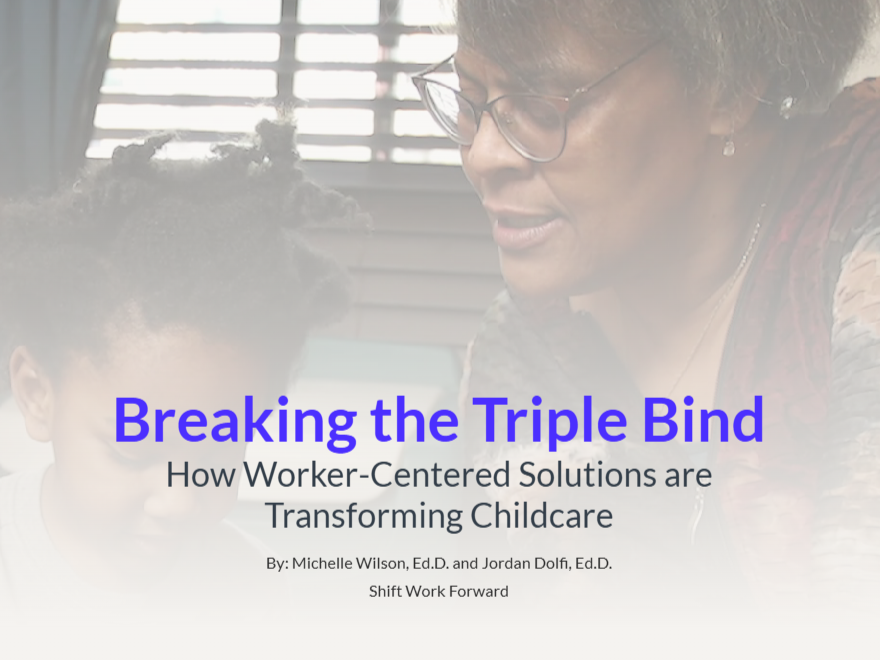
Report Details Trying Together’s Participation in Child Care Sector Quality Initiative

Shift Work Forward – a national organization aimed at redesigning workforce systems to advance racial equity and improve job quality – recently released a report on the national crisis facing the child care sector and the work done in four communities that focused on the workforce.

Learn More

The report, Breaking the Triple Bind: How Worker-Centered Solutions are Transforming Childcare, details the partnerships between Shift Work Forward and organizations from Pittsburgh, Baltimore, Akron, and Des Moines. As part of the Shifting the Childcare Industry initiative, local partners worked in their communities to build or strengthen cross-sector coalitions that took on a shared challenge: improving job quality in childcare by centering the people who do the work.

Each community involved in the initiative approached it from a different starting point and pursued a different intervention that was shaped by local conditions. 

Trying Together was part of a tri-sector coalition in Pittsburgh that also included Partner 4 Work and the Allegheny Department of Children Initiatives. This coalition focused on educator mental health and co-designed workplace-based supports to improve teacher retention and job quality. 

During the project, 168 frontline educators across 10 Pittsburgh programs shared their experiences, providing data for the initiative and helping to shape its direction. These educators identified mental health support as the priority.

The Pittsburgh organizations launched mental health supports with a shared coach across 14 centers and co-created an onboarding passport that standardized onboarding and aimed to ensure that new hires felt capable and confident in doing their jobs.

The coalition also created a Wellness Navigation model designed around how workers experience stress, burnout, and other mental health concerns on the job that was piloted by eight child care centers that embedded mental health support directly into child care workplaces.

Each participating program chose an educator to serve as a wellness navigation champion – a peer who was trained and compensated for their time. Champions provided support to their colleagues, helping them navigate wellness resources and connect to the type of help they needed. The local coalition also partnered with a licensed therapist to develop on-demand, one-on-one mental health coaching support through a team of practitioners for early educators. 

“We ask educators to hold so much – children’s emotions, families’ stress, systems that are under-resourced,” explained Cara Ciminillo, executive director for Trying Together. “This project starts with a simple truth: If we want children to thrive, we have to care for the health of the people who care for them.”

Shift Work Forward supported the coalition through the process with equity-centered coaching and technical assistance that helped the partners navigate their differences and stay focused on job quality as the through-line from design to implementation.

To learn more about the initiative and the work that was accomplished by the Pittsburgh coalition, read Shift Work Forward’s report.

News

Governor’s Advisory Commission on People with Disabilities Seeks Volunteers

Gov. Josh Shapiro recently signed three executive orders to strengthen the rights and protections of Pennsylvanians with disabilities and autism.

The executive orders rescind previous orders and establish the Governor’s Advisory Commission on People with Disabilities, which will consist of up to 30 volunteer members, appointed by the governor, including individuals with disabilities, family members, or those with relevant expertise. Those chosen for the commission will serve two-year terms.

Learn More

The new commissioners will recommend policy changes across the disabilities spectrum; communicate administration initiatives to the public; engage with federal, state, and local agencies; and compile information on programs, funding, and additional supports to create and inclusive resource for individuals with disabilities and their family members.

Commission members should have lived experience or be a caregiver of a person with a disability. Those interested in taking part in the commission should email a resume to Moriah Hathaway, deputy director for the Governor’s Office of External Affairs, at mhathaway@pa.gov.

News

PA Key Health Trend Involves Prioritizing Well-Child Visits

The Pennsylvania Key is focusing on well-child visits – a routine, preventative check-up with a pediatrician or doctor to monitor a child’s physical, emotional, or social development – as a health trend. 

Learn More

According to The Pennsylvania Key, well-child visits and vaccination rates are on the decline and the trend is worsening. A key driver of the trend is declining trust in government health agencies, medical institutions, and government officials.

Despite well-child visits being associated with fewer hospitalizations and emergency department use, children miss between 30% and 50% of well-child visits. 

Many families struggle to access and utilize well-child preventative services in the community for the following reasons:

  • Busy schedules, lack of transportation, or long wait times for appointments make it harder for working caregivers to prioritize well-child checkups.
  • Uninsured families may prioritize immediate needs such as food and housing.
  • Families who don’t immunize their children are also less likely to seek well-child care.

The American Academy of Pediatrics recommends that children receive 12 well-child visits during the first three years of life. The visits are considered during early childhood as an opportunity to identify and intervene on developmental risk or delay, maternal depression, and household social needs, including stable and safe housing.

The visits are important for all children, including children and youth with special health care needs who may also be under the care of specialists.

For more information on April’s health trend – well-child visits – visit The Pennsylvania Key’s website.

News

April Recalls on Children’s Products

Parents and caregivers should be aware of several child-related products recalls.

Learn More

Below is a list of April recalls collected from the following federal agencies: the Consumer Product Safety Commission, the Food and Drug Administration, and the National Highway Traffic Safety Administration.

Sam’s Club recalled its Member’s Mark children’s pajama sets because they violate mandatory standards for flammability of children’s sleepwear, posing a risk of burn injuries.

Spiral tower toy sets sold on Amazon by Beestech were recalled because they contain small balls and are intended for children under 3 years of age, posing a deadly choking hazard.

TecFlox recalled its hair and beard growth serum bottles because they contain minoxidil, which is required to be in child-resistant packaging, but was not. The bottles pose a risk of serious injury or death from poisoning if the contents are swallowed by children.

Tuymec has recalled its minoxidil hair growth spray bottles because they are required to be in child-resistant packaging, but were not. The hair serum poses a risk of serious injury or death from poisoning if the contents are swallowed by children.

Gavoyeat recalled its Halloween light-up rings because the battery compartment within the LED light ring contains button cell batteries that can easily be accessed by children. When button cell or coin batteries are swallowed, they can cause serious injuries, internal chemical burns, or death.

Coluans recalled its Christmas light-up rings because the battery compartment within the LED light ring contains button cell batteries that can easily be accessed by children. When button cell or coin batteries are swallowed, they can cause serious injuries, internal chemical burns, or death.

LED lights sold by Happiness Light on Amazon were recalled because they contain lithium coin batteries that can easily be accessed by children, posing an ingestion hazard. Additionally, the LED lights do not have warnings required by Reese’s Law. When button cell or coin batteries are swallowed, they can cause serious injuries, internal chemical burns, or death.

Maitys recalled its magnetic drinkware charms because they contain magnets that pose an ingestion hazard to children. When high-powered magnets are swallowed, the ingested magnets can attract each other or other metal objects and become lodged in the digestive system. This can result in perforations, twisting, or blockage of the intestines.

Silks recalled its children’s loungewear sets because they violate mandatory flammability standards for children’s sleepwear, posing a risk of serious injuries or deadly burn hazards to children. 

Montessori recalled its toy sets because they contain an airplane-shaped teething toy that has tentacle ends that can pose a choking hazard to children. 

Mini-round toddler trampolines manufactured by SEGMART were recalled due to strangulation hazards. Young children can become entangled in the straps of the hammock, punching bag, and hand ring accessories, posing a strangulation hazard that can result in serious injury or death.

JC Sales recalled its Lil’ Buddies pet laser toys because they contain button cell and coin batteries and the compartment containing them is not secure, making them easily accessible to children and posing an ingestion hazard. When button cell or coin batteries are swallowed, they can cause serious injuries, internal chemical burns, or death.

ZMC Group recalled its LED finger beam lights because they contain button cell batteries that can easily be accessed by children. When button cell or coin batteries are swallowed, they can cause serious injuries, internal chemical burns, or death.

Sanlebi recalled its pet vet playsets because the button cell batteries in the nail grinder and otoscope can easily be accessed by children.

ATOYUS recalled its children’s activity cubes because they violate a small parts ban. The toys are intended for children under age 3 and the toys’ xylophone screws and clock hands can detach. Also, the toys’ mallets have spherical ends, which pose a choking hazard.

Cpzzkq recalled its baby loungers because they violate mandatory safety standards for infant support cushions. The loungers’ padding can obstruct an infant’s breathing, posing a serious risk of injury or suffocation.

ShymeryDirect recalled its LED lights because they contain button cell or coin batteries that can be accessed easily by children. When button cell or coin batteries are swallowed, they can cause serious injuries, internal chemical burns, or death.

Halloween pumpkin carving kits sold on Amazon by Besslly Store were recalled because they contain button cell batteries in the tea lights that can be easily accessed by children. When button cell or coin batteries are swallowed, they can cause serious injuries, internal chemical burns, or death.

Vitaquest International recalled multiple iron supplement bottles and packets because they are not in child-resistant packaging, posing a risk of serious injury or death from poisoning if the contents are swallowed by children.

Fun and Function recalled its children’s metal multi-point swing frames because they can crack or break during use, posing a fall hazard.

Magnetic stick figure sets sold by BlissfulDestiny sold on Amazon have been recalled because they contain loose magnets that pose ingestion hazards to children. When high-powered magnets are swallowed, they can attack each other or other metal objects and become lodged in the digestive system. This can result in perforations, twisting, or blockage of the intestines, blood poisoning, or death.

Children’s tower stools imported by AMZCMJ DGD have been recalled because they can collapse or tip over while in use and a child’s torso can fit through the opening of the tower’s sides, posing a serious risk of injury or death by entrapment.

KMUSYL has recalled its Big Red Barn Farm Animal Playsets because the toy is intended for children under age 3 and the fence handles can detach from the toy, posing a deadly choking hazard.

Children’s tower stools imported by TOETOL Home have been recalled ecause they can collapse or tip over while in use and a child’s torso can fit through the opening of the tower’s sides, posing a serious risk of injury or death by entrapment.

Lil Pick Up has recalled its Youth All-Terrain Vehicles (ATVs) because they fail to meet maximum speed limitations for ATVs intended for children, ages 6 and older. The mechanical suspension fails to comply with safety requirements and the throttle may get stuck during use, all of which pose a crash hazard. One death relating to the ATVs has been reported. 

Autobrush has recalled its Sonic Pro Children’s Toothbrushes because they contain a lithium coin battery that can be easily accessed by children. The packaging also does not bear the required warning labels for products containing such batteries. If ingested, the batteries can cause serious injuries, including chemical burns or death.

mGanna has recalled its sodium hydroxide pellet bags because the packaging is not child-resistant as required by law. This poses a risk of chemical burns and irritation to the skin and eyes. 

HappyGira has recalled its Sweetie Baby and Style Life Eleven Baby Loungers because the sides of the loungers are shorter than the minimum side height limit to secure the infant and they do not have a stand, posing a fall hazard. An infant can fall out of the enclosed opening at the foot of the lounger or become entrapped. The sleeping pad’s thickness exceeds the maximum limit, posing a suffocation hazard. 

Wiifo recalled its children’s tower stools because they can collapse or tip over while in use, and a child’s torso can fit through the opening of the tower’s sides, posing a risk of serious injury or death.

News

May 1, 2026

Trying Together Honors Early Educators at Annual Celebration Event

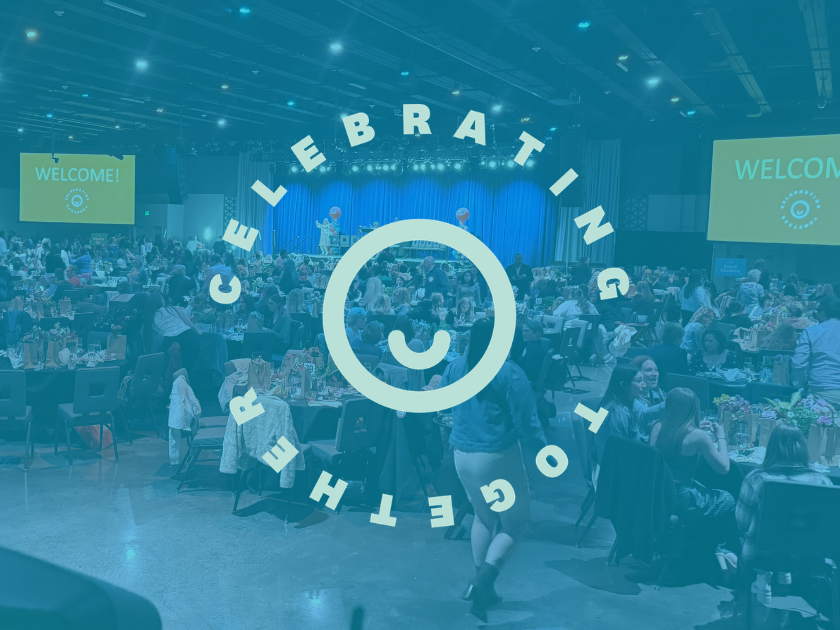
Nearly 800 early educators, community leaders, and supporters came together for an evening of joy and recognition at Trying Together’s annual celebration event.

Held April 30 at Rivers Casino, Celebrating Together honored and uplifted the work of early childhood education. The event included a new pre-dinner reception to present the inaugural Keystone Award for Early Childhood Advocacy, followed by the 30th Annual Celebration of Early Childhood Educators Dinner. 

Keystone Award for Early Childhood Advocacy

Celebrating Together kicked off with a reception to present the inaugural Keystone Award for Early Childhood Advocacy to the Shapiro-Davis Administration, in recognition of its historic investments in the early childhood workforce.

Local policymakers and community leaders delivered remarks touting the critical role early childhood educators play in supporting not just the growth and development of young children, but also the economic success of our region and state.

In her remarks, Pittsburgh First Lady Katie O’Connor urged greater support for early childhood educators, saying, “We must provide them with the advocacy, the resources, and the professional growth opportunities that they deserve.”

Stacy Juchno, corporate responsibility officer for PNC, emphasized the importance of community partnerships. 

“Gatherings like this remind me of the lasting change that happens through relationships,” she said. “It happens when public, private, and nonprofit partners choose to work closely together to build trust over time and commit to long-term solutions.”

Allegheny County Executive Sara Innamarato rounded out remarks by sharing an optimistic and family-forward vision for the future of the county. 

Trying Together Executive Director Cara Ciminillo then presented the award, which was accepted by Lieutenant Governor Austin Davis on behalf of the Shapiro-Davis administration. 

Davis expressed his gratitude for the work of early childhood educators. 

“I want to thank you on behalf of our entire administration […] for all the work that you do,” he said. “We are humbled and honored to carry this every single day and make progress for our most precious resource – our children.”

Celebrating Together

The 30th Annual Celebration of Early Childhood Educators Dinner included a sit-down meal and numerous activities. 

Before dinner began, Ciminillo welcomed early childhood educators, thanking them for the work they do. 

“Let this evening be a reminder that you matter,” she said. “The care you give matters. And a society that truly values its children must first value those who care for them. Thank you for all that you do, and please enjoy your night of celebration – you deserve it!”

Ciminillo expressed appreciation for the sponsors that helped to make Celebrating Together happen before introducing Dr. Kendra Ross, head of purpose and experiences at Duolingo. 

Dr. Ross recognized Trying Together as one of Duolingo’s Social Impact team’s earliest and most trusted partners, helping them reach families and providers in Pittsburgh at the very start of a child’s learning journey. Ross also thanked those gathered. 

“Tonight is a celebration of the people who hold that trust every single day – you, the educators in this room,” she said. “You are not just doing a job. You are building the foundation on which everything else stands.”

Allegheny County District 3 Council Representative Lissa Geiger Shulman concluded remarks by presenting a proclamation that declared April the Month of the Young Child. 

Following remarks, guests were free to spend the rest of the evening eating, dancing to music provided by BMW entertainment, and participating in the activities around the event space. Photo opportunities included photobooths of three different styles, a shimmer wall, lighted signs, and balloon arches. 

Each attendee had the opportunity to assemble a vase at the flower station, while the policy team led a friendship bracelet-making activity. Guests were also given tickets for a chance to win one of 74 register-to-win baskets.


Thank you to our sponsors for your generous support!


Premier
Duolingo
ELRC Region 5

Supporting
PNC
The Grable Foundation
The Heinz Endowments
University of Pittsburgh
UPMC
AT&T
Highmark Health

Advocate

Carlow University
Early Childhood Funders Alliance
Champion
Allegheny Conference

News

LIHEAP Extended Through May 8 to Help Pay Heating Bills

Pennsylvania’s Low-Income Home Energy Assistance Program (LIHEAP) has been extended through Friday, May 8 for families who need help paying heating bills through the winter.

Learn More

LIHEAP grants help income-eligible families to pay their heating bills. Those who receive assistance do not have to repay it. LIHEAP offers both crisis and cash grants, which are one-time payments sent to a family’s utility company or fuel provider. The grants range from $200 to $1,000 and are based on household size, income, and fuel type.

Grants are available for the following:

  • One in household with $1,995 monthly income and $23,940 annual income
  • Two in household with $2,705 monthly income and $32,460 annual income
  • Three in household with $3,415 monthly income and $40,980 annual income
  • Four in household with $4,125 monthly income and $49,500 annual income
  • Five in household with $4,835 monthly income and $58,020 annual income
  • Six in household with $5,545 monthly income and $66,540 annual income
  • Each additional household member: $710 added to monthly income and $8,520 to annual income

It is not necessary to have an unpaid balance to qualify. LIHEAP grants can be applied to a past balance to establish service at a new address.

To apply for a cash grant, applicants will need:

  • Name and date of birth for all household members
  • Proof of income for all household members
  • Social Security numbers for all household members
  • Copy of most recent utility bill (electric and gas if applicable)

Use the COMPASS online tool to apply for health and human service programs. Applications can be downloaded in English and Spanish.