TEACH Scholarship Application Process Open for Spring Semester with Updated Income Criteria

News

September 22, 2026

TEACH Scholarship Application Process Open for Spring Semester with Updated Income Criteria

Pennsylvania’s Office of Child Development and Early Learning (OCDEL) has updated income criteria for the TEACH scholarship as the application process for the spring semester has opened.

Learn More

Applications for the scholarships – which supports staff retention and program quality by helping early learning professionals to advance their education while continuing to work – are accepted on a rolling basis, but priority consideration is given to complete applications submitted by Friday, November 13. The spring semester begins in mid-January.

OCDEL recently announced that it had updated TEACH income criteria for the scholarship. Early childhood professionals can now earn up to $25 per hour, while directors can earn up to $30 per hour.

Eligible applicants must:

  • Work directly with children in a state Department of Human Services-certified child care program for a minimum of 25 hours per week year-round
  • Be a Pennsylvania resident
  • Be employed with a sponsoring program for at least six months before enrolling in a course through the scholarship program
  • Make $25 or less per hour (or $30 or less per hour for directors)
  • Be interested in pursuing coursework at a partnering college or university toward a degree or teacher certification in PreK-4/Early Childhood Education

Those interested in applying can learn how to do so on the PACCA website, where applicants can also find an enrollment checklist.

Honor Child Passenger Safety Week By Learning the Correct Way to Use Car Seats, Booster Seats, and Seat Belts

News

September 21, 2026

Honor Child Passenger Safety Week By Learning the Correct Way to Use Car Seats, Booster Seats, and Seat Belts

Keeping children safe in a vehicle is a duty that extends to the entire year but Child Passenger Safety Week – which runs from September 20 to 26 – is a great time for caregivers to learn important information on the correct way that car seats, booster seats, and seat belts should be utilized.

The Pennsylvania Traffic Injury Prevention Project has provided a fact sheet that shows the correct way for children to be placed in rear-facing car seats, forward-facing car seats, booster seats, and seat belts.

Rear-Facing Car Seats

Children should ride rear-facing until at least 2 years of age or until they outgrow their rear-facing car seat by height or weight. A rear-facing seat is considered the safest because it spreads crash forces across a child’s body and the back of the car seat, cradling the head, neck, and back. Plus, it is more convenient for placing in and out of the car.

When installing the seat, make sure it does not move more than an inch side to side or front to back. It should be at the recline angle specified by the car seat manufacturer. If you use a latch, the seat should be in a vehicle seat position allowed by the vehicle manual and car seat instructions. It should never be placed in front of an air bag.

To adjust the harness, tighten it so it is snug with no slack. The chest clip should be placed at armpit level, and harness slots should be at or below a child’s shoulders.

Forward-Facing Car Seats

Children should ride forward-facing when they are over 2 years of age and have outgrown the weight or height limits of the rear-facing car seat. They should remain in the forward-facing harness until the highest height or weight allowed by the car seat.

For installation, make sure the car seat is in tight and does not move more than an inch from side to side or front to back. If you use lower anchors, be sure the child is within the weight allowed by the car seat manufacturer. The child’s head should be within the car seat’s shell.

To adjust the harness, tighten it so it is snug with no slack. The chest clip should be placed at armpit level, and harness slots should be at or above a child’s shoulders.

The seat’s tether limits the forward movement of the child in a crash. Caregivers should follow the vehicle manual’s instructions to locate tether anchors and use the tether with the seat belt or lower anchors.

The types of forward-facing car seats include:

  • Forward-facing convertible: This seat goes from rear-facing to forward-facing, securing a child forward-facing once they have outgrown the rear-facing mode.
  • Combination car seat: This seat is used forward-facing with a five-point harness; once the child outgrows the harness, it can be used as a booster seat.
  • All-in-one seat: This seat can be used forward-facing, rear-facing, and then as a booster seat.

Booster Seats

Children ride in booster seats once they outgrow the weight or height limits of the forward-facing car seat and are at least 4 years of age. Booster seats position a child so the vehicle’s seat belt fits correctly over their body. Caregivers should always use the lap and shoulder belt to secure the child.

Booster seats are recommended because they lower the risk of injury by 45% among children ages 4 to 8 years when compared to a seat belt, which is designed for adults.

When adjusting the seat belt, make sure the shoulder belt lays across the center of the chest, while the lap belt lays across the upper thighs – not the stomach. The child should sit without slouching.

The types of booster seats include:

  • High back: Supports a child’s head, neck, and spine, and provides side impact protection; may ease the transition from a car seat with a harness to a booster seat.
  • Backless booster: Position the vehicle head restraint behind the child’s head; often used for older children before they transition to a seat belt.

Seat Belt Readiness

For a child to move from a booster seat to a seat belt, you must be able to say yes to all five of these items:

  • The child’s back is against the vehicle seat; no slouching.
  • Knees end at the front edge of the vehicle seat and feet are on the floor.
  • The shoulder belt lays across the center of the shoulder and the center of the chest, not across the neck or arm.
  • The lap belt lays across the upper thighs, never across the stomach.
  • The child can remain in the correctly seated position for the entire trip.

For more information, check out the Pennsylvania Traffic Injury Prevention Project’s tip sheet. And find information about recalls on car seats on the National Highway Traffic Safety Administration’s website.

Confluence Podcast Episode Discusses How Providers Can Protect Programs from Falsified Documents

News

Confluence Podcast Episode Discusses How Providers Can Protect Programs from Falsified Documents

The latest Confluence podcast episode on The Pennsylvania Key’s website discusses how early childhood education providers can protect their programs from falsified documents.

The episode, How to Protect Yourself from Falsified Documents in Your Child Care Program, is a conversation between podcast host Ruby Martin, director of Pennsylvania’s Office of Child Development and Early Learning’s (OCDEL) Bureau of Certification Services, and Brad Hamm, the regional manager of the bureau’s Central Region.

Tips for Preventing Falsified Documents

In the podcast, Martin and Hamm discuss what falsified documents might look like, how to prevent receiving them, and the repercussions of submitting them.

“The deceit that occurs through falsified statements can be devastating to your program if health and safety are compromised,” Martin said. “Taking the extra step to make sure this is not occurring is important.”

Hamm listed a variety of documents that could be falsified by existing or incoming staff members:

  • Trainings that staff claimed to have – but didn’t – attend
  • Degrees or diplomas
  • Health assessments 
  • First Aid or CPR certificates
  • Fire and emergency drill documentation
  • Zoning and occupancy permits
  • Deleted camera footage that might have been useful for an investigation

“Case law makes it clear that altering documents constitutes deceit,” Hamm said. “Whoever is responsible for submitting documents has an obligation to vet them to make sure there is no falsification there. If a document doesn’t look right, question it.”

The background check process can be arduous, Martin said, but employers should be sure to give materials they receive a close look.

“If someone hands you a form or a background check, you’re usually thankful to have it – and it’s one more thing to check off,” she said. “But it’s important to review the information that staff hands to you.”

The Confluence’s monthly podcast helps listeners to understand the complexities of OCDEL’s Bureau of Certification Services. To listen to podcast episodes, visit The Pennsylvania Key’s website.

Celebrating Relative Providers During Family, Friend and Neighbor Appreciation Week

News

September 17, 2026

Celebrating Relative Providers During Family, Friend and Neighbor Appreciation Week

From September 13 to 18, Home Grown celebrates its fourth annual Family, Friend, and Neighbor (FNN) Appreciation Week to honor those who care for the young children in their life.

This week, we join Home Grown in celebrating the 460 relative care providers who reside in Allegheny County. Relative providers include grandparents, great-grandparents, aunts, uncles, and siblings, and are a core pillar of Pennsylvania’s child care infrastructure.

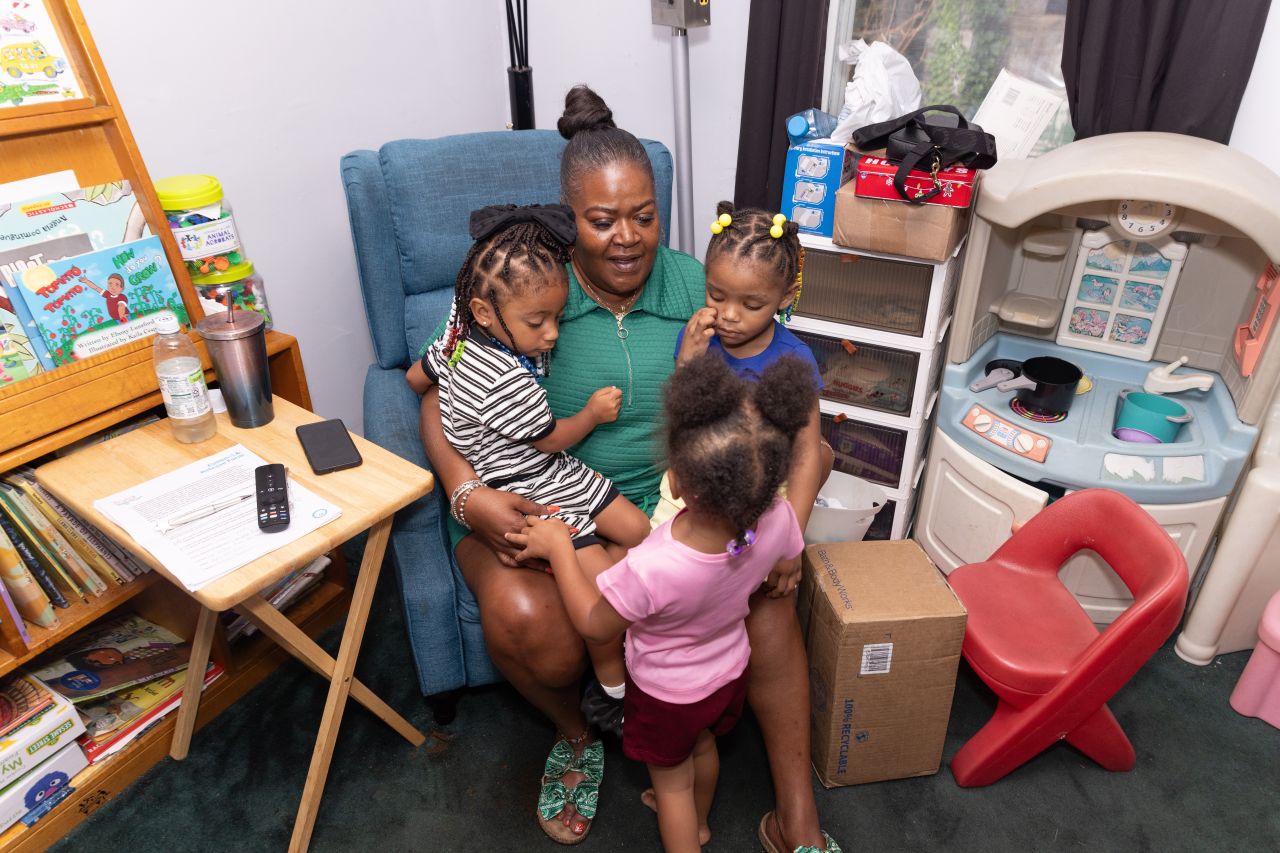
Families often rely on these caregivers for child care during nontraditional hours, such as evenings and holidays, or because they share the same language, culture, values, and traditions. Relative care providers are vitally important because they give stability, intergenerational connection, and a nurturing learning environment to thousands of children across Pennsylvania.

Advocating for Relative Care Providers 

For the past year, Trying Together has partnered with Home Grown and the United Way of Southwestern Pennsylvania on the Thriving Providers Project. This initiative is focused on strengthening the economic stability of home-based child care providers through direct cash payments and policy innovation. In Allegheny County, 19 caregivers are participating in this pilot project.

Through the project, relative child care providers have consistently identified economic insecurity, administrative barriers, and limited access to resources and supports as challenges to providing stable care. 

The program’s mission is to support and stabilize caregivers and improve the availability and quality of child care for children and families- and there’s evidence that the support works.

Relative care providers participating in the program have shared the ways the direct cash payments have helped them, saying

  • The direct payment helps with unforeseen circumstances
  • Direct cash transfers have enabled providers to not worry about meals and utilities and be able to afford to stay home and provide care
  • The payments help with purchasing diapers, wipes, and snacks

To learn more, see the Thriving Provider Project webpage and Home Grown’s FFN Appreciation Week page.

Pittsburgh’s Recreation Centers to Extend Hours When Schools Are Closed or Have Early Dismissal

News

September 16, 2026

Pittsburgh’s Recreation Centers to Extend Hours When Schools Are Closed or Have Early Dismissal

Mayor Corey O’Connor’s office announced this week that the city’s recreation centers will extend their hours on days when Pittsburgh Public Schools are closed or have early dismissal.

The extended hours are intended to bridge the gap in care coverage free of charge for families. 

Learn More

The centers will open at 8 a.m. on full-day closures and 11:30 a.m. on early dismissal days. Registration, which is required, opened this week. Caregivers can register at the recreation center where their child or children will attend and they may select multiple eligible dates during the school year, including:

Early Dismissal Days 

  • September 18
  • October 9
  • October 23
  • November 20
  • December 18
  • February 12
  • February 26
  • March 12

School Closure Days

  • September 21
  • October 12
  • October 16
  • November 3
  • December 28-31
  • January 19
  • January 20
  • March 10
  • March 22-26
  • May 18 (Election Day; some centers will not offer care on election days if they serve as polling locations)

Snacks will be provided in the afternoon on early dismissal days, while lunch and snacks will be provided on full days. Special programming and partner visits on these days will be posted on CitiParks’ social media accounts.

“It’s important that our local families have free options for where kids can go on their days off school to play, discover, and explore,” O’Connor said.

High Schoolers Explore Early Childhood Career Through Child Care 101 Program

News

High Schoolers Explore Early Childhood Career Through Child Care 101 Program

Through a partnership between Trying Together, Learn and Earn Homewood Children’s Village, and The Shady Lane School, high school students had the chance this summer to explore early childhood education as a future career.

Providing Real-World Experience

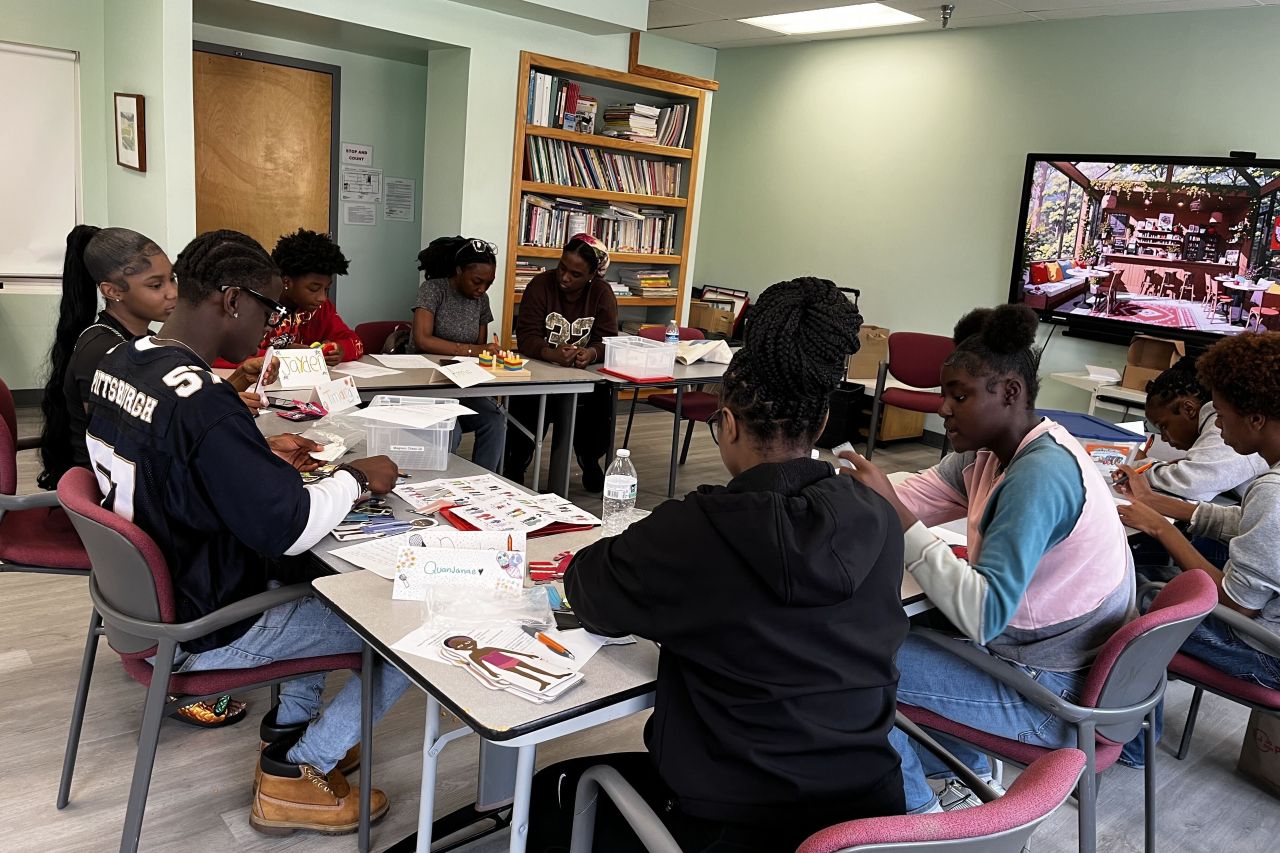
In its second year, Child Care 101: Learn and Earn is a six-week summer program for rising sophomores and seniors that provides hands-on learning, conversations with early childhood professionals, and real-world classroom experience at The Shady Lane School. The program gave the 10 participants in the program the opportunity to envision themselves in the field.

Over the course of six weeks, the program’s participants worked at Shady Lane and met on Fridays to explore topics, including an introduction to the early childhood field, child development, health and safety, engaging activities for young learners, and career pathways in early childhood education.

For one activity, students were broken up into small groups and given eight minutes to play with an item from Trying Together’s Lending Library. They then completed a worksheet where they had to decide for which ages the item would be appropriate, which areas of development it supported, and how many stars they would assign it based on whether they would like it in their own future classroom.

“It was fun to see the students grow over the course of the program, in terms of how they approached discussing behaviors from merely being bad to thinking about what the child might need and how educators can support them,” said Lindsey Vicoria, the Career Pathways program manager at Trying Together. “From day one, students were very curious and asked a lot of thought-provoking questions about working with young children.”

Vicoria said students shared in surveys taken at the end of the program that Child Care 101 made them consider careers in the field.

“It was great, the teacher was amazing, and after this I was thinking about being a part of childhood education as my career,” one student wrote.

Career Pathways Opportunities

To learn more about Trying Together’s professional development opportunities, check out our fall 2026 Professional Development Catalog. 

Courses offered this fall include professional development opportunities in the following areas:

  • Assessments and Supportive Services (Early Intervention)
  • Child Development
  • Classroom Environment
  • Curriculum Development
  • Family and Community Engagement
  • Guidance and Behavior Management
  • Health and Safety
  • Justice, Equity, Diversity, and Inclusion (JEDI)
  • Professionalism and Program Organization

OCDEL Releases Tips for Providers and Educators on Air Quality Warnings

News

September 15, 2026

OCDEL Releases Tips for Providers and Educators on Air Quality Warnings

Pennsylvania’s Office of Child Development and Early Learning (OCDEL) has released some tips for child care providers and early educators on what to do during air quality warnings.

Learn More

OCDEL receives guidance from the state’s Department of Environmental Protection (DEP) on air quality and when it is appropriate to take children outside during air quality warnings.

Although it is important for children to go outside daily, keeping them indoors when outdoor air quality is unsafe protects them from breathing pollutants.

Outdoor air pollutants include:

  • Wildfire smoke containing toxic gases and particles
  • Industrial, construction, or traffic-related pollution
  • High pollen levels

Child care providers need to know when daily or hourly air quality is unsafe for outdoor play. Poor air quality can cause breathing problems, especially for children with asthma and allergies.

Providers should check the Air Quality Index before allowing children to play outside. The colors in the chart include:

  • Green – good air quality
  • Yellow – moderate
  • Orange – unhealthy for sensitive groups (such as those with asthma)
  • Red – unhealthy
  • Purple – very unhealthy
  • Maroon – hazardous

Trying Together Names Blueprints Early Learning Director as September Advocate of the Month

News

Trying Together Names Blueprints Early Learning Director as September Advocate of the Month

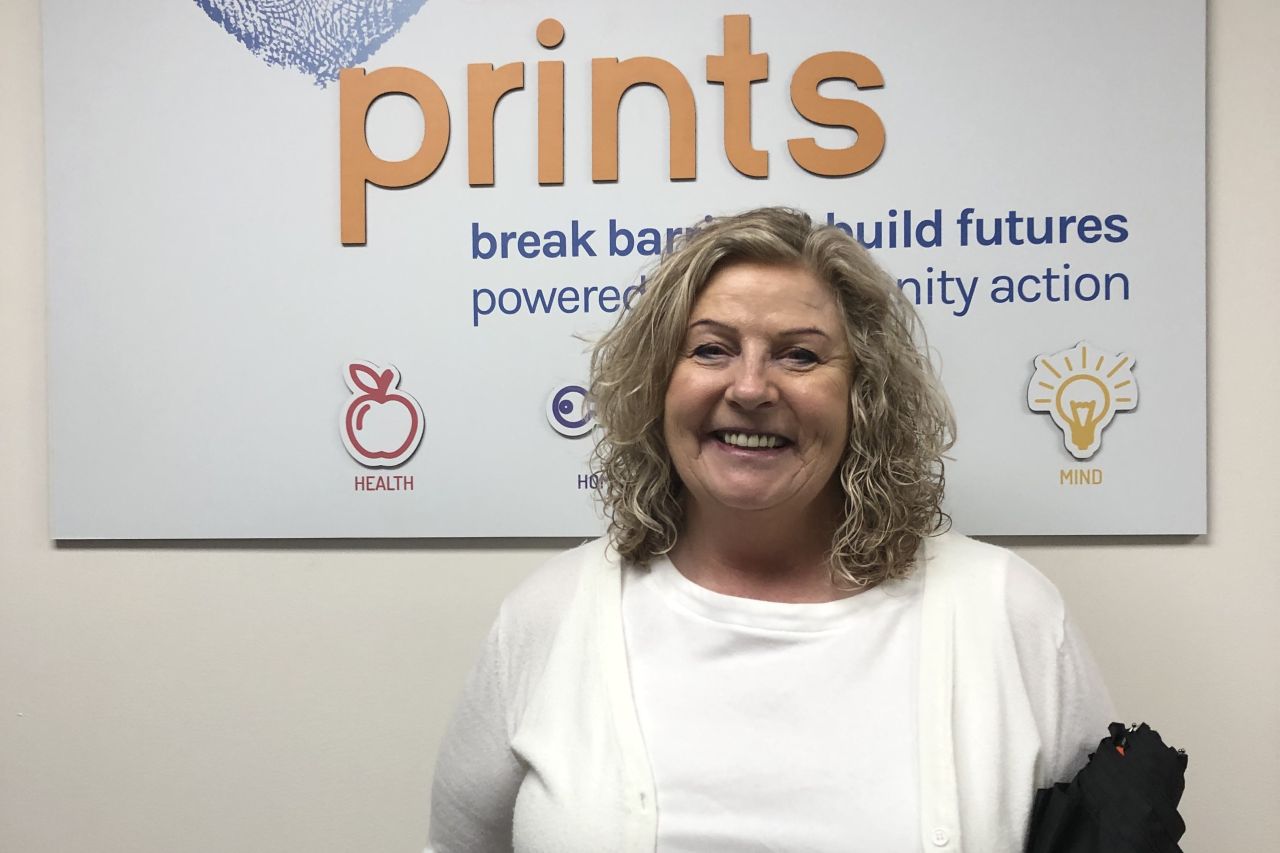
Trying Together has selected Brenda Fronzaglio, the early learning director for Blueprints in Washington, as its September advocate of the month.

Learn More

Fronzaglio was nominated by Valerie Williams, Trying Together’s kindergarten transition program director, and Donna Shriver, owner of Smart Kids Child Care Learning Center.

“She truly understands that quality learning is the cornerstone for our young children,” said Shriver, who has partnered with Fronzaglio in advocacy efforts. “Brenda is committed and supportive to the children, families, and early childhood educators, and actively advocates for them.”

Fronzaglio said that she understands the importance of early childhood education because she benefited from it herself.

“As a Head Start graduate, I know firsthand that advocacy can change the course of a life,” she said. “Someone saw potential in me, they invested in me, and made sure I had access to opportunities that my family may not have been able to provide at that time. And because of that support, I entered school ready to learn and, most importantly, ready to believe in myself. When I hear the word advocacy, I don’t just think about speaking up for others – I think about the people who spoke up for me before I was able to speak up for myself.”

She said that advocacy is important to her because when she can share the difference that early care and education programs make in the lives of children and families, especially those who are most vulnerable, she is able to help others to understand why supporting such programs matters.

“Advocacy means making sure that every child, regardless of where they come from, has the chance to succeed,” Fronzaglio said.” It means giving families a voice and connecting them to resources they need to thrive. It means standing up for programs like Head Start that open doors and create opportunities for generations to come.”

Blueprints, which is part of the Community Action Network, connects people with tools, resources, and support, and its programs are designed to support families across all stages of life with early childhood education, financial and career support, housing stability, and services for older adults. Its no-cost early learning programs include Head Start, Early Head Start, and Pre-K Counts. Blueprints offers center- and home-based program options.

PA Promise for Children Combines Activities with September Books for Preschoolers

News

PA Promise for Children Combines Activities with September Books for Preschoolers

PA Promise for Children released its list of September books for preschoolers, recommending eight books across four categories and combining some of them with activities that can increase interest in literacy.

Learn More

The book list includes four categories: Social Studies Thinking, Language and Literacy Skills, Science Thinking and Technology, and Mathematical Thinking and Expression.

The titles include:

Social Studies Thinking

  • Actual Size (Steve Jenkins)
  • Say Please, Little Bear (Peter Bentley)

Language and Literacy Skills

  • It Is Night (Phyllis Rowand)
  • The Bus for Us (Suzanne Bloom)

Science Thinking and Technology

  • Put It On the List (Kristen Darbyshire)
  • Mrs. McNosh and the Giant Squash (Sarah Weeks)

Mathematical Thinking and Expression

  • One Mole Digging a Hole (Julia Donaldson and Nick Sharratt)
  • 365 Penguins (Jean-Luc Fromental and Joelle Jolivet)

For the Science Thinking and Technology selections, PA Promise for Children suggests that caregivers have children look at fruits, vegetables, cans, and boxes in a grocery store or farmer’s market. Talk to them about the different shapes, colors, and sizes. Use words like same or different and continue reinforcing this concept with word cards, signs, or braille. 

An activity to pair with the Mathematical Thinking and Expression books is to make a height chart with paper. Place the paper against the wall or door and ask a child to stand with their back against the chart. Mark their height and date it. Try this again in three months and talk about the change. 

The child could also lie on the paper or use measurements to draw a line. Ask them to stretch out their arms and measure their arm span. Use the information about their height to compare with another object in the house and to talk about the circumference of objects.

Make the Call in Support of Head Start

News

September 14, 2026

Make the Call in Support of Head Start

Head Start is facing its greatest threat in decades. We need your help.

In early August, the federal government proposed significant changes to Head Start. For over 60 years, Head Start has provided high-quality early learning alongside health, developmental, nutrition, mental health, and family supports. These proposed changes would affect what families children and families experience. 

One of the most concerning changes impacts class sizes, staffing standards, and teacher qualifications that would result in more children with fewer educators including:

  • Changes to classroom sizes and child-to-adult ratios
  • Less guidance causing confusion for local program operations 
  • Curriculum implementation and requirements to English-only instruction 
  • Weakened staff qualifications 

With this new proposal, approximately 700,000 children and families who benefit from this program are at risk of reduced services. Moreover, it makes access to Head Start more challenging and impacts the quality of the program.

These changes are not final and as of now, this is a proposal – not law.  However, in order to influence this decision, we need your help! Contacting your federal lawmakers makes more than a difference. It creates impact. Whether you call or submit a public comment, every action counts. The public has until October 6 to weigh in.


Your Voice Makes a Difference

How does calling your Congress members move the needle? Here are a few reasons:

  • When you call your federal lawmaker, staff members are required to track constituent opinion. Imagine a sudden surge of calls; it signals immediate urgency.
  • Phone calls are also harder to ignore; they gather attention.
  • Lastly, it shows we are actively watching and care about the decisions made. The more phone calls they receive about Head Start, the more pressure they feel to take a stand to protect it. 

Your voices are what make a difference; they’re what allow those who do not understand what it’s like in a program to see the true stakes. 


Start Taking Action

Over the next few weeks, we will dive deeper into some of the proposed changes and ways to take action – but there are actions you can take immediately.

On Tuesday, September 15, advocates will be on the ground in Washington, D.C., meeting with members of Congress to defend Head Start. But you don’t have to be there in person to make your voice heard. Wherever you are, your voice matters.

How you can participate:

  1. Find your members of Congress. Look up your Representative and Senators using the online tool. It only takes a minute.
  2. Call their D.C. offices. Use the simple script below to urge them to protect Head Start.
  3. Spread the word. Share this email with three family members or friends and ask them to make the call.

Talking points for your call:

  • Head Start is a lifeline for more than 30,000 children in Pennsylvania, providing not just early education, but also nutritious meals, health screenings, and vital family support.
  • HHS’s proposed rule would strip away the quality standards that make Head Start the gold standard:
    • eliminating critical mental health services and supports for children and families;
    • increasing class sizes and reduce a teacher’s ability to provide individualized care and education by allowing 33% more children per teacher; and
    • reducing the number of teachers, home visitors, and support staff, creating a more stressful and less effective environment for learning.
  • It’s essential that Congress protect Head Start. Families depend on this program to keep their children safe and to be able to work.

Call-In Script

For Your U.S. House Representative

“Hello, my name is [Your Full Name] and I’m a constituent from [Your address].

I’m calling to urge Representative [Last Name] to protect Head Start from proposed cuts and rollbacks to its quality standards.

Head Start is a lifeline for children right here in our community. It provides safe, nurturing early learning environments, nutritious meals, and access to health and family support. These proposed changes would weaken the mental health services and support systems that help children and their families thrive.

I’m asking Representative [Last Name] to stand with working families and oppose any effort to weaken this essential program. Can we count on their support?

Thank you for your time.”

For Your U.S. Senators

“Hello, my name is [Your Full Name] and I’m a constituent from [Your address].

I’m calling to urge Senator [Last Name] to protect Head Start from proposed cuts and rollbacks to its quality standards.

This program is a vital support system for over 30,000 families and children across the state. These standards are what make Head Start the gold standard for early learning and comprehensive family support and weakening them would harm children and their families for years to come.

I urge Senator [Last Name] to protect Head Start and ensure its high standards remain in place.

Thank you for your consideration.”