Communication is Key to Building Strong Relationships Between ECE Professionals and Caregivers

News

December 22, 2025

Communication is Key to Building Strong Relationships Between ECE Professionals and Caregivers

Having a good relationship with caregivers is essential to an early childhood educator’s ability to guide a child’s development and success. 

A recent article by Brightwheel says that communication is the key to building strong relationships at preschools or child care centers.

Learn More

For many caregivers, Brightwheel writes, their child’s entry into preschool or a child care center will be the first time that they’ve trusted their child with someone other than family or friends.

Therefore, it is important for early childhood education professionals to understand how to inform families about a program’s goals, their child’s progress, and daily activities.

Effective communication is the means through which educators can build trust and create good relationships with caregivers. And establishing a respectful relationship is an essential component.

To develop a respectful relationship, early childhood educators should gather the following information:

  • Religious and cultural background, values, and beliefs
  • Family dynamics and home arrangements
  • Preferred languages
  • Disabilities or health issues or concerns
  • Learning styles

Understanding communication preferences is also important. This can include knowing which days and times are best to reach caregivers and whether they prefer to communicate over the phone, through email, or in person. Educators should also communicate to caregivers the same information about themselves.

Other effective means of communicating with caregivers include:

  • Monthly newsletters that cover school-wide announcements, updates, or events
  • Apps that help educators remain in touch with caregivers as well as track daily events and activities
  • Social media pages that give caregivers a glimpse into daily activities
  • Blogs that keep families up-to-date on current events in early childhood education

For more information – including such topics as how to have difficult discussions and active listening – read Brightwheel’s article.

Registration Open for Trying Together’s Spring CDA Cohort

News

December 17, 2025

Registration Open for Trying Together’s Spring CDA Cohort

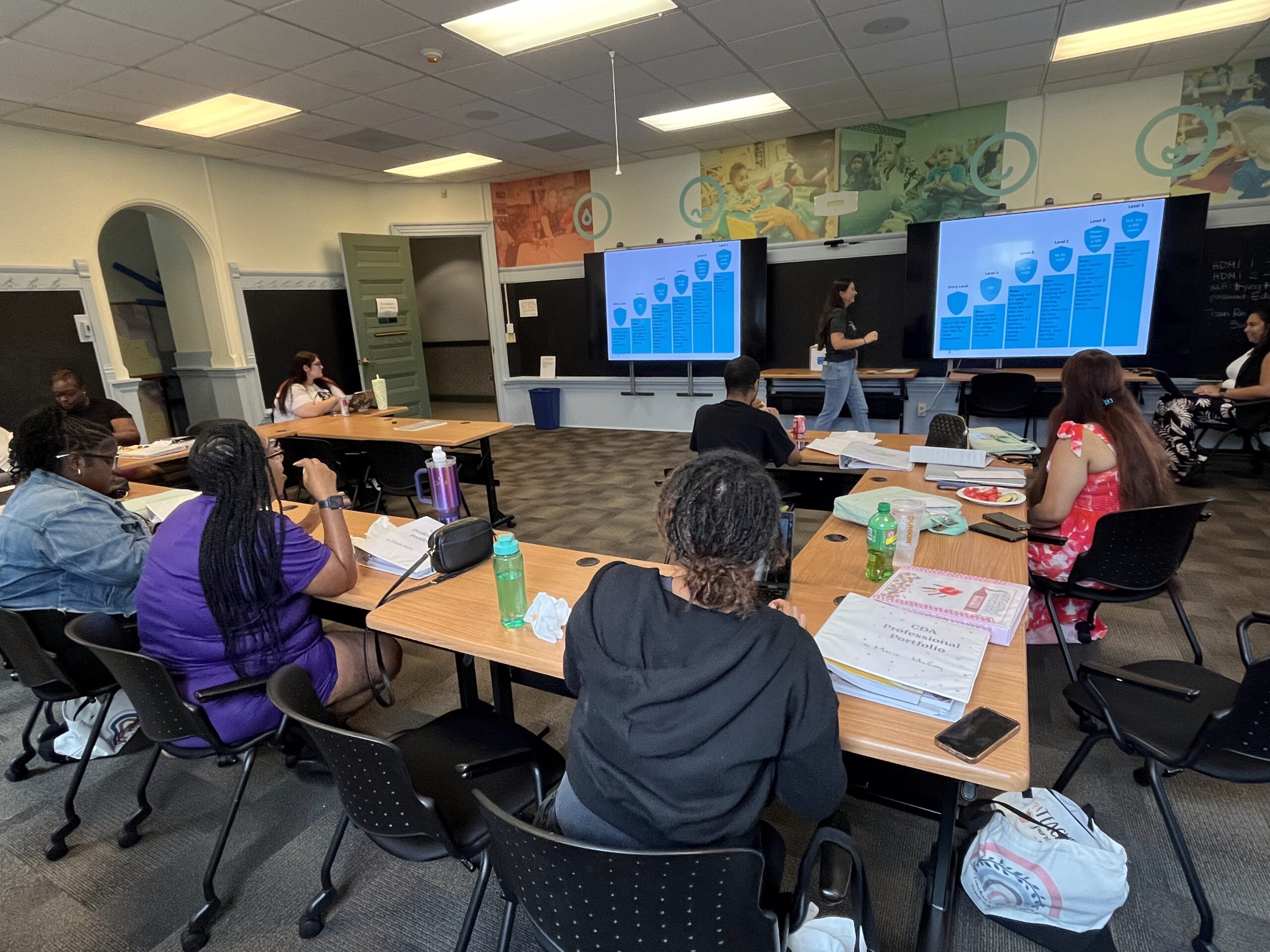
Trying Together has begun enrolling students in spring Child Development Associate (CDA) cohorts that begin in early January.

Learn More

Participants have the option to participate in one of two cohorts. The first cohort is hybrid and will run from Thursday, January 8 through Thursday, June 18. It meets virtually over Zoom Thursday evenings from 6:30 p.m. to 8:30 p.m. and one Saturday per month from 11 a.m. to 3 p.m. at Trying Together’s office in Squirrel Hill (5604 Solway Street, Pittsburgh).

The second cohort will run from Saturday, January 10 through Saturday, June 20 and will meet in person every other Saturday from 10 a.m. to 3 p.m. at Trying Together’s office.

To enroll, participants must complete two applications:

Those with questions about the program should reach out to Patty McGee at patricia@tryingtogether.org. 

About the CDA Credential

A CDA credential is the most widely recognized credential in the early childhood field and is a key stepping stone on the path to career advancement. The CDA Credential is based on a core set of competency standards that guide early learning professionals in their work to build on their professional experience and expertise.

As a nationally recognized credential, a CDA Credential enables early learning professionals to work in Head Start and Early Head Start classrooms in addition to early learning programs across the United States. Several topics are studied in a CDA program, including, but not limited to:

  • A healthy and safe learning environment
  • Physical, cognitive, language, and creative development
  • Social and emotional development
  • Positive guidance
  • Creating positive relationships with families
  • Program and classroom management
  • Observation and assessments
  • Professionalism in early childhood education

By earning a CDA Credential, early learning professionals strengthen their professional skill sets, gain opportunities to advance their careers, increase their confidence in the classroom, and reinforce their commitment to support young children and families.

Registration Open for NAEYC’s 2026 Public Policy Forum

News

Registration Open for NAEYC’s 2026 Public Policy Forum

Registration is now open for the National Association for the Education of Young Children’s 2026 Public Policy Forum that takes place from February 22 to 24 in Washington, D.C.

Learn More

The event will draw early childhood educators, advocates, and leaders from across the country for an in-person event that will focus on:

  • Expanding policy knowledge
  • Strengthening advocacy skills
  • Building relationships with other educators, advocates, and allies
  • Engaging with national and state policymakers and fellow advocates on relevant early childhood education issues
  • Deepening relationships with congressional offices

The event’s agenda includes workshops, keynote speakers, panels, strategy sessions, and conversations with policymakers on Capitol Hill.

Those interested in attending can register online.

Child Care Programs Still Recovering from Budget Impasse, Advocates Optimistic About New Investments

News

Child Care Programs Still Recovering from Budget Impasse, Advocates Optimistic About New Investments

Some early childhood education centers are still recovering from the months-long state budget impasse, despite additional child care investments in the 2025-26 budget that Governor Josh Shapiro signed into law last month, according to a new report by the West Hills Gazette.

Several long-time partners of Trying Together discussed with the Gazette how they were forced to dip into their reserves during the impasse and how getting a $25 million early childhood education retention and recruitment line item in the budget is a great start for alleviating teacher shortages.

Presbyterian Day School

Mary Merryman, director of Coraopolis’ Presbyterian Day School, said that low wages in the early childhood education profession has made it challenging to find teachers and resulted in a shortage of child care centers. 

Merryman, an alum of Trying Together’s advocacy fellowship, said that Coraopolis is a “child care desert,” meaning there are not enough centers or programs to support the number of children under age 5 in the area.

Merryman, who has traveled to Harrisburg to advocate for early childhood education, said the state budget’s $25 million line item is a good start to combatting the shortages.

“That will definitely help,” she told the Gazette. “If we can retain teachers, we can offer more services to families.”

Riverview Children’s Center

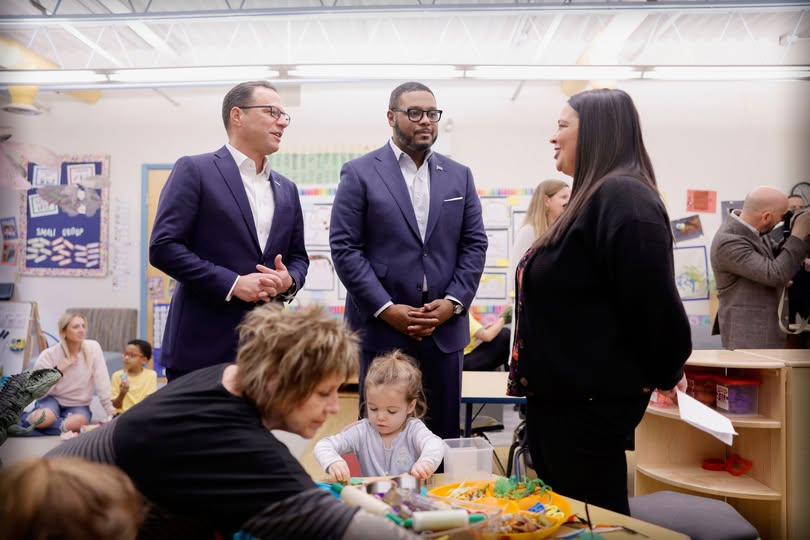
Stephanie Heakins, director of Riverview Children’s Center in Verona, said she took over the reins at the center in the middle of the impasse. Earlier this month, Shapiro and Lieutenant Governor Austin Davis dropped by the center to discuss the recently-passed child care investments in the 2025-26 budget. Riverview has been a long-time partner of Trying Together and has a history of advocacy work.

Heakins told the Gazette that loans were not an option during the impasse because paying interest on them was “not feasible,” while laying off teachers was also not possible because she knew the center would never get them back.

Riverview receives about $55,000 per month from the state for its Pre-K Counts program, which provides free pre-kindergarten classes to low-income families, the Gazette reported. More than 50 students are currently enrolled and there is a waitlist.

Because Pre-K Counts and Head Start – which Riverview does not offer – did not receive state dollars during the impasse, programs like Riverview were forced to dip into their reserve funds.

“(The impasse) was a big thing, but now we are hoping we can get back on track and start planning for the future,” Heakins told the Gazette.

Data

According to PA Partnerships for Children, there were about 3,000 open staffing positions in the child care workforce, with an average salary of $29,480, as of September 2024. Kindergarten teachers, on the other hand, make an average $67,670.

The 2025-26 budget’s $25 million Child Care Staff Recruitment and Retention Program would provide about $450 annually to employed licensed Child Care Works providers. The bonuses would support approximately 55,000 child care workers.

Podcast Tackles How to Help Children Manage Their Big Emotions

News

December 16, 2025

Podcast Tackles How to Help Children Manage Their Big Emotions

One of the biggest challenges – and most important skills to learn – for children is managing big emotions. If such feelings go unchecked, they can lead to struggles beyond the toddler years and caregivers being overwhelmed.

Learn More

A recent Thriving Kids podcast covered the topic of how to help children manage their emotions. Dave Anderson, senior psychologist and vice president of public engagement and education for the Child Mind Institute, joined Marc Brackett, PhD, founding director of the Yale Center for Emotional Intelligence and author of “Dealing with Feeling,” to discuss the topic.

The discussion covers why many children struggle to manage big feelings, how caregivers can shift from knowing to becoming “curious scientists,” and why focusing on positive emotions is just as important as managing difficult ones.

The Child Mind Institute’s Family Resource Center provided some strategies touted by experts on how to help children build emotional self-regulation skills. These include:

  • Start with labeling feelings – it’s easier for children to manage emotions when they can name them, such as “frustrated,” “sad,” “nervous,” or “excited.
  • Model calm – children often mimic adults’ behavior; when a caregiver takes a breath and speaks gently in response to a challenging situation, it teaches them what self-regulation looks like
  • Practice in slow-stakes moments – emotional self-regulation skills are built through repetition; try dry runs, such as practicing new skills during a quick errand if a child often has meltdowns as the store
  • Coach children through tough situations – when it comes to tasks or situations that children find overwhelming, break them down into small steps, which gives them the framework to tackle challenging scenarios on their own
  • Revisit challenges together – if a child has an outburst, return to it gently; children can learn to choose better ways to respond to a situation, but they need straightforward feedback. Talk about what went wrong and why – and how they can do better next time.

Listen to the entire Thriving Kids podcast on YouTube.

OCDEL Releases Information About Child Care Recruitment and Retention Program

News

OCDEL Releases Information About Child Care Recruitment and Retention Program

Pennsylvania’s Office of Child Development and Early Learning (OCDEL) has announced details covering everything from eligibility and staff retention bonuses to application information regarding its 2025-26 Child Care Staff Recruitment and Retention Program.

Learn More

The recruitment program is a funding opportunity for certified child care programs that maintains a Child Care Works (CCW) Certified Provider Agreement. The intent of the program is to support existing child care staff and recruitment within the field.

The 2025-26 enacted state budget includes $25 million for retention and recruitment funding to qualified DHS-certified providers. Qualified staff are eligible for a retention bonus. To the extent that funding is available, qualified child care providers may receive funds to provide new qualified hires with a recruitment bonus.

To prepare qualified providers for the release of the recruitment and retention program application period, OCDEL’s announcement includes details on the following:

  • Provider eligibility 
  • Staff retention bonuses
  • Staff recruitment bonuses
  • Application
  • Funding and spending requirements
  • Final expenditure report
  • Monitoring information
  • Timeline
  • Next steps

Qualified providers must submit a completed application to their regional Early Learning Resource Center (ELRC) by Thursday, January 29.

For more information, read OCDEL’s announcement.

Pennsylvania Key Adds Program Quality Blog to Its Website

News

Pennsylvania Key Adds Program Quality Blog to Its Website

The Pennsylvania Key recently added the Let’s Talk Quality: Program Quality Assessment in Pennsylvania blog to its website.

Learn More

The blog focuses on best practices in early childhood and school-age programming across Pennsylvania.

Categories on the blog include news and updates, environment rating scales, and other topics relating to early childhood education.

Recent articles include “Teaching Kindness to Preschool Children” and “Making Fitness a Priority for Higher Quality Early Childhood Environments.”

Incorporating the blog onto The Pennsylvania Key website gives it a new design, improved user experience, a single destination for all content and community updates, and easier access to related resources and tools.

To learn more, visit the Let’s Talk Quality blog on The Pennsylvania Key.

Toy Drives Continue This Week in Southwestern PA

News

December 15, 2025

Toy Drives Continue This Week in Southwestern PA

Toy drives in southwestern Pennsylvania will continue for the next few weeks of the holiday season to provide families in need of help with toys and gift cards.

Omega Christmas Toy Giveaway

Pre-registered families will be able to pick up toys from 10 a.m. to 1 p.m. on Saturday, December 20. Open walk-ups will continue at Anderson Manor, located at 1423 Liverpool Street in Pittsburgh, from 1 p.m. to 2 p.m. while supplies last.

The toy drive is hosted by the Iota Phi Foundation in partnership with the Iota Phi Chapter of Omega Psi Phi Fraternity, Inc.

Goodrich & Associates

Goodrich & Associates is hosting its 51st Annual Toys for Champions Christmas Toy Giveaway on Saturday, December 20 at the Penn Avenue McDonald’s East Liberty Station, which is next to Trader Joe’s.

The event, which runs from noon to 4 p.m. or until all toys are gone, is aimed at boys and girls, ages 5 to 12. Each child will be able to receive two toys. The child must be present – no exceptions.

Promise Center of Homewood

The Promise Center of Homewood’s Christmas Toy Giveaway will run from 10 a.m. to 2 p.m. on Saturday, December 20 at 7825 Hamilton Avenue in Pittsburgh.

The free event will include a toy giveaway, cookies, and hot chocolate with Santa Claus.

KBK Foundation

The KBK Foundation’s Christmas Toys 4 Tots will run from 3:30 p.m. to 6 p.m. on Thursday, December 18 at the Teenie Harris Center, located at 2195 Webster Avenue in Pittsburgh. 

For more information, call Marcia Scott at 412-790-1122, ext. 930.

Toys for Tots

Toys for Tots will operate toy drives this holiday season in various locations. Greene County will distribute toys on Saturday, December 20 to residents who have children from birth to age 12. 

For more details, visit the Toys for Tots page for Greene County.

Salvation Army Centers of Pittsburgh and Allegheny County

The Salvation Army operate toy drives such as the Angel Tree program, which helps families get free holiday toys for children or gift cards for parents. 

For information on The Salvation Army Angel Tree program, contact the Angel Tree coordinator, Leah Cross, at (412) 446-1534 or via email at leah.cross@use.salvationarmy.org. For other assistance, contact your local center.

Charlie Batch Annual Holiday Toy Drive

The Batch A Toys drive is organized by the Best of Batch Foundation, a nonprofit founded by former Steelers Quarterback Charlie Batch. The foundation will adopt 400 families, which will provide more than 1,000 children with holiday gifts.

The foundation is still accepting donations, but there is currently no information on how families can participate. Learn more. 

Education Organization Compiles Experts’ Advice on How to Talk to Children About Race and Racism

News

Education Organization Compiles Experts’ Advice on How to Talk to Children About Race and Racism

Talking about race or situations involving racism or discrimination can be challenging for caregivers and children, so The Hechinger Report has compiled experts’ advice on the topic in a new article.

Learn More

The Hechinger Report – an organization that covers inequality and innovation in education – has put together an article filled with experts’ advice on how to answer children’s questions about the mistreatment of communities of color by police, white privilege, racism, and other topics.

The article cites a caregiver who had texted its author, Jackie Mader, in the wake of George Floyd’s death at the hands of Minneapolis police in 2020. The caregiver’s twins understood racism but not why people categorize others by race.

The article noted that research shows it is critical to have such discussions with children because, by kindergarten, children express many of the same racial stereotypes as adults. By talking about race, racism, and differences, parents and teachers can intercept harmful stereotypes and normalize differences.

Experts cited in the article noted that parents should start introducing children at an early age to different races and cultures through books and toys that have diverse characters. Kenya Hameed, a clinical neuropsychologist with New York City’s Learning and Development at the Child Mind Institute, said that age 4 is a good time to start having those discussions.

Mercedes Samudio, a licensed clinical social worker, said that caregivers should take time to face their own biases and learn as much as they can about race and racism before talking to their own children.

“A lot of parents are being forced into this space because of the world and the way things are going,” Samudio said. “So, before parents jump in and answer questions, it’s OK to say, ‘You know, I need to do more reading on this and figure it out and we can talk tomorrow.’”

To read about more topics addressed by experts on the topics of race and racism, check out The Hechinger Report’s article.

Tips for Keeping Children Safe While Playing Outdoors During the Winter

News

Tips for Keeping Children Safe While Playing Outdoors During the Winter

Playing outside in the winter – especially after snowfall – can be a fun rite of passage for many children. 

But caregivers should ensure that children are taking adequate safety precautions to prevent them from catching illnesses that result from too much exposure to the cold.

Learn More

Healthy Children has put together a guide full of tips on how to keep children warm and safe while playing outside during the winter. It includes suggestions on how to prevent children from getting frostbite or hypothermia, which can be life threatening, and what to do if children get either of these conditions.

Children are more at risk from the cold than adults because their bodies are smaller and, therefore, lose heat more quickly. And if they’re having a good time outdoors, they may be less likely to come inside when they’re getting cold.

Frostbite

Frostbite occurs when the skin and, occasionally, the tissue below it freezes. Fingers, toes, ears, and noses are most likely to get frostbite, which may cause skin to hurt or feel like it’s burning before going numb. The skin may turn white or pale gray and form blisters.

If a caregiver suspects frostbite, they should bring a child indoors to gently warm up. They should not rub the affected area or pop blisters. Avoid placing anything hot directly on the skin. Instead, soak frostbitten areas in warm – not hot – water for 20 to 30 minutes. Warm washcloths can be applied to noses, ears, and lips.

Call a pediatrician if the numbness or pain continues for more than a few minutes.

Hypothermia

When the body’s temperature drops below normal due to the cold, hypothermia can set in. A child might start shivering, a sign that the body is trying to warm itself, but instead become sluggish, clumsy, or cause the child to slur words.

Hypothermia is considered a medical emergency, so you should call 911 immediately. While you wait for help to arrive, bring the child indoors, remove any wet clothing, wrap the child in blankets or warm clothes, and give them something warm to drink. Be sure to cover the chest and abdomen.

If a child stops breathing or loses a pulse, give them mouth-to-mouth resuscitation or CPR.

How to Prevent Emergencies

To prevent children from being exposed to these conditions, avoid letting them play outside in temperatures below -15 degrees, during which skin begins to freeze within minutes. 

Make sure that children wear several thin layers of clothing when outside to keep them warm and dry as well as insulated boots, mittens or gloves, and a hat. And be sure to make them change out of any wet clothes right away when they come inside.

Set limits for the amount of time that children play outside and make sure they have a place to go for regular indoor breaks to warm up.

Outdoor Activities

When children are ice skating, be sure to only allow them to skate on approved surfaces. Make sure that they skate in the same direction as the crowd, never skate alone or eat while skating, and consider making them wear a helmet and knee and elbow pads.

For sledding, make sure children are taking part in this activity far away from motor vehicles. Young children should be supervised and kept away from older children. Tell children to sled feet first or sit up, rather than lying down head-first. Try to use steerable sleds instead of snow disks or inner tubes. Additionally, make sure that sleds are free of sharp edges or splinters and that slopes are free of obstructions, such as trees or fences.

Children should be taught to ski or snowboard by a qualified instructor in a program designed for children and should never take part in either activity alone. All skiers and snowboarders should wear helmets and only go on slopes that fit their ability and experience. Children should also avoid skiing in areas with trees or other obstacles.

The AAP recommends that children under age 16 should not operate a snowmobile, while children under age 6 should never ride on one. Those who use one should wear goggles and a safety helmet, and should never use the snowmobile to pull a sled or skiers.

For more tips on how to keep children safe while playing outside in the cold winter months, read Healthy Children’s article.