PA Promise for Children Resource Emphasizes the Importance of Play

News

July 14, 2025

PA Promise for Children Resource Emphasizes the Importance of Play

PA Promise for Children has put together resources on the importance of play for children’s well-being and brain development.

Learn More

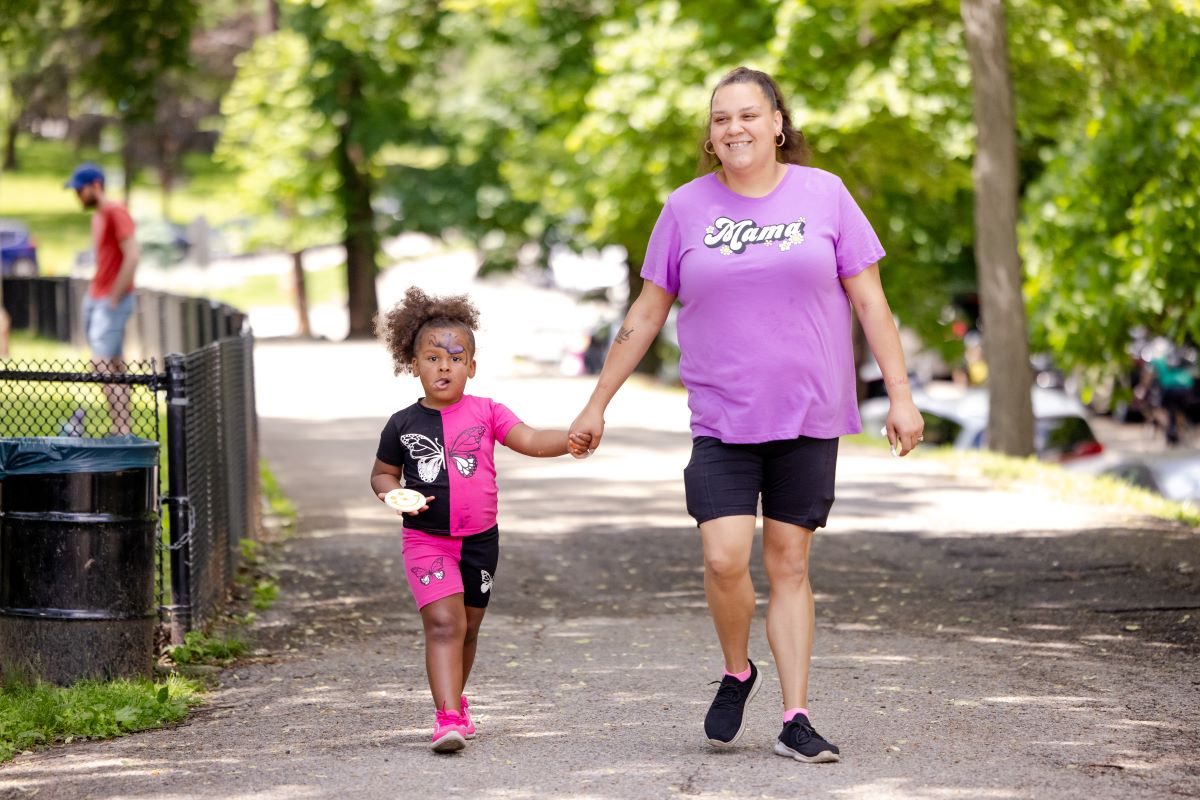
In The Importance of Play, PA Promise for Children notes that play is as important to a child’s well-being as work is for an adult. Play is important for brain development by teaching children new skills and how to share with others. It helps them to make decisions and learn about the world as well as work through scary and confusing experiences.

But, PA Promise for Children writes, nearly 40 percent of elementary schools have eliminated recess or are considering it, and many kindergartners in full-day programs have no break for recess. 

Real Play

Play workers in the United Kingdom consider real play to be “socially interactive, first-hand, and loosely supervised.” The American Academy of Pediatrics argues that play should be child-driven – not adult-directed – and that it is important that children have independent time away from TV, tablets, and video games for the purpose of producing “healthy, fit young bodies.”

Encouraging play, PA Promise for Children notes, can help children who have time for free, open-ended play to score higher in reading and math tests. A lack of real play, on the other hand, can lead to childhood obesity, higher levels of frustration, stress, and aggression as well as a lack of creativity and imagination.

Some of the types of play encouraged are:

  • Large and small-motor play
  • Language play (telling stories, making up silly songs)
  • Construction play (building things)
  • Sensory play (playing in mud or water)
  • Make-believe play
  • Rough-and-tumble and risk-taking play
  • Symbolic play (turning a stick into a magic wand, for example)
  • Mastery play (learning how to do new things)

To learn more, read PA Promise for Children’s The Importance of Play.

Pittsburgh Announces New Traffic Safety and Calming Measures Across City

News

July 11, 2025

Pittsburgh Announces New Traffic Safety and Calming Measures Across City

Pittsburgh’s Department of Mobility and Infrastructure has announced new traffic safety and calming measures at multiple locations around the city as part of the Safe Routes to School program.

Learn More

The city secured a federal grant to fund safety improvements for students who walk or bike to school. The initiative is a partnership with PennDOT.

Construction work is expected to start on Monday, July 14 at three locations over a period of two weeks. Hours of construction will be 7 a.m. to 5 p.m. Temporary no-parking signage will be posted throughout the corridor where work is taking place.

Locations

The three locations for the initiative include:

  • Pittsburgh Arlington Elementary – intersection improvements near Rectenwald and McManus streets, including new ADA ramps, curb extensions, and upgraded LED lighting
  • Propel Hazelwood Elementary – two speed humps on Glenwood Avenue and pedestrian refuge island on 2nd Avenue at Alameda Street
  • Faison Elementary Homewood – chokers/curb extensions on Tioga Street to prevent wrong-way driving and pedestrian refuge island at N. Braddock Avenue and Susquehanna Street

Impacts to traffic will be minimal, with the exception of Glenwood Avenue. During the speed hump construction, the road will be closed to through traffic, although flaggers will be stationed at each end to allow traffic access to and from their residences.

Questions about the project should emailed to saferoutestoschool@pittsburghpa.gov. For more information on the city’s traffic calming program, visit the Safe Routes to School website.

CDA Exam Scheduling Changes to Go Into Effect on Aug. 1

News

July 10, 2025

CDA Exam Scheduling Changes to Go Into Effect on Aug. 1

The Council for Professional Recognition has announced CDA exam scheduling changes that are effective as of early August.

Learn More

Beginning on Aug. 1, the council is implementing a new exam-first approach for the CDA credentialing process. The change enhances standardization and streamlines the process, allowing candidates to demonstrate their expertise in a structured manner.

Candidates must now complete the CDA exam before scheduling their verification visit with a professional development specialist.

Updated Process

After payment, candidates will receive their first Ready to Schedule notification, outlining their six-month deadline to complete the exam and verification visit as well as authorize them to schedule their exam.

Once the exam score is received, candidates will get a second notification, authorizing them to schedule their verification visit with a professional development specialist.

The six-month timeline to complete the exam and verification visit remains unchanged. Therefore, candidates should schedule their exam as soon as possible.

The exam scheduling process has been changed to ensure standardization by creating consistency across all CDA holders and support future enhancements by aligning with future changes that will further strengthen the CDA credentialing process.

For more information and to view the FAQ section, visit the Council for Professional Recognition’s announcement. 

Webinar to Focus on How Extreme Heat Can Affect Young Children

News

July 9, 2025

Webinar to Focus on How Extreme Heat Can Affect Young Children

Harvard University’s Center on the Developing Child will host a webinar on how extreme summer heat can affect young children.

Learn More

Excess heat can affect young children’s development and health both in the moment of contact and across their lifespan. Putting together strategies to reduce exposure to extreme heat benefits children and their caregivers.

The Center for the Developing Child will host a live conversation, Addressing the Impact of Extreme Heat on Young Children, at 1 p.m. on July 17. The webinar will explore how communities are working to reduce the effects of extreme heat on early childhood development.

The discussion will be led by Lindsey Burghardt, MD, MPH, FAAP, the center’s science officer and founding director of the Early Childhood Scientific Council on Equity and the Environment.

Panelists will include Michelle Kang, chief executive officer of the National Association for the Education of Young Children (NAEYC), and Jennifer Vanos, associate professor in the School of Sustainability and the College of Global Futures at Arizona State University. They will share strategies to protect children from extreme heat, support caregivers, and ensure the healthy development of all children.

Those interested in attending the webinar should register on the Center on the Developing Child.

PA Promise for Children Releases List of July Books for Preschoolers

News

PA Promise for Children Releases List of July Books for Preschoolers

PA Promise for Children has released its list of July books for preschoolers that includes eight books and is broken down into four categories.

Learn More

The list is broken down into four themed categories – Language and Literacy Skills; Health, Wellness, and Physical Development; Science Thinking and Technology; and Mathematical Expression and Thinking.

Books on the list include:

Language and Literacy Skills

  • Sorting Through Spring (Lizann Flatt)
  • Stick and Stone (Beth Ferry)

Health, Wellness, and Physical Development

  • Fireflies! (Julie Brinckloe)
  • Summer Days and Nights (Wong Herbert Yee)

Science Thinking and Technology

  • When Day Became Night (Jules Miller)
  • Mud Puddle (Robert Munsch)

Mathematical Thinking and Expression

  • Two Speckled Eggs (Jennifer K. Mann)
  • Mouse Shapes (Ellen Stoll Walsh)

To view the entire list, visit PA Promise for Children’s website.

IMMEDIATE ACTION NEEDED: PA Budget May Leave Out Child Care and Cut Pre-K Again!

News

IMMEDIATE ACTION NEEDED: PA Budget May Leave Out Child Care and Cut Pre-K Again!

Pennsylvania state budget negotiations have intensified, and we are learning that pre-k and the Child Care Recruitment Retention Initiative funding are IN JEOPARDY.

This is not a drill. Your elected officials need to hear from you immediately.

Now is the time for policymakers to show early childhood educators that their critical work of caring for and educating young children is valued and matters to children, families, businesses, and Pennsylvania’s economic security. The General Assembly needs to hear from you!

Steps to take today and every day until the budget is finalized:

1. Email your Senator using our Take Action page alert.

2. Find your legislator and their contact information using www.legis.state.pa.us. 

  • Click on each of your legislators to find their social media accounts.
  • Go to their Facebook page and tell them the General Assembly MUST fully fund pre-k and child care in the 2025-26 final PA budget. Be sure to include the #PABudget, #FixChildCare, and #iamprek tags.

3. Phone your Senator and tell them child care and pre-k funding must NOT be cut in the final 2025-26 state budget. You can leave a message with their staff if not able to speak to them directly.

We will not give up and are asking that you continue the fight with us!

The Mentoring Partnership Series to Focus on Caring for Young People and Caregivers

News

July 8, 2025

The Mentoring Partnership Series to Focus on Caring for Young People and Caregivers

The Mentoring Partnership will offer a two-session series in August and September that will enable attendees to brainstorm, share, and learn from each other to make sure young people feel cared for and supported while also taking care of themselves and other early childhood educators.

Learn More

Discussions in the Mentoring in the Moment Collaborative Series will be facilitate by The Mentoring Partnership and include participatory methods and activities to dive deeper into topics and encourage collaboration.

A portion of each session will be focused on a topic chosen by participants and partners. The sessions will provide opportunities to engage with topic experts, learn new information and skills, and share access to resources and follow-up support.

The sessions will take place at The Mentoring Partnership, located at 4165 Blair St. in Pittsburgh on the following dates:

  • Tuesday, Aug. 12 from 10 a.m. to 11:30 a.m.
  • Tuesday, Sept. 30 from 10 a.m. to 11:30 a.m.

Registration for the sessions is now open.

Trying Together Responds to Federal Reconciliation Bill

News

Trying Together Responds to Federal Reconciliation Bill

Last week, Congress passed the reconciliation bill that was signed into law on July 4. Thank you to all who sent emails, made calls, and shared stories regarding the concerning cuts to Medicaid and the Supplemental Nutrition Assistance Program (SNAP). This is not the outcome we hoped for and we are disheartened by the choice to cut investments to programs we know support families, young children, and professionals in the early childhood field. 

Across Pennsylvania, it’s estimated that nearly 144,000 Pennsylvanians who receive SNAP could lose access and 310,000 Pennsylvanians could lose Medicaid coverage. The Shapiro Administration released a factsheet with an estimate by Congressional district. We encourage you to continue to engage with your Congress member and Senators John Fetterman and Dave McCormick about the impact to you and your community. 

  • Enter your address to confirm your U.S. Congressperson here.
  • Contact Senator John Fetterman here.
  • Contact Senator Dave McCormick here.

Trying Together remains committed to advocating alongside early educators, families, and communities to educate policymakers on the negative impact of the cuts and how to strengthen policy and investments that will help the early care and education system and families to thrive. 

Read NAEYC’s statement on the reconciliation passage here.

While the reconciliation negotiations are over, Congress must still go through the process of the annual appropriations bill for Fiscal Year 2026, which includes yearly discretionary funding for child care and Head Start. The deadline for the appropriations bill is Sept. 30, so there is still time to let our policymakers know how important it is to invest in early learning.


Take Action

As Congress switches gears to make decisions about the annual appropriations, including such key early childhood programs as Child Care and Development Block Grant, Head Start and IDEA preschool special education and early intervention, urge your federal policymakers to invest in early learning. Add your voice to ours by taking action today and sending a message to your members of Congress.


Ongoing Pennsylvania State Budget Negotiations

Additionally, we are still in the midst of Pennsylvania state budget negotiations for Fiscal Year 2025-2026 where we have the opportunity to establish a new “line item” in the Department of Human Services’ budget for the child care workforce. 

As we navigate the ongoing developments and policy implications at the federal and state level, the Trying Together policy team stands as a steadfast resource for your questions and concerns. In solidarity with the early learning community, we are here to help make sense of the information and collaborate on meaningful action.  

Take Action

It’s important that we keep working together to ensure policy makers hear from us that child care needs strong public investment. Your voice can make a difference – and we need your help in the final days of budget negotiations to make sure the Pennsylvania General Assembly hears how important the $55 million is for children, families, educators, and businesses. Email your legislators today and urge them to support Gov. Shapiro’s $55 million child care workforce investment as they negotiate the final budget.

Guide Provides Information on Bringing Learner-Centered Practices Into Classrooms

News

Guide Provides Information on Bringing Learner-Centered Practices Into Classrooms

KnowledgeWorks has released a new resource for school districts looking to bring more learner-centered practices into its classrooms using Pennsylvania state education policies.

Learn More

KnowledgeWorks’ Pennsylvania Innovation Guide for Personalized Learning provides context for state policies, such as descriptions of statutes and regulations.

The guide’s introduction notes that parents and students believe that schools need to do a better job ensuring that learners attain the durable skills necessary to respond to rapid changes in their communities and the economy.

Pennsylvania has established policies and structures to facilitate this transformation, the guide says, and enable schools and districts to consider how to best personalize learning for students.

Personalized learning, the guide notes, involves empowering learners and providing experiences to help them find relevance and meaning in their educational journey. It creates opportunities for learners to explore their interests and passions through experiences that are meaningful to them.

In the guide, personalized learning is described as having six key components:

  • Empowered learners
  • Flexible learning environments
  • Learner relationships
  • Relevant learning experiences
  • Equitable learner supports
  • Demonstration of learning

To learn more, check out KnowledgeWorks’ Pennsylvania Innovation Guide for Personalized Learning.

Trying Together, ELRC Region 5 Offering August and September Professional Development Courses

News

July 7, 2025

Trying Together, ELRC Region 5 Offering August and September Professional Development Courses

Trying Together and ELRC Region 5 are offering a variety of professional development opportunities for early childhood educators in August and September as the 2025-26 school year begins.

Learn More

Trying Together will offer Introduction to ASQ-3 on Tuesday, Aug. 5 at 6 p.m. and Saturday, Sept. 27 at 9 a.m. The course, which is free for Allegheny County providers, teaches participants how to use ASQ-3 as a screening tool for children ages 3 months to 5 years. The session provides information on why a developmental screening tool is administered for early childhood programs, how to administer and score the screener, strategies for sharing results with families of diverse backgrounds, and supporting resources for making referrals to additional services.

ELRC Region 5 will hold a Supervision 101 class on Thursday, Aug. 7 at 6:30 p.m. This live webinar will give a foundational overview of supervision in licensed early childhood programs. The course will focus on the supervision aspects of the DHS Certification Regulations for child care in Pennsylvania. The session will also focus on ratio, scenarios, and the importance of supervision in child care.

Trying Together and ELRC Region 5 will offer American Red Cross First Aid, Pediatric First Aid, CPR, and AED training on Monday, Aug. 11 at 10 a.m. and Friday, Sept. 19 at 9 a.m. This PQAS-certified in-person course provides life-saving skills in alliance with The Occupational Safety and Health Administration (OSHA)’s Best Practices for Workplace First Aid Training Programs. The cost is $70.

Trying Together will host Introduction to ASQ:SE-2 on Tuesday, Aug. 12 at 6:30 p.m. Attendees should have already taken the ASQ-3 professional development prior to this training. Attendees will learn how to use the ASQ:SE-2® as a social-emotional developmental screening tool for children ages 3 months to 5 five years.

On the third Wednesday of every month, Trying Together hosts Growing Together, a professional development series focused on frequently requested topics relating to early childhood educators. The Wednesday, Aug. 20 session will be Resilience in the Classroom – What to Do When Things Fall Apart, while the Wednesday, Sept. 17 session is Supporting Immigrant and Refugee Families. Both begin at 6:30 p.m.

ELRC Region 5 will offer FLIP IT® on Thursday, Sept. 4.  The course is a strategy that offers a simple, kind, strength-based, common sense, and effective four-step process to addressing children’s day-to-day challenging behaviors. The four steps embodied in FLIP IT are F (Feelings), L (Limits), I (Inquiries), P (Prompts).