City Releases Series of Tools to Help Residents Plan Pittsburgh’s Future

News

June 10, 2025

City Releases Series of Tools to Help Residents Plan Pittsburgh’s Future

Mayor Ed Gainey’s office and Pittsburgh’s Department of City Planning released a series of new tools last month that will help residents plan for Pittsburgh’s future.

Learn More

Found on the PGH2050 website, 20 Topic Area Learning Guides is an extensive collection of research spanning 20 critical topic areas that affect the city and its 90 neighborhoods and represents a milestone in the comprehensive plan process to shape Pittsburgh’s future.

The guides capture existing conditions and trends in the city, showing how the city has changed over time, its current state, and projected future directions. Each four-page Learning Guide is accompanied by a comprehensive topic area audit book that contains extensive detailed analysis and research. 

“With these guides, we’re not just planning for our city’s future – we’re putting the power of knowledge into the hands of every resident,” Gainey said. “When people have access to clear, honest data, they can shape the neighborhoods they call home.”

Residents can engage with the research through multiple channels:

  • Explore the research at Pgh2050.com/learn
  • Attend a public forum on June 12 to learn more about the findings, connect with residents, and hear about the comprehensive plan’s approach from a just-transition perspective. Those interested in attending should RSVP.
  • Share feedback on each topic area on the website

The research materials serve as the foundation for Phase 1 of the Pittsburgh 2050 Comprehensive Plan. Research has been informed by reviews of past plans, original research and analysis, and input from the City Planning department and its partners.

Pittsburgh Parks Rank in Top 15 Nationally for Accessibility, Other Factors

News

Pittsburgh Parks Rank in Top 15 Nationally for Accessibility, Other Factors

The Trust for Public Land recently compared Pittsburgh’s parks to other major U.S. cities in five categories and found that an overwhelming majority of the city’s residents live near a park.

Learn More

Pittsburgh’s 176 parks were compared to other cities in the categories of acreage, access, investment, amenities, and equity. The report found that 94% of Pittsburgh residents live within a 10-minute walk of a park, compared to the national average of 76% for the nation’s 100 most populous cities.

Overall, Pittsburgh ranked 15th nationally among park systems. It ranked highest in the areas of amenities and access, slightly above average for equity and investment, and slightly below average for acreage. 

In terms of income, age, and race/ethnicity, there was little difference between various groups in terms of access to Pittsburgh parks. 

For more information on the study and to view its methodology, visit the Trust Public Land’s website.

State Survey Asks Women About Experiences Accessing Healthcare

News

June 9, 2025

State Survey Asks Women About Experiences Accessing Healthcare

Pennsylvania Gov. Josh Shapiro’s Advisory Commission on Women is asking for women to take part in a survey on their healthcare needs in the state.

Learn More

The survey aims to learn about Pennsylvania women’s real-life experiences of accessing healthcare in the state. Among the questions in the survey are:

  • Do you know what services are available and covered by your health insurance?
  • What stops you from seeking care?
  • What barriers or issues have you run into when trying to get women’s health services?

The survey takes about 10 minutes or less and responses are anonymous. The survey focuses on such topics as health screenings, birth control, pregnancy care, and mental health services.

The survey will remain open until July 7. It is available in English and Spanish.

Child Mind Institute Provides Resources on Black Families and Youth Mental Health

News

Child Mind Institute Provides Resources on Black Families and Youth Mental Health

The Child Mind Institute recently released resources centered around mental health issues relating to Black families and youth as part of May’s Mental Health Awareness Month.

Barriers to Treatment

Many parents face challenges in finding the right therapist for their child, the Child Mind Institute wrote, and this can be particularly difficult for Black parents. A history of misdiagnosis and mistreatment of Black patients in the mental health care system as well as a shortage of Black mental health professionals have all contributed to these challenges.

Therefore, the Child Mind Institute wrote, it can be difficult for Black parents to find a provider with whom they can entrust their child’s well-being. The institute’s recent study on the topic explored the views and experiences of Black families and young adults seeking mental health care and identified key barriers to care.

Resources

The institute’s resources include discussions on the importance of cultural competence in therapy for Black children – such as roadblocks that Black parents face when trying to find the right therapist – and why young Black men are less likely to seek professional care than their female counterparts.

The resources include clinical experts, educators, and church leaders talking about ways to support and encourage Black adolescent boys to seek treatment when they need it. Another resource covers how study participants felt that mental health professionals were too quick to prescribe medication and includes clinicians weighing in on how to talk to parents who might be skeptical about medication.

The Child Mind Institute’s resources include:

Schenley Park Skating Rink Open for Summer

News

Schenley Park Skating Rink Open for Summer

The Schenley Park Skating Rink is now open four days a week through the end of August for the city’s roller-skating community.

Learn More

The park, which first opened 50 years ago, opened for the summer in late May. Roller-skating sessions this summer will include:

  • Wednesdays from 5 p.m. to 8:30 p.m.
  • Thursdays from 10 a.m. to noon
  • Fridays from 10 a.m. to noon and 5 p.m. to 8:30 p.m.
  • Select Sundays (July 1, 8, and 15 and August 3, 24, and 31) from 10 a.m. to noon and 5 p.m. to 8:30 p.m.

The park closes on August 31.

“The organizers of PGH SK8 started hosting roller skate events at the rink and have worked to help us reimagine how we can utilize this facility to offer Pittsburghers an additional fun summer recreational activity in Schenley Park,” said Kathryn Vargas, CitiParks’ director.

UnConference Focuses on Engaging in Out-of-School Time Programs

News

June 6, 2025

UnConference Focuses on Engaging in Out-of-School Time Programs

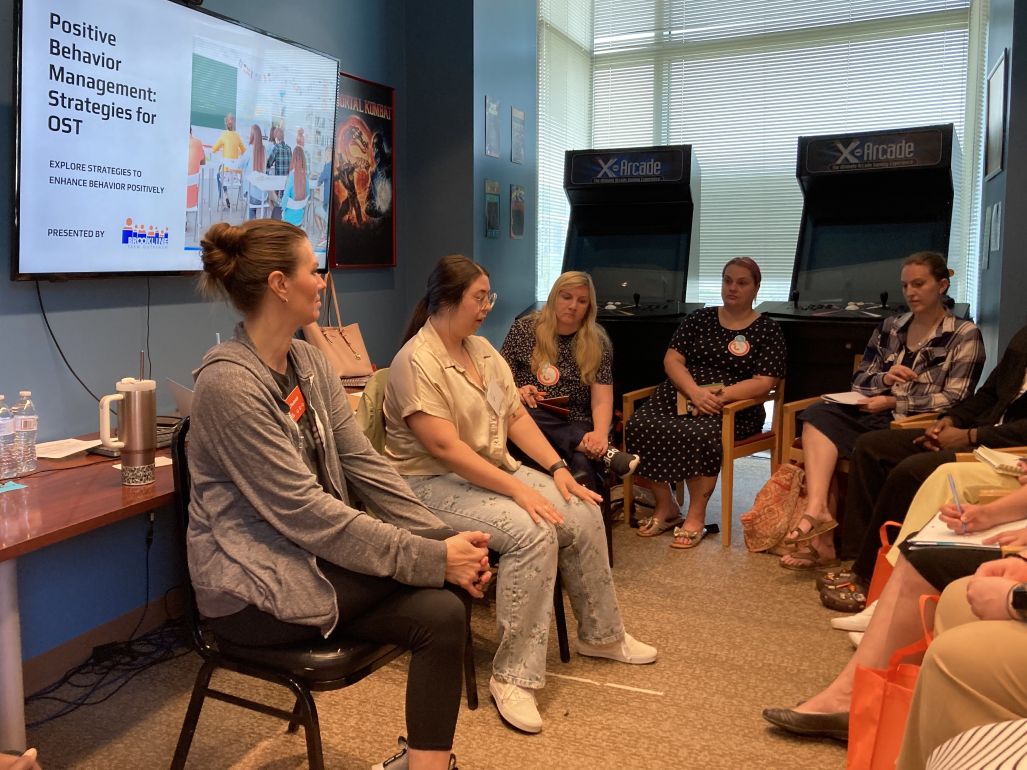
Participants took part in sessions involving mindfulness techniques, behavior management, developing lasting relationships with students, and CPR and First Aid training at Trying Together’s UnConference: Authentic Engagement in Out-of-School Time Programs on June 5.

Learn More

The conference, held at Carnegie Mellon University’s Entertainment Technology Center, was led by Trying Together, APOST, and the Allegheny Department of Human Services and featured sessions with WQED, the Pittsburgh Parks Conservancy, Brookline Teen Outreach, and other regional programs.

The morning kicked off with three different tracks – a First Aid/CPR class and two other tracks that featured three sessions apiece on a variety of topics relating to caring for children. The afternoon’s activities included a tour of interactive activity stations in the Entertainment Technology Center and Everyday Mentoring Training provided by The Mentoring Partnership.

Morning Sessions

During the CPR/First Aid class, participants were shown how to properly apply gloves before assisting with CPR services and given the three steps as a responder – check the scene for safety and check the person, call 911, and then provide care. Participants then practiced responses on mannequins.
In a Pittsburgh Parks Conservancy class, “Wellness Through Nature Chilling,” participants learned about practicing mindfulness through nature. They observed leaves and were asked by session leaders Patty Himes and Kathny Hunninen how the leaves felt and smelled. Later, they sat in chairs spread throughout a field behind the CMU building to observe what they saw in its natural surroundings.

A session titled “PBS 101” featured WQED’s Cathy Cook and Gina Masciola talking about the station’s Family Corner Newsletter, summer safety, Pride Month and Juneteenth resources, and programming for families.

“We expect that the resources we’re sharing are meant to support what you’re already doing,” Masciola said. “We always say that if WQED is doing its job correctly, you’ll turn us off and do something. It’s about inspiration and exploration.”

During a session titled “Building Relationships Through Cultural Connections,” the Center of Life’s Sarah Crawshaw discussed how educators should not assume that students are comfortable with being given a nickname without them explicitly approving it – especially for students from other countries or cultures whose names might be challenging to pronounce.

“It’s important for children to feel comfortable and confident in their names,” she said, adding that students should feel comfortable in correcting educators who mispronounce their names.

Kierra Price, of Brookline Teen Outreach, discussed the difference between traditional and positive behavior management during another session.

“Societally and culturally, we tend to lean into behavior management, which has caused more problems,” she said. “Traditional behavior management typically involves no conversation, but positive behavior management is about fostering an environment for conversation. If we can build a stronger relationship with a child, we can meet their needs much better and provide a better redirection for them.”

In a session on mindfulness for co-regulation, Awaken Pittsburgh’s Shannon Jenkins explained the Autonomic Ladder, which argues that the nervous system produces three elementary states – ventral vagal (a feeling of safety), sympathetic (fight-or-flight), and dorsal vagal (shutdown). She cited an example of a teacher mistaking children whispering after a test for cheating and ripping up their papers, which led to the students being in the dorsal vagal state.

Participants discussed how their bodies react when they feel angry, happy, or nervous. They took part in an activity in which they rubbed their palms together vigorously, raised their arms, and breathed in and out. Attendees said they noticed a cool tingling and a sense of release.

In the “Regulate & Recharge” session, Open Up’s Tessa Karel said that her organization’s mission is to find ways to remove barriers – whether financial or the ability to feel comfortable in a space – to help people improve wellness. The session focused on mindfulness techniques, including one in which participants stood in a circle and passed an invisible energy ball.

Afternoon Sessions

During the afternoon, UnConference attendees were able to tour four activity stations in the Entertainment Technology Center – The Cavern, The Cave, The Green Screen Room, and the CMU Brick Club, where participants learned about LEGO play methodology to help young people with social-emotional development.

Elsewhere, the Mentoring Partnership led an Everyday Mentoring Training session that focused on such tenets as speaking and listening from the heart, honoring privacy and remaining present, speaking and listening with respect, and protecting one’s community in regard to early childhood education. They said that everyday mentoring focuses on expressing care, challenging growth, providing support, sharing power, and expanding possibilities. 

“Be mindful of how to respect young people,” said Sophia Duck, The Mentoring Partnership’s training and engagement manager. “The category of sharing power makes young people feel seen and heard – you’re saying, ‘I value you.’”

Allegheny County Leaders Hold Roundtable to Address Child Care Teacher Staffing Crisis

News

Allegheny County Leaders Hold Roundtable to Address Child Care Teacher Staffing Crisis

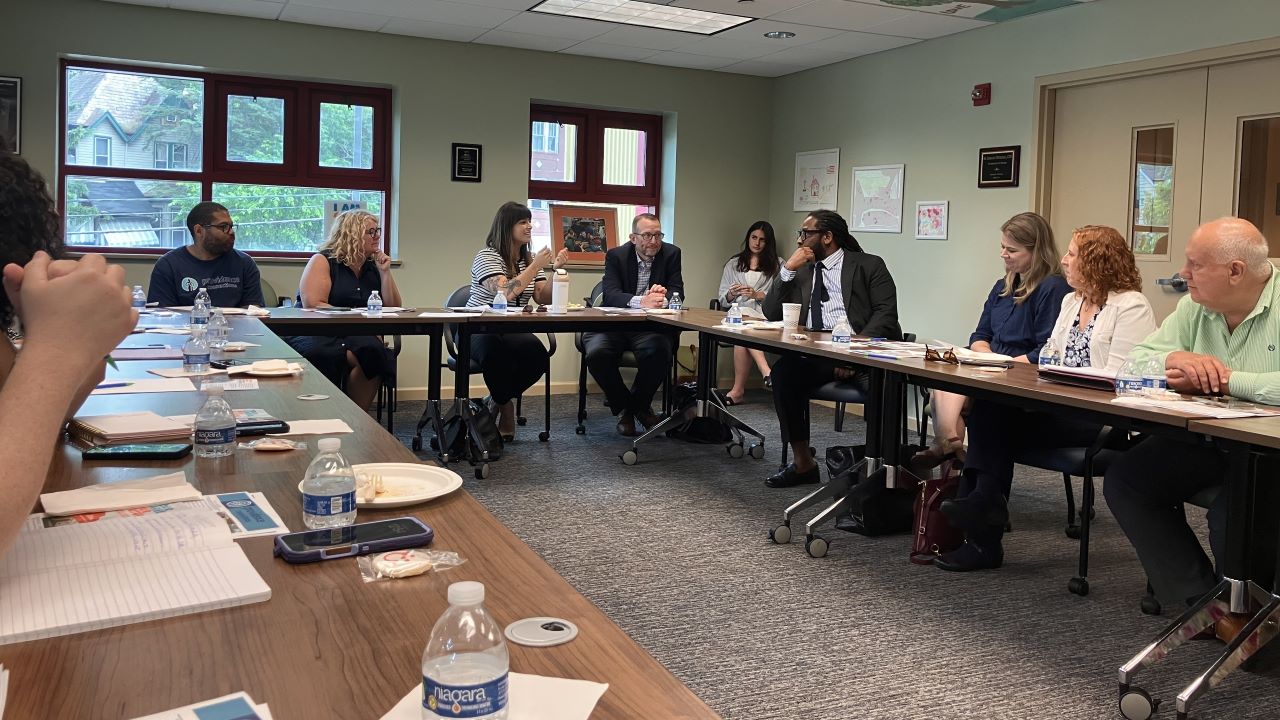
Allegheny County Executive Sara Innamorato joined Trying Together, the Allegheny Conference, state legislators, and child care providers Thursday for a roundtable to discuss new state and local survey data showing how a worsening child care teacher shortage – driven by low wages – is closing child care classrooms and causing parents to struggle to find the care they need to be able to work.

Learn More

During the roundtable at Providence Connections, results from a September Start Strong PA survey were shared to demonstrate how the staffing crisis is affecting programs in Allegheny County and across the state.

“Of the 118 providers that participated in the survey, 89% reported staffing shortages,” Innamorato said of the Allegheny County providers. “Those programs have 373 unfilled teaching positions, and if those positions were filled, they could serve an additional 3,000 children.”

A total of 1,140 Pennsylvania child care providers took the survey, of which 92% reported difficulties in recruiting staff and 85% said they struggled with teacher shortages. The shortages, which are leaving more than 3,000 unfilled positions statewide, could serve an additional 25,320 children if programs could recruit and retain the staff they need. The numbers represent only 17% of the total open registered programs in the state.

Leslie White, director of early childhood and youth programs for Providence Connections, said low wages are preventing programs from finding qualified early childhood educators.

“They are doing some of the most important work in our society – nurturing the next generation. But the reality is that many teachers can find other jobs that require far less specialized skills and pay more an hour, often with benefits,” she said. “I’ve been doing this work for nearly 40 years and fighting for better pay. The time is now to invest in the child care teaching workforce.” 

During the event, Matt Brown, an early educator at Providence and participant in the Your Career, Our Future campaign, shared his passion for teaching young children and why more qualified educators matter for the field. The initiative shares the experiences of current early educators and the families they serve in the hopes that more people will answer the call to become early educators.

Speakers said the foundational role child care plays is a critical part of the state’s economy and the bipartisan support that it has garnered to date.

“The report shows this is not just an inconvenience for working parents – this is a major economic issue that affects every business, every community, and every family in Pennsylvania,” Trying Together Public Policy Director Emily Neff said. “It is no surprise that this impact is understood by Pennsylvanians and, as such, they want lawmakers to prioritize early learning in the budget.”

Majestic Lane, chief opportunity officer for the Allegheny Conference, noted that the staffing crisis is a detriment to the economy, citing a recent economic analysis conducted by the Conference citing child care as one of the top barriers for employment in the region. 

“Child care is vital to the future of our economy and the quality of life in our region,” Lane said. “When families don’t have the resources they need and their ability to work is severely diminished, it has a measurable economic impact on our communities and our commonwealth.”

At the press conference, participants encouraged state lawmakers to prioritize early learning in the 2025-26 budget by including Gov. Josh Shapiro’s proposal to invest $55 million in a new and recurring Child Care and Recruitment and Retention line item to grant licensed child care providers participating in the child care subsidy program an additional $1,000 per educator.

“We’ve heard the problem, we’ve heard the solution, and we know the cost of inaction,” Trying Together Executive Director Cara Ciminillo said. “To grow our economy and support working families, we must invest in child care.”

State Reps. Lindsay Powell (D-21st District) and La’Tasha Mayes (D-24th District) and representatives from other state legislators attended the press conference and expressed their support for the investment in the child care workforce.

Trying Together Exec Director Discusses Your Career, Our Future on Yinz Are Good Podcast

News

June 4, 2025

Trying Together Exec Director Discusses Your Career, Our Future on Yinz Are Good Podcast

Trying Together’s executive director discussed the Your Career, Our Future campaign alongside the Early Excellence Project on Yinz are Good’s latest podcast.

Learn More

Cara Ciminillo, Trying Together’s executive director, joined Dr. DaVonna Shannon, director of research and impact for the Early Excellence Project, to discuss the initiative with Yinz are Good host Tressa Glover. The Early Excellence Project champions Black and Brown child care providers by fostering equality, equity, and accessibility in early childhood education.

Ciminillo and Shannon discussed how the Your Career, Our Future campaign has collected stories from early educators and families in the Pittsburgh region with the intention that their shared experiences will inspire more people to answer the call to become early educators.

Making Educators the Centerpiece

The campaign centers around 15 educators and parents, who relay their positive experiences with the early childhood education field. Ciminillo cited several stories from the campaign. One educator entered the the profession at a young age and rose from being a classroom aide to an executive director. Another was a stay-at-home father who become a classroom educator due to his interest in understanding how his child was developing.

“We’re always trying to center the educator,” Ciminillo said. “They are exemplars of people coming into the field. We ask how we can help others to see themselves in these stories to draw other people to the field. You need to help people see what opportunities exist, so making provider stories the centerpiece is important.”

A Need for Investment

Ciminillo and Shannon said the campaign aims to combat an ongoing early educator shortage that has resulted in repercussions for businesses, the economy, and local communities.

“One of the pain points that we’ve heard frequently – it predated COVID and was exacerbated after COVID – is that child care programs are struggling with staffing,” Ciminillo said. “We are a field where wages are suppressed and the reason why is that families can’t pay more. Child care is expensive and it’s a regulated system; it’s based on a child-to-staff ratio. The public system has not invested enough to alleviate that problem.”

Ciminillo said that this lack of investment in early childhood education has resulted in low wages for teachers and, in turn, teachers leaving the profession as well as challenges in recruiting and retaining them.

“What happens is that providers subsidize (a lack of funding) with their own wages,” she said. “As a result, you’re not getting as much interest in going into the field as other fields that are higher income-generating.”

Ciminillo noted that many early childhood educators were making just over $9 per hour prior to COVID-19, but are now earning an average $15. However, she said wages will need to continue to rise due to the profession’s often challenging nature. She said the job’s primary focus is “brain building.”

Shannon added that part of the Your Career, Our Future campaign involves letting families know that early childhood education is not “babysitting.”

“Children are developing in these early childhood programs, which are very high-quality,” she said. “The message to employers is: If you don’t know how to invest in early childhood education, you will lose staff. People won’t be able to work if they can’t afford child care.”

To listen to the entire interview, “Episode 168: Trying Together & Early Excellence Project’s Your Career, Our Future Campaign,” visit the Yinz are Good podcast’s website.

OCDEL Shares Keynote Speeches, Other Resources from Conference

News

OCDEL Shares Keynote Speeches, Other Resources from Conference

Pennsylvania’s Office of Child Development and Early Learning (OCDEL) has shared resources from its recent conference for those who were not able to attend.

Learn More

OCDEL’s Stable and Secure: Supporting Children Through Trauma-Sensitive Approaches conference was held on April 22 and 23 in downtown Pittsburgh. The event drew experts, educators, and practitioners, who explored how trauma-informed care can support the well-being of children, families, and the professionals who serve them.

Those who were unable to attend can access presentation slides and view recordings and other valuable materials to listen to the insights of those who participated.

Materials from the conference’s first day include Luisa Olivio-Wolf’s keynote speech, “Honoring and Supporting Language, Culture, and Identity of Families and Children.” Resources from the second day of the conference include Dr. Marnie Aylesworth’s keynote speech, “Compassion for Self: The Act of Taking Back Our Power.”

For additional resources, visit OCDEL’s conference page.

Three Rivers Festival to Host Musical Performances, Activities, and Artist Market

News

June 3, 2025

Three Rivers Festival to Host Musical Performances, Activities, and Artist Market

The Three Rivers Arts Festival will bring four days of free art and music to Pittsburgh’s cultural district in early June.

Learn More

The festival, which runs from Thursday, June 5 to Sunday, June 8, will offer a variety of events and activities, musical performances, artists, and vendors. 

For visual arts, there will be an artist market, exhibitions, and films, while performances will include everything from popular music artists to dance.

The artist market runs from noon to 8 p.m. every day of the festival. It will feature hundreds of independent artists from around the nation selling handmade fine arts and crafts that vary from jewelry and paintings to woodworking and photography. 

Some of the musical performance highlights include:

  • Ras Prophet (Thursday, June 5 at 3 p.m.)
  • Megan Paullet and the HR Department (Thursday, June 5 at 6 p.m.)
  • The Shiners (Friday, June 6 at noon)
  • Tiera Kennedy (Friday, June 6 at 6 p.m.)
  • Souls of Mischief (Saturday, June 7 at 4 p.m.)
  • Rell Z the Genius (Saturday, June 7 at 5 p.m.)
  • Cautious Clay (Saturday, June 7 at 7:30 p.m.)
  • Lisa Loeb (Sunday, June 8 at 6 p.m.)
  • Suzanne Vega (Sunday, June 8 at 7:30 p.m.)

Dance performances include ballet, garba, and a dance battle featuring cash prizes and trophies.

For children, the festival will feature a creativity zone and the YMCA of Greater Pittsburgh’s Magical Community Garden in the Strip District, both of which are open in the Strip District every day from noon to 6 p.m. The Pittsburgh Glass Center will offer mini-mosaic craft activities, while the Pittsburgh Center for Arts and Media will hold a clay workshop.

For more events and information, visit the festival’s website.