Kidsburgh Provides Advice on How to Talk to Children About Big Emotions

News

June 3, 2025

Kidsburgh Provides Advice on How to Talk to Children About Big Emotions

Children often have big emotions or feelings and the challenge can sometimes be getting them to say how they’re feeling. 

As part of Mental Health Awareness Month, Kidsburgh has provided advice on how to talk about big emotions – whether it’s fear, embarrassment, frustration, or others – with children.

Learn More

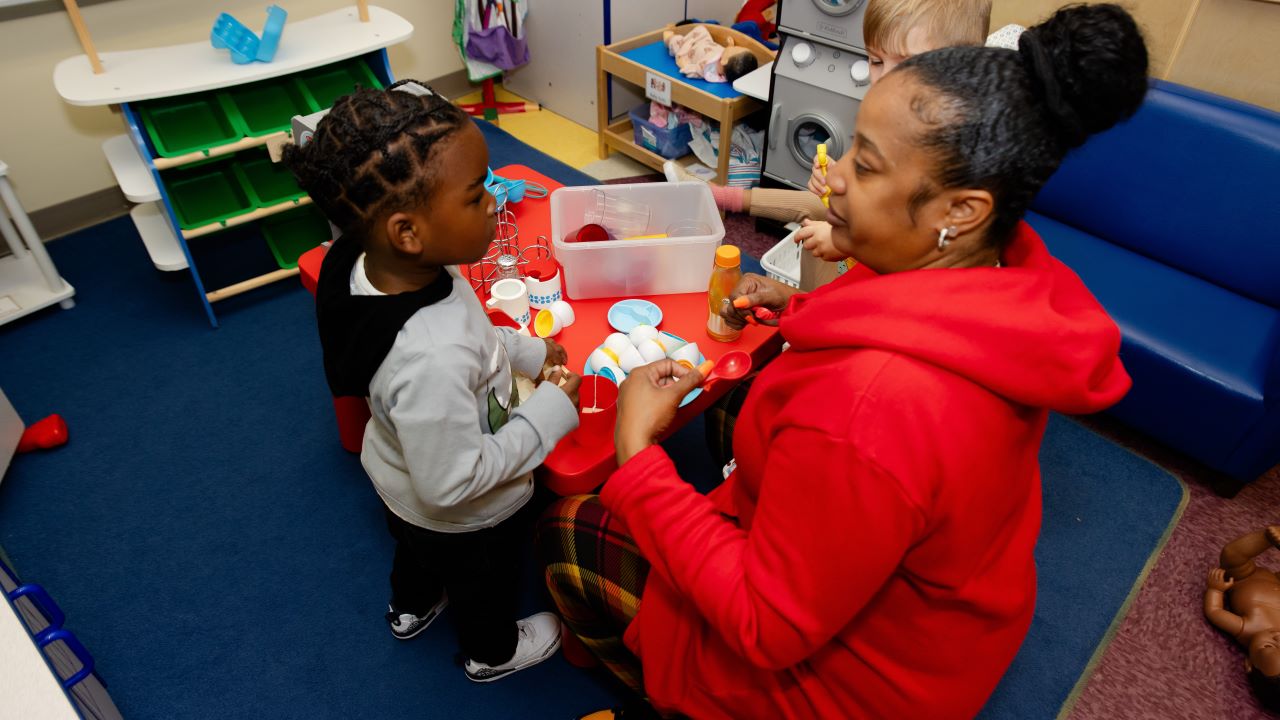
For many toddlers, who are still trying to figure out how to form sentences, expressing emotions or even just tiredness can be difficult, Kidsburgh writes. The article notes that while it may be tempting to react with discipline or distractions when children act out, the root cause could be something else – such as emotional illiteracy.

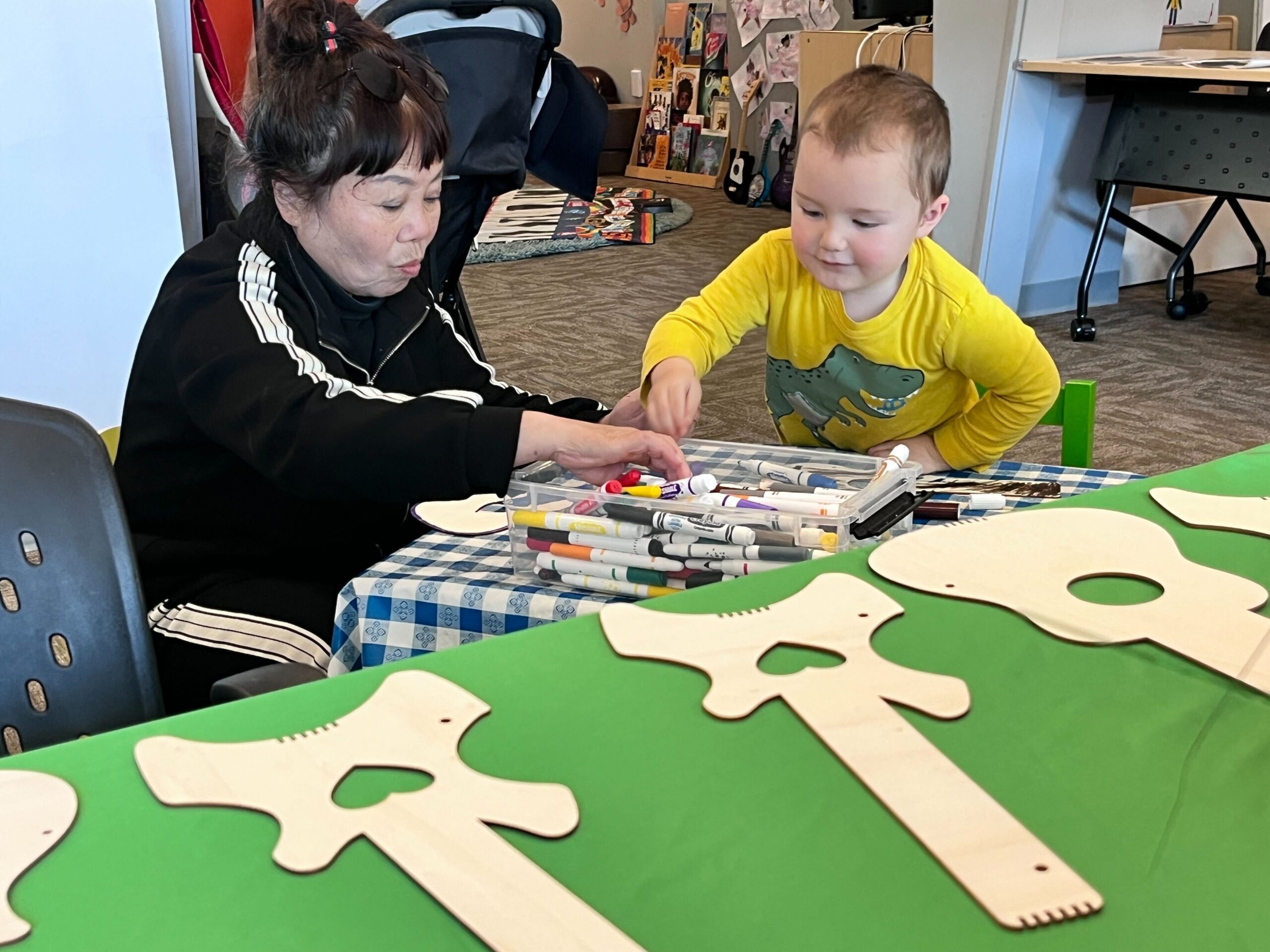
Kidsburgh notes that crayons, clay, music, puppets, or other forms of expression might ultimately help parents to build emotional vocabulary, rather than responding to outbursts with punishment or attempting to distract children from their source of bother.

In the article, Dr Aileen Oandasan, an Allegheny Health Network psychiatrist, said that most children begin to learn simple emotion words around age two and this typically grows from ages three to 5. During this span of time, such basic emotions as happy, sad, or mad are “developmentally normal.”

However, Oandasan says, emotional vocabulary depends on a variety of factors, including:

  • A child’s temperament and development factors
  • Parental factors, such as social or environmental conditions
  • Reinforcement of emotional vocabulary by teachers and caregivers

Oandasan goes on to say that art is an important tool for helping children to develop an emotional vocabulary. Suggested projects include feelings collages, creative art projects (painting, sculpting, or drawing), and play acting through the use of puppets or dolls that involve scenarios featuring emotionally provocative situations.

To learn more, read Kidsburgh’s article, “How Do You Feel Today? Advice on Talking Big Emotions with Little Kids.”

Pittsburgh Cultural Trust Announces Trust Family Series of Performances

News

June 2, 2025

Pittsburgh Cultural Trust Announces Trust Family Series of Performances

The Pittsburgh Cultural Trust will host its Trust Family Series of seven performances that will run from September through April.

Learn More

The series of performances is intended for all ages and aims to instill imagination and curiosity in both children and adults.

The lineup includes:

Tickets are on sale now. Those who purchase three or more shows can save up to 15 percent on their order.

For more information on the series or to buy tickets, visit the Pittsburgh Cultural Trust’s website.

May Recalls on Children’s Products

News

May Recalls on Children’s Products

Below is a list of May recalls from the following federal agencies: the Consumer Product Safety Commission, the Food and Drug Administration, and the National Highway Traffic Safety Administration.

May Recalls

  • Dlesot recalled its snap children’s hair clips due to lead poisoning hazard. The clips violate the federal ban for lead in paint, which can be toxic if ingested by young children and can cause adverse health issues.
  • Xylolin recalled its peg doll toy sets due to the risk of serious injury or death from choking. The peg dolls’ spherical ends can block a child’s airway.
  • Deuter recalled its Kid Comfort, Kid Comfort Pro, and Kid Comfort Active Child carriers due to fall hazards posed by the items. The hinges on the foldable rear kickstand support leg can crack or break, possibly causing a child to fall.
  • Boyro recalled its high chairs due to risk of serious injury or death from falling or entrapment hazards. The chairs, which violate federal regulations for high chairs, pose a deadly fall hazard to babies because their restraint system is not attached to the product and the locks or latches can fail. Additionally, the high chairs pose an entrapment hazard because the opening between the seat and tray is large enough that a child can become entrapped in it.
  • NICREW recalled its submersible RGB LED Lights due to risk of serious injury or death from ingestion. The lights, which violate federal regulations for consumer products with coin batteries, have a remote control with a lithium coin battery that can be easily accessed by children, posing an ingestion hazard risk. The recalled products also do not have the required warnings.
  • Leon Rading recalled its digital wall clocks due to ingestion hazards. The clocks, which violate federal regulations for consumer products with coin batteries, pose a risk of serious injury or death to children. The remote control for the clock has a lithium coin battery that can be easily accessed by children and the clocks do not have the required warnings required under Reese’s Law.
  • Fat Brain recalled its rollers tile toys that are used in PlayTab Modular Activity Boards due to magnet ingestion hazards. The toy violates federal regulations for toy magnets because it contains a magnet that can become loose, posing an ingestion hazard to children. When high-powered magnets are swallowed, they can attract each other or other metal objects and become lodged in the digestive system. This can result in perforations, twisting, and blockage of the intestines, infection, blood poisoning, and death.
  • FidgetThings recalled its Chill Pill Magnetic Haptic Fidget Toys Red Bumpy due to risk of ingestion. The toys violate federal regulations for magnets, posing an ingestion hazard to children.When high-powered magnets are swallowed, they can attract each other or other metal objects and become lodged in the digestive system. This can result in perforations, twisting, and blockage of the intestines, infection, blood poisoning, and death.
  • Child safety gates sold on Amazon were recalled due to risk of serious injury or death from entrapment and fall hazards. The gates violate federal safety regulations for expansion gates and expendable enclosures because a child’s torso can fit through the opening between the gate slat and side wall as well as the secondary opening. The locking mechanism does not fully engage and the gate does not resist a push-out force.
  • BuddyLove recalled its children’s Mini Danica Loungewear sets due to burn hazards. The pajamas violate flammability standards for children’s sleepwear, posing a burn hazard and risk of serious injuries or death to children.
  • Areson recalled its Rolanstar 6-Drawer Dressers due to risks involved in tipping over or entrapment. The dressers are unstable if they are not attached to the wall, posing serious tip-over and entrapment hazards that can result in injuries or death to children. The dressers violate performance requirements of the STURDY Act because they can tip over with fewer than 60 pounds applied horizontally.
  • Sivan recalled its dressers due to tip-over and entrapment hazards. The dressers are unstable if they are not attached to the wall, posing serious tip-over and entrapment hazards that can result in injuries or death to children. The dressers violate performance requirements of the STURDY Act because they can tip over with fewer than 60 pounds applied horizontally.
  • Primark recalled its DTR Plush Bag Stitch and DTR Plush Bag Angel due to choking and ingestion hazards. The zipper on the back of the plush bags can detach, posing a serious injury or death from choking or ingestion of the zipper pull.
  • Nezmi recalled its infant swings due to suffocation hazards. The swings pose a risk of suffocation to babies because they were marketed for infant sleep and have an incline greater than 10 degrees. The swings also fail to meet mandatory warning requirements under federal swing regulations. The remote control included with the swings contains a lithium coin battery and is missing the required warnings and instructions for consumer products containing those items.
  • Macy’s recalled its Holiday Lane infant-footed pajamas because the elastic on its ankles can be too tight and can restrict blood circulation, posing an injury hazard.

Westmoreland County Child Care Roundtable Discusses Impact of Child Care Teacher Shortage on Employers

News

May 30, 2025

Westmoreland County Child Care Roundtable Discusses Impact of Child Care Teacher Shortage on Employers

Business, nonprofit, and community leaders gathered Thursday at the Westmoreland County Chamber of Commerce to address a child care teacher shortage that is affecting both the economy and families across the state and called for state investments in teacher recruitment and retention efforts.

Calls for Recruitment and Retention Funding

Trying Together joined the chamber of commerce, local advocates, and representatives from state Sen. Kim Ward’s (R-39th District) office to highlight the results of new state and local surveys that reveal how the teacher shortage – driven by unlivable wages – is forcing child care classrooms to close and leaving working families scrambling to find care.

“Today, we are talking about the child care staffing crisis, a challenge that has reached critical levels and is affecting employers, workers, and families alike,” said Dan DeBone, president and CEO of the chamber of commerce. 

The Westmoreland County Chamber of Commerce has joined more than 70 state chambers of commerce and economic development organizations to urge the General Assembly to work across the aisle to allocate funding for child care teacher recruitment and retention.

Emily Neff, Trying Together’s director of public policy, said that 83% of the 29 Westmoreland County providers that participated in a September 2024 survey conducted by the Start Strong PA Campaign reported staffing shortages, while 86% reported challenges in recruiting teachers.

“Those programs have 69 unfilled teaching positions, and if those positions were filled, they could serve an additional 747 children in Westmoreland County,” Neff said.

One employer shared that she is trying to help a staff member who is a new mother find child care so she can return to work and fears she might lose the staffer due to the challenges in finding child care. Another employer said that child care is a barrier to effectively covering shift work and has had to change the schedule to meet the needs of employees who cannot find child care.

Of the 1,140 child care providers who took the survey statewide, 92% reported recruitment challenges and 85% said they were struggling with teacher shortages that are leaving more than 3,000 positions unfilled statewide. A total of 25,320 additional children could be served if those positions were filled.

Teacher Shortage Driven by Low Wages

Eva Wood, executive director of Ligonier Valley Learning Center, said that low wages is the primary reason why it is challenging to retain and recruit new teachers.

“The wages for child care teachers are so low that they fail to meet the cost of living in every single county in Pennsylvania,” Wood said. “They are doing some of the most important work in our society – nurturing the next generation. But the reality is that many teachers can find other jobs that require far less specialized skills and pay more an hour, often with benefits. Our Ligonier location had to close the infant and toddler child care program and the Latrobe location just lost six teachers who are moving on to higher paying jobs, some outside of the field.”

The event also spotlighted the “A Day in the Life” project, a partnership between Trying Together, Start Strong PA, and Pre-K for PA. The project shares photos and stories to help the public and lawmakers gain a deeper understanding of the realities facing children, families, and early childhood educators in Pennsylvania. 

Speakers during the press conference also highlighted a March poll conducted by Susquehanna Polling and Research that found that 98% of voters agreed that early childhood education plays an important role in what it takes to lead a healthy and productive life. The poll also found that 83% of respondents supported increasing state funding for child care teacher recruitment and retention.

“New polling data from a March 2025 statewide poll showed overwhelming Pennsylvania voter support for early childhood care and education programs and increased state funding to strengthen and grow these services,” said Hailee B. Roye, Trying Together’s policy and practice manager.

Looking to Take Action? 

Sign the petition to tell the PA General Assembly to prioritize child care in the final 2025-2026 PA budget!
Summer Nutrition Programs Feed Children Out of School

News

May 28, 2025

Summer Nutrition Programs Feed Children Out of School

Caregivers can sign up for several summer nutrition programs that help keep children fed during the summer months when they are out of school.

SUN Bucks

Caregivers can sign up for the federal child nutrition program SUN Bucks, also known as Summer EBT, which provides eligible children with an EBT card that can be used to purchase groceries.

The program is run by Pennsylvania’s Department of Human Services, with support from the Department of Education. Children who are eligible and automatically signed up for SUN Bucks include:

Children ages 6 to 18 who receive Supplemental Nutrition Assistance Program (SNAP), Temporary Assistance for Needy Families (TANF), or medical assistance with qualifying income during the school year or summer 2025. This includes home-schooled and cyber-schooled children. 

Children who attend schools that participate in the National School Lunch Program and applies for free and reduced-price meals during the school year, receive SNAP, TANF, or medical assistance with qualifying income any time, or is directly certified for free school meals as a foster child, migrant, or someone experiencing homelessness

Children who attend schools that participate in the National School Lunch Program and whose families meet the income guidelines for SUN Bucks, but were not automatically enrolled in the program by being in one of the categories listed above, may be eligible. They would need to apply directly to SUN Bucks.

The monthly household gross income limit for SUN Bucks is:

  • $2,248 for a household of one
  • $3,041 for a household of two
  • $3,833 for a household of three
  • $4,625 for a household of four
  • $5,418 for a household of five
  • +$8,732 for each additional family member

The benefit amount for summer 2025 is currently not listed on the SUN Bucks website. Qualifying families who already receive SNAP benefits will see the benefit added to their card.

For those who do not receive SNAP benefits, an EBT card will be mailed to them. Those interested in the program should make sure that their child’s school has a current mailing address.

More information on how to activate the card, how to check its balance, or how it can be used to buy food is available online. Those interested in utilizing the program should fill out this application.

Summer Youth Cafe

The Greater Pittsburgh Community Food Bank’s Summer Youth Cafe is a federally-funded child nutrition program that provides healthy meals while schools are on summer break. It opened for the season in May. Those interested in becoming a program site or sponsor should complete a partnership inquiry form.

The cafes are open to anyone 18 years old and younger at no cost. Those interested should visit the cafe’s website and follow the instructions to find a local site.

Summer Meal Site Finder

The U.S. Department of Agriculture’s Summer Meals for Kids Site Finder provides a directory by state of places where families can find meal service options for children. Currently, Pennsylvania is not listed among the states, but the site is regularly updated.

Carnegie Library Summer Meals

The Carnegie Library of Pittsburgh is participating in the 2025 Summer Food Service Provide to ensure Pittsburgh youth have access to free food during summer vacation.

Unless otherwise noted, the library locations listed below offer meals or snacks from Monday, June 16 through Friday, August 15.

  • Allegheny (12:30 p.m. – 1:30 p.m.)
  • Beechview (2 p.m. – 3 p.m.)
  • Brookline (12 p.m. – 1 p.m., 3 p.m. – 4 p.m.)
  • Downtown (1 p.m. – 3 p.m.)
  • Hazelwood (3 p.m. – 3:30 p.m.)
  • Hill District (12 p.m. – 1 p.m., 4 p.m. – 4:30 p.m.)
  • Homewood (1 p.m. – 2 p.m.)
  • Knoxville (Through Thursday, August 14; 12 p.m. – 1 p.m., 3:30 p.m. – 4 p.m.)
  • Main (Oakland) (Tuesday, June 17 through Thursday, August 7; 2 p.m. – 4 p.m.)
  • South Side (11 a.m. – 12 p.m., 3 p.m. – 4 p.m.)
  • Woods Run (12 p.m. – 1 p.m., 3 p.m. – 4 p.m.)

Daniel Tiger Teams Up with YWCA for Pool Season Safety Tips

News

Daniel Tiger Teams Up with YWCA for Pool Season Safety Tips

The YWCA and the producers of the animated series “Daniel Tiger’s Neighborhood” have provided safety tips in a new episode for parents and caregivers to keep preschoolers safe as pool season begins.

Learn More

A new episode of “Daniel Tiger’s Neighborhood” was released this week that shows Daniel and his friend Juan Carlos having fun at a pool and pretending to be whales. 

Caregivers and children can watch the pool-themed episode and listen to a Daniel Tiger song about staying safe near water to start a conversation about pool safety.

Safety Tips

Lindsay Mondick, director of strategy and quality practices of aquatics at the YMCA of the USA, said the following safety tips should always be considered when young children are at the pool:

  • Always Ask Permission: Parents must instill this simple rule during a day at the pool, beach, or lake. Children must always ask for permission before entering the water.
  • Find a Water Watcher: Whenever children are in or around water, make sure an adult is identified as the “water watcher.” They are tasked with keeping an active eye on and supervising everyone without distractions – in other words, no phones, books, or conversations.
  • Use the Buddy System: Never let children swim alone, regardless of how strong a swimmer they are. Before leaving for the pool or beach, designate swimming buddies for everyone in the group.
  • Suit Up Accordingly: Swimsuits and sunscreen – but also Coast Guard-approved life jackets when necessary – should be worn by children at the pool. Do not rely on water toys, such as inflatable floats or pool noodles, as safety equipment.
  • Ban Breath-Holding Contests: Although a common pool game, breath-holding contests under water can be dangerous and lead to complications or a possible emergency.

Be sure to watch the Daniel Tiger episode, follow the YWCA’s safety rules around water, and have a great pool season.

Resources for June Observances

News

May 27, 2025

Resources for June Observances

Various organizations, states, and nations recognize a number of observances each month. Resources help parents, caregivers, and child care professionals acknowledge and navigate them.

Here is a list of resources for June observances:

Month-Long Observances

June is Caribbean American Heritage Month

June is National Men’s Health Month

June is National PTSD Awareness Month

June is Pride Month

June is Child Vision Awareness Month

Weeks of Recognition

June 1 – 7 is CPR & AED Awareness Week

June 10 – 16 is National Men’s Health Week

Days of Recognition

June 5 is World Environment Day

June 16 is Father’s Day

June 19 is Juneteenth

June 27 is National PTSD Awareness Day

PACCA Partners with Alvernia University to Offer T.E.A.C.H. Scholarships

News

PACCA Partners with Alvernia University to Offer T.E.A.C.H. Scholarships

The Pennsylvania Child Care Association (PACCA) has established a new partnership with Alvernia University to offer T.E.A.C.H. bachelor’s degree scholarships.

Learn More

The university is now offering a fully online, accelerated Early Childhood Education bachelor’s degree program with PK-4 teacher certification.

More details for the degree program include:

  • Fully online with observation and student teaching completed local to the student
  • Mindfully designed with flexibility for working adults
  • Generous transfer credit policy as well as a streamlined associate to bachelor’s degree pathway program
  • Approved by the Pennsylvania Department of Education
  • The university is a PACCA/T.E.A.C.H. scholarship-approved institution

Those interested in learning more about the program can attend a virtual information session on Wednesday, June 4 from 6:30 p.m. to 7:30 p.m. 

Attendees are asked to register in advance for the session. After registering, participants will receive a confirmation email with a link to log onto the screen. 

Child Mind Institute Lists Best Books on Mental Health for Children

News

May 26, 2025

Child Mind Institute Lists Best Books on Mental Health for Children

As part of national Mental Health Awareness Month, the Child Mind Institute has released a list of the best books of 2024 for children that tackle topics relating to mental health.

Learn More

Clinicians at the Child Mind Institute reviewed more than 60 titles while compiling the list and eventually narrowed it down to 20 books. 

The books on the list involved storylines or themes that helped children to understand and handle mental health challenges. The list breaks down the books by topics: anxiety, mindfulness, feelings, sadness and depression, OCD, ADHD, autism, eating disorders, and parental addiction.

The lists included

Anxiety

  • The Worry Monster (Dr. Catherine Cook-Cottone)
  • What to Do When You Worry Too Much (Dawn Huebner, PhD)
  • Invisible Isabel (Sally J. Pla)
  • Unstuck (Barbara Dee)

Mindfulness

  • A Tiny Difference (June Tate)
  • Today (Gabi Snyder)

Feelings

  • Bea’s Bad Day (Tom Percival)
  • The Hare-Shaped Hole (John Dougherty)
  • My Thoughts Have Wings (Maggie Smith)
  • Cranky (Phuc Tran)
  • A Terrible Place for a Nest (Sara Levine)

Sadness and Depression

  • The Cat Who Couldn’t Be Bothered (Jack Kurland)
  • Gray (Laura Dockrill)
  • A Voice in the Storm (Karl James Mountford)

OCD

  • The Very Best Me (Marin Canaday)
  • Puzzled (Pan Cooke)

ADHD

  • That Always Happens Sometimes (Kiley Frank)

Autism

  • Henry and the Something New (Jenn Bailey)

Eating Disorders

  • Louder Than Hunger (John Schu)

Parental Addiction

  • Breaking Into Sunlight (John Cochran)

For the entire list and the descriptions of the books, visit the Child Mind Institute’s website.

The Buzzword is COUNT

News

The Buzzword is COUNT

As part of its programming, Buzzword distributes its signature “BUZZ Boxes” to local families to help excite children from birth to age five as well as their caregivers about new words that are all around them. These family engagement kits come complete with a high-quality children’s book and enriching activities that support early literacy skills and development.

Learn More

This month’s Buzzword is COUNT, which means to name numbers in order. Buzzword’s COUNT Activity Book will give children – ages birth to five – and their caregivers the opportunity to connect through science, art, music, and early literacy activities.

Caregivers are encouraged to read through Gato Guapo by Anika Aldamuy Denise with their child. Then, they should go through the different activities and ideas together, taking time to explain the meaning of the words and connecting them to their child’s real-life experiences.

Buzzword has also provided a COUNT book list of recommendations from the Carnegie Library of Pittsburgh for further reading.

View the COUNT Activity Book and book recommendations.

More Information

Want to learn more on how to get involved with Buzzword? Ask your local Allegheny County Family Center about the program, or email buzzword@tryingtogether.org.