Pittsburgh Foundation Offering Help to Submit Comments About Paid and Parental Sick Leave Amendment

News

June 8, 2026

Pittsburgh Foundation Offering Help to Submit Comments About Paid and Parental Sick Leave Amendment

The Pittsburgh Foundation will host open office hours on Thursday, June 11 to help Allegheny County residents craft and submit comments about the county Health Department’s Paid and Parental Sick Leave.

Learn More

In May, the Health Department proposed an amendment to Article XXIV – Paid and Parental Sick Leave – to expand paid sick time and include paid parental leave for employees across the county. The department is requesting feedback on the proposal through a public comment process.

The Pittsburgh Foundation will host open office hours from 11 a.m. to 3 p.m. on June 11 at its offices at 912 Fort Duquesne Boulevard. Those who stop by can receive assistance in crafting and submitting comments to the Health Department.

For accommodation requests, contact Maura Jacob at jacobm@pghfdn.org. 

Thriving Kids Podcast Focuses on How Anxiety Can Affect the Brain

News

Thriving Kids Podcast Focuses on How Anxiety Can Affect the Brain

The latest Thriving Kids podcast episode is a discussion on how anxiety can affect the brain and how children who suffer from it often fly under the radar.

Learn More

In the podcast, Dave Anderson, PhD, senior psychologist and vice president of public engagement and education for the Child Mind Institute, joins neurosurgeon Brian Hoeflinger, MD, for a discussion on anxiety.

They discuss a scenario involving a boy who went from being the seventh grade class president to slipping out of class with his heart racing and thinking he was going to die. The boy started skipping school, his parents never noticed, and his teachers never asked why. For the next 20 years, anxiety controlled his life.

In the podcast, Hoeflinger said it shouldn’t have taken the boy so long to get help, and explains how anxious children can go unnoticed by parents, teachers, and counselors.

The podcast’s topics include what panic attacks feel like from the inside and how to face them and what parents should know about head injuries and helmets.

Tips for recognizing signs of anxiety in children and offering support include:

  • Know that anxiety often hides in plain sight; anxious children are often quiet, well-behaved, and outwardly OK, which is why their struggles can go unnoticed.
  • Watch for avoidance, not just worry. A child who skips school, dodges social situations, or finds reasons to opt out of doing things may not be lazy. Anxiety often shows up as avoidance.
  • Learn what a panic attack feels like – racing heart, trouble breathing, sweating, trembling, or a sense of dread.
  • Don’t help a child avoid what they are afraid of; avoidance feels better in the moment, but makes anxiety worse over time. Prioritize gradual exposure to the thing they are anxious about.
  • Validate the feeling without amplifying it; saying “I know you’re scared, and I know you can handle this” works better than dismissing the fear or promising nothing bad will happen.

For more information, listen to the Thriving Kids podcast.

Advocates Screen Make a Circle Documentary, Reflect on Path Forward

News

June 4, 2026

Advocates Screen Make a Circle Documentary, Reflect on Path Forward


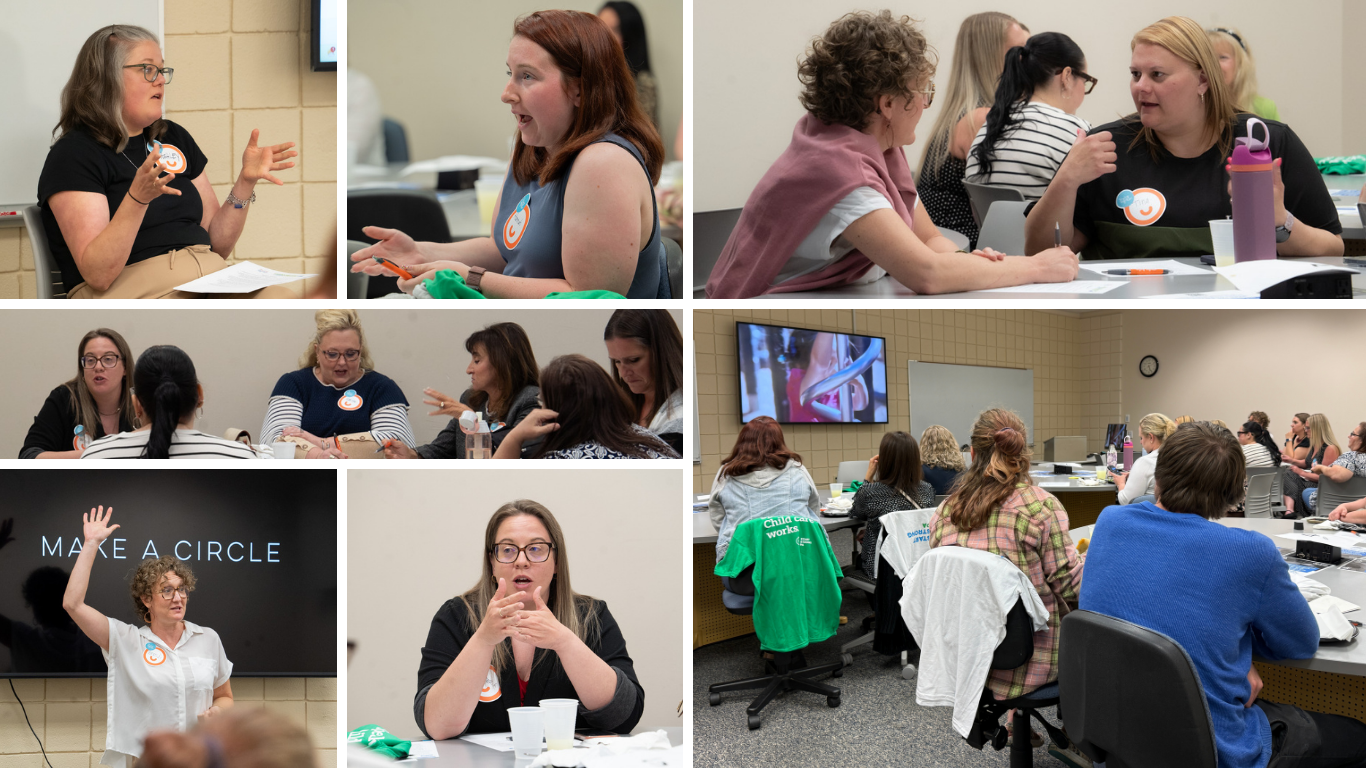
On June 1, Trying Together and Westmoreland County Community College hosted a screening of the documentary film Make a Circle with early care and education teachers, program directors, administrators, and higher education professionals. After dinner and a 60-minute viewing, the group engaged in impactful conversations and shared reflections on a path forward. 

About Make a Circle

Make a Circle follows early care and education providers from California, highlighting their joys, challenges, and collective advocacy efforts. The film demonstrates through compelling storytelling how early childhood education is historically undervalued and underfunded despite its critical importance. While the film takes place in California, the stories and universal experiences resonated with the ECE professionals representing Allegheny, Beaver, Fayette, Greene, Washington, and Westmoreland counties who came to view and discuss the film.

Throughout the screening, the audience nodded along in recognition of the challenges, laughed at relatable interactions between children and educators, and shed tears during heartbreaking moments that felt all too familiar. 

Group Discussion

Focusing on the experiences of early care and education professionals in Southwestern Pennsylvania, the group shared their own stories, emphasizing the deep fulfillment that comes from helping children grow, witnessing moments of curiosity, and building the foundation for all future learning. 

Despite the joys of working in the field, the group recognized universal challenges: difficulty hiring and retaining staff; the daily struggle to provide coverage; the hard decision to close classrooms; and more.

At the forefront were anecdotes about those who continue to make heartbreaking decisions to leave their passion behind for higher paying jobs, including those in K-12 settings. According to Start Strong PA and PreK for PA, kindergarten teachers in Pennsylvania make an average salary of $64,270 compared to $35,250 for preK teachers and $29,510 for child care teachers. 

“I left direct care too because I couldn’t provide a living for myself,” said one participant, reacting to a story from the film about an educator leaving his job in child care because he could no longer afford to remain. “I love working with kids and being in the classroom with the little ones… I miss it a lot.”

While much of the discussion focused on the challenges faced by educators, the group also recognized the difficulties faced by families. Often, parents shoulder a financial burden when child care programs are forced to raise tuition rates. Without public investment, it becomes more and more difficult for programs to keep their doors open. In turn, families lose access to high-quality child care which can hinder their ability to work. 

Takeaways

The film highlights the importance of advocacy – from creating spaces to have important conversations and connect with our communities, to organizing and elevating unified messages. 

It is unfortunately common for early educators to dedicate multiple decades of advocacy to make small strides in public investments. Emily Neff, director of public policy for Trying Together, encouraged the group to keep speaking up for change. “Persistence matters!”

In the 2025 – 2026 State Budget, PA saw the development of a new early childhood line item for the first time in nearly 20 years. For many early educators, this was a moment of celebration and of feeling heard. The $25 million investment in the new Child Care Recruitment and Retention line item demonstrated that policymakers heard advocate’s voices and took the first step in solving the child care crisis and investing in the workforce.

Last year’s new investment in the child care workforce was an important first step, but there’s still more to do. 

“All the work our advocates have done is phenomenal, and we’ve achieved a lot of things,” one participant reflected. “But we’re still in the trenches. We’re not even above water yet.”

Early childhood supporters in Pennsylvania are currently actively advocating for the 26-27 budget to include the proposed investments in the early care and education workforce (at a minimum):

    • $10M increase for the Child Care Staff Recruitment and Retention Program.
    • $2M increase for the Head Start Supplemental Assistance Program.
    • $7.5M increase for Pre-K Counts. 

The early education professionals who attended the screening ended the evening by completing post cards to send to their elected officials and signing action alerts urging elected officials to invest public dollars in ECE.

As conversations closed for the evening, folks left with a spark of optimism and renewed sense of hope that we can continue to grow awareness of the value of early care and education, along with elevating the need for increasing public investments.



Trying Together’s Lending Library Offers Materials to Providers to Inspire Love of Learning

News

June 3, 2026

Trying Together’s Lending Library Offers Materials to Providers to Inspire Love of Learning

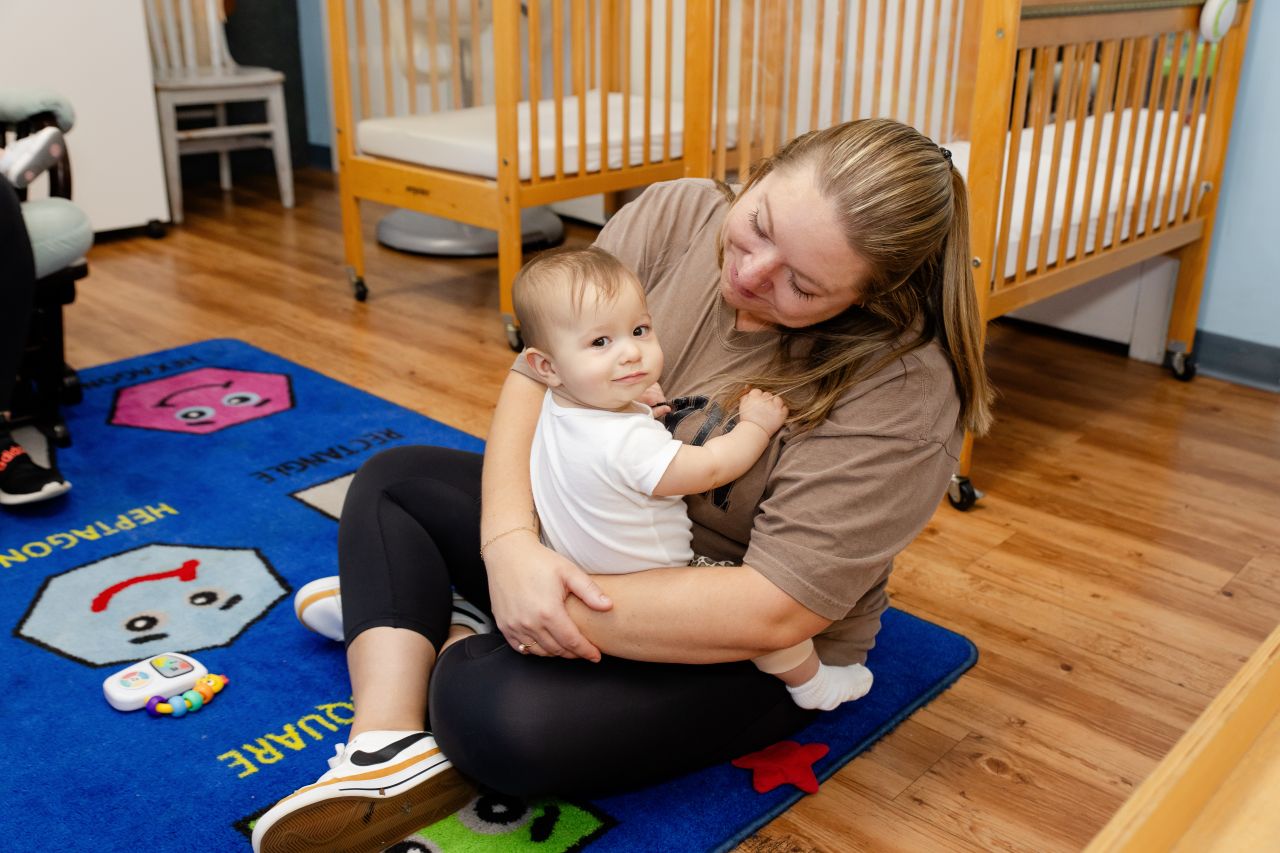
Early learning providers can find a variety of materials to borrow from Trying Together’s ECE Lending Library that support and recognize learning abilities, promote cultural diversity, and cover everything from health to safety.

Learn More

The library, which is located at Trying Together’s offices at 5604 Solway Street, was created to be a community space for child care providers in Allegheny County to borrow learning materials as well as teacher and curriculum resources.

“The benefit for teachers is that they are able to rotate materials in their programs without having to worry about storage or extra added costs,” said Allison Robinson, a leadership development strategist for ELRC Region 5. “It gives them the opportunity to try new things – a new material they might like to try before purchasing it.”

Teachers can borrow materials for 30 days on the first Saturday of the month or on Tuesdays or Thursdays.

“We want teachers to see it as a beneficial place where they can come monthly to change out the learning materials for their classrooms,” Robinson said.

What the Library Offers

Robinson said the library’s most popular items are its theme boxes – such as boxes focusing on farm animals or other topics – as well as its infant-toddler boxes and book bundles.

The materials in the library can help children learn about a variety of topics, Robinson said.

“We’ve got a number of STEAM and STEM materials, so these can give them a start in science, technology, and engineering, which is important because that’s where so many of the jobs these days are focused. We have materials for math and basic reading skills and a wealth of new social-emotional materials.”

Robinson said that Trying Together is currently undergoing an equity audit for the library, and that it intends to stock additional diverse materials.

“We’re excited for the opportunity to get more representation in place,” she said.

Robinson said that the intention of the library is to help get children more interested in what they are learning.

“We talk about behavior issues in the classroom, but it’s often that children are uninterested in what’s going on in the classroom,” she said. “By coming to the lending library monthly, teachers can get them more interested. It’s not a magic wand, but it helps them to develop a love for learning.”

More Details

The library’s materials include:

  • Books for infants, toddlers, and preschoolers
  • Infant social-emotional support kits
  • Toddler dress up trunks
  • Puppet sets
  • STEM and coding kits
  • Active play kits
  • Storytelling kits
  • Sensory items and kits
  • Musical instruments
  • Leadership resources
  • Resources related to early childhood education and interactions with children
  • Die cut machines
  • Inspire Interactive Panels

The library is located in Room 204 of Trying Together’s office on Solway Street. It is open on the first Saturday of the month from 10:30 a.m. to 12:30 p.m., and from 11:30 a.m. to 3 p.m. on Tuesdays and Thursdays.

For details about how to access the library, how to check out items, and to view a full list of available items, visit the ECE Lending Library website.

Child Mind Institute Resources Focus on Medicating Children with Tics or Tourette’s

News

June 2, 2026

Child Mind Institute Resources Focus on Medicating Children with Tics or Tourette’s

Tics can upset children and disorders such as Tourette’s, ADHD, or OCD can interfere with their lives. 

Medication can be a helpful part of treatment for such disorders, but clinicians who are prescribing should take into consideration that many children with one condition often have another, the Child Mind Institute notes.

Learn More

Clinicians will want to prioritize treating what is causing the child the most difficulty, the Child Mind Institute writes in a new set of resources – which is often not the tics, but the disorder.

The institute’s resources examine the two main types of medication that are effective in reducing tics as well as the pros and cons of each and the steps leading to an effective treatment plan.

The first recommended step in treatment is a specialized therapy known as comprehensive behavioral intervention for tics (CBIT), rather than medication, which may be prescribed if therapy alone doesn’t alleviate tics.

If a child also has ADHD, it is important to ensure that their ADHD medication isn’t making the tics worse. Occasionally, when a second disorder causes a child a lot of stress, treating that can alleviate tics as well. 

Below are the Child Mind Institute’s resources on how to treat tics and disorders such as Tourette’s in children.

Trying Together Announces 2026-27 Schedule for Growing Together PD Series

News

Trying Together Announces 2026-27 Schedule for Growing Together PD Series

Trying Together has released a schedule for 2026 and 2027 offerings available through its upcoming Growing Together professional development series.

Learn More

Every third Wednesday of the month, Trying Together hosts a virtual professional development session that is focused on requested topics that are relevant to early childhood educators.

Participants can choose to attend any or all of the mini-sessions. Registration for the sessions is highly recommended, but participants can access any session using the series’ Zoom link.

Trying Together’s Growing Together schedule includes:

  • Navigating Public Policy and Systems – 6:30-7:30 on July 15
  • Trauma Informed Care – 6:30-7:30 on August 19
  • The Cycle of Inquiry: Meaningful Experiences from Infancy to Pre-K – 6:30-7:30 on September 16 
  • Intro to Neurodivergence – 6:30-7:30 on October 21
  • Let’s Get Creative: Incorporating Creative Art in the Early Childhood Classroom – 6:30-7:30 on November 18
  • Sensory Activities Through STEAM – 6:30-7:30 on December 16
  • Separation Anxiety – 6:30-7:30 on January 20 
  • Calm, Reset, Respond – 6:30-7:30 on February 17
  • ELRC Resources – 6:30-7:30 on March 17
  • Behavior is Communication – 6:30-7:30 on April 21
  • De-Escalation – 6:30-7:30 on May 18
  • Infant and Toddler Circle Time – 6:30-7:30 on June 16, 2027

Those interested in attending the sessions can register online.

Trying Together Requests Quotes for Digital Communications & Creative Services for Advocacy Campaigns

News

Trying Together Requests Quotes for Digital Communications & Creative Services for Advocacy Campaigns

On behalf of the Early Learning Pennsylvania Coalition (ELPA), Trying Together seeks qualified communications firms or vendors to provide strategic digital communications, creative content development, website support, and multimedia storytelling services for two statewide advocacy campaigns: 

  • Start Strong PA – advancing policies and investments that strengthen child care and support children and families from birth through age five.
  • Pre-K for PA – advocating for equitable access to high-quality publicly funded pre-kindergarten.

Trying Together is the lead contracting organization and chair of the Communications Committee for these two campaigns, in consultation with the Governing Committee.

The anticipated contract start date is July 1, 2026 with an initial contract term of twelve (12) months, with potential for renewal based on campaign needs, performance, and funding availability.

The selected vendor(s) should demonstrate:

  • Strong project management and communication practices
  • Ability to work collaboratively within a coalition environment
  • Responsiveness during legislative sessions, advocacy campaigns, and media opportunities
  • Ability to manage multiple timelines and stakeholder needs simultaneously
  • Commitment to accessibility, representation, and equity-centered communications practices

Interested firms or vendors are encouraged to submit proposals by June 15, 2026 to Trying Together at info@tryingtogether.org. Proposals should include a cover letter, approach and methodology, relevant work experience and samples, team qualifications, pricing proposal, and references. 

All questions regarding this RFQ must be submitted in writing via email to:

info@tryingtogether.org

Subject Line: RFQ Question – [Vendor Name]

Responses to substantive questions may be shared with participating vendors to ensure equitable access to information.

For full details, see the full Request for Quotes. 


Trying Together Calls for Proposals for October UnConference

News

June 1, 2026

Trying Together Calls for Proposals for October UnConference

Trying Together invites those interested in presenting at its October 12 UnConference, “Ordinary Moments, Meaningful Connections,” to submit proposals relating to that topic by Monday, June 29.

Learn More

Trying Together’s UnConference is an innovative, hands-on professional development training format where a deeper experience is provided around a particular theme related to early childhood education. Speakers are invited to present and participants are encouraged to engage hands-on in the workshops.

Trying Together will host its October UnConference at the Hosanna House, located at 807 Wallace Avenue, on Monday, October 12.

Ordinary Moments, Meaningful Connections

The foundation of quality in early learning settings begins with the everyday interactions that we share with one another. These simple and ordinary moments that take place during daily routines form the foundation of learning and connection for young children and adults alike.

Focusing on the belief that meaningful learning happens within everyday moments, this UnConference highlights how connection, reciprocity, inclusion, and opportunities for growth emerge through adult-child interactions. Participants will experience interactive presentations that offer practical strategies for fostering inclusive environments, strengthening relationships, and creating opportunities for mutual growth.

The UnConference is designed to support educators in cultivating classrooms where every child and adult feel seen, heard, and valued.

Proposal topics can address – but are not limited to – the following topics:

  • Connection and attunement
  • Reciprocity in practice
  • Inclusion and belonging
  • Opportunities for growth

Trying Together will offer an honorarium of $250 to any organization or individual not affiliated with an organization whose proposal is chosen to be presented. Additionally, those who are engaging the audience through interactive workshops and learning experiences are invited to participate in the rest of the day at no cost.

Those interested in leading a workshop at the UnConference should submit a proposal by June 29.

Meaningful Play Seeking Reviewers to Shape This Year’s Program

News

Meaningful Play Seeking Reviewers to Shape This Year’s Program

Meaningful Play 2026 is searching for reviewers for everything from long-form academic work to games to help shape this year’s program.

Learn More

Participants would help to champion ideas, support emerging voices, and shape conversations that will define this year’s conference.

Reviewers would provide feedback on:

  • Full papers: Long-form academic work; these are ideal for senior community members and late-stage graduate students.
  • Posters: Short academic pieces; these are intended for early-career and junior reviewers. 
  • Games and prototypes: Video demos and playable builds; these are meant for professionals and early-career reviewers with the capacity to playtest.

Assignments will be sent out on Monday, June 1. Reviews will be due by Wednesday, July 8.

Those interested in participating should fill out a form online.

May Recalls on Children’s Products

News

May Recalls on Children’s Products

Parents and caregivers should be aware of several child-related products recalls.

Learn More

Below is a list of April recalls collected from the following federal agencies: the Consumer Product Safety Commission, the Food and Drug Administration, and the National Highway Traffic Safety Administration. 

Natural Pigments has recalled its Rublev Colours Gum Turpentine and Mineral Spirits bottles because they contain turpentine and low-viscosity hydrocarbons, but are not in child-resistant packaging as required by law. If swallowed by young children, the contents pose a serious injury or death from poisoning.

Rainbow Wall Toys, which are sold in Amazon by Justforjoyful, were recalled because the toys’ drumstick that is attached to the xylophone component has a spherical end that can pose a choking hazard.

ZMC Group has recalled multiple light up toys because they contain button cell batteries that can easily be accessed by children. If button cell or coin batteries are swallowed, they can cause serious injuries, including internal chemical burns and death.

Allura Imports has recalled its youth sweatshirts with a Bobcat logo and drawstrings, which can get caught on objects and cause death or serious injury to children from strangulation. 

EEMB USA has recalled its battery pouches because they violate federal statutes for child-resistant packaging. The lithium coin batteries are in pouches that are not child resistant as required by law. If a child swallows button cell or coin batteries, they can cause serious injuries, including internal chemical burns and death.

Missry Associates has recalled its Misco Sports Badminton Toy Sets because the shuttlecocks contain button cell batteries that can be easily accessed by children. When button cell or coin batteries are swallowed, they can cause serious injuries, including internal chemical burns and death.

Tiyol has recalled its pull string teething toys because the silicone strings are smaller and longer than permitted. The strings can reach the back of the throat and become lodged, posing a respiratory distress and becoming a deadly choking hazard.

Guidecraft has recalled its children’s standing towers because the tower can loosen over time, causing it to become unstable or detach and, ultimately, posing a fall hazard to young children.

Cosyland has recalled its children’s tower stools because they can collapse or tip over while in use, and a child’s torso can fit through the openings on the front and back sides, posing a serious risk of serious injury and death due to tip over, fall, and entrapment hazards.

Lithium coin batteries sold on Amazon by LiCB were recalled because they are not in child-resistant packaging and do not bear the warning labels required by law. When button cell or coin batteries are swallowed, they can cause serious injuries, including internal chemical burns and death.

Orb Funkee recalled its squeeze toys because they may contain fibrous tremolite (asbestos) in the sand, which can cause adverse health issues if inhaled.

ABC Trading recalled its children’s toys because they contain button cell batteries and the compartments that hold the batteries can be easily accessed by children, posing a deadly ingestion hazard. When button cell or coin batteries are swallowed, they can cause serious injuries, including internal chemical burns and death.

PandaEar recalled its portable hook-on chairs because the crotch restraints can be removed without the use of a tool and infants can fall through an opening, posing a deadly fall hazard.

Lil Pick Up recalled its youth all-terrain vehicles (ATVs) because they failed to meet mechanical suspension requirements, and the reverse indicator light failed to illuminate, posing a crash hazard. The parking brakes fail to hold, posing a collision hazard, and the surfaces near the footwell can reach high temperatures, posing a severe burn risk.

ABC Trading has recalled its WSDZ light-up glasses because they contain button cell batteries that can be easily accessed by children, posing an ingestion hazard. When button cell or coin batteries are swallowed, they can cause serious injuries, including internal chemical burns and death.