Webinar to Focus on Healthy Eating and Physical Activity for Children

News

September 17, 2025

Webinar to Focus on Healthy Eating and Physical Activity for Children

The Pennsylvania Department of Health and The Pennsylvania Key will hold a webinar focusing on healthy eating and physical activity for children in October.

Learn More

The Pennsylvania Out-of-School Time (OST) Healthy Eating and Physical Activity (HEPA) Program Webinar will provide information to attendees about the HEPA program. It will include discussion of web-based asynchronous professional development events, resources, and strategies through the Out-of-School Nutrition and Physical Activity Initiative (OSNAP).

The HEPA program supports out-of-school programs to improve policies and practices to help children eat healthier snacks and move more. The webinar is recommended for anyone who currently runs an out-of-school time program for kindergarten through eighth grade students – including administrators and program staff, DHS-certified child care, 21 CCLC grantees, libraries, recreation programs, Boys and Girls Club administrators, and tutoring support.

The event will run from 11 a.m. to noon on Wednesday, Oct. 22 on Zoom. The program is free to attend and will award up to $750 in innovation awards.

Registration is open. If you cannot attend on this date and time, register and the recording will be available. Any further questions should be directed to Betsy O. Saatman at betsaa@pakeys.org or 484-955-5909.

OCDEL’s Latest Confluence Podcast Tackles Market Rate Survey

News

September 16, 2025

OCDEL’s Latest Confluence Podcast Tackles Market Rate Survey

The Pennsylvania Office of Child Development and Early Learning (OCDEL) has released a new Confluence podcast that focuses on the Market Rate Survey.

Learn More

In the podcast, Phil Sirinides, Penn State’s director of the Institute of State and Regional Affairs, and Luisa Oliva-Wolf, director of OCDEL’s Bureau of Policy and Professional Development, discuss the importance of the survey and how its data benefits child care providers across the state.

Results from the state’s Child Care Market Rate Survey are used by OCDEL to evaluate future child care programming and policy decisions. All licensed child care providers in Pennsylvania that charge private pay tuition rates are encouraged to participate in the survey by Dec. 8.

More information about the survey is available on The Pennsylvania Key website. For assistance with the survey, email ChildCareResearch@psu.edu or call 814-865-1775.

To listen to the episode, visit the Confluence podcast’s website.

U.S. Dept. of Agriculture Newsletters Promote Healthy Eating Habits for Children

News

U.S. Dept. of Agriculture Newsletters Promote Healthy Eating Habits for Children

Children’s Health Month doesn’t begin until October, but any time is a good time to start thinking about healthier eating habits for young people.

Learn More

The U.S. Department of Agriculture’s Nibbles for Health: Nutrition Newsletters for Parents of Young Children has a wealth of material on how to promote healthy eating habits for children. The newsletters are intended to be shared by child care food program providers for discussion on popular nutrition topics.

Some of the topics in the newsletters include:

Most of the newsletters are broken down into sections that combine facts with tips and activities. For example, the Encouraging Vegetables newsletter includes information on how vegetables can help children to get important nutrients, provide dietary fiber, and reduce the risk of certain diseases. 

The newsletter then provides ways to encourage children to eat vegetables – such as eating and preparing food together, choosing different colors of vegetables, and shopping together for vegetables. The newsletter culminates in an activity for children and caregivers that involves coloring in vegetables that the child has sampled.

Each of the newsletters are available for download in the Nibbles for Health archive.

RAD Pass Expanding Year-Round for Free and Discounted Tickets to Pittsburgh Attractions

News

RAD Pass Expanding Year-Round for Free and Discounted Tickets to Pittsburgh Attractions

The RAD Pass is expanding year-round for free and discounted tickets for Allegheny County library cardholders to attend regional attractions.

Learn More

The RAD Pass is an online ticket lending system that allows county library cardholders to take part in cultural activities – including museums, the Pittsburgh Zoo & Aquarium, the National Aviary, and other attractions – at discounted rates.

Now, discounted tickets are available beyond the summer’s limited RAD Days, enabling Pittsburgh residents to take advantage of the region’s attractions year-round. Additional upcoming RAD Pass activities include live theater, ballet, opera, musical performances, art-making classes, and crafting activities.

Those interested in utilizing the RAD Pass will need to have an active Allegheny County library card. It is possible to sign up online or at a county library location. 

A complete list of participating organizations is available online. 

Strong Minds, Bright Futures to Host Community Listening Sessions on Children’s Mental Health

News

September 15, 2025

Strong Minds, Bright Futures to Host Community Listening Sessions on Children’s Mental Health

A new statewide coalition supporting children’s mental health in schools, communities, and care systems – to which Trying Together recently signed on as a partner organization – will host community listening sessions this fall. 

Learn More

Strong Minds, Bright Futures will host the sessions throughout the fall, including two in the region. The events will focus on solutions-focused conversations between families, youth, educators, health providers, and community leaders on the topic of strengthening children’s mental health in the state.

The free, family-friendly events will be held on:

  • Monday, Sept. 29: 5 p.m. to 7 p.m. at Indiana University of Pennsylvania, Kovalchick Complex, 711 Pratt Drive in Indiana
  • Tuesday, Sept. 30: 5 p.m. to 7 p.m. at Jewish Healthcare Foundation, 625 Liberty Avenue, #2500, in Pittsburgh

For more information on the events, call 267-361-7945, email info@strongmindspa.org, or visit the Strong Minds, Bright Futures website.

Trying Together Article on EIM Directors Series Featured on Simple Interactions Website

News

Trying Together Article on EIM Directors Series Featured on Simple Interactions Website

An article by Trying Together on Everyday Interaction Matter (EIM) and its directors series is featured on the Simple Interactions website.

Learn More

The article, “Trying Together’s EIM Directors Series Supports Directors and Educators Participating in Everyday Interactions Matter,” discusses how Trying Together’s experience with EIM began and how it helped to develop a series of professional development sessions for providers.

The article, written by Karian Wise, an interactions design strategist for Trying Together, delves into how Trying Together works directly with educators to build skills and improve program quality.

“Through our work with programs, we realized that interactions between adults within programs are as important as the interactions between adults and children,” the article reads. 

Trying Together’s EIM Directors Series teaches professionals to recognize meaningful daily interactions and share practices with peers. Its aim is to provide directors with a method to think about interactions with caregivers and staff that aligns with the Everyday Interactions Matter approach and to support relationship building.

To learn more about the components and sessions in Trying Together’s EIM Directors Series, read the article on the Simple Interactions website.

Simple Interactions is a practice-based, strengths-focused, and community-driven approach to support helpers who serve children, youth, and families.

Safety Tips for Children Who Ride the School Bus

News

Safety Tips for Children Who Ride the School Bus

Now that class is back in session for the 2025-26 school year, it’s time to review some important safety tips for children who ride the school bus. Ready PA has provided some tips on what to do or not to do when boarding, riding, or getting off the bus.

Learn More

Students, caregivers, teachers, administrators, drivers, and transportation personnel all play important roles in keeping children safe when they ride a school bus.

While preparing to ride the bus, children should:

  • Get to the bus stop five minutes early so they don’t have to run across the road to catch the bus
  • Stay away from traffic while waiting for the bus and line up at least five large steps away from the curb
  • Never run after the bus if it has already left the stop
  • Always walk at least 10 feet in front of the bus when crossing, so the driver can see them
  • Cross with care – wait until the bus has stopped all traffic before stepping onto the road

While on the bus, children should: 

  • Never push when getting on or off the bus
  • Stay in their seat while the bus is moving and never put their head, arms, or hands out of the window
  • Talk quietly so as not to distract the driver
  • Be calm and quiet when the bus is crossing railroad tracks, so the driver can listen for a train
  • Obey the bus driver’s instructions, so they can make safe decisions
  • Never play with the emergency exits
  • Make sure that backpacks, band instruments, or sports equipment is not blocking the aisle or emergency exits
  • Listen to the driver and follow instructions in case of an emergency

While getting off the bus, children should: 

  • Make sure all drawstrings and other loose objects are secure, so they don’t get caught on the handrail or door
  • Never cross the street behind the bus
  • Never go back for an item left on the bus or dropped outside of it; the driver might not see you and begin moving the bus
  • Never speak to strangers at the bus stop or getting into a car with a stranger

For more information, take a look at the tips from Ready PA, a website dedicated to public safety that is operated by the Pennsylvania Emergency Management Agency. 

Providers Should Apply for PA NAPSACC’s 2025-26 Wellness Grant By Oct. 3

News

September 12, 2025

Providers Should Apply for PA NAPSACC’s 2025-26 Wellness Grant By Oct. 3

Pennsylvania Nutrition and Physical Activity Self-Assessment for Child Care (PA NAPSACC) is seeking 40 licensed child care providers for its 2025-26 wellness grant. The deadline to apply is Friday, Oct. 3.

Learn More

Providers who are chosen will help to make a difference in children’s lives by helping them to form positive nutrition and physical activity habits.

To be eligible, one must be a licensed child care provider in Pennsylvania, serving a minimum of four children, from birth to age 5. Past participants are eligible to apply. Priority will be given to programs that have participated no more than once since 2019.

Following the application process, eligible applicants will be invited to participate in an informational webinar on Thursday, Oct. 23 from 12:45 p.m. to 1:45 p.m. The webinar will be recorded and shared with eligible applicants.

Starting on Monday, Oct. 27, program enrollment will be based on the first 40 programs to complete enrollment tasks outlined in the webinar.

About the Grant

The grant provides an opportunity to engage in a continuous quality improvement process focused on obesity-prevention practices and policies within an early care and education setting. The program utilizes Go NAPSACC, an online, evidence-based tool, to guide self-assessment, action planning, implementation, policy development, re-self-assessment, and reflection.

Programs will be linked with a child care health consultant at no cost to the site. The consultant will review current nutrition and physical activity practices and policies, assist with sustainable policies, and offer guidance for continuous quality improvement.

More Details

Those who participate and complete grant requirements will receive up to $500 in grant funding to support staff time or materials and resources needed. For STAR 3 and 4 programs, participation in all components of the wellness grant satisfies Keystone STARS performance standards LM.3.4.10 as well as bonus points area Partnerships with Families and Communities.

Providers interested in participating should complete and submit the online application. For questions or additional information, email Cindy Wilson at Tuscarora Intermediate Unit at cjwilson@tiu11.org or call 717-248-4942, ext. 143.

Pilot Program Provides Direct Cash Payments to Home-Based Providers

News

September 11, 2025

Pilot Program Provides Direct Cash Payments to Home-Based Providers

In partnership with Home Grown and the United Way of Southwestern Pennsylvania, Trying Together is participating in a pilot program to provide direct cash payments to select home-based providers.

About the Program

The Thriving Providers Project (TPP) – a national initiative spearheaded by Home Grown – seeks to demonstrate how direct cash payments to providers will have positive results for relatives who provide child care to young children. The goal is to reform child care payment policies and influence future decisions around compensation for home-based child care providers. TPP provides pre-selected caregivers with a direct cash payment of $500 monthly, understanding that the support to providers reduces financial stress and ultimately improves the early learning experiences of the children and families they serve.

“I can afford to take the children on field trips,” shared Relative Provider Tywanda Powell. “I bought them school supplies and better toys. I was able to just do extra for the children.” 

Program Participants

Communities with limited access to resources such as affordable child care, transportation and healthcare, were prioritized to ensure support reached families with the greatest need.

Within these neighborhoods, participant selection emphasized caregivers whose roles have had a significant impact on child and family well-being. 

  • Grandparents and great-grandparents raising grandchildren were prioritized for the stability, intergenerational connection, and nurturing environment they provide, often while managing limited financial resources. 
  • Caregivers of children under age five were included given the critical importance of the early years for child development, when consistent care and support have the greatest long-term benefits. 
  • Caregivers providing care during nontraditional hours were also prioritized, as they help families balance essential work responsibilities with the challenge of securing reliable care outside of standard availability.

By centering these caregiving strengths, the program directs resources to families whose dedication and resilience most directly influences children’s growth and stability, ensuring funds provide both immediate relief and long-term community benefit.

“The program not only supports caregivers who are often underrecognized and underpaid but also improves access to reliable, nurturing care for families, particularly in underserved communities,” explains Bliss Letang, director of equity initiatives at Trying Together. 

“Additionally, TPP generates valuable evidence on the impact of direct cash payments, informing future policies and reforms around fair compensation for home-based providers, while fostering stronger connections between children, families, and their caregivers.”

The Thriving Providers Project’s philosophy is based on a belief that people should be trusted to make decisions for themselves. Drawing on learning from guaranteed income initiatives around the nation and best practices in early childhood education, the program’s mission is to support and stabilize caregivers and, in the process, improve the availability and quality of care for children and families. The transfers enable providers to make decisions that are best for the children and families they serve.

Home-based Child Care Statistics

Home-based child care providers are the largest population of caregivers serving the largest number of children, ages five and below. A total of 30% of infants and toddlers attend home-based child care as their primary care arrangement, compared to just 12% in centers, according to the program. 

However, home-based care providers receive little public support, which makes them more vulnerable to financial emergencies or crises. On average, family child care providers work 56 hours per week and earn around $29,000. About 30% of them rely on at least one other job.

For more information, see the Thriving Providers Project Fact Sheet.
Trying Together Celebrates Relative Care Providers at Grandparents Day Event

News

September 10, 2025

Trying Together Celebrates Relative Care Providers at Grandparents Day Event

In recognition of National Grandparents Day, Trying Together held a celebration event to honor grandparents who provide daily child care for their grandchildren.

Learn More

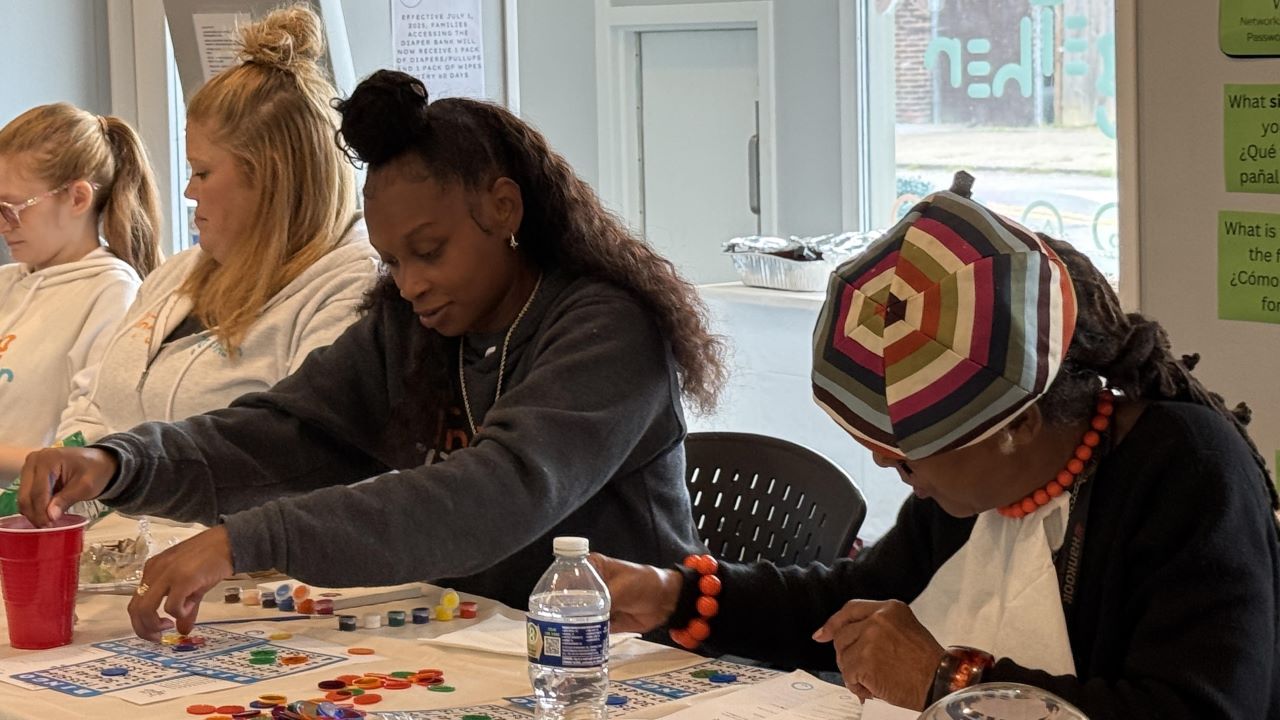
Hosted by the Homewood Early Learning Hub & Family Center on Sunday, September 7, the event included food, painting, and games. Attendees connected with one another and shared their stories. Children of all ages accompanied their grandparents and had the opportunity to participate in the activities and explore the Hub’s play areas. 

“Out of the over 450 relative care providers in Allegheny County who act as daily caregivers for young children while their parents are at work, approximately 65% are grandparents,” said Bliss Letang, director of equity initiatives at Trying Together. “This event was an opportunity to recognize the dedication of these grandparents and the impact they have on the lives of their grandchildren.”

Trying Together was a cosponsor for Home Grown’s Family, Friend, and Neighbor (FFN) Appreciation Week, which was an opportunity to celebrate the more than five million family, friend, and neighbor caregivers who look after 11.5 million children annually.