Child Mind Institute Shares Resources on Hoarding and Messy Rooms

News

September 29, 2025

Child Mind Institute Shares Resources on Hoarding and Messy Rooms

Cleaning one’s room has become a rite of passage for many children, while staying on top of children to clean their rooms is a tradition among many caregivers. It’s a scenario that most involved do not enjoy.

Learn More

But while caregivers might believe that a child’s failing to clean their room after being asked multiple times to be a sign of defiance, a cluttered room could also result from hoarding.

According to the Child Mind Institute, children who hoard get emotionally attached to objects – occasionally even ones that might seem like trash, such as used pizza boxes, clothing tags, or rocks. In these cases, the child might get upset if someone tries to clean it up.

In a series of new resources, the Child Mind Institute dives into the topic of hoarding and how it differs from other concerns – such as the chaotic room of a child with ADHD or a teen who hides food. Hoarding is related to OCDE, but children who hoard don’t collect items to relieve anxiety. Instead, anxiety might come when they are forced to get rid of things.

The Child Mind Institute writes that the treatment for hoarding is exposure therapy, where children who hoard handle the discomfort that comes from discarding items. Some children might resist getting treatment, while others might feel ashamed about hoarding. Among the Child Mind Institute’s resources is an article on how to handle embarrassment and support children as they take steps to be more flexible.

Here are the Child Mind Institute’s resources on hoarding: 
Resources for October Observances

News

Resources for October Observances

Various organizations, states, and nations recognize a number of observances each month. Resources help parents, caregivers, and child care professionals acknowledge and navigate them.

Here is a list of resources for October observances.

Week-Long Observances

  • Anti-Poverty Week (Oct. 12 to Oct. 18)

  • Baby Loss Awareness Week (Oct. 9 to Oct. 15)

  • Fire Prevention Week (Oct. 5 to Oct. 11)

  • Mental Illness Awareness Week (Oct. 5 to Oct. 11)

  • National Friends of Libraries Week (Oct. 19 to Oct. 25)

  • National School Bus Safety Week (Oct. 20 to Oct. 24)

Month-Long Observances

HEAD START AWARENESS MONTH

DYSLEXIA AWARENESS MONTH

NATIONAL BOOK MONTH

Days of Recognition

• OCTOBER 3: KIDS MUSIC DAY

• OCTOBER 4: NATIONAL PLAY OUTSIDE DAY

• OCTOBER 5: WORLD TEACHER’S DAY

• OCTOBER 6: NATIONAL CHILD HEALTH DAY

• OCTOBER 8: NATIONAL WALK TO SCHOOL DAY

• OCTOBER 10: WORLD MENTAL HEALTH DAY

• OCTOBER 11: NATIONAL COMING OUT DAY

• OCTOBER 13: INDIGENOUS PEOPLES’ DAY

• OCTOBER 19: NATIONAL NEW FRIENDS DAY

• OCTOBER 20: NATIONAL YOUTH CONFIDENCE DAY

• OCTOBER 28: NATIONAL IMMIGRANTS DAY

• OCTOBER 29 : INTERNATIONAL DAY OF CARE AND SUPPORT

PA Budget Impasse Hurts Providers, Families, and Businesses

News

PA Budget Impasse Hurts Providers, Families, and Businesses

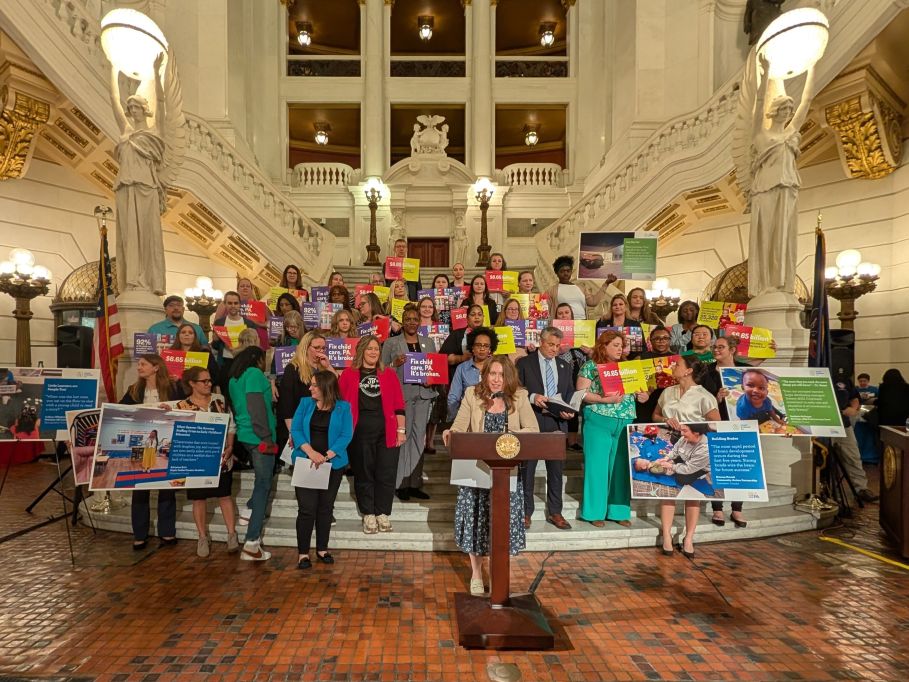
The Pennsylvania state budget is now months overdue, and early learning programs across the state face an impossible situation because of this delay. 

Currently, 3,200 pre-k providers are being denied payment for over 66,500 slots, leading to closed classrooms or programs forced to self-fund with costly loans.

“We are seeing the ripple effects of this budget impasse on working families in Pennsylvania,” explains Emily Neff, director of public policy for Trying Together. “Children are not just losing out on critical early learning opportunities –  families are also suffering because they are unable to find the care they need in order to work. Child care businesses are making hard decisions to let go of teachers or take out high interest loans. Employers then experience workforce disruptions, which hurts their bottom line.” 

To effectively advocate for a solution and show the real-time impact of this impasse, the Pre-K for PA and Start Strong PA campaigns are collecting crucial information from Pre-K Counts and Head Start Supplemental Assistance Program grantees. These campaigns ask those impacted by the impasse to complete a survey to share how their program has been affected by October 9. 

The collected data will be instrumental in their efforts to urge state lawmakers to pass a budget that funds pre-k immediately, and data will be shared with lawmakers in real time. These first-hand accounts will help illustrate the urgent need to support early educators and the children and families who depend on these vital programs.

Take Action Now

We appreciate your support and collaboration year after year. Here are some other concrete ways you can help us elevate ECE as the budget impasse continues.

  1. Register for and attend the Working Together Webinar on Wednesday, November 5, 2025 at 1:00 p.m. focusing on a state budget update; advocating for early learning; the 2025 Market Rate Survey; and federal advocacy updates and opportunities
  2. Complete our current action alert and share with your networks
  3. Call your state lawmakers and urge them to include early childhood investments in the final deal. Use the SSPA Budget Impasse Fact Sheet to guide your conversation 
  4. Do you know a provider, family, or business who is feeling the impact of the state budget impasse? Maybe YOU have a story! Take a few minutes to record a quick video explaining how this hurts providers, families, and businesses. Please share with your networks. 

WQED Kids Book List Focuses on Promoting Empathy in Children

News

September 24, 2025

WQED Kids Book List Focuses on Promoting Empathy in Children

WQED Kids has released a list of eight books that can be used to promote empathy among children.

Learn More

The focus of the booklist is to promote empathy through listening. Reading aloud to children is important for brain development – but it also strengthens family bonds and increases children’s understanding of the world.

While listening to stories, children are learning to understand how others feel and how they want to be understood. Reading together leads to empathy when children can listen and understand the thoughts and feelings of others.

The books on WQED Kids’ list help show children how listening is caring and is a skill they can use to connect with others. When reading these books to children, caregivers should discuss what it means to listen well and feel heard.

Caregivers should ask children how listening in each story helped, how the character felt before someone listened to them, and why the character listened to someone in the story. Children should then be asked about a time when someone listened to them like the character in the book and how that made them feel.

The books on the list include:

  • The Rabbit Listened (Cori Doerrfeld) 
  • My Story Friend (Kalli Dakas and Dream Chen)
  • Pinkalicious and the New Teacher (Victoria Kann)
  • Anzu the Great Listener (Benson Shum)
  • My Hands Tell a Story (Kelly Starling Lyons)
  • Dr. Fauci: How a Boy from Brooklyn Became America’s Doctor (Kate Messner)
  • Listen to My Trumpet (Mo Willems)
  • Judge Juliette (Laura Gehl)

To read descriptions of the books, check out WQED Kids’ list.

First Up Seeks Home-Based Child Care Providers to Take Survey on Community Support

News

September 23, 2025

First Up Seeks Home-Based Child Care Providers to Take Survey on Community Support

First Up and Temple University are asking home-based providers to take a survey that aims to document the specific support that they provide to children and families through and beyond their official child care duties.

The deadline for the survey is Sept. 30.

Learn More

The concept of the survey is to explore the value of home-based child care by examining the connection between community support and home-based child care providers. First Up said that currently there is little research on the topic and, as a result, it is difficult to make the case that more funding is needed.

Those who take the survey can do so in their preferred language by clicking the language option. Responses from experienced home-based child care providers in Pennsylvania will help inform research, advocacy, and potential policy improvements. 

Questions in the survey include:

  • How many years the provider has been in business
  • How many children the provider serves
  • The age range of children served
  • How much education experience the provider has
  • Information about the provider’s STAR level

Those who participate will be entered into a raffle for a $150 gift card. Participants who have additional questions or would like to take the survey over the phone should email Elizabeth.ozer@firstup.org. 

The survey is available online.

Thriving Kids Podcast Outlines 9 Tips on How to Help Children Succeed in School

News

Thriving Kids Podcast Outlines 9 Tips on How to Help Children Succeed in School

The Thriving Kids podcast recently hosted a psychologist who provided nine tips on how children can succeed in school. 

Learn More

Now that the school year is in full swing, caregivers could pick up some useful tips from Adam Zamora, PsyD, who recently joined the Thriving Kids podcast to discuss how to help children create good habits, but also when to step back so they can learn on their own.

The podcast included discussion on how to make education an adventure by letting children discover the joy of learning through shared stories, problem-solving activities, and exploring their own ideas. 

Other pointers included building a supportive community by scheduling check-ins with teachers and getting to know classmates’ parents as well as creating good habits – such as setting up a quiet space at home for homework and developing routines where homework comes before other activities, including watching TV. Helping a child organize their backpack and using a calendar to keep track of important school events and assignments were other tips.

Caregivers should celebrate a child’s unique journey and avoid comparing them to other children. Instead, focus on their individual strengths and areas for growth by learning strategies that work best for the child. Lastly, caregivers should seek help if a child is struggling in school.

Thriving Kids host Dave Anderson, PhD, emphasized that school success isn’t about perfection – but instead about effort, routine, and encouragement.

The podcast’s nine tips to help children thrive in school include:

  • Make learning fun for children, whether it’s through reading, exploring areas of interest, or exposing them to a variety of opportunities.
  • Establish good habits at home, such as creating a dedicated homework space, setting up a planner, helping children organize their backpacks, and offering homework support.
  • Teach school skills at home – how to organize, prioritize and plan tasks, set goals, take notes, and study for tests.
  • Get involved in your child’s school community and establish an open line of communication with their teacher.
  • Give children space. Experience can be the best teacher, so don’t be afraid to let them make mistakes and figure out things on their own.
  • Be patient, understanding, and supportive if a child is struggling in school and help them to figure out what they might need to succeed.
  • Don’t compare your child to others. Every individual succeeds at their own rate and has unique strengths and challenges.
  • Encourage children, but don’t stress them because too much pressure often backfires.
  • Focus on effort, not outcomes. Children will grow to be more resilient if their efforts are praised, rather than caregivers focusing on results. Let them know you are proud of them, even if their grades aren’t where you’d like them to be. When they succeed, focus on how effort played an important role.

For more information, read the Thriving Kids newsletter.

List Features Books for Children with Family and Friends Theme

News

List Features Books for Children with Family and Friends Theme

PA Promise for Children has released a new list of 12 books that are family- and friend-themed.

Learn More

The Family & Friend Books list includes 12 titles for children of varying ages. Unlike typical PA Promise for Children lists, the titles are not broken down into categories – but instead all focus on themes of family and friends.

The list includes:

  • Ciencia Magica enla sala de estar (Richard Robinson)
  • Please, baby, please (Spike Lee and Tonya Lewis Lee)
  • Who’s In My Family (Robie H. Harris)
  • More More More, Said the Baby: Three Love Stories (Vera Williams)
  • Annie Rose is My Little Sister (Shirley Hughes)
  • Lion in the Living Room (Caelaach McKinna & A.R. Stone)
  • Crazy Hair Day (Barney Saltzberg)
  • Toot & Puddle You Are My Sunshine (Holly Hobbie)
  • Guess How Much I Love You (Sam McBratney)
  • Max’s First Word (Rosemary Wells)
  • Hunter’s Best Friend at School (L.M. Elliott)
  • Harold and the Purple Crayon (Crockett Johnson)

The list can be found on PA Promise for Children’s website.

NAEYC Provides Tips for Helping Children Transition to Classroom Setting

News

September 22, 2025

NAEYC Provides Tips for Helping Children Transition to Classroom Setting

The National Association for the Education of Young Children (NAEYC) has shared tips for caregivers on how to help children get used to transitioning into a classroom environment.

Learn More

It can be challenging for children to say goodbye to their caregivers when they are dropped off at child care in the morning. To help children transition into their new setting, NAEYC has compiled a list of 11 tips to help with this transition.

Methods recommended in NAEYC’s article include everything from discussing a child’s daily schedule or talking about feelings to establishing a goodbye routine. 

The full list of tips includes:

  • Find out how the program makes children feel comfortable as they start by asking for the name of the child’s primary caregiver and how you can share information about your family or routines.
  • Review the daily schedule with your child.
  • Help your child get to know the primary caregiver first before you leave them at the program.
  • Establish a predictable goodbye routine – for example, wave from the window or share a hug.
  • Give your child tools to use when missing family – such as a photo of the family or a special toy.
  • Share at least a few words of your home language with your child’s teacher.
  • Share your child’s favorite things to do with the teachers.
  • Make homemade books for your child about the daily routine – including the transition from home to school – so they can rehearse the day’s plan to cope.
  • Talk about feelings and don’t be offended if your child is upset with you; it’s common for children to feel angry at parents for leaving them.
  • Create a reunion ritual, checking in with your child’s teacher about the day.
  • Be timely. Returning at the same time each day prevents your child from worrying and makes drop off the next day easier.

For the entire list and their descriptions, read NAEYC’s article.

Annual Lights On Afterschool Celebration To Be Held in October

News

Annual Lights On Afterschool Celebration To Be Held in October

Lights On Afterschool will hold its 26th annual nationwide event celebrating after school programs and their role in the lives of children, families, and communities in October.

Learn More

Lights On Afterschool has become a hallmark of the afterschool movement since its launch in October 2000.

The Afterschool Alliance organizes Lights On Afterschool events to draw attention to the numerous ways that afterschool programs support students by offering them opportunities to learn new things and discover new skills.

Subjects and activities about which students learn through Lights On Afterschool include science, community service, robotics, poetry, and Tae Kwon Do, among others.

The annual Lights On Afterschool events send a message that more children need quality afterschool programs around the nation.

2025 Event

This year’s event will be held on Oct. 23. For more information, visit Lights On Afterschool’s website.

More than 8,000 programs across the country are expected to take part in Lights On events in October. Those interested in hosting a Lights On event can register their event online.

Trying Together Presents at State of Black Learning Conference in Pittsburgh

News

September 17, 2025

Trying Together Presents at State of Black Learning Conference in Pittsburgh

Trying Together presented at the Urban Academy of Greater Pittsburgh’s State of Black Learning Conference on Aug. 8, helping to drive conversations and strategies to dismantle systemic inequities in education. 

Learn More

Our partnership contributed to actionable initiatives that strengthen Black students’ learning experiences.

Representing Trying Together, Policy and Practice Manager Hailee B. Roye presented “Cultivating Advocacy in Early Childhood Education: Building ECE Champions.” Presented to a full house, the session sparked a powerful discussion on the role of advocacy, how it empowers educators and families, and how collective action can drive positive change for young learners.

Through hands-on activities such as power mapping, role playing, and a 30-second legislator pitch, participants practiced real advocacy tools. These interactive strategies not only showcased the importance of elevating early learning, but also offered models participants could adapt in their own communities. 
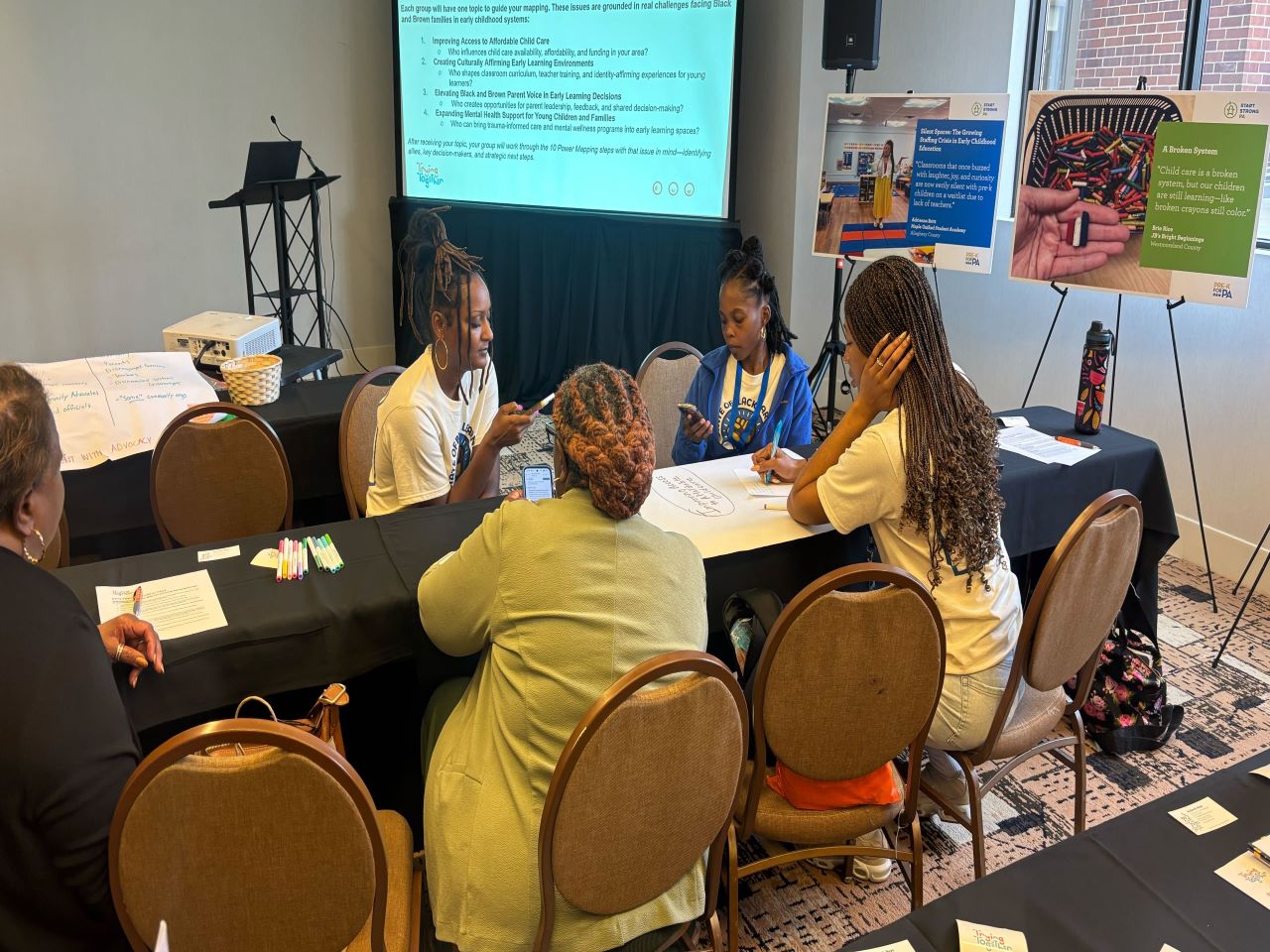
Together, we highlighted the stories of providers, researchers, parents, and everyday advocates, continuing to uplift and advance the early childhood education field.

The conference featured more than 70 speakers from such organizations as When Brown Girls Lead, Valiant Cross Academy, National Association of Black Male Educators, The Freedom Center for Arts and Education, and Baltimore and Washington D.C.’s public school systems.

For more information on the conference, visit its website.