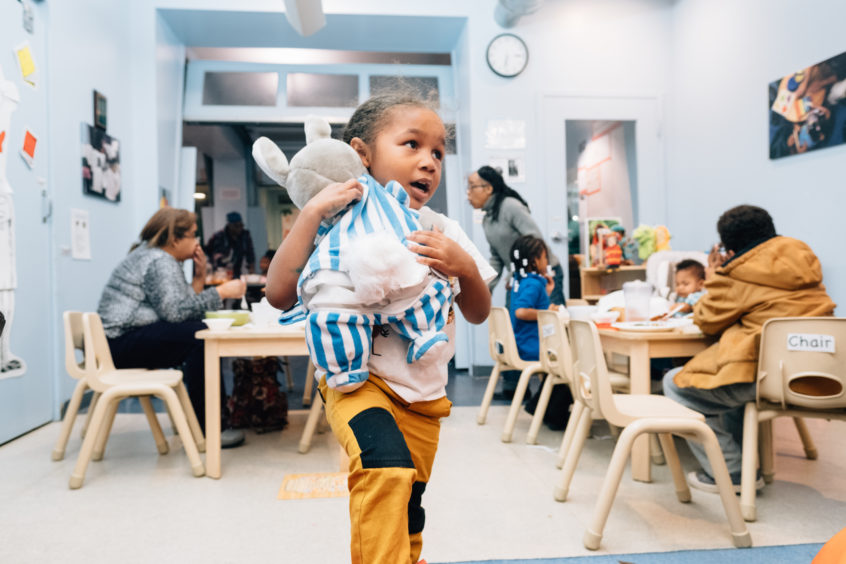
Child Care Becoming More Unaffordable for Low-Income Parents

News

March 13, 2019

Child Care Becoming More Unaffordable for Low-Income Parents

Overview

A recent research brief, Child Care Affordability for Working Parents, from the Institute for Child, Youth and Family Policy, Heller School for Social Policy and Management, Brandeis University, finds that many U.S. parents who are highly attached to the labor force would have a difficult time purchasing full-time center-based care.

Spending

This finding is especially true for low-income, Hispanic and black parents. Overall, parents working full time and year-round would spend 10 percent of family income to send their children to full-time center-based child care; low-income parents working full time and year-round would spend 28 percent. Almost all low-income parents working full time and year round would have to spend more than the federal affordability benchmark of 7 percent to send their children to full-time center-based child care.

Ranking

According to the brief, Pennsylvania ranks fifth highest nationally in child care price to income ratios for low-income parents, and in fourth highest for Hispanic parents.

Analysis

Even for families with a parent working a full-time year-round job, full-time center-based child care for young children and care during the school year for school-age children is largely unaffordable. Importantly, the parents included in this analysis are those with a clear need for child care.

This analysis has three key findings about the affordability of center-based care for working parents. First, market-price full-time center-based care would be difficult to afford for a majority of U.S. working parents. Second, center-based child care presents an even greater financial burden for low-income working parents – virtually all (95%) low-income full-time year-round working parents face unaffordable child care costs. Finally, because larger proportions of working black and Hispanic parents earn low incomes than working white and Asian/Pacific Islander parents, child care affordability issues disproportionately affect black and Hispanic working families. This disproportionate burden has the potential to exacerbate racial/ethnic disparities in both family economic security and child wellbeing.

Read the full research brief here. 

New Study on Maternity Leave Unveiled

News

March 11, 2019

New Study on Maternity Leave Unveiled

Study

A new study in the International Journal of Child Care and Education Policy finds a direct link between length of maternity leave and quality of mother-child interactions. The study: The Role of Length of Maternity Leave in Supporting Mother-Child Interactions and Attachment Security Among American Mothers and Their Infants suggests these results have implications for the development of family policies that support the needs of infants and mothers during the first months of life.

Policy

The implementation of comprehensive and universal maternity leave policy can complement child care policies. Both quality child care and maternity leave policies constitute solutions to similar needs. The results of this study support the need for parents to have the opportunity to choose to take maternity before infants enter child care. While quality child care can result in positive developmental outcomes for the infants, maternity leave can ensure that mothers have time off from work. This way, maternity leave can give mothers the opportunity to spend time with their infants, engage in positive and stress-free interactions, and learn to read a child’s cues before they negotiate the stress of balancing parenting and work. Ultimately, a combination of comprehensive maternity leave and child care policies will give each family the opportunity to have some choice in timing and combination of work, leave, and child care.

Read the complete study here.

2019 National Survey of Early Care and Education Underway

News

March 7, 2019

2019 National Survey of Early Care and Education Underway

Overview

Data collection for the 2019 National Survey of Early Care and Education (NSECE) has begun. The Administration for Children & Families, Office of Child Care is now collecting new, nationally representative information about all parts of early care and education and families’ needs for ECE services, including child care, Early Head Start and Head Start, and pre-k programs. 

Goals

A key aim of the 2019 surveys is to provide updated profiles of individuals and programs providing ECE and to describe ECE use in households across the United States. This information provides a more representative sample that will better inform future policy and research. All data provided by households and providers will be used only for statistical purposes, and the identities of individuals and programs will not be disclosed.

Participation

The Administration for Children and Families has contracted with the National Opinion Research Center (NORC) at the University of Chicago to conduct the 2019 NSECE. NORC has sent mailings to selected providers and households throughout the country, inviting them to participate in the study. We are writing you to ask your support for this critical data collection effort. If you are contacted by providers, households, teachers and caregivers, or other members of the public, please emphasize and reassure those individuals that the 2019 NSECE is a legitimate and vital effort for our programs and our ability to help all children get access to high-quality ECE programs.

Learn More

Read more about the survey and access findings from the 2012 survey.

Response to Governor Wolf’s Budget Proposal

News

February 15, 2019

Response to Governor Wolf’s Budget Proposal

On Tuesday, February 5, Governor Tom Wolf presented his fiscal year 2019-20 budget proposal. In highlighting his plan to make the Pennsylvania workforce the strongest in the nation, he outlined several increases in early care and education programs, as well as his plans to spend over $101 million in federal child care funds. Governor Wolf’s proposal includes the following:


Child Care

  • $15 million in federal funds to provide subsidized child care for 970 additional infants/toddlers in STAR 3 and 4 programs.
  • $10 million in federal funds to provide a 28 percent increase to tiered reimbursement rates for STAR 2, 3 and 4 providers for infant/toddler care.
  • $2 million in federal funds to support an “Early Childhood Career Pathways Initiative” for education, training and professional supports for an apprenticeship, or work-based learning model for professionals serving infants/toddlers in early care and education programs.
  • $74 million in federal funds to provide a rate increase for subsidized providers for an increase in the minimum wage to $12/hour.

Today only one-third of subsidized children are accessing high-quality STAR 3 and 4 care, 4,300 children are on the subsidy waiting list, with families waiting 88 days to access subsidies they need to work, 50 percent of child care staff are receiving public assistance and child care subsidy reimbursements do not cover the cost of quality care. Trying Together, along with nine partner advocacy organizations, launched a new advocacy campaign last week – Start Strong PA – to turn those numbers around and increase access to high-quality child care for families so their infants and toddlers can grow, learn and succeed.

We are pleased to see the federal spending plan includes a waiting list initiative to serve more infants/toddlers in high-quality care and an increase in tiered reimbursement that will provide further program stability and consistency in teacher:child relationships. These are proposals for which we and partners advocated and align with our goals. We also believe the “career pathways” initiative will help to attract and retain talented early care and education teachers, another hallmark of the campaign.

Trying Together looks forward to learning more about Governor Wolf’s minimum wage proposal’s impact on the professionals in our field and the programs in which they work. While we appreciate the allocation of these critical federal dollars and again thank our federal delegation for strong, bipartisan support for high-quality child care, we are concerned with the lack of new state investments in this area.

Pre-K

  • $40 million for the Pre-K Counts program
  • $10 million for the Head Start Supplemental Assistance Program

This expansion would serve 5,500 additional young children.  

Today the commonwealth ranks 18th of the 30 states investing in high-quality, publicly-funded pre-k and with this investment 100,000 children still lack access. As a leading partner in the Pre-K for PA campaign, Trying Together is advocating that lawmakers fully-fund Governor Wolf’s proposal.

Evidence-Based Home Visiting

In addition, the budget proposal includes a $5 million investment in evidence-based home visiting programs to expand home visiting for 800 eligible families.

For more information on home visiting advocacy efforts go to www.childhoodbeginsathome.org.

Evidence-Based Early Intervention

There is a $15 million state funding increase proposed in the Department of Education budget and a $9.75 million increase in the Department of Human Services (DHS) budget for Early Intervention to continue to support the cost of children receiving services.

Trying Together commends Governor Wolf for his continued commitment to early care and education programs in the commonwealth and encourages a state investment be made in high-quality child care so we can provide children with the educational foundation they all deserve. We will advocate for these investments as the budget process continues. Stay up-to-date on how to advocate for these issues by signing-up to support Trying Together’s public policy agenda here.

Previous Issues

News

Start Strong PA Encouraged by Calls for Increased State Investments

News

February 8, 2019

Start Strong PA Encouraged by Calls for Increased State Investments

Observations

Start Strong PA observed the 2019-20 PA budget as an important down payment to ensure all infants and toddlers learn, grow, and succeed. The following statement was issued by the ten principal partners leading Start Strong PA, a campaign to ensure that children across the state can access affordable, high-quality child care programs during the most critical period of brain development, the first three years of life:

Statement on the Budget

“We are pleased Governor Wolf’s budget provides a plan for spending $101 million in federal child care dollars that will help Pennsylvania families who need high-quality child care for their children to thrive. Given the essential role that high-quality child care has to support Pennsylvania’s working families, we urge Pennsylvania policymakers to explore all options to allocate additional state resources to address the critical needs of our state’s early childhood system that limit access and affordability.

Two elements of Governor Wolf’s budget proposal closely align with the campaign’s goals, including: a $15 million allocation to remove approximately 970 infants and toddlers from the subsidy waitlist and move them into programs that will elevate their potential; and a roughly $10 million allocation that will help to reinforce program stability and consistent staff-child relationships by increasing quality add-on rates for infants and toddlers by 28% for STAR 2, 3, and 4 programs.

In addition, the Governor’s proposal includes a $2 million allocation to support early childhood career pathways which acknowledges that children develop best when they have consistent teachers and relationships. The campaign believes this proposal will begin to address the significant need to attract and retain additional talented adults to become early childhood educators. Furthermore, an allocation of approximately $74 million would increase rates to support the move to a $12 per hour minimum wage in Pennsylvania.

The Governor’s proposals use federal Child Care Development Block Grant (CCDBG) and Temporary Assistance for Needy Families (TANF) dollars. Start Strong PA campaign partners believe that these increased investments demonstrate the bipartisan support for ensuring our youngest children have what they need to thrive, while supporting the needs of our state’s workforce and education systems.” The Governor acknowledged the dual role of high-quality child care for children and families by saying, “We can get more kids off of waiting lists…and help more parents make their way into the workforce. Pennsylvania’s children deserve every chance to succeed.”

Reaction to the Governor’s Address

The importance of quality child care to the Commonwealth’s workforce was also raised by Senator Joe Scarnati in his reaction to the Governor’s address saying, “we have to focus on the families and we have to focus on their problems that stop them from getting to work.” Start Strong PA is urging the Pennsylvania General Assembly to build on the proposed federal allocations, and invest additional state dollars to support the positive brain development of all infants and toddlers by addressing access and affordability issues.

What Does Start Strong PA Support?

Specifically, Start Strong PA supports:

1. Increased reimbursement rates for the highest quality STAR 3 and 4 programs serving infants and

toddlers to the full cost of quality;

2. Increased investments to support more STAR 2 providers to move to STAR 3 and 4 thereby increasing

high-quality capacity;

3. Increased investments in the child care workforce by adding slots for Rising STARS Tuition

Assistance and T.E.A.C.H. Early Childhood® Scholarships, fully funding Education and Retention

Awards, and conducting a child care labor market survey.

“Our state is at a critical moment for determining the future of infants and toddlers in Pennsylvania. Legislators must build on last year’s momentum that acknowledges the role of state funds in our early childhood system. We call on legislators to use this year’s state budget to foster a better future for all children by providing them a solid educational foundation through access to high-quality child care that their families can afford.”

Budget Details

The 2019-20 proposed budget includes the following expanded investments to early learning:

● Allocation of $101 million in federal child care funds;

● Increase in Pre-K Counts investment: $40 million;

● Increase in Head Start Supplemental Assistance Program investment: $10 million;

● Increase in state funds for evidence-based home visiting: $5 million.

Start Strong PA is an initiative of Early Learning PA (ELPA), a statewide coalition of advocates focused on supporting young Pennsylvanians birth to age five (5). ELPA also advocates for expanding publicly funded Home Visiting services via the Childhood Begins at Home Campaign and access to high-quality, publicly funded pre-k for income eligible children via the Pre-K for PA Campaign.

What is Start Strong PA?

Start Strong PA is an initiative of Early Learning PA. Through a statewide collaboration of partners, Start Strong PA aims to support healthy child development, working families, and the economy by increasing access to and affordability of high-quality child care programs for young children. Learn more at www.startstrongpa.org

Partners

Fight Crime: Invest in Kids | First Up | Mission: Readiness | Pennsylvania Association for The Education of Young Children | Pennsylvania Child Care Association | Pennsylvania Head Start Association | Pennsylvania Partnerships for Children | Public Citizens for Children and Youth | The United Way of Pennsylvania | Trying Together
 

Pittsburgh Launching New Book Gifting Program

News

February 4, 2019

Pittsburgh Launching New Book Gifting Program

With support from The Benter Foundation, Pittsburgh Mayor Bill Peduto’s administration plans to launch a free book program for children from birth to age five. Tomorrow, Pittsburgh City Council will introduce legislation to accept $250,000 from the foundation, introducing Dolly Parton’s Imagination Library program to the city. Since starting in 1995, this program has sent more than 113 million books for free, to children in the United States, Australia, Canada, and the United Kingdom.

The Role That Access Plays

Studies of the Imagination Library have discovered:

  • Parents believed their children were more interested in reading when receiving the books every month
  • Parents read aloud to their children more often
  • Children were excited when books arrived in their name
  • Positive views of the program transcended demographics and longer participation provided better outcomes

The City’s Role

The Imagination Library covers overhead costs, databases, monthly mailings, and a book selection committee. The City of Pittsburgh, as an affiliate of the Imagination Library, would cover the ongoing costs for mailing each book every month, as well as enrollment and promotional activities.

Once funding is approved, outreach and communication plans will be launched, as well as engaging with local organizations that work with young children and families.

Quotes from the Partnership

Tiffini Simoneaux, manager of the City’s Office of Early Childhood in Mayor Peduto’s Bureau of Neighborhood Empowerment:

“Research shows that early literary experiences, including access to books in the home, are fundamental ingredients for academic success. This program will enable young children throughout the city to build a home library of up to 60 books.”

Bill Benter, president of The Benter Foundation:

“We’re pleased to partner with the City of Pittsburgh and other community allies to help children develop a lifelong love of reading. Having your own books at home unlocks a new world of learning and language that can help Pittsburgh’s children thrive.”

*Information provided by the City of Pittsburgh

Start Strong PA Hosts Statewide Campaign Launch in Harrisburg

News

January 29, 2019

Start Strong PA Hosts Statewide Campaign Launch in Harrisburg

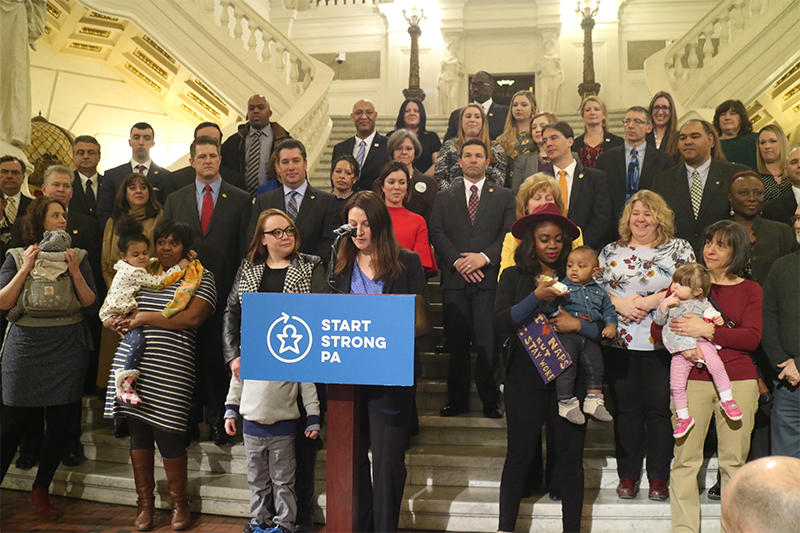
On January 29, Start Strong PA hosted their official statewide campaign launch event at the Pennsylvania State Capitol Complex in Harrisburg.

What is Start Strong PA?

Guided by evidence-based research, the Start Strong PA campaign was launched to help ensure that every Pennsylvania infant and toddler starts off strong. By advocating for increased access to and affordability of high-quality child care programs, the campaign aims to support healthy childhood development, working families, and the Pennsylvania economy.

Speaking on behalf of the campaign, Jodi Askins, Executive Director of PennAEYC, stated:

“Infant-toddler brains make over a million neural connections every second – forming brain architecture for life. At no other time in a human’s life will the brain develop at this remarkable speed or with such intricacy. This is the foundation upon which all later learning, behavior, and health depend. That’s why we need Pennsylvanians to join us and help our infants and toddlers ‘start strong’!”

At the Launch

With approximately 75 early childhood advocates in attendance, including state legislators, professionals, and families with children in child care, the launch began with a complimentary coffee bar (made possible by Little Amps Coffee Roasters), pictures of legislators’ young children, and conversations on the important role that high-quality child care plays in the lives of our infants and toddlers.

A press conference was held later in the afternoon, featuring representatives from partner organizations, state legislators, administration, parents, and high-quality child care programs. Various early childhood education and care topics were highlighted, including issues of access, affordability, low wages, and a need for more high-quality early childhood staff.

Parent Lauren Bethea spoke about her experiences waiting for care for her daughter Lorraine:

“The weight of the world was on my shoulders until my child got into a high-quality program. Every young child like Lorraine deserves this opportunity. Waiting for space in a program until your child is 2, 3, or even older before enrollment is not an option for so many families.”

Deputy Secretary Suzann Morris spoke to her role as a mother and to her leadership role over current initiatives of the Office of Child Development and Early Learning, sharing that work is underway to make early childhood programs more efficient such as program coordination in regional Early Learning Resource Centers.

Watch the full press conference here.

Quotes from Pennsylvania Legislators

At the press conference, state legislators spoke out on the following topics:

Senator Pat Browne, Co-Chair, Early Childhood Education Caucus

“This is the type of results-based thinking that’s necessary to maximize where the state spends its limited amount of discretionary revenue. These early learning programs have a proven track record of helping prevent at-risk young people from falling behind or dropping out of school. Looking long-term, young people who receive early learning assistance are more likely to become productive members of our community. By prioritizing spending on these vital programs it will save the Commonwealth long-term costs.”

Senator Jay Costa

“Paying [early childhood professionals] some of the lowest wages in the service industry is simply unacceptable and needs to change.”

Representative Mark Longietti, Co-Chair, Early Childhood Education Caucus

“Programs provide a safe and secure environment and teachers help children learn the “executive function” and self-regulation skills that are necessary for life success – from being able to pay attention, plan, and prioritize to recognizing, naming and controlling their emotions.”

Representative Lynda Schlegel Culver

“The state has a waiting list of over 4,300 kids for a subsidy and an average waiting time of 88 days as of November. And only one-third of children receiving subsidized care were in Keystone STAR 3 or 4 programs.”

How You Can Support

Help us inform and engage Pennsylvania policymakers on the changes necessary to increase access, affordability, and quality in infant/toddler child care programs and sign-on your support here or download, complete, and email this sign-on form to info@startstrongpa.org.

For updates on the campaign, follow Start Strong PA on Facebook and Twitter.

Questions

For questions or to schedule an interview with campaign launch speakers or Start Strong PA partner organizations, please contact Lissa Geiger Shulman at 717.802.1881 or lissa@tryingtogether.org.

Come Play!

News

January 16, 2019

Come Play!

Guided by the staff at Trying Together, Come Play! is an opportunity for family and group child care providers to bring their enrolled children for hands-on professional development.

Share this flyer with your networks.

Start Strong PA Webinar

News

October 29, 2018

Start Strong PA Webinar

Join sponsors Pennsylvania Child Care Association and Pennsylvania Association for The Education of Young Children for an afternoon or evening webinar to hear about priorities for the campaign, the work done so far, and how you can become involved. Register now.

FACILITATORS:

  • Jodi Askins, Executive Director, PennAEYC
  • Diane Barber, Executive Director, PACCA

REGISTRATION DEADLINE:

Wednesday, October 31.

Both webinars will be recorded and posted to the PACCA and PennAEYC websites afterward.