ACF Seeks Input On Improving Quality Child Care Access

News

October 18, 2019

ACF Seeks Input On Improving Quality Child Care Access

On October 2, the Administration for Children and Families (ACF) posted a Request for Information (RFI) on improving access to affordable, high-quality child care in the United States.

About

ACF is focused on finding innovative solutions to improve working families’ access to affordable, high quality child care, as well as investigating how access to child care affects America’s workforce, present, and future. Child care is one of the biggest expenses a family faces and can be a barrier to work. The average cost of center-based infant child care in 28 states is more than college tuition.

At the same time, there is concern about the quality of child care and ensuring that child care settings are a place of education that promote and enhance child and youth development and well-being. High-quality child care is a critical investment that pays off now, for parents by enabling them to work, and later, by supporting children’s development and success in school and life. This request for information seeks public comment on innovative ways to address the affordability and access crisis of child care in the U.S., without compromising on quality.

Information collected through this RFI may be used by ACF in the development of future rulemaking and technical assistance, the formation of legislative proposals and research agenda, and/or strategic planning. To learn more, visit the RFI page.

Intended Audience and Stakeholders

AFI is looking to receive input from a wide range of stakeholders, including, but not limited to, parents who use child care; parents of children with disabilities; small child care businesses; employers; state and local chambers of commerce; foundations; faith-based and other community organizations; family child care networks; child care resource and referral agencies; universities and other institutions of higher education; child care workforce development organizations, etc.

RFI Topics

    • Building Supply of Child Care
    • Improving Child Care Regulations
    • Cultivating the Child Care Workforce
    • Developing Better Child Care Business Models
    • Transforming Financing of Child Care and Early Education Programs

Submit Your Comment

To submit a comment, visit the RFI page. All comments must be submitted by December 2, 2019.

*Information provided by the Administration of Children and Families
Governor Wolf Releases Report on Infant Toddler Support

News

October 2, 2019

Governor Wolf Releases Report on Infant Toddler Support

Governor Tom Wolf released a report detailing seven Ready to Start Task Force priorities that were developed to better support the long-term success of infants, toddlers, and families in Pennsylvania.

Ready to Start Task Force

The Governor’s Ready to Start Task Force was created in September 2018 to “develop a framework of strategies to address health, human services, and education policy for infants and toddlers ages birth to three in Pennsylvania.” Led by six Governor-appointed co-chairs, the Task Force facilitated “six regional roundtable listening sessions with members of the Administration and approximately 150 stakeholders who represent early care and education providers, health care practitioners, research organizations, workforce development, state and local government, foundations, employers, postsecondary educators, and community-based organizations.”

At these sessions, stakeholders responded to three key questions on family and child health, home environments, and future school success. The Governor also provided an online feedback form to receive ideas and thoughts from the community. Through these methods, the Task Force identified a list of key themes and findings, from which the four-year framework report was created.

Priorities

“Governor’s Ready to Start Task Force: A Four-Year Framework to Support Pennsylvania’s Infants and Toddlers” lists seven key priorities, all of which include specific goals that guide Pennsylvania “to a stronger future for the Commonwealth’s infants, toddlers, and their families.”

    • Increase the Availability of High-Quality Child Care and Home Visiting Service Slots
    • Improve Early Intervention Quality and Streamlining to Enhance Availablity, Alignment, Integration, and Coordination of Services
    • Increase Recruitment, Retention, Development, Support, and Training of Early Childhood Education Professionals
    • Better Utilize Medicaid, CHIP, and State Regulatory Powers to Address the Risks to Infants and Toddlers Posed by Harmful Environmental Contaminants
    • Promote Education, Engagement, and Support of Parents and Families as Children’s First Teachers
    • Improve Information, Outreach, and Access to Services
    • Promote Sustainable Systems of Care to Support the Health and Wellbeing of All Children and Women of Child-Bearing Age

Next Steps

Moving forward, Governor Wolf will “establish a cross-sector ‘Ready to Start’ Workgroup comprised of agency and external stakeholders that will be responsible for establishing measurable goals and ensuring progress on the framework priorities and recommendations.” Meeting monthly, the Workgroup will engage with other state groups in fields that intersect with the priorities.

Learn More

To learn more, read the full report.

*Information provided by the Office of Governor Tom Wolf

Kindergarten Transition Strategies Highlighted in New Briefs

News

September 27, 2019

Kindergarten Transition Strategies Highlighted in New Briefs

About

New America reported that in the 2019-20 school year, “approximately four million children will start kindergarten.” This period of early learning is critical, as research shows that access to high-quality early education increases children’s likelihood of going to college, saving for retirement, and living in wealthier neighborhoods.

Recognizing the need for better support, New America released two briefs highlighting opportunities for states, local education agencies (LEAs), and elementary schools to strengthen pre-k to kindergarten transitions and fund transition activities.

Moving into Kindergarten

Their first brief, Moving into Kindergarten: How Schools and Districts are Connecting the Steps for Children and Families, highlights actions that schools and districts can take to help ensure a smooth and stress-free transition into kindergarten for children and their caregivers. The highlighted approaches are currently taking place in districts across the country, with a range of models included to ensure an appropriate method based on a district’s current state of development.

Highlighted methods include:

    • increased data sharing between child care, pre-k programs, and kindergarten
    • professional development and planning across grades (more specifically, formal activities that bring adults together across childcare, pre-k, and kindergarten)
    • a focus on family engagement that emphasizes the importance of involvement in education, extends beyond a one-time activity and takes place prior to the start of kindergarten
    • activities for incoming kindergarten students that go beyond one-time events (such as a classroom visit) and prioritize students without access to pre-k

To read the full brief, visit the New America website.

Using Local, State, and Federal Dollars to Improve Pre-K to Kindergarten Transitions

New America’s second brief, Using Local, State, and Federal Dollars to Improve Pre-K to K Transitions, highlights the importance of a seamless transition between early learning programs and grade levels as well as effective policies and practices. With this, New American mentions that “there are a number of federal and state programs and other funding opportunities that can help support state and local efforts to improve pre-k to kindergarten transitions and alignment.”

Serving as a resource for state and local leaders, the brief examines:

    • Child Care & Development Block Grant (CCDBG)
    • Every Student Succeeds Act (ESSA)
    • Head Start Act
    • Maternal, Infant, and Early Childhood Home Visiting (MIECHV)
    • Individuals with Disabilities Education Act (IDEA)
    • Preschool Development Grant, Birth through Five (PDG B-5)
    • Race to the Top-Early Learning Challenge (RTT-ELC)
    • Other Sources

Following this, the brief provides action recommendations for states, local education agencies, and elementary schools. Visit the New America website to learn more.

Local Initiatives

Are you interested in learning about the local pre-k and kindergarten landscape? Check out these initiatives:

    • Hi5 ensures that young children are school ready and promotes the importance of on-time kindergarten registration. Over the past seven years, this program has helped Allegheny County schools reach an impressive on-time kindergarten registration rate of 96 percent. To learn more, visit the Hi5 webpage.

Learn More

For more information, contact New America at 202.986.2700 or nyc@newamerica.org.

*Information provided by New America

Engaging Indoor Classrooms: Natural Materials & Loose Parts

News

September 20, 2019

Engaging Indoor Classrooms: Natural Materials & Loose Parts

Join Cindy Gennarelli, M.Ed., Director of Early Childhood Education Innovation at William Patterson University, for her upcoming webinar exploring opportunities to engage indoor classrooms using natural materials and loose parts.

About

This free webinar was designed to support the use of nature-based materials and loose parts in indoor classrooms. Common questions and concerns include:

    • How will these materials change the indoor environment?
    • Where do they go and how do I introduce the materials to the children?
    • How will these materials support children’s learning?
    • How do we integrate these materials without compromising the integrity of our curriculum and/or physical classroom space?

These questions and others will be discussed and answered. Photos of classroom environments, children’s engagement in inquiry-based, hands-on, STEAM-related explorations and discoveries will be used as examples. Examples will highlight the use of combining indoor classroom tools, materials, and equipment with outdoor materials to create richer learning experiences.

Learning outcomes will be relevant and aligned with approved developmentally appropriate curricula, pedagogy, children’s learning styles, and 21st-century skills. This webinar will be of particular benefit to pre-k teachers. Time for questions will be provided.

Registration

To sign-up, register via the event webpage.

More Information

To learn more, visit the edWeb website.

*Information provided via EdWeb

UnConference: The Business of Child Care

News

September 5, 2019

UnConference: The Business of Child Care

Are you interested in learning about the business fundamentals of running a successful child care business? Join Trying Together in Homestead on Saturday, October 19 for UnConference: The Business of Child Care!

About

This UnConference dives into the business fundamentals of a successful child care business, from marketing and human resources to day-to-day accountability and business planning. Keynote Rona Nesbit, CFO of the Pittsburgh Cultural Trust, will share the benefits of shared services and how the award-winning Cultural District shared services model has provided growth, benefits, and smart business insights to downtown-based performing arts organizations.

Following the keynote, Rachelle Duffy of Trying Together moderates a panel discussion and audience “Q&A” on how shared services can and does work for child care centers. Attendees will then engage in two workshops, featuring presenters from Trying Together, PNC Financial Services, Shared Source PA, and more.

What Is Included

    • 5.5 PQAS/DHS credits and/or Act 28 hours
    • Light breakfast and lunch
    • Networking with colleagues
    • Hands-on, interactive workshops
    • Refund policy

Registration

Registrations to attend must be submitted by 5 p.m. on Friday, October 11, 2019. For individuals or groups with less than six people, please register using the form below. There is a 10% discount for groups of more than six people. For more information, contact Yu-Ling at conference@tryingtogether.org.

When workshops are finalized, you will receive an email from Yu-Ling to select your preferred workshops. Due to limited space in each workshop, we recommend registering early as placement is dependent on the date of your registration. We will do our best to place you in your requested workshop, but this is not guaranteed.

Attendees can receive refunds if requested 30 days in advance of the UnConference date. For refunds, please email Yu-Ling at conference@tryingtogether.org.

More Information

For more information, please visit the event webpage.

Share this flyer with your network.

The Business of Child Care

News

September 4, 2019

The Business of Child Care

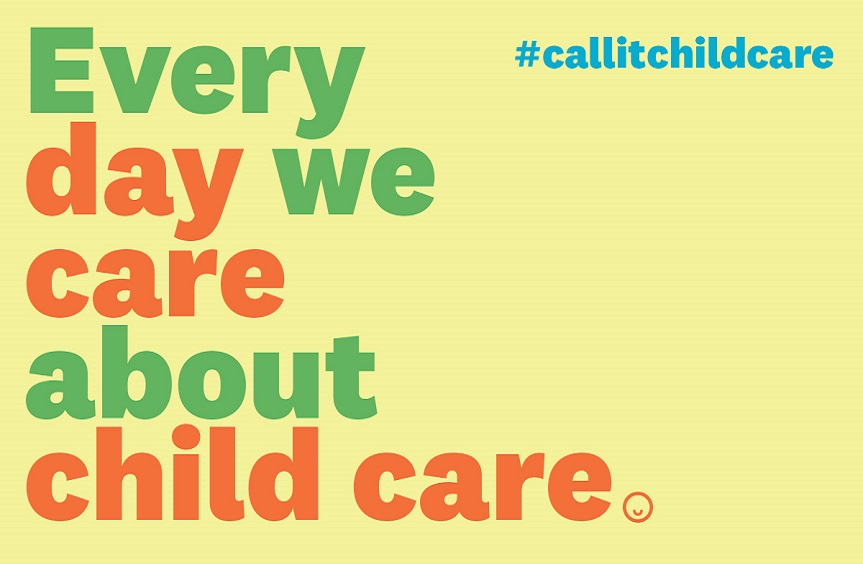
Call It Child Care

News

August 7, 2019

Call It Child Care

Response: Pennsylvania Fiscal Year 2019-20 Budget

News

July 28, 2019

Response: Pennsylvania Fiscal Year 2019-20 Budget

Recently, the state finalized the budget for fiscal year 2019-20, running now through June 30, 2020.

About

Alongside monumental increased investments for pre-k and home visiting, child care line items expanded, but only due to increases in funds from the federal government that are appropriated (or allowed to be spent) in the new state budget. Meanwhile, state child care dollars were cut by $36 million and replaced with federal funds.

While Trying Together is excited by the growth of pre-k and home visiting, this budget was a missed opportunity to support greater access to and affordability of high-quality child care. It is critical that our state policymakers know that the early childhood community is paying attention to their actions.

Detailed Budget Overview

Governor Wolf’s enacted budget includes the following:

Child Care
    • $6 million cut from the Child Care Services line item (replaced by federal funds).
    • $30 million cut from the Child Care Assistance line item (replaced by federal funds).
    • $27 million of federal dollars allocated to serve 970 additional infants and toddlers eligible for Child Care Works in high-quality programs; raise tiered reimbursement rates for STAR 2, 3, and 4 providers caring for infants and toddlers; and support apprenticeships for infant and toddler teachers.
Pre-K
    • $25 million increase for Pre-K Counts. This funding will also provide a rate increase of 2.95%, meaning approximately $250 more per child served over the prior rate.
    • $5 million increase for the Head Start Supplemental Assistance Program to serve more children.
Evidence-Based Home Visiting
    • $5 million increase for evidence-based home visiting programs to serve an additional 800 eligible families.

Why It’s Important

Today, only one-third of children on child care subsidy are accessing high-quality STAR 3 or 4 care. On average, families wait 88 days to access subsidies they need to join or remain in the workforce, with 4,300 children on the subsidy waiting list. However, child care subsidy reimbursements do not cover the cost of quality care. With this, child care staff are often paid low wages, with 50 percent of child care staff receiving public assistance.

We are pleased to see a waiting list initiative to serve more infants and toddlers in high-quality care and an increase in tiered reimbursement that will provide further program stability and consistency in teacher:child relationships. These are initiatives we and partners advocated for and strongly align with our Start Strong PA campaign goals.

Trying Together appreciates Governor Wolf’s continued commitment to early care and education programs in the commonwealth. With this, we recognize that countless families still lack access to high-quality early learning programs that they can afford. Trying Together will be doubling down on our advocacy for greater state and federal funding for child care.

Take Action

To support the work of early childhood and caregivers of young children, we participate in multiple campaigns, including Pre-K for PA, Start Strong PA, and Childhood Begins at Home. However, the success of these advocacy efforts is only possible when the early childhood community is visible and heard by our elected officials.

Visit our Take Action page and take action on the campaigns that matter to you. By doing so, you can thank lawmakers for greater investments in pre-k and home visiting and let them know that you expect to see them restore and grow investments in high-quality child care.

To stay up-to-date on how to advocate for these issues, sign-up to receive public policy updates.

See the full budget history here.

Cliff Effect Public Service Announcement Seeks Focus Group

News

July 15, 2019

Cliff Effect Public Service Announcement Seeks Focus Group

Circles Greater Pittsburgh and the University of Pittsburgh’s Office of Child Development are seeking individuals who are willing to be interviewed and recorded for a Public Service Announcement that will raise awareness on the Cliff Effect. Participants selected will be compensated.

About

The Cliff Effect impacts individuals who are:

    • working, but still eligible for certain subsidies such as Section 8 or public housing, Child Care Assistance, Medicaid, Food Stamps, and more
    • at risk of losing benefits because of an increase in income
    • faced with choosing between a raise/increased income or receiving benefits

Available Sessions

There are two available session dates:

    • Thursday, July 18, 6 – 8 p.m.
      Carnegie Library East Liberty | 130 S. Whitfield Street, Pittsburgh, PA 15206
    • Saturday, July 20, 11 a.m. – 1 p.m.
      Gallery on Penn | 5937 Penn Avenue, Pittsburgh, PA 15206

Registration

To register for the Cliff Effect groups, complete this form.

Share this flyer with your network.

No Small Matter Screening

News

March 27, 2019

No Small Matter Screening

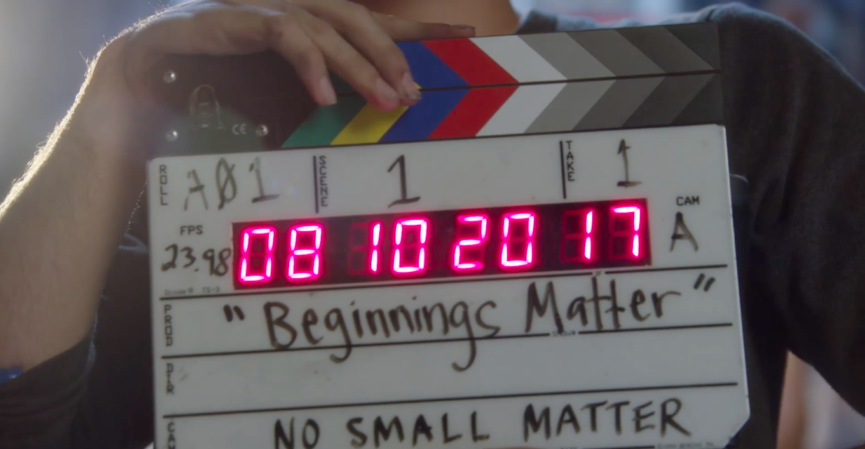
Join co-hosts Trying Together and PUMP for a screening of “No Small Matter,” a documentary film that highlights the importance of high-quality early education and its impact on all Americans.

Itinerary

  • 6:00 – 6:30 p.m. | Dinner*
  • 6:30 – 7:15 p.m. | Screening
  • 7:15 – 7:45 p.m. | Panel Discussion
  • 7:45 – 8:00 p.m. | Action Item/Wrap-Up

*A light dinner will be provided.

Share this flyer with your network.

Registeration

Free child care will be available for children ages two to eight. Pre-registration is required for child care and space is limited. To register for child care, visit Sweet Dreams Child Care’s registration link​.


Questions

About No Small Matter

No Small Matter is the first feature documentary to explore the most overlooked, underestimated, and powerful force for good in America today: early childhood education. Through poignant stories and surprising humor, the film lays out the overwhelming evidence for the importance of the first five years, and reveals how our failure to act on that evidence has resulted in an everyday crisis for American families, and a slow-motion catastrophe for the country.