On September 29, the Office of Child Development and Early Learning (OCDEL) issued an announcement to provide certified child care facilities with interim guidance for operating a facility during the COVID-19 pandemic. This announcement replaces C-20-06-Revised.
About
The announcement includes guidance on a range of health and safety considerations. Early learning professionals can review the guidance document in its entirety online. For examples of this guidance, continue reading below.
Reopening
-
- The CDC developed a decision tool to assist in operating and reopening decisions.
- It is suggested that child care providers develop and publicly post their implementation strategies to mitigate the spread of COVID-19 and inform parents of new procedures.
Practices, Policies, and Procedures
-
- Implement drop-off and arrival procedures: post signage to maintain social distancing; encourage the same designated person to drop off and pick up the child every day; set up hand hygiene stations; keep hand sanitizer out of children’s reach and supervise use; stagger arrival and pick up times; transport infants in their car seats; etc.
- Implement daily screening procedures: conduct a screening of any person entering the building; do not allow people who have tested positive for COVID-19 or who are showing symptoms to enter the building; ask caregivers to take their child’s temperature before coming to the facility and check their temperature again upon arrival; maintain at least six feet of distance from the parent and child; ask the child’s caregiver if any symptoms are present; put on disposable gloves; etc.
- Implement disinfecting and sanitation procedures: clean and sanitize toys; develop a schedule for routinely cleaning and disinfecting; keep cleaning materials out of the reach of children; don’t use products near children; ensure adequate ventilation; etc.
Social Distancing in Child Care Settings
-
- If possible, child care classes should include the same group each day, and the same child care providers should remain with the same group each day.
- If your child care program remains open, consider creating a separate classroom or group for the children of healthcare workers and other first responders.
- Consider whether to alter or halt daily group activities that may promote transmission. Cancel or postpone special events such as festivals, holiday events, and special performances.
- Limit the mixing of children, such as staggering playground times and keeping groups separate for special activities such as art, music, and exercising. Keep each group of children in a separate room.
- If possible, at nap time, ensure that children’s naptime mats (or cribs) are spaced out as much as possible, ideally 6 feet apart. Consider placing children head to toe in order to further reduce the potential for viral spread.
Face Coverings
-
- If a child is outdoors and able to consistently maintain a social distance of at least 6 feet from individuals who are not a part of their household, they do not need to wear a face covering.
- If a parent, guardian, or responsible person has been unable to place a face covering safely on the child’s face, they should not do so.
- If a child two years old or older is unable to remove a face covering without assistance, the child is not required to wear one.
- If experiencing issues with getting younger children comfortable wearing face coverings and keeping them on, parents, guardians, licensed child care providers in community-based and school settings or responsible persons may consider prioritizing the wearing of face coverings to times when it is difficult for the child to maintain a social distance of at least 6 feet from others who are not a part of their household (drop-off, pick-up, standing in line, etc.).
Confirmed COVID-19 Cases and Exposure
-
- The facility must develop a process to inform facility persons of possible exposure to a positive COVID-19 case. The operator shall inform parents of enrolled children when there is a suspected outbreak of a communicable disease or an outbreak of an unusual illness that represents a public health emergency in the opinion of the Department of Health.
- If the child is in care when the test results are confirmed positive, the child must be isolated until the appropriate party arrives to pick them up. The child’s parent must be notified as soon as possible.
- If a facility person or child tests positive for COVID-19, areas used by the person who tested positive must be closed for a period of 24 hours following the confirmed positive COVID-19 case of a child or facility person in attendance so that the facility can be cleaned and disinfected properly. Close contacts must self-quarantine.
- If a facility person, household member, or a child is exposed to an individual who tests positive for COVID-19, they shall self-quarantine for a period of 14 days based on the CDC guidance.
Reporting
-
- If a facility person/child is a potential exposure AND has COVID-19 like symptoms, please report to the Department of Health or your local health department.
- The facility must report positive COVID-19 cases to the Department of Health. Facilities within the counties listed on page 13 of the announcement must report positive cases to their local health department, who will in turn report this information to the Department of Health.
- The facility must report positive COVID-19 cases and positive COVID-19 cases that result in death to their Department of Human Services (DHS) Certification Representative. Facilities must utilize the DHS Licensed Facility COVID Data Collection Tool.
Timeline for Returning to Care
-
- Individuals with COVID-19 who have symptoms and were directed to care for themselves at home: discontinue isolation after at least 24 hours have passed since recovery (defined as the resolution of fever without the use of fever-reducing medication and the improvement of symptoms), AND at least 10 days after symptoms first appeared.
- Persons with laboratory-confirmed COVID-19 who have not had any symptoms and were directed to care for themselves at home: discontinue isolation after no less than 10 days have passed since the date of their first positive COVID-19 diagnostic test, provided no symptoms have developed during that 10-day period.
- Symptomatic child/facility persons who are not tested: exclude for 10 days from symptom onset AND at least 24 hours after fever resolution (if present) without the use of fever-reducing medication AND improved respiratory symptoms.
- Symptomatic child/facility persons determined by a health care provider to have an illness other than COVID-19: exclude until without a fever for 24 hours (if fever present) without the use of fever-reducing medication and symptoms improve.
- Symptomatic child/facility persons with test negative: exclude until without a fever for 24 hours (if fever present) without the use of fever-reducing medication AND improved respiratory symptoms.
-
Additional Resources
More Information
This information was provided by OCDEL. For questions or concerns, please contact the regional OCDEL office at 800.222.2149. For more information, read the full announcement.
Would you like to receive alerts when you come into close contact with someone who tested positive for COVID-19? Download the Pennsylvania Department of Health’s free COVID Alert PA App.
About
In the app, users report how they are feeling and whether they are experiencing any COVID-19 symptoms. If you report having symptoms, the app will provide information on what to do next. The tool also helps its users track their own symptoms within the app while also receiving public health information based on your responses.
COVID Alert PA protects your privacy and personal information. The app does not use GPS, location services, or any movement or geographical information and will never collect, transmit, or store your personal information. Your account will remain completely anonymous. The app detects if users are in close contact with another app user using Bluetooth Low Energy technology, which is the same technology your phone uses to connect to wireless headphones and other devices.
Download the App
To download the app, visit the Google Play Store or iPhone App Store. The app is available on Android phones running Android 6.0 and higher, and iPhones that support iOS 13.5 and higher. This app is not intended to be used by people under the age of 18 years old.
After you download the app, you can opt-in to receive alerts if you have had potential exposure to someone who tested positive for COVID-19. Getting timely alerts can help you get advice on how to help yourself and protect others. These alerts will reduce your likelihood of unknowingly spreading the virus to your friends, family, and community.
More Information
For more information, visit the PA Unites Against COVID webpage.

Are you interested in learning tips from education experts on how to support children in remote and blended learning environments? Join Zoom and the International Society for Technology in Education (ISTE) on October 7 and October 8, 2020 for their two-part Back-to-School webinar series designed for families and caregivers.
About
Session 1
Tips and Strategies for Families and Caregivers (K-12)
October 7, 2020 | 4:30 – 5:30 p.m.
In this webinar, families and caregivers will learn key strategies for building a positive, effective home learning environment and implementing concrete tips to advocate for their learner’s needs. ISTE Certified Educators and Trainers Dr. Daisy Sam and Dr. Sonn Sam will lead this timely discussion as an effort to ensure a more successful, productive school year during these challenging times.
Session 2
Zoom Basics and Tips for Families and Caregivers (K-6)
October 8, 2020 | 4:30 – 5:30 p.m.
In this webinar, Zoom experts will provide important tips to help support your child in remote and blended learning environments. Presenters will cover everything from platform basics and troubleshooting to remote learning soft skills to help them succeed as students. This session will be geared towards younger learners, primarily in grades K-6, however parents and caregivers of all ages are welcome to attend.
Registration
Both sessions will be broadcast in English with the option to listen to a live language interpretation in Spanish. Live American Sign Language (ASL) interpretation will also be available. To register and learn more, visit the event webpage.
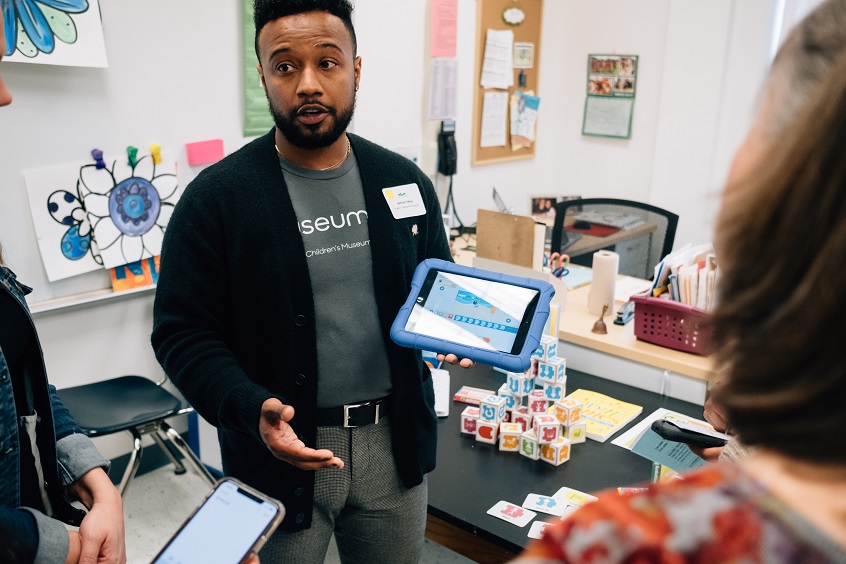
The Office of Child Development and Early Learning (OCDEL) announced that COVID-19 Health and Safety System Supports Training Webinars are available on the Pennsylvania Key website.
About
Each webinar provides COVID-19 guidance on topics related to the early childhood field, including:
Watch the Webinars
To watch the webinars, visit the Pennsylvania Key website.
The guidance provided in these videos has been based on evidence and information available at the time of publishing. Guidance will be reviewed as new information continues to emerge. To ensure you are implementing the most up-to-date guidance, visit the OCDEL or CDC website.
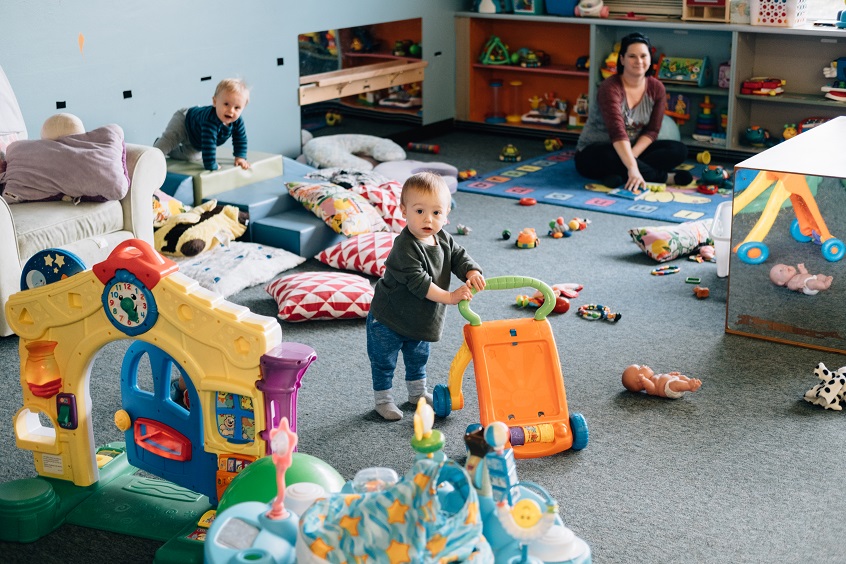
Are you interested in learning about essential trauma-informed practices you can use to support your students during the COVID-19 recovery? Join The Social Express on October 13 for their webinar, “Essential Trauma-Informed Practices During COVID-19 Recovery.”
About
During this webinar, presenters will explore the topic of trauma, the brain, and effective strategies to help teachers, students, and their families reach positive outcomes in school and at home. This webinar will be of particular interest to PreK-12 teachers; school and district leaders; special education leaders and specialists; guidance counselors; and school psychologists. Time for questions will be provided.
Registration
To register and learn more, visit the event webpage.
In September 2020, the Allegheny County Department of Human Services Office of Behavioral Health released a plan and guidance on in-person Early Intervention (EI) services for infants and toddlers in the county. These documents were developed to inform EI program providers and participants of the strategies that will be implemented to mitigate the spread of COVID-19 as in-person services resume.
About
Because in-person Early Intervention services are provided in people’s homes and communities, the successful implementation of in-person services relies heavily on the team effort or EI professionals and participating families to follow the health and safety guidelines detailed in the Allegheny County Infant/Toddler Early Intervention Health and Safety Plan for Resuming In-Person Services. Program staff will work with families to offer quality Early Intervention services in the safest manner feasible.
In addition to this plan, Allegheny County EI Providers and the EI SC Entity are expected to follow the Allegheny County Guidance for Conducting In-Person Infant/Toddler Early Intervention Services which outlines how and when EI in-person service provision will be carried out in Allegheny County during the Red, Yellow, and Green phases of reopening in Pennsylvania.
These plans and guidelines were informed by existing best practice guidance from numerous sources, including the Office of Child Development and Early Learning (OCDEL), the Pennsylvania Department of Education, the Pennsylvania Department of Health, the Centers for Disease Control and Prevention (CDC), the Office of Governor Tom Wolf, and local Allegheny County government officials.
Featured Topics
The Allegheny County Infant/Toddler Early Intervention Health and Safety Plan for Resuming In-Person Services features information on numerous topics, including the following:
-
- required training and education;
-
- health screenings and responses;
-
- conducting in-person visits; and
-
- EI Intervention Therapist and Provider caseload and staffing reviews.
More Information
For more information, read the full plan and guidance. Early Intervention providers are encouraged to share this document and its content on their websites and social media platforms.
Are you interested in learning about how much learning loss students are experiencing due to the COVID-19 pandemic? Attend the webinar “Unpacking Research on the COVID Slide and Recommendations to Close the Gap” on September 16 to hear from researchers Dr. John Bielinski, Dr. Rachel Brown, and Dr. Kyle Wagner.
About
During this webinar, the researchers who authored the just-released report, “COVID Slide: Research on Learning Loss and Recommendations to Close the Gap”, will review the data and answer the following questions:
-
- Did certain grade levels experience more pronounced learning loss than others?
- Will core subjects experience the same levels of learning loss, or will one suffer more than the other?
- Exactly how far behind can I expect students to be when we resume instruction?
- What can I do to help catch students up quickly?
This webinar will be of interest to K-12 teachers, school and district leaders, guidance counselors, and school psychologists. Time for questions will be provided.
Registration
To register and learn more, visit the event webpage.

Are you interested in learning how to implement social-emotional and mental health supports for your students and staff? Attend the webinar “SEL & Mental Health in Distance Learning: District Leaders Share Best Practices” on September 15 to hear best practices from education leaders.
About
In this webinar, presenters will share:
-
- how to connect and build trust with students, laying the groundwork for engagement and learning;
- best practices for supporting students in special education in distance learning;
- how to ensure staff feels safe and supported;
- how to implement SEL that supports anti-racism and equity in distance learning; and
- how to implement digital tools in an MTSS for efficacy and sustainability.
School and district administrators will learn concrete steps they can take to deliver effective, trauma-informed SEL and mental health supports to students and staff as schools and communities continue to grapple with the challenges of COVID-19.
This recorded webinar will be of interest to school and district leaders of pre-k through high school grade levels, federal program coordinators, and those involved in student mental health.
Registration
To register and learn more, visit the event webpage.