The outside world shapes children’s development through everyday, hands-on experiences. In this free online session, participants will explore ways to facilitate sensory experiences in outdoor play including natural materials in the outdoor environment, reusable loose parts, and classroom materials. Participants will discover the benefits of learning through the five senses and explore meaningful ways to encourage sensory learning with young children.
Course Information
-
- Timeline: May 4 – 24, 2020
- Trainer: Katie Gullone
- CKC: K2.4C2
- Keystone STARS Alignment: SQ. 3.4.9
- CDA Subject Area: Planning a safe and healthy learning environment.
- Three PQAS and Act 48 hours available.
Registration
To register for this course, please visit the event registration page. All registrations must be submitted by May 1, 2020 at 5 p.m. Limited spots are available.
More Information
For more information, contact Jasmine Davis at 412.567.3933 or jasmine@tryingtogether.org.
Share this flyer with your network.

Behind the Scenes: Examining Underlying Causes of Challenging Behaviors is a live, interactive webinar that examines developmentally appropriate behaviors, mistaken behaviors, and imitation. Emphasis will be on how adults and the environment contribute to behaviors.
About Challenging Behaviors
Two PQAS hours will be offered for Behind the Scenes: Examining Underlying Causes of Challenging Behaviors. Participants are expected to fully participate with their digital device microphones and cameras on. This is not a log-in and leave event. Arriving 15 minutes late may result in no credit for the session. Please note, no refunds will be provided for cancellation or no show.
Learning Objectives on Challenging Behaviors
Upon completion of this course, learners will be able to:
-
- describe factors that contribute to children’s behaviors;
-
- briefly explain Maslow’s Hierarchy of Needs and the PBS Pyramid as they relate to children’s behaviors; and
-
- analyze the extent to which adult behaviors and environmental factors facilitate children’s behaviors.
Available Date
To access this course, use the link below or enter the event ID on the Pennsylvania PD Registry website.
More Information
For questions, please contact Karen Rucker at 717.314.8368 or krucker@respectingchildren.com. For more events like this, please click here.
*Information provided by the Pennsylvania Key

Leave It at the Door: Managing Personal Stress in the Classroom is a live, interactive webinar that explores causes of stress and ways to manage that stress in an effort to move towards a healthy, balanced lifestyle in the classroom and at home.
About
Two PQAS hours will be offered. Participants are expected to fully participate with their digital device microphones and cameras on. This is not a log-in and leave event. Arriving 15 minutes late may result in no credit for the session. Please note, no refunds will be provided for cancellation or no show.
Learning Objectives
Upon completion of this course, learners will be able to:
-
- identify common sources and symptoms of stress in adults,
-
- summarize ways to reduce stress in and out of the workplace, and
-
- implement stress management techniques to address personal stressors.
Available Dates
To access this course, use the links below or enter the event ID on the Pennsylvania PD Registry website.
More Information
For questions, please contact Karen Rucker at 717.314.8368 or krucker@respectingchildren.com.
*Information provided by the Pennsylvania Key

The Importance of Supervision: Indoors & Out is a live, interactive webinar that explores the important role that supervision plays in early childhood and discusses the consequences of inadequate supervision. This course will also explore legal responsibilities, strategies, and the role of a supervision policy.
About
Two PQAS hours will be offered. Participants are expected to fully participate with their digital device microphones and cameras on. This is not a log-in and leave event. Arriving 15 minutes late may result in no credit for the session. Please note, no refunds will be provided for cancellation or no show.
Learning Objectives
Upon completion of this course, learners will be able to:
-
- explain expectations by DPW, STARS, and the community,
- identify the consequences of inadequate supervision, and
- implement improved strategies to account for each child and ensure their safety.
Available Date
To access this course, use the link below or enter the event ID on the Pennsylvania PD Registry website.
More Information
For questions, please contact Karen Rucker at 717.314.8368 or krucker@respectingchildren.com. For more events and courses like this, please click here.
*Information provided by the Pennsylvania Key

Observing Young Children is a live, interactive webinar that explores the role of observation in early childhood and discusses how to use gained information to inform program decisions and assessments of children. Video clips will be utilized to practice observation skills.
About
Two PQAS hours will be offered. Participants are expected to fully participate with their digital device microphones and cameras on. This is not a log-in and leave event. Arriving 15 minutes late may result in no credit for the session. Please note, no refunds will be provided for cancellation or no show.
Learning Objectives
Upon completion of this course, learners will be able to:
-
- list reasons to keep written records of observations of children;
-
- define ways to conduct observations that are objective and free of bias;
-
- use anecdotal notes to record observations of children; and
-
- apply gained information to program planning and child assessment.
Available Dates
To access this course, use the links below or enter the event ID on the Pennsylvania PD Registry website.
More Information
For questions, please contact Karen Rucker at 717.314.8368 or krucker@respectingchildren.com.
*Information provided by the Pennsylvania Key
If you work for or operate an early learning program in Pennsylvania, including public and private schools; child care centers; group child care homes; family child care homes; family, friend, and neighbor care, it’s important to remain calm, prepare, and take precautionary measures. By doing so, you will help to maintain the health and wellbeing of yourself, other staff, and the communities you serve. For up-to-date recommendations and COVID-19 Resources for Early Learning programs, please visit the ELRC Region 5 website.
Continue reading below for a brief overview of COVID-19; information about waivers and enrollment capacity; and a list of resources.
An Overview of COVID-19
COVID-19 is a highly contagious respiratory disease caused by a new coronavirus not previously seen in humans. Because the virus impacts the respiratory system, common symptoms of infection include fever, dry cough, tiredness, shortness of breath, and difficulty breathing. However, WHO states that some patients may have aches and pains, nasal congestion, runny nose, sore throat, and diarrhea. After being infected with COVID-19, individuals generally display mild symptoms that begin gradually, but some people who become infected may not develop any symptoms at all and may feel healthy.
To learn more about COVID-19 and the steps you can take to reduce your family’s risk of infection, read our recent news post. This post also includes information about what to do after infection, information on how it spreads, and links to several other organizations and entities that can provide more information.
National Sex Offender Registry Clearances
According to the Department of Human Services Office Child Development & Early Learning Bureau of Certification Services, no exceptions will be made for expired or late National Sex Offender Registry (NSOR) clearances after regular child care operations resume. Once regular child care operations resume statewide, staff will not be permitted to return to early learning programs if any of their clearances are expired. For this reason, it is recommended that all staff who require new or renewed finger-print checks should do so as soon as possible at one of the following available facilities.
To learn more about NSOR changes in the last 12 months, please visit ELRC Region 5’s news post.
COVID-19 Resources for Early Learning Programs
Information about COVID-19
Guidance for Providers
-
-
- Coronavirus Emergency Loans: Small Business Guide and Checklist (English) (Spanish), U.S. Chamber of Commerce
-
Early Learning
Talking with Children
Prevention
After Infection
Impacts on Child Care, School, and Work
Fact Sheets
Informational Flyers
Mental Health
Receiving Support
Multilingual Resources
Curated Lists
Recorded Webinars
Contacts and Information
-
- Pennsylvania Department of Health
www.health.pa.gov
1.877.72.432584 | 1.877.PA.HEALTH
- United Way
www.pa211sw.org
Dial 2.1.1 | Text Your Zip Code to 898-211 (Text Alerts)
- Optum (Free Emotional Support Helpline)
866.342.6892
- National Suicide Prevention Lifeline
suicidepreventionlifeline.org
1.800.273.8255 (English) | 1.888.628.9454 (Spanish) | 1.800.799.4889 (Deaf or Hard of Hearing)
More Information
For more information about COVID-19, visit the Pennsylvania Department of Health, Centers for Disease Control and Prevention (CDC), or World Health Organization (WHO) websites.
Are you interested in learning how to transition your home or school into a making and tinkering environment for your young child(ren)? Join Cate Heroman, author of Making and Tinkering with STEM, and Lianna Kali, Project Director for The Tinkering Studio in San Francisco’s Exploratorium, as they share strategies for delightful investigations to try at home and school.
About
During this webinar, presenters will take a closer look at tinkering with two big ideas–light and shadow play and balls, ramps, and chain reactions. Attendees will receive a certificate of attendance for viewing this live webinar. For those who cannot attend, a recorded version of the presentation will be made available within six to eight weeks.
Registration
To register, visit NAEYC’s event page.

If you are a parent or caregiver who understands the importance of finding picture books that feature Black and Indigenous People and People of Color (BIPOC) – offering children, as Dr. Rudine Sims Bishop phrased it, “mirrors and windows” to the world – it can still be challenging to know how to choose a good book from among what’s increasingly available on the “diverse books” market.
Join EmbraceRace and the founders of Diverse BookFinder on April 28 for their webinar “Choosing ‘Good’ Picture Books Featuring Black and Indigenous People and People of Color” to get their practical advice about how you can move beyond simply avoiding stereotypical portrayals to find great picture books your child is likely to enjoy. Time for questions and book recommendations will be provided.
Registration
To register, visit the event webpage.
*Information provided by EmbraceRace
Are you interested in learning about the different options child care programs can access to get financial support during the COVID-19 pandemic? Join the National Association for the Education of Young Children (NAEYC) on April 9 for the webinar, “Paying Yourself, Your Staff, and Your Bills: Helping Child Care Programs Understand and Navigate SBA Loan Options.”
About
In addition to the $3.5 billion for CCDBG provided by Congress in the recent CARES Act, there are multiple options for child care programs across states and settings to get financial support to survive this crisis. Since these processes may be complex, NAEYC is bringing together experts from the banking, business, and child care industries for a webinar featuring lessons from the first few days following the opening of the Paycheck Protection Program.
By attending, participants will learn how the different options work, which options may work best for them, and what precise steps individuals need to take to apply for them.
Register
To register, visit the event webpage.
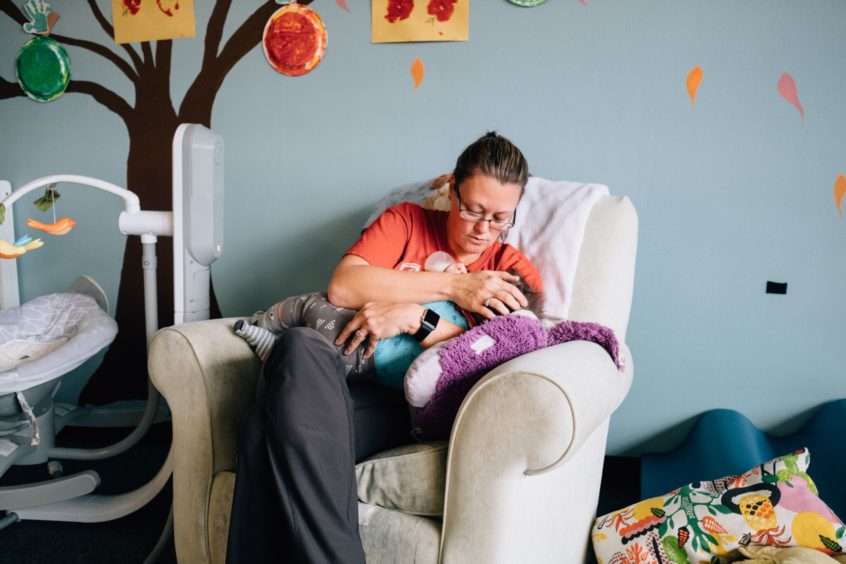
Families caring for young children during this time with little outside social support or respite can be at risk for an increase in harsh disciplinary practices, abuse, or neglect. If you are an early learning professional, join Zero to Three on April 29 for their webinar, “Attending to Risks of Abuse and Neglect During COVID-19 Pandemic Response: Early Childhood Educators.”
About
Recent protocols around social distancing and sheltering in place have created substantial changes in family lifestyles and professional practice. For some families, staying home together has had positive impacts on their quality of time together, strengthening relationships. For many families, this social isolation is also coupled with anxiety around health concerns and financial security.
Objectives
During this webinar, early childhood educators will learn the following:
-
- how to assess and address risks and signs of abuse and neglect in an early childhood education setting while simultaneously adjusting protocols specific to COVID-19 in these settings;
-
- how to maintain relationships through virtual contacts when programs are closed and assess risk through virtual interactions;
-
- the importance of reflective practice for early childhood educators who are often facing many of their own individual and family challenges during this time; and
-
- about resources specific to early childhood education.
Register
To register, visit the event webpage.