OCDEL to Award Funds for Implementation or Continuation of Family Support Programs

News

September 10, 2026

OCDEL to Award Funds for Implementation or Continuation of Family Support Programs

Pennsylvania’s Office of Child Development and Early Learning (OCDEL) is seeking to award funds to qualified applicants for the implementation or continuation of Family Support Programs.

OCDEL’s Bureau of Early Intervention Services and Family Supports would award funds for the programs, which consist of community-based, high-quality evidence-based home visiting (EBHV) services, as well as three categories of enhancements to evidence-informed programs, EBHV model enhancements, and program enhancements.

About Family Support Programs

Family Support Programs help families to access a broad array of supports and services, including formal supports (such as EBHV and parenting classes), informal supports (such as providing resources and connecting families to services in the community), and a community system of services that promote the well-being of families and their children.

Such services can take many different forms, depending on the strengths and needs of the family, but the overarching goal is to help caregivers enhance skills and resolve problems to promote optimal child development

Applicants must apply to implement as least one EBHV model, and may apply to implement one or more enhancements.

Applications must be received no later than Tuesday, October 13, while questions must be submitted by Tuesday, September 15 and answers to potential applicant questions will be posted by Tuesday, September 22.

For more information, visit the eMarketplace website.

OCDEL Calls for Providers to Strengthen Measles Prevention Efforts Amid Outbreak

News

September 9, 2026

OCDEL Calls for Providers to Strengthen Measles Prevention Efforts Amid Outbreak

Pennsylvania’s Office of Child Development and Early Learning (OCDEL) is calling for early childhood providers to strengthen measles prevention efforts, contribute to vaccination awareness, and ensure that rapid response procedures are up to date as the number of cases rises statewide.

Currently, Pennsylvania has confirmed more than 570 cases of measles and several counties are experiencing concentrated outbreaks. The state’s Department of Health has a measles dashboard that shows case counts by county.

Measles Symptoms

Measles is a highly contagious viral illness that spreads through the air, often when an infected person coughs or sneezes. The virus can linger on surfaces and in the air for up to two hours. Symptoms include a rash, fever, cough, runny nose, sore throat, and red, watery eyes. Other severe complications can include pneumonia and swelling of the brain, and some may be hospitalized or die. 

Those infected with the illness are contagious from four days before to four days after the rash appears. Symptoms typically appear seven to 14 days after exposure, but it can take up to 21 days to appear.

Vaccines 

Vaccines are the best protection against getting sick from measles, specifically two doses of the measles, mumps, and rubella (MMR) vaccine, OCDEL said. Two doses provide approximately 97% protection, while one provides 93% protection. Most people who are fully vaccinated will be protected for life.

According to the Pennsylvania code 27.77, a licensed child care facility requires all children, ages 2 months and older, to have an immunization record on file. The record should be provided by the parent from a physician, physician’s assistant, CRNP, the state’s Department of Health, or a local health department. 

The record must contain the dates that the child received all age-appropriate vaccinations. Newly enrolled families have up to 60 days to provide the child’s updated record. If a child has not received vaccinations, acceptable documented exemptions must be on file. For exemptions due to medical concerns, documentation must be provided by a medical professional, while a religious exemption requires a signed and dated written statement from the child’s caregiver.

People who are not immune by either vaccination or documented prior infection have a 90% chance of developing measles after being exposed.

Child care providers should review the immunization status for all children and talk to staff members and volunteers about their status. Proof of immunity includes:

  • Documentation of one or more doses of the MMR vaccine
  • Laboratory evidence of immunity (blood test) or laboratory confirmation of measles disease
  • Birth before 1957; adults born before that year are more likely to have had measles as children and are generally, but not always, considered immune.

Providers should remind families and staff about the vaccination, including where it can be accessed, such as primary care providers, urgent care, pharmacies, federally funded health centers, state health centers, and local health departments.

Prevention and Response 

Providers should promote infection control practices, such as respiratory hygiene and cough etiquette, frequent handwashing, and disinfection of high-touch surfaces. Staff and children should be encouraged to stay home when they are ill. Families of unvaccinated children and staff who are exposed to measles should be notified that they may need to stay home for up to three weeks after their last exposure.

If a case of measles occurs, providers should contact their local health department or the state’s Department of Health at 877-724-3258.

For more information, visit The Pennsylvania Key’s website and Trying Together’s recent news post, Measles a Growing Concern as Number of Cases Rises.

Help to Promote Reading Among Children During September’s National Literacy Month

News

Help to Promote Reading Among Children During September’s National Literacy Month

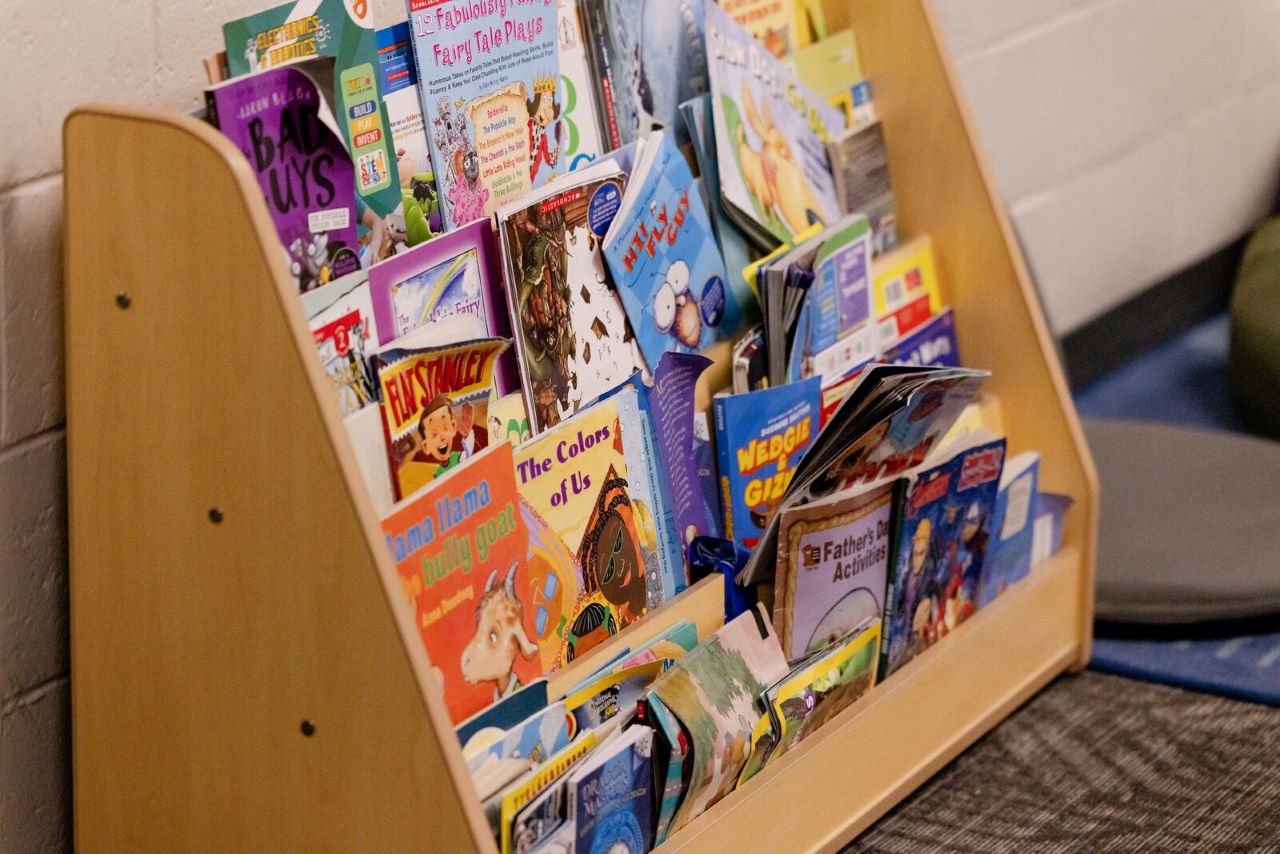
Although promoting early literacy is a year-round endeavor, September has been designated as National Literacy Month, during which educators and caregivers should encourage reading among children.

Learn More

Pennsylvania’s Office of Child Development and Early Learning shared a message this week that families should spend at least 15 minutes per day reading, storytelling, singing, and taking part in conversation. 

OCDEL cited research showing that shared reading experiences help to strengthen vocabulary, comprehension, social-emotional development, and caregiver-child relationships while helping children prepare for school.

Children who are exposed to books and language early in life, according to OCDEL, are more likely to:

  • Develop strong language and communication skills
  • Build larger vocabularies
  • Strengthen listening and comprehension skills
  • Be prepared for kindergarten and future learning
  • Develop creativity and imagination
  • Foster a lifelong love of reading

OCDEL noted that it would share weekly tips and resources to help promote early literacy as part of National Literacy Month. 

Meanwhile, some other resources from Trying Together, Buzzword, and the Carnegie Library of Pittsburgh to help celebrate the month include:


OCDEL Provides Information on How to Remove Ticks from Children

News

August 10, 2026

OCDEL Provides Information on How to Remove Ticks from Children

The Pennsylvania Office of Child Development and Early Learning’s (OCDEL) Bureau of Certification has provided tips on how to remove a tick from a child and which symptoms to keep an eye on.

Learn More

Ticks have eight legs, are very small, and can attach to a person to suck blood. In Pennsylvania, many ticks carry diseases and can be found outdoors in areas with long grass and weeks, leaf piles, the woods, or in the backyard.

It is important to remove a tick as soon as the insect is found embedded in the skin. The longer a tick is attached to a child or adult increases the risk of Lyme disease transmission.

Removing a Tick

Early childhood educators who are removing a tick from a child should:

  • Use tweezers and grasp the tick close to the skin (on its head).
  • Hold the tweezers sideways next to the skin surface.
  • Pull the tick straight upward without twisting or crushing it.
  • Maintain a steady pressure until it releases its grip.
  • If you don’t have tweezers, you can use your fingers.
  • It is not helpful to cover the tick with petroleum jelly, nail polish, rubbing alcohol, a soapy cotton ball, or a hot or cold object.

If the tick’s head breaks off in the skin during removal, caregivers should remove any large parts, clean the skin with rubbing alcohol, or use clean tweezers to uncover the head and scrape it off.

If the tick is so small that tweezers or fingers don’t work, use the edge of a credit card to scrape it off the skin. If a small piece of the head remains, the skin will slowly shed it.

After Removing a Tick

After the tick has been removed, early childhood educators should:

  • Wash the wound and your hands with soap and water after removal. This helps to prevent catching any disease carried by the tick. 
  • Inform the parent or guardian that you have removed a tick from the child. Alert them to watch the bite area for the appearance of a rash. If a rash appears or the child becomes ill, the child will need medical care.

Tick bites typically don’t hurt or itch – which is why they are not often noticed. If the tick transfers a disease, a rash will appear in the next two to four weeks.

Caregivers should contact a health care provider if they can’t remove the tick, fever or rash occurs in the next four weeks, or the bite starts to look infected. 

To prevent tick bites, perform daily checks on children after outdoor play. Children should wear light clothing, so ticks can be spotted and tuck their socks into pants, avoid tall grass, and stay on clear paths outdoors.

OCDEL Announces Pathway for Internationally Educated ECE Professionals to Obtain Necessary Documents

News

July 29, 2026

OCDEL Announces Pathway for Internationally Educated ECE Professionals to Obtain Necessary Documents

Starting in early August, a new equivalency report will create an additional pathway for internationally educated early childhood professionals to obtain necessary educational documents.

Learn More

As of Monday, August 3, the Educational Credential Evaluators will offer an equivalency report to early childhood education (ECE) workforce professionals who are unable to obtain their original international educational documents.

Photocopies of original documentation will now be eligible to proceed through a vetted review process by Educational Credential Evaluators and reviewed for authenticity and U.S. equivalency, according to an announcement on Wednesday by Pennsylvania’s Office of Child Development and Early Learning (OCDEL).

The equivalency report can be used by ECE professionals to be placed on the state’s ECE Career Pathway, which provides a clear framework for professional growth, helping educators to meet the qualifications and competencies required for various roles in early childhood education.

Last year, OCDEL and the Pennsylvania Key partnered with the Educational Credential Evaluators to develop a more accessible system for ECE workforce members who received their education abroad.

Now, in its second year, the International Education Evaluation program has launched a new opportunity for workforce members who are experiencing challenges obtaining original diplomas, transcripts, and degrees from the educational institutions where they were educated.

More information on the equivalency reports can be found on the Pennsylvania Key’s International Education Evaluation website, including instructions on how to secure the required documentation and the evaluation application process in Pennsylvania. 

OCDEL Releases Book Lists About Trees and Rocks as Part of 2026 Literacy Road Trip

News

July 27, 2026

OCDEL Releases Book Lists About Trees and Rocks as Part of 2026 Literacy Road Trip

Pennsylvania’s Office of Child Development and Early Learning has released two nature-related book lists for children as part of its 2026 Summer Learning & Literacy Road Trip.

Learn More

The theme of this year’s road trip is exploring the natural world. OCDEL recently curated two book lists – one with the theme of rocks and another focusing on trees – for children to read this summer.

The two book lists are intended to encourage children to look closely at their surroundings. Selections on the lists blend storytelling with science and discovery.

The eight books on the list about rocks include:

  • Rhoda’s Rock Hunt (Molly Beth Griffin)
  • Everybody Needs a Rock (Byrd Baylor)
  • If You Find a Rock (Peggy Christian)
  • The Pebble in My Pocket: A History of Our Earth (Meredith Hooper)
  • Rocks, Fossils, and Arrowheads (Laura Evert)
  • A Stone is a Story (Leslie Barnard Booth)
  • Little Kids First Big Book: Rocks, Minerals, and Shells (Moira Rose Donohue)
  • A Rainbow of Rocks (Kate DePalma)

The 12 books on the list about trees include:

  • Listen to the Language of Trees (Tera Kelley)
  • The Busy Tree (Jennifer Ward)
  • We’re Going on a Leaf Hunt (Steve Metzger)
  • Do Trees Have Mothers? (Charles Bongers)
  • Who Will Plant a Tree? (Jerry Pallotta)
  • Tall Tall Tree (Anthony D. Fredericks)
  • The City Tree (Shira Boss)
  • Be a Tree! (Maria Gianferrari)
  • Abuela’s Wishing Tree (Mitzi Fernandez Spitzer)
  • A Tree Grows Up (Marfe Ferguson Delano)
  • A Tree is Home (Pamela Hickman)
  • Leaf Man (Lois Ehlert)

OCDEL Notified by U.S. Department of Education That It Meets Highest Designated Requirement

News

OCDEL Notified by U.S. Department of Education That It Meets Highest Designated Requirement

Pennsylvania’s Office of Child Development and Early Learning (OCDEL) has been notified by the U.S. Department of Education that the state’s Part C Infant and Toddler Early Intervention system has met the highest-possible designation a state can receive.

Learn More

OCDEL’s Bureau of Early Intervention Services and Family Supports recently announced that the U.S. Department of Education’s Office of Special Education and Rehabilitative Services notified it that it had received the designation of “Meets Requirements.”

This determination is based on the totality of Pennsylvania’s data and information, including the federal fiscal year 2024 State Performance Plan/Annual Performance Report, other state-reported data, and other publicly available information. 

The state’s 2026 determination is based on the data reflected in Pennsylvania’s 2026 Part C Results-Driven Accountability Matrix. 

More information is available on the state’s Department of Education website.

OCDEL Announces Requirements for Programs Using Keystone STARS – Alternate Pathways

News

July 1, 2026

OCDEL Announces Requirements for Programs Using Keystone STARS – Alternate Pathways

Pennsylvania’s Office of Child Development and Early Learning’s (OCDEL) Bureau of Policy and Professional Development has released an announcement regarding requirements for programs using an OCDEL-approved Alternate Pathways in Keystone STARS.

Learn More

The announcement includes guidance on:

  • Changes to the requirements for OCDEL-approved Keystone STARS – Alternate Pathways programs
  • Addition of Cognia as an OCDEL-approved Keystone STARS – Alternate Pathway
  • Initial steps for programs using an OCDEL-approved Keystone STARS – Alternate Pathway
  • Designation requirements for OCDEL-approved Keystone STAR Alternate Pathway programs
  • Reminders for OCDEL-approved Keystone STARS-Alternate Pathway programs
  • Next steps

Keystone STARS, the state’s quality rating and improvement system, promotes quality in early childhood education programs for children and families. OCDEL recognizes that there are state and national accrediting organizations that similarly serve to ensure early childhood education programs provide high quality and enriching programming to children and families.

To give credence to these organizations and their accreditation standards of quality, OCDEL offers several approved Keystone STARS – Alternate Pathways. Programs that are accredited  through an OCDEL-approved Alternate Pathway and wish to use the pathway for a Keystone STARS designation must apply for an initial Alternate Pathway designation in the Professional Development (PD) Registry system.

Additionally, these programs are required to complete annual renewals of their Alternate Pathway designation in the registry system. Failure to do so will result in the program dropping to a STAR 1.

The full announcement is available on The Pennsylvania Key.

OCDEL Kicks Off 2026 Summer Learning and Literacy Road Trip

News

June 15, 2026

OCDEL Kicks Off 2026 Summer Learning and Literacy Road Trip

The Pennsylvania Office of Child Development and Early Learning (OCDEL) has unveiled its 2026 Summer Learning and Literacy Road Trip, which features a theme of exploring the natural world.

Learn More

Each year, OCDEL’s initiative helps families, teachers, and early childhood partners to explore ways to support young children’s love of reading and learning.

This year’s theme, From Ground to Sky, encourages children to explore the natural world, from the rocks beneath their feet to the trees high above them, by looking closely, asking questions, and discovering how nature connects to their everyday lives.

The initiative’s Nature Journal – which can be printed in English and Spanish – is a family travel companion that includes:

  • Inclusive early learning activities designed for all young children
  • Hands-on nature experiences to do in the backyard, a park, or on a walk
  • Family-friendly activities that support learning through play and exploration

All activities in the Nature Journal are aligned with Pennsylvania Early Learning Standards, which help children to build important skills in language, literacy, curiosity, observation, and self-regulation that will be necessary as they begin school.

The Summer Learning and Literacy Road Trip’s map highlights special areas in Pennsylvania to find native rocks and trees – such as Cook Forest State Park, Archbald Pothole State Park, Chatham Arboretum, Keystone State Park, and other locations.

To view the initiative’s numerous activities – which include everything from a building and sorting rock challenge to differentiating the buds, leaves, branches, and other parts of a tree – visit the 2026 Summer Learning and Literacy Road Trip website.

OCDEL Makes Clarification About Program Licensure Requirements

News

June 10, 2026

OCDEL Makes Clarification About Program Licensure Requirements

The Pennsylvania Office of Child Development and Early Learning (OCDEL) has made a clarification regarding program licensure requirements.

Learn More

OCDEL’s Bureau of Policy and Professional Development and Bureau of Certification Services (BCS) have released an announcement to clarify the applicability of program licensure requirements. 

BCS is responsible for receiving applications, conducting inspections, and issuing a certificate of compliance to certified child care facilities in Pennsylvania. The certificate is a document issued by the state to a legal entity permitting it to operate a specific type of facility at a specific location for a specific period of time according to department regulations. 

Under the state code, certified child care facilities in Pennsylvania fall under one of the three categories – child care center, group child care home, or family child care home. 

The state code requires that legal entities must obtain a valid certificate of compliance to operate at a specific location. Upon meeting the requirements, the certificate of compliance will be issued by the state to a legal entity prior to commencement of operation at a specific location. 

For more information and to find details on programs subject to the requirements, read OCDEL’s announcement.