News

July 28, 2025

Thriving Kids Newsletter Discusses How to Promote Good Behavior in Children

The Child Mind Institute recently kicked off its Thriving Kids newsletter with the topic of how to promote good behavior in children.

The article noted that while managing a child’s behavior can be exhausting, there are simple strategies that can be employed to make a big difference.

Learn More

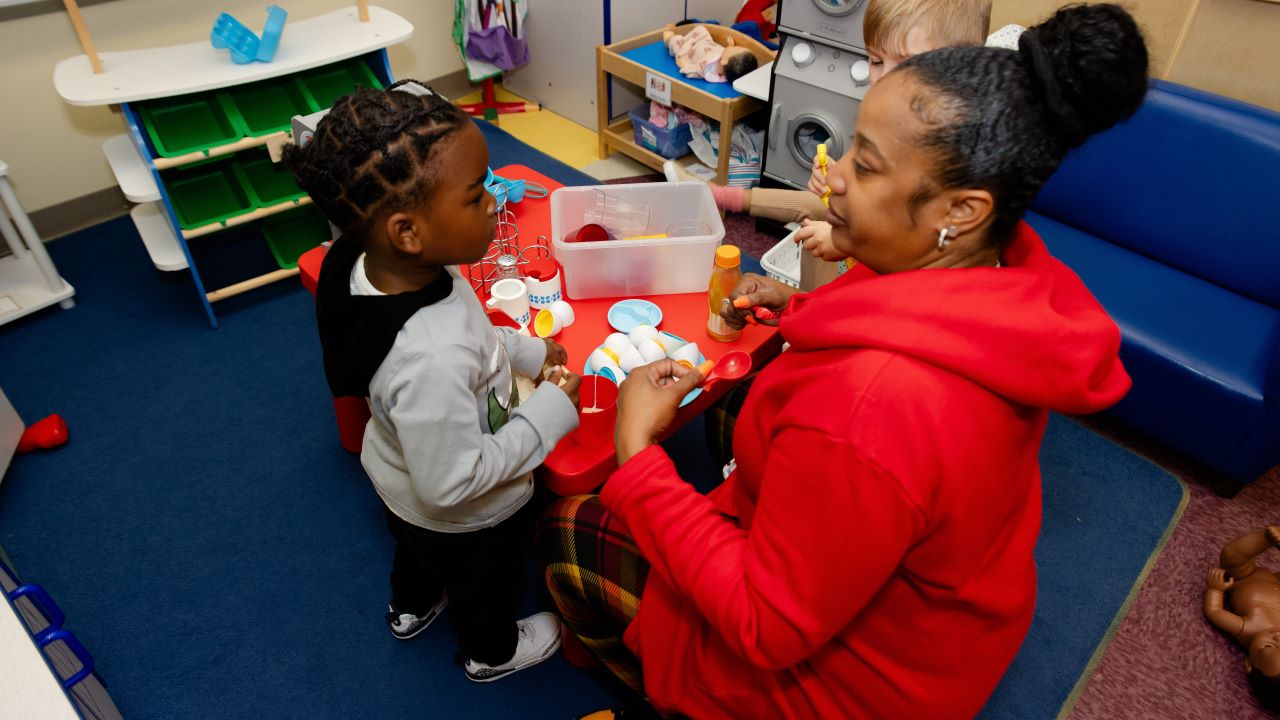
Thriving Kids noted that taking time out of each day to do something with a child that they enjoy can contribute to a healthy caregiver-child relationship and promotes good behavior. Children appreciate getting attention, which can include everything from asking about their day on the drive home from school or taking part in an activity together.

Setting clear expectations about the type of behavior that is expected helps to guide both the caregiver and child when undesirable behavior occurs. Expectations should be realistic and discussed with the child.

When a child exhibits good behavior, it should be acknowledged and rewarded. This increases the chance that the child will repeat good behavior in the future. On the other hand, parents should initiate consequences for unwanted behavior immediately after it happens. Consequences should be brief and consistent.

Lastly, caregivers should take a moment to reset. It is normal to become frustrated or upset with a child’s behavior. It can be helpful to take a breath, and caregivers can share with a child that they are taking a moment to let go of frustration before having a discussion about the behavior.

8 Tips for Promoting Good Behavior

Thriving Kids also provided eight tips for promoting good behavior in children. These include:

  • Taking care of the relationship – connecting with a child is important to build a relationship based on trust and respect; try to spend time daily fully engaged with the child in an activity they enjoy.
  • Set clear and realistic expectations – go over expectations for how a child is expected to behave in certain situations and review them when a child needs to demonstrate that behavior.
  • Catch them being good – Use specific praise when a child behaves appropriately, which will increase the likelihood that they’ll repeat the good behavior in the future.
  • Be thoughtful about consequences – try to make consequences immediate, brief, and consistent; try to return to “normal” as quickly as possible once the consequence is completed.
  • Avoid harsh discipline – consequences don’t need to upset children to work; it’s more important that consequences are consistently applied when unwanted behavior occurs.
  • Take a moment – if you notice yourself getting frustrated or upset with a child’s behavior, take a moment to calm down before responding.
  • Be a detective – rather than focusing on the behavior itself, dig deeper to try to figure out what might be behind it; the reason is not always simple or obvious, so look for patterns.
  • Talk when they’re calm – don’t try to reason with children during a meltdown; wait until things calm down to have a discussion, during which you listen to one another and share feelings.

To learn more, read Thriving Kids’ article on how to promote good behavior in children.

News

July 22, 2025

Child Mind Institute Series Focuses on Fostering a Child’s Development

Children grow up quickly and keeping on top of all the various forms and stages of their development can be challenging for caregivers.

The Child Mind Institute has released a list of resources for fostering a child’s development, from play to language skills.

Learn More

Articles in the series focus on how specific forms of play are integral to a young child’s development and how play can help to develop cognitive, social, emotional, physical, creative, and language skills. 

The series also features an article on how spending time in nature can help a child to foster creativity, curiosity, and a sense of responsibility. It also includes resources on how to introduce discipline and encourage a child’s growing independence in an age-appropriate way.

Here are the Child Mind Institute’s resources on fostering a child’s development:

News

July 15, 2025

Child Mind Institute Provides Resources for Summer Sensory Processing Issues

The Child Mind Institute has compiled a list of resources for sensory processing issues that are exacerbated by summer.

Learn More

For many children with autism, The Child Mind Institute writes, summer can be a challenging season. Because many of them can be sensitive to light or certain sounds and textures, they might not enjoy things that other children do – such as playing in the sand on the beach or watching July 4th fireworks.

The Child Mind Institute has put together some resources that parents can utilize to help children with autism enjoy the season on their own terms.

Tips on how to navigate overstimulating summer activities involve planning and letting children know what to expect, whether you’re going on vacation or outside on a hot day, as well as smoothing transitions from one environment to another since unfamiliar sensations can lead children to act out.

Rather than avoiding potentially stressful situations, The Child Mind Institute notes that it’s better to prepare for them by carrying comfortable clothing, earplugs, sunglasses, and other items. Showing kids how to deal with unpleasant sensory experiences helps them to recognize their needs and learn to manage situations on their own.

Here are The Child Mind Institute’s resources on managing sensory processing issues during the summer:

News

July 7, 2025

Child Mind Institute Shares Resources on Setting Screen Time Rules for Summer

As summer temperatures heat up, parents will likely want to encourage their children to spend more time outside and hope that they’ll spend less time thinking about screen time.

The Child Mind Institute has put together a list of resources on how to make effective rules for screen time during the summer.

Learn More

Most parents will want to limit their children’s screen time and, more importantly, not spend much of the summer arguing about it.

The Child Mind Institute has shared tips for identifying the tech-related harms that parents will want their children to avoid as well as the activities they’ll want to encourage. It also discusses how to make a practical plan to achieve both objectives.

The resources include recommendations on screen use for children who are neurodivergent and strategies to keep children reading over the summer. The Child Mind Institute proposes ways to provide the structure that children with ADHD need to thrive while on summer vacation.

Lastly, the resources explore how parents should not be afraid to let their children become bored because there are lessons they can learn from it.

Here are The Child Mind Institute’s resources on how to approach screen time for children during the summer:

For more information, visit The Child Mind Institute’s website.

News

June 30, 2025

Child Mind Institute Provides Resources for Getting Children to Do Chores

For most children, chores are a burden that they don’t enjoy and, many times, it can be a chore getting them to pitch in around the house.

However, chores can help children to build confidence, independence, and a sense of responsibility to others as well as develop practical skills for taking care of themselves when they get older.

Learn More

The Child Mind Institute has provided some resources that involve effective methods for getting children to do chores without making it feel like a punishment. It notes that making chores routine as early as the preschool years will help them learn to expect them as they grow older.

The resources discuss giving step-by-step instructions on what you’d like them to do, noting that young children and older ones with ADHD might need detailed explanations. In the absence of clear instructions, children might get frustrated or even act out.

The Child Mind Institute also wrote that it’s important to praise them for their good work as chores can often be thankless tasks.

Here are the Child Mind Institute’s resources for assigning chores to children:

News

June 24, 2025

Child Mind Institute Provides Sleepover and Summer Camp Anxiety Resources

Spending the night at a friend’s house or going away to summer camp can be a fun and exciting rite of passage for children and young adults – but it can also involve anxiety.

Learn More

The Child Mind Institute has released resources regarding sleepover and summer camp anxiety to help parents in easing their children’s minds when they are going to spend the night away from home.

Spending the night at a friend’s house or at a sleepover camp can help children to develop independence, but such occasions can be cut short by a stomachache brought on by anxiety. 

The Child Mind Institute’s resources discuss how to help children develop the courage to spend the night away from home. One article discusses how one bad experience away from home can lead to anxiety about doing so again, while another involves how parents’ anxiety about their children being away can be passed on to their child.

Here are The Child Mind Institute’s resources on sleepover and summer camp anxiety:

News

May 19, 2025

Child Mind Institute Provides Resources on Oppositional Defiant Disorder

Oppositional defiant disorder is a condition that is characterized by a frequent pattern of angry or irritable moods and argumentative or defiant behavior that is typically diagnosed in childhood. The disorder can affect a child’s relationships, school performance, and well-being.

This month, The Child Mind Institute has shared some resources on how to respond to children whose behavioral issues are extreme and ongoing or who have a pattern of challenging authority figures, purposefully causing harm, or refusing to follow rules.

Oppositional Defiant Disorder

The resources examine how the disorder develops and how specific responses – parents being permissive to keep the peace or overly emphasizing punishment – can perpetuate a negative cycle.

The Child Mind Institute also discusses treatment options for parents – such as training to reset the relationship – as well as medication for severe cases. Another article examines how children with attention deficit hyperactivity disorder (ADHD) can develop ODD, while another includes information on how anxiety, depression, and difficulty managing emotions can lead to behavior that looks like ODD.

There is also information on conduct disorder, a serious disorder that can develop in teenagers if behavior problems go untreated.

The Child Mind Institute’s resources include:

News

May 7, 2025

Child Mind Institute to Host Black Families and Youth Mental Health Discussion

The Child Mind Institute will host a virtual panel discussion in May to discuss the findings of a study on mental health support for Black families and youth.

Learn More

The institute, in partnership with The Steve Fund, recently released findings from its mental health support for Black families study. The comprehensive literature review and nationally representative survey exposes a shift in views toward mental health within the Black community – and highlights significant gaps in access and quality of mental healthcare. The study was made possible by the Morgan Stanley Alliance for Children’s Mental Health.

During the panel discussion, experts will talk about the findings of the study and how mental health professionals, organizations, and communities can break down barriers and improve the quality of mental health care for Black children and young adults.

Topics during the discussion will include:

  • Shifts in views toward mental health
  • Parent vs. young adult response to stigma
  • Barriers to quality care
  • Medication skepticism
  • Intervention and prevention initiatives

Continuing medical education credits for psychiatrists and continuing education credits for psychologists and social workers will be available to registered course participants.

The event will run from noon to 1:30 p.m. ET on Wednesday, May 14. Registration for the event is currently open.

News

May 6, 2025

Child Mind Institute: Challenging Behaviors Could Be Signs of a Learning Disorder

Children who struggle academically in school might sometimes act out, whether it’s resisting to do their homework, refusing to participate, or being disruptive in class.

While some parents or educators might believe these children to be defiant or disinterested, their behaviors could be a sign of undiagnosed learning disorders.

Learn More

The Child Mind Institute has compiled a list of resources on how to determine whether challenging behavior could be hiding a learning disorder or if children are acting out because they are struggling.

The resources cover such topics as how to tell if a child who is acting out needs help with their schoolwork, how tantrums and problem behavior could be masking other issues, which issues could be at the root of math difficulties, and how to find the right professional to work with your child.

The resources include:

For more resources, visit the Child Mind Institute’s website

News

May 5, 2025

The Child Mind Institute’s Spring Luncheon

The Child Mind Institute will host its 2025 spring luncheon on Monday, May 12. Now is the last chance to register.

Parenting in a Complex World: How Kids and Parents Can Cope During Challenging Times will kick off at 11:30 a.m. with a reception that will be followed by a luncheon and panel discussion at 12:30 p.m.

Speakers include award-winning journalist Melinda Wenner Moyer and The Child Mind Institute’s Dr. Adam Zamora. Actress Ali Wentworth will moderate the event.

Register now.