UnConference Focuses on Engaging in Out-of-School Time Programs

News

June 6, 2025

UnConference Focuses on Engaging in Out-of-School Time Programs

Participants took part in sessions involving mindfulness techniques, behavior management, developing lasting relationships with students, and CPR and First Aid training at Trying Together’s UnConference: Authentic Engagement in Out-of-School Time Programs on June 5.

Learn More

The conference, held at Carnegie Mellon University’s Entertainment Technology Center, was led by Trying Together, APOST, and the Allegheny Department of Human Services and featured sessions with WQED, the Pittsburgh Parks Conservancy, Brookline Teen Outreach, and other regional programs.

The morning kicked off with three different tracks – a First Aid/CPR class and two other tracks that featured three sessions apiece on a variety of topics relating to caring for children. The afternoon’s activities included a tour of interactive activity stations in the Entertainment Technology Center and Everyday Mentoring Training provided by The Mentoring Partnership.

Morning Sessions

During the CPR/First Aid class, participants were shown how to properly apply gloves before assisting with CPR services and given the three steps as a responder – check the scene for safety and check the person, call 911, and then provide care. Participants then practiced responses on mannequins.
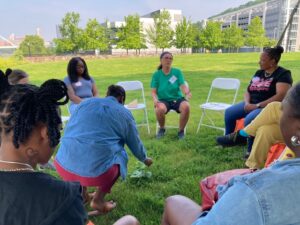
In a Pittsburgh Parks Conservancy class, “Wellness Through Nature Chilling,” participants learned about practicing mindfulness through nature. They observed leaves and were asked by session leaders Patty Himes and Kathny Hunninen how the leaves felt and smelled. Later, they sat in chairs spread throughout a field behind the CMU building to observe what they saw in its natural surroundings.

A session titled “PBS 101” featured WQED’s Cathy Cook and Gina Masciola talking about the station’s Family Corner Newsletter, summer safety, Pride Month and Juneteenth resources, and programming for families.

“We expect that the resources we’re sharing are meant to support what you’re already doing,” Masciola said. “We always say that if WQED is doing its job correctly, you’ll turn us off and do something. It’s about inspiration and exploration.”

During a session titled “Building Relationships Through Cultural Connections,” the Center of Life’s Sarah Crawshaw discussed how educators should not assume that students are comfortable with being given a nickname without them explicitly approving it – especially for students from other countries or cultures whose names might be challenging to pronounce.

“It’s important for children to feel comfortable and confident in their names,” she said, adding that students should feel comfortable in correcting educators who mispronounce their names.

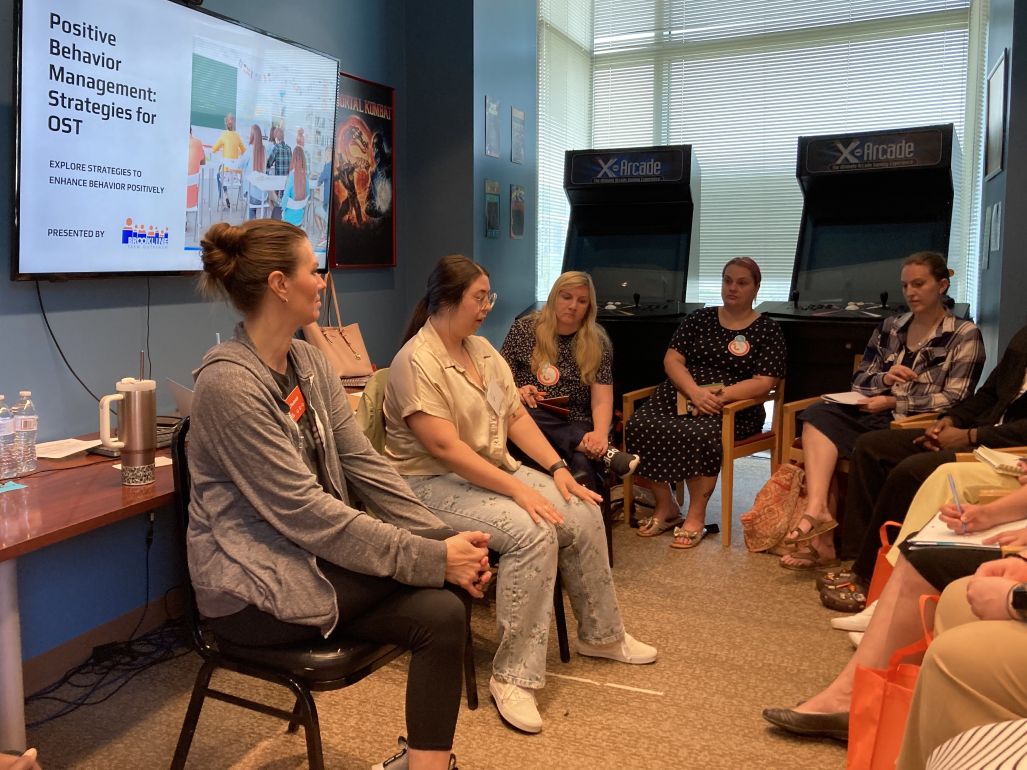
Kierra Price, of Brookline Teen Outreach, discussed the difference between traditional and positive behavior management during another session.

“Societally and culturally, we tend to lean into behavior management, which has caused more problems,” she said. “Traditional behavior management typically involves no conversation, but positive behavior management is about fostering an environment for conversation. If we can build a stronger relationship with a child, we can meet their needs much better and provide a better redirection for them.”

In a session on mindfulness for co-regulation, Awaken Pittsburgh’s Shannon Jenkins explained the Autonomic Ladder, which argues that the nervous system produces three elementary states – ventral vagal (a feeling of safety), sympathetic (fight-or-flight), and dorsal vagal (shutdown). She cited an example of a teacher mistaking children whispering after a test for cheating and ripping up their papers, which led to the students being in the dorsal vagal state.

Participants discussed how their bodies react when they feel angry, happy, or nervous. They took part in an activity in which they rubbed their palms together vigorously, raised their arms, and breathed in and out. Attendees said they noticed a cool tingling and a sense of release.

In the “Regulate & Recharge” session, Open Up’s Tessa Karel said that her organization’s mission is to find ways to remove barriers – whether financial or the ability to feel comfortable in a space – to help people improve wellness. The session focused on mindfulness techniques, including one in which participants stood in a circle and passed an invisible energy ball.

Afternoon Sessions

During the afternoon, UnConference attendees were able to tour four activity stations in the Entertainment Technology Center – The Cavern, The Cave, The Green Screen Room, and the CMU Brick Club, where participants learned about LEGO play methodology to help young people with social-emotional development.

Elsewhere, the Mentoring Partnership led an Everyday Mentoring Training session that focused on such tenets as speaking and listening from the heart, honoring privacy and remaining present, speaking and listening with respect, and protecting one’s community in regard to early childhood education. They said that everyday mentoring focuses on expressing care, challenging growth, providing support, sharing power, and expanding possibilities. 

“Be mindful of how to respect young people,” said Sophia Duck, The Mentoring Partnership’s training and engagement manager. “The category of sharing power makes young people feel seen and heard – you’re saying, ‘I value you.’”
Allegheny County Leaders Hold Roundtable to Address Child Care Teacher Staffing Crisis

News

Allegheny County Leaders Hold Roundtable to Address Child Care Teacher Staffing Crisis

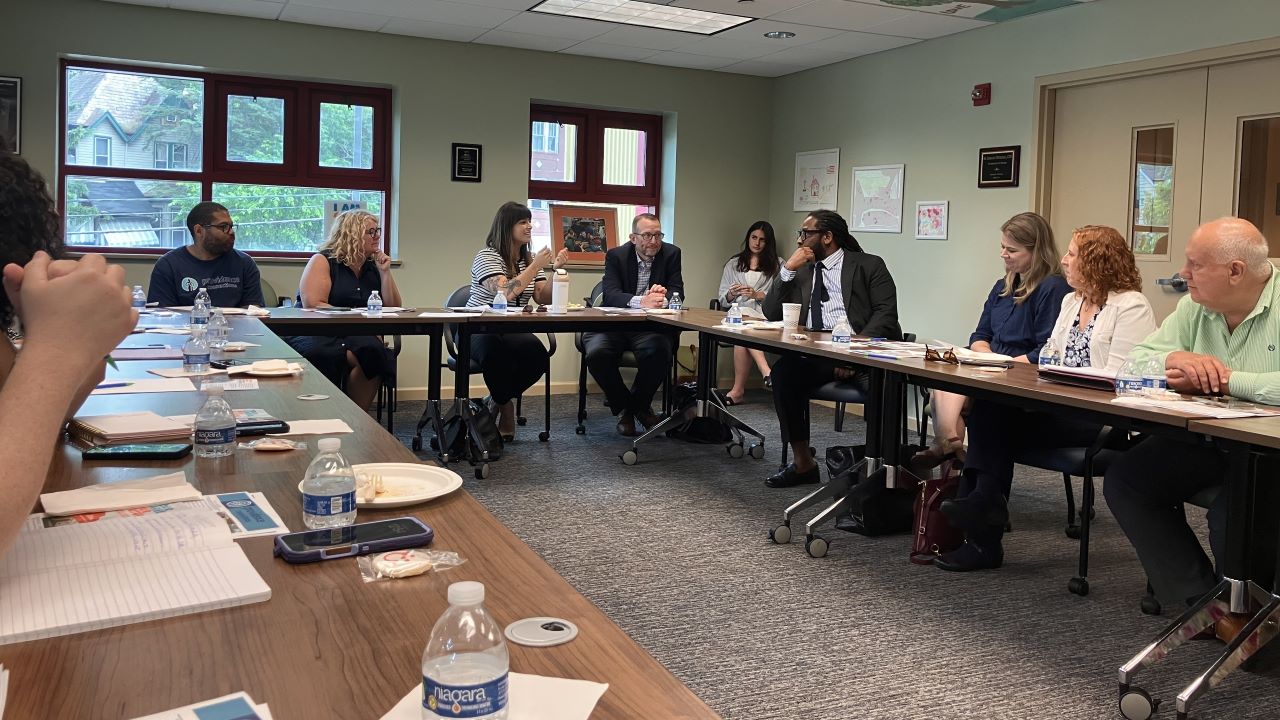
Allegheny County Executive Sara Innamorato joined Trying Together, the Allegheny Conference, state legislators, and child care providers Thursday for a roundtable to discuss new state and local survey data showing how a worsening child care teacher shortage – driven by low wages – is closing child care classrooms and causing parents to struggle to find the care they need to be able to work.

Learn More

During the roundtable at Providence Connections, results from a September Start Strong PA survey were shared to demonstrate how the staffing crisis is affecting programs in Allegheny County and across the state.

“Of the 118 providers that participated in the survey, 89% reported staffing shortages,” Innamorato said of the Allegheny County providers. “Those programs have 373 unfilled teaching positions, and if those positions were filled, they could serve an additional 3,000 children.”

A total of 1,140 Pennsylvania child care providers took the survey, of which 92% reported difficulties in recruiting staff and 85% said they struggled with teacher shortages. The shortages, which are leaving more than 3,000 unfilled positions statewide, could serve an additional 25,320 children if programs could recruit and retain the staff they need. The numbers represent only 17% of the total open registered programs in the state.

Leslie White, director of early childhood and youth programs for Providence Connections, said low wages are preventing programs from finding qualified early childhood educators.

“They are doing some of the most important work in our society – nurturing the next generation. But the reality is that many teachers can find other jobs that require far less specialized skills and pay more an hour, often with benefits,” she said. “I’ve been doing this work for nearly 40 years and fighting for better pay. The time is now to invest in the child care teaching workforce.” 

During the event, Matt Brown, an early educator at Providence and participant in the Your Career, Our Future campaign, shared his passion for teaching young children and why more qualified educators matter for the field. The initiative shares the experiences of current early educators and the families they serve in the hopes that more people will answer the call to become early educators.

Speakers said the foundational role child care plays is a critical part of the state’s economy and the bipartisan support that it has garnered to date.

“The report shows this is not just an inconvenience for working parents – this is a major economic issue that affects every business, every community, and every family in Pennsylvania,” Trying Together Public Policy Director Emily Neff said. “It is no surprise that this impact is understood by Pennsylvanians and, as such, they want lawmakers to prioritize early learning in the budget.”

Majestic Lane, chief opportunity officer for the Allegheny Conference, noted that the staffing crisis is a detriment to the economy, citing a recent economic analysis conducted by the Conference citing child care as one of the top barriers for employment in the region. 

“Child care is vital to the future of our economy and the quality of life in our region,” Lane said. “When families don’t have the resources they need and their ability to work is severely diminished, it has a measurable economic impact on our communities and our commonwealth.”

At the press conference, participants encouraged state lawmakers to prioritize early learning in the 2025-26 budget by including Gov. Josh Shapiro’s proposal to invest $55 million in a new and recurring Child Care and Recruitment and Retention line item to grant licensed child care providers participating in the child care subsidy program an additional $1,000 per educator.

“We’ve heard the problem, we’ve heard the solution, and we know the cost of inaction,” Trying Together Executive Director Cara Ciminillo said. “To grow our economy and support working families, we must invest in child care.”

State Reps. Lindsay Powell (D-21st District) and La’Tasha Mayes (D-24th District) and representatives from other state legislators attended the press conference and expressed their support for the investment in the child care workforce.

Trying Together Exec Director Discusses Your Career, Our Future on Yinz Are Good Podcast

News

June 4, 2025

Trying Together Exec Director Discusses Your Career, Our Future on Yinz Are Good Podcast

Trying Together’s executive director discussed the Your Career, Our Future campaign alongside the Early Excellence Project on Yinz are Good’s latest podcast.

Learn More

Cara Ciminillo, Trying Together’s executive director, joined Dr. DaVonna Shannon, director of research and impact for the Early Excellence Project, to discuss the initiative with Yinz are Good host Tressa Glover. The Early Excellence Project champions Black and Brown child care providers by fostering equality, equity, and accessibility in early childhood education.

Ciminillo and Shannon discussed how the Your Career, Our Future campaign has collected stories from early educators and families in the Pittsburgh region with the intention that their shared experiences will inspire more people to answer the call to become early educators.

Making Educators the Centerpiece

The campaign centers around 15 educators and parents, who relay their positive experiences with the early childhood education field. Ciminillo cited several stories from the campaign. One educator entered the the profession at a young age and rose from being a classroom aide to an executive director. Another was a stay-at-home father who become a classroom educator due to his interest in understanding how his child was developing.

“We’re always trying to center the educator,” Ciminillo said. “They are exemplars of people coming into the field. We ask how we can help others to see themselves in these stories to draw other people to the field. You need to help people see what opportunities exist, so making provider stories the centerpiece is important.”

A Need for Investment

Ciminillo and Shannon said the campaign aims to combat an ongoing early educator shortage that has resulted in repercussions for businesses, the economy, and local communities.

“One of the pain points that we’ve heard frequently – it predated COVID and was exacerbated after COVID – is that child care programs are struggling with staffing,” Ciminillo said. “We are a field where wages are suppressed and the reason why is that families can’t pay more. Child care is expensive and it’s a regulated system; it’s based on a child-to-staff ratio. The public system has not invested enough to alleviate that problem.”

Ciminillo said that this lack of investment in early childhood education has resulted in low wages for teachers and, in turn, teachers leaving the profession as well as challenges in recruiting and retaining them.

“What happens is that providers subsidize (a lack of funding) with their own wages,” she said. “As a result, you’re not getting as much interest in going into the field as other fields that are higher income-generating.”

Ciminillo noted that many early childhood educators were making just over $9 per hour prior to COVID-19, but are now earning an average $15. However, she said wages will need to continue to rise due to the profession’s often challenging nature. She said the job’s primary focus is “brain building.”

Shannon added that part of the Your Career, Our Future campaign involves letting families know that early childhood education is not “babysitting.”

“Children are developing in these early childhood programs, which are very high-quality,” she said. “The message to employers is: If you don’t know how to invest in early childhood education, you will lose staff. People won’t be able to work if they can’t afford child care.”

To listen to the entire interview, “Episode 168: Trying Together & Early Excellence Project’s Your Career, Our Future Campaign,” visit the Yinz are Good podcast’s website.

Westmoreland County Child Care Roundtable Discusses Impact of Child Care Teacher Shortage on Employers

News

May 30, 2025

Westmoreland County Child Care Roundtable Discusses Impact of Child Care Teacher Shortage on Employers

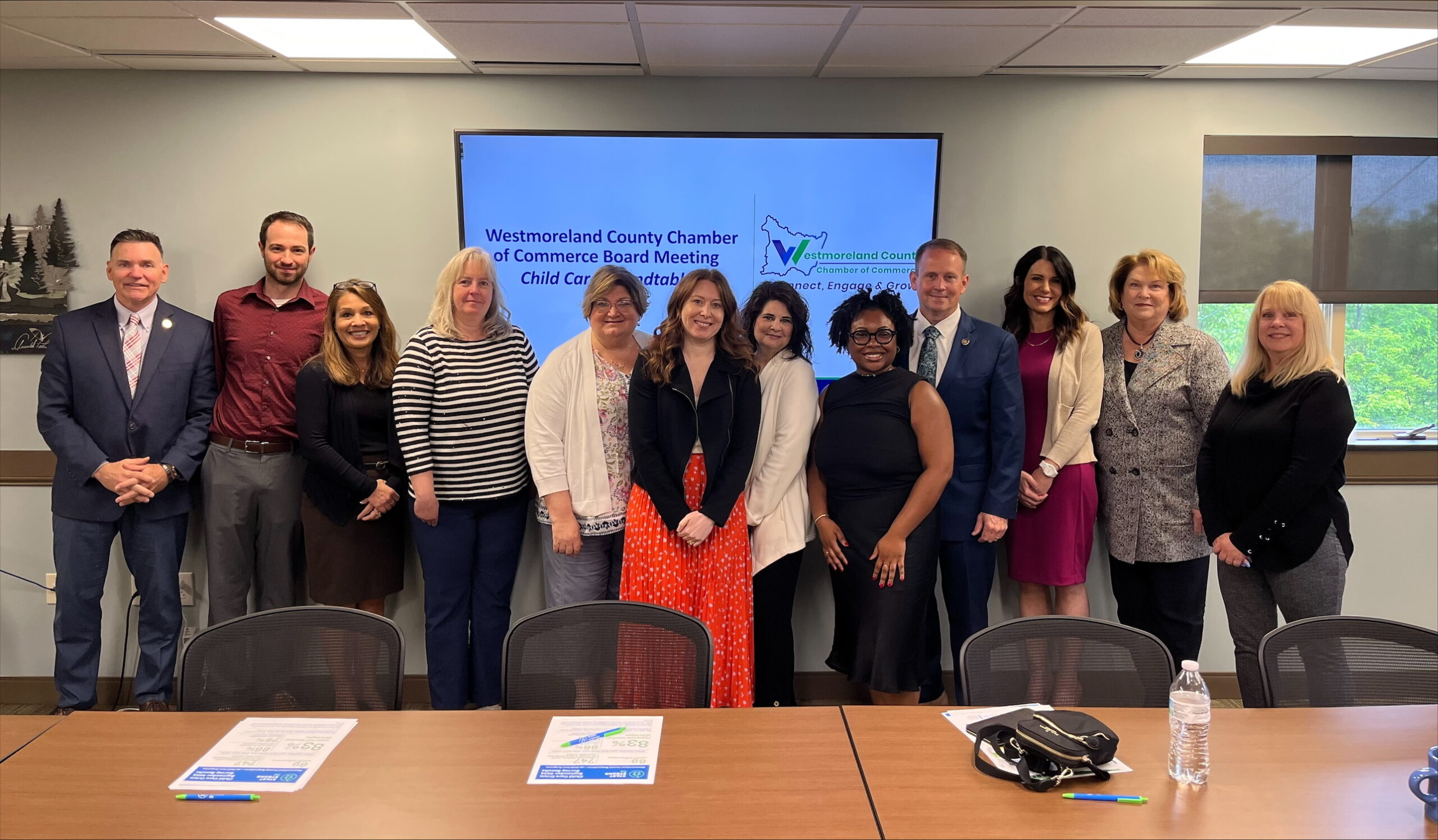
Business, nonprofit, and community leaders gathered Thursday at the Westmoreland County Chamber of Commerce to address a child care teacher shortage that is affecting both the economy and families across the state and called for state investments in teacher recruitment and retention efforts.

Calls for Recruitment and Retention Funding

Trying Together joined the chamber of commerce, local advocates, and representatives from state Sen. Kim Ward’s (R-39th District) office to highlight the results of new state and local surveys that reveal how the teacher shortage – driven by unlivable wages – is forcing child care classrooms to close and leaving working families scrambling to find care.

“Today, we are talking about the child care staffing crisis, a challenge that has reached critical levels and is affecting employers, workers, and families alike,” said Dan DeBone, president and CEO of the chamber of commerce. 

The Westmoreland County Chamber of Commerce has joined more than 70 state chambers of commerce and economic development organizations to urge the General Assembly to work across the aisle to allocate funding for child care teacher recruitment and retention.

Emily Neff, Trying Together’s director of public policy, said that 83% of the 29 Westmoreland County providers that participated in a September 2024 survey conducted by the Start Strong PA Campaign reported staffing shortages, while 86% reported challenges in recruiting teachers.

“Those programs have 69 unfilled teaching positions, and if those positions were filled, they could serve an additional 747 children in Westmoreland County,” Neff said.

One employer shared that she is trying to help a staff member who is a new mother find child care so she can return to work and fears she might lose the staffer due to the challenges in finding child care. Another employer said that child care is a barrier to effectively covering shift work and has had to change the schedule to meet the needs of employees who cannot find child care.

Of the 1,140 child care providers who took the survey statewide, 92% reported recruitment challenges and 85% said they were struggling with teacher shortages that are leaving more than 3,000 positions unfilled statewide. A total of 25,320 additional children could be served if those positions were filled.

Teacher Shortage Driven by Low Wages

Eva Wood, executive director of Ligonier Valley Learning Center, said that low wages is the primary reason why it is challenging to retain and recruit new teachers.

“The wages for child care teachers are so low that they fail to meet the cost of living in every single county in Pennsylvania,” Wood said. “They are doing some of the most important work in our society – nurturing the next generation. But the reality is that many teachers can find other jobs that require far less specialized skills and pay more an hour, often with benefits. Our Ligonier location had to close the infant and toddler child care program and the Latrobe location just lost six teachers who are moving on to higher paying jobs, some outside of the field.”

The event also spotlighted the “A Day in the Life” project, a partnership between Trying Together, Start Strong PA, and Pre-K for PA. The project shares photos and stories to help the public and lawmakers gain a deeper understanding of the realities facing children, families, and early childhood educators in Pennsylvania. 

Speakers during the press conference also highlighted a March poll conducted by Susquehanna Polling and Research that found that 98% of voters agreed that early childhood education plays an important role in what it takes to lead a healthy and productive life. The poll also found that 83% of respondents supported increasing state funding for child care teacher recruitment and retention.

“New polling data from a March 2025 statewide poll showed overwhelming Pennsylvania voter support for early childhood care and education programs and increased state funding to strengthen and grow these services,” said Hailee B. Roye, Trying Together’s policy and practice manager.

Looking to Take Action? 

Sign the petition to tell the PA General Assembly to prioritize child care in the final 2025-2026 PA budget!

Growing Together | Preparing the Classroom Environment to Support Social-Emotional Regulation

News

May 29, 2025

Growing Together | Preparing the Classroom Environment to Support Social-Emotional Regulation

Join Trying Together virtually every third Wednesday of the month for professional development focused on frequently requested topics relevant to early childhood educators. The July 16 session is focused on Preparing the Classroom Environment to Support Social-Emotional Regulation

Participants can choose to attend any or all of the mini-sessions and registration is highly recommended. However, participants can access any session using the Zoom link.

Click here to register


The other sessions in the series include:

  • August 20: Resilience in the Classroom: What to Do When Things Fall Apart 
  • September 17: Supporting Immigrant and Refugee Families
  • October 15: From Conflict to Connection: Better Collaboration with Collages
  • November 19, 2025: Career Pathways in Early Childhood
  • December 17, 2025: Introducing the Early Intervention Toolkit
  • January 21, 2026: Reframing Children’s “Challenging” Behaviors
  • February 18, 2026: Building and Maintaining Positive Relationships with Parents
  • March 18, 2026: Utilizing Your ELRC Quality Coach: What is Their Role  and How Can They Support You?
  • April 15, 2026 Aligning Curriculum With Daily Practice
  • May 20, 2026: The ELPES (Early Learning Program Engagement Specialists) Team: Who Are They and How Can They Support Providers?
  • June 17, 2026 Child Development: Expectations vs. Reality 
  • July 15, 2026 Navigating Public Policy and Systems

Each session runs from 6:30 p.m. to 7:30 p.m. on the third Wednesday of the month.

Growing Together | Resilience in the Classroom: What to Do When Things Fall Apart

News

Growing Together | Resilience in the Classroom: What to Do When Things Fall Apart

Join Trying Together virtually every third Wednesday of the month for professional development focused on frequently requested topics relevant to early childhood educators. The August 20 session is focused on Resilience in the Classroom: What to Do When Things Fall Apart.

Participants can choose to attend any or all of the mini-sessions and registration is highly recommended. However, participants can access any session using the Zoom link.

Click here to register


Upcoming sessions in the series include:

  • September 17: Supporting Immigrant and Refugee Families
  • October 15: From Conflict to Connection: Better Collaboration with Collages
  • November 19, 2025: Career Pathways in Early Childhood
  • December 17, 2025: Introducing the Early Intervention Toolkit
  • January 21, 2026: Reframing Children’s “Challenging” Behaviors
  • February 18, 2026: Building and Maintaining Positive Relationships with Parents
  • March 18, 2026: Utilizing Your ELRC Quality Coach: What is Their Role  and How Can They Support You?
  • April 15, 2026 Aligning Curriculum With Daily Practice
  • May 20, 2026: The ELPES (Early Learning Program Engagement Specialists) Team: Who Are They and How Can They Support Providers?
  • June 17, 2026 Child Development: Expectations vs. Reality 
  • July 15, 2026 Navigating Public Policy and Systems

Each session runs from 6:30 p.m. to 7:30 p.m. on the third Wednesday of the month.

Growing Together: Supporting Immigrant and Refugee Families

News

Growing Together: Supporting Immigrant and Refugee Families

Join Trying Together virtually every third Wednesday of the month for professional development focused on frequently requested topics relevant to early childhood educators. The topic for September is Supporting Immigrant and Refugee Families. 

Participants can choose to attend any or all of the mini-sessions and registration is highly recommended. However, participants can access any session using the Zoom link.

Click here to register


Upcoming sessions in the series include:

  • October 15: From Conflict to Connection: Better Collaboration with Collages
  • November 19, 2025: Career Pathways in Early Childhood
  • December 17, 2025: Introducing the Early Intervention Toolkit
  • January 21, 2026: Reframing Children’s “Challenging” Behaviors
  • February 18, 2026: Building and Maintaining Positive Relationships with Parents
  • March 18, 2026: Utilizing Your ELRC Quality Coach: What is Their Role  and How Can They Support You?
  • April 15, 2026 Aligning Curriculum With Daily Practice
  • May 20, 2026: The ELPES (Early Learning Program Engagement Specialists) Team: Who Are They and How Can They Support Providers?
  • June 17, 2026 Child Development: Expectations vs. Reality 
  • July 15, 2026 Navigating Public Policy and Systems

Each session runs from 6:30 p.m. to 7:30 p.m. on the third Wednesday of the month.

Growing Together | From Conflict to Connection – Better Collaboration with Colleagues

News

Growing Together | From Conflict to Connection – Better Collaboration with Colleagues

Join Trying Together virtually every third Wednesday of the month for professional development focused on frequently requested topics relevant to early childhood educators. The topic for October is From Conflict to Connection: Better Collaboration with Colleagues

Participants can choose to attend any or all of the mini-sessions and registration is highly recommended. However, participants can access any session using the Zoom link.

Click here to register


Professional development sessions in the series include:

  • November 19, 2025: Career Pathways in Early Childhood
  • December 17, 2025: Introducing the Early Intervention Toolkit
  • January 21, 2026: Reframing Children’s “Challenging” Behaviors
  • February 18, 2026: Building and Maintaining Positive Relationships with Parents
  • March 18, 2026: Utilizing Your ELRC Quality Coach: What is Their Role  and How Can They Support You?
  • April 15, 2026 Aligning Curriculum With Daily Practice
  • May 20, 2026: The ELPES (Early Learning Program Engagement Specialists) Team: Who Are They and How Can They Support Providers?
  • June 17, 2026 Child Development: Expectations vs. Reality 
  • July 15, 2026 Navigating Public Policy and Systems

Each session runs from 6:30 p.m. to 7:30 p.m. on the third Wednesday of the month.

Growing Together | Career Pathways in Early Childhood

News

Growing Together | Career Pathways in Early Childhood

Join Trying Together virtually every third Wednesday of the month for a free professional development focused on frequently requested topics relevant to early childhood educators. The topic for November is Career Pathways in Early Childhood.

Participants can choose to attend any or all of the mini-sessions and registration is highly recommended. However, participants can access any session using the Zoom link.

Attendees will be awarded one hour of PQAS each month and the topics will be shared in advance.

Click here to register


Upcoming sessions in the series include:

  • December 17, 2025: Introducing the Early Intervention Toolkit
  • January 21, 2026: Reframing Children’s “Challenging” Behaviors
  • February 18, 2026: Building and Maintaining Positive Relationships with Parents
  • March 18, 2026: Utilizing Your ELRC Quality Coach: What is Their Role  and How Can They Support You?
  • April 15, 2026 Aligning Curriculum With Daily Practice
  • May 20, 2026: The ELPES (Early Learning Program Engagement Specialists) Team: Who Are They and How Can They Support Providers?
  • June 17, 2026 Child Development: Expectations vs. Reality 
  • July 15, 2026 Navigating Public Policy and Systems

Each session runs from 6:30 p.m. to 7:30 p.m. on the third Wednesday of the month.

Growing Together | Introducing the Early Intervention Toolkit

News

Growing Together | Introducing the Early Intervention Toolkit

Join Trying Together virtually every third Wednesday of the month for professional development focused on frequently requested topics relevant to early childhood educators. The topic for December is Introducing the Early Intervention Toolkit

Participants can choose to attend any or all of the mini-sessions and registration is highly recommended. However, participants can access any session using the Zoom link.

Click here to register


Upcoming sessions in the series include:

  • January 21, 2026: Reframing Children’s “Challenging” Behaviors
  • February 18, 2026: Building and Maintaining Positive Relationships with Parents
  • March 18, 2026: Utilizing Your ELRC Quality Coach: What is Their Role  and How Can They Support You?
  • April 15, 2026 Aligning Curriculum With Daily Practice
  • May 20, 2026: The ELPES (Early Learning Program Engagement Specialists) Team: Who Are They and How Can They Support Providers?
  • June 17, 2026 Child Development: Expectations vs. Reality 
  • July 15, 2026 Navigating Public Policy and Systems

Each session runs from 6:30 p.m. to 7:30 p.m. on the third Wednesday of the month.