News

September 13, 2021

Celebrating National Kinship Care Month

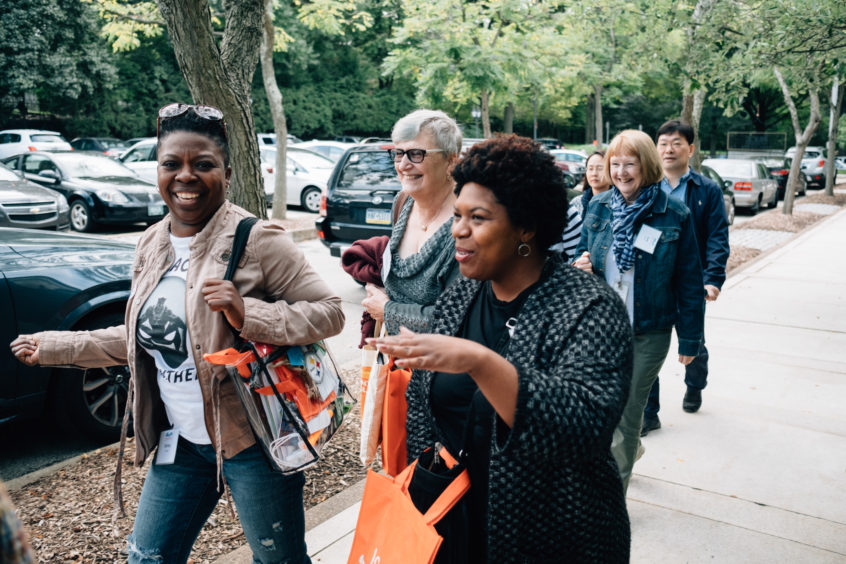
Celebrated in September, National Kinship Care Month recognizes and celebrates the grandparents, aunts, uncles, relatives, and non-relatives who care for children when they cannot safely remain with their parents.

National Kinship Care Month

When children are unable to live with their parents, it is critical that they live with someone they know and trust. This helps to create a sense of security, community, and cultural identity and can reduce the trauma of being removed from their home. Kinship care refers to circumstances where grandparents, extended family members, and other adults with family-like relationships with children take on the primary caregiving role when biological parents are unable to do so.

Unfortunately, not all children who are removed from their parents have an opportunity to live with their kin. National Kinship Care Month is a reminder of the important work of keeping children connected to their kin. Additionally, it is a great time to thank the caregivers who are supporting children both inside and outside of the child welfare system.

2020 Statistics

In 2020:

    • more than 68,000 children were informally being raised by kin without a parent present,
    • over 6,000 children in Pennsylvania were being raised by kin formally through the child welfare system, and
    • for every one child raised by kin through the foster care system, it is projected that there are 10 children being raised informally.

The KinConnector Program

Pennsylvania’s KinConnector program provides valuable resources to kind who are caring for children informally or formally through the child welfare system. Every Wednesday in September, the program is hosting virtual information forums on a variety of topics, including:

    • financial assistance,
    • legal rights,
    • education and child care,
    • mental health,
    • and more.

These events are open to the public. To register and learn more, visit the event page.

More Information

For more information, visit the KinConnector website. For more news, visit our News page.
News

Pittsburgh Celebrates Welcoming Week 2021

From September 10 – 19, you are invited to celebrate the rich cultural fabric of Pittsburgh through Welcoming Week 2021. Events will be held to bring together immigrant and U.S.-born neighbors.

What is Welcoming Week 2021?

On September 10, Mayor William Peduto’s Welcoming Pittsburgh initiative kicked off Welcoming 2021, a national celebration recognized locally that brings together immigrant and U.S.-born neighbors for community-based events to promote pride in the rich cultural fabric of Pittsburgh.

Join the Celebration

Join the celebrations by participating in the following events!

Watch the Welcome, Neighbor Video Series

Daily “Welcome, Neighbor” videos are available on Welcoming Pittsburgh’s Facebook, Twitter, and Instagram. Stories from local Pittsburghers will be posted each day at noon from September 10 – 19.

Watch a New Play

The Rivers Don’t Know is a new theatrical play at City Theatre that tells the story of immigrants and refugees in Pittsburgh from the 1940s to the present day. It runs from September 10 – 18, 2021. Each performance will feature an Artisan Marketplace with food, crafts, merchandise, art, and food.

Other Events in Pittsburgh

Additional Pittsburgh Welcoming Week events include:

    • Universal Representation Roundtable
      September 13, 2021  |  5:00 p.m.  |  Live on Welcoming Pittsburgh’s Facebook

      Learn how community advocates across Pennsylvania have worked to establish a program for the legal defense of people facing deportation and how Mayor Peduto and Mayor Jim Kenney of Philadelphia have supported the work.

    • Naturalization Ceremony
      September 16, 2021  |  10:00 a.m.

      Join the City of Pittsburgh for a public event to celebrate the naturalization of new American citizens!

    • Special Announcement
      September 17, 2021  |  12:00 p.m.  |  Live on Welcoming Pittsburgh’s Facebook

      Join Mayor Peduto as he makes a special announcement about Pittsburgh’s welcoming work.

More Information

Welcoming Pittsburgh is guided by the Welcoming Pittsburgh Roadmap, a comprehensive citywide plan for immigrant, refugee, and New American advocacy. To learn more, visit the Welcoming Pittsburgh website. For more news, visit our news web page.

News

September 10, 2021

Free Family-Friendly Events in Pittsburgh

Now through October 10, 2021, family-friendly events will be hosted for free throughout Pittsburgh as a part of RADical Days 2021.

Free Family-Friendly Events

Hosted from September 9 through October 10, 2021, RADical Days features free admission, tours, performances, and family activities offered by organizations and attractions that are funded by the Allegheny Regional Asset District (RAD).

September Events

Here are some of the events hosted in September:

    • Free admission at the Carnegie Science Center.
      September 12, 10 a.m. – 5 p.m.  |  Get Timed Tickets
    • Free admission at Phipps Conservatory & Botanical Gardens.
      September 14, 9:30 a.m. – 8 p.m.  |  Make a Reservation
    • STEM-based activities at Sto-Rox Public Library.
      September 15, 12 – 5 p.m.
    • Free tours and activities at Andrew Carnegie Free Library & Music Hall.
      September 18, 10 a.m. – 5 p.m.  |  Call 412.565.6000 to reserve a time.
    • Pirate & Princess Party at South Park Theatre.
      September 19, 1 – 5 p.m.
    • Free tours of Heinz Field.
      September 21, 11 a.m. – 2 p.m.  |  First-come, first-served. Enter at Gate B.
    • Musical performances and vendors at Pittsburgh Musical Theater.
      September 25, 2:30 – 4 p.m.
    • Free choral classes at Pittsburgh Girls Choir.
      September 28, 4:30 – 5:30 p.m. (1st – 3rd graders) or 6 – 7:30 p.m. (4th – 8th graders)
    • Free events on the Northside by Northside Corridor.
      September 30, 11 a.m. – 6 p.m.

To learn more and view all events, download the full schedule.

More Information

For more information, visit the RADical Days website. For more news, visit our news page or subscribe to our digital newsletters.

News

September 8, 2021

City Council Considers Assured Cash Experiment Initiative

The Pittsburgh City Council will consider an Assured Cash Experiment initiative that seeks to combat poverty and inequality through unrestricted monthly cash transfers.

Inequality in Pittsburgh

According to a 2019 Pittsburgh’s Inequality Across Gender and Race report, Black women and children in Pittsburgh are more likely to live in poverty than in comparable cities. Pittsburgh’s Black women are five times as likely (and twice as likely as white women) to live in poverty.

In response to this, the Office of Mayor Peduto designed a guaranteed basic income policy to address the poverty inequitably faced by Black women in Pittsburgh communities.

What is the Assured Cash Experiment Initiative?

Assured Cash Experiment PGH (AcePGH) is a guaranteed basic income pilot that seeks to combat poverty and inequity in the City of Pittsburgh. The initiative would provide an unrestricted $500 monthly cash transfer to 200 people in the city. 100 of those participants will be Black women.

How would participants be selected?

The 200 participants must be 18 or older and will be recruited in two groups:

    • 100 Black women who live in the City of Pittsburgh and earn at or below 50% of the area median income who participate in Pittsburgh Financial Empowerment Centers, an initiative of Mayor Peduto’s Office of Equity.
    • 100 City of Pittsburgh residents randomly selected from five disadvantaged zip codes citywide.

What will participants receive?

Participants would receive a monthly payment of $500 on a debit card to spend on what they or their families need for 24 months. Findings from other pilots show participants most frequently use cash to meet their basic needs like food, merchandise/wholesale, and utilities.

How would the program be funded?

The City of Pittsburgh will join cities nationwide in utilizing relief funds from the American Rescue Plan to fund part of the program through OnePGH, a nonprofit organization that is supported by public and private investment to allow for the collaboration of local government, business, philanthropy, and nonprofits to improve the lives of all Pittsburghers.

The program will also be funded through grants from Twitter CEO Jack Dorsey and MGI.  See how other cities are defining and funding their pilot programs.

Guaranteed Basic Income in History

Guaranteed basic income was championed by Reverend Dr. Martin Luther King who said that poverty could be eradicated by providing every American a direct, guaranteed middle-class income. He argued that other programs to address poverty were less effective because, as he wrote, “they are indirect.” He continued, “Each seeks to solve poverty by first solving something else.”

Learn More

To learn more, read the full press release. For more news, visit our news page.

News

COVID-19 Prevention in Schools: Updated CDC Guidance

The Centers for Disease Control and Prevention (CDC) has updated their guidance on COVID-19 prevention in K-12 schools.

COVID-19 Prevention in Schools

On August 4, 2021, the CDC updated its guidance on COVID-19 prevention in K-12 schools to recommend universal indoor masking for all students, staff, teachers, and volunteers (regardless of vaccination status). The guidance also includes recommendations for fully vaccinated people and updated considerations for contact tracing in schools.

What does the guidance include?

In addition to the updated guidance on universal indoor masking, recommendations for fully vaccinated people, and updates to contact tracing in schools, the webpage includes information on:

    • prevention strategies to reduce the transmission of COVID-19;
    • promoting equity in learning and health;
    • creating emergency operation plans;
    • resources to support school screening testing programs; and
    • additional considerations for K-12 schools such as disability or other health care needs, visitors, recess, physical education, food services, sports, etc.

Learn More

To learn more, visit the CDC website. For more news, visit our news page or sign up to receive our digital newsletters.

News

COVID-19 Best Practices for Child Care

OCDEL has developed best practices for early learning professionals navigating COVID-19 protocols in their child care programs. The first topic: face coverings.

COVID-19 Best Practices for Child Care

To keep child care providers informed on the latest best practices for keeping children, staff, and families safe during the COVID-19 pandemic, the Pennsylvania Key created a webpage that highlights recommended best practices. As of September 8, the page includes:

    • activities that can make children feel more comfortable with wearing a face mask,
    • guidance regarding the use of face masks in early childhood education programs,
    • printable flyers in English and Spanish that you can display in your program,
    • tips on how to select, wear, clean, dry, and store face masks,
    • tip sheets that answer frequently asked questions about wearing a mask in child care settings,
    • and more.

Learn More

For more information, visit the Pennsylvania Key website. To read more news, visit our news page or sign up to receive our digital newsletters.


News

Join the Early Learning Council

The Office of Child Development and Early Learning (OCDEL) is seeking members for the Pennsylvania Early Learning Council Executive and Subcommittees.

Pennsylvania Early Learning Council

The Pennsylvania Early Learning Council is a governor-appointed council that advises the work of the OCDEL by providing feedback on current and proposed initiatives and policies.

What is the council devoted to?

The Council is devoted to identifying and recommending opportunities to the Governor and Pennsylvania State Agencies for the elimination of disparities (e.g. race/ethnicity, social class, gender), due to systemic factors that may hinder the development of young children.

What principles guide this work?

Inclusion, diversity, equity, and respect are embedded in the three principles that guide the work and recommendations made by the Early Learning Council. These core principles include:

    • A whole-child approach to education is essential to meeting the holistic and individual needs of each and every child and family.
    • Knowledgeable and responsive early care and education professionals are essential to the development of children and the support of families.
    • Building and sustaining ongoing positive relationships among children, families, early care and education professionals, and community stakeholders is essential for the growth and development of every child.

How to Apply

To apply, complete this online application by September 30, 2021. All applications must include a resume/curriculum vita and your contact information.

More Information

For questions, contact Karen Grimm-Thomas, OCDEL Director of External Relations, at c-kgrimmth@pa.gov. For more news, visit our news page or subscribe to our newsletters.

News

September 3, 2021

Support Paid Leave for All with Virtual Labor Day Parade

The Women and Girls Foundation, and the Family Care Coalition, are hosting a virtual “Paid Leave for All” selfie photo booth for Labor Day weekend. You’re invited to take a selfie; choose from several pro-worker backgrounds, frames, and stickers; and then share it on social media using the hashtags #VirtualLaborDayParade and #PaidLeaveForAll to create a virtual Labor Day parade online!

Virtual Labor Day Parade

For a second year in a row, the effects of the COVID-19 pandemic have caused many Labor Day parades and other festivities across the country to be cancelled. The Paid Leave for All virtual parade offers participants the opportunity to join together to support workers.

Why Does It Matter?

Paid family leave policy has many benefits for children and families; yet, the United States is one of the only countries in the world without a national policy. Though early care and education  is at the center of Trying Together’s policy priorities, paid family leave and child care can work together to support families and early learning providers.

The prenatal to age three period is when babies’ brains develop the fastest and when their relationships with caregivers are most essential. Allowing caregivers time to bond during at least the first six weeks is critical to a child’s healthy development.

Paid family leave and high-quality child care work in tandem to support parents’ return to the workforce after the maternity or paternity leave period. Having access to paid leave while working and having access to high-quality child care is key for maintaining a robust and diverse workforce.

How to Support and Participate

To participate, visit paidleaveforall.virtualbooth.co to take a selfie or upload your own photo. Then, personalize it with the available pro-workers digital stickers.

The virtual selfie booth will be live from September  3  to  September 8, 2021.

More Information

View the social media toolkit for post ideas. To read more news, visit Trying Together’s News page or subscribe to our newsletters.

News

September 1, 2021

Early Intervention Training Available for Free (C2P2 EI)

Applications are open for Competence and Confidence Partners in Policymaking for Families of Children in Early Intervention (C2P2 EI), a free training program that explores issues that affect children with disabilities.

Early Intervention Training

C2P2 EI is an innovative training program that participants with information, leadership training, resources, and skills related to local, state, and national issues that affect children with disabilities.

Virtual Sessions

Virtual sessions are scheduled from November 4, 2021 – February 5, 2022. Learn more.

In-Person Sessions

In-person sessions will be hosed in Harrisburg in March, April, and May 2022. Travel and child care expenses will be reimbursed. Meals are included. Overnight lodging will be available to people who travel at least 40 miles to attend. Alernative options will be available if COVID-19 restrictions occur. Learn more.

Submit an Application

To participate, you must submit an online application by October 8, 2021. Applicants will receive an email notification if they are accepted or not accepted during the week of October 25.

More Information

To learn more about C2P2 EI, contact the Institute on Disabilities at Temple University at 215.204.1356 or iod@temple.edu. For more news, visit our news page.

News

Celebrate National Voter Registration Day

Celebrate National Voter Registration Day on September 28 by encouraging voter registration in your community, hosting an in-person or virtual event, and more!

What is National Voter Registration Day?

Celebrated every year on the fourth Tuesday of September, National Voter Registration Day is a nonpartisan civic holiday that celebrates our democracy by encouraging new voters to register and existing voters to check their registration status. Americans could be purged from the voter rolls for a number of simple and easily avoidable reasons. The holiday:

    • encourages voter registration and updates to registration information,
    • raises awareness of voter registration options,
    • elevates reliable sources of information on voting,
    • brings in new, diverse partners and individuals to participate in the democratic process.

Why Does It Matter?

    • Over four million Americans will turn 18 and be eligible to vote in 2021.
    • As many as 30 million Americans will move and need to update their voter registration.
    • An average of two million Americans will get married, and many of them will need to update their voter registration after changing their names.
    • Worst of all, millions of millions of Americans could be purged from the voter rolls for any number of simple and easily avoidable reasons.

What You Can Do

Join your community in celebrating National Voter Registration Day by:

More Information

To learn more, visit nationalvoterregistrationday.org. For more news, visit our news page.