News

September 11, 2025

Pilot Program Provides Direct Cash Payments to Home-Based Providers

In partnership with Home Grown and the United Way of Southwestern Pennsylvania, Trying Together is participating in a pilot program to provide direct cash payments to select home-based providers.

About the Program

The Thriving Providers Project (TPP) – a national initiative spearheaded by Home Grown – seeks to demonstrate how direct cash payments to providers will have positive results for relatives who provide child care to young children. The goal is to reform child care payment policies and influence future decisions around compensation for home-based child care providers. TPP provides pre-selected caregivers with a direct cash payment of $500 monthly, understanding that the support to providers reduces financial stress and ultimately improves the early learning experiences of the children and families they serve.

“I can afford to take the children on field trips,” shared Relative Provider Tywanda Powell. “I bought them school supplies and better toys. I was able to just do extra for the children.” 

Program Participants

Communities with limited access to resources such as affordable child care, transportation and healthcare, were prioritized to ensure support reached families with the greatest need.

Within these neighborhoods, participant selection emphasized caregivers whose roles have had a significant impact on child and family well-being. 

  • Grandparents and great-grandparents raising grandchildren were prioritized for the stability, intergenerational connection, and nurturing environment they provide, often while managing limited financial resources. 
  • Caregivers of children under age five were included given the critical importance of the early years for child development, when consistent care and support have the greatest long-term benefits. 
  • Caregivers providing care during nontraditional hours were also prioritized, as they help families balance essential work responsibilities with the challenge of securing reliable care outside of standard availability.

By centering these caregiving strengths, the program directs resources to families whose dedication and resilience most directly influences children’s growth and stability, ensuring funds provide both immediate relief and long-term community benefit.

“The program not only supports caregivers who are often underrecognized and underpaid but also improves access to reliable, nurturing care for families, particularly in underserved communities,” explains Bliss Letang, director of equity initiatives at Trying Together. 

“Additionally, TPP generates valuable evidence on the impact of direct cash payments, informing future policies and reforms around fair compensation for home-based providers, while fostering stronger connections between children, families, and their caregivers.”

The Thriving Providers Project’s philosophy is based on a belief that people should be trusted to make decisions for themselves. Drawing on learning from guaranteed income initiatives around the nation and best practices in early childhood education, the program’s mission is to support and stabilize caregivers and, in the process, improve the availability and quality of care for children and families. The transfers enable providers to make decisions that are best for the children and families they serve.

Home-based Child Care Statistics

Home-based child care providers are the largest population of caregivers serving the largest number of children, ages five and below. A total of 30% of infants and toddlers attend home-based child care as their primary care arrangement, compared to just 12% in centers, according to the program. 

However, home-based care providers receive little public support, which makes them more vulnerable to financial emergencies or crises. On average, family child care providers work 56 hours per week and earn around $29,000. About 30% of them rely on at least one other job.

For more information, see the Thriving Providers Project Fact Sheet.

News

September 10, 2025

Trying Together Celebrates Relative Care Providers at Grandparents Day Event

In recognition of National Grandparents Day, Trying Together held a celebration event to honor grandparents who provide daily child care for their grandchildren.

Learn More

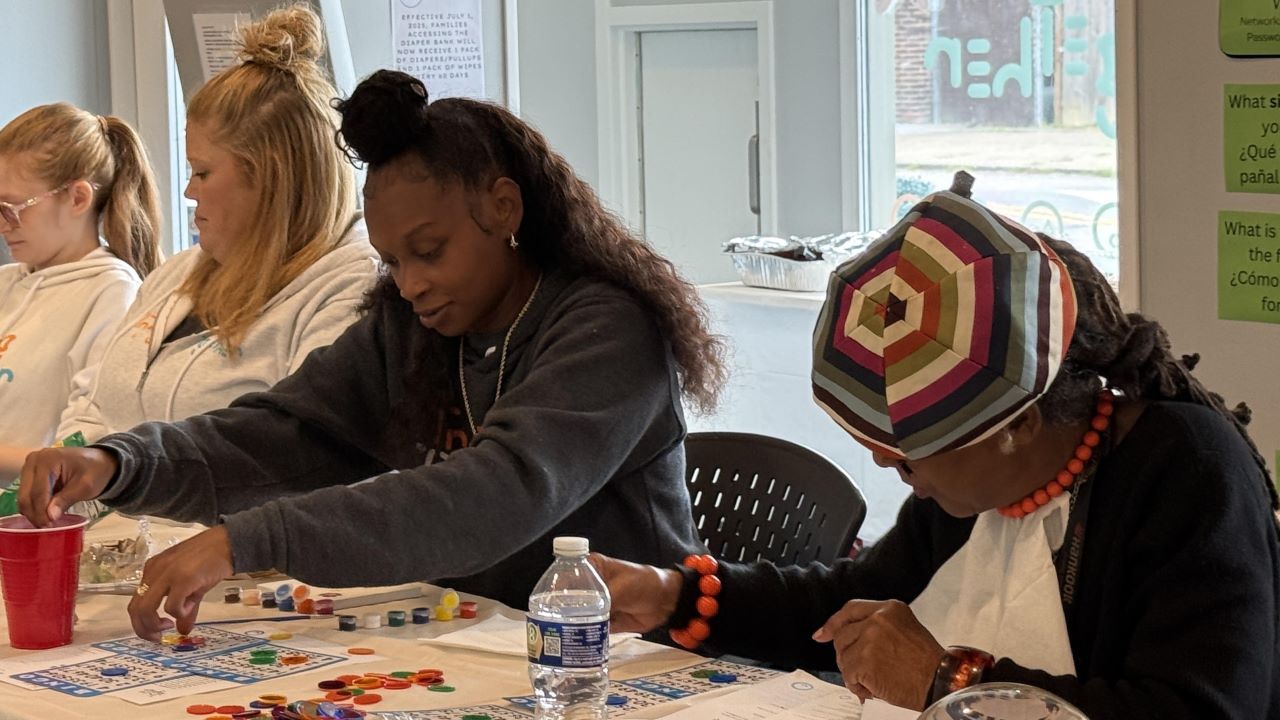
Hosted by the Homewood Early Learning Hub & Family Center on Sunday, September 7, the event included food, painting, and games. Attendees connected with one another and shared their stories. Children of all ages accompanied their grandparents and had the opportunity to participate in the activities and explore the Hub’s play areas. 

“Out of the over 450 relative care providers in Allegheny County who act as daily caregivers for young children while their parents are at work, approximately 65% are grandparents,” said Bliss Letang, director of equity initiatives at Trying Together. “This event was an opportunity to recognize the dedication of these grandparents and the impact they have on the lives of their grandchildren.”

Trying Together was a cosponsor for Home Grown’s Family, Friend, and Neighbor (FFN) Appreciation Week, which was an opportunity to celebrate the more than five million family, friend, and neighbor caregivers who look after 11.5 million children annually.

News

Child Mind Institute Offers Resources for Suicide Prevention Month

To honor Suicide Prevention Month in September, the Child Mind Institute has released a list of resources for caregivers to combat the scourge.

Learn More

Suicidal feelings or attempts in children can leave adults feeling helpless and struggling to figure out the cause of distress. But there are services and treatments available for people of all ages who are experiencing suicidal behavior.

Among the Child Mind Institute’s resources is a piece on cognitive behavioral therapy for suicide prevention (CBT-SP), which helps children and teens recognize and change the thoughts that drive suicidal behavior and learn tools to cope with painful feelings.

There are also resources on how to create a safety plan so children know what to do if such thoughts emerge as well as guidance on how to notice signs that a child might be suicidal.

Below are the Child Mind Institute’s resources:

News

September 9, 2025

2025 State of Black Pittsburgh Event to Focus on Advancing Equity and Progress

The Urban League of Greater Pittsburgh will host its 2025 State of Black Pittsburgh on Sept. 23 at The Pittsburgh Foundation.

Learn More

This year’s event will tackle such topics as advancing equity, opportunity, and progress across the region. 

The event will be hosted and moderated by Esther L. Bush, the league’s interim president and CEO. Speakers during the event will include:

  • Mayor Ed Gainey
  • Judge Kim Berkeley Clark, president judge of the Fifth Judicial District of Pennsylvania
  • Dr. Joe Trotter, professor of history and social justice at Carnegie Mellon University
  • Lt. Gov. Austin Davis 

The 2025 State of Black Pittsburgh will run from 4 p.m. to 7:30 p.m. on Tuesday, Sept. 23 at The Pittsburgh Foundation, located at 912 Fort Duquesne Blvd., 10th floor. 

For more information, call 412-227-4229 or email srking@ulpgh.org.

News

PA Promise for Children Releases List of September Books for Preschoolers

PA Promise for Children has released its list of September books for preschoolers that includes eight books across four categories.

Learn More

The list is broken down into four categories – Social Studies Thinking, Language and Literacy Skills, Science Thinking and Technology, and Mathematical Thinking and Expression.

The book list is accompanied by a downloadable Kindergarten Here I Come activity guide that features a variety of resources, learning activities, information, and play opportunities for caregivers that can be used to help their preschool-age child.

The books on this month’s list include: 

Social Studies Thinking

  • Actual Size (Steve Jenkins)
  • Say Please, Little Bear (Peter Bentley)

Language and Literacy Skills

  • It Is Night (Phyllis Rowand)
  • The Bus for Us (Suzanne Bloom)

Science Thinking and Technology

  • Put It On the List (Kristen Darbyshire)
  • Mrs. McNosh and the Giant Squash (Sarah Weeks)

Mathematical Thinking and Expression

  • One Mole Digging a Hole (Julia Donaldson and Nick Sharratt)
  • 365 Penguins (Jean-Luc Fromental and Joelle Jolivet)

News

Trying Together’s Director of Public Policy Discusses Early Childhood Education Crisis on PCN Capitol Preview

Trying Together’s director of public policy appeared this week on The PCN Capitol Preview to discuss Pennsylvania’s ongoing early childhood education staffing and funding crisis.

Learn More

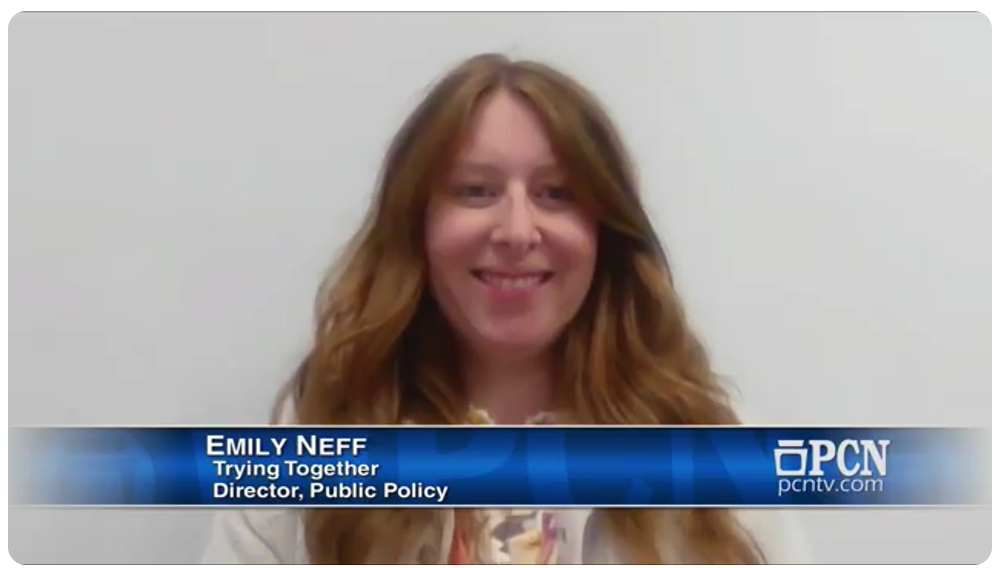
Emily Neff, Trying Together’s director of public policy, appeared on the program on Tuesday, Sept. 8 to discuss what Trying Together does to support early childhood development as well as the state’s teacher shortage and budget impasse.

“We are in a crisis,” Neff said. “The system is not working for everyone. Early childhood educators are woefully underpaid for the amazing work they do for our children. Families are paying as much for their rent or mortgage as they do for child care – and that’s if they can find it.”

Neff said many parents – including herself – are on long waiting lists to get their children into a program. Often, she added, programs have classrooms that are closed that could serve more children, but cannot due to the state’s staffing crisis. She said that one program she knows of recently closed its toddler class, while another said it would shut down if it lost another teacher. 

Neff cited Gov. Josh Shapiro’s proposed $55 million child care teacher recruitment and retention line item as an opportunity to address the state’s early education crisis.

“It’s a great opportunity for Pennsylvania to put itself on the map,” she said. “It would be a $1,000 payment to teachers, but we don’t know what’s going to happen with that right now.”

She said that the state’s budget impasse – during which the state Legislature has not passed a budget more than two months past the deadline, resulting public schools not receiving state funding that educators say is critical to keep them operating – has led some programs to lay off teachers, while parents have been left to find care elsewhere.

“We need more investments to make sure that programs have what they need, teachers are being paid better, and families have access – and it’s not costing families more than what they’ve already been paying,” Neff said.

The PCN Capitol Preview is available on YouTube.

News

PA Partnerships for Children: MMR Vaccines for Children Trending Downward in State

Pennsylvania Partnerships for Children has released a new fact sheet on kindergarten immunizations as the 2025-26 school year begins.

Learn More

The fact sheet primarily focuses on vaccinations for measles, mumps, and rubella (MMR) among Pennsylvania kindergarteners and emphasizes the importance of getting vaccinated for public health.

Data in the fact sheet focuses on MMR vaccines because of the resurgence of measles cases around the United States. However, other childhood vaccines for Pennsylvania kindergarteners – such as ones for whooping cough and polio – are also trending downward.

For the second consecutive year, the state’s MMR coverage rate for kindergarteners fell below the 95% target following the 8,000 children who were not up to date during the previous school year. Coverage rates vary by county, with 44 Pennsylvania counties below 95% and eight below 90%.

Vaccination rates have decreased, while exemptions – mostly for religious reasons – have increased. National MMR coverage is 93%, with only 11 states meeting the 95% target. 

Decreasing vaccination rates heighten the risk of outbreaks of vaccine-preventable diseases such as measles. As the 2025-26 school year begins, caregivers are encouraged to schedule wellness checkups and discuss vaccine safety with their doctors.

There are free or low-cost health insurance options for families through Medicaid, CHIP, or the state’s health insurance marketplace, Pennie. The state Department of Health offers free vaccines for uninsured children or those whose insurance does not cover immunizations through the Vaccines for Children Program.

To learn more, check out the Pennsylvania Partnerships for Children fact sheet.

News

September 8, 2025

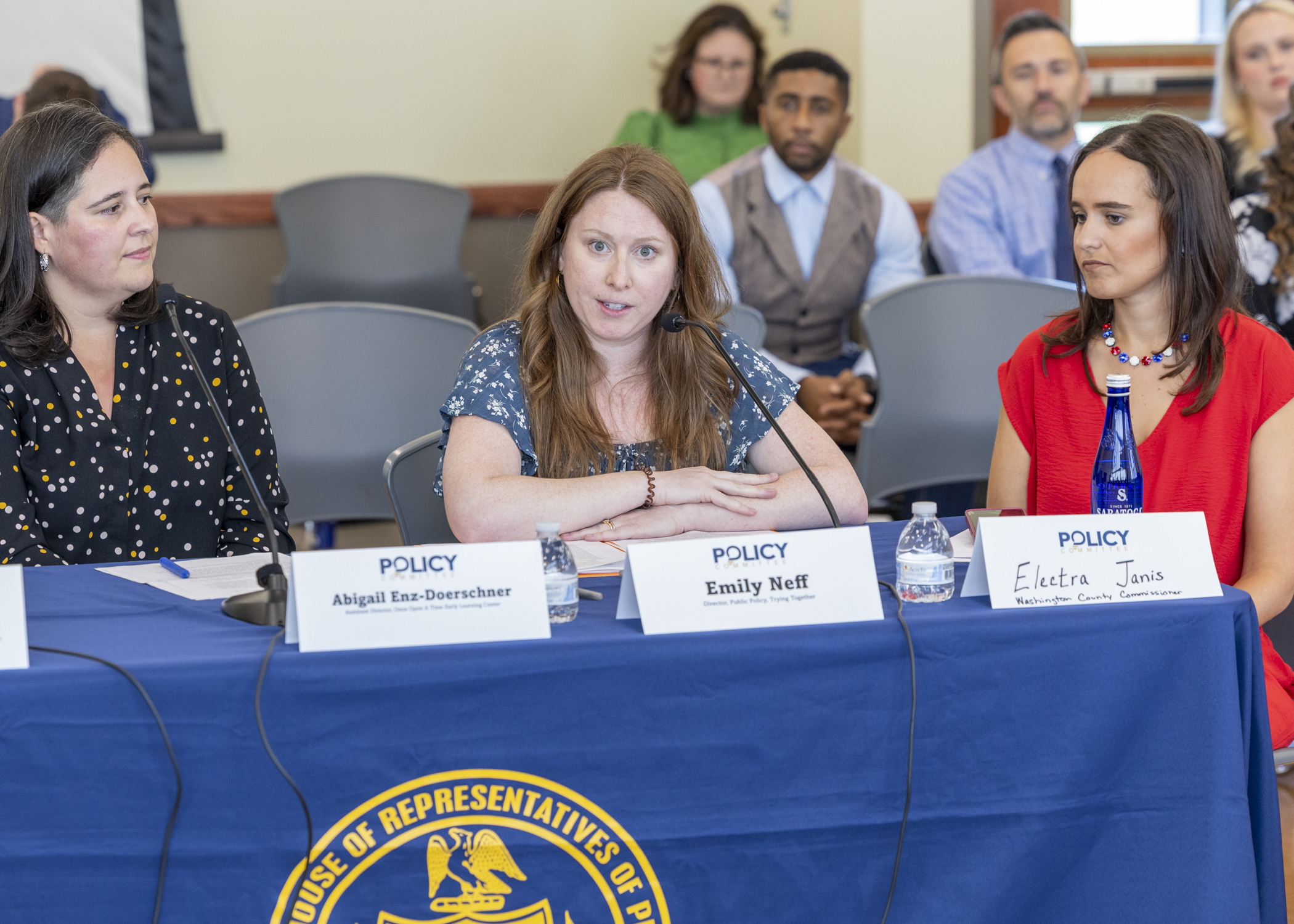
Trying Together Testifies At PA House Public Hearing on State Child Care System

Trying Together’s director of public policy testified at an August public hearing held by the state House of Representatives’ Republican Policy Committee to examine challenges facing Pennsylvania’s child care system and discuss solutions.

Learn More

Emily Neff, Trying Together’s director of public policy, was among those who testified at the hearing. Speakers discussed the impact on families, providers, and the economy caused by low pay, workforce shortages, and rising costs of care. Policymakers also expressed interest in exploring regulatory reforms to ease the burden and reduce red tape for child care programs.

“When looking for solutions within the regulations, it’s critical to make sure that we are not making changes that tie directly to child health, safety, and quality learning,” Neff said. “We hear that liability costs are unsustainable. We hear so many stories across Allegheny County that zoning codes create barriers to open or maintain a home-based child care business.”

During her testimony, Neff said that many families pay the same amount for their rent or mortgage that they do for child care and noted that the pay for early childhood educators is driving viable candidates away from the field.

“The problem is not the pipeline,” she said. “There are dedicated people who are passionate about educating young children – but when they’re told that the wage is $15.15 an hour, people don’t want to or truly cannot pursue that path.”

The hearing was held as part of the House Republican Policy Committee’s ongoing work to engage with stakeholders across the state and ensure that proposed policy solutions support families, strengthen the workforce, and create opportunity. 

“All too often, Pennsylvania families are priced out of quality, affordable child care and have to second guess whether they can afford to pursue or maintain a career,” said state Rep. Natalie Mihalek (R-Washington), who hosted the hearing. “By hearing directly from those who work in child care, my House colleagues and I are better positioned to craft common sense solutions that address this important issue.”

The full hearing is available online.

News

Resources for Caregivers Parenting Multiple Children with Mental Health Challenges

Caregivers who take care of multiple children face the task of juggling many needs at once – and often at different maturity levels and schedules. But balancing the needs of multiple children can be even more challenging when more than one child struggles with mental health issues.

Learn More

The Child Mind Institute has compiled a list of resources to help caregivers meet these challenges, allowing them to take care of themselves while also giving each child the support they need.

Among the resources are a list of common challenges faced by families when more than one child has a mental health issue as well as how to approach conflict between siblings with different needs.

The resources include ways caregivers can prevent children from arguing and how to encourage connection. There is a discussion on how to navigate differing parenting styles while making sure children are properly supported.

The Child Mind Institute also includes advice from siblings of children with mental health challenges on how caregivers can ensure that each child feels seen and heard. The resources also include guidance on how to avoid burnout.

The Child Mind Institute’s resources on parenting multiple children with mental health challenges include:

News

PBS Kids for Parents Releases List of Books for Children About Friendship

PBS Kids for Parents has compiled a list of 15 books for children that cover the topic of friendship. 

Learn More

The list was recently put together to celebrate the International Day of Friendship, which took place on July 30. The author, Kate McKeown, wrote that as a mother of two children she found that teaching and practicing friendship skills is a daily effort.

“When my children and I read together, we watch the dynamics of friendships play out in the lives of storybook characters and then talk about what we observe,” she wrote.

The book list is meant to help start conversations with children about what it means to be a friend. Some of the topics included in the books include autism, bullying, race, gender stereotypes, kindness, bilingualism, and cultural differences.

The list includes:

  • A Friend for Harry (Jenn Bailey)
  • Stick and Stone (Beth Ferry)
  • Be a Friend (Salina Yoon)
  • The Other Side (Jacqueline Woodson)
  • Best Friends in the Universe (Stephanie Watson)
  • I Walk with Vanessa (Kerascoet)
  • Boxes for Katje (Candace Fleming)
  • The Lion and the Mouse (Jerry Pinkney)
  • The Almost Terrible Playdate (Richard Torrey)
  • If You Plant a Seed (Kadir Nelson)
  • Katie Woo: Boss of the World (Fran Manushkin)
  • Ladybug Girl and Bumblebee Boy (Jacky Davis)
  • Margaret and Margarita (Lynn Reiser)
  • Big Friends (Linda Sarah)
  • The Sandwich Swap (Queen Rania of Jordan Al Abdullah and Kelly DiPucchio)

The books’ descriptions can be found on PBS Kids for Parents’ website.