OCDEL Provides Safety Tips to Consider When Choosing Child’s Before- or After-School Program

News

October 26, 2026

OCDEL Provides Safety Tips to Consider When Choosing Child’s Before- or After-School Program

Pennsylvania’s Office of Child Development and Early Learning (OCDEL) provided tips in its latest PA Promise for Children newsletter on what to look for regarding safety when choosing a before- or after-school program for a child.

Child care programs in Pennsylvania must meet state health and safety regulations. These cover such areas as safety standards for the building and classrooms; staff requirements, such as age and education level; staff-to-child ratios; classroom and playground equipment; supervision of children; and nutrition and adult and child health.

As caregivers are looking for a before- or after-school program, OCDEL notes, they should visit potential programs and look for the following safety signs:

  • A state Department of Human Services Child Care Certificate is posted.
  • Check child care programs’ inspection and violation history before visiting on the COMPASS Find Child Care website.
  • Look around to see if the facility looks orderly and clean.
  • Check to make sure hazardous materials are locked away.
  • See if the program has an emergency plan – and whether it is posted – and make sure that security measures are in place.
  • Find out if there is a policy for sick children and other circumstances.

For more information on how to find a safe and secure location for children to learn, visit PA Promise for Children’s website.

Allegheny County Makes History with Paid Parental Leave Policy

News

October 23, 2026

Allegheny County Makes History with Paid Parental Leave Policy

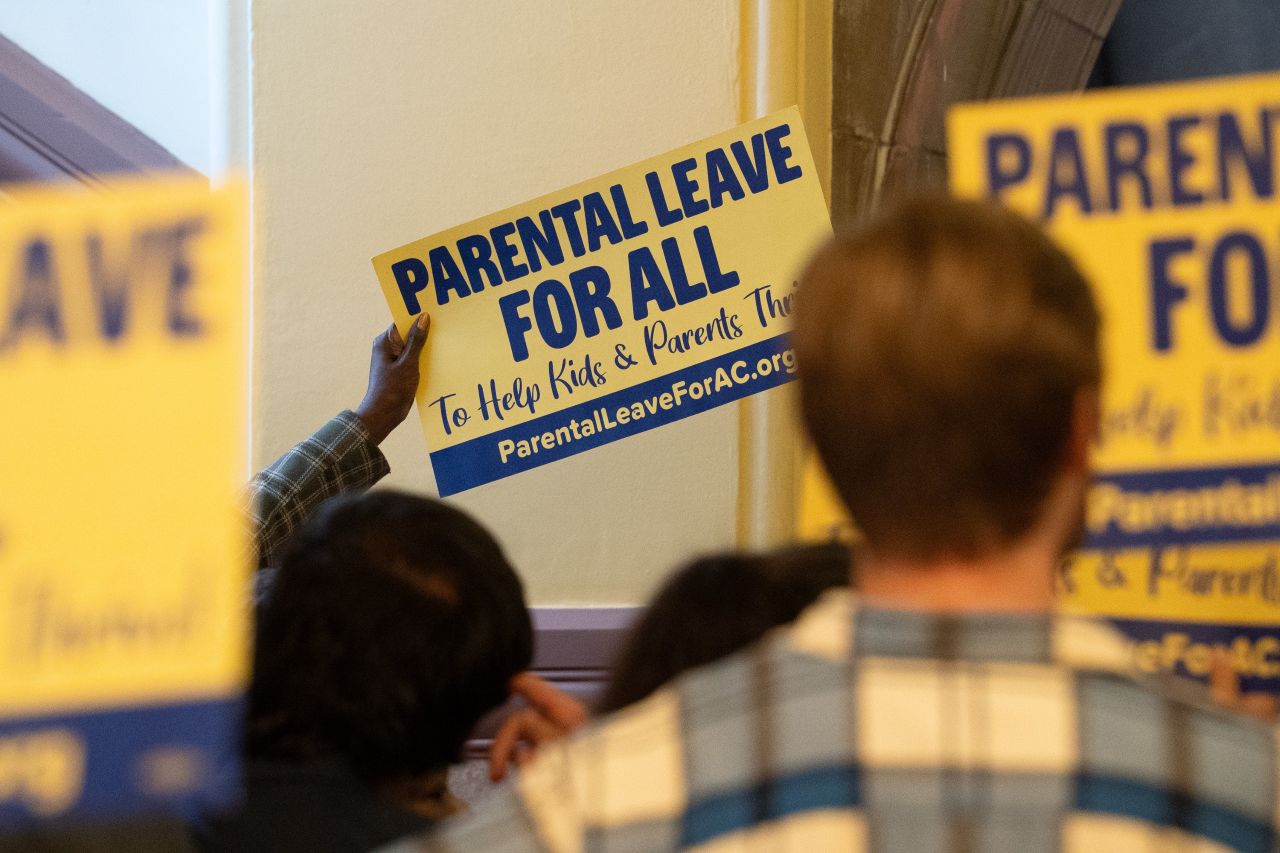
Allegheny County made history on Tuesday, October 20 as the first county in the nation to pass paid parental leave. 

This is an historic win for families and offers hope and progress for our community to ensure babies and families are healthy and thriving. 

As supporters of a paid parental leave policy, we celebrate the passage of this policy. We also recognize that some may be nervous or unsure about the policy, or concerned about the impact on their business. 

What’s in the Policy?

  • Allegheny County businesses with more than 15 employees must offer 12 weeks of paid parental leave for new parents, including birth, foster, or adoption, and for parents who experience a stillbirth.
  • Employees are eligible after 180 days (six months) of employment.
  • Employers have up to one year before they have to comply with the policy, giving them time to strategize financially for the shift.

Why Did Allegheny County Council Enact This Policy?

Allegheny County took this step to protect families and babies because we do not have a policy at the state or federal level.

This opens up the pathway for more counties to create a policy and puts pressure on the state to pass the Family Care Act (House Bill 200 and Senate Bill 906).

The state has the authority to create a public social insurance program that would help to pay for paid leave, and the state policy would extend beyond parents starting a family to also include medical leave. 

See if your representative voted in favor of HB 200 or if your senator signed on as a cosponsor for SB 906. If they have not, we encourage you to let them know you support the legislation. 

Paid Parental Leave: Good for Families, Good for Business

As a regional early childhood intermediary committed to supporting the adult caregivers in young children’s lives, we believe a true continuum of care begins with paid parental leave and continues with the availability of high-quality infant child care. We supported the paid parental leave policy in Allegheny County – and here’s why: 

  • Parents are children’s first and most important teachers.
    The first few months of bonding with a new baby are essential to the health and wellness of both the child and their caregivers, and critical for a child’s brain development.
  • Welcoming a child is one of life’s most transformative and expensive milestones.
    The financial aspects of growing a family should not create additional strain and stress on new parents. Unpaid parental leave (for one or both parents) is not an option for many families. The establishment of paid parental leave ensures more economic security and stability – parents can still receive their paycheck, nurture their baby, and cover the costs of new expenses.
  • Paid parental leave is a health necessity.
     Only 42% of individuals in the county have access to some form of paid parental leave, and infant mortality rates in Allegheny County are slightly higher than the state with alarming racial disparities.  More time off leads to better postpartum physical and mental health of mothers and babies, including a decrease in maternal and infant mortality.
  • Quality care for infants begins with parents being able to stay home for the first few months of a child’s life.
    Most child care providers do not enroll infants until they are at least six weeks old. Even then, infant care is the hardest for parents to find. Given the lack of availability of infant care and the constraints on the child care system, paid parental leave for 12 weeks for both parents would be transformative for families and caregivers in the county.
  • Paid parental leave is proven to be good for business and workforce retention.
    While much debate has been given to the cost of a paid parental leave policy at the county level, the economic return on the policy is clear. Replacing employees who leave their job entirely is costly, and access to paid parental leave increases a new mother’s likelihood of staying in the workforce. Supporting worker retention supports local businesses by keeping costs down over time in rehiring, retraining, and lost productivity.

Read our full public comment for more details.

What Does This Policy Mean for Child Care Providers? 

We understand the financial and operational concerns from child care providers that make implementing extended paid leave challenging. 

At the same time, early childhood educators—the people who dedicate their careers to caring for other people’s children—deserve the opportunity to care for their own babies and families, too.

We don’t believe those realities should be pitted against one another. The answer is to build the supports that make both possible.

That’s why Trying Together and child care providers have advocated for solutions such as a countywide substitute pool to help programs maintain staffing and continuity of care. And at the state level, proposals such as the Family Care Act are intended to provide financial support that helps employers manage the cost of paid family and medical leave.

We should think bigger about what families, educators, and child care programs all need to thrive. That means investing in the infrastructure that allows parents to return to work, educators to care for their own families, and child care programs to remain strong and sustainable.

Trying Together will continue advocating for solutions that recognize all three—and we appreciate that Allegheny County has been listening to the child care sector as this work moves forward.

Resources Provide Guidance on Children Who Are Slow to Grow Out of Bedwetting

News

October 21, 2026

Resources Provide Guidance on Children Who Are Slow to Grow Out of Bedwetting

It is not uncommon for young children to wet the bed or have related accidents during the day, but it can cause shame, especially for those who are slow to grow out of it.

If a child continues to wet the bed or have accidents during the day more than just occasionally after their fifth birthday, it can be a sign of a disorder known as enuresis, the Child Mind Institute notes.

Learn More

For children with enuresis, urinating voluntarily or involuntarily at inappropriate times or places can be caused by different things. However, treatment should never involve punishment or shaming.

The Child Mind Institute has provided some resources on enuresis and other toileting challenges, such as encopresis, which is when a child cannot control their bladder or bowels.

The resources focus on situations in which children might be too anxious to go to the bathroom at school and on children with ADHD who may struggle to transition from doing something interesting to sitting on a toilet. Children with autism can have sensory sensitivities that can cause constipation or abdominal pain.

Because all of these scenarios can be embarrassing for children, the institute has provided advice on how to help them cope with their feelings as they learn to listen to and gain better control of their bodies.

The resources include:

PA Promise for Children Lists Books for Children About Being Afraid

News

October 20, 2026

PA Promise for Children Lists Books for Children About Being Afraid

It is normal for children to have fears, whether it’s of the dark or seeing new places. Although sometimes adults do not understand these fears, they are very real for those who experience them.

PA Promise for Children has put together a list of 10 books about being afraid for children to read. Caregivers can read the books with their children and discuss fears they may have and how they can cope with them.

The list includes:

  • When I Feel Scared (Cornelia Spelman)
  • There’s an Alligator Under My Bed (Mercer Mayer)
  • Franklin in the Dark (Paulette Bourgeois)
  • Orion and the Dark (Emma Yarlett)
  • The Thing Lou Couldn’t Do (Ashley Spires)
  • The Doghouse (Jan Thomas)
  • Miss Hazeltine’s Home for Shy and Fearful Cats (Alicia Potter)
  • There’s a Nightmare in My Closet (Mercer Mayer)
  • Can’t You Sleep, Little Bear? (Martin Waddell)
  • The Little Old Lady Who Was Not Afraid of Anything (Linda D. Williams)

Educators Reflect on Needs of Children in Their Care Through Collaborative Art Project

News

Educators Reflect on Needs of Children in Their Care Through Collaborative Art Project

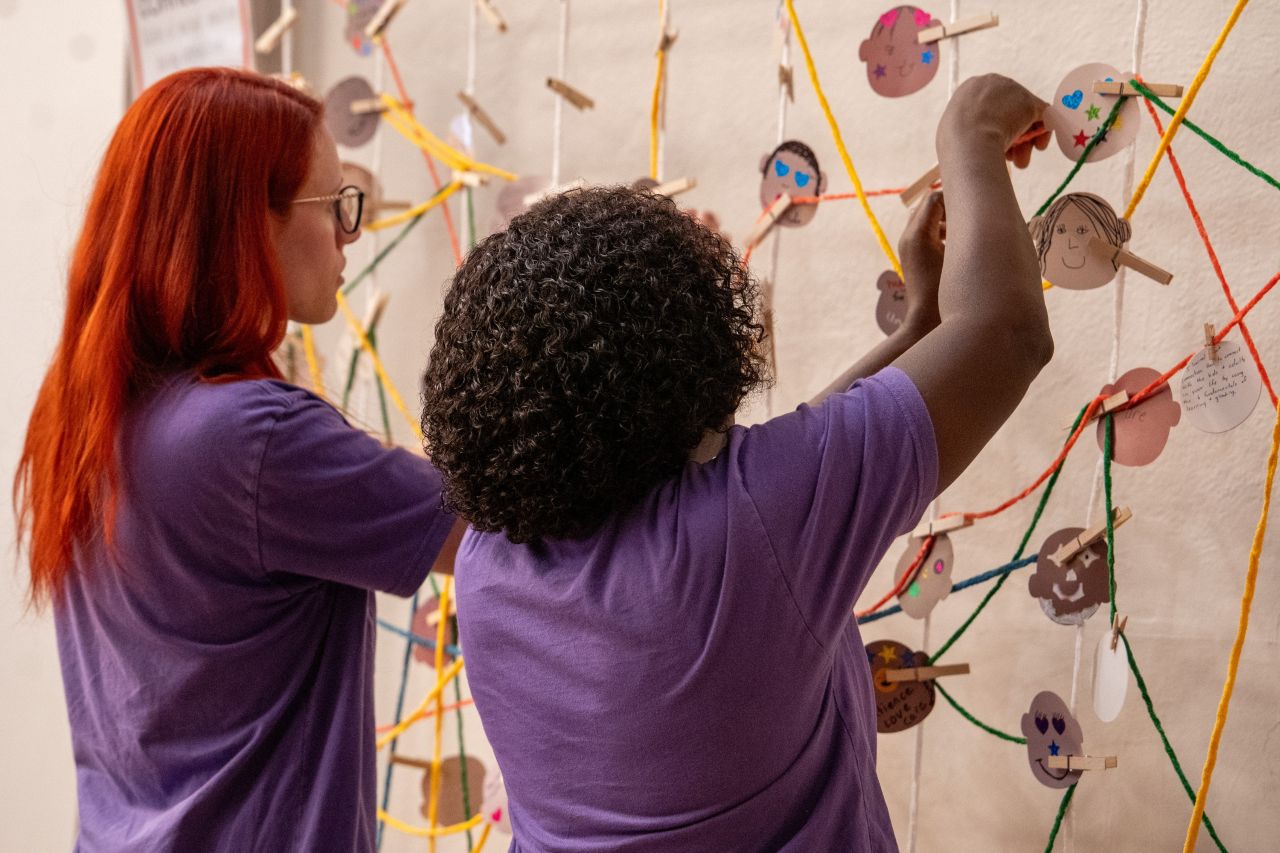
More than 150 educators reflected on the needs of children in their care through a collaborative art project featured at the recent UnConference: Ordinary Moments, Meaningful Connections. 

The interactive hands-on activity invited educators to share their experiences and consider the common threads that connect their work across different settings and communities.

The activity took place in two parts. First, participants responded to the prompt, “What do the children in my care need from me?” by writing their thoughts on a cutout face. They then decorated the face and added it to an art wall made up of strings.

While attendees took part in their morning sessions at the event, Trying Together staff connected the participants’ answers using yarn that matched the colors of the Simple Interactions tool dimensions – connection, reciprocity, inclusion, and opportunity to grow.

Later in the day, participants were asked to revisit the reflections and answer a second prompt: “What is a new strategy that you learned today?” They were encouraged to think about the four dimensions and add their circle to the colored thread that matched the dimension.

“As the artwork grew, it became a visual representation of the collective wisdom, creativity, and commitment within the group,” said Karian Wise, Trying Together’s interactions design strategist. “Although educators may work in different environments and bring unique perspectives to their roles, the activity highlighted the values and aspirations that unite them: By making space for individual voices within a shared creation, the activity demonstrated both the diversity of educational experiences and the common purpose that guides the participants’ work. The resulting artwork served as a reminder that the educators can all learn from one another, strengthen their practice through collaboration, and create more meaningful opportunities for every child through simple, everyday interactions.”

To learn more about UnConference: Ordinary Moments, Meaningful Connections, read the coverage of the event.

PA Promise for Children Releases List of October Books for Kindergartners

News

October 19, 2026

PA Promise for Children Releases List of October Books for Kindergartners

PA Promise for Children has released its October list of books for kindergartners that includes eight titles across two categories.

The categories in which PA Promise for Children has organized the books are Language and Literacy Skills and Social and Emotional Development, which each have four titles.

The books on the list include:

Language and Literacy Skills

  • Pizza, Pigs and Poetry (Jack Prelutsky)
  • Is Your Mama a Llama? (Deborah Guarino)
  • Fooling Ewe (Mike Demers)
  • Fishing in Potato Salad (Othen Donald Dale Cummings)

Social and Emotional Development

  • Stars (Mary Lyn Ray)
  • Papa, Please Get the Moon for Me (Eric Carle)
  • Stephanie’s Ponytail (Robert Munsch)
  • Elmer (David McKee)

Activities 

For activities to pair with the selections, PA Promise for Children has recommended looking at the stars; discussing what might prevent one from seeing them; finding star books in Braille for a kindergartner with limited vision; and making a star book using stickers and construction paper. This activity can be paired with the books “Stars” and “Papa, Please Get the Moon for Me.”

Other social-emotional development activities include having a kindergartner draw a picture of themselves and then write a sentence about what they like about themselves, or using pre-cut shapes that your child assembles into an image. These can be paired with “Stephanie’s Ponytail” and “Elmer.”

Activities that can be paired with “Pizza, Pigs and Poetry” and “Is Your Mama a Llama?” include looking through books and magazines to find words that rhyme; talking in rhyme with your kindergartner; finding picture books or nursery rhymes that include rhyming words; and playing hand-clapping games like Pat-a-Cake and Miss-Mary-Mack. 

Other language and literacy activities include taking your kindergartner to the library and each  picking out a book. Then, compare which book is the funniest and has the best pictures. This activity can be paired with “Fooling Ewe” and “Fishing in Potato Salad.”

Confluence Podcast Episode Focuses on How OCDEL Can Help Providers to Stay on Track

News

Confluence Podcast Episode Focuses on How OCDEL Can Help Providers to Stay on Track

A new episode of the Confluence podcast discusses how Pennsylvania’s Office of Child Development and Early Learning (OCDEL) can support child care providers amid leadership transitions and ongoing teacher shortages.

The podcast – Support Before Sanctions: Helping Child Care Providers Stay on Track – features Shante Brown, OCDEL’s deputy secretary, and Ruby Martin, director of OCDEL’s Bureau of Certification Services.

The episode focuses on where child care providers can turn for help when challenges begin to build. Brown and Martin discuss early warning signs, when to reach out for assistance, what happens when a provider asks Certification for help, and resources available through OCDEL and its partners.

“We want providers to know that OCDEL really wants programs to be successful,” Brown said. “Our work isn’t only identifying when something is wrong. It’s to help them to connect with resources and support that can strengthen their programs. At the end of the day, we all share the same goal – children being cared for in healthy, safe environments and strong quality programs that can continue serving Pennsylvania’s children and families.”

It also features discussion on how OCDEL balances its responsibility to protect children’s health and safety with its commitment to helping providers understand requirements, strengthen their programs, and maintain compliance.

Martin said programs’ most common compliance-related issues involve the Child Protective Services Law, health and safety concerns, and severe supervision issues.

“There are usually some signs that a program is beginning to struggle, and it’s often not one issue by itself,” she said. “It’s often several pressures starting to build at the same time – a change in leadership, staff turnover, or making sure that new staff is trained appropriately.”

The Confluence podcast episode is available on The Pennsylvania Key. 

Resources Examine How Caregivers Can Respect Emotional Boundaries with Children

News

Resources Examine How Caregivers Can Respect Emotional Boundaries with Children

The parent-child bond is a powerful connection, but it is important to recognize and respect emotional boundaries and not get overinvolved in a child’s feelings or allow them to have control over yours.

Learn More

In a new set of resources, the Child Mind Institute notes that good intentions can occasionally lead caregivers to want to solve a problem for a child involving one of their friends or allow children to be mean to them in a way that they wouldn’t accept from other people.

The institute’s resources focus on how to maintain emotional boundaries and recognize situations where overstepping happens and why it can be a problem.

Sometimes, caregivers cross boundaries because they feel overprotective or afraid of letting a child fail. Or, in the case of a divorce, a caregiver might treat a child like an adult partner. The resources cover these scenarios as well as how to nurture independent children, how to push children out of their comfort zone, and how to provide support so they can learn to make decisions on their own. The resources include:

Panelists Explore “The Freedom to Fail” at Meaningful Play Conference

News

October 16, 2026

Panelists Explore “The Freedom to Fail” at Meaningful Play Conference

How do we protect the freedom to take chances and the right to fall short?

A panel discussion explored this question and more during Carnegie Mellon University’s Meaningful Play Conference on October 15. 

The panel, titled The Freedom to Fail: Understanding the Role of Risk in Play, addressed the specific benefits of risk and failure in play, from early learners to adults. Cara Ciminillo, Trying Together’s executive director, was one of three panelists. She was joined by Shannon Merenstein, founder of Hatch Partners in Play, and Rae Sookhoo, senior undergraduate and Failure Games research team member at Carnegie Mellon University. 

The panel was moderated by Kristen Burns, the associate director of the Grable Foundation. 

Drawn to the Crown Demonstration

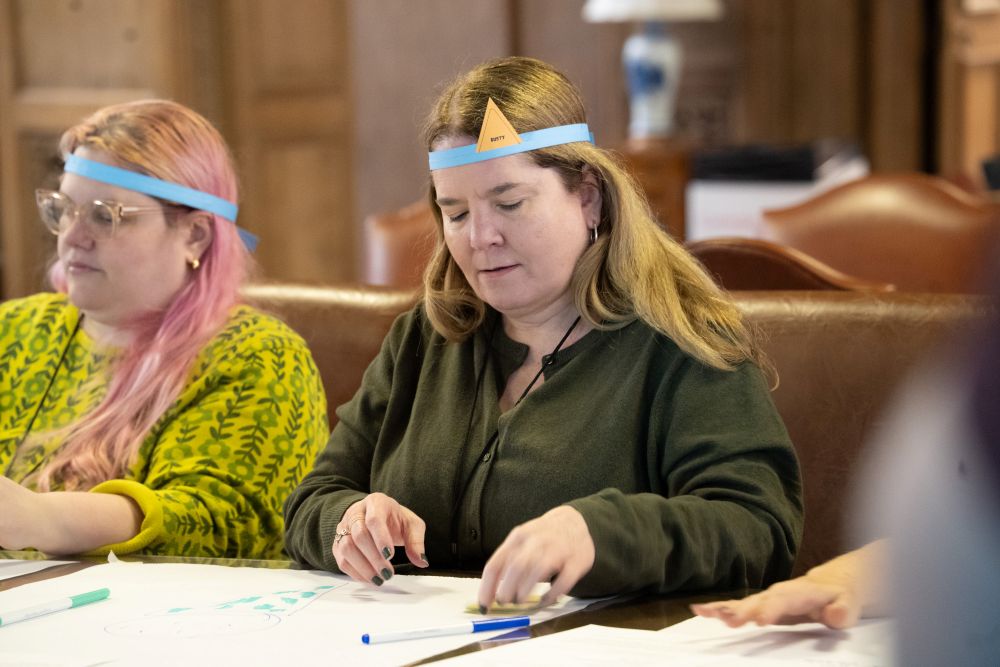
Before the discussion began, Sookhoo led a demonstration of her original game “Drawn to the Crown.” The game was simple: First, a single card with a noun was drawn – in this instance, the word “dessert.” The players then drew their interpretation of the word with a time limit of 45 seconds. Then, a second card was drawn – an adjective to describe the noun. In this demonstration, the word was “rusty.” 

The challenge of the game is that once you begin drawing, you cannot cross anything out or begin again. Once the drawings were complete, a judge chose which drawing they believed was best. The winner placed the card into her crown, and the next round began.

While simple, this game relies on vulnerability and risk. Because the players have limited time and unexpected word choices, failure is an expected and humorous outcome. 

Panel Discussion

The panelists began the discussion talking about risky play and the benefits for children, which led to a rich conversation about failure. A running theme throughout the discussion was that it’s OK to do something and fail immediately – especially when we learn and try again.

“Failure isn’t who you are as a person,” explained Ciminillo. “The focus is on the trying, not the outcome.” 

For children especially, this is an important part of growth and development. Merestein pointed out that children should have the freedom to “tinker, dabble, experiment, and assume new roles.” 

“Free play is the time you build your identity and discover what you’re interested in and connected to. It’s a critical part of early childhood – but good for all of us,” she said.

The panel also discussed the tension between allowing young children the autonomy to engage in risky play, while at the same time considering their safety.  Children are perceptive to how adults are feeling – and if they are with an adult who is rigid or overly cautious, their experience can be affected. 

“Risk, agency, and trust go hand in hand with children,” explained Merestein. “We all want to feel trusted and respected, and have agency and choice. Adults can allow that safe risk to happen, to pull back.” 

Ciminillo encourages caregivers to be aware of themselves and to bring neutral judgement about what’s unsafe when interacting with children. This gives them more space to learn and explore. Learning cannot occur if adults are constantly stopping play.

Sookhoo connected risk in play to more developed creativity and a willingness to forgo perfection. 

“Try fast and fail fast,” she encouraged. “Free play is a big part of the brainstorm. It’s important for people to go with their ideas and not hinder the thinking process.” 

This provides the opportunity to move on quickly and try new things – for both adults and children.

The discussion then shifted to different risks across various demographics, including socioeconomic, racial, cultural, gender, physical ability, and more. Ciminillo urged game creators to be mindful of their biases and belief systems when creating. 

The discussion wrapped up with a question to the audience: How do we as adults perceive, embrace, and speak about play? 

Participants cited video games, cosplay, sports, and board games as typical methods of play for adults. However, adults may be less likely to consider things like baking or crafting as “play,” despite the incredible opportunity to experiment and learn. 

The ultimate takeaway from the discussion is that risky play should be embraced and encouraged for people of all ages. With risky play comes the potential for failure – and this is a good thing. When we embrace that failure, we open ourselves up to greater learning, creativity, and possibility. 
OCDEL Announces Reduction in Document Requirements for PA Director Credential

News

OCDEL Announces Reduction in Document Requirements for PA Director Credential

Pennsylvania’s Office of Child Development and Early Learning (OCDEL) announced a reduction in the documentation requirements for the Pennsylvania Director Credential starting in the new year.

Learn More

Beginning on Monday, January 4, applicants for the credential will see a reduction in the required number of documents throughout the application process.

OCDEL initiated the changes based on provider feedback and the collection of data to better understand the challenges early childhood education (ECE) professionals face when applying for the credential.

The credential is designed as a standard for measuring and validating the abilities and competencies of directors and administrators to manage high-quality early childhood and school-age programs. However, feedback reflected common challenges across providers as they shared their experiences in applying for the credential.

The change to the application process will not affect those who hold a current Pennsylvania Director Credential, but will apply only to those who are in the process of submitting initial and renewal applications.

Those currently applying for the credential will be notified that they may complete their application by Tuesday, December 1 or cancel it and begin a new one on January 4.

The changes to the process will be available in the Pennsylvania Professional Development (PD) Registry and on the Pennsylvania Key website.