Trying Together Raises Over $3,000 to Support the Work of Early Childhood in Highmark Walk

News

July 11, 2023

Trying Together Raises Over $3,000 to Support the Work of Early Childhood in Highmark Walk

Fundraising for the 2023 Highmark Walk for a Healthy Community closed last month, and Trying Together successfully trotted away with $3,205.

Walk dollars will aid Trying Together’s continued efforts to support the work of early childhood, children, child care professionals, and families.

Trying Together’s 2023 Highmark Walk for a Healthy Community Campaign

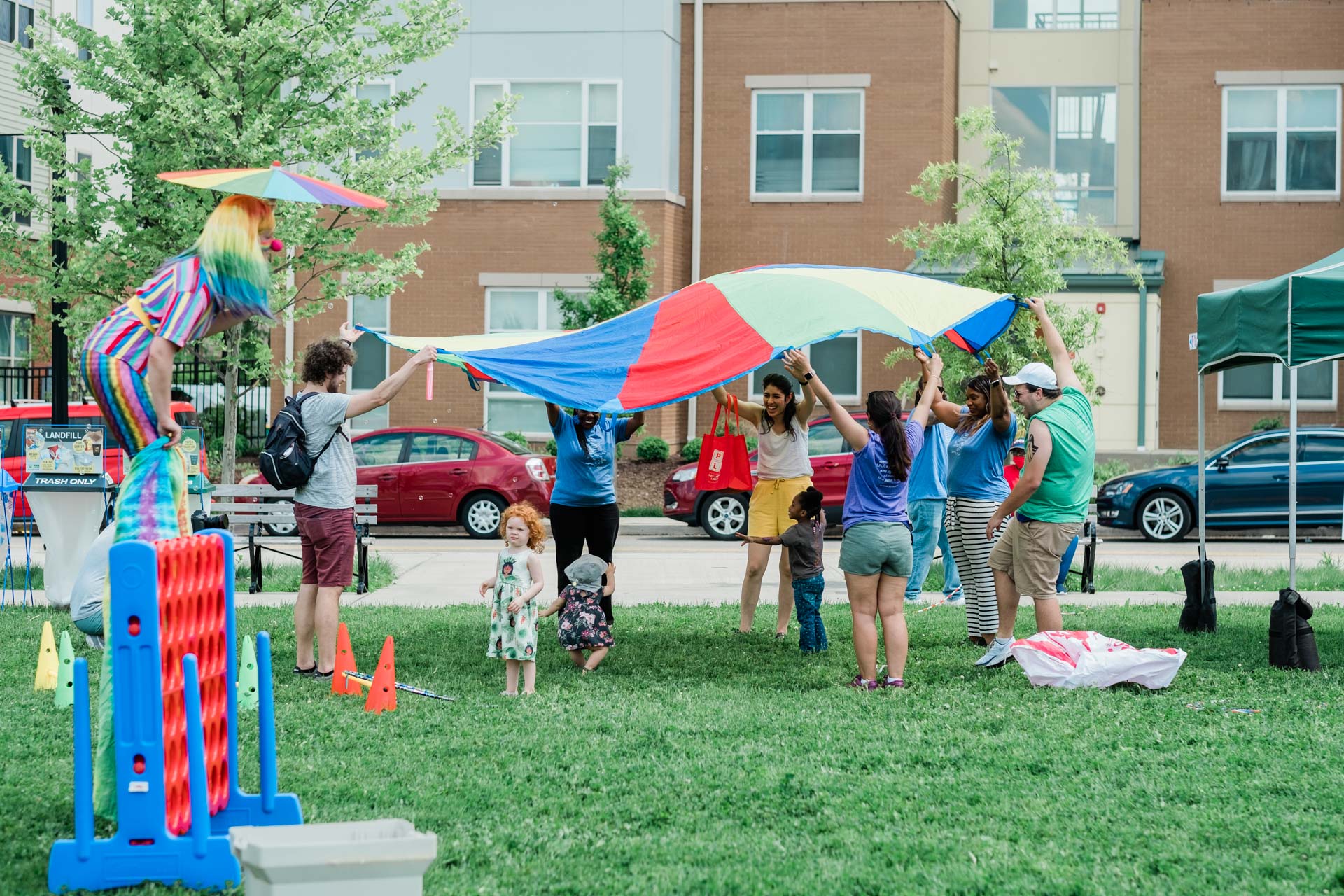
To extend the reach of the Highmark Walk, Trying Together invited early learning programs to create walk teams on behalf of Trying Together, committing to donate 75% of funds raised by early learning programs back to them.

With provider participation, Trying Together developed six walk teams which collectively raised the $3,205 total—64% of the $5,000 goal. Team SMYL (Trying Together’s main team) raised the most funds at $1,320. Crafton Children’s Corner came just behind them with $1,000 raised. Here’s how the rest of the funds are broken down:

  1. Team SMYL – $1,320
  2. Crafton Children’s Corner – $1,000
  3. Presbyterian Day School – $275
  4. St. Paul’s Weekday Ministries – $160
  5. Dunkin’ Run – $85
  6. Thomas Child Care and Learning Academy – $25

Team success depended on the efforts of individual team members, and a few team members drove funds. Top participants included:

  1. Mary Merryman – $265
  2. Kristin Ash – $205
  3. Laura Pollick – $180
  4. Kendall Davis – $150
  5. Maria Snyder – $115

Because of the dedication of these individuals and many others, Trying Together can directly support participating child care programs and use remaining funds to further aid local children, families, and professionals. The entire organization offers a great many thanks to all of those who made and continue to make that possible.

Regional Participation & Impact

Through the 2023 Highmark Walk for a Healthy Community, Trying Together and 66 other organizations in the Pittsburgh region raised $309,653 for their missions, reaching 77% of their 400,000 goal.

Find a list of participating Pittsburgh organizations on the Highmark Walk for a Healthy Community website.

About the 2023 Highmark Walk for a Healthy Community

Part of the Highmark Bright Blue Futures charitable giving and community involvement program, the Highmark Walk for a Healthy Community is an annual fundraising walk that benefits local health and human service agencies in regions across Pennsylvania and Delaware.

Held since 2003, the primary goal of the walk is to help participating organizations raise money for their individual missions by giving 100% of funds raised back to fundraisers.

Through 2023, the Highmark Walk for a Healthy Community events have raised more than $17.6 million for more than 500 health and human service nonprofit organizations.

This year, the walk was held at Acrisure Stadium on Saturday, May 13, with fundraising continuing throughout the month of June..

Learn More

To learn more, go online:

Related Content & Resources

PA DHS Accepting Applications for Children’s Trust Fund Grants

News

July 7, 2023

PA DHS Accepting Applications for Children’s Trust Fund Grants

The Pennsylvania Department of Human Services (DHS) is accepting applications for the Children’s Trust Fund (CTF) grants to promote primary and secondary child abuse and neglect prevention programs in community-based settings in order to address child and family well-being and prevent abuse and neglect of children in the Commonwealth. The maximum CTF grant award is $50,000 per year.

About the Children’s Trust Fund Grants

The mission of the Pennsylvania Children’s Trust Fund (CTF) is to prevent child abuse and neglect in Pennsylvania. To do this, the CTF Board of Directors funds community-based primary and secondary prevention programs that support families.

The CTF was established in December 1988 by Act 1988-151. It operates under the administration of the CTF Board and is supported by the Office of Child Development and Early Learning (OCDEL), a dual deputate of the Department of Human Services (DHS) the Pennsylvania Department of Education (PDE).

Funds for the CTF are generated from a $10 surcharge on all applications for marriage licenses and divorce complaints. These surcharges are paid into a special non-lapsing fund. Interest, donations and federal funds also contribute to the CTF.

The CTF is dedicated to funding community-based programs to prevent child abuse and neglect. Since its inception, the CTF has invested more than $37 million through 295 grants. See the list of current grantees.

The CTF also supports the work of the Pennsylvania Strengthening Families Leadership Team.

How to Apply

Application details and forms are available at the eMarketPlace website.

Each Applicant must submit one complete copy of the Submittal via email to ra-pwrfaquestions@pa.gov. The subject line of the email must indicate “RFA 13-23 Application”. Applications are due by 10 a.m. on July 31, 2023. Please refer to the eMarketplace listing for any changes regarding the deadline.

Organizations can view the bid online. Awarded contracts are posted to eMarketplace after they become fully executed.

Questions?

If you have a question, send an email to Robin Lease at RAPWRFAQUESTIONS@PA.GOV. All emails should include the subject line “RFA #13-23 Question” and must be submitted by July 14, 2023 at 10 a.m. Written answers will be posted on the eMarketPlace website on July 21, 2023.

2023 Lights On Afterschool Poster Contest Deadline Approaching

News

2023 Lights On Afterschool Poster Contest Deadline Approaching

The 2023 Lights On Afterschool poster contest will close on Monday, July 10 and interested individuals must enter their submissions before the midnight deadline.

About the Lights On Afterschool Poster Contest

Sponsored by the Afterschool Alliance, the 2023 Lights On Afterschool poster contest is a great opportunity for an afterschool program to gain national recognition for the opportunities it offers.

With the winning submission printed on more than 50,000 posters, it will be seen at more than 8,000 Lights On Afterschool events around the world. Additionally, the winning artist will be featured on the Afterschool Alliance website and blog, as well as in a national press release, and their afterschool program receive a grand prize of $500.

Closing on July 10, voting will take place July 11-13 on the Afterschool Alliance Facebook and Instagram pages, where followers can vote on the top five submissions.

Rules and Guidelines

Do:
  • Submit any artwork that represents the spirit of afterschool programs.
  • Submit either new or existing artwork.
    • If your program has pre-made artwork celebrating afterschool, you can submit it.
    • The artwork does not have to be created specifically for the Lights On Afterschool Poster Contest, but it must represent afterschool.
  • Submit any of many kids of art (e.g. murals, paintings, graphics, etc.)
  • Be creative!
    • Think of the many ways your program has opened the doors to new opportunities for children.
    • Also, look for artwork that can represent how afterschool staff has been an inspiration to children.
  • Portray ideas in abstract or realistic renderings.
    • Additionally, encourage students to use bright, bold markers, or paint to bring life to their images.
  • Submit all physical artwork on 11 x 14 size paper.
  • For digital submissions, make sure the artwork is in PDF format and is no larger than a 2 MB file with a DPI of 350. For higher resolution photos, email sgray@afterschoolalliance.org and request a link to our file transfer account.

Don’t:

  • Use a specific program name within the submission.
  • If your artists do include the phrase Lights On Afterschool in their designs, make sure “afterschool” is written as one word, consistent with the national branding of the celebration.

Submit a Poster

To submit a poster, simply:

  1. Review the rules and guidelines to verify that you’re submission is eligible for contest entry.
  2. Complete the entry form.
  3. Either:

Mail your completed entry form and physical poster submission to:

Afterschool Alliance, Lights On Afterschool Poster Contest
1101 14th Street NW, Suite 700
Washington, D.C. 20005

OR

Email your completed entry form and digital poster submission to: lightson@afterschoolalliance.org.

Please note: Mailed submissions must be postmarked no later than Monday, July 10. Additionally, artwork sent via email must be in PDF format and no larger than 2 MB with a DPI of 350. For higher resolution photos, email sgray@afterschoolalliance.org and request a link to our file transfer account. 

Learn More

To learn more, visit the Afterschool Alliance website.

Source

Information for this post was taken directly from the Afterschool Alliance website. Some text may have been added, paraphrased, or adapted for readability and comprehension.

Related Content & Resources
State Budget Fails to Significantly Invest in Early Care and Education Amid Historic Labor Shortage

News

July 6, 2023

State Budget Fails to Significantly Invest in Early Care and Education Amid Historic Labor Shortage

The principal partners of Early Learning Pennsylvania (ELPA), a statewide coalition of advocates focused on supporting young Pennsylvanians from birth to age five, recently issued the following statements regarding House Bill 611, which still awaits the signature of the Senate President Pro Tempore and Governor to become the enacted 2023-24 Pennsylvania state budget.

ELPA operates four issue-based advocacy campaigns: Pre-K for PA, Start Strong PA, Childhood Begins at Home and Thriving PA.

First Budget in a Decade to Not Expand Pre-K Counts and State Funding for Head Start

“The Pre-K for PA campaign is deeply disappointed by the failure to expand the state’s publicly funded pre-k programs – PA Pre-K Counts and the Head Start Supplemental Assistance Program. When nearly 90,000 eligible 3- and 4-year-olds do not have access to these once-in-a-lifetime early learning opportunities, and pre-k and Head Start programs can’t keep teachers in their classrooms because of inadequate reimbursement rates, this budget bill is simply unacceptable.

Public investment in high-quality pre-k has historically been a consensus issue in Pennsylvania; aligning political parties, rural, urban and suburban communities, and families across the commonwealth on a once-in-a-lifetime opportunity that improves the life chances of Pennsylvania’s children. In fact, a February 2023 Susquehanna Polling and Research poll showed that 98% of PA voters believe that early learning is important, and 78% of PA voters support increasing state funding to serve more eligible children in pre-k programs, which was an increase from 65% in 2022.

Unfortunately, HB 611 is a noticeable departure from a decade of growing investment in high-quality pre-k and threatens the stability of the early care and education sector and the futures of the 90,000 young children that lack access.”

With no new funding and all PA Pre-K Counts contracts up for renewal as part of a complete competitive rebid in FY 2023-24, Pre-K for PA urges the Shapiro Administration to maintain (to the greatest degree possible) the current per county slot allocation to ensure stability in access for our youngest learners.”

Budget Fails to Address Historic Labor Shortage & Furthers Impact on Working Families

“With a child care sector that is on the brink of collapse, the Start Strong PA Campaign is shocked by the lack of investment to address the child care teacher shortage in the state budget bill. Policymakers ignored calls from chambers of commerce, working parents, child care providers, military leaders and others to stabilize the sector by investing in child care wages. Failing to invest in the workforce, which supports all other sectors, will continue to harm the commonwealth’s children, working families and the overall economy.

HB 611 currently allocates slightly more than $100 million in new state funding to maintain the status quo in the child care system. This includes supporting the current child care subsidy caseload and utilization, as well as maintaining the increase in subsidy rates as one-time federal funding lapses. While maintaining the 60th percentile of market rates is important to help alleviate inflationary pressures on child care providers, it has not stabilized the child care workforce. This maintenance of effort of the subsidy system is simply woefully inadequate given the scale of the commonwealth’s child care crisis.

Across Pennsylvania, child care providers are closing classrooms and entire programs due to this historic child care teacher shortage. According to a February 2023 Start Strong PA survey of more than 1,000 child care providers across the state, 85% of responding providers had open and unfilled positions amounting to more than 3,600 open staff positions resulting in 1,500 closed classrooms, and a combined waitlist of more than 35,000 children.

Low wages within the child care sector are driving this staffing shortage. The average wage of a Pennsylvania child care teacher is less than $12.50/hour. At this earning potential, 21 percent of the child care workforce relies upon Medicaid for their health care coverage and SNAP to put food on the table. There is no county in the commonwealth where this wage covers the cost of living.

For families with young children, access to child care is a critical factor in their ability to go to work and ensure their children are in a safe and nurturing environment. Nearly 70 percent of all households with children younger than age 6 have all available caregivers in the workforce—that’s over 537,000 households.

For all other business sectors, the child care sector is the workforce behind the workforce. When families can’t get child care, their children suffer, their income drops and the state’s economy is shortchanged. In a time of severe labor shortages and billions in state budget surplus, the commonwealth’s failure to ensure parents have access to child care is a tragic outcome.

For all Pennsylvanians, when businesses aren’t fully staffed, or staff are unreliable due to lack of child care, they cannot produce goods or provide services, creating shortages and increasing prices. So, whether one has young children or not, Pennsylvania’s child care crisis should matter to all of us.”

Infant and Toddler Early Intervention and Maternal Health Increases Included in Budget

“The budget bill also contains an increase of $15.4 million for Infant and Toddler (Part C) Early Intervention in the Department of Human Services budget. This is short of Governor Shapiro’s March budget proposal, which called for a $20.2 million increase. While the additional $15.4 million will serve more children and sustain a rate increase initially achieved through one-time federal stimulus funding, Thriving PA is disappointed more was not done to support the Early Intervention system holistically. This includes solutions to address workforce shortages needed to create a viable and sustained service delivery platform.

Additionally, Preschool (Part B) Early Intervention received a $10.4 million increase in the Department of Education budget, which was what Governor Shapiro included in his March request.

A $2.3 million increase in the Department of Health budget was included in HB 611 in order to implement recommendations included in the Maternal Mortality Review Commission report. Thriving PA appreciates support for these funds, which will help address maternal mortality and morbidity in Pennsylvania.”

Summary

House Bill 611, which is not yet the enacted 2023-24 Pennsylvania state budget, includes:

  • Level funding for the state’s Pre-K Counts program.
  • Level funding for the Head Start Supplemental Assistance Program.
  • Increase of $103,747,000 to maintain the status quo in the child care subsidy program (increases of $13,370,000 million for the state
  • Child Care Assistance line item and $90,377,000 million for the Child Care Services line item).
  • Level-funding for evidence-based home visiting in the Community-Based Family Center line item and $25,000 for the Nurse-Family
  • Partnership line item, which is a technical adjustment from previously enhanced federal matching funds.
  • $15.4 million for the Early Intervention Part C (infants and toddlers) program through DHS.
  • $10.4 million for the Early Intervention Part B (age-three-to-five) program through PDE.

Start Strong PA Message to Early Care and Education Professionals, Families, and Advocates

Early Care and Education Professionals, Families, and Advocates:

You raised your voices time and time again. Our data was strong and compelling, but policymakers have ignored calls from working parents, child care providers, chambers of commerce, military leaders, and others urging investment in child care wages to stabilize the workforce.

We feel your frustration and will soon give you an efficient way of communicating with your elected officials about how our child care crisis continues to impact you, your program, the families you serve, and our communities at large.

Learn More

To learn more, visit the websites for any of the ELPA campaigns:

Source

Information for this post was taken directly from the Pre-K for PA press release. Some text may have been added, paraphrased, or adapted for readability and comprehension.

Related Content & Resources

2023 Summer Reading Programs for Young Readers

News

July 5, 2023

2023 Summer Reading Programs for Young Readers

Summer reading season is here! This is a great time for young readers to explore new words and books with their parent, caregiver, and other loved ones in different settings. Summer reading for early learners can look like acting out scenes from a picture book in the park with your child, or visiting a local library or family center for a story time.

There are plenty of local and national summer reading programs, resources, and activities to allow early readers the opportunity to expand their vocabulary with their parent or caregiver.

Find Your Voice! Summer Reading 2023, Carnegie Library of Pittsburgh

For the Carnegie Library of Pittsburgh (CLP), summer reading is all about the celebration of self expression. Sign-up for Find Your Voice! summer reading through August 6 at any CLP branch or in the library app. On Sunday, August 13, CLP – Main in Oakland will host its end-of-summer Extravaganza!, a family-friendly outdoor festival features music, crafts, games, prizes, storytelling, and food trucks.

Summer Learning and Literacy Road Trip, PA’s Promise for Children

Join the Pennsylvania Office of Child Development and Early Learning (OCDEL) on their virtual Summer Learning and Literacy Road Trip. Parents, caregivers, teachers, and early childhood education professionals can follow along with OCDEL as they travel to various Pennsylvania libraries and state parks while providing fun resources, activities, and book recommendations to support early literacy and language. All activities align with the PA Early Learning Standards and can be done anywhere.

Summer Reading Field Trips, Reading is Fundamental

Reading is Fundamental (RIF) has provided various reading logs, coloring sheets, and summer-themed book recommendations to keep learning fun and fresh. Parents and caregivers that take the RIF summer reading pledge will receive a copy of the book, A Sofia Special, one of the books featured in RIF’s summer collection.

Summer Reading Camp, Half-Priced Books

Young readers can join Summer Reading Camp by visiting a local Half Price Books through July 31 to pick up interactive reading logs, sticker sheets and more, while supplies last. Families that register for the camp will have access to reading recommendations, crafts, and other literacy activities.

Scholastic Summer Reading Program, Scholastic

The Scholastic Summer Reading program offers children an exciting, free, and safe summer reading experience, while helping to provide books to kids with limited or no access over the summer. Through Thursday, September 7, children can visit the summer zone in Scholastic Home Base, a completely free digital destination which offers stories, characters, games, and a community of readers. Home Base is moderated for safety 24/7.

Bookworm Wednesdays, Showcase Cinemas

Bookworm Wednesdays entitles children to free admission to a select children’s film when they present a book report at a participating Cinema de Lux, Showcase, or Multiplex Cinemas box office. Accompanying parents or caregivers and children younger than age six receive free admission and do not need to submit a book report.

More Programs

Check out other summer reading programs from Mille’s Ice Cream and Pizza Hut. Alternatively, parents and caregivers can also visit their local library, family center, or community resource space to learn more about local summer reading programs.

New Nationwide Report Ranks Pennsylvania 22nd in Child Well-Being

News

New Nationwide Report Ranks Pennsylvania 22nd in Child Well-Being

The Annie E. Casey Foundation recently released its 2023 KIDS COUNT Data Book on state trends in child well-being. The 50-state report ranks Pennsylvania 22nd overall in child well-being, showing declines in major indicators of child health, safety, education, support, and happiness.

About the Kids Count Data Book

Since 1990, the Casey Foundation has ranked states annually on overall child well-being using a selection of indicators. Called the KIDS COUNT index, these indicators capture what children and youth need most to thrive in four domains:

  1. economic well-being,
  2. education,
  3. health, and
  4. family and community.

Each domain has four indicators, for a total of 16. These indicators represent the best available data to measure the status of child well-being at the state and national levels. Indicators include:

Economic Well-Being

  • children in poverty
  • children whose parents lack secure employment
  • children living in households with a high housing cost burden
  • teens not in school and not working

Education

  • young children (ages 3 and 4) not in school
  • fourth-graders not proficient in reading
  • eighth-graders not proficient in math
  • high school students not graduating on time

Health

  • low birth-weight babies
  • children without health insurance
  • children and teen deaths per 100,000
  • children and teens (ages 10-17) overweight or obese

Family and Community

  • children in single-parent families
  • children in families where the household head lacks a high school diploma
  • children living in high-poverty areas
  • teen births per 1,000

This year’s Data Book presents a picture of how the COVID-19 pandemic impacted child well-being in the United States.

Foundational Information & Report Context

Importance of Child Care

  • According to one estimate, shortcomings of the child care system cost the U.S. economy $122 billion a year through lost earnings, productivity and tax revenue.

Access & Barriers to Child Care

  • Despite gains in recent years, the United States is still failing to deliver early childhood education to more than half of its children (54%).
  • The National Survey of Children’s Health reports that 13% of children birth to age 5 (2.8 million) had a family member who faced work challenges due to child care. More than half of working parents with infants or toddlers reported having been late to work or leaving early at least once in the previous three months due to child care problems, and almost a quarter (23%) have, at some point, been fired for it.
  • According to an analysis by the advocacy organization Child Care Aware, the average annual cost of care for one child in America
    was $10,600 in 2021—one-tenth of a couple’s average income or more than a third (35%) of a single parent’s income.
  • Child Care Aware also has estimated that center-based infant care costs more per year than in-state tuition at a public university
    in 34 states and the District of Columbia.
  • Child care costs have risen 220% since the publication of the first KIDS COUNT Data Book in 1990, significantly outpacing inflation.

Issues & Inequities Within Child Care

  • Of children eligible for subsidies under federal rules, only 1 in 6 receives them.
  • The shortcomings of the child care system disproportionately affect the financial well-being of women, single parents, parents in poverty, families of color, and immigrant families.
  • Parents tend to need child care earlier in their career when lower salaries match their limited experience. Young parents spend
    an average of 14% of their household income on child care, twice the share the federal government recommends.
  • Researchers estimate women were five to eight times more likely than men to experience negative employment consequences related to caregiving in 2022.

Cost of Providing Child Care

  • Labor costs can account for more than 80% of a child care provider’s expenses.
  • Child care workers make less than workers in 98% of our nation’s other professions, despite the vital role they play in preparing the next generation to thrive.
  • The median pay for child care workers, who typically must hold a range of credentials, was $28,520 per year or $13.71 an hour in
    2022. That’s less than the median pay for:

    • customer service representatives ($18.16),
    • retail sales positions ($14.26), and
    • restaurant jobs ($14) that don’t require the same level of education.
  • Ninety-four percent of child care workers are women; 14% are Black and 4% are Asian, and across all races, 24% described their ethnicity as Hispanic or Latino.
  • Staffing shortages have left those within the field “more stressed” (85%) and “exhausted/burnt out” (75%). These shortages were a factor for the more than one-third of owners and operators who said they were considering shutting down.

Key Findings

Nationwide Data

Negative Trends
  • Half of the indicators tracked in the 2023 Data Book worsened since before the pandemic, while four stayed the same, and only four saw improvement. The most recent data available show that fewer parents were economically secure, educational achievement declined, and more children died young than ever before.
  • In 2022, 74% of eighth-graders were not proficient in math, the worst figure in the last two decades. Also, more young children did not attend school, and the percentage of high school students graduating on time stalled.
  • In 2021, the child and teen death rate was 30 deaths per 100,000 children and youths ages 1 to 19, the highest rate seen since 2007, with continued increases in deaths by suicides, homicides, drug overdoses, firearms, and traffic accidents.
Positive Trends
  • The number and percentage of children without health insurance improved between 2019 and 2021. Thus, efforts to expand access to stable and affordable coverage helped children and families.
  • Over the last two years, the teen birth rate improved, a smaller percentage of children lived with parents who lacked a high school diploma and there was improvement in the number of children living in high-poverty communities.
Racial Inequities in Child Well-Being
  • Data suggest that the United States fails to provide American Indian, Black and Latino children with the opportunities and support they
    need to thrive, and to remove the obstacles they encounter disproportionately on the road to adulthood.
  • Nearly all index measures show that children with the same potential are experiencing disparate outcomes by race and ethnicity. A few notable exceptions:
    • Black children were more likely than the national average to be in school as young children and to live in families in which the head of the household has at least a high school diploma.
    • American Indian and Latino kids were more likely to be born at a healthy birth weight.
    • Latino children and teens had a lower death rate than the national average.
  • However:
    • Black children were significantly more likely to live in single-parent families and in poverty.
    • American Indian kids were more than twice as likely to lack health insurance and almost three times as likely to live in neighborhoods with more limited resources than the average child.
    • And Latino children were the most likely to be overweight or obese and live with a head of household who lacked a high school diploma.

State Data

  • New Hampshire ranks first in overall child well-being, followed by Utah and Massachusetts. Mississippi (at 48th place), Louisiana (49th) and New Mexico (50th) are the three lowest-ranked states.
  • States in Appalachia, as well as the Southeast and Southwest (where families have the lowest levels of household income) populate
    the bottom of the overall rankings. In fact, except for Alaska, the 15 lowest-ranked states are in these regions.
  • Although they are not ranked against states, children in the District of Columbia and Puerto Rico experienced some of the worst outcomes on many of the indicators the Foundation tracks.

Pennsylvania Data

Negative Trends
  • The number of children whose parents lack secure employment and the number of teens not in school and not working increased over the last two years.
  • Additionally, fewer than half of:
    • young children are in school,
    • fourth-graders are proficient in reading, and
    • eighth-graders are proficient in math.
  • Statistically:
    • 55% (up from 53% in 2016) of 3-4 year olds are not in school.
    • 66% (up from 60% in 2019) of fourth-graders are not proficient at reading.
    • 73% (up from 61% in 2019) of eighth-graders are not proficient in math.
  • More children and teens are:
    • dying,
    • overweight or obese, and
    • in families where the household head lacks a high school diploma.
Positive Trends
  • Though Pennsylvania’s rate of uninsured children is 4% and approximately 126,000 children cannot access affordable, quality health care coverage through Medicaid and the Children’s Health Insurance Program (CHIP), more Pennsylvania children are insured now than in 2019. Additionally, the percentage of low birth-weight babies is down from 2019.
  • Fewer children are:
    • living in households with a high housing cost burden (25% from 27% in 2019),
    • in single-parent families (34% from 35% in 2019), and
    • living in high-poverty areas (9% from 12% in 2016).
  • Also, fewer teenagers are giving birth (12% from 13% in 2019).
  • Despite significant drops in indicators, Pennsylvania outranked most states in education.

For more detailed Pennsylvania data, view the KIDS COUNT Data Book state profile.

Policy Recommendations

The Annie E. Casey Foundation encourages policymakers to take the following actions:

  • Federal, state and local governments should invest more money in child care.
  • Public and private leaders should work together to improve the infrastructure for home-based child care, beginning by increasing access to startup and expansion capital for new providers.
  • To help young parents, Congress should expand the federal Child Care Access Means Parents in School program, which serves student parents.

Learn More

To learn more, read the full report or visit the Annie E. Casey Foundation website.

Source

Information for this post was taken directly from the Annie E. Casey Foundation’s 2023 KIDS COUNT Data Book. Some text may have been added, paraphrased, or adapted for readability and comprehension.

Related Content & Resources
Resources for July Observances

News

June 29, 2023

Resources for July Observances

Various organizations, states, and nations recognize a number of observances each month. Resources help parents, caregivers, and child care professionals acknowledge and navigate them.

Here is a list of resources for July observances:

Month-Long Observances

National Parks and Recreation Month

National Make a Difference to Children Month

National Minority Mental Health Awareness Month

Days of Recognition

July 4 is Independence Day

July 14 is International Non-Binary People’s Day

July 24 is National Parents’ Day

July 25 is World Drowning Prevention Day

July 26 is National Disability Independence Day

ELRC Region 5 Requesting Feedback on Evening Phone Hours

News

ELRC Region 5 Requesting Feedback on Evening Phone Hours

The Early Learning Resource Center (ELRC) Region 5 is asking Allegheny County families and child care providers to complete a brief survey on evening phone hour offerings.

ELRC Region 5 currently offers evening phone hours from 5 – 7 p.m. on Tuesdays. However, center leaders seek to find the best day and time to offer evening service to county families and child care providers. By completing the survey, respondents allow ELRC Region 5 to better serve the community.

The survey is just five questions. All responses are confidential and will not be shared.

Access and Take the Survey

Access and take the survey on SurveyMonkey.

Learn More

To learn more, visit the ELRC Region 5 website or call 1.888.340.3572 or 412.350.3577 for assistance.

CitiParks Announces Free Pool Access for Area Youth

News

June 28, 2023

CitiParks Announces Free Pool Access for Area Youth

The City of Pittsburgh Department of Parks and Recreation (CitiParks) recently announced that it will make access to CitiParks swimming pools free to all Pittsburgh children from birth to age 15.

About CitiParks Pool Access

Previously, Pittsburgh children needed a Recreation Center Membership Tag to access pools for free.  This summer, CitiParks is waiving the Recreation Membership Tag requirement for area youths.

Season passes are still available for purchase by Pittsburgh’s adult residents.  Non-residents of Pittsburgh are also able to purchase season tags.

Find full details and the 2023 Pool Tag form on the CitiParks website.

Learn More

To learn more, visit the City of Pittsburgh website.

Allegheny County Family Resource Map Highlights Supports for Locals

News

Allegheny County Family Resource Map Highlights Supports for Locals

Did you know the Early Learning Resource Center (ELRC) Region 5 offers an interactive, online tool to help families navigate area programs and services?

The Allegheny County Family Resource Map provides caregivers of young children and other residents in Allegheny County the opportunity to locate available supports closest to them.

About the Allegheny County Family Resource Map

Launched in 2020, the map highlights the addresses, phone numbers, and websites of a variety of family supports, including those on:

  • aging
  • care and education
  • employment
  • family activities
  • food
  • health
  • housing
  • new parents
  • outdoors and recreation
  • transportation, and
  • wi-fi locations

Through the map, families can find countywide resources and services closest to them, such as senior community centers, family centers, early learning programs, public schools, WIC offices, parks, libraries, food pantries, diaper banks, clinics, public housing, Port Authority bus stops, and more.

Access the Map

Access the map here or visit the ELRC Region 5 website.

Learn More

For questions or to submit a map suggestion, please contact ELRC Region 5 at 412.350.3577 or elrc5@alleghenycounty.us.