News

June 15, 2026

PA Promise for Children Releases June List of Books for Preschoolers

Pennsylvania Promise for Children has released its June list of recommended books for preschoolers that includes eight titles across four categories.

Learn More

The four categories in which PA Promise for Children has organized the books are Language and Literacy Skills, Partnership for Learning, Social Emotional Development, and Health, Wellness, and Physical Development.

This month’s selections include:

Language and Literacy Skills

  • S is for S’mores: A Camping Alphabet (Helen Foster James)
  • Q is for Duck: An Alphabet Guessing Game (Mary Elting)

Partnership for Learning

  • Magic Shapes (Patrick George)
  • Tap the Magic Tree (Christie Matheson)

Social Emotional Development

  • The Quiltmaker’s Gift (Jeff Brumbeau)
  • Zen Shorts (Jon J. Muth)

Health, Wellness and Physical Development 

  • Sofa Boy (Scott Langteau)
  • One Two Three PULL! (Sophie Schmid and Sabine Praml)

To view the entire list, visit PA Promise for Children’s website.

News

June 11, 2026

Chambers of Commerce Coalition Asks State Assembly to Continue Investing in Child Care Workforce

A coalition of 81 local chambers of commerce from across Pennsylvania is urging the Pennsylvania State Assembly to continue investing in the child care workforce as part of the 2026-27 state budget.

Learn More

The coalition, led by the Schuylkill Chamber of Commerce, delivered a sign-on letter to state policymakers calling for additional investments in the Child Care Staff Recruitment and Retention Program, Pennsylvania Pre-K Counts, and the Head Start Supplemental Assistance Programs.

Other chambers of commerce to join the coalition included the Pittsburgh Airport Area Chamber of Commerce, Greene County Chamber of Commerce, Butler County Chamber of Commerce, Beaver County Chamber of Commerce, Indiana County Chamber of Commerce, Westmoreland County Chamber of Commerce, Fayette Chamber of Commerce, Greater Connellsville Chamber of Commerce, and Three Rivers Business Alliance.

The letter emphasizes that the state’s child care crisis is not only a family issue, but also a workforce and economic development challenge. Employers around the state continue to report that working caregivers are struggling to find and afford quality child care, making it harder to fill open positions, maintain productivity, and support economic growth.

“In Indiana County and communities like ours across Pennsylvania, employers need reliable access to talent and parents need reliable access to child care,” said Mark Hilliard, president of the Indiana County Chamber of Commerce. “When child care providers cannot hire and keep staff, businesses feel the impact through absenteeism, turnover, and unfilled jobs. A stronger investment in recruitment and retention is an investment in workforce stability.” 

The Child Care Staff Recruitment and Retention Program, the letter notes, was created as a first step to help child care providers address severe staffing shortages by supporting teacher recruitment and retention. Chamber of commerce leaders said that growing the program would help providers to better compete in a tight labor market, stabilize classrooms, and expand access for working families. 

The letter states that providers continue to struggle to compete with other sectors that offer higher wages, while the average child care teacher in the state earns just over $15 per hour. As a result, providers have been forced to close classrooms, limit enrollment, and maintain long waitlists despite strong demand.

The chambers are also calling for increased investments in Pre-K Counts and Head Start to help providers address inflationary pressures and workforce shortages. The letter noted that the state’s child care crisis costs working families and employers approximately $6.5 billion annually in lost wages and productivity. 

For more details, read the coalition’s letter.

News

June 10, 2026

OCDEL Makes Clarification About Program Licensure Requirements

The Pennsylvania Office of Child Development and Early Learning (OCDEL) has made a clarification regarding program licensure requirements.

Learn More

OCDEL’s Bureau of Policy and Professional Development and Bureau of Certification Services (BCS) have released an announcement to clarify the applicability of program licensure requirements. 

BCS is responsible for receiving applications, conducting inspections, and issuing a certificate of compliance to certified child care facilities in Pennsylvania. The certificate is a document issued by the state to a legal entity permitting it to operate a specific type of facility at a specific location for a specific period of time according to department regulations. 

Under the state code, certified child care facilities in Pennsylvania fall under one of the three categories – child care center, group child care home, or family child care home. 

The state code requires that legal entities must obtain a valid certificate of compliance to operate at a specific location. Upon meeting the requirements, the certificate of compliance will be issued by the state to a legal entity prior to commencement of operation at a specific location. 

For more information and to find details on programs subject to the requirements, read OCDEL’s announcement.

News

Trying Together, Educators Advocate in Harrisburg for Early Childhood Education Investments in State Budget

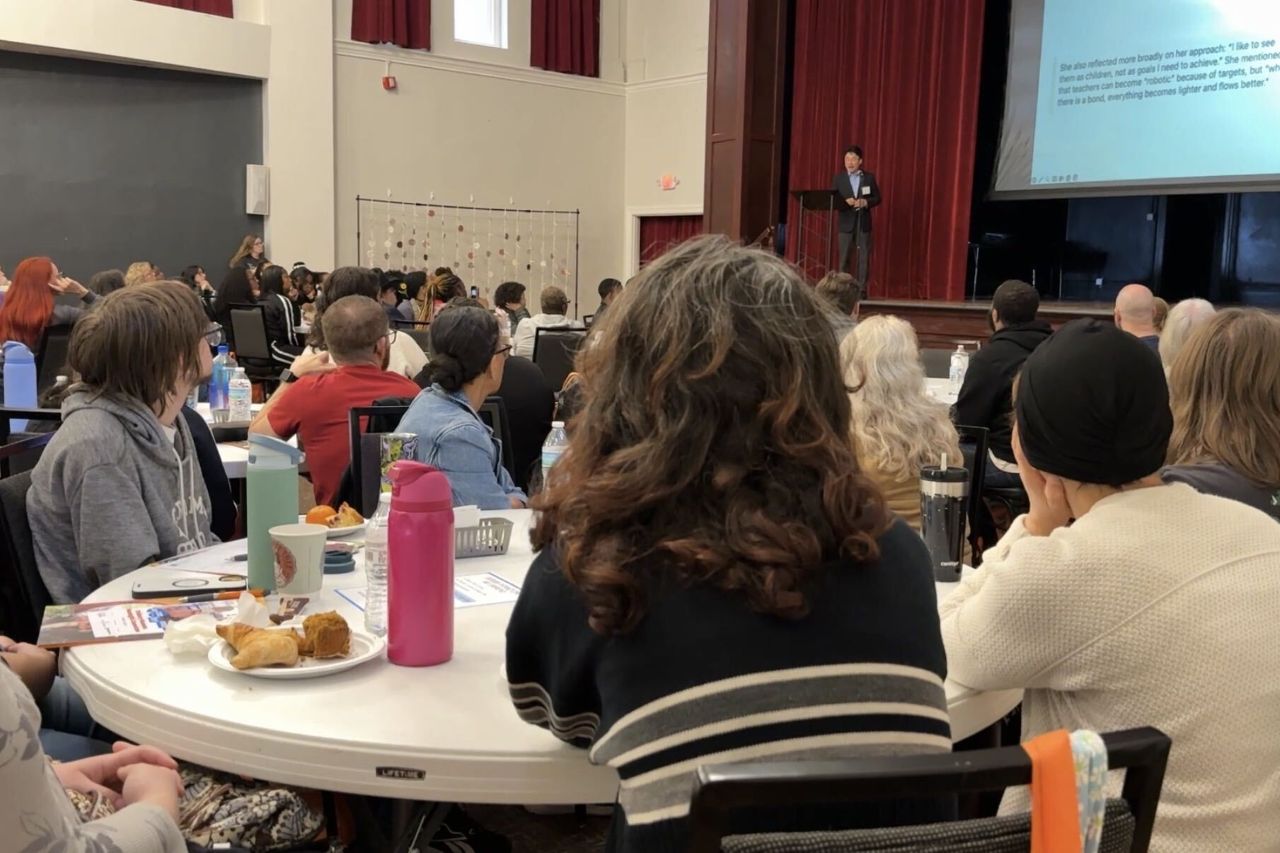
Trying Together traveled with 40 early childhood education teachers and administrators as well as caregivers of young children to Harrisburg on Tuesday, June 9 to meet with policymakers and advocate for investments in the early care and education workforce in the 2026-27 budget.

Learn More

The teachers, administrators, and parents represented five counties – Allegheny, Westmoreland, Fayette, Washington, and Beaver – and were members of Trying Together’s advocacy fellowship program. They met with their state representatives and senators to tell their early childhood education stories.

“Early care and education is a critical issue for families and economic development in every community – rural, suburban, and urban alike,” said Emily Neff, Trying Together’s director of public policy. “The fact that nearly 40 early childhood educators from five counties traveled to Harrisburg and back in a single day demonstrates the urgency of this issue.”

Neff said the group met with policymakers from both parties and both chambers – a total of 19 state representatives and 10 senators – to advocate for increased investments in child care, pre-k, and early intervention in the state budget. 

“There is no way around it: continued public investment in early care and education is essential,” Neff said.

Meetings with Policymakers

The group discussed with policymakers the importance of including proposed investments in the early care and education workforce in the 2026-27 state budget, including:

  • A $10 million increase for the Child Care Staff Recruitment and Retention Program
  • A $2 million increase for the Head Start Supplemental Assistance Program
  • A $7.5 million increase for Pre-K Counts

Participants in the day of advocacy said it was a positive experience. Anna Dolter, a Pittsburgh Public Schools pre-k teacher, said the trip was her first time to Harrisburg. She met with state Reps. Dan Frankel (D-23rd) and Lindsay Powell (D-21st) and state Sen. Jay Costa (D-43rd).

“My message to them was the importance of early education and keeping it accessible and equitable to all families in our city and state,” she said. “It was good to meet with representatives, so we can take information back to our colleagues in terms of what we can do to advocate to get early education in the budget.”

Wes Garis, the senior director of professional and child development at Braddock’s Heritage Community Initiatives, said his job involves supporting educators and providing classroom support.

“I’ve tried to bolster recruitment and retention, but we need to have teachers long enough to grow them and keep them in the field,” he said.

He said although some of the policymakers he met with on Tuesday were already on board with proposed investments, he thought it was important to provide them with context.

“It was good that we did it as a group,” he said. “We had our stories bounce off each other – it shows the connection and makes the stories and data come to life.”

Dayna Jones, the owner and CEO of Highland Park’s Simply Kidz Zone Early Learning Center, said that the trip to Harrisburg was a great opportunity to advocate for investments to the field.

“I wanted to advocate that we struggle with financially supporting our staff to be able to embrace high-quality child care,” she said. “We want to pay staff what they deserve and allow parents to be able to afford child care and be able to work. We want to send a message that (early childhood educators) are essential. I don’t think child care is taken seriously enough.”

The group met with state Reps. Dan Frankel (D-23rd), Lindsay Powell (D-21st), Eric Nelson (R-57th), Daniel Deasy (D-27th), Arvind Venkat (D-30th), Timothy J. O’Neal (R-48th), Joshua Kail (R-15th), Jim Rigby (R-71st), Jessica Benham (D-36th), Aerion Abney (D-19th), Andrew Kuzma (R-39th), Emily Kinkead (D-20th), Bud Cook (R-49th), Natalie Mihalek (R-40th), Eric Davanzo (R-58th), and Anita Kulik (D-50th), La’Tasha Mayes (D-24th), Mandy Steele (D-33rd), and John Inglis III (D-38th), and state Sens. Jay Costa (D-43rd), Kim Ward (R-39th), Joe Pittman (R-41st), Camera Bartolotta (R-46th), Wayne Fontana (D-42nd), Elder Vogel (R-47th), Patrick Stefano (R-32nd), Lindsey Williams (D-38th), Wayne Langerholc (R-35th), and Devlin Robinson (R-37th).

News

June 9, 2026

Application Process Open for Scholarships to Conference Focusing on Autism and Sensory Disabilities

Those interested in attending the Building Knowledge to Know How Conference can apply for a scholarship, which provides free registration and lodging.

The conference highlights best practices, research, and strategies with a special focus on autism, sensory disabilities, secondary transition, and complex instructional needs.

Learn More

Those interested in obtaining a scholarship to attend the conference should apply by Monday, June 15. 

The scholarships are provided by the state’s Department of Education, Bureau of Special Education, and PaTTAN. The conference runs from August 4 to 7 at the Lancaster County Convention Center.

This year’s theme is “Empowering Pennsylvania Educators and Partners.” The conference will provide an opportunity to learn and engage with nationally recognized presenters as well as educators and families from across the state.

The conference also includes:

  • Youth experiences for young people, ages 4 to 21
  • Poster sessions on successful approaches, programs, and collaborations from state educational agencies
  • Exhibitors and vendors
  • Networking opportunities and evening activities

Family scholarships – full, partial, and virtual – are available to Pennsylvania residents who have children between the ages of 4 and 21. Applicants should:

  • Have a current IEP/IFSP
  • Receive supports and services through an infant toddler or preschool early intervention program
  • Be in the evaluation/assessment process for eligibility to receive support and services from a state public or approved private school

More information about the scholarships is available online.

News

Application Process Open to Serve on PA State Advisory Council Subcommittees

The Pennsylvania State Advisory Council (SAC) is accepting applications for family and professional leaders who are interested in serving on one of the council’s five supporting subcommittees. 

Learn More

Participation on a SAC subcommittee is an opportunity for participants to help shape discussions, provide feedback, and support initiatives that affect the state’s early childhood education system, children, and families.

The subcommittees serve as focused workgroups that provide specialized expertise, develop recommendations, and support the implementation of initiatives aligned with the council’s broader goals and priorities.

The SAC advises the state’s Office of Child Development and Early Learning (OCDEL) on planning for the expansion and coordination of effective early learning and development services for young children and their families.

Family members, early childhood education professionals, advocates, community partners, and system leaders are encouraged to apply to serve on a subcommittee.

The application can be completed online. To learn more about the State Advisory Council, visit the organization’s website.

News

June 8, 2026

Child Mind Institute Provides Resources on How to De-Escalate with Autistic Children

Allowing a child’s temper tantrum to run its course is often a method employed by many caregivers, but tantrums from children with autism might need a different approach.

In a new set of resources, The Child Mind Institute discusses how to de-escalate when children with autism are having a meltdown.

Learn More

Meltdowns, the institute writes, are similar to tantrums in that they share such traits as crying, screaming, door slamming, and harsh words. But they differ in that they are an intense involuntary response to outside stimuli, such as stress, powerful emotions, or sudden changes.

Meltdowns can go on for hours and have the potential to become dangerous to the child and others if not effectively defused.

Among the Child Mind Institute’s resources are an article that covers the different stages of an autistic meltdown as well as the dos and don’ts on how to de-escalate.

There is also an article on the sensory processing issues that can trigger extreme behavioral responses from children with autism or other developmental disorders. There are also some tips on how to help autistic children to build communication skills and manage responsibility.

Another resource discusses common causes of behavior problems in children – such as anxiety and ADHD – and how to help them regulate strong emotions or impulsive urges.

The Child Mind Institute’s resources include:

News

Pittsburgh Foundation Offering Help to Submit Comments About Paid and Parental Sick Leave Amendment

The Pittsburgh Foundation will host open office hours on Thursday, June 11 to help Allegheny County residents craft and submit comments about the county Health Department’s Paid and Parental Sick Leave.

Learn More

In May, the Health Department proposed an amendment to Article XXIV – Paid and Parental Sick Leave – to expand paid sick time and include paid parental leave for employees across the county. The department is requesting feedback on the proposal through a public comment process.

The Pittsburgh Foundation will host open office hours from 11 a.m. to 3 p.m. on June 11 at its offices at 912 Fort Duquesne Boulevard. Those who stop by can receive assistance in crafting and submitting comments to the Health Department.

For accommodation requests, contact Maura Jacob at jacobm@pghfdn.org

News

Thriving Kids Podcast Focuses on How Anxiety Can Affect the Brain

The latest Thriving Kids podcast episode is a discussion on how anxiety can affect the brain and how children who suffer from it often fly under the radar.

Learn More

In the podcast, Dave Anderson, PhD, senior psychologist and vice president of public engagement and education for the Child Mind Institute, joins neurosurgeon Brian Hoeflinger, MD, for a discussion on anxiety.

They discuss a scenario involving a boy who went from being the seventh grade class president to slipping out of class with his heart racing and thinking he was going to die. The boy started skipping school, his parents never noticed, and his teachers never asked why. For the next 20 years, anxiety controlled his life.

In the podcast, Hoeflinger said it shouldn’t have taken the boy so long to get help, and explains how anxious children can go unnoticed by parents, teachers, and counselors.

The podcast’s topics include what panic attacks feel like from the inside and how to face them and what parents should know about head injuries and helmets.

Tips for recognizing signs of anxiety in children and offering support include:

  • Know that anxiety often hides in plain sight; anxious children are often quiet, well-behaved, and outwardly OK, which is why their struggles can go unnoticed.
  • Watch for avoidance, not just worry. A child who skips school, dodges social situations, or finds reasons to opt out of doing things may not be lazy. Anxiety often shows up as avoidance.
  • Learn what a panic attack feels like – racing heart, trouble breathing, sweating, trembling, or a sense of dread.
  • Don’t help a child avoid what they are afraid of; avoidance feels better in the moment, but makes anxiety worse over time. Prioritize gradual exposure to the thing they are anxious about.
  • Validate the feeling without amplifying it; saying “I know you’re scared, and I know you can handle this” works better than dismissing the fear or promising nothing bad will happen.

For more information, listen to the Thriving Kids podcast.

News

June 6, 2026

Thriving Kids Podcast Episode Tackles Effects of Smartphones and Social Media on Children

Although smartphones and social media are often cited as significant factors that contribute to the youth mental health crisis, a new episode of the Thriving Kids podcast discusses how research on the matter isn’t as cut and dry.

Learn More

In the podcast episode, Dave Anderson, PhD, the Child Mind Institute’s senior psychologist and vice president of public engagement and education, discusses this topic with Candice Odgers, PhD, a professor of psychology at the University of California who is one of the leading researchers studying technology and adolescent mental health.

For more than 20 years, Odgers has tracked young people’s daily lives, often through their own phones, to understand what shapes their well-being. In the podcast episode, she explains that data shows social media to be one of the weakest predictors of children’s mental health, how correlation can get mistaken for causation, and what evidence shows about phone bans in schools.

She also emphasizes that family relationships, quality friendships, sleep, and the well-being of adults in their lives are what really matters when it comes to supporting children’s mental health.

Some tips provided during the podcast for supporting a child’s mental health without making the phone the entire conversation include:

  • Look at the whole picture, not just the screen: When something feels off, resist the urge to blame the phone first. Make sure a child is getting the basics that protect mental health – real-world social connection, enough sleep, and activities that help to build identity and self-confidence.
  • Keep the line of communication open: Think of your role as scaffolding – give children age-appropriate independence while keeping a line of open communication so they feel that they can come to you. Children are more likely to tell a caregiver when something goes wrong online if they respond to problems calmly and without judgment, and not immediately resorting to taking a device away.
  • Pay closer attention to children who are already struggling: Children going through a difficult time or under stress are more vulnerable to the downsides of social meda. Keep an eye on how a child seems after they have been on their phone. If they are withdrawn, upset, or showing signs of anxiety or depression, it’s worth a closer look and, if necessary, a conversation with a mental health professional.
  • Model the balance you want to see – especially with sleep: Children notice how the adults around them use their phones. Set an example with phone-free dinners and family time, and protect sleep with a no-phones in the bedroom policy after a set time. Sleep deprivation is among the most common contributors to low mood in teens.

For more information, listen to the Thriving Kids podcast.