Measles a Growing Concern as Number of Cases Rises

News

August 26, 2026

Measles a Growing Concern as Number of Cases Rises

As the number of measles cases continues to rise in Pennsylvania, state and county health departments have provided guidelines for families to stay safe amid the outbreak.

What to Know About Measles

  • Measles is a highly contagious virus that infects the lungs and spreads when an infected person breaths, coughs, or sneezes. The virus remains in the air and on surfaces for up to two hours, even after the infected person leaves the area.
  • Symptoms to watch for include fever, cough, runny nose, and red, watery eyes followed by a rash that starts on the head or face and spreads downward. 
  • Symptoms can start seven to 21 days after exposure. An individual with measles can spread the virus to others four days before and four days after the rash begins.

Cases on the Rise

The number of measles cases continues to rise in Pennsylvania as 70 people have been hospitalized statewide, with two deaths in Lancaster County. Allegheny County reported a positive case at UPMC Children’s Hospital Emergency Department in Pittsburgh

No additional details can be provided about the Allegheny County case for privacy reasons. UPMC will call patients who have been identified as exposed on the two days when the patient was at the hospital.

How to Prevent Measles

Measles is a preventable disease, but vaccination is on the decline and cases have risen to the highest level in 35 years. Individuals who are not vaccinated are most at-risk for infection, state and county health departments said. 

The Measles, Mumps, Rubella (MMR) vaccine is given to toddlers when they are 12 to 15 months, and a second MMR vaccine is required for all Pennsylvania school children.

The state’s Department of Health (DOH) advises that Pennsylvanians should follow immunization recommendations issued by the American Academy of Pediatrics, American Academy of Family Physicians, and American College of Obstetricians and Gynecologists, which include MMR, hepatitis, polio, and whooping cough.

The Pennsylvania  DOH recently said that it planned on sticking to its original childhood vaccine schedule, despite a federal executive order recommending alterations, and that school entry requirements would remain the same.

What To Do If Your Child is Exposed to Measles

Caregivers who are concerned that their child might have been exposed to measles should take the following steps:

  • Do not go directly to a healthcare facility without calling ahead first.
  • Check the child’s vaccination status.
  • Residents in Allegheny County who are concerned about a potential exposure should call the Allegheny County Health Department at 412-578-8062.
  • Pennsylvanians in other areas who believe their child might have been exposed can call 877-724-3258.

Resources for September Observances

News

Resources for September Observances

Various organizations, states, and nations recognize a number of observances each month. Resources help parents, caregivers, and child care professionals acknowledge and navigate them.

Here is a list of resources for September observances.

Month-Long Observances

Attendance Awareness Month

Baby Safety Month

Childhood Cancer Awareness 

Hispanic Heritage Month

National Childhood Obesity Awareness Month

National Recovery Month

Newborn Screening Awareness Month

Weeks of Recognition

September 20 – 26 is Child Passenger Safety Awareness Week 

Days of Recognition

September 6 is National Read a Book Day

September 28 is National Family Day

Homewood Families Receive Backpacks, Resources at Family Center Open House

News

Homewood Families Receive Backpacks, Resources at Family Center Open House

More than 100 people turned out for the Homewood Early Learning Hub & Family Center’s August 21 open house, where families received backpacks, supplies, and important resources to support their children’s growth and development.

Emphasizing the Importance of Early Learning

The open house was especially important because families learned about pre-k and Head Start options, said Toni Beasley, the Hub’s director.

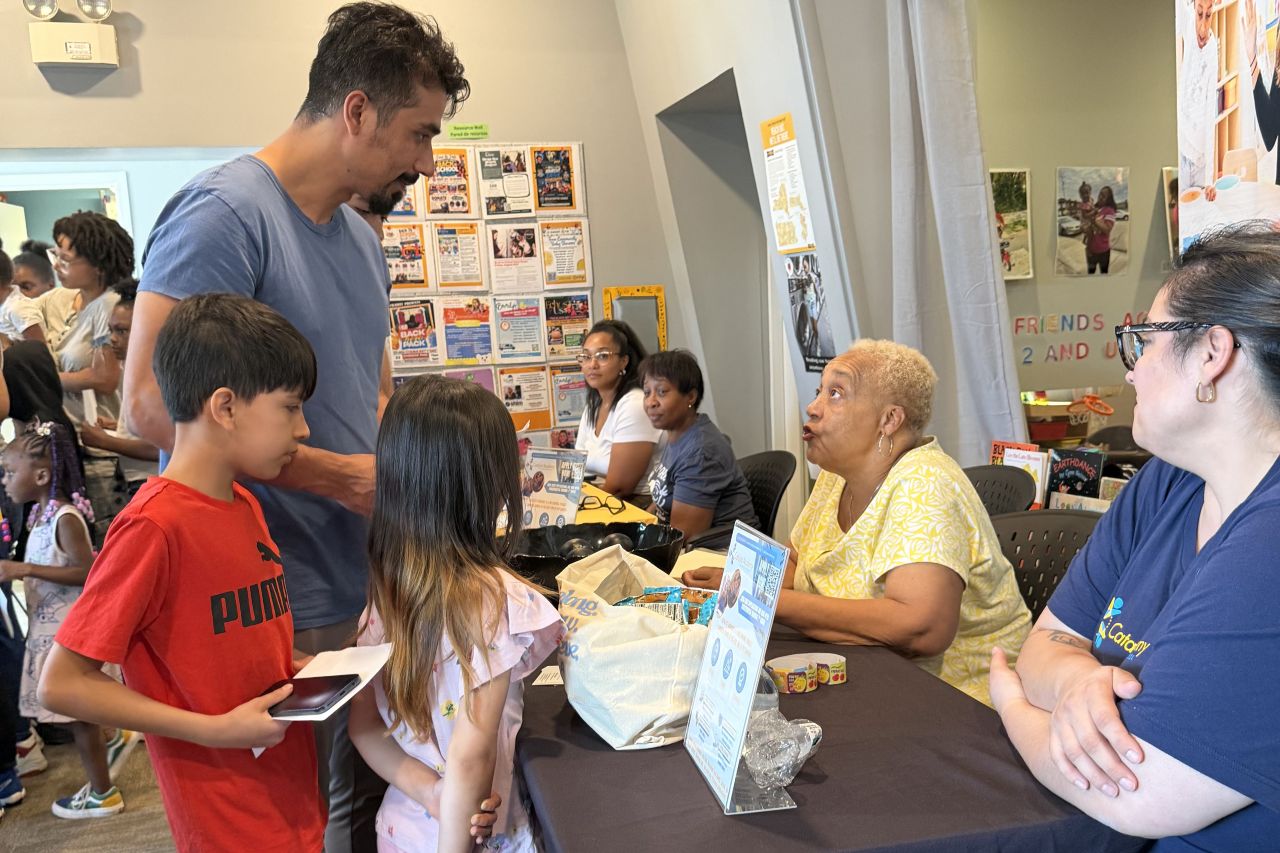

“Many families in our area aren’t familiar with pre-k and the importance of sending their child to school before kindergarten,” Beasley said. “We let caregivers know that by sending their child to pre-k or Head Start, they are giving their child the best opportunity to develop important skills and prepare for kindergarten”

Educators and child care providers attended the event to meet with families and help enroll  children in early learning programs. They also provided information about free pre-k options in the region and other ways to afford child care. 

Supporting Families

Attendees received a variety of materials at the open house, including backpacks, swag bags, coats, a variety of snacks and drinks, and personal hygiene products, such as soap, body wash, deodorant, toothbrushes, socks, and laundry detergent. They also took part in children’s activities and free blood pressure screenings.

“It wasn’t just school supplies,” Beasley said. “Children received hygiene supplies, clothing, and other items so they can start the school year feeling comfortable, confident, and with a sense of belonging.”

The Hub partnered with several organizations for the event. Beverly’s PGH Basics Boutique operated a truck, where participants could pick up everything from bedding and clothing to cleaning supplies, books, and toys. Students from the University of Pittsburgh School of Medicine’s Community Alliance Program held a discussion on postpartum care.

The Homewood Early Learning Hub & Family Center, located at 7219 Kelly Street, supports the early learning needs of children, families, and early educators in Homewood. It offers developmentally appropriate activities for children from birth to age 9, individual and group support for parents to set and meet goals for their family, and professional growth opportunities for providers.

Child Mind Institute Provides Tips for Students Starting Elementary, Middle, or High School

News

August 25, 2026

Child Mind Institute Provides Tips for Students Starting Elementary, Middle, or High School

Although the sun is still shining and families are still taking vacations, the return to school is not far off.

This can lead to a combination of excitement and nervousness. For some, a new school year means a different teacher and classroom, but for others it could be a new school and higher expectations.

Learn More

The Child Mind Institute has put together some resources and suggested some strategies for a successful return to school. Some resources explore what children in transition years can expect, what skills they will need to develop, and how caregivers can support those who may be anxious.

One article discusses how kindergartners need to build independence and stamina for longer days and more structured learning activities, while middle schoolers will be changing classes for the first time and dealing with a heavier workload.

And high school freshmen will face pressure to effectively manage their time and develop productive study habits. Children of all ages will face social and emotional challenges and new opportunities as they navigate larger groups and more complex interactions.

The Child Mind Institute’s resources include:

State DCNR Announces New Planning Tools, Updates to Accessible Recreation Website

News

State DCNR Announces New Planning Tools, Updates to Accessible Recreation Website

Pennsylvania’s Department of Conservation and Natural Resources (DCNR) has announced new planning tools, communication boards, and updates to its accessible recreation website pages to help visitors to plan trips to the state’s public lands.

Learn More

The DCNR recently announced several ways that it is making state parks and forests more accessible for all visitors.

The agency said it is making major updates to its accessible recreation website pages. More than 100 state park and forest webpages now list detailed accessibility features. 

These pages continue to be updated and include information about accessible facilities and amenities, such as lodging, pavilions, water access, fishing access, hiking, hunting, beaches, loaner equipment, colorblind viewfinders, wildlife-watching areas, theaters, amphitheaters, and environmental education centers.

A new search function on the websites allows visitors to filter locations by the specific accessibility features they are looking for.

The DCNR also announced new:

  • Online planning tools
  • Communication boards at seven state parks
  • Handy Talkers
  • Colorblind viewing resources for all visitors to plan trips and enjoy Pennsylvania’s public lands.

For more information on the DCNR’s new features, visit the department’s website.

Pennie Announces Open Enrollment Season for the Upcoming Year

News

August 24, 2026

Pennie Announces Open Enrollment Season for the Upcoming Year

Pennie has announced that its open enrollment season this year will run from Sunday, November 1 through Friday, January 15.

Learn More

Pennie offers health coverage from the top health insurance companies in Pennsylvania. Those who use it can get personalized help from a Pennie-certified professional at no additional cost.

To get coverage for the year, one must enroll during the open enrollment period. If there is a qualifying life event – such as loss of health coverage, marriage, change of residence, or other changes – residents can enroll during a special enrollment period.

Those interested in enrolling should:

  • Use the Plan Comparison Tool in Pennie to see plans in their coverage area and within their budget.
  • Apply after gathering household information. Consult Pennie’s shopping checklist. 
  • Filter and compare health plans by needs and cost.
  • Pay for coverage, which will not begin until the first month’s premium has been paid. For most health plans, you can make your first payment at the same time you enroll.

Pennie’s coverage includes free preventive care, covers a wide range of medical services, and cannot be denied because of a preexisting condition. 

To schedule an appointment or for more information, visit Pennie’s website.

PA Promise for Children Releases List of August Books for Preschoolers

News

PA Promise for Children Releases List of August Books for Preschoolers

PA Promise for Children has released its list of August books for preschoolers that includes eight titles across four categories.

Learn More

This month’s titles fall under the categories of Language and Literacy Skills, Social Studies Thinking, Science Thinking and Technology, and Mathematical Thinking and Expression.

The list of August books for preschoolers includes:

Language and Literacy Skills

  • Click, Clack Moo Cows That Type (Doreen Cronin)
  • Dear Panda (Miriam Latimer)

Social Studies Thinking

  • Maisy Goes to Preschool (Lucy Cousins)
  • Mr. Gumpy’s Motor Car (John Burningham)

Science Thinking and Technology

  • Oscar and the Cricket (Geoff Waring)
  • And Everyone Shouted, “Pull!” (Claire Llewellyn)

Mathematical Thinking and Expression

  • Lengthy The Long Long Dog (Syd Hoff)
  • Big Dog… Little Dog (P.D. Eastman)

The full list can be viewed online.

Trying Together Builds Network For Alumni of CDA Credential

News

August 19, 2026

Trying Together Builds Network For Alumni of CDA Credential

Trying Together helps educators to obtain their Child Development Associate (CDA) credential, a widely recognized credential in the early childhood education field and a key stepping stone on the path to career advancement.

Trying Together has recently formed a CDA Alumni Network as a means of staying connected with the participants who have taken the course.

Learn More

The CDA credential is based on a core set of competency standards that guide early learning professionals in their work to build on their professional experience and expertise. 

Lindsey Vicoria, Trying Together’s Career Pathways program manager, said the CDA network currently consists of nine Trying Together CDA Cohort alum – two from Fayette County and seven from Allegheny County.

“We had this idea of building up our CDA alumni network,” Vicoria said. “We have kept contact with a lot of great early educators, but sometimes we lose touch after they get their CDA. So, we wanted a way to strengthen that connection.”

She said the idea for the network is to provide a leadership development opportunity for the CDA alumni who want to dive a little deeper into the work and to provide feedback for Trying Together’s growing CDA program.

Current participants in the CDA Alumni Network hold a variety of positions in the education field, from leadership to administration and educator roles. The group meets quarterly and holds both virtual and in-person meetings.

“I think it’s important for two reasons – to strengthen our CDA program through continuous practitioner-informed feedback and to develop a pipeline of emerging early childhood education leaders who are connected to the work of Trying Together,” Vicoria said. “It’s intended to professionalize the field, build emerging ECE leaders, and expand Trying Together’s visibility and credibility through authentic educator voices.”

The network takes part in a variety of activities, including skill building, workshops, and CDA program feedback and insight. For example, the council provides feedback and reflection on any new CDA components that are introduced.

Vicoria said the network provides a great opportunity for networking. She added that she is encouraged by the group’s growth.

“This is an opportunity for educators from across the region to network, build relationships, and share practices,” she said. “I feel energized by the meetings and the joy in the space when all of these educators get a chance to get together. It makes me excited for the future of the field and the leaders who Trying Together is connected to.”

Those interested in getting involved can email Vicoria at lindseyv@tryingtogether.org. Participants should be alumni of Trying Together’s CDA credential course from one of the 10 counties that Trying Together covers.

Institute for Early Childhood Career Pathways and the CDA Credential

The Institute for Early Childhood Career Pathways is the central hub for Trying Together’s workforce development programs, bringing together education, career pathways, and professional growth opportunities, with the goal to support the early childhood workforce.

The CDA Credential Program offered by the institute constitutes 135 hours of professional development over the course of approximately six months, focusing on practice knowledge and skills early learning professionals need to become credentialed.Trying Together is actively enrolling students for the fall’s CDA cohort.

A CDA credential enables early learning professionals to work in Head Start and Early Head Start classrooms in addition to early learning programs across the United States. Several topics are studied in a CDA program, including, but not limited to:

  • A healthy and safe learning environment
  • Physical, cognitive, language, and creative development
  • Social and emotional development
  • Positive guidance
  • Creating positive relationships with families
  • Program and classroom management
  • Observation and assessments
  • Professionalism in early childhood education

Thriving Kids Podcast Provides Tips on How to “Future Proof” Children

News

August 18, 2026

Thriving Kids Podcast Provides Tips on How to “Future Proof” Children

While no caregiver can know what their children will face in the years to come, that uncertainty doesn’t prevent them from doing what they can to prepare them for the future.

In a new episode of the Thriving Kids podcast, Dave Anderson, PhD, senior psychologist and vice president of public engagement and education for the Child Mind Institute, discusses the concept of “future proofing” children with Lisa Damour, PhD, a psychologist and best-selling author.

Learn More

The list of things that Anderson and Damour discuss that caregivers can do to support their children in the long run includes protecting sleep, prioritizing family meals, encouraging meaningful hobbies, and practicing flexible thinking and emotional durability.

The podcast provides several tips on building sustainable habits and fostering curiosity and resilience, including:

  • Protect your child’s sleep like it’s nonnegotiable: Set a consistent bedtime and stick to it. Build in screen-time before bed, so children are already winding down. Keep the bedroom cool, dark, and free of distractions such as glowing screens or exciting toys. Try to reserve the bed for sleep only, so it doesn’t become a place where homework or scrolling happens.
  • Build in regular, low-key time together: Aim to eat together regularly – it doesn’t have to be dinner and it doesn’t have to be every night. Keep phones and screens off during designated family time, even if you aren’t having a big talk. 
  • Support pursuing hobbies for fun: Encourage children to try new things simply because they are curious, not because it will look good on a resume. Help them to find something that’s genuinely theirs. Celebrate their effort and progress – and not just the end result – to help build their confidence and take on bigger challenges.
  • Model adaptability and resist the urge to prevent every hiccup: Help children understand how to adapt to change by showing them what to do. It’s OK to get frustrated when plans fall through, but show how you’re going to adjust so children have a template. When children are faced with a problem, resist the urge to overprotect or overdirect – let them navigate small setbacks on their own first.

To learn more, listen to the latest Thriving Kids podcast episode.

IECMH Shares Resources on Building Self-Esteem and Independence in Children

News

IECMH Shares Resources on Building Self-Esteem and Independence in Children

The Infant Early Childhood Mental Health Consultation (IECMH) program has provided resources for July on how to promote independence in children and help them to develop self-confidence.

The program notes that caregivers can begin nurturing a child’s self-esteem from the moment they are born. It suggested several resources by age group that include books and activities that caregivers can use early on to help build confidence. These include:

A child’s self-esteem, the IECMH notes, is rooted in the strong, loving relationships they experience at an early age. This foundation can set them up for long-term success as they grow and face challenges.

Resources on Self-Esteem and Building Independence

The program shared several resources on self-confidence, self-esteem, and helping children to gain independence. These include: