About
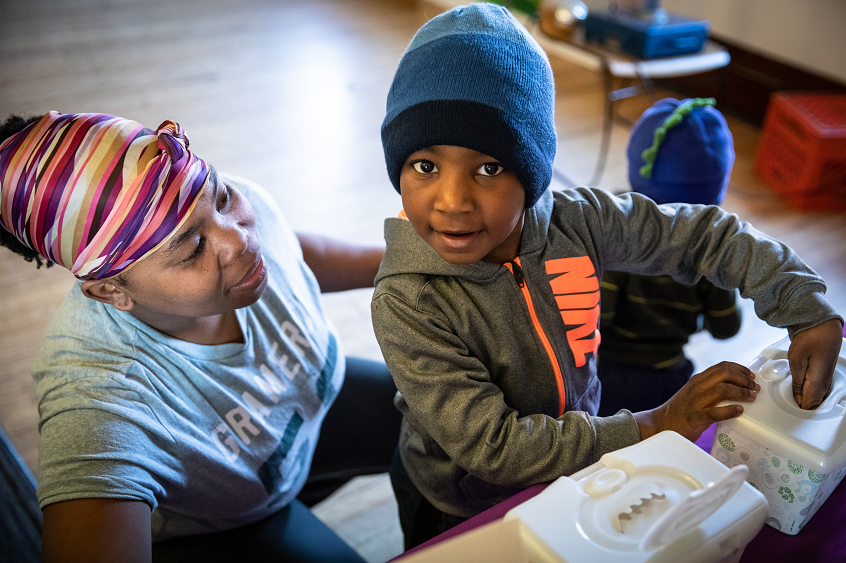
The Recess Advocacy Team is a group of organizations dedicated to health, wellness, education, and play with a focus on recess practices and policies in Pre-K through sixth grade. Parents, educators, and caregivers recognize how important recess is for a child’s success. Additionally, recess promotes social and emotional skills that become fundamental lifeline tools.
Learn More
A flyer is available for download and distribution to learn more about the importance of play and recess. View the Recess Advocacy Team flyer (PDF).
About
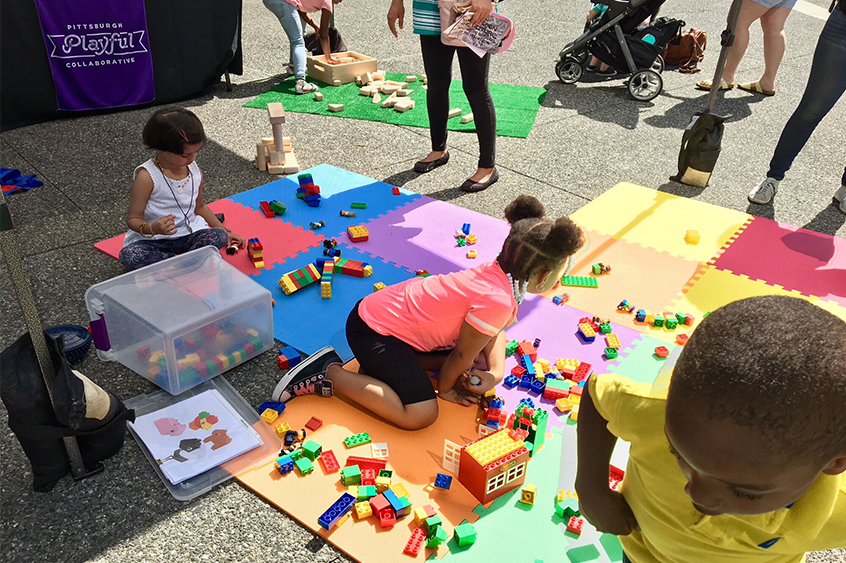
Singings songs to and with your child not only creates a playful, positive environment, it also teaches children important vocabulary and skills such as rhyming, rhythm, vocal pitch, and how to change the pace of their speech (fast, slow). In addition to these things, parents can use songs to help their child transition to new activities or to a new location!
In their resource “Songs, Rhymes, and Fingerplays in English and Spanish”, Zero to Three highlights several songs from Zero to Three Cornerstone Learning and Development Network member, Project Family. Project Family provides services across Arlington County, Virginia for low-income, predominantly Latino families with young children.
View the Resource
Songs are available in both English and Spanish. To view the list of songs, visit the Zero to Three website.
About
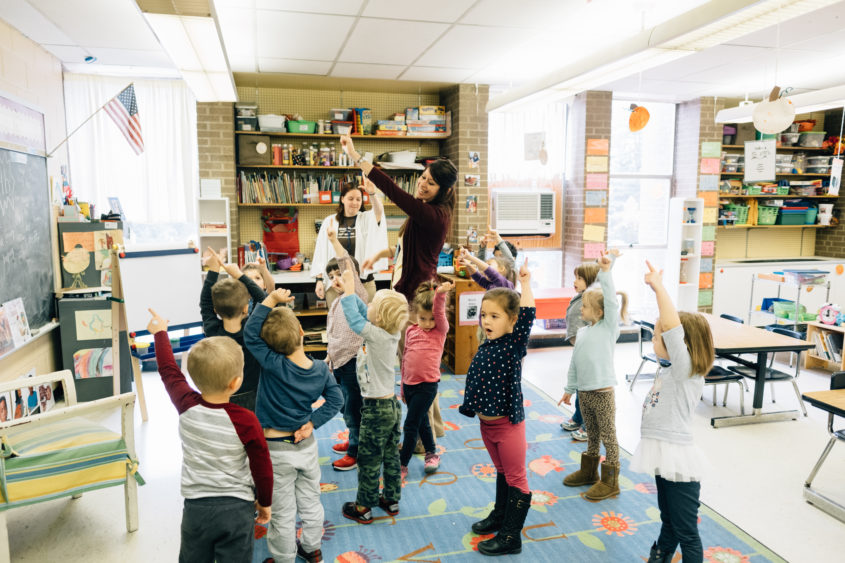
Are you looking for playful learning opportunities for your young child? Step outside and go on a learning adventure! In their resource “Outdoor Tips,” PNC Grow Up Great highlights several outdoor activities for you and your young child, including Exploring Your Shadow, Getting Creative with Storytelling, Making a Backyard Dig Site, and more!
View the List
Visit the PNC Grow Up Great website to view the list of activities.

Child Care and the COVID-19 Pandemic
Child Care Operations in Pennsylvania
During the COVID-19 pandemic, all child care programs located in counties in the yellow or green phase of Governor Tom Wolf’s Process to Reopen Pennsylvania are permitted to offer services to families and caregivers without a waiver. However, to maintain the health and safety of children, families, and staff, all programs must comply with the Center for Disease Control and Prevention’s Guidance for Child Care Programs that Remain Open.
To better understand the type of care and services your early learning program is providing during the COVID-19 pandemic, ask your early learning professional the following questions. For additional questions on program quality, visit our Questions to Ask Your Early Learning Professional page.
Questions to Ask Your Child Care Program
-
- What are your current operating hours? (COVID-19 might have affected the normal hours.)
-
- What is the health screening process you are implementing for children and staff?
-
- What is your drop-off and pick-up process right now?
-
- What is your policy regarding visitors and non-essential staff in your program?
-
- What is your program’s policy on adults and children wearing masks?
-
- Can you share with me a little about your handwashing and hygiene practices?
-
- What is the staff-to-child ratio you are currently following?
-
- How are you handling groupings of children and use of space in general (ie., meals, nap time, outdoor activities)?
-
- How is your program communicating with families?
-
- Can you tell me about the communication you will have with families about illnesses?
-
- Does the program have an emergency plan for a child or staff member showing COVID-19 symptoms?
-
- Can you share your sick/illness policy with me before enrolling?
-
- How will you meet the developmental needs of my child while following the health and safety guidance of the CDC?
-
- Do you have an outside play area or a plan to get children outside every day?
-
- Recognizing the increased need for cleaning and sanitation, are cleaning supplies and chemicals locked up and out of the reach of children?
Print this Resource
This list of questions is also available as a printable Family Checklist (PDF).
Find Child Care
Is your family in need of child care? Use the Allegheny Child Care tool to search for child care, before and after school programs, and summer programs near you! This tool displays real-time available child care slots at early learning programs in Allegheny County. Visit our Find Child Care page to learn more and start your search.
More Information
If you are looking for additional questions to assess program quality, visit our Questions to Ask Your Early Learning Professional page. For more information and to stay up-to-date on COVID-19 guidance, please visit the Pennsylvania Department of Health website.
Type & Quality of Care
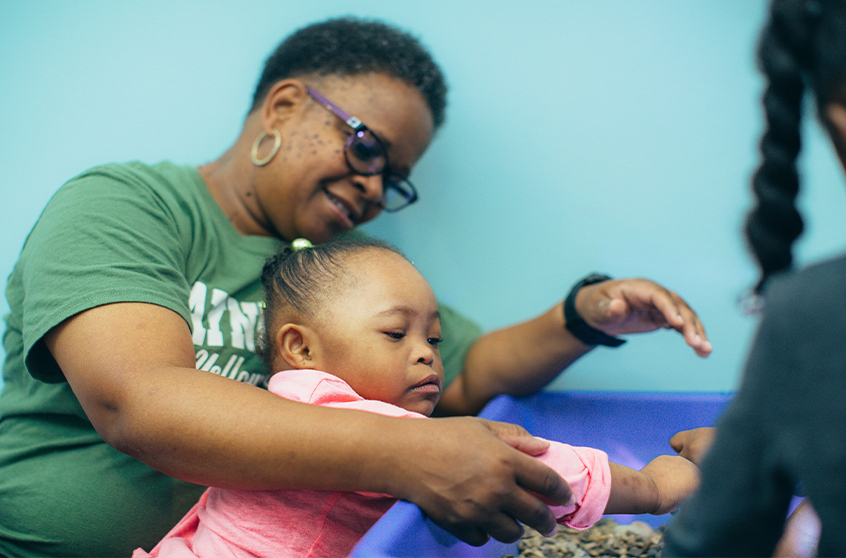
When a child has access to high-quality early care and learning environments, they have access to certified, experienced professionals who support their development. To learn more about the type and quality of care your child care professional is providing, consider asking the following questions:
Program Details
-
- What will a typical day for my child look like?
-
- Does your program use a play-based curriculum? Can you tell me a little bit about it?
-
- Is your facility Keystone STARS certified? If so, what is your STAR level?
-
- How does your program contact families?
-
- Will there be family engagement events or opportunities? Can you tell me more about them?
Health and Safety
-
- What is your adult-to-child ratio for each age group?
-
- How will I be alerted if there is an emergency?
-
- What is your facility’s Emergency Preparedness Plan?
-
- Are all staff at your program certified in pediatric CPR and first aid?
-
- Are all staff at your program required to complete a PA Child Abuse History Clearance, PA State Police Criminal Record Check, FBI Criminal History Background Check, and National Sex Offender Registry Clearance?
Qualifications
-
- Is your program state certified?
-
- What other qualifications or certifications are staff required to have at your location?
-
- What topics are staff regularly trained on or learning about?
-
- How often do your staff access professional development courses?
Reflection
In addition to asking questions, parents and caregivers can benefit from personally reflecting on their visit to the early learning program. Take a few minutes to answer the following questions:
-
- What did you notice during your visit to the early learning program?
-
- Were caregivers playing with and talking to children at their level?
-
- Were caregivers using a warm tone and kind touch to engage with children?
-
- Were caregivers responsive rather than reactive?
-
-
- Were toys and materials readily available for children to engage with?
Print this Resource
This list of questions is available as a printable PDF.
More Information
Looking for additional questions you can ask to learn about your program’s updated procedures and operations during the COVID-19 pandemic? Visit our Questions to Ask Your Early Learning Provider During the COVID-19 Pandemic page.
About
At the earliest stages of your child’s life, it may seem like they can’t do too much. But that’s not true! Infants and toddlers are always learning and developing. To learn how you can support the early development of your young child, read the facts and opportunities highlighted below.
What is Developmentally Appropriate Practice?
Developmentally Appropriate Practice (DAP) is the approach early care and education professionals use to teach young children. Developmentally Appropriate Practice:
-
- is grounded in research on how young children learn;
-
- provides a connection to real-world experiences and opportunities to gain knowledge and skills through hands-on learning;
-
- prepares children for future learning; and
-
- acknowledges the role of play in learning and development.
Facts and Opportunities
FACT: All children, including babies, learn through play. Play is an important way that young children bond with their caregivers; develop cognitive, physical, social, and emotional skills; and build an understanding of the world around them.
-
- Regularly touching, talking, and responding to your child’s sounds and needs will solidify the bond between you and your child. Look your baby in the eyes, sing songs to them, and interact with them regularly through play activities.
-
- A simple game of peekaboo not only leaves your baby giggling and smiling, but it also provides a chance for children to make eye contact with their caregiver; practice their arm and head movements; and learn that even if a person or object disappears from their view, it still exists somewhere else.
-
FACT: Starting from birth, meaningful play experiences help your child build background knowledge, imagination, and rational thought that enables academic skill development. In fact, play is the primary way your child uses language and math concepts.
-
- As an infant or toddler, your child is taking in new sights, sounds, smells, and sensations. Broaden your child’s horizon by taking a stroll through nature, narrating what you see, smell, hear, and feel during the journey. This will expose your baby to new vocabulary through a positive outdoor experience.
-
- Support your child’s ability to make choices that interest them as a way to guide their math and literacy skills. Start by providing multiple book and activity options to your child and let them choose the one they are interested in.
-
- Find a playful way to introduce math concepts. For example, you can use healthy food items like apple slices, grapes, or raisins to introduce concepts of adding, subtracting, and grouping during snack time. Use words like more, less, first, after, rectangle, circle, heavier, and other common math terms.
FACT: In addition to learning skills like counting and speaking in sentences, it’s important for children to practice social, emotional, and physical skills that support their future success inside and outside of the classroom.
-
- With supervision, give your baby their own spoon at mealtime or give them a child-safe bowl and spoon to play with. You can also give your baby blocks and balls to strengthen their grip, practice their holding skills, and improve dexterity.
-
- Be expressive with your face and make eye contact with your child. This will teach them different social expressions that help with non-verbal communication. Use your eyes and hands to point to something to teach the child how to follow other people’s cues. You can also introduce your child to the names of emotions during this time.
-
- Encourage social skill development by providing opportunities for your child to meet and play with family members, friends, and caregivers. This allows children to develop relationships with people other than the parent or primary caregiver and helps build feelings of trust.
FACT: While caregiver-child play is important, unsupervised child-led play helps children become independent and make decisions.
-
- Provide opportunities for your child to practice sharing, teamwork, creativity, and independence by inviting other children over for a playdate (when possible). Gather a box of household items like clothes, child-safe dishes, books, and more and let the children determine how they will use them.
-
- Introduce your child to new items and materials. Let them touch the items and work to figure out what they do and how they work. If your child is expressing frustration, provide them with a quick demonstration or how-to. After that, let your child take the lead and try it out themselves.
-
- Include times throughout the day where your child must direct their own play. In a safe environment (preferably a location with a baby monitor), leave your child unattended with child-safe play items for a short period of time. Monitor how your child handles the situation and if they play with the items. Each time you leave, stay away for a bit longer to encourage the development of self-regulation skills.
Print this Resource
To learn more and view the full guide, view the free printable PDF of this resource (English) (Español). Additional information is available. To learn more, please visit our Developmentally Appropriate Practice: A Guide for Parents page.
About
Early childhood is an important time when children experience rapid development, learn important skills, and learn more about the world around them. To learn how you can support the early development of your child, read the facts and opportunities provided below.
What is Developmentally Appropriate Practice?
Developmentally Appropriate Practice (DAP) is the approach early care and education professionals use to teach young children. Developmentally Appropriate Practice:
-
- is grounded in research on how young children learn;
-
- provides connection to real-world experiences and opportunities to gain knowledge and skills through hands-on learning;
-
- prepares children for future learning; and
-
- acknowledges the role of play in learning and development.
Facts and Opportunities
FACT: Meaningful play experiences help your child build background knowledge, imagination, and rational thought that enables academic skill development. Consider:
-
- Playing with your child in a water table helps them understand math concepts like shapes and measurements, as well as science concepts like float, sink, and waves.
-
- Asking your child questions about observed activities, encouraging experimentation, and helping them understand cause and effect relationships during play.
-
- Including playful elements like using reusable materials to create their own inventions.
FACT: Play is the primary way your child uses language and math concepts. Consider:
-
- Allowing your child to construct stories during imaginative play will later become the foundation for creative writing.
-
- Helping your child recreate elements of familiar books during play, demonstrating the understanding of characters, emotions, and empathy.
-
- Supporting your child to make choices that interest them as a way to guide their math and literacy skills.
-
- Asking what strategies your child’s teacher uses for reading instruction.
-
- Asking if worksheet and book activities are made playful.
FACT: Dramatic play helps your child develop executive functioning and the ability to self-regulate. Consider:
-
- During dramatic play, take turns with your child contributing ideas into imagined scenarios.
-
-
- Providing your child with opportunities to make choices in their learning.
FACT: Physical movement—including the freedom to play—helps your child improve his/ her behavior and attention. Consider:
-
-
-
- Asking your child’s teacher if physical activity is part of the classroom routine.
Print this Resource
To learn more and view the full guide, view the free printable PDF of this resource (English) (Español). Additional information is available for parents and caregivers of infants and toddlers. To learn more, visit our Developmentally Appropriate Practice: A Guide for Caregivers of Infants and Toddlers page.
About
Tummy time helps to build a foundation for other skills as an infant develops proper alignment of the spine and the postural control needed for sitting, crawling, and walking. It’s also an opportunity to practice visual tracking, which is when your child moves their eyes in a coordinated manner as they turn their head.
In their resource “Tummy Time: An Important Child Development Milestone,” the Early Learning Institute (TELI) provides more information about tummy time and highlights opportunities for parents to support.
Learn More
To learn more, visit the Early Learning Institute website.
Developmentally Appropriate Practice
Early childhood education plays an important role in the learning and healthy development of young children. However, to best support children’s cognitive, physical, social, and emotional development, parents, caregivers, and professionals must meet each child where they are at in their personal learning and development. Developmentally Appropriate Practice (DAP), a practice well-known in the early childhood field, is based on knowledge—not assumptions—of how children learn and develop.
To help guide families in understanding, identifying, and implementing DAP methods, Trying Together developed the following resource content. Use the links below to navigate to each series section and learn more.
Featured Topics
What is Developmentally Appropriate Practice?
Developmentally Appropriate Practice (DAP) is a practice well-known in the early childhood field, but what exactly is it? Visit our Developmentally Appropriate Practice post to learn about its benefits and what it looks like in practice.
Early Learning: Myths vs Facts
There are many misconceptions about early learning, especially when it comes to what early learning looks like. Visit our Early Learning: Myths vs Facts post to view answers to common myths.
Creating Play Rich Environments: DAP at Home
As children’s first teachers, parents and caregivers play a vital role in children’s healthy development. Visit our Creating Play Rich Environments post to learn how you can incorporate DAP at home.
Developmentally Appropriate Parenting: Guides for Parents and Caregivers
Early childhood is an important time when children experience rapid development and there are plenty of opportunities for parents to support this growth. To learn more, visit the following posts:
Questions to Ask Your Early Learning Provider
To better understand the type of care and services your early learning program is providing during the COVID-19 pandemic, it’s important for caregivers to ask their early learning provider questions. For a list of questions, visit our Questions to Ask Your Early Learning Provider During COVID-19 post.
Additional Topics
Additional topics and resources are available. To view the full list, visit the Developmentally Appropriate Parenting page.
More Information
To stay up-to-date on available resources, follow Trying Together on Facebook and Twitter or sign up to receive our newsletter.
What is DAP?
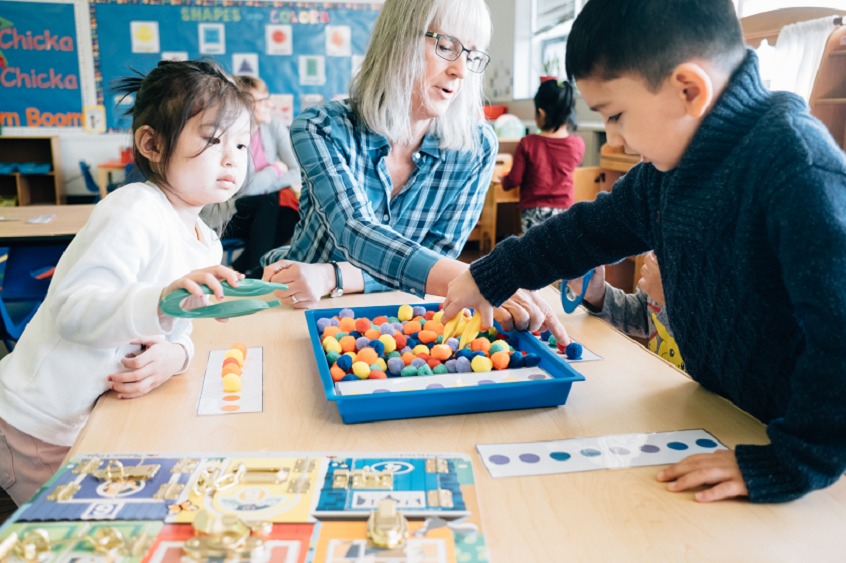
Developmentally Appropriate Practice (DAP) is an approach that early care and education professionals use to support the learning and development of young children birth to age nine.
Benefits of DAP
By implementing DAP methods with their young children, parents and caregivers:
-
- use strategies and activities that are proven to help young children learn;
-
- use hands-on learning activities to help young children develop practical knowledge and skills; and
-
- recognize the important role that play has in early childhood learning and development.
What DAP Looks Like
If your child is enrolled or is enrolling in early learning programs, ask your provider how they incorporate DAP into their day-to-day work. Parents and caregivers are also encouraged to incorporate developmentally appropriate activities and methods with their children at home. In developmentally appropriate environments, your child will:
-
- move around rather than wait;
-
- speak rather than listen passively;
-
- use their creativity to create their own books and art;
-
- follow a schedule based on their needs;
-
- attempt to solve their own problems;
-
- explore their own interests;
-
- have opportunities to make their own choices; and
-
- learn through experience rather than mechanical repetition.
To view the full list, download our printable DAP Guide for Families (PDF).
More Information
For more information, watch this webinar recording of “Advance Developmentally Appropriate Practice: How Young Children Learn.”