Using Play to Support Children’s Physical Health

News

December 14, 2020

Using Play to Support Children’s Physical Health

Creating play-rich early environments.

As children’s first teachers, parents and caregivers play a vital role in supporting their children’s healthy development. While it may sound like a big task, the first step is simple: incorporate developmentally appropriate activities into your daily routines!

Physical Activity Recommendations

Birth to one year old:

Caregivers should encourage their infants to practice movement skills while their infant is awake. These skills include supporting their head, rolling, crawling, walking, and picking up both small and large objects. Include at least 30 minutes of tummy time every day.

Ages two to five years old:

It is recommended that toddlers remain physically active throughout the entire day through a combination of play-based activities. Aim to include a mix of structured, adult-led play and unstructured, free play every day.

    • Structured play activities follow rules to reach a specific goal. Examples include assembling a LEGO set, playing organized sports like soccer, and playing tag.
    • Unstructured play is child-led, improvised, and creative. It does not follow a specific set of rules. Examples include playing with blocks, creating new games to play, and improvised dance.

Ages six years old and older:

Children in this age range should get at least 60 minutes of moderate-to-vigorous physical activity every day. There should be a mix of aerobic (running, swimming, jump roping) and bone- and muscle-strengthening activities (climbing, yoga, basketball, bodyweight exercises).

Playful Activity Ideas

Consider using these activities to get your family up and moving!

Infants and Young Toddlers: Household Item Play

With supervision, give your child their own spoon at meal time or give them a child-safe bowl and spoon to play with. You can also give your baby blocks and balls to strengthen their grip, practice their holding skills, and improve dexterity.

Pre-k: Muddy Maneuvers

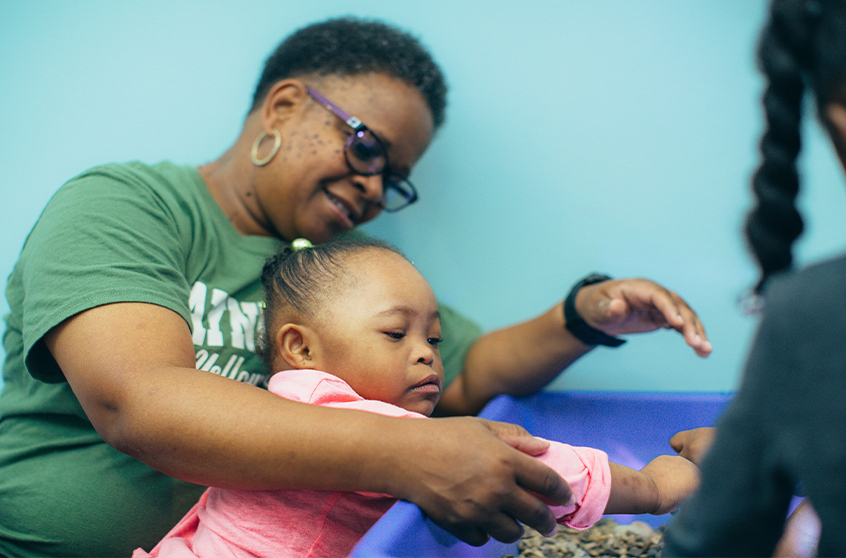
Even though mud is messy and slippery, it provides a lot of great play opportunities for you and your child. Let your child take off their shoes; squish mud between their toes and fingers; make handprints, footprints, and mudpies; and more! Just bring some water and towels to clean up after!

Kindergarten: Nature Hunt

Take a walk in nature with your child and try to find local animals, plants, and bugs. If you have them, bring binoculars to see how far away you can see and a magnifying glass to get a closer look at bugs and plants. You can research information online about local plant life and wildlife to create a scavenger hunt and list of fun facts! For example, what type of animal is it? What does it eat?

School Age: Hold that Animal Pose (Yoga)

Challenge your child to pose like a giraffe, flamingo, and other animals to help build their muscles, practice their balance, and work on patience. You can find examples of yoga animal poses beforehand or tune in to your creativity to create poses (with your child) on the spot! For an extra challenge, ask them to hold a book, milk jug, or another household item while holding the pose.

Resources

Developmentally Appropriate Parenting Series

Developmentally Appropriate Parenting is a family resource content series developed by Trying Together as an effort to empower caregivers to create high-quality experiences at the earliest stages of their child’s life.

Playful Pittsburgh Collaborative

The Playful Pittsburgh Collaborative is a group of organizations dedicated to advancing the importance of play in the lives of children, families, and communities in the Pittsburgh region. Read their blog to learn about playful activities for children of all ages.

KidsHealth

The KidsHealth website features a wide range of information on childhood health topics such as exercise, breastfeeding, nutrition, and more.

Print This Resource

This resource is available as a printable PDF (English) (Español).
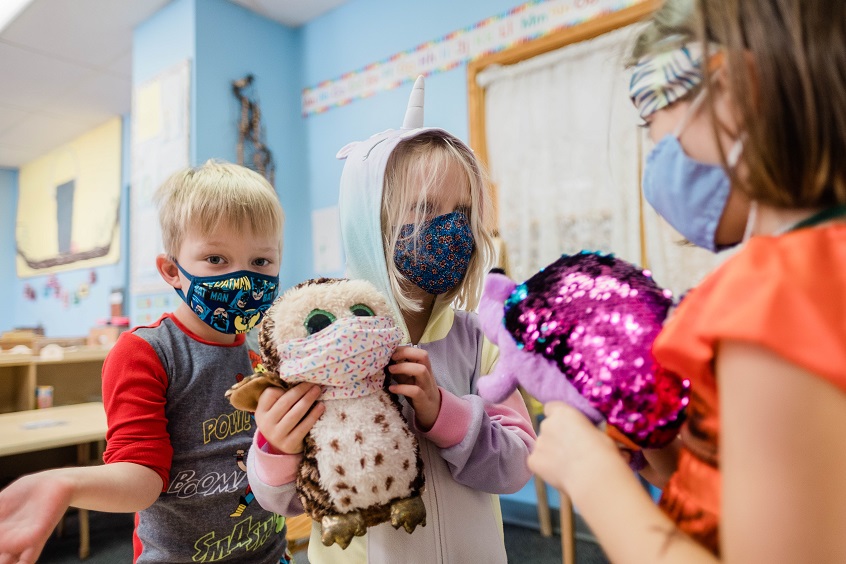
 

Child Care and Education Planning Tools

News

September 10, 2020

Child Care and Education Planning Tools

About

Due to the COVID-19 pandemic, many early learning programs and all schools in Pennsylvania had to close abruptly and drastically adjust their operations. In turn, this left many families without access to child care and education services for their children.

In response to this crisis, Trying Together and our partners worked rapidly to develop several new platforms and resources to support the continuity of care and education for families in Southwestern Pennsylvania and to support the early learning professionals who provide these services.

To learn about our tools and resources, continue reading below. Share this flyer with your network.


Allegheny Child Care

In partnership with the Allegheny County Department of Human Services and Allegheny Partners for Out-of-School-Time (APOST), Trying Together developed Allegheny Child Care. By using this online tool, parents and caregivers of young children can search for available child care spots at early learning, after-school, out-of-school, summer camp, and virtual programs in Allegheny County.

To use the tool, visit the Allegheny Child Care website. For additional support in finding child care and/or funding your child care needs, visit the ELRC Region 5 website or call 412.350.3577.

Family Care and Education Forum

In response to uncertainty surrounding the 2020-21 school year, Trying Together launched the Family Care & Education Forum. This new resource connects parents and caregivers across Southwestern Pennsylvania and provides a space to ask questions, network, and support one another.

Upon signing up, users will be able to post questions, respond to comments, and learn more about care and education opportunities in their area. To discuss your care and education plans for this fall with other families, visit the new Family Care and Education Forum.

Early Learning Resource Center (ELRC) Region 5

Pennsylvania’s Early Learning Resource Centers (ELRCs) provide a single point-of-contact for families, early learning service providers, and communities to gain information and access services that support high-quality child care and early learning programs.

To request support and learn more, visit the ELRC Region 5 website or call 412.350.3577.


How to Find, Choose, and Pay for High-Quality Child Care

News

August 11, 2020

How to Find, Choose, and Pay for High-Quality Child Care

About

Choosing child care for the young children in your life can be less stressful if you know what to look for when determining whether or not a program is “high-quality.” Continue reading below to learn what to look for, how to find and pay for child care, and more!


What to Look For

Caregivers who:

    • communicate through talk and touch, songs, and stories
    • engage at the child’s level, sitting, squatting, or laying on the floor
    • use a warm and supportive tone of voice while addressing a behavior or redirecting attention

Classrooms and settings that include:

    • organized, clean, and accessible materials for children to select without adult assistance
    • a variety of materials available for all types of play:
      • physical—developing gross and fine motor skills
      • object—sensory tables with rice, sand, or water, loose parts play
      • dramatic—costumes, housekeeping, or kitchen objects
      • constructive—art materials, blocks
      • games with rules—fingerplays to music or books, board games

Curriculum:

    • play-based and allows for exploration, creativity, and inquiry

Family Engagement that includes:

    • an open-door policy for family members to drop-in
    • regular updates about a child’s day
    • special events, family nights, and programming in the evenings or on weekends

Designations like:

* Note that only licensed child care programs may participate in these rating systems.


Find Child Care

Now that you know how to determine if a program is high-quality, it is time to find programs that meet your location, time, and transportation needs. Here are a few resources to support your search.

Allegheny Child Care

Caregivers and parents of young children can now search available child care spots at all Allegheny County early learning, after-school, out-of-school, summer camp, and virtual programs in real-time with the Allegheny Child Care tool. Visit the Allegheny Child Care website to try it out and learn more.

Early Learning Resource Center (ELRC) Region 5

ELRC Region 5 provides a single point-of-contact for families, early learning services providers, and communities to gain information and access services that support high-quality child care and early learning programs. To learn more, visit the ELRC Region 5, email elrc5@alleghenycounty.us, or call 412.350.3577.

United Way of Southwestern Pennsylvania

To talk to a resource specialist, call 2.1.1 or text your zip code to 898-211. Pennsylvania 211 resource specialists will listen to your needs and connect you to programs in your community.


Paying for Quality Care

You found a high-quality child care program and are ready to enroll your child, but how do you pay for it? Do you qualify for publicly-funded programs? Learn more about qualifying for subsidy and supplemental payment programs available for families below.

Pre-K Counts

Pre-K Counts is available to families with incomes that are no more than 300 percent of the federal poverty guidelines. Pre-K Counts is a school-day, school-year program for children ages three to four. This program may give preference to four-year-olds.

Child Care Works

Child Care Works (CCW) is available to families with incomes that are no more than 200 percent of the federal poverty guidelines. Through CCW, children ages birth to 12 may receive a voucher to attend a child care program based on their family’s or household’s school or work schedule. A small co-pay is required from the family to receive services.

Head Start

Head Start is available to families with incomes that are no more than 100 percent of the federal poverty guidelines. Head Start is a school-day, school-year program for children ages three and four. This program may give preference to four-year-olds.

Early Head Start

Early Head Start (EHS) is available to families with incomes that are no more than 100 percent of the federal poverty guidelines. Early Head Start serves children birth to age two in home-based or center-based programs. Most of these programs are not full-time care.

Scholarships and Tuition Assistance

Even if you do not qualify for the programs listed above due to your income, many programs offer their own independent scholarships or tuition assistance programs. Ask each program you are considering if they offer financial assistance.


Take Action

After searching for an affordable high-quality program, too many families find themselves making compromises in the process. Affordable programs fill up quickly and many have long waiting lists. Simply put, there are just not enough high-quality slots to meet the needs of all families.

As a leading advocate in western Pennsylvania, Trying Together works every day with our local, regional, and state partners to advocate for child care access, affordability, and quality. Join our effort to expand access to high-quality child care by signing up to receive our advocacy action alerts!


Print This Resource

This resource is available as a downloadable PDF (English) (Español).

If Kids Built a City: Playful Pittsburgh Collaborative, Trying Together, and the Grable Foundation

News

June 16, 2020

If Kids Built a City: Playful Pittsburgh Collaborative, Trying Together, and the Grable Foundation

About

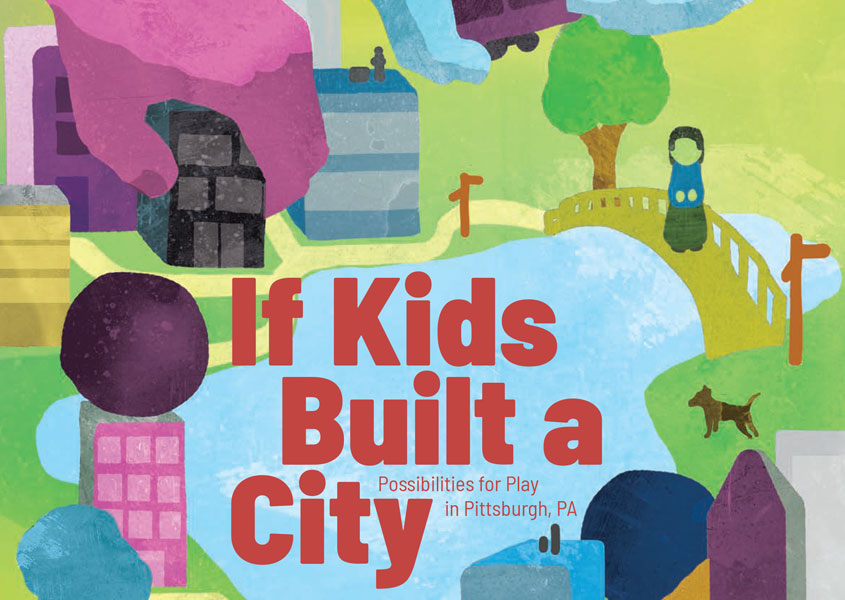
Pittsburgh, like many cities, is only at the beginning of its journey to intentionally build a playful city. Every day, Pittsburghers young and old are answering the call to play more often. In their report “If Kids Built a City,” Trying Together, the Playful Pittsburgh Collaborative, and the Grable Foundation explore the many ways to play in the city and its potential for more.

Download This Resource

To learn more, download the “If Kids Built a City” report (PDF).


Mister Rogers’ Neighborhood: The Songs

News

June 15, 2020

Mister Rogers’ Neighborhood: The Songs

About

Through his songs, Fred Rogers translated the concepts of child development into musical messages in a language that children could understand. Some songs celebrate good feelings. Some are calming. Others are for times when children are struggling with a particular issue like jealousy or persistence or being apart from a loved one.

View the List

To listen, access the full song list on the Mister Rogers’ Neighborhood website.


Today We Will Play Poster: Playful Pittsburgh Collaborative

News

Today We Will Play Poster: Playful Pittsburgh Collaborative

About

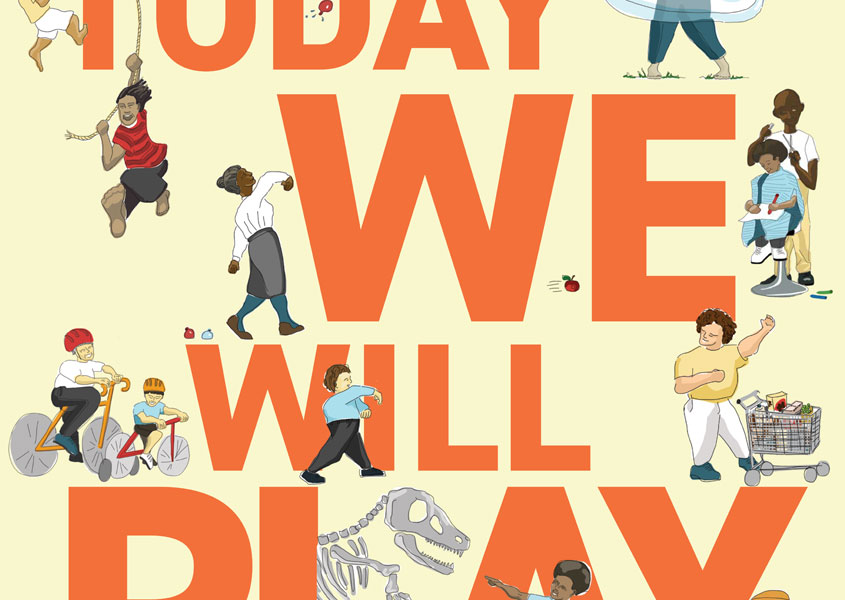
The Playful Pittsburgh Collaborative’s “Today We Will Play” poster features diverse scenes of play that take place in everyday life: at the grocery story, on the sidewalk, in the laundromat, at school, at home, in the office, and everywhere in between.

Download the Poster

To learn more and download the poster, visit the Playful Pittsburgh Collaborative’s website.


Questions for Your Early Learning Provider During COVID-19

News

Questions for Your Early Learning Provider During COVID-19

Child Care and the COVID-19 Pandemic

Child Care Operations in Pennsylvania

During the COVID-19 pandemic, all child care programs located in counties in the yellow or green phase of Governor Tom Wolf’s Process to Reopen Pennsylvania are permitted to offer services to families and caregivers without a waiver. However, to maintain the health and safety of children, families, and staff, all programs must comply with the Center for Disease Control and Prevention’s Guidance for Child Care Programs that Remain Open.

To better understand the type of care and services your early learning program is providing during the COVID-19 pandemic, ask your early learning professional the following questions. For additional questions on program quality, visit our Questions to Ask Your Early Learning Professional page.


Questions to Ask Your Child Care Program

    • What are your current operating hours? (COVID-19 might have affected the normal hours.)
    • What is the health screening process you are implementing for children and staff?
    • What is your drop-off and pick-up process right now?
    • What is your policy regarding visitors and non-essential staff in your program?
    • What is your program’s policy on adults and children wearing masks?
    • Can you share with me a little about your handwashing and hygiene practices?
    • What is the staff-to-child ratio you are currently following?
    • How are you handling groupings of children and use of space in general (ie., meals, nap time, outdoor activities)?
    • How is your program communicating with families?
    • Can you tell me about the communication you will have with families about illnesses?
    • Does the program have an emergency plan for a child or staff member showing COVID-19 symptoms?
    • Can you share your sick/illness policy with me before enrolling?
    • How will you meet the developmental needs of my child while following the health and safety guidance of the CDC?
    • Do you have an outside play area or a plan to get children outside every day?
    • Recognizing the increased need for cleaning and sanitation, are cleaning supplies and chemicals locked up and out of the reach of children?

Print this Resource

This list of questions is also available as a printable Family Checklist (PDF).

Find Child Care

Is your family in need of child care? Use the Allegheny Child Care tool to search for child care, before and after school programs, and summer programs near you! This tool displays real-time available child care slots at early learning programs in Allegheny County. Visit our Find Child Care page to learn more and start your search.

More Information

If you are looking for additional questions to assess program quality, visit our Questions to Ask Your Early Learning Professional page. For more information and to stay up-to-date on COVID-19 guidance, please visit the Pennsylvania Department of Health website.


Questions to Ask Early Learning Professionals

News

Questions to Ask Early Learning Professionals

Type & Quality of Care

When a child has access to high-quality early care and learning environments, they have access to certified, experienced professionals who support their development. To learn more about the type and quality of care your child care professional is providing, consider asking the following questions:

Program Details

    • What will a typical day for my child look like?
    • Does your program use a play-based curriculum? Can you tell me a little bit about it?
    • Is your facility Keystone STARS certified? If so, what is your STAR level?
    • How does your program contact families?
    • Will there be family engagement events or opportunities? Can you tell me more about them?

Health and Safety

    • What is your adult-to-child ratio for each age group?
    • How will I be alerted if there is an emergency?
    • What is your facility’s Emergency Preparedness Plan?
    • Are all staff at your program certified in pediatric CPR and first aid?
    • Are all staff at your program required to complete a PA Child Abuse History Clearance, PA State Police Criminal Record Check, FBI Criminal History Background Check, and National Sex Offender Registry Clearance?

Qualifications

    • Is your program state certified?
    • What other qualifications or certifications are staff required to have at your location?
    • What topics are staff regularly trained on or learning about?
    • How often do your staff access professional development courses?

Reflection

In addition to asking questions, parents and caregivers can benefit from personally reflecting on their visit to the early learning program. Take a few minutes to answer the following questions:

    • What did you notice during your visit to the early learning program?
    • Were caregivers playing with and talking to children at their level?
    • Were caregivers using a warm tone and kind touch to engage with children?
    • Were caregivers responsive rather than reactive?
    • Was the facility clean?
    • Were toys and materials readily available for children to engage with?

Print this Resource

This list of questions is available as a printable PDF.

More Information

Looking for additional questions you can ask to learn about your program’s updated procedures and operations during the COVID-19 pandemic? Visit our Questions to Ask Your Early Learning Provider During the COVID-19 Pandemic page.


test

tes

Developmentally Appropriate Practice: A Guide for Caregivers of Infants and Toddlers

News

Developmentally Appropriate Practice: A Guide for Caregivers of Infants and Toddlers

About

At the earliest stages of your child’s life, it may seem like they can’t do too much. But that’s not true! Infants and toddlers are always learning and developing. To learn how you can support the early development of your young child, read the facts and opportunities highlighted below.

What is Developmentally Appropriate Practice?

Developmentally Appropriate Practice (DAP) is the approach early care and education professionals use to teach young children. Developmentally Appropriate Practice:

    • is grounded in research on how young children learn;
    • provides a connection to real-world experiences and opportunities to gain knowledge and skills through hands-on learning;
    • prepares children for future learning; and
    • acknowledges the role of play in learning and development.

Facts and Opportunities

FACT: All children, including babies, learn through play. Play is an important way that young children bond with their caregivers; develop cognitive, physical, social, and emotional skills; and build an understanding of the world around them.

    • Regularly touching, talking, and responding to your child’s sounds and needs will solidify the bond between you and your child. Look your baby in the eyes, sing songs to them, and interact with them regularly through play activities.
    • A simple game of peekaboo not only leaves your baby giggling and smiling, but it also provides a chance for children to make eye contact with their caregiver; practice their arm and head movements; and learn that even if a person or object disappears from their view, it still exists somewhere else.

FACT: Starting from birth, meaningful play experiences help your child build background knowledge, imagination, and rational thought that enables academic skill development. In fact, play is the primary way your child uses language and math concepts.

    • As an infant or toddler, your child is taking in new sights, sounds, smells, and sensations. Broaden your child’s horizon by taking a stroll through nature, narrating what you see, smell, hear, and feel during the journey. This will expose your baby to new vocabulary through a positive outdoor experience.
    • Support your child’s ability to make choices that interest them as a way to guide their math and literacy skills. Start by providing multiple book and activity options to your child and let them choose the one they are interested in.
    • Find a playful way to introduce math concepts. For example, you can use healthy food items like apple slices, grapes, or raisins to introduce concepts of adding, subtracting, and grouping during snack time. Use words like more, less, first, after, rectangle, circle, heavier, and other common math terms.

FACT: In addition to learning skills like counting and speaking in sentences, it’s important for children to practice social, emotional, and physical skills that support their future success inside and outside of the classroom.

    • With supervision, give your baby their own spoon at mealtime or give them a child-safe bowl and spoon to play with. You can also give your baby blocks and balls to strengthen their grip, practice their holding skills, and improve dexterity.
    • Be expressive with your face and make eye contact with your child. This will teach them different social expressions that help with non-verbal communication. Use your eyes and hands to point to something to teach the child how to follow other people’s cues. You can also introduce your child to the names of emotions during this time.
    • Encourage social skill development by providing opportunities for your child to meet and play with family members, friends, and caregivers. This allows children to develop relationships with people other than the parent or primary caregiver and helps build feelings of trust.

FACT: While caregiver-child play is important, unsupervised child-led play helps children become independent and make decisions.

    • Provide opportunities for your child to practice sharing, teamwork, creativity, and independence by inviting other children over for a playdate (when possible). Gather a box of household items like clothes, child-safe dishes, books, and more and let the children determine how they will use them.
    • Introduce your child to new items and materials. Let them touch the items and work to figure out what they do and how they work. If your child is expressing frustration, provide them with a quick demonstration or how-to. After that, let your child take the lead and try it out themselves.
    • Include times throughout the day where your child must direct their own play. In a safe environment (preferably a location with a baby monitor), leave your child unattended with child-safe play items for a short period of time. Monitor how your child handles the situation and if they play with the items. Each time you leave, stay away for a bit longer to encourage the development of self-regulation skills.

Print this Resource

To learn more and view the full guide, view the free printable PDF of this resource (English) (Español). Additional information is available. To learn more, please visit our Developmentally Appropriate Practice: A Guide for Parents page.


Call It Child Care

News

May 29, 2020

Call It Child Care

Child care supports children’s healthy development and a lifetime of learning.

That’s why we call it child care.

In June 2018, the Pennsylvania state legislature passed House Bill 1677 to update Pennsylvania’s regulations and code to use the term “child care” rather than “day care” to reflect the work of early learning programs more accurately.

Trying Together worked closely with the bill’s prime sponsor, Representative Jason Ortitay, who represents Allegheny and Washington counties. Thanks to advocates like you, and Rep. Ortitay’s persistence, HB 1677 passed and was signed by the Governor.

Why Call It Child Care?

Trying Together recognizes that shifting commonly used language can be difficult. However, by using the term “child care” instead of “day care,” you recognize that:

1. The impact of child care is much longer than a day.

    • Early childhood programs support lifelong success for children and families. Research has shown that high-quality child care builds a strong foundation from which children grow and thrive.
    • By having access to early care and education programming, families experience multi-generational benefits, with young children achieving higher test scores and graduation rates, committing fewer crimes, and earning higher wages, to name a few.
    • Caregivers are able to reenter the workforce, increasing the financial stability of the family and the long-term professional success of the caregiver.

2. The words we use matter.

    • The words we use affect the public’s perception of the early care and education field and affect the field’s own accountability in providing high-quality care.
    • Using “child care” rather than “day care” recognizes the important work of these professionals, in addition to the work children put in to learn, develop, and grow.
    • Accurate language is critical to gaining respect, validation, and investments in currently under-resourced systems.

3. “Child care” acknowledges the complexity of high-quality early care and education programs.

    • High-quality child care programs employ, develop, and retain educated credentialed staff.
    • Child care professionals use a curriculum, lesson plans, and family engagement activities to promote the cognitive, social, emotional, and physical development of the children they serve.

How You Can Help

Please join us in the coming months as an advocate for the “Call It Child Care” initiative.

If you’re an early care and education professional, use the term “child care” when speaking about your work and update your materials as needed. If you’re a family or community member, embrace the term “child care” and use it when referencing your child’s program!

DIGITAL RESOURCE TOOLKIT

Interested in doing more? Use our digital resource toolkit to advocate for “Call It Child Care” today!

Watch This Video

Learn More

To learn more about the initiative, visit our Call It Child Care page.