News

July 14, 2026

PA Key Health Trend Report Focuses on How Screen Time Affects Early Childhood

The Pennsylvania Key’s latest health trend report focuses on screen time and digital media use in early childhood and provides tips for caregivers on how to regulate it.

Learn More

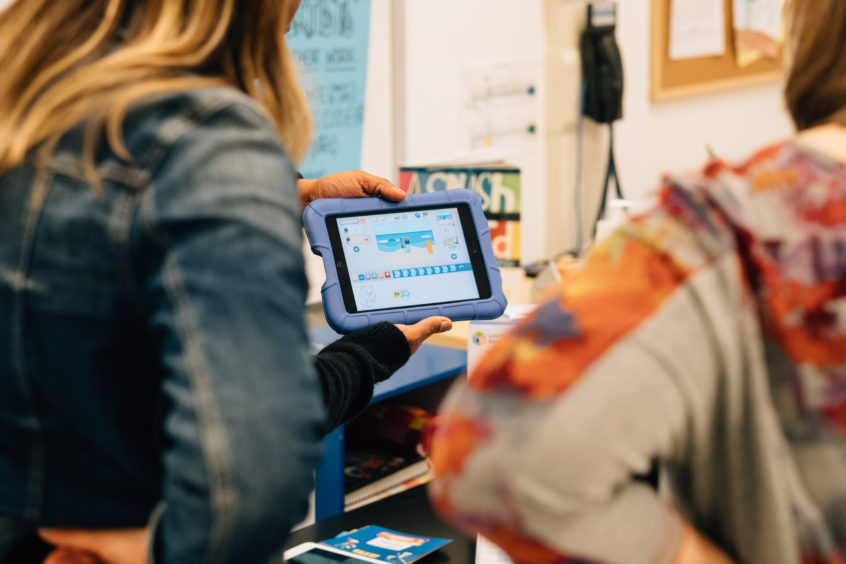
The report notes that screen time is now an integral part of daily activities for many families, and that it’s common for young children to use smartphones, tablets, interactive content, short-form videos, and AI-assisted learning apps.

By age 2, The Pennsylvania Key writes, four in 10 children have their own tablet and, by age 4, more than half do. Overall, about 47% of children under age 8 have their own tablet device.

Parent surveys show that one in five families use mobile devices to help manage their children’s bedtime routines, mealtimes, and emotional regulation. 

Impacts

Young children learn best from real-world interactions, so heavy solo screen use can affect their developing language and social skills, depending on how much time they spend daily on digital media and how adults use screens to calm or entertain them, the report notes.

Some concerns stemming from the misuse of digital media in young children include:

  • Delays in language, thinking, and social skills
  • Slower vocabulary growth and conversational skills
  • Fewer face-to-face interactions, which lead to less spent time learning with loved ones, less reading, less independent play, and less time moving around and for exploration
  • Overreliance on screens for emotional regulation
  • Fewer opportunities to develop patience and self-control

A study published in Developmental Psychology found that using digital devices to calm or district very young children was linked to increased behavioral problems over time. Rapidly changing video content and highly stimulating media can be challenging to young children’s sustained attention and self-regulation.

The report also references a surgeon general’s advisory that screen exposure can also be disruptive to healthy sleep, which is fundamental to learning, mood behavior, physical health, and overall development.

Tips in the article include:

  • Promote balanced media use, such as high-quality educational content or video chatting with relatives.
  • Keep picture books for story time because they help children to connect the words to the pictures on the page.
  • Look for these qualities when evaluating digital apps: active, engaging, meaningful to the child, iterative, socially interactive, and joyful to experience.
  • Monitor young children’s chatbot interactions; until AI product developers are clearer about labeling what a product is and what it provides, caregivers should take care to guide children to understand AI tools and their limitations as social partners.
  • Model healthy screening habits – while it may be hard to keep phones completely out of sight, carve out some boundaries by encouraging screen-free routines (at the kitchen table, for example) and model a consistent and united front when managing digital technology for children. 

For more information and additional tips, read The Pennsylvania Key’s health trends report.

News

August 28, 2024

Webinar: An OST Leader’s Guide to Leveraging AI

The National Afterschool Association is hosting an upcoming webinar on a new version of an AI-powered language model.

Learn More

An OST Leader’s Guide to Leveraging AI will feature a discussion on ChatGPT 4.0, the newest version of an AI-powered, large language model that is changing how OST professionals work. Whether one is a program director, administrator, or development officer, the webinar will show attendees how to harness the power of ChatGPT to streamline operations, enhance programming, and boost communications.

Those who attend the webinar will learn:

  • The basics of ChatGPT 4.0 – what it can do and why it is useful for the OST sector
  • How to leverage ChatGPT as a personal assistant
  • How to master prompt engineering; how to train it to understand specific needs
  • Tips for effective AI interaction

The webinar is designed for OST professionals who want to save time, reduce workload, and focus on making a difference in the lives of children and families they serve. It aims to enable attendees to walk away with practical tips and strategies to incorporate the tool into daily work.

More Details

The webinar begins at 1 p.m. ET on Wednesday, Sept. 18. Registration is now open.

News

July 18, 2024

An Exploration of Ethics in AI and Its Impact on Black Children

The National Black Child Development Institute (BCDI) is hosting an upcoming virtual discussion of how ethics in artificial intelligence affect Black children.

Learn More

Speakers will include Dr. Leah Austin, president and CEO of NBCDI; Jalen Talyor, of BCDI-Colorado; Dr. Kiesha King, of T-Mobile; and Winston Roberts, of KIPP New Jersey. The discussion will explore the critical role of emerging technology and digital inclusion in shaping a safer and more equitable environment for Black children.

Topics of discussion will include historical disparities, biases in technology, and ethic frameworks crucial to safeguarding Black children online. AI algorithms can perpetuate and exacerbate existing biases, leading to unfair treatment of Black children in educational settings.

Ethical AI can help to ensure equitable access to quality education for Black children, address disparities in educational resources, and opportunities.

The event will take place at noon EST on Thursday, July 25. Registration is now open.


News

July 15, 2019

Learning Power: Examining the Future of Education

Join New America, the Western Pennsylvania Writing Project, and the CREATE Lab on July 24 for a stimulating afternoon of sharing and conversation about the future of education.

About

Community members and organizations are invited to share their unique questions and concerns regarding artificial intelligence, personalized learning, and other automation in their teaching and learning context. All people and perspectives are welcome.

The event will feature Professor Nicole Mirra and others, including special guests from YMCA LighthouseTeenBloc A+ Schools, and Steeltown Entertainment, to exchange learnings from the many projects across the Pittsburgh area that combine technology and humanities approaches to learning.

Featured Participants

    • Kristina Ishmael
      Senior Project Manager, Teaching, Learning, and Tech Program, New America
    • Nicole Mirra
      Assistant Professor of Urban Teacher Educattion, Rutgers University
      Author, Educating for Empathy: Literacy Learning and Civic Engagement
    • Laura Roop
      Director, Western Pennsylvania Writing Project

Registration

To register for this event, visit the RSVP page.

Learn More

This event is part of a larger Connected Conversations series produced by New America with communities in and around Pittsburgh, Southwestern Pennsylvania, and West Virginia, in partnership with Remake Learning and other local organizations. See New America’s event page to learn more.