The PA Office of Child Development and Early Learning (OCDEL) is asking child care providers for input on their marketing needs.
About
OCDEL is conducting a survey to understand the marketing needs and challenges of licensed child care providers in Pennsylvania. Survey responses will help OCDEL inform future decisions and programs.
The deadline to complete the survey is Friday, June 24, 2022.
Take the survey.

The Pennsylvania’s Professional Development (PD) Registry will be holding a live demonstration of the new Keystone STARS Designation System for directors, administrators, and owners of child care programs in Pennsylvania.
About
On July 1, 2022, the new process for Keystone STARS pre-designation and designation applications launches into Pennsylvania’s Professional Development (PD) Registry. Moving more functionality into the PD Registry streamlines multiple processes into one system and designation for providers.
Child care providers can register for one of the following live demonstrations:
The demonstration will be recorded and posted to the Pennsylvania Key (www.pakeys.org) website.
Other Ways to Prepare
Other ways directors, administrators, and owners can prepare for this transition include:
-
Completing an individual or personal PD Registry profile.
-
Applying for placement on Pennsylvania’s Early Childhood Education (ECE) Career Pathway.
-
Claiming your organization profile for your program.
-
Assisting staff members in completing their PD Registry profile and applying for Career Pathway placement.
-
Verifying your staff and complete classroom information in your program profile.
The Pennsylvania Key website has PD Registry tip sheets and video tutorials to complete these steps and more.
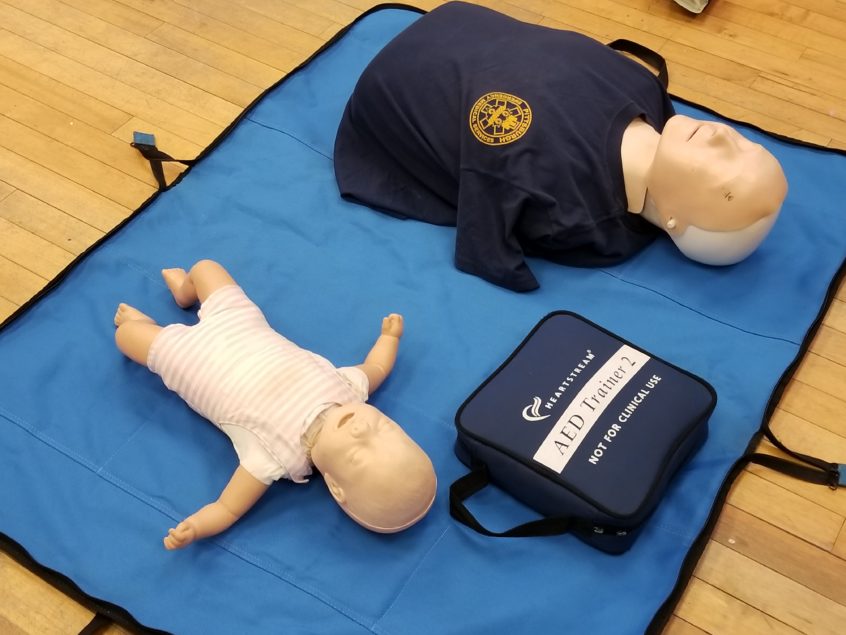
The Early Learning Resource Center (ELRC) Region 5 is offering several Pediatric CPR and Pediatric First Aid training sessions in May and June 2022 to assist Allegheny County child care providers with recent changes to training requirements.
Training Requirements
Pediatric First Aid and Pediatric CPR is a required health and safety training topic that must be completed before a child care staff can care for children unsupervised. The Office of Child Development and Early Learning (OCDEL) Bureau of Certification Announcement C 22-01 requires staff to complete professional development in Pediatric First Aid and Pediatric CPR within 90 days of hire and renew their certification in Pediatric First Aid and CPR on/or before the expiration of the most current. In addition, effective April 29, 2022, the Pediatric First Aid and Pediatric CPR training must be conducted by an approved Pennsylvania Quality Assurance System (PQAS) Instructor using an OCDEL-recognized curriculum.
Details are available on Appendix A – Health and Safety Training Certification Requirements: FAQs and OCDEL Guidance Chart.
Session Details
ELRC Region 5 will offer trainings with approved PQAS Instructors and OCDEL-recognized curriculums at no cost to educators who meet the following requirements:
-
Currently working in a DHS Regulated Child Care setting in Allegheny County.
-
Have a valid CPR/First Aid Certificate from a training that was not conducted by a PQAS certified instructor and/or the curriculum used was not OCDEL approved.
-
Are not considered new hires.
A list of available sessions is on the ELRC Region 5 website and will be updated regularly.
Department of Human Services (DHS) certified child care centers can now apply for funding to purchase technology items such as laptops, wireless routers, tablets, and more to expand centers’ technological capacity and enrich the educational experience providers offer to young children and families.
About the Child Care Technology Access Awards
The Child Care Technology Access Awards are one-time grants available through federal American Rescue Plan Act (ARPA) and Coronavirus Response and Relief Supplemental Act (CRRSA) funding. The award amount ranges from $2,500 to $5,500 and is based on the eligible DHS certified child care program’s provider type and licensed capacity. This funding opportunity will be awarded in the form of a voucher eligible recipients will use to order approved materials from the Kaplan Learning Company.
The following is a list of technology tools that eligible DHS certified child care programs can order through the award:
- Accounting software
- Headsets and Headphones
- Laptop Computers
- Office software
- Portable Scanners
- Printer/Scanners
- Smaller items including printer ink and batteries
- Tablets
- Walkie-talkies
- Web Cams
- Wi-fi Access Point
- Wi-fi Extenders
- Wireless Routers
Eligibility
All eligible DHS certified child care providers, regardless of Keystone STAR Level, can apply. To be eligible, programs must meet the following requirements at the time of application submission and final approval:
- be open and available to provide child care or temporarily closed no more than 14 consecutive business days due to COVID-19 exposure;
- be in good standing with the Bureau of Certification Services and have a regular or provisional Certificate of Compliance (CoC);
- have a Certificate of Compliance that is not in a Revocation or Refuse to Renew status with the Bureau of Certification Services; and,
- not be under investigation by the Office of State Inspector General (OSIG) for fraud or previously convicted of fraud.
Apply
DHS certified child care programs who want to apply will be required to designate an authorized representative to complete and electronically sign an online Attestation Form.
Kaplan Learning Center began sending emails to eligible DHS certified child care programs on April 20, 2022. DHS certified child care programs who believe they are eligible but have not received an email from info@kaplanco.com, should first check their spam/junk email inboxes to make sure the email did not get sent there. Programs that didn’t receive an email should contact Kaplan at 1-800-334-2014. To inquire about eligibility status, email OCDEL at RA-ocdelsubchildcare@pa.gov.
More Information
For additional information about the Award, please see the Announcement ELRC 22-02 Child Care Technology Access Award.
All Pennsylvania early childhood education (ECE) professionals will have two years of free access to the Healthy Minds app, Healthy Minds @Work.
About Healthy Minds
The Office of Child Development and Early Learning (OCDEL) has invested in providing access to the Healthy Minds app to all ECE professionals in an effort to support them as they learn to cope with their personal trauma from the COVID-19 pandemic while also supporting the children and families they serve.
The Healthy Minds @Work program offers tools to help individuals train their minds to be more calm and focused, develop healthier relationships with colleagues, gain perspective in workplace interactions, and bring more meaning to work. With a combination of podcast-style lessons and both seated and active meditations, users learn what the science says about the brain and practice skills based on these insights.
According to an OCDEL announcement, users of the Healthy Minds @Work Program report burnout symptoms reduced by 25% and 70% reported a clinically significant decrease in depression, anxiety, and stress.
Access can be found on the Pennsylvania Key website where you will:
-
Search for your Early Learning Resource Center (ELRC) Region,
-
Click on the link to get to to the login page for Healthy Minds.
-
Download the app on your smart phone device and get started.
Community of Practice for Child Care Providers
The ELRC Region 5 will be hosting virtual Healthy Minds Communities of Practice sessions every Monday at 1:30 p.m. from May 9, 2022 through October 2022 for all child care providers. These are short sessions (15-minutes) where you can engage in a mindful practice together and talk about successes and challenges in practicing. Learn more about the Healthy Minds CoPs.

To understand the depth of the ongoing child care crisis due to the COVID-19 pandemic, the National Association for the Education of Young Children (NAEYC) has been surveying thousands of programs across states and settings. Current survey results show that federal and state relief funds have provided critical support for stabilizing child care programs.
NAEYC Pandemic Survey
NAEYC’s newest survey results, completed in January 2022 by nearly 5,000 respondents working in child care centers and family child care homes, shows that two-thirds of respondents reported experiencing a staffing shortage that affected their ability to serve families. The survey also showed that stabilization grants provided through the American Rescue Plan were critical in helping child care facilities stay open, including during the recent COVID-19 Omicron wave, even if providers were simultaneously unable to serve all families who needed care.
Statistics
-
75% of respondents reported that the end of stabilization grants would have a negative or highly negative effect on their programs.
-
Of the respondents who said they knew enough about Build Back Better’s investments in child care and pre-k to answer the question, 89% agreed that it would “secure the future of our program,” including 86% of respondents from family child care homes and 85% of respondents from faith-based programs.
-
28% of respondents reported that they are definitely or maybe considering leaving their program or closing their child care home in 2022. This comes on top of recent findings from Child Care Aware of America indicating that between December 2019 and March 2021—during the pandemic but before ARP funds started to go out—8,889 child care centers and 6,957 licensed family child care homes were permanently closed.
More Information
For access to prior survey data and analyses:
The Start Strong PA and Pre-K for PA Campaigns are seeking out early childhood professionals to apply to participate as a lead advocate in their region by serving on the first statewide Start Strong PA and Pre-K for PA Provider Advisory Board.
About the Provider Advisory Board
The advisory board will be composed of 30 early childhood professionals from across the state, working in diverse roles in all setting types. Participants will have:
-
an opportunity to elevate the voices of early childhood professionals by providing the field’s professionals with a consistent platform for policy updates and advocacy opportunities;
-
a space to identify the diverse needs of the early childhood workforce through a consistent feedback loop of what they are experiencing in the field;
-
free access to consistent advocacy related professional development, leadership development, and growth opportunities;
-
a chance to create equity driven strategies and connect practice to inform policy recommendations that support the needs of all providers, children, and families in Pennsylvania;
-
and opportunities to strengthen connections with community partners.
The advisory board will meet virtually once a month beginning in April 2022. All participants will be compensated for their time.
Apply
The application period will be from March 1 to March 28, 2022. Providers can apply online. Applicants will be notified of their application status via email the first week of April.
Share this flyer with your networks.
Child care providers in Allegheny County may participate in a free, 15-hour course, “Everyday Interactions Matter: Deep and Simple in School Age Care”.
Sessions will take place via Zoom on Tuesday evenings from March 1 to March 29, at 6:30 – 8 p.m. Additional self-paced homework will be assigned via Schoology. Registration is available on the Trying Together website.
Receive Credit
All 15 hours must be completed to get PQAS and/or ACT 48 credit. If you are interested, we encourage you to register very soon! The link below gives details and dates for this course. If you successfully complete all 15 hours of the series PD, you can use these hours to matriculate into 1 stackable credit at Carlow University.
Course Description
The primary ingredient of quality in school age settings begins with the “everyday interactions” between educators and children. These simple and ordinary moments that take place during play, transition, and daily routines form the foundation for learning and growth.
In this five-week course, school age learning professionals will engage with the Everyday Interactions Matter approach through a process of careful observation, discussion, and self-reflection. Educators will evaluate the impact their ordinary interactions have on child development and the overall quality of programming in their learning communities. Course experiences offer school age educators the chance to cultivate professional self-awareness and community building. Through the Everyday Interactions Matter approach, educators recognize powerful moments of connecting, sharing, learning, and belonging in their everyday interactions with school age children.
About Everyday Interactions Matter
Everyday Interactions Matter (EIM) is a professional development initiative designed to help early childhood educators learn and grow from their own practice. Through a strengths-based process of observation, discussion, and reflection, educators take a close look at the everyday moments they share with children. Video footage of adult-child interactions serves as the raw material for facilitating professional growth.
Effective February 17, 2022, Department of Human Services (DHS) certified child care providers are no longer required to submit a Provisional Hire Waiver Request for Child Care (CD 353) to allow child care employees to work in a certified child care facility on a 45-day provisional basis.
About
On February 17, 2022, Governor Tom Wolf signed HB 764 into law as Act 12 of 2022 (Act 12), which amends the Child Protective Services Law (CPSL) to allow most employers to hire an applicant on a provisional basis for up to 45 days.
For certified child care operators, to do so, all the following conditions must be met:
-
The applicant has received the results of the National Sex Offender Registry (NSOR) and out of state clearances, if applicable, and submitted the results to the employer.
-
The employer, administrator, supervisor, or other person responsible for employment decisions received the result of the applicant’s PA Child Abuse History Clearance and either the Pennsylvania State Police Criminal Record Check or the FBI Criminal History Background Check before the start of employment. The applicant must have applied for the outstanding check (Pennsylvania State Police Criminal Record Check or the FBI Criminal History Background Check) and submit proof of application to the employer, administrator, supervisor, or other person responsible for employment decisions.
-
The employer, administrator, supervisor, or other person responsible for employment decisions requires that the applicant not be permitted to work alone with children and that the applicant work in the immediate vicinity of a permanent employee.
-
The employer must have no knowledge of information that would disqualify the applicant.
-
The applicant must affirm in writing they are not disqualified from employment by reason of being listed on the abuse registry or being convicted of a disqualifying offense.
-
If the results of the applicant’s background checks reveal that the applicant is disqualified from employment due to section 6344(c) (relating to grounds for denying employment or participation in program, activity, or service) of the CPSL, the applicant must be immediately dismissed by the employer, administrator, supervisor, or other person responsible for employment decisions.
Questions?
Comments and Questions should be directed to the child care provider’s Regional Office of Child Development and Early Learning:
-
Central Region 800-222-2117
-
Northeast Region 800-222-2108
-
Southeast North and Southeast South Region 800-346-2929
-
Western Region 800-222-2149
Trying Together has released a policy brief highlighting the growing need for high-quality non-traditional hour (NTH) child care in Pennsylvania. The Overview of Non-Traditional Hour Child Care Policy Brief outlines how critical it is to include NTH care in state policy solutions to strengthen our early care and learning infrastructure.
About
Prior to the pandemic, roughly one in three working families required child care during non-traditional hours, yet only one in four regulated providers offered this service, according to a 2019 Research for Action report.
According to the policy brief, the gap in non-traditional care threatens the economic security of many working families and the overall economy as employers struggle to rehire their workforce. Prior to the pandemic, the Keystone Command Center for Economic Development and Workforce 2020 annual report noted the lack of accessible non-traditional child care as a barrier for both employees and employers recommending expanding the availability of licensed child care before 6 a.m. and after 6 p.m. (what is normally considered traditional hours) in order to give flexibility and security for working parents.
In October 2021, Governor Tom Wolf’s administration allocated $16.8 million of the American Rescue Plan Act (ARPA) discretionary child care funds for subsidy rate incentives for providers that offer at least two hours of child care during non-traditional hours.
More Information
Trying Together in partnership with the Start Strong PA Campaign are calling on the Pennsylvania General Assembly and Governor Wolf to help further stabilize child care in the Commonwealth, including non-traditional care as part of budget negotiations. Failing to use state funds to help solve the child care crisis would be a missed opportunity that will negatively impact working families, Pennsylvania businesses and the economy.
For details, read the full policy brief. Stay up-to-date on how to advocate for these issues by signing-up to support Trying Together’s public policy agenda.