News

August 4, 2020

Supporting Children’s Emotional Wellness with Digital Technologies

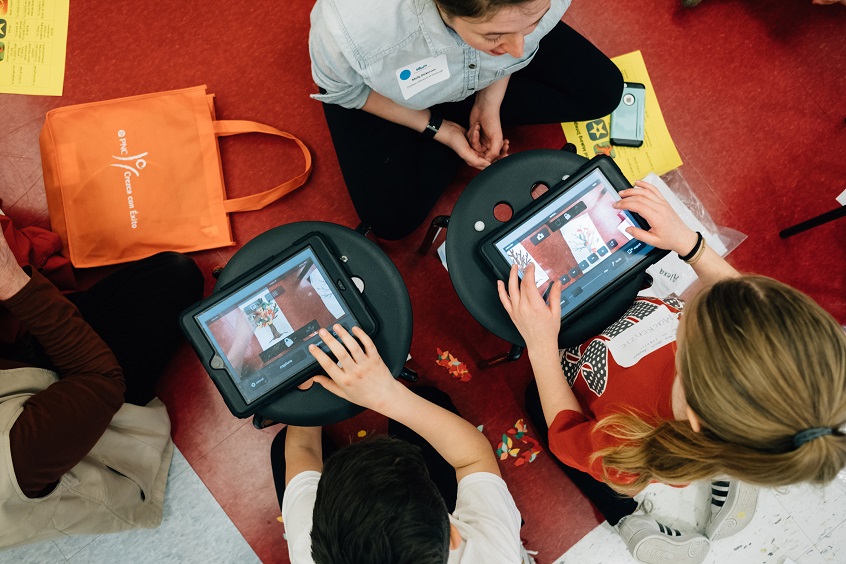
More than ever before, early childhood practitioners play a critical role in supporting children’s social and emotional wellness. When used intentionally, digital technologies can serve as tools to help children navigate emotions and express thoughts and feelings. Join Trying Together on September 2 for a conversation on promoting children’s communication skills and emotional development through the use of technology and media. Participants will engage in discussion and reflection on their current practice and the impact of COVID-19.

About

Connections and Conversations Virtual Check-Ins are interactive sessions that highlight topics of interest to the field of early childhood education. Participants will engage in virtual discussions via Zoom with child development experts while interacting with early learning practitioners to share questions, experiences, and expertise about the highlighted topic.

Participants will receive the course Zoom link via email within 24 hours before the start date for the course. For questions, contact Rosie Hogan at rosie@tryingtogether.org.

Session Details

    • Session Date: Wednesday, September 2  |  6 – 7 p.m.
    • Instructor: Katie Gullone
    • CKC: K1.4 C2
    • Registrations must be submitted by Monday, August 31. Space is limited.
    • Sessions will be offered biweekly and will offer one hour of PQAS credit. Act 48 credit will not be offered.

Learning Objectives

    • Identify strategies to address children’s social and emotional development through the use of technology and media.
    • Reflect on current practice and the role of technology tools in early childhood environments.

Registration

To register for this session, complete our online registration form.

Session Rules and Guidelines

These virtual discussions are designed to provide educators the opportunity to grow professionally and share knowledge on early childhood topics. During the meeting, participants should follow the guidelines below to ensure a successful virtual meeting for all participants.

    • Please allow all participants a chance to speak. Listen respectfully and actively.
    • Commit to learning about each other, not to debating the topic.
    • Embrace differences of opinion as healthy and support each person’s authentic self-expression.
    • Participants will be muted for the beginning portion of the session.
    • Participants may use the “Raise Hand” feature in Zoom to request an opportunity to comment or ask a question. Individuals will be temporarily unmuted by the moderator.
    • Participants may type a comment or question in the Chat or may send comments or questions directly to the moderator for them to share.
    • To receive PQAS credit, you must complete an evaluation at the end of the session and include your PD Registry number.
    • Have fun, make connections, and engage in the conversations!

More Information

For questions or more information, please contact Rosie Hogan at rosie@tryingtogether.org.

News

July 31, 2020

New Process to Prevent Suspensions and Expulsions

Effective August 1, a new process to request support for a child with unique needs or challenging behaviors to prevent suspension and/or expulsion from early learning programs is available for families and early learning professionals.

How to Request Support

To request assistance from the Pennsylvania Office of Child Development and Early Learning (OCDEL), early learning professionals and families can complete a new online form entitled, “PA Key Expulsion/Suspension Support Request.”

Circumstances for Alternative Support

More Information

For more information, view the Developing Suspension and Expulsion Policies document.

News

July 21, 2020

Child Care Works Payment Practice Changes Effective 9/1

On July 17, the Pennsylvania Office of Child Development and Early Learning (OCDEL) issued an announcement stating that starting September 1, 2020, Child Care Works (CCW) payments will return to payment practices and policies based on attendance and invoicing for all children. This will remain true regardless of when a child was enrolled with the provider.

Additional Policy Changes

In addition, the following policies will again be effective starting September 1:

    • absences will be tracked and counted towards the 40 days of absences for all children;
    • children’s enrollment after five days of absence will be suspended until the child returns to care;
    • all Adverse Action notices will be sent to families per policy;
    • dual enrollments, the practice implemented under COVID-19 to support both a closed provider and families who need care, will end; and
    • collection of family co-pays will resume.

The announcement is intended to provide advance notice to child care providers, allowing them to plan for the use of final CARES Act funding which will be issued in August. Providers should communicate the resumption of absence policies (effective September 1) to the families they serve.

More Information

For more information, view OCDEL’s full announcement or contact your local ELRC.

News

July 16, 2020

COVID-19 Supplies Distribution Event for Child Care Providers

About

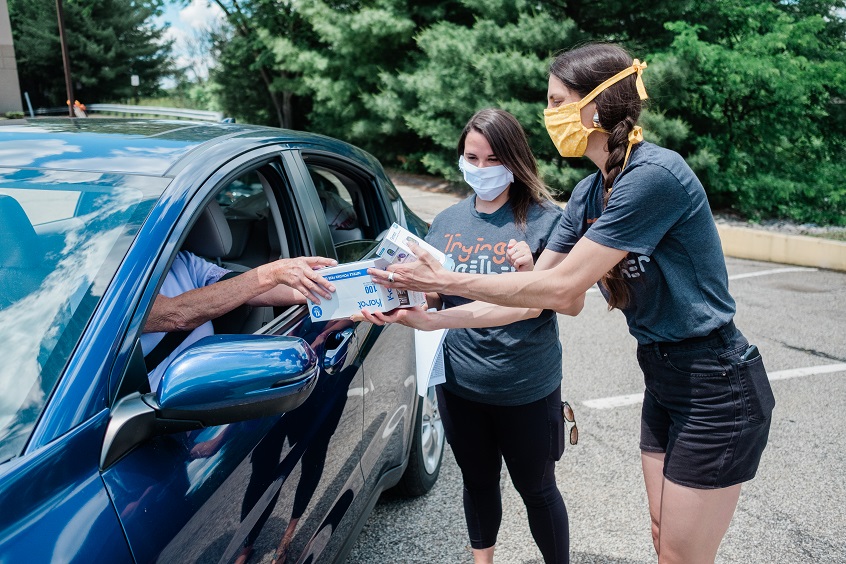
Trying Together, Global Links, and Early Learning Resource Center (ELRC) Region 5 are partnering to ensure that 650 licensed child care operators in Allegheny County are fully equipped with the protective and cleaning supplies they need to maintain a safe, clean, and healthy environment for children and employees.

All licensed child care providers in Allegheny County are eligible to receive cleaning supplies and safety equipment. Providers must have their tax identification (EIN) numbers read for staff at the distribution site.

What’s Included

Child care operators are invited to visit a distribution location to receive:

    • an infrared, no-touch thermometer;
    • gloves for diaper changes and cleaning;
    • hand sanitizer;
    • disinfectant;
    • reusable cloth masks;
    • reusable clear plastic face shield; and
    • one case of tissues.

Available Dates and Locations

See a map of each distribution location.

Registration

To ensure enough supplies are available, please register for the date and location of your choice via the PPE Supply Pickup Form. Each provider must sign up separately. Providers with multiple locations should sign up for each program, specifying the program name on each form.

More Information

The purchase and distribution of supplies are made possible through the generous support of local foundations. For more information, call 412.350.3577 or visit elrc5.alleghenycounty.us.

News

COVID-19 Supplies Distribution Event for Child Care Providers

About

Trying Together, Global Links, and Early Learning Resource Center (ELRC) Region 5 are partnering to ensure that 650 licensed child care operators in Allegheny County are fully equipped with the protective and cleaning supplies they need to maintain a safe, clean, and healthy environment for children and employees.

All licensed child care providers in Allegheny County are eligible to receive cleaning supplies and safety equipment. Providers must have their tax identification (EIN) numbers read for staff at the distribution site.

What’s Included

Child care operators are invited to visit a distribution location to receive:

    • an infrared, no-touch thermometer;
    • gloves for diaper changes and cleaning;
    • hand sanitizer;
    • disinfectant;
    • reusable cloth masks;
    • reusable clear plastic face shield; and
    • one case of tissues.

Available Dates and Locations

See a map of each distribution location.

Registration

To ensure enough supplies are available, please register for the date and location of your choice via the PPE Supply Pickup Form. Each provider must sign up separately. Providers with multiple locations should sign up for each program, specifying the program name on each form.

More Information

The purchase and distribution of supplies are made possible through the generous support of local foundations. For more information, call 412.350.3577 or visit elrc5.alleghenycounty.us.

News

COVID-19 Supplies Distribution Event for Child Care Providers

About

Trying Together, Global Links, and Early Learning Resource Center (ELRC) Region 5 are partnering to ensure that 650 licensed child care operators in Allegheny County are fully equipped with the protective and cleaning supplies they need to maintain a safe, clean, and healthy environment for children and employees.

All licensed child care providers in Allegheny County are eligible to receive cleaning supplies and safety equipment. Providers must have their tax identification (EIN) numbers read for staff at the distribution site.

What’s Included

Child care operators are invited to visit a distribution location to receive:

    • an infrared, no-touch thermometer;
    • gloves for diaper changes and cleaning;
    • hand sanitizer;
    • disinfectant;
    • reusable cloth masks;
    • reusable clear plastic face shield; and
    • one case of tissues.

Available Dates and Locations

See a map of each distribution location.

Registration

To ensure enough supplies are available, please register for the date and location of your choice via the PPE Supply Pickup Form. Each provider must sign up separately. Providers with multiple locations should sign up for each program, specifying the program name on each form.

More Information

The purchase and distribution of supplies are made possible through the generous support of local foundations. For more information, call 412.350.3577 or visit elrc5.alleghenycounty.us.

News

July 15, 2020

T.E.A.C.H. Scholarship Fall 2020 Deadline

Early childhood education professionals interested in attending college for the fall semester can submit applications to receive a T.E.A.C.H. (Teacher Education And Compensation Helps) Scholarship.

Eligibility

The Pennsylvania Child Care Association (PACCA) offers a variety of T.E.A.C.H. scholarships to meet the needs of the early care and education workforce in center and home-based settings. Eligible applicants must:

    • work a minimum of 25-30 hours per week directly with children in a DHS-certified child care program;
    • make $19 or less an hour ($25 or less per hour for directors); and
    • be interested in pursuing coursework at a participating college toward a degree or credential in early childhood.

Scholarship awards are dependent upon the availability of funds and priorities of funders. Other eligibility criteria may apply are subject to change without notice. See the brochure.

Application Details

To be considered for the Fall 2020 semester, T.E.A.C.H. applications must be completed and submitted with all required documentation by Friday, August 7, 2020. PACCA will continue to accept applications on an ongoing basis, however, incomplete applications and applications received after this date will not receive priority for consideration. New scholarship awards for the Fall 2020 semester will be dependent upon funding availability at that time.

Interested applicants should also begin the college admissions process now and contact an early childhood education (ECE) advisor at their intended college/university. This helps to ensure that scholarship applicants are admitted to their college/university and can register for courses if/when they receive a T.E.A.C.H. scholarship. T.E.A.C.H. can provide contact information for early childhood education advisors at partnering institutions if needed.

Submit an Application

To download a scholarship application, visit the PACCA website. Completed applications must be submitted to PACCA by Friday, August 7 through one of the following methods:

    • Fax: 717.657.0959
    • Mail: 20 Erford Road, Suite 302
      Lemoyne, PA 17043

More Information

For questions about scholarship eligibility and requirements, contact a T.E.A.C.H. Counselor at 717.657.9000.

News

July 10, 2020

Remote Learning for Early Learners with Autism

Are you interested in learning how to help early learners with autism engage with remote instruction through evidence-based practices? Attend the webinar “Remote Learning for Early Learners with Autism” on July 16.

About

While remote learning allows students to continue their education, it can be challenging for young students with autism and other developmental disabilities to attend to the screen and engage with the curriculum. In this webinar, STAR Autism Support Training Specialist Elizabeth Curtin will discuss strategies to help early learners with autism engage with synchronous remote instruction through evidence-based practices.

A focus of this presentation will be on teaching skills in receptive language, expressive language, social and play, and pre-academics. This webinar will include video examples of teachers coaching caregivers to provide consistent instruction to their students. Participants will also learn strategies on teaching students to be more independent in daily functional routines.

This webinar is best suited for pre-k through elementary teachers and school leaders. Time for questions will be provided.

Registration

To register and learn more, visit the event webpage. Registration to attend the live presentation is limited to 2,000 people. A recording of the session will be available to those who sign up to receive it via email and to those who attend the live event.

News

COVID-19: Updated Guidance for Child Care Programs

To maintain the health and safety of their staff and the families they serve, all child care facilities and programs that continue to remain open or that are preparing to reopen in Pennsylvania should follow the guidance issued by the Centers for Disease Control and Prevention (CDC) and the Pennsylvania Department of Health (DOH). With this, programs are highly encouraged to implement additional health and safety procedures as soon as possible.

About

The Office of Child Development and Early Learning (OCDEL) released a revised announcement that outlines recommended steps child care providers can take to mitigate the impact of COVID-19. This guidance was developed based on recommendations from the CDC and the DOH and is subject to change. To access the full list of recommendations, read Announcement: C-20-06 Revised: Interim Guidance for Certified Child Care Facilities operating during the Novel Coronavirus Pandemic.

Additionally, in Announcement C-20-08: COVID-19 Operations for Licensed Child Care, OCDEL issued clarification regarding health and safety compliance during the COVID-19 pandemic to licensed child care providers and child care certification representatives employed by the Department of Human Service (DHS).

For examples of required and recommended policies and procedures, continue reading below.

Required Procedures

Announcement C-20-08: COVID-19 Operations for Licensed Child Care states that child care providers are required to do the following:

    • Child care staff must wear face coverings indoors; they must also wear face coverings outside where staff are unable to maintain a six-foot distance from others unless a medical reason prevents the staff from wearing a face covering. This includes anyone who has trouble breathing, is unconscious, incapacitated, or otherwise unable to remove the face covering without assistance.
    • Child care programs must have a written health and safety plan that aligns with CDC guidance to minimize the risks of COVID-19. The safety plan must be communicated to staff and enrolled families. At a minimum, the safety plan must address screening procedures; child drop-off and pick-up policies; sick policies; mask policies; and cleaning and sanitation procedures. Providers can see the “Child Care Facility COVID-19 Health and Safety Plan Template” for developing a health and safety plan.
    • Child care programs must adhere to the reporting of suspected or confirmed cases of enrolled children or staff with COVID-19 and complying with follow-up guidance pertaining to remediation, quarantine, and directive for temporary closure to address additional cleaning and sanitation.

Effective July 17, 2020, child care certification representatives will cite child care programs operating out of compliance with the previously described Critical Elements derived from CDC guidance. Child care programs failing to comply with acceptable plans of correction may be subject to further action that impacts the child care programs’ Certificate of Compliance, ability to continue to operate, and eligibility for distributions of supplemental financial supports.

For more information, view the full announcement or FAQ document.

Drop-Off and Arrival Procedures

Child care programs are strongly recommended to:

    • greet children outside as they arrive;
    • stagger arrival and drop-off times and plan to limit direct contact with parents as much as possible;
    • post signage in drop-off and arrival areas to remind staff and children to keep six feet of distance whenever feasible; and
    • set up hand hygiene stations at the entrance of the facility so children, families, and staff can clean their hands before they enter.
Screening Procedures

The best way to prevent the spread of COVID-19 is to prevent it from getting inside the facility. Child care providers should:

    • conduct a daily health screening of any person entering the building, including children, staff, family members, and other visitors to identify symptoms, diagnosis, or exposure to COVID-19 (any person with a fever of 100.4 degrees Fahrenheit or above, or other signs of illness, should not be admitted into the facility);
    • not allow staff and children to enter the child care facility if they have tested positive for COVID-19, are showing symptoms, or have had potential exposure to a person with COVID-19; and
    • immediately isolate a child or staff member that starts to display symptoms and send them (and any family members) home as soon as possible.
Routine Disinfecting and Sanitation

To reduce the spread of COVID-19 in their program, child care providers should:

    • post signs in highly visible locations that promote everyday protective measures and describe how to stop the spread of COVID-19 (washing hands, wearing masks, disinfecting, etc.);
    • develop a schedule for cleaning and disinfecting;
    • routinely clean, sanitize, and disinfect surfaces and objects that are frequently touched (toys, games, tables, toilet training potties, chairs, nap pads, etc.); and
    • keep all cleaning materials secure and out of reach of children.
Bedding and Toys

Child care providers should:

    • not use toys and bedding that cannot be washed, cleaned, and sanitized;
    • not share toys with other groups of infants and toddlers unless they have been properly washed and sanitized before being moved from one group to the other;
    • set toys that need to be cleaned aside and out of children’s reach;
    • keep each child’s bedding separate and stored in individually labeled bins, cubbies, or bags; and
    • clean bedding that touches a child’s skin weekly or before use by another child.
Face Masks

Child care staff are required to wear cloth face coverings. Children two years old and older are required to wear a face covering unless the child fits one of the exceptions included in Section 3 of the Order of the Secretary of the Pennsylvania Department of Health Order for Universal Face Coverings.

    • If a child is outdoors and is able to consistently maintain a social distance of at least six feet from others who are not a part of their household, they do not need to wear a mask.
    • If a parent, guardian, or responsible person has been unable to place a face covering safely on a child’s face, they should not do so.
    • If a child two years old or older is unable to remove a face covering without assistance, the child is not required to wear one.
Social Distancing

If possible, child care providers should:

    • limit individual classes to the same group of children and same child care providers each day;
    • consider creating a separate classroom or group for the children of healthcare workers or other first responders;
    • limit the mixing of children, such as staggering playground times and keeping groups separate during special activities; and
    • maintain space between each child’s naptime mat or crib (ideally six feet or more) and place children head to toe during naptime to reduce potential virus spread.

More Information

For additional information, including information on what to do if a person at your facility tests positive for COVID-19 or is exposed to someone with COVID-19, view the full guidance from OCDEL.

To stay up-to-date on the most recent COVID-19 information, visit the Department of Health or Centers for Disease Prevention and Control websites.

News

OCDEL Releases an “Opening a Child Care Facility” Toolkit

To support individuals interested in opening their own child care program, the Office of Child Development and Early Learning (OCDEL) released the “Opening a Child Care Facility in Pennsylvania” toolkit that features details on the step-by-step process of requirements and regulations, obtaining a child care certification, and more!

Featured Topics

In the toolkit, OCDEL features information on the following topics and more:

    • child care requirements and regulations;
    • types of child care facilities;
    • the process to obtain a child care certification;
    • the types of clearances needed for staff;
    • health and safety requirements, including fire safety;
    • the role of child care subsidies; and
    • financial considerations and supports for operating a child care business (private pay, Child Care Works, Pre-K Counts, etc.).

Download the Toolkit

For more information on how to open a child care facility in Pennsylvania, download the full toolkit.