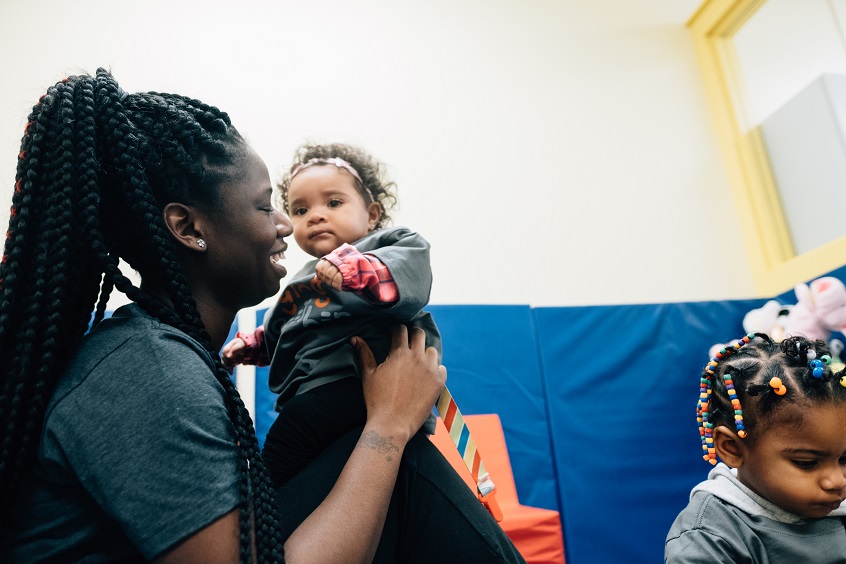
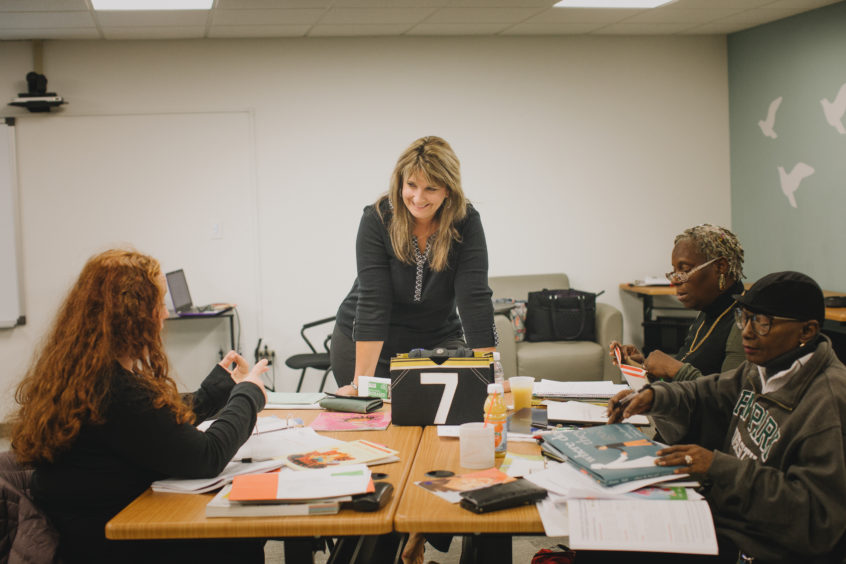
OCDEL’s Bureau of Policy and Professional Development recently released Announcement 20 #15 which explains changes to the policy regarding parents and caregivers caring for their own children in a child care setting during the COVID-19 pandemic-related Proclamation of Disaster Emergency. This policy change is effective as of September 1, 2020. Read below to learn more.
About
For the duration of the COVID-19 pandemic-related Proclamation of Disaster Emergency, the current policy will be revised to allow for parents and caregivers to provide care for their own children in a child care facility. This change allows a parent or caretaker who is a teacher, assistant teacher, or aide in a classroom at the same child care facility where their children are enrolled to have their children in their classroom.
Parents and caregivers will be able to receive subsidized child care payments for their children as long as there is another paid teacher, assistant teacher, or aide present in the classroom for a majority of the day. Additionally, there must be at least one other child in the classroom, that is not the child of the parent or caregiver, for which the parent or caregiver is caring for.
More Information
For more information, read the full announcement.
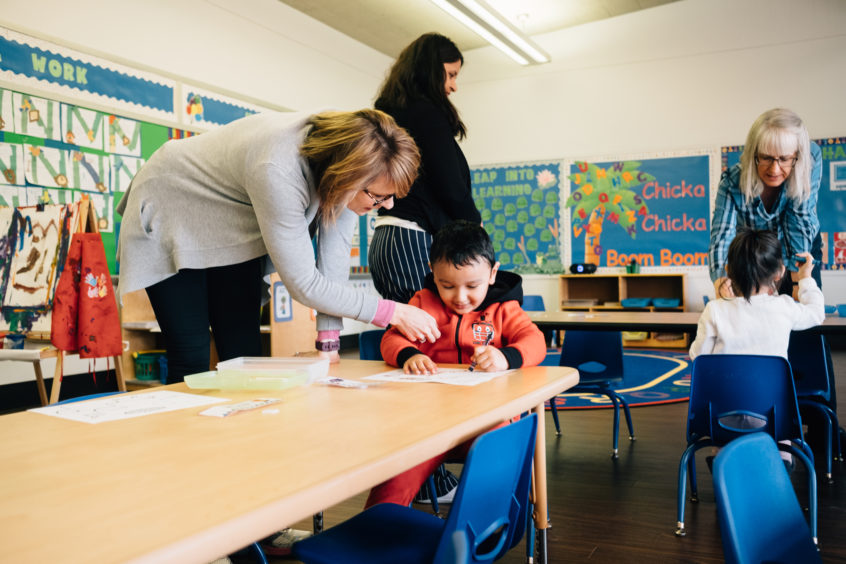
Are you interested in hearing guidance from experts on early childhood development, adverse childhood experiences, and the impact of COVID-19 on children? Join the NIHCM Foundation on September 10 for their webinar, “Protecting Our Children: COVID-19’s Impact on Early Childhood and ACEs.”
About
Although most children are not at high risk for contracting COVID-19, the pandemic has disrupted their lives and exacerbated challenges to children’s health and well-being. This webinar will convene experts to provide information and guidance on early childhood development, adverse childhood experiences (ACEs), and the impact of COVID-19 on children.
Speakers will discuss the following topics:
-
- the importance of early childhood experiences in lifelong health and how adversity affects both the developing brain and other physiological systems;
-
- what ACEs initiatives are doing to respond to COVID-19 and the opportunities and challenges the pandemic has produced for professionals in the field; and
-
- lessons from a health plan’s investment in programming that addresses ACEs, including education on ACEs for teachers, policymakers, and health care professionals.
Registration
To learn more and register, visit the event webpage.
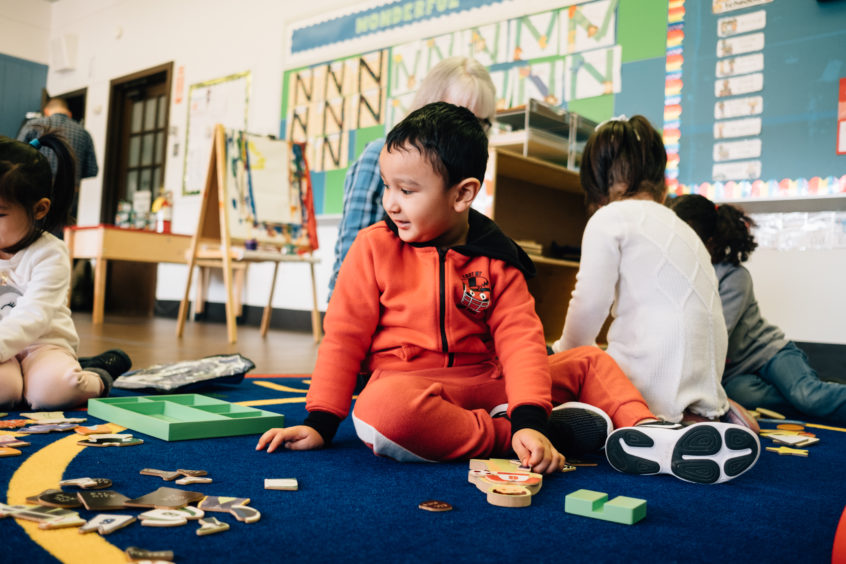
Are you interested in hearing guidance from child development experts? Join Trying Together on August 19 and September 2 for our free virtual professional development sessions! Each session will offer one PQAS credit hour.
Both sessions are a part of our interactive Connections and Conversations Virtual Check-In series that features guidance from child development experts, information on the highlighted topic, and opportunities for early learning professionals to share questions, experiences, and expertise.
Available Sessions
-
- Magda Gerber’s Philosophy of Care for Infants & Toddlers
Wednesday, August 19, 2020 | 6 – 7 p.m.
Join Trying Together on August 19 to explore the core principles of Magda Gerber’s RIE philosophical approach to educaring for infants and toddlers in the early childhood setting. Participants will have an opportunity to engage in conversations around developmentally appropriate practice for infants and toddlers while reflecting on how to best create a safe, challenging, predictable environment for all children.
-
- Supporting Children’s Emotional Wellness with Digital Technologies
Wednesday, September 2, 2020 | 6 – 7 p.m.
More than ever before, early childhood practitioners play a critical role in supporting children’s social and emotional wellness. Join Trying Together on September 2 for a conversation on promoting children’s communication skills and emotional development through the use of technology and media. Participants will engage in discussion and reflection on their current practice and the impact of COVID-19.
More Information
For questions or more information, please contact Rosie Hogan at rosie@tryingtogether.org.
Join Highmark Caring Place on August 5 for their webinar, “Wait, My Grief Has a Shape? Understanding the Loss Experience for Our Children and Ourselves.”
About
Grief is often experienced not as a set of linear stages, but as a spiral where emotions come and go in intensity. In their webinar, Highmark Caring Place will discuss the spiral shape of grief and explain the differences in these spirals between adults and children. In understanding our grief experiences, and those of our children, we are better able to manage our own grief and support others in their grief journeys.
Learning Objectives
By attending, participants will be able to:
-
- recognize the distinctions between various models of grief,
- identify common grief responses, and
- discuss the differences in grief between adults and children.
Registration
To register, visit the event webpage. Registrations must be submitted no later than Tuesday, August 4.
More Information
For questions, contact Patrick McKelvey at patrick.mckelvey@highmark.com.
Share this flyer with your network.

Are you interested in learning how to create a more culturally and linguistically responsive early learning environment? Join the National Center on Parent, Family, and Community Engagement (NCPFCE) on July 28 for their webinar, “Culturally Responsive Parent Engagement.”
About
In this webinar, participants will explore tools, resources, and ideas they can use to create a more culturally and linguistically responsive environment. Join fellow educators to learn how it can help families engage in their child’s early learning and hear from programs that have successfully engaged families from diverse backgrounds as leaders and advocates.
This webinar is best suited for Head Start and Early Head Start directors, managers, family services staff, and parent leaders; T/TA providers; and early childhood leaders who support children and their families.
Registration
To register and learn more, visit the event webpage. Participants will receive a certificate of participation upon completion of the webinar.
More Information
For questions, contact NCPFCE at pfcewebinars@ecetta.info or 855.208.0909.
To support individuals interested in opening their own child care program, the Office of Child Development and Early Learning (OCDEL) released the “Opening a Child Care Facility in Pennsylvania” toolkit that features details on the step-by-step process of requirements and regulations, obtaining a child care certification, and more!
Featured Topics
In the toolkit, OCDEL features information on the following topics and more:
-
- child care requirements and regulations;
-
- types of child care facilities;
-
- the process to obtain a child care certification;
-
- the types of clearances needed for staff;
-
- health and safety requirements, including fire safety;
-
- the role of child care subsidies; and
-
- financial considerations and supports for operating a child care business (private pay, Child Care Works, Pre-K Counts, etc.).
Download the Toolkit
For more information on how to open a child care facility in Pennsylvania, download the full toolkit.
To support family-facing providers in their online work with children and families, Brazelton Touchpoints Center is offering a series of free one-hour webinars and an online learning community that will explore how to manage the challenges posed by virtual service delivery and share strategies providers have found for building and sustaining strong relationships with families virtually.
About
In partnership with Parents as Teachers and the Rapid Response Virtual Home Visiting (RR-VHV) Collaborative, Brazelton Touchpoints Center will build on lessons learned from virtual home visiting, adapted for all family-facing providers.
All professionals who work with families of young children—including those who work in health care, early care and education, early intervention, child welfare, and family support—are encouraged to attend these webinars. Brazelton Touchpoints Center is pairing the webinars with an online learning community where webinar participants can engage with one another and BTC facilitators on topics and strategies discussed in the webinars.
Featured Webinars
-
- Engaging Families Using a Strengths-Based Approach in the Virtual World
Wednesday, July 22 | 2 – 3 p.m. | Register
-
- Partnering with Families Virtually
Wednesday, August 5 | 2 – 3 p.m. | Register
-
- Providing Staff Support and Supervision Virtually
Wednesday, August 19 | 2 – 3 p.m. | Register
-
- Developmental Screenings on Your Screen
Wednesday, September 2 | 2 – 3 p.m. | Register
-
- Challenging Conversations with Families Virtually
Wednesday, September 16 | 2 – 3 p.m. | Register
-
- Taking Care of Yourself as a Virtual Service Provider
Wednesday, September 30 | 2 – 3 p.m. | Register
Registration
To register and learn more, visit the Brazelton Touchpoints Center website. Participants can register for the entire series or for individual webinars.
More Information
For questions, email touchpoints@childrens.harvard.edu.
Are you interested in learning how institutional racism becomes present in early childhood environments? Sign up to receive a recording of the live webinar “Embracing Anti-Bias Classrooms: A Response to Racism in America” on July 8.
About
In this webinar, the lead authors of the newly released book, Don’t Look Away, Embracing Anti-Bias Classrooms, will participate in a roundtable discussion on how to explore and address issues of bias, equity, low expectations, and family engagement to ensure culturally responsive experiences. Equipped with the tools and strategies to promote classroom change, educators will be empowered to do the following:
-
- learn how institutional racism becomes present in early childhood environments;
-
- discover how implicit bias, microaggression, and white privilege can play a role in undermining the learning experiences of marginalized Black and brown children and those who teach them;
-
- embrace anti-bias and anti-racist teaching approaches; and
-
- implement best practices for creating culturally-rich and supportive classroom environments that protect children from social-emotional and psychological trauma by affirming personal healing.
This webinar will be of interest to pre-k through elementary teachers; school and district leaders; coaches; trainers; and child care providers, owners, and administrators.
Registration
Live access to this event is sold out. Sign up to receive the event recording by visiting edWeb.net.
Are you interested in learning about the important role authentic relationships play in the early learning and development of young children? Join Trying Together on August 5 at 6 p.m. for our online session, “Connections and Conversations: The Power of Self-Compassion.”
About
Connections and Conversations Virtual Check-Ins are interactive sessions that highlight topics of interest to the field of early childhood education. Participants will engage in virtual discussions via Zoom with child development experts while interacting with early learning practitioners to share questions, experiences, and expertise about the highlighted topic.
This session will highlight how children benefit greatly from authentic relationships with the adults in their lives. It will explore how the critical messages we learned from our childhood affect our interactions and relationships with children in our care. We will utilize self-reflection as a tool to develop self-compassion to build our intentional use of compassion in early learning environments.
Participants will receive the course Zoom link via email within 24 hours before the start date for the course. For questions, contact Rosie Hogan at rosie@tryingtogether.org or Sarah Grubb at sarah.elrc5@alleghenycounty.us.
Session Details
-
- Session Date: Wednesday, August 5 | 6 – 7 p.m
- Instructors: Mimi Loughead
- CKC: K6.4 C2
- CDA Subject Area: Supporting children’s social and emotional development.
- Registrations must be submitted by Monday, August 3. Space is limited.
- Sessions will be offered biweekly and will offer one hour of PQAS credit. Act 48 credit will not be offered.
Registration
To register and learn more, visit the course webpage.
Session Rules and Guidelines
These virtual discussions are designed to provide educators the opportunity to grow professionally and share knowledge on early childhood topics. During the meeting, participants should follow the guidelines below to ensure a successful virtual meeting for all participants.
-
- Please allow all participants a chance to speak. Listen respectfully and actively.
- Commit to learning about each other, not to debating the topic.
- Embrace differences of opinion as healthy and support each person’s authentic self-expression.
- Participants will be muted for the beginning portion of the session.
- Participants may use the “Raise Hand” feature in Zoom to request an opportunity to comment or ask a question. Individuals will be temporarily unmuted by the moderator.
- Participants may type a comment or question in the Chat or may send comments or questions directly to the moderator for them to share.
- To receive PQAS credit, you must complete an evaluation at the end of the session and include your PD Registry number.
- Have fun, make connections, and engage in the conversations!
More Information
For questions or more information, please contact Rosie Hogan at rosie@tryingtogether.org.