Turning Ordinary Moments into Meaningful Connections: UnConference Wrap-Up

News

October 13, 2026

Turning Ordinary Moments into Meaningful Connections: UnConference Wrap-Up

A child’s day is filled with seemingly ordinary moments – but those moments are more meaningful than we realize. The simple and ordinary moments that take place during daily routines form the very foundation of learning and connection during a crucial time for brain development. 

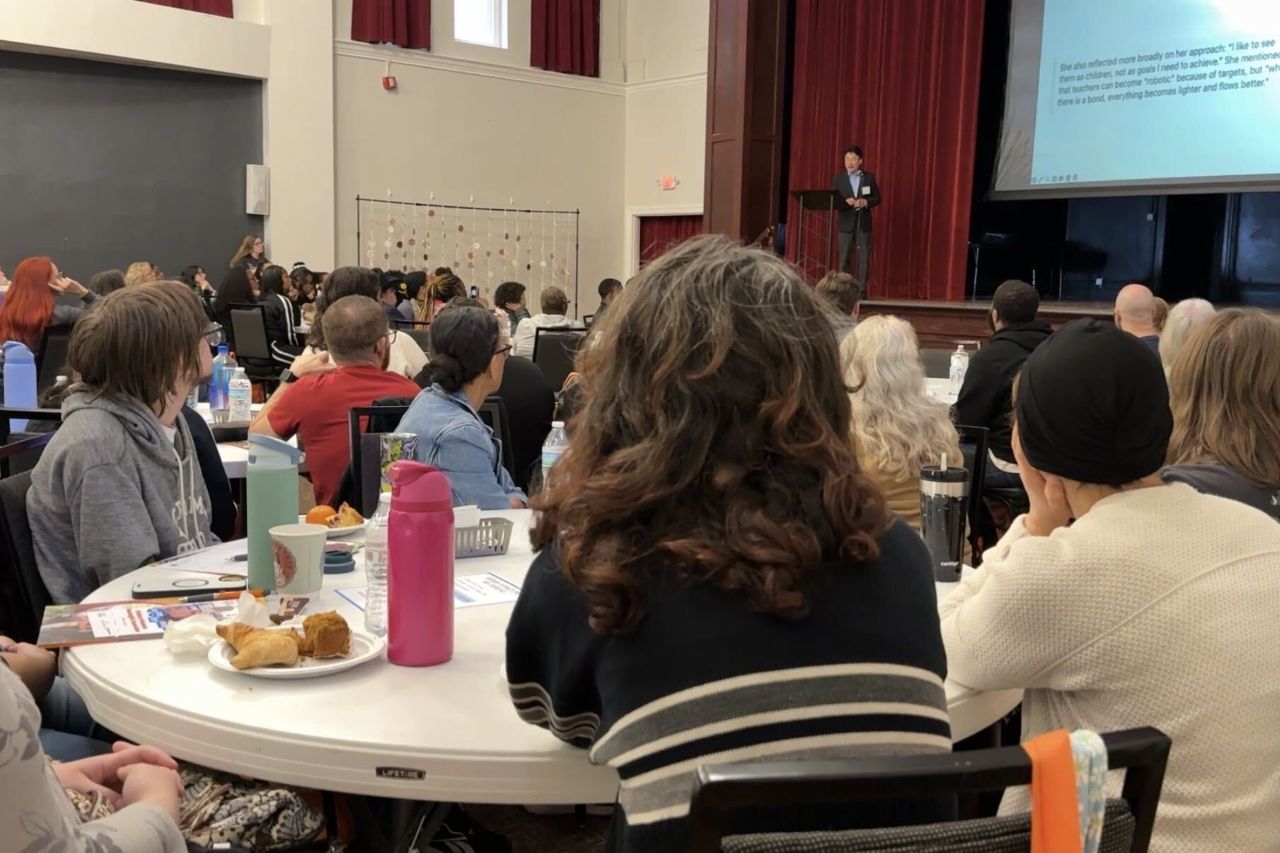
On October 12, early care and education professionals attended UnConference: Ordinary Moments, Meaningful Connections to deepen their understanding on how to cultivate environments where every child—and every adult—feels seen, heard, and valued.

The UnConference highlighted how connection, inclusion, opportunities for growth, and meaningful learning occur within everyday moments between adults and children.

Noticing the Extraordinary

The UnConference kicked off with a keynote address from Dr. Junlei Li, Saul Zaentz Senior Lecturer in Early Childhood Education at the Harvard Graduate School of Education and creator of the Simple Interactions approach.

Dr. Li is a valued friend and partner of Trying Together whose work has profoundly influenced how we think about relationships, human connection, and the everyday moments that shape children’s lives.

Everyday Interactions Matter, the early childhood arm of Simple Interactions in Pittsburgh, was developed in partnership with Trying Together and the Fred Rogers Institute and is rooted in the work of Fred Rogers and Dr. Li.
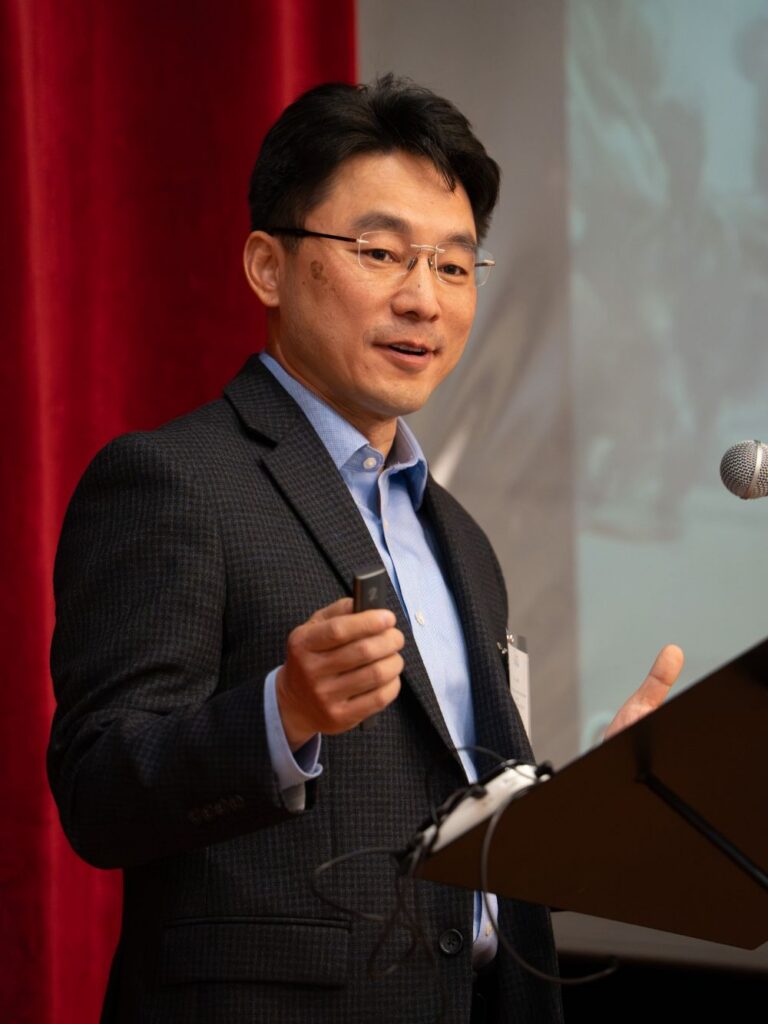
“When we constructed Simple Interactions, we tried not to assume there’s a value in certain interactions,” Li said. “The tool was designed not to presuppose what we should see in a moment, but let the moment teach us what it means to be a teacher or caregiver.”

In his keynote speech, Dr. Li focused on the practice of noticing.

“The more you pause, the more you have the opportunity to allow something extraordinary to come out,” Dr. Li said. “That’s where you find the things you want to notice.”

Li said that 90% of early childhood education research comes from industrialized and wealthy western countries, and that the vast majority of U.S. children live in multicultural environments, so educators can’t presume to understand them based solely on research.

“Young children all around the world have developmental needs – such as being loved or being held,” he said. “Researchers have a phrase about how care is different around the world: Universality without uniformity. Not everyone has to do it the same way across every home, school, or community.”

Li’s message set the tone for workshops that followed that focused on connection, inclusion, and creating meaningful moments between children and educators or caregivers.

Cultivating Connected, Inclusive, and Meaningful Interactions

Following the keynote, participants broke into smaller workshops to delve deeper into topics relevant to their own work. Workshops included:

    • Building Rapport & Play Skills with Early Learners with Autism with Katie Hirsh, Better View Consulting
    • Seen, Heard, and Valued: Building Educator Resilience to Create More Connected Classrooms with Alichia Parker, A PAR EDU
    • Reducing Hidden Effort: Building Classrooms Where Diverse Learners Can Thrive with Dana Pettygrove, System 1-2-3
    • Read-Alouds as a Bridge to Inclusion and Belonging: A Disability Case Example with Jennifer Briggs and Caitlin Spear, University of Pittsburgh School of Education Office of Child Development
    • Creating Classrooms Where Everyone Belongs: Fostering Connection, Inclusion, and Student Growth with Khari Hicks, Hosanna House
    • Building Relationships Through Fred Rogers’ Six Fundamentals of Learning and Growing with Annie White, Fred Rogers Institute

About Simple Interactions

Dr. Junlei Li said Simple Interactions was started nearly a decade-and-a-half ago to capture and reflect back to children’s helpers the extraordinary work they do each day, and to advocate for respect and recognition for early education professionals. 

“The Simple Interactions approach is a way of seeing, recognizing, and thinking about human relationships from the lens of everyday, ordinary interactions that adults and caregivers have with children,” Li said.

He noted that the approach offers a framework and visual language to help educators reflect and recognize the most essential elements of their daily work, and that it creates opportunities to include administrators and policymakers in understanding what’s most important in this work.

The four tenets of Simple Interactions are connection, reciprocity, inclusion, and opportunity to grow, which are described on the tool’s website.

The approach benefits children because it takes big developmental milestones and breaks them down into the small moments where everyday developmental needs are met with care and support from adults, Li added.

Li said the tool’s aim is to notice what is happening inside the small moments and what educators are already doing well. Then, it engages educators to reflect and learn together in a community of peers to develop a shared practice as professionals. Last, it pushes the systems that provide support to educators and families to recognize that these small moments are what really matters in the work of care and education. 

“There isn’t one single way of using it, and our colleagues all around the country and world have been using it in their own way,” Li said.

In terms of results, Li said the most important one for front-line educators is encouragement by offering an affirmation of what they do and what they believe. A secondary result is reminding leaders who are distanced from the frontline that relationships are at the core of education and care work and that administrative systems and policies ought to strengthen – not diminish – such relationships.

Li said the Simple Interactions tool is continuously updated and translated with the help of colleagues and volunteers. The most up-to-date tool and its translations are accessible for free on the Simple Interactions website.
UnConference: Ordinary Moments, Meaningful Connections

News

July 10, 2026

UnConference: Ordinary Moments, Meaningful Connections

Trying Together, in partnership with Hosanna House, will host UnConference: Ordinary Moments, Meaningful Connections on Monday, October 12 at Hosanna House.

The foundation of quality in early learning settings begins with the everyday interactions that we share with one another. These simple and ordinary moments that take place during daily routines form the very foundation of learning and connection for young children and adults alike.

Focusing on the belief that meaningful learning happens within everyday moments, this UnConference highlights how connection, reciprocity, inclusion, and opportunities for growth emerge through adult-child interactions.

This UnConference is designed to support educators in cultivating classrooms where every child—and every adult—feels seen, heard, and valued. The event will include a keynote presentation by Dr. Junlei Li, Saul Zaentz Chair in Early Childhood Education at Harvard Graduate School of Education and creator of the Simple Interactions Tool. Dynamic morning and afternoon sessions will follow (see below for workshop descriptions). A light breakfast with coffee and tea and a boxed lunch will be provided.

A total of 4.5 PQAS and Act 48 credit hours are available.

We have reached capacity, and registration is now closed. 


Details

UnConference: Ordinary Moments, Meaningful Connections

  • Monday, October 12
  • 8 a.m. – 2:30 p.m.
  • Hosanna House (807 Wallace Avenue)
  • $25
  • Registration is now closed

Sessions

Building Rapport & Play Skills with Early Learners with Autism
Presented by: Katie Hirsh, Better View Consulting
In this session, attendees will learn about practical strategies to effectively engage with young children who present with minimal expressive communication and toy use. Topics within this session are informed by child development milestones, Autism research, pivotal response training, and applied behavioral analysis.

Seen, Heard, and Valued: Building Educator Resilience to Create More Connected Classrooms
Presented by: Alichia Parker, A PAR EDU
Meaningful connections begin with educators who feel supported, valued, and grounded in their own identity. This interactive workshop explores how educator well-being, self-awareness, and resilience shape daily interactions with children and families. Drawing from qualitative research and nearly two decades of facilitation experience, participants will reflect on personal experiences, examine how organizational culture influences classroom relationships, and develop practical strategies for creating environments where both adults and children feel seen, heard, and valued.

Reducing Hidden Effort: Building Classrooms Where Diverse Learners Can Thrive
Presented by: Dana Pettygrove, System 1-2-3
Many children expend significant energy navigating the complex demands of classrooms, in ways that may be invisible to the adults around them. What children experience internally may look different from what they communicate through behavior. Rather than focusing on identifying which children are neurodivergent, this interactive workshop explores how educators can reduce hidden effort by creating classroom environments that foster belonging and accessible participation. Through reflection, case examples, and practical, sustainable strategies, participants will learn how everyday interactions and environmental supports can reduce stress, strengthen relationships, and help diverse learners thrive without requiring a diagnosis to benefit from these supports.

Read-Alouds as a Bridge to Inclusion and Belonging: A Disability Case Example
Presented by: Jennifer Briggs and Caitlin Spear, University of Pittsburgh School of Education Office of Child Development
In this session, we will explore culturally informed read-alouds as a tool for creating meaningful connections that promote inclusion and belonging in practice. We will share data from a recent study exploring read aloud practices, honing in on how teachers can use read-alouds to co-construct learning experiences and build strong relationships. We will then work with one anchor text, Tiffany Hammonds’ “A Day with No Words”, to co-create a read-aloud that (a) aligns with culturally responsive early literacy approaches, (b) strengthens relationships and dialogue, and (c) model ways to support inclusion and belonging around disability.

Creating Classrooms Where Everyone Belongs: Fostering Connection, Inclusion, and Student Growth
Presented by: Khari Hicks, Hosanna House; Karian Wise & Bliss Letang, Trying Together
This engaging, hands-on session emphasizes the importance of building inclusive learning communities where all voices are heard, students feel accepted, and every learner has the opportunity to participate and thrive. In addition to strengthening students’ social, emotional, and academic growth, this session offers educators opportunities to grow their own skills in creating meaningful connections, cultivating belonging, and reflecting on practices that positively impact classroom culture. Participants will leave with an Individual Success Plan, renewed confidence, and practical ideas for creating safe, welcoming classrooms where every student experiences a genuine sense of value and belonging. 

Building Relationships Through Fred Rogers’ Six Fundamentals of Learning and Growing
Presented by: Annie White, Fred Rogers Institute
Fred Rogers reminded us that the “deep and simple is far more essential than the shallow and complex.” In this session, we will explore how Fred Rogers’ six fundamentals of learning and growing (self-worth, trust, curiosity, looking and listening carefully, play, and solitude) can support relationships in our practice. Participants will engage with artifacts from the Fred Rogers Archive and watch videos of real practice highlighting these six fundamentals. We will facilitate activities for participants to develop their own practical takeaways integrating these six into their work to support relationships with children, colleagues, and families. 


About UnConference

The UnConference is an innovative, hands-on professional development training format in which a deeper experience is provided around a particular theme. Local and national speakers are invited to present and participants are encouraged to engage hands on in the workshops.

The day concludes with a roundtable discussion on how to apply these experiences and ideas in the early childhood environment and share ideas on how to partner with new colleagues.


Thank You To Our Sponsors and Partners

A huge thank you to our series sponsor PNC Grow Up Great and partner Hosanna House.


Trying Together Calls for Proposals for October UnConference

News

June 1, 2026

Trying Together Calls for Proposals for October UnConference

Trying Together invites those interested in presenting at its October 12 UnConference, “Ordinary Moments, Meaningful Connections,” to submit proposals relating to that topic by Monday, June 29.

Learn More

Trying Together’s UnConference is an innovative, hands-on professional development training format where a deeper experience is provided around a particular theme related to early childhood education. Speakers are invited to present and participants are encouraged to engage hands-on in the workshops.

Trying Together will host its October UnConference at the Hosanna House, located at 807 Wallace Avenue, on Monday, October 12.

Ordinary Moments, Meaningful Connections

The foundation of quality in early learning settings begins with the everyday interactions that we share with one another. These simple and ordinary moments that take place during daily routines form the foundation of learning and connection for young children and adults alike.

Focusing on the belief that meaningful learning happens within everyday moments, this UnConference highlights how connection, reciprocity, inclusion, and opportunities for growth emerge through adult-child interactions. Participants will experience interactive presentations that offer practical strategies for fostering inclusive environments, strengthening relationships, and creating opportunities for mutual growth.

The UnConference is designed to support educators in cultivating classrooms where every child and adult feel seen, heard, and valued.

Proposal topics can address – but are not limited to – the following topics:

  • Connection and attunement
  • Reciprocity in practice
  • Inclusion and belonging
  • Opportunities for growth

Trying Together will offer an honorarium of $250 to any organization or individual not affiliated with an organization whose proposal is chosen to be presented. Additionally, those who are engaging the audience through interactive workshops and learning experiences are invited to participate in the rest of the day at no cost.

Those interested in leading a workshop at the UnConference should submit a proposal by June 29.

Free Developmental Screenings for Children

News

November 3, 2025

Free Developmental Screenings for Children

ELRC Region 5 is hosting free Ages & Stages Questionnaires developmental screening events in November.

Learn More

Families with children between the ages of two months and 5 years are invited to participate on the following dates:

  • Monday, November 17 at 304 Wood Street, Suite 400, Pittsburgh
  • Thursday, November 20 at Hosanna House, 807 Wallace Avenue, Pittsburgh
  • Friday, November 21 at 304 Wood Street, suite 400, Pittsburgh

Screenings will take place from 8:30 a.m. to 4:30 p.m. The screening can take 40 minutes to an hour and results are immediately provided. Staff can offer referrals for full evaluations and developmental resources if necessary.

Those interested in taking part in the screenings should call 412-350-3577 or email elrc5@alleghenycounty.us to make an appointment.

Free Developmental Screenings for Children

News

Free Developmental Screenings for Children

ELRC Region 5 is hosting free Ages & Stages Questionnaires developmental screening events in November.

Learn More

Families with children between the ages of two months and 5 years are invited to participate on the following dates:

  • Monday, November 17 at 304 Wood Street, Suite 400, Pittsburgh
  • Thursday, November 20 at Hosanna House, 807 Wallace Avenue, Pittsburgh
  • Friday, November 21 at 304 Wood Street, suite 400, Pittsburgh

Screenings will take place from 8:30 a.m. to 4:30 p.m. The screening can take 40 minutes to an hour and results are immediately provided. Staff can offer referrals for full evaluations and developmental resources if necessary.

Those interested in taking part in the screenings should call 412-350-3577 or email elrc5@alleghenycounty.us to make an appointment.

All for One Community Talk

News

All for One Community Talk

Hosanna House will host a final All for One Community Talk on Monday, December 1.

Learn More

At the event, Hosanna House will discuss how it is working to improve the health and well-being of growing families in the community.

The event will include food, bingo, raffles, resources, and community conversation.

The talk will take place from 11 a.m. to 3 p.m. at Hosanna House, located at 807 Wallace Avenue in Wilkinsburg.