STEM All Hands on Tech: Robot Playground

News

May 1, 2019

STEM All Hands on Tech: Robot Playground

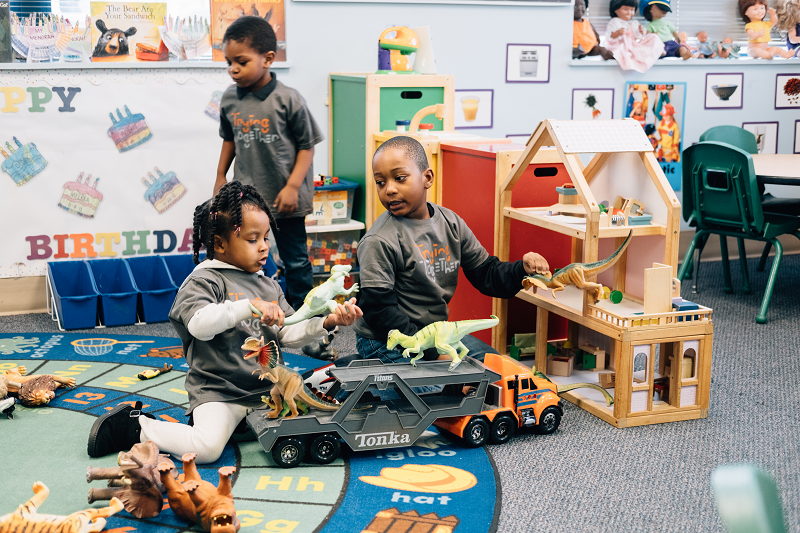
Join the Carnegie Library of Pittsburgh Carrick branch for a day of experimentation, play, and learning by exploring interactive technology and a variety of robots. STEM All Hands On Tech programs support learning and literacy by introducing children to technology. This event is intended for children in grades pre-k to 5.

Questions

For questions, contact Jon Antoszewski at 412.381.6543 or antoszewskijo@carnegielibrary.org.

This location is handicap accessible. See the event page.

Door Knocking: School Board Member Elections

News

April 22, 2019

Door Knocking: School Board Member Elections

Being a School Board member is one of the most important elected positions in Pittsburgh. They play a vital role in our community property, including setting tax rates, negotiating the work rules and pay for all school staff, hiring key school administrators, and enacting policies that govern the district and budget. However, only one in five registered voters cast their votes during school board elections.

How Can You Help?

On May 21, 2019, voters will vote in the primary elections for Districts 2, 4, 6 and 8. You can help make sure voters are informed about the upcoming School Board elections by signing up to volunteer today and talking with your friends and neighbors. Interested volunteers can sign up for varying types of opportunities, including:

  • Door Knocking,
  • Phone Banking, and
  • Giving Voters Information on Election Day.

Volunteer Sign Up

Sign up for canvassing today to support your local community.

Other Sessions

Phone Banking: School Board Member Elections

News

Phone Banking: School Board Member Elections

Being a School Board member is one of the most important elected positions in Pittsburgh. They play a vital role in our community property, including setting tax rates, negotiating the work rules and pay for all school staff, hiring key school administrators, and enacting policies that govern the district and budget. However, only one in five registered voters cast their votes during school board elections.

How Can You Help?

On May 21, 2019, voters will vote in the primary elections for Districts 2, 4, 6 and 8. You can help make sure voters are informed about the upcoming School Board elections by signing up to volunteer today and talking with your friends and neighbors. Interested volunteers can sign up for varying types of opportunities, including:

  • Door Knocking,
  • Phone Banking, and
  • Giving Voters Information on Election Day.

Volunteer Sign Up

Sign up for phone banking today to support your local community.

Other Sessions

Foundations Urged to Unite to Reinforce Early Learning

News

Foundations Urged to Unite to Reinforce Early Learning

In a recent article in the Chronicle of Philanthropy, Gregg Behr and Kristen Burns, both Executives of the Grable Foundation, discuss the topic of early childhood programs and explore the increasing general awareness of the important role of early learning experiences.

Overview

Data has repeatedly shown that “kids who participate in high-quality programs develop a greater capacity for cognitive and social-emotional skills like collaboration, communication, and perseverance — skills that improve school attendance, grades, and more.”

However, with the current levels of early childhood funding, only “two-thirds of American four-year-olds are enrolled in early learning programs…with less than a quarter of those programs being considered high-quality.” Because of this, advocates are calling for grantmakers and foundations to step up, as many have, to reinforce the positive impact of early childhood programs.

Toxic Stress and Trauma

In the article, Behr and Burns discuss the negative impacts of sustained exposure to toxic stress and trauma. Because of this, disadvantaged kids may be taking the brunt of the impact with greater risks for developmental delays linked to problems such as “poor academic achievement, substance abuse, and diabetes.” However, studies show that even if a young child is exposed to toxic stress and trauma, many of the negative impacts may be reduced if the child has access to a positive, safe, and supportive early learning experience. By advocating for increased investments in early childhood, foundations are advocating to support the healthy development and success of our nation’s children.

Current Funding

Behr and Burns state that “among the 91 grantmakers surveyed, one-third reported funding [efforts related to early childhood programs]. Of those, well over half anticipated increased support in the next two years.” However, despite wide and growing support for the cause, early childhood spending gets just four percent of foundation dollars. Because of this, advocates are calling on grantmakers and foundations to unite in an effort to support the benefits of early childhood programs. While philanthropy cannot take the place of adequate government funding, any supportive effort today “may lead to better public policy tomorrow.”

Learn More

To read the full article, including clear examples highlighted in the Grantmakers for Education report, visit the website.

Gregg Behr is executive director of the Grable Foundation and chairman of Grantmakers for Education. Kristen Burns is associate director of Grable.
PPS: Take a Father to School Day 2019

News

April 10, 2019

PPS: Take a Father to School Day 2019

Pittsburgh Public Schools welcomes fathers, grandfathers, uncles, and positive male role models to participate in the nationally recognized Take a Father to School Day.

In support of the District’s long-term outcome of increased proficiency in literacy for all students, this year’s theme is #ExpectGreatThings. Every school will have an activity or event planned to celebrate the day.

Ask your school for details!

Questions

For questions, contact Larry Meadows at 412.529.3851.

Share this flyer with your network.

2019 P-3 Governor’s Institute Encourages Applications

News

April 3, 2019

2019 P-3 Governor’s Institute Encourages Applications

The Pennsylvania Department of Education Office of Child Development and Early Learning announced the 2019 Prenatal to Grade 3 (P-3) Governor’s Institute: P-3 Collaboration – Working Together for Student Success.

Purpose

The purpose of Pennsylvania’s P-3 Governor’s Institute is to help school districts, early learning providers, and community organizations throughout the Commonwealth make the vital connections and collaborations necessary for student success from prenatal through grade 3. The 2019 P-3 Governor’s Institute is being offered June 24- 25, 2019 in Hershey, PA.

Application Details

Participation in the 2019 Institute is limited to 22 teams that have not previously attended a P-3 Governor’s Institute. Participating teams will be selected through an application process. School districts, birth-5 early learning programs, and community organizations may submit an application.

Applications may be submitted for more than one team from the same organization if each applying team represents a different elementary school and birth-5 feeder school/program. Teams should be built around a specific elementary school(s), its feeder early learning programs, and the local community. Selected teams will participate in this two-day event. Professional development will be offered to support team specific implementation of P-3 efforts.

Most expenses, except meals, will be covered for participating teams using Preschool Development Grant funds. Act 48, and Act 45/PIL professional development credits and Pennsylvania Quality Assurance System (PQAS) hours will be offered.

Required Agreements

To be considered for participation in this event, participating teams must agree to the following:

  • Participate in pre-conference assignment, webinar or call;
  • Attend and actively engage in the entire two-day event;
  • Bring a core team of no less than four educators (maximum participating team of eight members): a birth-5 administrator, a birth-5 teacher, a K-3 administrator, and a K-3 teacher. Preference will be given to applicants who include up to four of the following: family leader or family representative, Early Intervention representative, out of school time professional, community member, librarian, curriculum specialist, higher education partner, IU representative, Home Visiting, and Family Support;
  • Applying team has not attended a past P-3 Governor’s Institute;
  • Engage in continuous improvement via sharing and implementation of strategies/programs that will enhance student achievement; and
  • Maintain an active role in the Governor’s Institute cohort subsequent to the event (e.g., professional learning community, webinars, monthly follow up).

Application & Deadline

Applications are being accepted via the Governor’s Institute P-3 2019 Application link until the April 30, 2019 deadline. Selected applicants will be notified via email by May 10, 2019.

Questions

For questions, contact Jolie Phillips at jolphillip@pa.gov.

*Information provided by OCDEL’s PA Early Ed Newsletter

Engaging Early Learners with Technology: Sharing Research and Best Practices

News

March 15, 2019

Engaging Early Learners with Technology: Sharing Research and Best Practices

About

In this edWebinar, the presenters will discuss the best practices for technology use with young children (birth through age five) and their families. They will also discuss how to support early childhood educators in grades K-3 with effective technology strategies. Research on technology use in early childhood education from the National Association for the Education of Young Children (NAEYC) and Common Sense Media will provide the framework for this discussion. With digital devices becoming more readily available in school settings, the logistics of implementing technology in the classroom as a tool for learning must be examined in order to utilize emerging technology most effectively.

Roundtable

The edWebinar will also share insights from a roundtable facilitated by Hi5!, a kindergarten readiness and registration campaign in the Greater Pittsburgh Region. The roundtable served as a professional development and networking event for over 20 school districts to share best practices for how they are using technology to support the transition to kindergarten for students and families. The discussion included developmentally appropriate technology use across the early childhood continuum.

Audience

This presentation will be of interest to preK-3 teachers and school leaders. There will be time to get your questions answered at the end of the presentation. Be sure to view and share this event flyer (PDF) with your network.

For more information and registration, click here.

Child Care Becoming More Unaffordable for Low-Income Parents

News

March 13, 2019

Child Care Becoming More Unaffordable for Low-Income Parents

Overview

A recent research brief, Child Care Affordability for Working Parents, from the Institute for Child, Youth and Family Policy, Heller School for Social Policy and Management, Brandeis University, finds that many U.S. parents who are highly attached to the labor force would have a difficult time purchasing full-time center-based care.

Spending

This finding is especially true for low-income, Hispanic and black parents. Overall, parents working full time and year-round would spend 10 percent of family income to send their children to full-time center-based child care; low-income parents working full time and year-round would spend 28 percent. Almost all low-income parents working full time and year round would have to spend more than the federal affordability benchmark of 7 percent to send their children to full-time center-based child care.

Ranking

According to the brief, Pennsylvania ranks fifth highest nationally in child care price to income ratios for low-income parents, and in fourth highest for Hispanic parents.

Analysis

Even for families with a parent working a full-time year-round job, full-time center-based child care for young children and care during the school year for school-age children is largely unaffordable. Importantly, the parents included in this analysis are those with a clear need for child care.

This analysis has three key findings about the affordability of center-based care for working parents. First, market-price full-time center-based care would be difficult to afford for a majority of U.S. working parents. Second, center-based child care presents an even greater financial burden for low-income working parents – virtually all (95%) low-income full-time year-round working parents face unaffordable child care costs. Finally, because larger proportions of working black and Hispanic parents earn low incomes than working white and Asian/Pacific Islander parents, child care affordability issues disproportionately affect black and Hispanic working families. This disproportionate burden has the potential to exacerbate racial/ethnic disparities in both family economic security and child wellbeing.

Read the full research brief here. 

PA’s Program Reach and Risk Assessment Report Released

News

March 8, 2019

PA’s Program Reach and Risk Assessment Report Released

About

Children in 40 Pennsylvania counties (60 percent) are at moderate-high or high-risk of low academic performance. This is according to the recent release of the Pennsylvania Office of Child Development and Early Learning Program Reach and Risk Assessment State of Fiscal Year 2016-2017. 

As a result, OCDEL annually creates its Program Reach and Risk Assessment Report. This report offers information on the level of risk for school failure for children (based on 16 risk factors). It also offers information on the availability, or reach, of most OCDEL programs to children in each county and school district in Pennsylvania. Consequently, the Reach and Risk Report includes data for all children under age five. It also provides a breakdown of program reach by infants/toddlers (birth – two years) and preschool (ages three and four).

Report Breakdown

Highlights within the report include:

  • One-third (34 percent) of children under age five participate in state and/or federally-funded quality early care and education programs in Pennsylvania.
  • Of all state-funded programs, the most children are reached through the Keystone STARS program. This program provides services to an estimated 14 percent of children from birth to age five. 
  • Approximately one-fourth (24 percent) of Pennsylvania’s infants and toddlers (birth to age two) participate in publicly-funded quality early care and education programs.
  • Almost half (49 percent) of Pennsylvania’s preschoolers are served in state and/or federally funded quality early care and education programs.

Full Report

To read the full report and access county and school-based specific information, visit the PA Key website. 

Kindergarten Registration Open in Allegheny County

News

March 5, 2019

Kindergarten Registration Open in Allegheny County

If your child is five, it’s time. Kindergarten registration has opened in Allegheny County for the 2019-2020 school year. View details on Kindergarten registration costs, locations, and dates at trying together.org.


Hi5! Campaign

Successful transition practices help school districts identify and work with early care and education providers in their community to support young children and their families so they are comfortable and prepared for the first day of Kindergarten. Through a partnership called Hi5!, Trying Together, United Way of Southwestern Pennsylvania, and Allegheny Intermediate Unit 3 (AIU3) work with over 40 local school districts. Due to these efforts, Kindergarten registration rates have improved to a 97% early or on-time registration rate for Allegheny County children as reported for the 2017 – 2018 school year.


Learn More

Learn more about Kindergarten Transition with this white paper from Trying Together (PDF). For questions, contact Emily Neff at 412.421.3889 or hi5@tryingtogether.org.