Pilot Program Provides Direct Cash Payments to Home-Based Providers

News

September 11, 2025

Pilot Program Provides Direct Cash Payments to Home-Based Providers

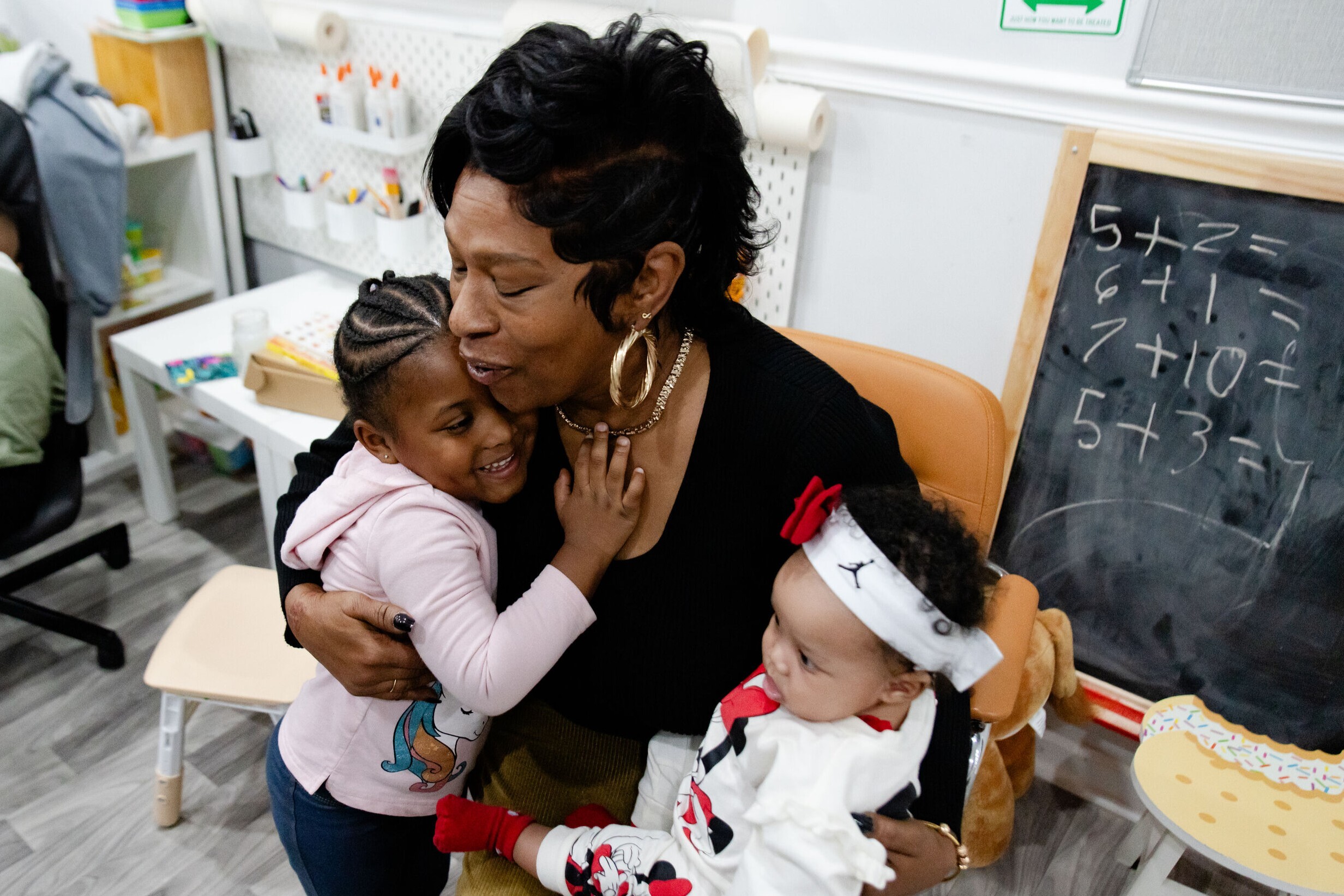
In partnership with Home Grown and the United Way of Southwestern Pennsylvania, Trying Together is participating in a pilot program to provide direct cash payments to select home-based providers.

About the Program

The Thriving Providers Project (TPP) – a national initiative spearheaded by Home Grown – seeks to demonstrate how direct cash payments to providers will have positive results for relatives who provide child care to young children. The goal is to reform child care payment policies and influence future decisions around compensation for home-based child care providers. TPP provides pre-selected caregivers with a direct cash payment of $500 monthly, understanding that the support to providers reduces financial stress and ultimately improves the early learning experiences of the children and families they serve.

“I can afford to take the children on field trips,” shared Relative Provider Tywanda Powell. “I bought them school supplies and better toys. I was able to just do extra for the children.” 

Program Participants

Communities with limited access to resources such as affordable child care, transportation and healthcare, were prioritized to ensure support reached families with the greatest need.

Within these neighborhoods, participant selection emphasized caregivers whose roles have had a significant impact on child and family well-being. 

  • Grandparents and great-grandparents raising grandchildren were prioritized for the stability, intergenerational connection, and nurturing environment they provide, often while managing limited financial resources. 
  • Caregivers of children under age five were included given the critical importance of the early years for child development, when consistent care and support have the greatest long-term benefits. 
  • Caregivers providing care during nontraditional hours were also prioritized, as they help families balance essential work responsibilities with the challenge of securing reliable care outside of standard availability.

By centering these caregiving strengths, the program directs resources to families whose dedication and resilience most directly influences children’s growth and stability, ensuring funds provide both immediate relief and long-term community benefit.

“The program not only supports caregivers who are often underrecognized and underpaid but also improves access to reliable, nurturing care for families, particularly in underserved communities,” explains Bliss Letang, director of equity initiatives at Trying Together. 

“Additionally, TPP generates valuable evidence on the impact of direct cash payments, informing future policies and reforms around fair compensation for home-based providers, while fostering stronger connections between children, families, and their caregivers.”

The Thriving Providers Project’s philosophy is based on a belief that people should be trusted to make decisions for themselves. Drawing on learning from guaranteed income initiatives around the nation and best practices in early childhood education, the program’s mission is to support and stabilize caregivers and, in the process, improve the availability and quality of care for children and families. The transfers enable providers to make decisions that are best for the children and families they serve.

Home-based Child Care Statistics

Home-based child care providers are the largest population of caregivers serving the largest number of children, ages five and below. A total of 30% of infants and toddlers attend home-based child care as their primary care arrangement, compared to just 12% in centers, according to the program. 

However, home-based care providers receive little public support, which makes them more vulnerable to financial emergencies or crises. On average, family child care providers work 56 hours per week and earn around $29,000. About 30% of them rely on at least one other job.

For more information, see the Thriving Providers Project Fact Sheet.

Trying Together Celebrates Relative Care Providers at Grandparents Day Event

News

September 10, 2025

Trying Together Celebrates Relative Care Providers at Grandparents Day Event

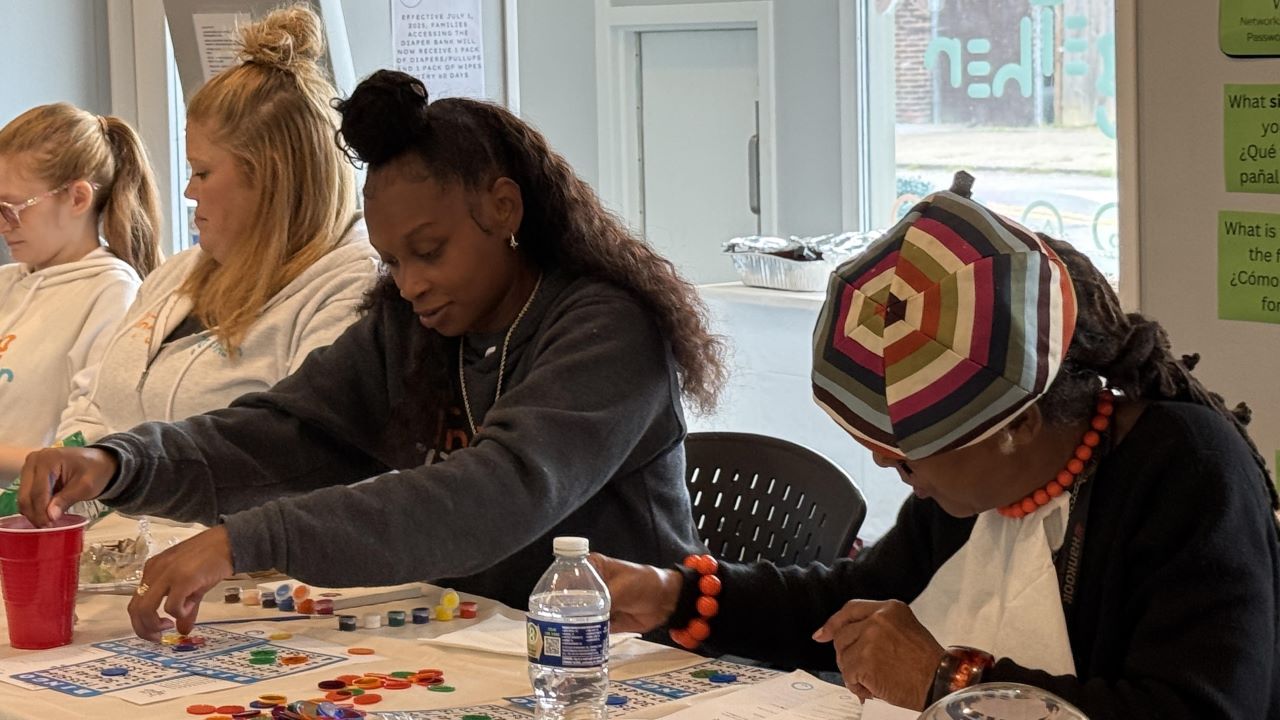
In recognition of National Grandparents Day, Trying Together held a celebration event to honor grandparents who provide daily child care for their grandchildren.

Learn More

Hosted by the Homewood Early Learning Hub & Family Center on Sunday, September 7, the event included food, painting, and games. Attendees connected with one another and shared their stories. Children of all ages accompanied their grandparents and had the opportunity to participate in the activities and explore the Hub’s play areas. 

“Out of the over 450 relative care providers in Allegheny County who act as daily caregivers for young children while their parents are at work, approximately 65% are grandparents,” said Bliss Letang, director of equity initiatives at Trying Together. “This event was an opportunity to recognize the dedication of these grandparents and the impact they have on the lives of their grandchildren.”

Trying Together was a cosponsor for Home Grown’s Family, Friend, and Neighbor (FFN) Appreciation Week, which was an opportunity to celebrate the more than five million family, friend, and neighbor caregivers who look after 11.5 million children annually.

Trying Together’s Director of Public Policy Discusses Early Childhood Education Crisis on PCN Capitol Preview

News

September 9, 2025

Trying Together’s Director of Public Policy Discusses Early Childhood Education Crisis on PCN Capitol Preview

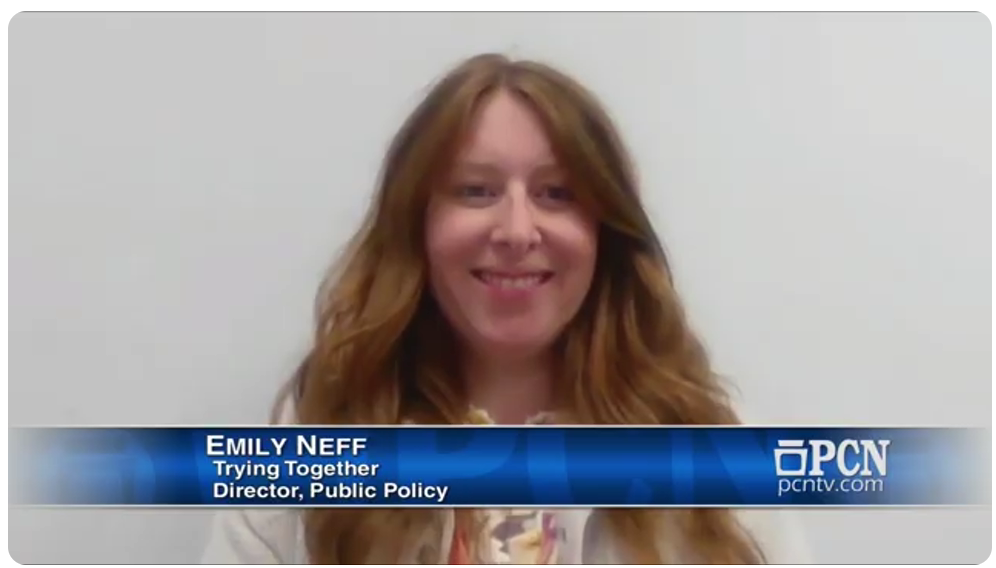
Trying Together’s director of public policy appeared this week on The PCN Capitol Preview to discuss Pennsylvania’s ongoing early childhood education staffing and funding crisis.

Learn More

Emily Neff, Trying Together’s director of public policy, appeared on the program on Tuesday, Sept. 8 to discuss what Trying Together does to support early childhood development as well as the state’s teacher shortage and budget impasse.

“We are in a crisis,” Neff said. “The system is not working for everyone. Early childhood educators are woefully underpaid for the amazing work they do for our children. Families are paying as much for their rent or mortgage as they do for child care – and that’s if they can find it.”

Neff said many parents – including herself – are on long waiting lists to get their children into a program. Often, she added, programs have classrooms that are closed that could serve more children, but cannot due to the state’s staffing crisis. She said that one program she knows of recently closed its toddler class, while another said it would shut down if it lost another teacher. 

Neff cited Gov. Josh Shapiro’s proposed $55 million child care teacher recruitment and retention line item as an opportunity to address the state’s early education crisis.

“It’s a great opportunity for Pennsylvania to put itself on the map,” she said. “It would be a $1,000 payment to teachers, but we don’t know what’s going to happen with that right now.”

She said that the state’s budget impasse – during which the state Legislature has not passed a budget more than two months past the deadline, resulting public schools not receiving state funding that educators say is critical to keep them operating – has led some programs to lay off teachers, while parents have been left to find care elsewhere.

“We need more investments to make sure that programs have what they need, teachers are being paid better, and families have access – and it’s not costing families more than what they’ve already been paying,” Neff said.

The PCN Capitol Preview is available on YouTube.

Trying Together Testifies At PA House Public Hearing on State Child Care System

News

September 8, 2025

Trying Together Testifies At PA House Public Hearing on State Child Care System

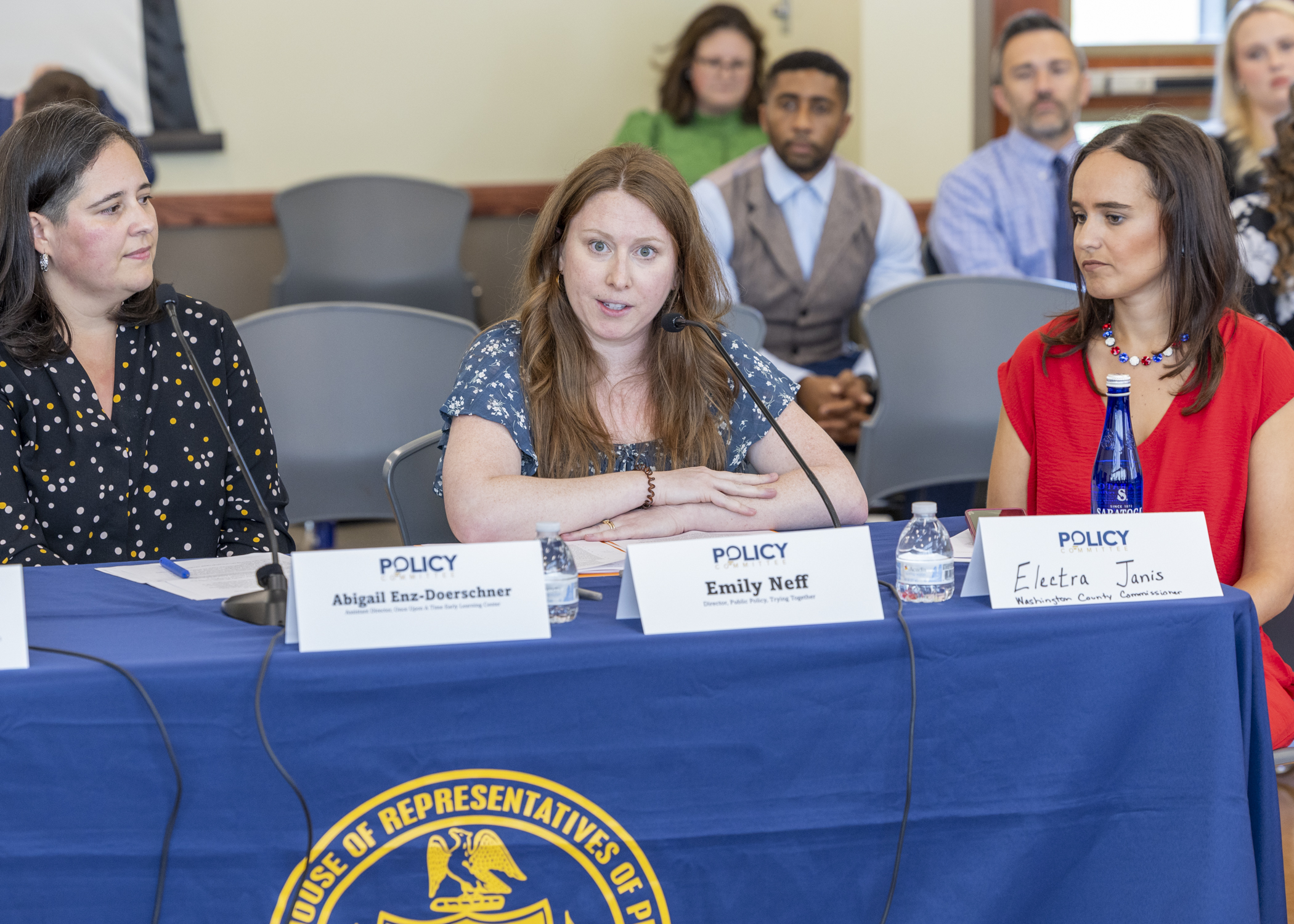
Trying Together’s director of public policy testified at an August public hearing held by the state House of Representatives’ Republican Policy Committee to examine challenges facing Pennsylvania’s child care system and discuss solutions.

Learn More

Emily Neff, Trying Together’s director of public policy, was among those who testified at the hearing. Speakers discussed the impact on families, providers, and the economy caused by low pay, workforce shortages, and rising costs of care. Policymakers also expressed interest in exploring regulatory reforms to ease the burden and reduce red tape for child care programs.

“When looking for solutions within the regulations, it’s critical to make sure that we are not making changes that tie directly to child health, safety, and quality learning,” Neff said. “We hear that liability costs are unsustainable. We hear so many stories across Allegheny County that zoning codes create barriers to open or maintain a home-based child care business.”

During her testimony, Neff said that many families pay the same amount for their rent or mortgage that they do for child care and noted that the pay for early childhood educators is driving viable candidates away from the field.

“The problem is not the pipeline,” she said. “There are dedicated people who are passionate about educating young children – but when they’re told that the wage is $15.15 an hour, people don’t want to or truly cannot pursue that path.”

The hearing was held as part of the House Republican Policy Committee’s ongoing work to engage with stakeholders across the state and ensure that proposed policy solutions support families, strengthen the workforce, and create opportunity. 

“All too often, Pennsylvania families are priced out of quality, affordable child care and have to second guess whether they can afford to pursue or maintain a career,” said state Rep. Natalie Mihalek (R-Washington), who hosted the hearing. “By hearing directly from those who work in child care, my House colleagues and I are better positioned to craft common sense solutions that address this important issue.”

The full hearing is available online.

Trying Together Releases Fall 2025 Professional Development Catalog

News

August 29, 2025

Trying Together Releases Fall 2025 Professional Development Catalog

Trying Together has released its 2025 fall catalog to help educators find professional growth opportunities that align with their career goals. The catalog provides course details and credentials.

Learn More

In the past year, Trying Together awarded nearly 4,500 PQAS credits to support continuous improvement in early learning programs. It aims to increase the number by regularly updating its Professional Development Catalog to make it easier for educators to continue to learn.

All courses listed in the catalog are led by a certified PQAS instructor and are Act 48 approved.

The courses are broken down into nine sections:

  • Assessments and Supportive Services (Early Intervention)
  • Child Development
  • Classroom Environment
  • Curriculum Development
  • Family and Community Engagement
  • Guidance and Behavior Management
  • Health and Safety
  • Justice, Equity, Diversity, and Inclusion (JEDI)
  • Professionalism and Program Organization

For more information on how Trying Together can assist educators in their learning goals, email learning@tryingtogether.org or call 412-421-3889. 

UnConference: From Representation to Inclusion

News

August 27, 2025

UnConference: From Representation to Inclusion

Registration is open for Trying Together’s UnConference: From Representation to Inclusion, which will take place on Oct. 4 from 8 a.m. to 4:30 p.m. at the Carnegie Museum of Art.

Learn More

The UnConference will focus on immigrant children and their families, delving into the ways early childhood educators can foster supportive and inclusive learning environments. Participants will hear from a keynote speaker and caregivers before taking part in a large group activity.

Attendees will also attend workshops led by representatives from organizations that serve immigrant families in the region. These workshops will cover topics such as inclusive practices and building trust; trauma-informed communication; play and literacy; honoring identity; practical considerations for educators; and more.

The cost to attend is $25. Registration is now open.

Trying Together Asks Caregivers and Educators to Write Letters Advocating for the Importance of Play

News

Trying Together Asks Caregivers and Educators to Write Letters Advocating for the Importance of Play

In recognition of the upcoming National Day of Play championed by the USA Affiliate (IPA USA) of the International Play Association on Sept. 20, Trying Together is asking caregivers and educators to take part in a letter-writing campaign to advocate for the importance of play for children in early childhood settings.

Be an Advocate for Playful Learning

Play-based learning and adequate recess time have been shown to support children’s health and holistic well being, aid in the development of executive function skills, improve behaviors, and increase academic knowledge acquisition. 

The National Association for the Education of Young Children (NAEYC) and the World Health Organization recommend one to three hours of vigorous activity for children each day and play-based learning as the primary instructional model for all of early childhood, birth to age 9, yet no state in the United States requires recess and most children in U.S. schools receive 40 minutes or less of recess per day. 

How Can You Help? 

Trying Together’s Advocacy Team recommends sending a letter to school principals, school board members, or other district leaders and mobilizing other members of the community to do the same. 

The Advocacy Team has put together a toolkit of sample letters to get started. Writers should be sure to include their own story and discuss why play matters to them. 

Letters can be sent by mail or email.

Sample letters include ones for caregivers or teachers to administrators, ECE providers to school districts, formal memos to districts or birth to age 5 programs, and students. Another resource is a list of recommendations on physical activity by age.

“Play is often talked about as if it were a relief from serious learning. But for children, play is serious learning. Play is really the work of childhood“

-Mr. Rogers 

Students in Trying Together’s Summer CDA Course Tout Program’s Relationship Building

News

August 25, 2025

Students in Trying Together’s Summer CDA Course Tout Program’s Relationship Building

Students in Trying Together’s summer Child Development Associate (CDA) credential program said the program helped them to learn more about the early childhood education system as well as learn from each other.

Learn More

The summer CDA program was the first time Trying Together offered a hybrid course option with an in-person class in the beginning, the middle, and at the end. All other classes in between were virtual. 
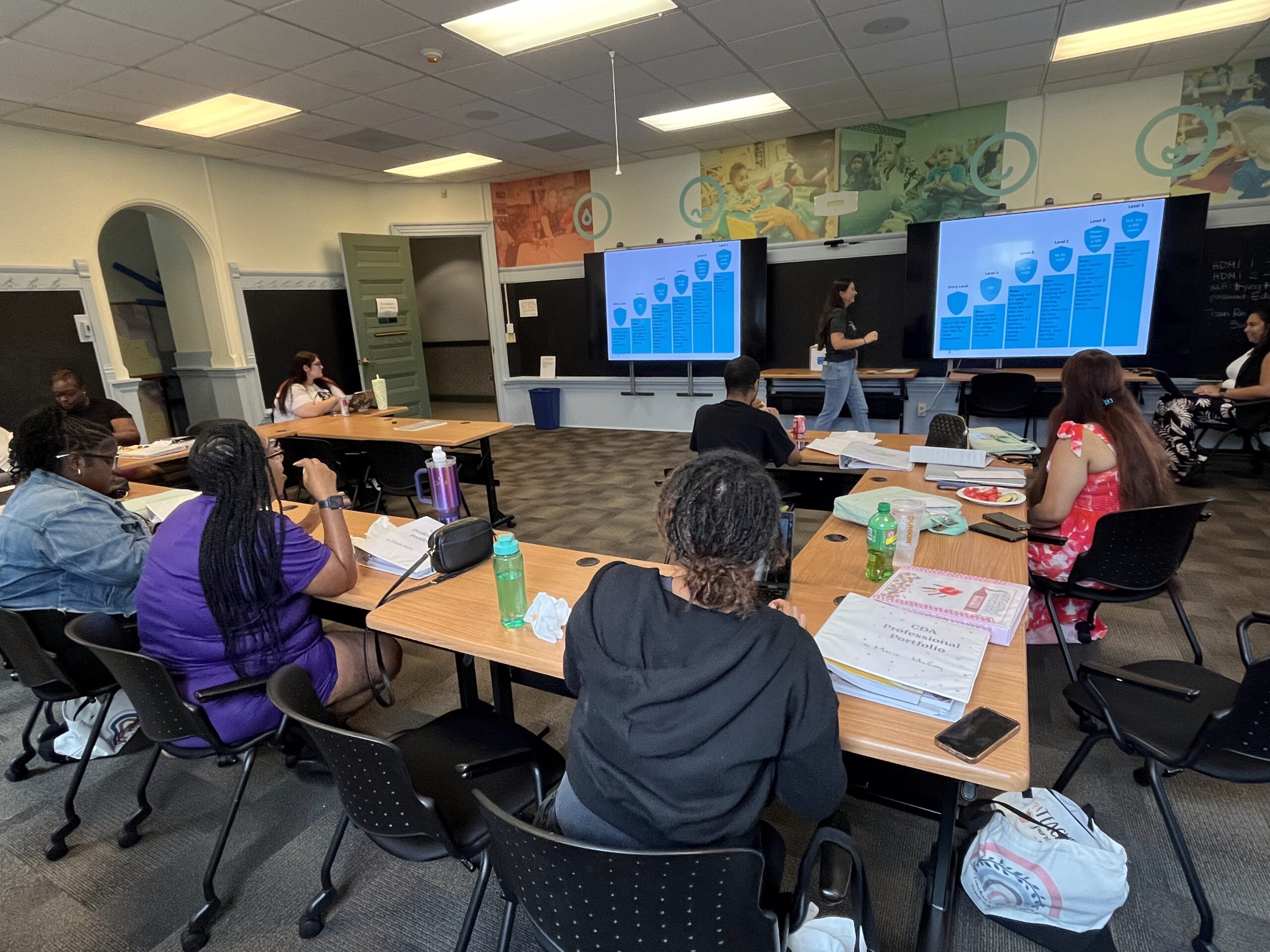
Students met with instructors twice a week, every other week, for Zoom classes to review CDA course content and build their professional portfolio. The format of the summer program moved more rapidly than Trying Together’s typical CDA Program, condensing six months of content into three while still maintaining a high standard of quality. 

“I am grateful to have my CDA with Trying Together,” said student Rajlakshmi Ghosh Pal. “The whole team is just amazing. They are so helpful that I feel so confident after being in this class.”

The students were motivated and excelled at relationship building with one another. Between the instructors and students, there was a sturdy support system in which they encouraged one another to keep pushing. 

As instructors presented course content, students shared their own experiences in their classrooms and suggested teaching strategies to each other. The instructors enjoyed seeing the community building between them and their students. 

“This program has helped me to implement different types of learning into my classroom to better help children learn,” student Madison Deithorn said. “I have also learned from classmates their way of teaching to try in my classroom.”

Even though summer classes have wrapped up, the students are continuing to work hard by completing their CDA applications, taking the exam, and being observed in their classroom to showcase their work to earn their CDA Certificate.

Student Maria McCoy said she was glad to have participated in the class and noted that “Trying Together helped me become more aware of the impact that I make in my classroom daily.”

Another student, Denise Hazlip, said the class gave her a greater understanding of the early childhood education system.

“Taking my CDA class has been a valuable and rewarding experience,” she said. “Throughout the course, I have gained a deeper understanding of child development, early learning standards, and the important role that educators play in supporting children and families. The class has not only given me knowledge, but also practical strategies that I can use every day in the classroom.”

Trying Together to Hold Event to Celebrate Grandparent Relative Care Providers

News

August 19, 2025

Trying Together to Hold Event to Celebrate Grandparent Relative Care Providers

Trying Together will hold an event at the Homewood Early Learning Hub & Family Center in September to celebrate grandparents who are relative care providers for their grandchildren. 

Learn More

As a cosponsor for Home Grown’s Family, Friend and Neighbor (FFN) Appreciation Week, Trying Together will host the Relative Provider Grandparents Appreciation Day on Sunday, Sept. 7 from 11 a.m. to 3 p.m. 

FFN Appreciation Week is an opportunity to celebrate the over 5 million family, friend, and neighbor caregivers who look after 11.5 million children each year. This week of celebration begins on National Grandparents Day, a holiday that honors the bond between children and grandparents. 

Those who are a grandparent caring for a grandchild can bring the children in their lives to the Hub for an appreciation celebration. The event will include food, fun activities, and an opportunity for participants to share their stories.

The event is free, but space is limited. Those interested in attending should register as soon as possible.

The Hub is located at 7219 Kelly St. in Pittsburgh.

Registration Open for UnConference: From Representation to Inclusion

News

August 18, 2025

Registration Open for UnConference: From Representation to Inclusion

Registration is now open for Trying Together’s UnConference: From Representation to Inclusion scheduled for Saturday, Oct. 4 at the Carnegie Museum of Art.

Learn More

The UnConference will focus on immigrant children and their families, delving into the ways early childhood educators can foster supportive and inclusive learning environments. Attendees will hear from a keynote speaker and caregivers as well as take part in a large group activity.

Participants will attend workshops led by representatives from organizations that serve immigrant families in the region. These workshops will cover topics such as inclusive practices and building trust, trauma-informed communication, play and literacy, honoring identity, and practical considerations for educators.

More Details

The UnConference will run from 8 a.m. to 4:30 p.m. at the Carnegie Museum of Art, located at 4400 Forbes Ave. The fee to attend is $25. Registration is required and now open.

Parking will be available in the museum parking lot and on the street. A light breakfast with coffee and tea will be available and lunch will be provided as part of the registration fee.

The event will begin with keynote speaker Ivonne Smith-Tapia, director of refugee and immigrant services at Jewish Family & Community Services. Then, participants will take part in a large group workshop and panel. 

After lunch, attendees will take part in two sessions – out of 10 options – they chose during registration. The day will end by 4:30 p.m.

A total of 6.5 PQAS and Act 48 credit hours will be available for attendees.

Workshops

Participants will be able to select their first and second choices of preferred sessions for each of the afternoon session time slots. Workshops include:

  • Effective and Trauma-Informed Communication Pathways for English Learners and Their Families
  • Muslim Families in Learning Environments: Building Trust and Inclusion
  • Who Makes the Rules? Exploring Cross-Cultural Communication Through Play
  • Supporting Positive Identity Development Through Picture Books
  • Carnegie Museums of Art Extension Activity
  • What’s in a Name? Honoring Identity Through Cultural Learning
  • Not Just a Seat, But a Say: Inclusive Practices That Nourish
  • Refugee 101: Background and Practical Considerations for ECE Teachers
  • Positionality, Power & Poetry: A Reflection on Bias & Creating Inclusive Practices Within Multicultural Classrooms
  • Carnegie Museums Guided Art Tours

For descriptions of the workshops, visit the UnConference’s registration page.

About UnConference

The UnConference is an innovative, hands-on professional development training format in which a deeper experience is provided around a particular theme. Local and national speakers are invited to present and participants are encouraged to engage hands-on in the workshops.