MOMPGH To Host Free Dental, Hearing, & Vision Clinic 2023

News

October 13, 2023

MOMPGH To Host Free Dental, Hearing, & Vision Clinic 2023

The 2023 Mission of Mercy Pittsburgh Free Dental, Hearing & Vision Clinic will be held October 27-28, at the David L. Lawrence Convention Center.

Learn More

Mission of Mercy Pittsburgh (MOMPGH) is a free, two-day dental, hearing, and vision clinic for the underserved members of the community who are uninsured or don’t have access to affordable dental care.

 All services are provided free of charge by local dental professionals, assisted by a strong support team of volunteers. There are no eligibility requirements or insurance needs to receive these services.

Dental Services Include:

  • X-Rays
  • Cleaning
  • Fillings
  • Select Root Canals
  • Limited Extractions & Partial Dentures

Hearing Services Include: 

  • Hearing Evaluations
  • Free Hearing Aids
  • Hearing Aid Fittings
  • Batteries for Hearing Aids
  • Access to Free Amplified or Captioned Phones
  • Hearing Aid Troubleshooting and Repair
  • Hearing Protection

Vision Services Include: 

  • Visual Acuity Screenings
  • Glasses Prescriptions
  • Free Glasses

Doors open at 6 a.m. and the clinic will begin at 7 a.m. All patients will be seen on a first-come and first-served basis.

More Information

For details about the MOMPGH free clinic or to sign up to volunteer, visit mompgh.org.

Upcoming Webinars: Strategies for Building Child Vaccine Confidence

News

October 11, 2023

Upcoming Webinars: Strategies for Building Child Vaccine Confidence

The topic of childhood vaccines is on parents’ minds more than ever but also has become more sensitive for educators to discuss with families than many other concerns. Penn State Extension Better Kid Care is hosting webinars for early childhood educators, family child care professionals, and out-of-school-time professionals about how to discuss childhood vaccines with families.

Learn More

The webinars will dive into why these conversations are uncomfortable at times and how professionals can approach them in ways that stay true to fact-based information while also preserving their relationships with families.

Some families who have complied with vaccination requirements at ECE programs may still have questions or concerns that can be alleviated. Other families who have opted for or are considering exempting their child from vaccines may be open to changing their decision based on information shared with them in a non-confrontational way.

Participants will:

  • Identify strategies for ECE professionals to address the most common reasons that families give for being hesitant about child vaccines.

  • Explore communication strategies for addressing the topic of vaccines with hesitant families.

  • Identify trustworthy, family-friendly sources of information about child vaccines and effective ways of sharing them with families.

Webinar Details

  • Thursday, 10/26 | 6:30 p.m.

  • Tuesday, 11/07 | 1 p.m.

  • Wednesday, 11/08 | 1 p.m. and 6:30 p.m.

  • Thursday, 11/09 | 12 p.m. and 6 p.m.

  • Tuesday, 12/05 | 1 p.m.

Registration is available online. There is no cost to attend. To register by phone, call 1.877.345.0691.

E-Learning Course: Exploring the WIDA PreK-3 Essential Actions

News

E-Learning Course: Exploring the WIDA PreK-3 Essential Actions

A new course, Exploring the WIDA Prek-3 Essential Actions, is now available in the PD Registry for free.

 Learn More

This self-paced e-learning course will introduce educators to the WIDA PreK-3 Essential Actions.

Educators will have an opportunity to build their knowledge and understanding of the Essential Actions and key concepts embedded in the Essential Actions for supporting dual language learners. They will also reflect on their own ideologies, practices, and settings. This course will invite participants to apply their learning and take action to enhance their current practices by utilizing the tools and resources provided.

Register

To register for the course, visit the PD Registry and search the training calendar for Exploring the WIDA Prek-3 Essential Actions.

Any questions can be directed to Barry Wiestling at bwiestling@pa.gov.

Upcoming Enrollment Application Assistance for Families

News

October 9, 2023

Upcoming Enrollment Application Assistance for Families

The Homewood Early Learning Steering Committee (HELSC) and Carnegie Library of Pittsburgh (CLP) – Homewood invite families to participate in a week-long enrollment application assistance event.

Families looking for assistance with completing online applications for open enrollment to early learning centers, schools, and neighboring educational programs can visit either of two locations from Monday, November 6 through Friday, November 10.

The event will be held at the Hub & Family Center (7219 Kelly Street, Pittsburgh, Pa. 15208) and CLP-Homewood (7101 Hamilton Avenue, Pittsburgh, Pa. 15208), during normal hours of operation.

Registration is not necessary to participate. Walk-ins are welcomed.

REGISTER

Note: All Carnegie Library of Pittsburgh locations offer drop in computer and scanning assistance during regular operating hours. Customers can also Book a Librarian for more 1-on-1 support.

More Information and Questions

For any questions or more information, please contact Toni Beasley, Director of The Homewood Early Learning Hub & Family Center at toni@tryingtogether.org and/or Mary Phillips, Children’s Librarian CLP-Homewood at phillipsm3@carnegielibrary.org.

A Roadmap to Understanding Child Development

News

October 6, 2023

A Roadmap to Understanding Child Development

It can be intimidating for families and caregivers of young children to have open conversations about their child’s development with pediatric health care providers, early care and education providers, home visitors, or early interventionists.

The Brazelton Touchpoints Center has developed several different roadmaps to help families and caregivers navigate conversations to ensure the safety and well-being of their child.

For Pediatric Primary Care Providers
For Home Visitors
For Early Care and Education Providers
For Early Interventionists
For staff who utilize Developmental Monitoring checklists

Learn More

To learn more, read the full article or visit the Center on the Brazelton’s Touchpoint Center.

Source

Information for this post was taken directly from the Brazelton’s Touchpoint Center’s “Development is a Journey,” Some text may have been added, paraphrased, or adapted for readability and comprehension.

Resources and Related Content
Center on the Developing Child Releases Report on Role of Racism in Child Development
Organizations Publish New Child Safety and Development Resources for Families and Educators


Free Winter Coats For Children

News

October 4, 2023

Free Winter Coats For Children

Update: As of October 12, 2023, winter coats are no longer available.

The Center for Community Resources, in partnership with the Pennsylvania Department of Human Services, is providing free winter coats for children.

Learn More

Beginning Wednesday, October 4, families can visit the ELRC Region 5 main office (304 Wood Street Suite 400 Pittsburgh, PA 15222) during normal business hours to receive winter coats for their families while supplies last.

For details, view this flyer (PDF).

Thriving PA Releases Maternal Health Fact Sheets

News

October 3, 2023

Thriving PA Releases Maternal Health Fact Sheets

ThrivingPA is out with an extensive series of new maternal health fact sheets to ensure that mothers and birthing parents are healthy and that their children have the best starts possible.

These first-ever maternal health county fact sheets show each county’s overall perinatal vulnerability index (PVI), based upon data culled across five domains: Behavioral health, environmental context, health care availability, pregnancy and birth outcomes, and social stratification. The fact sheets also highlight data about prenatal care and the percentage of low birth weight births.

Summary of Findings

Pennsylvania Maternal Health Fact Sheet 

  • Total Births in 2020: 130,730
  • Moderate Access to Care: 13 counties
  • Maternity Care Deserts: 6 counties
  • Black babies had the lowest birth weight ratio out of any other race

Fact sheets for Trying Together’s 10-county footprint are as follows:

Thriving PA Efforts

Thriving PA supports building a comprehensive and coordinated system of care and supports for Pennsylvania moms and birthing people by:

  • Establishing a perinatal psychiatric access pilot program.
  • Ensuring every birthing person has access to coverage during pregnancy by
    advocating for CHIP coverage for pregnant immigrants and their babies.
  • Collaborating with DHS to expand and ensure the sustainability of the Managed Care
    Home Visiting initiative.
  • Monitoring progress toward Medicaid reimbursement for Doula services.
  • Supporting campaigns advocating for universal paid leave in PA and a state-earned Income Tax Credit.

Learn More

View all fact sheets broken out by county.

NAEYC Seeking Educators’ Voices Regarding Long-Term Funding

News

NAEYC Seeking Educators’ Voices Regarding Long-Term Funding

The National Association for the Education of Young Children (NAEYC) is asking early childhood educators to share stories about the importance of long-term, substantial, sustainable funding for child care and preschool.

NAEYC is collecting these stories to elevate the voices of educators to Congress and Administration in critical debates over funding.

Story Submission Details

Stories should be submitted by early childhood educators should discuss:

  • What would Congress significantly investing in child care and mixed-delivery preschool mean for you, your program, and the children and families you serve?
  • What would be different for children in your program if there was enough funding to cover the true cost of quality ECE?
  • How would your program and/or your own life be different if there was enough funding for all educators to be paid at least $15/hour, and earn comparable wages with kindergarten teachers with comparable qualifications?
  • Other related experience-based questions.

Submit a Story

Interested individuals must submit stories using the online Story Submission Form or visit the NAEYC website.

Learn More

Learn more on the NAEYC website or call 202.232.8777 with questions. Find a list of phone extensions on the NAEYC Contact Us page.

Center on the Developing Child Releases Report on Role of Racism in Child Development

News

October 2, 2023

Center on the Developing Child Releases Report on Role of Racism in Child Development

Harvard University’s Center on the Developing Child recently released a report on the harmful effects of racism on child development, and possible policy solutions which address the source of structural, cultural, and interpersonal forms of hate.

Entitled, “Moving Upstream: Confronting Racism to Open Up Children’s Potential,” the report reveals unique and significant stressors for families raising young children of color and looks at the link between racist interactions and future success.

About the Report

This report shares a portion of current knowledge on the effects of racism on child development and is based on studies from the social and biological sciences. It is not an complete review of all related research. Report authors took and adapted content from “Early Childhood Adversity, Toxic Stress, and the Impacts of Racism on the Foundations of Health,” by Jack P. Shonkoff, Natalie Slopen, and David R. Williams.

Additional research findings, particularly in the biological sciences, are currently the subject of an ongoing inquiry by the National Scientific Council on the Developing Child and will be reported in future Center publications.

Key Findings

How Racism Affects the Body

Please note: There is no evidence that the groups we commonly call “races” have unique, unifying genetic identities. Distinctions by race are empty social creations that change over time with societal influences. Therefore, well-documented “racial disparities”
in health outcomes undoubtedly have multiple causes that are not genetically determined.

Stress & Allostatic Load
  • The body responds to adverse experiences and exposures by activating the stress response, popularly known as “fight or flight.” When activated at high levels for long periods, it can become what is known as toxic stress or allostatic load, which can have a significant effect on children’s brains and other biological systems. The need to cope continuously with the burdens of structural racism and everyday discrimination can be a potent activator of that kind of regular stress response, which builds up over time.
  • When the stress response is triggered, the immune system responds by sending immune cells to fight off potential infections. This
    process is called inflammation. Persistently elevated inflammation puts highly activated substances in constant contact with multiple organs, which can disrupt their function over time. For some individuals, this can produce lasting changes in biological systems that increase the risk of later impairments, such as:

    • obesity,
    • diabetes,
    • heart disease,
    • depression, and
    • preterm births.
  • Both Black men and women have higher mean allostatic load scores than do White men and women at all ages, equivalent to as much as 10 years of aging.
Environmental Threats
  • Additionally, toxic environmental exposures—including air pollution, heavy metals (e.g., cadmium, arsenic, lead), contaminated water, and pesticides—are more prevalent —in neighborhoods populated mostly by people of color with low incomes. As a result, these exposures are experienced at disproportionately higher levels by Black populations. They are associated with increased risk of:
    • poor pregnancy outcomes,
    • poor nutrition,
    • higher rates of obesity and diabetes, and
    • decreased physical activity.

How Racism Creates Conditions That Harm the Well-Being of Children and Families

Race-based discrimination is deeply embedded within social, political, and economic systems and institutions, such as housing, labor markets, the justice system, immigration policies, education, health care, and the media, among others. This complex web of economic policies, zoning regulations, social misconceptions, and historical legacies results in regular barriers and unequal opportunities that affect the healthy development of children in multiple ways.

Segregated Neighborhoods

  • Residential segregation by race—whether through historical housing policies or economic inequalities—continues throughout the United States, with significant differences in:
    • neighborhood quality,
    • living conditions,
    • exposure to environmental toxins, and
    • access to opportunities.
  • Longstanding institutional neglect and disinvestment in poor, segregated communities contribute to low-quality housing, underfunded schools, and weakened community and neighborhood infrastructures that harm interpersonal relationships and trust among neighbors.
  • In the 100 largest metropolitan areas in the United States, almost two-thirds of all White and Asian-American children live in high or very high opportunity neighborhoods, compared to 19% of Black, 23% of Hispanic, and 29% of Native American children.
  • Segregation makes it harder for families to improve their circumstances (and life prospects for their children) by decreasing access to:
    • quality early childhood services,
    • elementary and high school education,
    • after-school services,
    • preparation for higher education, and
    • employment opportunities.
  • Segregation adversely affects both access to medical care and the quality of care received. Medical facilities in largely segregated, lower socioeconomic neighborhoods are more likely to have:
    • less financial stability,
    • less access to diagnostic imaging equipment, and
    • higher barriers to finding and keeping specialty doctors.

Interpersonal Discrimination

  • Experiencing racial bias or animosity is often connected to:
    • lower self-esteem,
    • diminished psychological well-being,
    • increased problems related to pregnancy outcomes, and
    • higher levels of alcohol consumption, depressive symptoms, and obesity.
  • Increased reports of discrimination have been connected with higher rates of preterm delivery and babies with very low birth weight.
  • A study of Black and Latina urban, teen mothers found that everyday discrimination reported during pregnancy predicted greater separation problems and negative emotions in their children at 6 months and one year of age.
  • Discrimination experienced by mothers is connected with increased indicators of inflammation in their children aged 4-9 years.

Financial Stress and Loss

  • Among the most common items on typical lists of stressful life events are financial difficulties and the loss of a loved one. The financial strain of poverty is significantly more common among Black (31%), Hispanic (23%), and American Indian (30%) children relative to non-Hispanic, White children (10% ).
  • Relationship losses—and the resulting financial challenges—due to imprisonment are disproportionately felt by families of color compared to White families (see below), as is the death of a loved one due to poorer living and working conditions, earlier onset of disease, and higher rates of early death.

Incarceration

  • Significant disparities in surveillance, prosecution, and sentencing have driven a tenfold increase in the risk of incarceration for Black men compared to White men. Considerable evidence shows that adult incarceration affects the health and well-being of children and their families, including:
    • economic instability and adverse influences on prenatal health,
    • infant and child death,
    • obesity,
    • poor self-reported health in childhood and young adulthood,
    • unhealthy behaviors and mental health problems, and
    • poorer school outcomes
  • Mass incarceration of adults has increased racial disparities in children’s behavioral and mental health problems by 15-25% for externalizing problems and 24-46% for internalizing problems.
  • Exposure to high levels of police incidents, which are much higher in neighborhoods with mostly Black families, is also connected with higher rates of preterm births.

Cultural Racism & Immigration Policy

  • Negative stereotypes and images of racial groups normalize and support the idea of racial inferiority, and can spark and sustain both institutional and individual discrimination.
  • Cultural racism contributes to bias in how students of color are treated in school, beginning in the early childhood years.
  • Black preschoolers are 3.6 times more likely than their White peers to receive one or more suspensions. Accordingly, although Black children make up 19% of the preschool population, they make up almost half (47%) of the preschoolers suspended one or more times.
  • Anti-immigrant initiatives trigger hostility that can lead to a feeling of vulnerability, threat, and psychological distress among individuals who get targeted directly, as well as those who get affected indirectly, including children.
  • A study of Latinos in 38 U.S. states found higher rates of mental health illnesses in areas with more exclusionary policies.

Policy Recommendations

  • Strengthen policies that provide economic support.
  • Invest in place-based interventions.
  • Take steps to reduce cultural racism.

Learn More

To learn more, read the full report or visit the Center on the Developing Child website.

Source

Information for this post was taken directly from the Center on the Developing Child’s “Moving Upstream: Confronting Racism to Open Up Children’s Potential.” Some text may have been added, paraphrased, or adapted for readability and comprehension.

Resources and Related Content
Resources for October Observances

News

September 26, 2023

Resources for October Observances

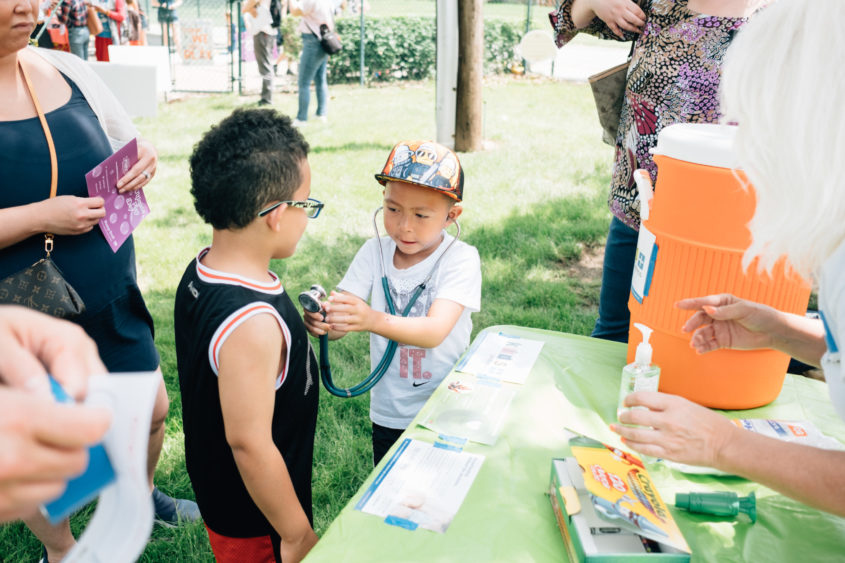
Various organizations, states, and nations recognize a number of observances each month. Resources help parents, caregivers, and child care professionals acknowledge and navigate them.

Here is a list of resources for October observances:

Month-Long Observances

Head Start Awareness Month

Dyslexia Awareness Month

Hispanic Heritage Month (continued)

National Book Month

Days of Recognition

October 2 is National Child Health Day

October 4 is National Walk to School Day

October 7 is National Play Outside Day

October 9 is Indigenous Peoples’ Day

October 10 is World Mental Health Day

October 11 is National Coming Out Day