Trying Together Celebrates Inclusion of Recess Mandate in PA School Code

News

July 15, 2026

Trying Together Celebrates Inclusion of Recess Mandate in PA School Code

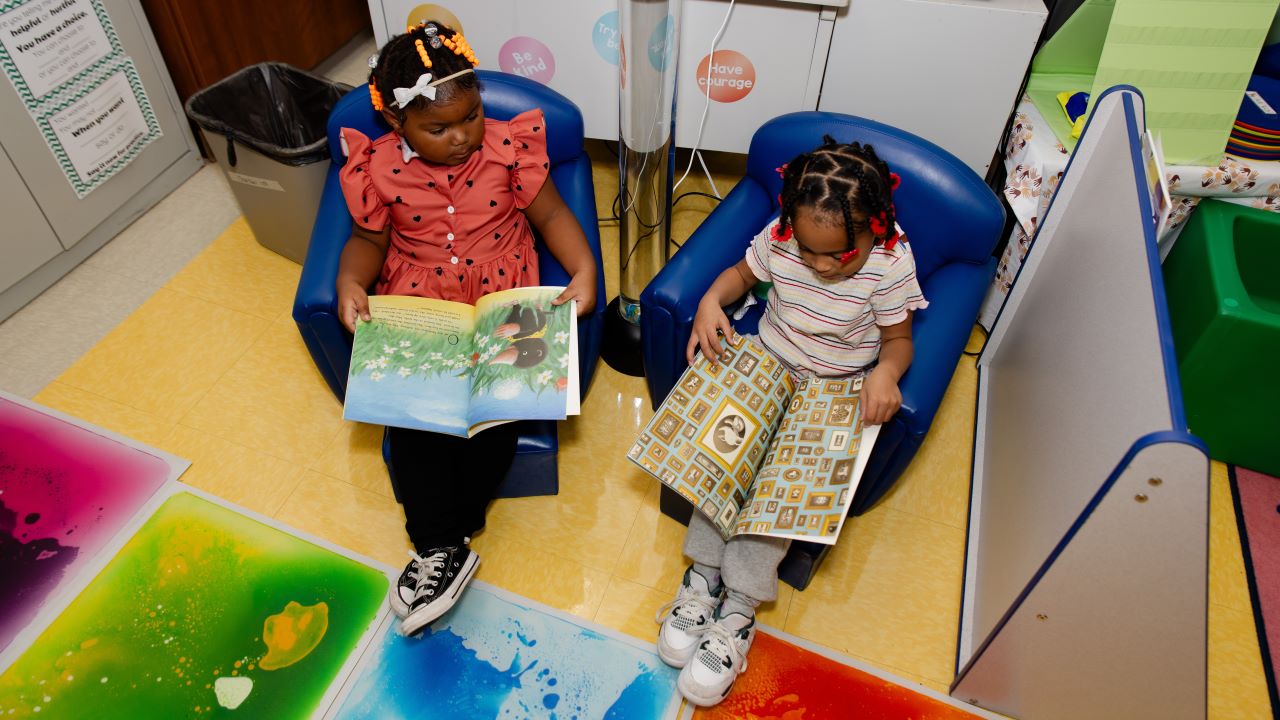
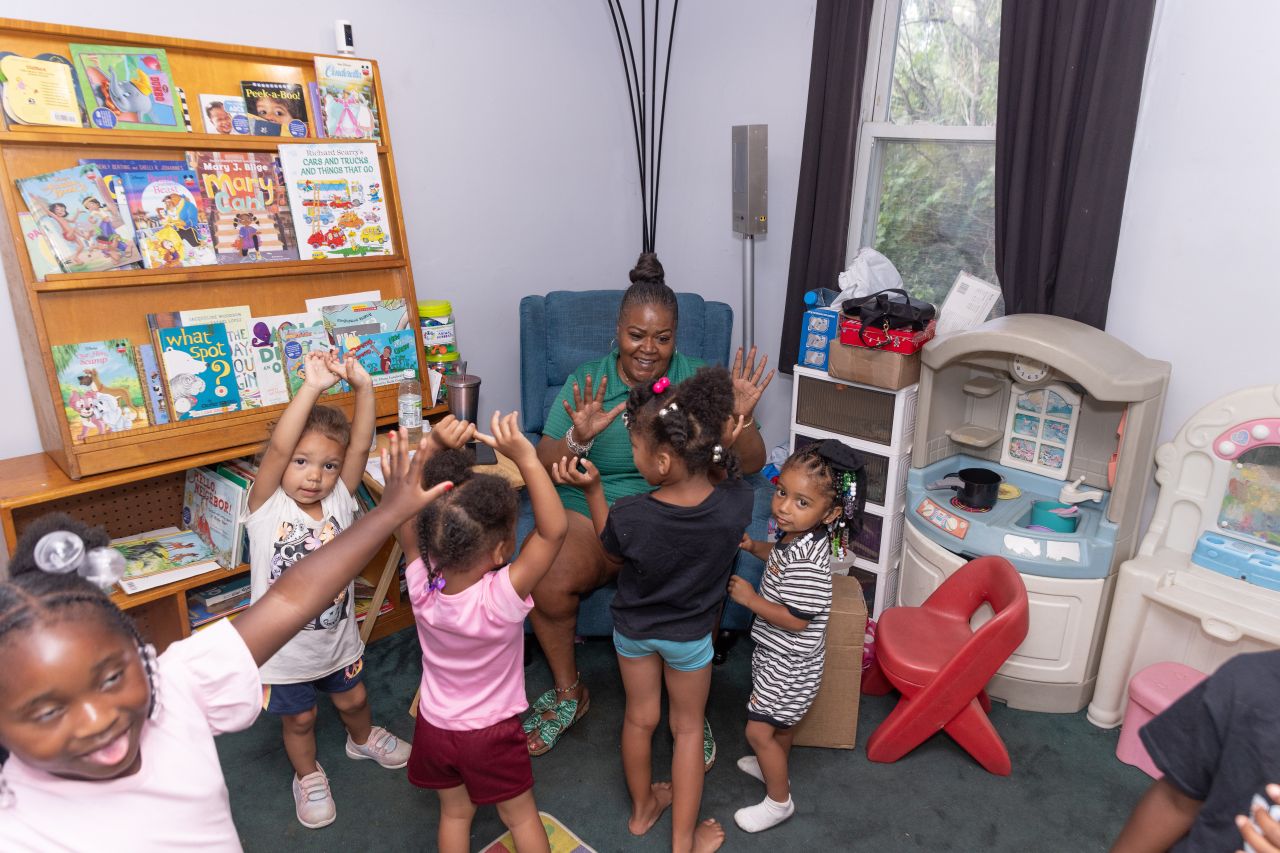
The School Code (HB 1505) recently passed by the Pennsylvania General Assembly and signed into law by Governor Josh Shapiro on July 12 included a 2026 Recess Mandate, making Pennsylvania one of 12 states that mandate recess at varying lengths during the school day for kindergarten through fifth grade.

“The passage of a Recess Mandate for Pennsylvania is an exciting step forward towards ensuring that early childhood education in Pennsylvania is rooted in developmentally appropriate practice,” said Valerie Williams, Trying Together’s kindergarten transition program director. “Play is the primary modality through which children learn and recess is critical for children to have unstructured active play time, which supports their mental and physical health. When children have daily active recess, they are healthier, they internalize all learning concepts more deeply, and we even see classroom behavioral challenges improve.”

The Importance of Recess

Defining recess explicitly as unstructured play, physical activity, and social interaction supports developmentally appropriate practice in early childhood education. Recess should be a device-free period that includes play and social interaction.

Policymakers also rightfully ensured that the bill addressed preserving lunch time – and not requiring children to choose between rushed nourishment or play – and that it included a minimum time mandate of 15 minutes for half-day kindergarten programs as well as the minimum 30-minute recess mandate for full-day programs.

While this progress should be celebrated, the current school code still allows for the removal of recess for disciplinary reasons. Trying Together calls on districts to choose other options for discipline.

“Removing a child’s access to play not only conflicts with the United Nations’ ‘Rights of the Child,’ but will also not improve behaviors,” Williams said. “On the contrary, regular access to recess and playful learning all across the early childhood day has been shown to improve behavioral outcomes. I hope this important policy update spurs many positive conversations and system-level changes across the state in service of young children’s joy in learning.”

The World Health Organization recommends one hour of moderate-to-vigorous activity for children, ages 3 to 6, during the day. It also recommends three hours of active learning for children ages 3 to 5. Additionally, the American Academy of Pediatrics revised and published its policy statement, The Crucial Rule of Recess in School, in May 2026 that reaffirms that recess is a necessary break in the day with benefits for social, emotional, physical, and cognitive development. AAP also recommends that recess not be withheld for academic or punitive reasons.

Regular access to aerobic exercise, team-based activities, and physical activity through movement-based activities across curriculum has been shown to increase children’s executive functioning, which is the cognitive process responsible for organizing and controlling goal-directed behavior.

The Benefits of Play

Research demonstrates the cognitive, social, emotional, and physical benefits from play and physical activity:

  • Cognitive/Academic Benefits: Several studies show that recess increases children’s attention spans and productivity in the classroom. Physically active students tend to have better attendance, classroom behaviors, cognitive performance, and grades.
  • Social and Emotional Benefits: Recess promotes social and emotional skills that become fundamental lifelong tools and serves as a developmentally appropriate way to reduce stress. Through recess children learn to develop self-discipline, plan strategies, respect rules, and solve problems.
  • Physical Benefits: Dedicated time for recess during the school day helps children achieve some of the recommended sixty minutes of moderate to vigorous activity per day. 

More Resources

Trying Together continues to advocate for play integrated throughout the school day and for people of all ages. Take a look at our Playful Resource Series for more information about play. The second part of the series – which will focus on play equity and advocating for play – will be coming soon.

For more information on recess advocacy and other resources, check out Trying Together’s Recess Advocacy Toolkit. 

We look forward to collaborating with school districts as they implement the recess policy and consider how playful, hands-on learning can be integrated throughout the school day.

Thriving Kids Podcast Discusses How Caregivers Should Keep Up With Children’s Online Activity

News

Thriving Kids Podcast Discusses How Caregivers Should Keep Up With Children’s Online Activity

In our present age, children are growing up online – with such channels as YouTube, Roblox, group chats, and TikTok – and it can be stressful trying to keep up with what they are watching or playing.

But, the latest Thriving Kids podcast argues, the caregivers who navigate this landscape the best aren’t the ones with the strictest rules – they’re the ones who engage with children about what they are doing online.

Learn More

In the podcast, Dave Anderson, PhD, senior psychologist and vice president of public engagement for the Child Mind Institute, joins actor Busy Philipps for a conversation about what modern parenting entails.

The discussion focuses on why staying connected to children on social media takes active participation, not just passive monitoring, and why watching what they watch (even if it drives you a bit crazy) is important.

Philipps also talks about her own ADHD diagnosis in her late 30s and how that has shaped how she parents. The discussion also takes on more challenging topics – such as the “manosphere,” mental-health misinformation on TikTok, and how to keep children thinking critically about what they are consuming while keeping communication open.

Some expert-supported strategies for staying engaged with children’s media use include:

  • Watch and play together – and talk it through. The best way to counter negative messages that children pick up online is to experience it alongside them and point out when something isn’t right.
  • Model the tech habits you want to see. Experts agree the single most effective thing a parent can do is to curtail their own screen use first. Children should be used to seeing your face, not the top of your head bent over a phone. Establish tech-free zones and hours that apply to everyone, caregivers included.
  • Start from trust, monitor thoughtfully. If a child is on social media, it’s reasonable to follow their accounts and keep an eye on their page, but experts caution against going through texts without a real reason.
  • Help children build confidence offline. A sense of self that doesn’t depend on likes or followers is a good protection against the pressures of growing up online.

To learn more, listen to the latest Thriving Kids podcast episode.

PA Key Health Trend Report Focuses on How Screen Time Affects Early Childhood

News

July 14, 2026

PA Key Health Trend Report Focuses on How Screen Time Affects Early Childhood

The Pennsylvania Key’s latest health trend report focuses on screen time and digital media use in early childhood and provides tips for caregivers on how to regulate it.

Learn More

The report notes that screen time is now an integral part of daily activities for many families, and that it’s common for young children to use smartphones, tablets, interactive content, short-form videos, and AI-assisted learning apps.

By age 2, The Pennsylvania Key writes, four in 10 children have their own tablet and, by age 4, more than half do. Overall, about 47% of children under age 8 have their own tablet device.

Parent surveys show that one in five families use mobile devices to help manage their children’s bedtime routines, mealtimes, and emotional regulation. 

Impacts

Young children learn best from real-world interactions, so heavy solo screen use can affect their developing language and social skills, depending on how much time they spend daily on digital media and how adults use screens to calm or entertain them, the report notes.

Some concerns stemming from the misuse of digital media in young children include:

  • Delays in language, thinking, and social skills
  • Slower vocabulary growth and conversational skills
  • Fewer face-to-face interactions, which lead to less spent time learning with loved ones, less reading, less independent play, and less time moving around and for exploration
  • Overreliance on screens for emotional regulation
  • Fewer opportunities to develop patience and self-control

A study published in Developmental Psychology found that using digital devices to calm or district very young children was linked to increased behavioral problems over time. Rapidly changing video content and highly stimulating media can be challenging to young children’s sustained attention and self-regulation.

The report also references a surgeon general’s advisory that screen exposure can also be disruptive to healthy sleep, which is fundamental to learning, mood behavior, physical health, and overall development.

Tips in the article include:

  • Promote balanced media use, such as high-quality educational content or video chatting with relatives.
  • Keep picture books for story time because they help children to connect the words to the pictures on the page.
  • Look for these qualities when evaluating digital apps: active, engaging, meaningful to the child, iterative, socially interactive, and joyful to experience.
  • Monitor young children’s chatbot interactions; until AI product developers are clearer about labeling what a product is and what it provides, caregivers should take care to guide children to understand AI tools and their limitations as social partners.
  • Model healthy screening habits – while it may be hard to keep phones completely out of sight, carve out some boundaries by encouraging screen-free routines (at the kitchen table, for example) and model a consistent and united front when managing digital technology for children. 

For more information and additional tips, read The Pennsylvania Key’s health trends report.

Resource Emphasizes Importance of Summer Reading for Children

News

Resource Emphasizes Importance of Summer Reading for Children

Summer provides a much-needed break for children from school routines, but it’s also an important time to ensure that the learning doesn’t stop for a long period of time.

Learn More

Reading Rockets has provided a guide on why summer reading is important for young children. It provides some ideas on how to make the summer a fun time for reading, writing, exploring, creating, and other activities.

Some children will likely be in community programs or camps for part of the day during summer, but other children will have less structure. Therefore, it is important to keep children’s minds engaged.

Reading Rockets notes that enrichment during the summer – whether it’s reading, writing, or hands-on activities – has numerous benefits. These include:

  • Preventing the summer slide: If learning slows down over the summer break, children can lose some of the academic gains they made during the school year. This is especially true of children who are already struggling academically. Reading and writing over the summer can help them to practice their skills.
  • Build vocabulary and comprehension: Reading comprehension can be improved by reading regularly. Summer reading exposes a child to new vocabulary, and reading widely across different genres gives them the opportunity to wrestle with more challenging books.
  • Strengthen writing skills: Children should also keep writing during the summer, even if it’s low-stakes writing – a grocery list, a nature journal, or postcards to family members.
  • Learn new things and build background knowledge: Summer reading, writing, and hands-on learning are great ways for children to expand their knowledge and understanding of the world. Encourage children to try a new topic or genre.

To learn more, check out Reading Rockets’ article on the importance of summer learning.

NAEYC Asks for Educators to Take Survey on Regulatory Systems and Requirements

News

July 13, 2026

NAEYC Asks for Educators to Take Survey on Regulatory Systems and Requirements

The National Association for the Education of Young Children (NAEYC) is asking for early childhood educators currently working in programs across a variety of settings to take a survey.

Learn More

The workforce survey is intended for teachers, assistant teachers, coaches, specialists, program directors, and administrators in early learning programs. 

It is primarily focused on experience with implementing licensing, quality and other regulatory requirements, and systems that support children’s health, safety, and learning.

Responses to the survey will help NAEYC to understand how current policies are working in practice, where providers face challenges, and what is needed to support safe, high-quality early learning environments.

Those interested in participating should fill out the survey no later than Monday, July 27. It should take about 10 to 15 minutes to complete.

To be entered for a chance to win a $100 gift card, enter your email address at the end of the survey.

PA Promise for Children Recommends July Books for Preschoolers

News

PA Promise for Children Recommends July Books for Preschoolers

PA Promise for Children has released its list of July books for preschoolers, providing eight titles across four categories.

Learn More

The list of books is included in PA Promise for Children’s latest Kindergarten Here I Come newsletter. The four categories for the selections include Language and Literacy Skills, Science Thinking and Technology, Mathematical Thinking and Expression, and Health, Wellness, and Physical Development.

This month’s selections include:

Language and Literacy Skills

  • Sorting Through Spring (Lizann Flatt)
  • Stick and Stone (Beth Ferry)

Health, Wellness, and Physical Development

  • Fireflies! (Julie Brinckloe)
  • Summer Days and Nights (Wong Herbert Yee)

Science Thinking and Technology

  • Mud Puddle (Robert Munsch)
  • When Day Became Night (Jules Miller)

Mathematical Thinking and Expression

  • Two Speckled Eggs (Jennifer K. Mann)
  • Mouse Shapes (Ellen Stoll Walsh)

To view the entire list, visit PA Promise for Children’s website.

Registration Open for 2026 Meaningful Play Conference

News

Registration Open for 2026 Meaningful Play Conference

Registration is open for the Meaningful Play conference that will be held at Carnegie Mellon University on October 13 to 15.

Learn More

The conference – which will be hosted by the university’s Center for Transformational Play in partnership with Michigan State University – will focus on the power of games and play.

The conference will bring together academics, game designers, innovators, game researchers, game developers, government organization or NGO interested in games, students, and educators to explore how games and play can change people’s lives. 

The event is intended for those who make or study games. Games and prototypes will be exhibited during the event.

Those interested in attending can register online.

Investments in Early Care and Education Included in the 2026-27 State Budget

News

July 12, 2026

Investments in Early Care and Education Included in the 2026-27 State Budget

Pennsylvania lawmakers passed a $50.8 billion budget on Sunday, July 12 that includes modest investments that build on last year’s historic funding for child care and a small increase for Pre-K Counts and Head Start.

State Budget Delivers Modest Gains for the Early Learning Workforce but Leaves Out Critical Supports for Pennsylvania’s Youngest Children

Early Learning PA (ELPA), of which Trying Together is a principal partner, released a statement following the budget’s passage that expressed appreciation for some small steps forward in addressing early education workforce shortages in the 2026–27 state budget. It also emphasized that the state must do far more to support programs such as infant and toddler Early Intervention to ensure that every Pennsylvania child from birth to age 5 has access to affordable, high-quality early care and education by 2030. Read the full statement from Early Learning PA.

Cara Ciminillo, executive director for Trying Together, shared her perspective: “Pennsylvania’s youngest children need a comprehensive system of care, which includes various options to meet families needs. Lasting progress requires investing in and strengthening every part of the system from home visiting and Early Intervention to child care and pre-k. We can not expect one program to absorb cuts while another receives modest gains. Families do not experience these programs in silos and a comprehensive approach is necessary to realize the full potential of early learning experiences.”

Recruitment and Retention

In the joint statement, Start Strong PA noted the incremental progress this budget makes to support the child care workforce by building on the $25 million recurring Child Care Recruitment and Retention Program funding with an additional $5 million investment. These funds will support programs in recruiting high-quality applicants and retaining experienced educators.

“Child care is an economic development strategy, workforce participation strategy, and education success strategy,” the statement read. “These investments will encourage teachers to remain in the field, allowing more parents to work, prepare more Pennsylvania children for school and build a stronger and more prosperous commonwealth.”

Start Strong PA also noted that while this increase is a step in the right direction, there is much more that can be done to help families find and afford child care. It called on Pennsylvania to continue to build a robust early learning sector while working to improve system quality and stability.

“We are encouraged that the enacted 2026-2027 will increase the Child Care Staff Recruitment and Retention program by $5 million, bringing the total to $30 million,” said Emily Neff, director of public policy for Trying Together. “It’s clear that the bonuses had a meaningful impact on early childhood educators, bringing some to tears when they received them.”

“A modest growth to the program is the next right step. However, we must think bigger and bolder to truly transform the early care and education system. We look forward to continuing to work with the governor, lieutenant governor, and the bipartisan group of ECE champions in the General Assembly to strengthen state investments and policy for early care and education.”

Budget Gives a Slight Boost to Pre-K Counts and Head Start

Additionally, Pre-K for PA responded to the passage of the 2026-27 budget, in particular the $3.75 million in new state funding for Pre-K Counts and $1.043 million for the Head Start Supplemental Assistance Program. They noted that this investment will help to stabilize early learning providers by increasing per-child rates – an important investment to help programs facing rising costs and persistent staffing shortages due to low wages.

While Pre-K for PA acknowledged that these funding increases are a meaningful step forward, they fall short of the level needed to fully address the challenges facing Pennsylvania’s early learning systems.

To meet the growing needs of children and families, they urged policymakers to invest additional funding to strengthen and expand these programs.

“We remain committed to working with policymakers to build on this progress through sustained investments that strengthen the early childhood workforce, address the ongoing teacher recruitment and retention crisis and ensure high-quality early learning programs remain strong, stable and accessible to families across the commonwealth,” Pre-K for PA said in the statement.

Early Intervention Funding Cut Creates Uncertainty for Families and Providers

Early Learning PA expressed concern over the $5.2 million cut to infant and toddler Early Intervention in the Department of Human Services budget. It noted that while policymakers have indicated they intend to use remaining funds from the current fiscal year to prevent service reductions, the 2.6% decrease creates confusion and uncertainty for families and providers alike.

“Early Intervention is a critical, federally required component of the early care and education continuum,” Early Learning PA’s statement read. “Children from birth through age 5 with developmental delays, regardless of family income, must be identified, referred to and provided the services they need to help them and their families reach their fullest potential.”

Early Learning PA referenced OCDEL’s Early Intervention Rate Methodology Study, which found that infant and toddler rates were underfunded by more than $71 million – nearly 40% – in fiscal year 2022-23. It noted that this deficit has continued to grow in the years since and is now upwards of $116 million. The ongoing rate deficit leads to workforce shortages, which severely constrains providers and ultimately affects families seeking services. 

“Early Intervention programs continue to see significant annual increases in the number of children needing these critical services,” the statement concluded. “Moving forward, we will focus our efforts on ensuring families can continue to access the supports their children need.”

2026-27 PA State Budget Includes:

  • $5 million in additional funding for the Child Care Staff Recruitment and Retention Program.
  • $3.75 million in additional funding for the Pre-K Counts program.
  • $1.043 million in additional funding for the Head Start Supplemental Assistance Program.
  • $1.129 million for the Child Care Assistance line item.
  • Level funding for the Child Care Services line item.
  • A $5.2 million reduction in funding for the infant and toddler Early Intervention program in the Department of Human Services budget. The department is using prior-year funds to keep the program whole and maintain the rate increase provided in fiscal year 2025-26.
  • $41.221 million in additional funding for preschool Early Intervention in the Department of Education budget.
  • Level funding for evidence-based home visiting in the Community-Based Family Center line item, with a small reduction in the Nurse-Family Partnership line item due to a change in federal matching rates.

Family Swim to Return to Pittsburgh Pools Starting on July 13

News

July 10, 2026

Family Swim to Return to Pittsburgh Pools Starting on July 13

Family Swim will return to neighborhood pools citywide as part of the city’s summer aquatics program starting on Monday, July 13.

Learn More

Family Swim will take place from 5 p.m. to 7 p.m. on Monday through Friday and during all weekend pool hours.

This provides children under the age of 15 with the opportunity to enjoy the pool alongside a parent, guardian, or other adult age 21 or older during a dedicated Family Swim session.

Similar to Adult Lap Swim, which offers designated time for adults only to swim for fitness and exercise, Family Swim provides a dedicated opportunity for families to enjoy the pool together.

City Pool schedules are available online, but operating schedules – including weekend hours – may vary by location. Poolgoers should check with their local pool for days of operation and complete daily schedules.

Child Mind Institute Resources Focus on Children’s Summer Anxieties

News

July 8, 2026

Child Mind Institute Resources Focus on Children’s Summer Anxieties

For many children, summer is a relaxing time during which they can take a break from homework or getting up early in the morning – but the season can also bring its own stressors.

The Child Mind Institute has released some resources on some of the things that stress children during the summer, whether it’s summer camp, unpredictable schedules, or travel.

Learn More

Changes in routine can cause worry about the unknown, especially for children who struggle with mental health challenges such as ADHD or anxiety.

The Child Mind Institute’s resources include a discussion on how to support children who might be feeling anxious about summer activities. They feature some suggestions for children who are nervous about camp, whether it’s apprehension about meeting new people or fear of being separated from their caregivers for longer than they’re used to.

The resources also include a piece in which experts weigh in on how to make travel easier for children with mental health challenges and how to support children who are easily upset by sensor surprises, such as hot sand or loud firecrackers.

Lastly, the resources include an article on how to manage boredom and use it to help children develop independence.

The Child Mind Institute’s resources include: