Promoting Infant and Toddler Social and Emotional Development
News
February 11, 2020
Promoting Infant and Toddler Social and Emotional Development
Are you interested in learning how to better support children’s social and emotional development? Join Trying Together for our online course, “Promoting Infant and Toddler Social and Emotional Development.”
About
This online session will explore the questions: “What is social and emotional learning within infants and toddlers, and why is it important?” Participants will be provided with positive social-emotional opportunities for infants and toddlers and develop skills necessary to build a solid foundation for very young children. Course instructors will discuss how to support very young children to form secure relationships with others to ultimately be able to focus and learn in their day to day experiences. Also, skills and techniques will be provided to engage with infants and toddlers to teach them to feel good about themselves while developing confidence and self-control.
Three hours of PQAS and/or Act 48 credits will be offered.
Core Knowledge Competencies (CKCs): K1.9 C2 and K2.2 C2
Keystone STARS Alignment: SQ. 3.4.4
Timeline
This online course will be available from March 9 through March 30, 2020. Please note that this event listing is not a day-of, in-person event. Once registered, course instructors will provide further information on accessing the course.
Registration
To register for this course, complete the form below.
More Information
For questions or more information, contact Jasmine Davis, Professional Learning Program Manager, at 412.567.3933 or jasmine@tryingtogether.org.
Exceptional Care with a Team Approach to Inclusion
News
January 31, 2020
Exceptional Care with a Team Approach to Inclusion
Recorded Sessions
From January 19 – 29, 2021, Trying Together hosted our free Virtual UnConference: Exceptional Care with a Team Approach to Inclusion. Recordings of each workshop have been added to this page for those who were unable to attend.
UnConference Details
Young children thrive and grow in their natural learning environments, including children with developmental differences. Educators play a critical role in creating an inclusive and diverse environment for children to feel a sense of belonging, to feel valued as a member of the classroom, and to feel empowered to learn to their full ability. UnConference: Exceptional Care with a Team Approach to Inclusion dives into the importance of working together—with a collaboration between teachers, intervention specialists, and parents/caregivers—to provide this environment for children to learn and grow in differentiated ways yet feel included in the group.
This is a free Virtual UnConference.
What Do I Receive?
PQAS and/or Act 48 hours.
Networking with colleagues.
Interactive workshop sessions.
Refreshed or refined thinking about your work with young children.
Featured Sessions
Keynote: Exceptional Care with a Team Approach to Inclusion
Tuesday, January 19, 2021 | 1:30 – 3 p.m. Presented by: Trying Together and Children’s Institute | Keynote Speaker: Wendy Pardee
During the keynote session, Wendy Pardee, President, and CEO of The Children’s Institute will share how they created a collaborative environment that provides a positive view on early intervention in an effort to bring different parties together in the best interest of the child. The presentation will be followed by a panel discussion featuring an educator, parent, and intervention specialist.
Transition and Educational Support in the Early Childhood Environment
Thursday, January 21, 2021 | 6:30 – 8 p.m. Presented by: Kristina Berg and Loreleigh Elders, DART
Early Childhood Educators are an active and critical part of a child’s early intervention team that is often lost in the process of transition and service planning. This presentation will provide an overview of the early intervention process, as children age out of the Infant/Toddler Early Intervention Program and transition into Preschool Early Intervention Support. We will provide practical examples and resources of ways to support children and families through the transition process, as well as ways to adapt the preschool classroom environment in order for all children to be successful.
Creating and Building Inclusive Support Teams for Children
Friday, January 22, 2021, | 10 – 11:30 a.m. Presented by: Serena Washington, Trying Together
When thinking about what a team/collaboration approach looks like when working with children and families we must be open to asking the following questions: Why is it important to build a team for a child(ren)? What does the team/collaboration approach look like? Who and what do we need on the team/collaboration? How do we work and communicate as a team? In this workshop, join us for a robust discussion and learn strategies for creating an inclusive team to support your children.
How to Assess Your Students Needs: Using the ASQ through the Lens of Infant Early Childhood Mental Health Program
Tuesday, January 26, 2021 | 1:30 – 3 p.m.
Presented by: Gloria Rodriguez-Ransom, The Pennsylvania Keys
Through the expertise of the Infant Early Childhood Mental Health (IECMH) program, participants will receive an overview of the Ages & Stages Questionnaires with a particular emphasis on assessing children’s social and emotional development. The developmental screening tools ASQ3 and ASQ:SE 2 are designed for children ages three months to five years and designed for use by early childhood educators and health care professionals. Attendees will learn how to administer and score the screener and share the results of the screener with families and professional colleagues. In addition, recommendations for suggested resources will be shared if additional services are needed.
Overview of Infant/Toddler Early Intervention Services in Allegheny County Referral Through Transitioning Out of 0-3 Services
Wednesday, January 27, 2021 | 10 – 11:30 a.m. Presenters: Erica Balint and Vonna May-Miller, Alliance for Infants and Toddlers
In this workshop, presenters will discuss how the child’s 0-3 Early Intervention (EI) team collaborates with families and child care staff so that all have an understanding of how the EI system in Allegheny County operates and supports children. This session will give an overview of how children are referred and become part of the EI system. Information will include how a child is referred, eligibility criteria, evaluation process, service planning, and implementation along with transitioning out of 0-3 services.
Catering to The Whole Classroom: Lesson Development and Implementation That Speaks to Every Child
Friday, January 29, 2021 | 10 – 11:30 a.m. Presented by: Daile Fordoski, Lyasha Bishop, LaRae D. Cullens, The Learning Loft
There is not one lesson in any learning environment that is one size fits all. It is the educator’s responsibility to develop ways in which a lesson can benefit every child in a classroom. This workshop examines strategies for planning and implementing inclusive activities for children of varying developmental levels. Participants will have the opportunity to practice these skills by dissecting a pre-made lesson and sharing ideas and strategies of accommodation that can be applied in their setting.
Registration
Registration for this event is closed. Recordings of each workshop session will be available on this webpage after the conclusion of each session. Please continue to monitor this page for updates.
PQAS and Act 48 credits are available to professionals who registered for and completed these sessions. More information, including the online Attendance form, will be sent via email to individuals who registered. Once completed, Jasmine Davis, Professional Learning Program Manager at Trying Together, will process your credit. If you have questions specific to receiving credit, please email jasmine@tryingtogether.org.
Wendy Pardee, President & CEO, The Children’s Institute
Dr. Wendy Pardee joined The Children’s Institute as President and CEO in August 2017. She has led the 118-year-old nonprofit organization through transformational change in a short period of time thanks to her leadership, vision, and advocacy for our community’s youngest residents. Wendy has more than two decades of management experience in the healthcare, human services, and financial services sectors. Previously, she served as President and CEO of Skills of Central Pennsylvania, an organization with sites in 18 counties serving those with intellectual disabilities. She also served as CFO of the Community Guidance Center and began her career at First Commonwealth Financial Corporation.
Wendy has a Bachelor of Arts Degree in Accounting and Management of Information Systems, a Master’s Degree in Business Administration, and a Doctorate in Administration and Leadership Studies. She has served on community child care boards, community health councils, local YMCA boards, the Rehabilitation and Community Providers Association board, the Center Area Transportation Authority Board, and the American Association of University Women.
Thank You To Our Sponsors and Partners
A huge thank you to our series sponsor PNC Group Up Great, our sponsor Early Learning Resource Center (ELRC) Region 5, co-host The Children’s Institute, and workshop partners.
Sponsors
Co-Host
About Trying Together
Trying Together supports high-quality care and education for young children by providing advocacy, community resources, and professional growth opportunities for the needs and rights of children, their families, and the individuals who interact with them. Trying Together works regionally (in Southwestern Pennsylvania) and takes its expertise and models to statewide and national audiences.
Joyful Transitioning for Toddlers with Music and Movement
News
January 15, 2020
Joyful Transitioning for Toddlers with Music and Movement
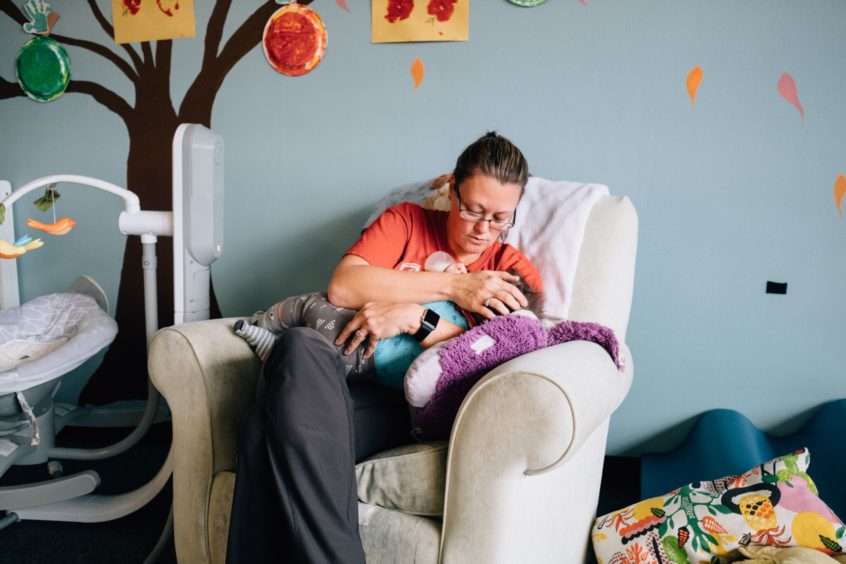
Transitioning into a classroom for the first time can be a big challenge for young toddlers. Ease the transition and even make it joyful by using music and movement! In this workshop, participants will experience a variety of soothing songs and rhythmic movements that can be incorporated into their daily practice to support children’s social-emotional development. PQAS and Act 48 hours available.
For personal assistance selecting accessible seats or for more information about accessibility for a person with a disability, contact Customer Service at 412.456.6666. To learn more, visit the event webpage.
Career Pathway Overview for Directors
News
January 8, 2020
Career Pathway Overview for Directors
Child Care Directors and Administrators are invited to join The Pennsylvania Key on January 23 for their webinar exploring Pennsylvania’s Early Childhood Education (ECE) Career Pathway.
About
This webinar seeks to provide a full overview of the Career Pathway. Presenters will detail different levels of the career pathway, professional development alignment within the career pathway, resources to share with teachers planning to move up in the career pathway, and examples of programs focused on career pathways advancement. More information on Pennsylvania’s Quality Initiatives for the Early Childhood Education workforce will also be provided.
By attending “The Basics of Creative Curriculum,” participants will explore how the environment, teacher, and family work together to provide a solid foundation for early learning experiences. Additionally, participants will learn how to manage their classrooms, create lesson plans, and systematically observe children using the Creative Curriculum Framework.
Learning Objectives
Upon completion of this course, learners will be able to:
understand the role of the environment, teacher, and parent have in a Creative Curriculum classroom;
evaluate their classroom management skills and tools using the Creative Curriculum framework; and
develop lesson plans based on children’s interests and developmental needs.
By attending “An Introduction to the ASQ3 and the ASQ:SE 2,” participants will learn how to use the ASQ3 and ASQ:SE 2 as screening tools for children ages 3 months to 5 years. This session will provide information on how to administer and score the screener and share results of the screener with families. Resources for making referrals to additional services will be included if needed.
Learning Objectives
Upon completion of this course, learners will be able to:
define and discuss the benefits of developmental screening;
describe features of ASQ-3 and ASQ:SE-2;
score ASQ-3 and ASQ:SE-2;
understand the importance of sensitive communication of screening results; and
discuss the process for referring children to appropriate agencies.
Available Dates
To access this course, use the links below or enter the event ID on the Pennsylvania PD Registry website.
STARS 101 & 102 is a web-based course that meets the requirement for STAR 2 SQ.2.1 Part 1 and Part 2. It is an introduction to the idea of Continuous Quality Improvement which is the basic premise for the Keystone STARS Quality Rating System. In addition to the philosophy of CQI, the process of change and how to begin your journey through the Keystone STARS system will be discussed.
About
The following elements of assessing and building quality will be covered: Pennsylvania Core Knowledge Competencies and Big Ideas Framework, Continuous Quality Improvement, PA Early Learning Standards, and Caring for Our Children Basics (CFOCB) as a resource and supporting interactions with children and families.
This is a live, interactive webinar. PQAS hours offered. Participants are expected to fully participate; this is not a log-in and leave event. Arriving 15 minutes late may result in no credit for the session. Please note, no refunds will be provided for cancellation or no show.
Learning Objectives
Upon completion of this course, learners will be able to:
identify the benefits of continuous quality improvement through Keystone STARS, for children families and programs;
identify what determines STAR Designation;
describe Program Observation Instruments (POI) used for STARS designation;
identify and implement the Pennsylvania Core Knowledge Competencies/Big Ideas Framework;
identify and implement PA Early Learning Standards;
identify and implement Caring for our Children Basics practices;
identify and implement assessment tools that support program quality; and
identify and implement interactions with children and families.
Available Dates
To access this course, use the links below or enter the event ID on the Pennsylvania PD Registry website.
STARS 101 & 102 is a web-based course that meets the requirement for STAR 2 SQ.2.1 Part 1 and Part 2. It is an introduction to the idea of Continuous Quality Improvement which is the basic premise for the Keystone STARS Quality Rating System. In addition to the philosophy of CQI, the process of change and how to begin your journey through the Keystone STARS system will be discussed.
About
The following elements of assessing and building quality will be covered: Pennsylvania Core Knowledge Competencies and Big Ideas Framework, Continuous Quality Improvement, PA Early Learning Standards, and Caring for Our Children Basics (CFOCB) as a resource and supporting interactions with children and families.
This is a live, interactive webinar. PQAS hours offered. Participants are expected to fully participate; this is not a log-in and leave event. Arriving 15 minutes late may result in no credit for the session. Please note, no refunds will be provided for cancellation or no show.
Learning Objectives
Upon completion of this course, learners will be able to:
identify the benefits of continuous quality improvement through Keystone STARS, for children families and programs;
identify what determines STAR Designation;
describe Program Observation Instruments (POI) used for STARS designation;
identify and implement the Pennsylvania Core Knowledge Competencies/Big Ideas Framework;
identify and implement PA Early Learning Standards;
identify and implement Caring for our Children Basics practices;
identify and implement assessment tools that support program quality; and
identify and implement interactions with children and families.
Available Dates
To access this course, use the links below or enter the event ID on the Pennsylvania PD Registry website.
Project WET: Getting Little Feet WET is a workshop that provides early childhood educators with developmentally appropriate water-based curriculum and activities for their early childhood classrooms. This Project WETcourse is led by an approved professional development instructor and offers Pennsylvania Quality Assurance System (PQAS) hours.
Learning Objectives
Upon completion of this course, learners will be able to:
Properly utilize the Project WET educator guide as a curriculum reference;
Participate in four Project WET activities that can be utilized in an early childhood classroom; and
Walk away with at least 10 new ways to incorporate water into the early childhood classroom.