Caregivers have a great responsibility when it comes to taking care of young children – but they must also take care of themselves.
The latest Thriving Kids podcast episode provides some tips and reminders about parenting and self-care – and how caregivers can’t pour from an empty cup.
Learn More
In the podcast, Dave Anderson, the Child Mind Institute’s senior psychologist and vice president of public engagement and education, is joined by Lauren Hughes, MD, IBCLC, a board-certified pediatrician who is known for her evidence-based approach to raising children.
The podcast’s topics of discussion include developmental milestones (when to worry and when not to), sleep training, breastfeeding, and why supporting one’s own mental health matters just as much as supporting a child’s.
Other tips provided regarding parenting and self-care:
- Self-care doesn’t have to be elaborate – it can be a quiet walk, a few minutes of meditation, a bath after the children are in bed, or other small moments.
- You don’t have to pretend to be OK when you’re not; if you’re struggling, tell someone and let them know how they can help, whether it’s covering a school pickup, watching children for an hour, or just checking in on you.
- Find your people – connecting with other parents can help ease the isolation that comes with raising young children.
- Your well-being and your child’s well-being are connected. Children look to their parents for cues on how to handle stress. By asking for help and taking care of yourself, you teach children to do the same.
- Help is out there: Parenting is hard, especially when you’re not sleeping, getting enough support, or dealing with mental health challenges. Asking for help is a sign of strength – not failure.
Being the caregiver of a child can be equally exhilarating and exhausting. As a result, many caregivers find themselves worn out and running on empty.
When this happens, the latest Thriving Kids podcast episode explores, even small challenges can be overwhelming.
Learn More
In the podcast, Dave Anderson, PhD, senior psychologist and vice president of public engagement and education at the Child Mind Institute, discusses with Joanna Kim, PhD, an associate professor of psychology at Arizona State University, why taking care of oneself as a caregiver is important, but might feel unrealistic.
The podcast discussion involves how guilt can prevent a caregiver from meeting their own needs, why self-care doesn’t have to mean making big changes, and how filling one’s own cup helps caregivers to show up for their child with more calm, patience, and consistency.
In addition, Thriving Kids provided some reminders about caring for oneself as a caregiver.
- Being a caregiver can be demanding, and sometimes it can feel like you’re running on empty. But taking care of yourself is essential and self-care isn’t a luxury. Even taking small, mindful moments dedicated to yourself can make a big difference.
- Building a strong support network is crucial. Surround yourself with other adults – a partner, family members, friends, or fellow parents – who understand your challenges and can lend a helping hand. Share responsibilities, delegate tasks, and ask for help.
- Investing in your well-being isn’t selfish – it’s empowering. When you take care of yourself, you’re better able to parent with patience, joy, and presence. You’ll also set a positive example for children in your care by demonstrating that it’s important to take care of yourself.
Generations United, with support from Humana, recently developed tip sheets on self-care and youth mental health for grandfamily caregivers.
Tip sheets include specialized information and resources for grandfamilies and grandparents who care for young children.
About Grandfamily Caregiver Tip Sheets
According to Generations Untied, there are 2.6 million children in the U.S. living in households headed by a grandparent, another relative, or close family friend without a parent present. Consequently, these families, often referred to as “grandfamilies,” require unique supports.
Tip sheets, tailored to grandfamilies, serve Generations United’s mission to improve the lives of children, youth, and older people through intergenerational collaboration.
Thus far, two grandfamily caregiver tip sheets have been developed:
- Grandfamily Caregiver Tip Sheet: Self-Care, and
- Grandfamily Caregiver Tip Sheet: Youth Mental Health.
Both are available in English and Spanish.
Grandfamily Caregiver Tip Sheet: Self-Care
The grandfamily caregiver tip sheet on self-care:
- defines self-care,
- explains the need for grandfamily self-care,
- estabilishes challenges grandfamilies face in receiving self-care,
- provides self-care tips for grandfamily caregivers, and, also
- provides examples of self-care.
Grandfamily Caregiver Tip Sheet: Youth Mental Health
The grandfamily caregiver tip sheet on youth mental health:
- explains the impacts of childhood trauma,
- shares recommendations on mitigating the impact of trauma,
- highlights warning signs of child mental health challenges,
- shares recommendations for talking to children about mental health, and, additionally,
- provides mental health resources.
Access the Tip Sheets
To access the tip sheets, utilize the following links:
Additionally, tip sheets are available on the Generations United website.
Learn More
To learn more, visit the Generations United website.
Related Content & Resources
Join Trying Together for the upcoming session: “Self-Care Isn’t Selfish, It’s Necessary: Practical Tools for Early Childhood Educators to Reduce Stress and Avoid Burn-Out”.
In this session, participants will learn why self-care is necessary, how to recognize when they need to be more intentional about self-care, and research informed strategies and activities to reduce stress and avoid burn-out. At the end of the session, participants will create a personalized self-care plan.
UnConference: Creating a Safe Place with Trauma-Informed Care
This session is a part of Trying Together’s upcoming UnConference. Between February 8-18, expert-led workshops will share content related to trauma-informed care. We begin the UnConference with keynote speaker Dr. Veirdre Jackson and dive into how we can create an environment of healing through equity and trust. Following the keynote, workshop sessions include how to identify family stressors, how to provide responsive care-giving for children experiencing trauma, and an overview of the recently launched Rapid Response Team from Trying Together.
Individuals can learn more and register on Trying Together’s website.
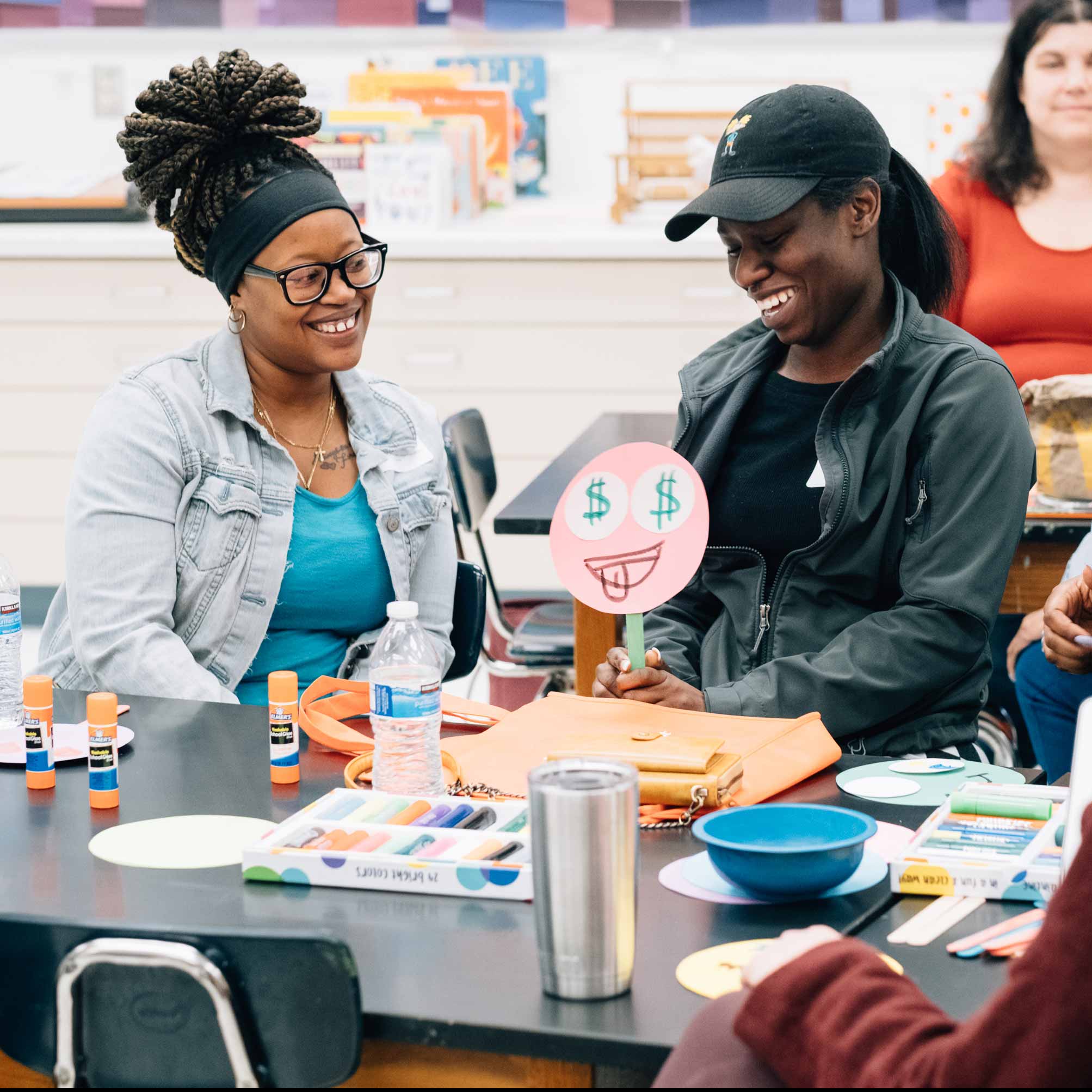
If your family receives Early Intervention and/or Family Support services in Pennsylvania, join other families virtually for conversations focused on self-care, health, and wellness.
About
Café sessions are intended for family members of children enrolled in Early Intervention Services or Family Support Services. To support participation, a stipend of $40 will be offered. A child care reimbursement will be offered if needed to participate in the Cafes. Information on how to access the stipend/reimbursement will be provided after registration. Forms to be submitted for the stipend will be provided at the end of each Café.
Virtual Vitality Café Dates
Virtual Vitality Cafés will be held on the following dates:
Receiving Support
Support for families of children who are deaf/heard of hearing is provided from the Pennsylvania Department of Health. For other families of children receiving EI services that do not have diagnosed hearing loss and children receiving Family Support Services, support is provided by The Office of Child Development and Early Learning. This will require ALL participants to pre-register and indicate what program(s) your child is receiving services and whether or not your child has a diagnosis of hearing loss.
Registration
To register, complete the online registration form. Any accommodations (language or ADA) must be requested at least two weeks in advance of each cafe, during the registration process. Families are encouraged to join as many sessions as they would like to attend.
More Information
For questions, call The Alliance for Infants and Toddlers at 412.885.6000.
Are you interested in learning about Trauma-Informed Care and how to create self-care plans? Join First Up in January 2021 for their New Eyes training and forum.
About
The New Eyes training is the first offering in First Up’s trauma series, led in partnership with Lakeside Global Institute (LGI), and is geared for individuals with little or no exposure to Trauma-Informed Care. At the end of each training, First Up will lead forums in which attendees will further discuss and learn to apply the specifics of the training to the field of Early Childhood Education. Attendees will understand the different types of stress and how to develop self-care plans for themselves and more.
Session Dates
Training Dates
-
- Tuesday, January 5, 2021 | 7 – 8 p.m. | Register
-
- Tuesday, January 12, 2021 | 7 – 8 p.m. | Register
-
- Monday, January 18, 2021 | 9:30 – 10:30 a.m. | Register
-
- Saturday, January 23, 2021 | 9 – 10 a.m. | Register
Forum Dates
-
- Thursday, January 7, 2021 | 1 – 2 p.m. | Register
-
- Thursday, January 14, 2021 | 1 – 2 p.m. | Register
-
- Monday, January 18, 2021 | 11 a.m. – 12 p.m. | Register
-
- Monday, January 25, 2021 | 7 – 8 p.m. | Register
-
- Saturday, January 30, 2021 | 9 – 10 a.m. | Register
More Information
For more information, visit the event registration page.
This information was provided by First Up.

Save the date! From March 5 – 6, 2021, First Up is hosting their virtual conference “Hope and Healing: From Self-Care to Best Practice in a Trauma-Impacted World.”
About
This conference is being carefully curated by the First Up team to provide a break, a safe space, and a chance for all participants to come together to fill their cups with the things they individually need. For some, that may mean a strategy for managing challenging behaviors in the classroom, for others it may mean instruction in a technical/professional skill, or a chance to move their bodies and focus their minds on the present moment. This virtual conference will feature short breakout activities that can be experienced with the whole family.
Registration
First Up will provide more information on registration in January. For now, save the date!
Submit A Presentation Proposal
First Up is currently accepting proposals for presenters. If you are interested in presenting, download this RFP form and return it to Becca Tyrell at rebecca.tyrrell@firstup.org no later than January 15, 2021.
More Information
For questions, please contact First Up at 215.893.0130 or info@firstup.org.
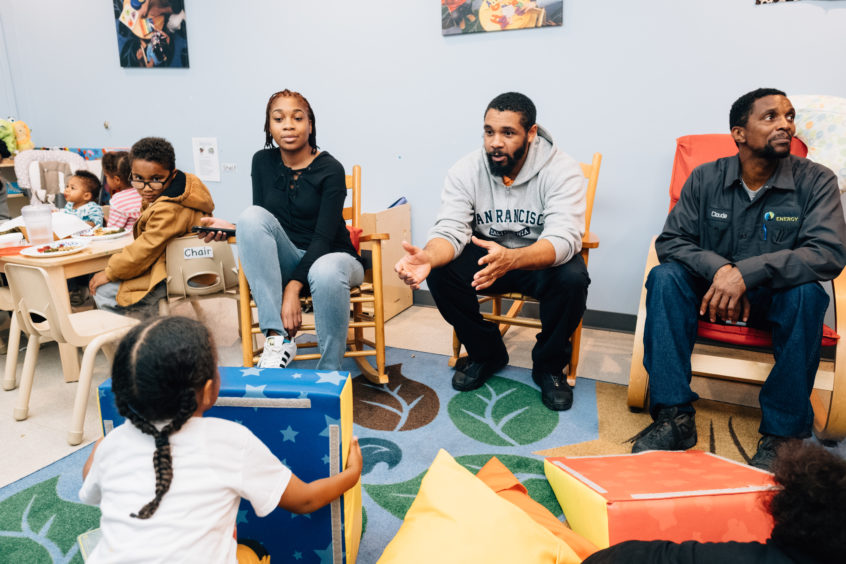
Are you interested in learning how mindfulness practices can impact a child’s ability to deal with stress, anxiety, and trauma? Join Megan Davis on November 19 for “Compassionate Classrooms: Mindfulness-Based Skills to Promote Resilience and Connection.”
About
The goal of this webinar is to introduce mindfulness skills that educators, therapists, and paraprofessionals can integrate into the classroom to build resiliency, distress tolerance, and connection. At the end of this session, you will have gained insight into how simple mindfulness practices directly impact our body’s ability to downregulate in the face of stress, anxiety, and trauma. You will be able to integrate concrete skills into your classroom to support students’, as well as your own, wellness.
Featured Topics
In this webinar, Megan Davis will:
-
- define a basic understanding of how stress impacts the nervous system and our ability to self-regulate,
- demonstrate breathing exercises to calm and balance an activated nervous system,
- demonstrate mindfulness exercises to regulate and widen the “window of tolerance”,
- help professionals plan for how and when to integrate skills into a typical school day (virtual or in-person),
- and provide opportunities to reflect on current self-care practices and how they translate to the culture of classroom wellness.
Registration
This webinar is best suited for K-12 teachers, librarians, school leaders, therapists, and counselors. To register, visit the EdWeb website.

Are you interested in learning strategies to avoid exhaustion and burnout? Join Dr. Tina Boogren and Dr. Timothy Kanold on November 18 for “Attend to Your Well-Being: How Educators Can Avoid Mental, Physical, and Emotional Exhaustion.”
About
To counter the pressure, stress, and chaos around us, professionals need to practice healthy, practical habits, and routines of wellness and self-care. They also need to rise up to the expectations of taking care of students and their colleagues, amidst the challenges of this unprecedented school season.
In this engaging, fun-filled webinar, Dr. Tina Boogren and Dr. Timothy Kanold will provide practical strategies to avoid exhaustion and burnout and give you the courage and permission to attend to a more balanced and joyful professional life! Time for questions will be provided.
Registration
This webinar is best suited for prek-12 teachers, librarians, and school and district leaders. To register, visit the EdWeb website.