News

August 12, 2026

Trying Together Responds to Proposed Changes to Head Start Performance Standards

Trying Together encourages public comment from administrators, teachers, former Head Start children and families, caregivers, and community members regarding proposed changes to the Head Start Performance Standards by the U.S. Department of Health and Human Services (HHS).

Head Start Performance Standards

Head Start is a core part of the early care and education landscape across the nation, providing quality care and comprehensive support for children and families for more than 60 years. In addition to education, it provides physical and mental health support, family engagement, nutrition, and developmental screenings.

Last week, the HHS published proposed changes to the Head Start Performance Standards, which serve as the foundational regulations to provide guidance on how to implement the Head Start program’s comprehensive services. However, the changes are only in the proposal stage. Head Start programs should continue to operate as usual and not make any changes based on the proposed changes. 

It is important to note that the proposed changes are to the Head Start Performance Standards – not The Head Start Act, which is the law and can only be changed by Congress. The Performance Standards define the quality – and provide clarity and guidance for implementation – of services at the local level. The standards cannot reduce the quality, scope, or types of services in The Head Start Act.

Proposed Changes

The Head Start Performance Standards are based in child development science. Proposed changes would eliminate a majority of the standards, such as:

  • Removing the mention of standards related to health, mental health, oral health, and developmental screenings, including details about how to provide services, the timeline, and requirement for follow-up
  • Eliminating class size and staff-to-child ratios
  • Weakening parent voice and decision making in local programs
  • Making it more difficult for families to prove eligibility, which may result in a reduction of service to families experiencing homelessness, children in foster care, or immigrant families
  • Removing services for pregnant women, expectant families, and newborns
  • Reducing administrative cap from 15% to 5%, creating more burden for programs to operate 
  • Requiring teaching and learning to only be in English
  • Removing additional services for children with disabilities and the ban on suspension/expulsion

Trying Together’s Response

Trying Together is working with state and national partners to gain a better understanding of the proposed changes.

“Trying Together is concerned that the proposal weakens health, safety, and quality standards for Head Start and creates more challenges for programs to operate,” said Emily Neff, Trying Together’s director of public policy. “As we continue to hear about rising costs for families and challenges to find quality child care, efforts to dismantle core components of a quality care and education program like Head Start further worsen the child care crisis.”

Neff said any attempt to weaken health and safety standards raises concerns about the wellbeing of young children and the de-professionalization of the early childhood field. She added that proposed changes aim to increase classroom sizes to serve more children without increasing investments for the program as well as remove credentials for teachers and pathways for families to be decisionmakers in local programs.

“While HHS frames the proposed changes as providing more flexibility and reducing administrative burden, in reality it proposes a reduction in services, larger class sizes, and fewer staff – and, ultimately, will help to justify why less funding will be needed for programs to operate in our communities,” Neff said.

Trying Together will continue to provide updates and resources in the coming weeks about the proposed changes – including ways that educators and caregivers can voice their concerns. 

Review Period

The deadline to submit comments is Tuesday, October 6. Trying Together encourages former Head Start children and families, administrators, teachers, caregivers and parents, and concerned community members to provide comments.

Regulatory changes at the federal level go through a process known as Notice of Proposed Rulemaking (NPRM). Now that proposed changes have been made, anyone can comment during a 60-day period.

After the comment period, HHS must review and respond to comments before issuing a final rule. Changes only take effect after a final rule is published and an effective date is announced, which will likely take several months.

Trying Together’s policy team – and its partners at the Pennsylvania Head Start Association, Pre-K for PA, and Start Strong PA – will offer support and provide templates for public comment.

Further Resources

News

August 5, 2026

Safe Sleep in Child Care

Trying Together will lead a class on how to create safer sleep environments for infants in early childhood education settings on Tuesday, August 18.

Learn More

Safe Sleep in Child Care is an online training that will run from 6 p.m. to 8 p.m. PQAS and Act 48 hours will be available for attendees.

The class will teach participants to:

  • Recognize the risk factors associated with Sudden Infant Death Syndrome (SIDS)
  • Implement safe sleep practices that meet current recommendations and licensing standards
  • Create a safe sleep environment that helps protects infants in your care

For more information, contact Anna Zettle at 814-262-0732, ext. 305, or azettle@thelearninglamp.org.

For more information, check out this flyer for the event.

News

August 4, 2026

Paid Family Leave: Good for Families, Good for Businesses

As the conversation continues in Allegheny County around Paid Parental Leave, Trying Together reiterates its support for a county-wide, mandated paid parental leave policy of 18 weeks for birth, foster, and adoptive parents. We believe a true continuum of care begins with paid parental leave and continues with the availability of high-quality infant child care. 

As an early childhood nonprofit, we also recognize the impact on the child care sector and urge the Allegheny County Board of Health and the County to review and consider recommendations for a paid leave policy that supports the realities of child care programs.

What is Paid Parental Leave?

Paid Parental Leave is compensated time away from work for parents  to bond with a newborn, newly-adopted, or newly-fostered child. This includes paternity and maternity leave.

Paid Parental Leave is not a partisan policy. A recent article by Public Source highlighted just how far behind the United States is on this issue. Paid parental leave is mandated in more than 180 countries, including all 55 high-income countries. About a quarter of all countries offer 18 weeks or more and more than half of all wealthy countries do.   

The World Policy Center created a global map to demonstrate which countries mandate paid parental leave. 

In its article, Public Source notes that across the United States, support for paid parental leave continues to gain traction as American families and employers realize what other high-income countries have already confirmed: the economic, health, and social benefits of paid family leave are good for families and good for business. 

Paid Parental Leave is Good for Families

Parents are children’s first and most important teachers. The first few months of bonding with a new baby following a birth, adoption, or foster placement are essential to the health and wellness of the child and parents. This wellness is not just nice to have –  it translates to broader health, economic, and societal outcomes. 

It provides mothers the essential time required for physical recovery and healing following labor and delivery, and in some cases major abdominal surgery. Research shows a decrease in maternal and infant mortality and more time off is linked to longer breastfeeding periods, which strengthen a child’s immune system. Furthermore, access to leave is a proven intervention for protecting the mental health of mothers during the postpartum period. In the case of foster placement or adoption, paid parental leave offers additional mental health benefits with time for children to bond and develop trust with new parents. 

The financial aspects of growing a family should not create additional strain and stress during one of the most transformative milestones in life. The establishment of paid parental leave would ensure no parent has to choose between a medical appointment or a missed paycheck, and that they can be present during the most formative weeks without the threat of financial ruin.

Paid Parental Leave is Good for Businesses Of All Sizes

A National Bureau on Economic Research report shows that every $1,000 invested in paid parental leave produces an estimated $7,275 to $29,406 in net social benefits (such as immediate health outcomes to babies and mothers and future savings from boosted earnings and tax contributions), and that providing paid parental leave results in higher workforce participation, improved health outcomes, and increased lifetime earnings. Paid parental leave has also been shown to reduce turnover, functionally reducing costs to an organization.  

As noted by Public Source, the majority of businesses currently offering paid family leave programs in the United States tend to be large employers – but paid family leave can, and should, be a part of small business’ operations structure. Trying Together encourages small business owners to move beyond the question of whether it is possible, and towards what the right design is to make paid parental leave feasible for all employees in Allegheny County.

Successful current paid family leave programs across the United States all share one common thread of utilizing a social insurance model. In doing so, the cost burden is not the employer paying out-of-pocket dollar to dollar for every day missed, but rather is part of a shared pool similar to how unemployment insurance and disability insurance function. 

As Public Source reports, most states have been able to cover the costs of their parental leave policies with a payroll tax of less than 1%. Since payroll costs make up only a portion of a business’ total revenue, an average business should expect its costs to rise by less than 1%. When viewed from a cost perspective, this model is far less burdensome to a business than having to replace employees due to workplace policies that don’t support new parents. 

While we recognize the county is restricted in its ability to create a social insurance design through a new tax, we urge continued advocacy for the passage of the Family Care Act in the state. Senate Bill 906 proposes a state-run insurance program funded by employee payroll deductions capped at no more than 1% of a worker’s wage. House Bill 200 mandates that employers cover partial wage replacement for qualified employees, and proposes a grant program to help small businesses offset the costs.

Considerations for the Early Care and Education Sector

Child care providers overwhelmingly recognize the value of paid parental leave. However, there are unique operational and financial constraints that make implementing extended paid leave especially challenging. Child care programs operate with limited financial reserves while maintaining strict state-required staff-to-child ratios for the health and safety of young children. 

When a teacher takes extended leave, providers often must continue paying the employee while simultaneously paying overtime, hiring substitute staff, or reducing classroom capacity if qualified staff cannot be found. Unlike many businesses, child care programs cannot simply increase production or temporarily reduce staffing levels without affecting families’ access to care.

Trying Together recommends:

  • Adding an element of social or private insurance to support the implementation of the proposal and ensure a funding model and structure
  • Creating an option for child care programs/small businesses to buy into private group insurance
  • Developing and maintaining a county child care substitute pool to ensure programs remain staffed
  • Increasing the 30-day qualification requirement 
  • Considering a scaled approach for implementation
  • Educating the community on how the county policy will interact with other policies such as FMLA and short-term disability
  • Exploring a partnership with local philanthropy for funding support

Additionally, Trying Together continues to recommend that policymakers increase support for the systemic needs of the field, so that child care providers can be more financially secure and stabilized.

Those working in the field know very well that child care teachers are not simply babysitting or watching children. Their work is that of a skilled professional, deeply committed to supporting children during their most rapid period of brain development, which lays the foundation for all future learning and development. To create a sustainable pipeline of passionate, highly professional, and dedicated early childhood educators,  increased compensation and benefits such as paid parental leave are required.  

The question is not whether paid family leave should exist; it is asking how we can collectively implement it in a way that strengthens families without unintentionally weakening the child care system upon which those same families depend. Paid family leave and a strong child care system are complementary investments. Supporting child care providers during paid parental leave implementation ensures these two public priorities reinforce one another rather than compete. 

Learn More

To learn more about the currently proposed paid parental leave policy of Allegheny County, see Allegheny County’s Paid Parental Leave FAQ sheet.

To view the full public comments on the policy proposal, as submitted by Trying Together on July 10, including in-depth recommendations for the child care sector, please click here

News

July 31, 2026

Enrollment Open for Trying Together’s Fall CDA Cohort

Trying Together is now actively enrolling students for its fall Child Development Associate (CDA) cohorts.

Learn More

The hybrid cohorts will begin on Monday, September 14 and will conclude in May 2027. All students will participate in biweekly virtual meetings on Monday evenings from 6:30 p.m. to 8:30 p.m. 

Additionally, three smaller groups will meet in-person:

  • Alternating Mondays (two times per month)
  • Alternating Tuesdays (two times per month)
  • Saturdays (once a month)

The cohort will be a total of 135 hours. Coursework for the cohort will include portfolio and application assistance, study materials, and exam preparation. Interested students should fill out Trying Together’s CDA Interest Form. Additionally, all students will be required to complete a PASSHE PDO Funding application to cover tuition, books, and fees. 

About the CDA Credential

A CDA credential is the most widely recognized credential in the early childhood field and is a key stepping stone on the path to career advancement. The CDA Credential is based on a core set of competency standards that guide early learning professionals in their work to build on their professional experience and expertise.

As a nationally recognized credential, a CDA credential enables early learning professionals to work in Head Start and Early Head Start classrooms in addition to early learning programs across the United States. Several topics are studied in a CDA program, including, but not limited to:

  • A healthy and safe learning environment
  • Physical, cognitive, language, and creative development
  • Social and emotional development
  • Positive guidance
  • Creating positive relationships with families
  • Program and classroom management
  • Observation and assessments
  • Professionalism in early childhood education

By earning a CDA Credential, early learning professionals strengthen their professional skill sets, gain opportunities to advance their careers, increase their confidence in the classroom, and reinforce their commitment to support young children and families.

News

July 28, 2026

Trying Together Names Lifesteps’ Resource Development Specialist as July Advocate of the Month

Trying Together has selected Julie Thumma, the resource development specialist at Lifesteps in Butler, as its July advocate of the month.

Learn More

Lifesteps is an independent, nonprofit, human services agency assisting families with challenges at various stages in life. The agency works to meet the needs of the community by helping children, families, older adults, and individuals with intellectual, developmental, or physical disabilities lead better lives — offering care and support through family‑focused services and programs. 

Thumma said that her journey as an early childhood advocate has been shaped by her professional experiences and personal life.

“Every step along the way has reinforced my belief that the earliest years of a child’s life are among the most important – and that the people who care for and educate young children deserve to be supported, valued, and connected,” she said.

Julie Thumma appeared on the Butler Buzz podcast in April to discuss the Week of the Young Child.

Thumma earned a degree in social work and then became the director of a child care center, but she had little preparation in business management or early childhood education. She soon realized that many professionals in the field faced the same challenges.

“They were expected to lead programs, support families, and provide high-quality care while often working in isolation and with limited resources,” she said. “I also saw the disparity between the tremendous value of their work and the recognition and compensation they received. Those experiences inspired me to advocate for the early childhood workforce and for stronger systems that support both educators and children.”

Thumma said her advocacy has been shaped by her career at Lifesteps. For the past 25 years, she has served as the coordinator of the Butler County Early Care & Education Council, a countywide collaboration that brings together leaders from preschool programs, early intervention, human services, and school districts. The council assesses the community’s early childhood systems, shares resources, and develops projects that strengthen the continuum of education from birth through third grade.

In 2008, her advocacy became more personal when she became a mother in need of full-time child care. She experienced firsthand the importance of finding affordable, high-quality care. At the same time, Pennsylvania was implementing Keystone STARS, and she worked in Butler County to help support its implementation.

“Seeing those efforts through the eyes of both a parent and a former child care director strengthened my belief that positive, high-quality learning experiences provide the foundation for lifelong success,” she said.

As her child approached kindergarten, she also experienced the uncertainty that comes with the milestone. This helped to deepen her passion for helping families, early learning providers, and elementary schools to work together to create smoother transitions into school.

“When children experience continuity between preschool and kindergarten, families feel more confident, teachers are better prepared, and children begin school ready to thrive,” she said.

Ashley Harland, Trying Together’s early childhood policy manager, said she met Thumma through her role at the Butler Early Care and Education Council. 

“Julie gets it,” Harland said. “She understands the critical role of early childhood education (ECE) in the life of a child; she knows that parents rely on high-quality ECE; and she is devoted to elevating the professionals that work in ECE.”

News

How to Find Professional Growth Opportunities Through Trying Together

Trying Together offers a variety of professional growth opportunities through the Institute for Early Childhood Career Pathways, including public in-person and virtual courses and custom professional development options.

Fall 2026 Professional Development Catalog

Trying Together recently released its Fall 2026 Professional Development Catalog, which is designed to help early educators find professional growth opportunities that are aligned with their career goals by providing key course details and credentials.

This fall’s offerings include 58 classes across nine categories that include:

  • Assessments and Supportive Services (Early Intervention)
  • Child Development
  • Classroom Environment
  • Curriculum Development
  • Family and Community Engagement
  • Guidance and Behavior Management
  • Health and Safety
  • Justice, Equity, Diversity, and Inclusion (JEDI)
  • Professionalism and Program Organization

Courses cover everything from Ages & Stages Questionnaires® and the exploration of P.R.I.D.E. (Positive Racial Identity Development in Early Childhood) principles to offerings that examine classroom de-escalation, integrating social-emotional learning in classrooms, and effective lesson planning.

To learn more about courses offered by Trying Together, check out its updated PD catalog.

Upcoming Professional Development Offerings

Trying Together has a variety of professional development courses – both in-person and online – available in the coming months. Some upcoming courses include:

To see a full list of professional development course offerings, check out Trying Together’s events calendar.

How to Request Custom Professional Development

Those interested in custom professional development can submit requests to Trying Together for in-person and virtual opportunities.

Requests must be submitted at least eight weeks before the preferred start date by completing our custom professional development form. For questions, email learning@tryingtogether.org 

Expanded Professional Development in Counties in Southwestern PA

Trying Together has expanded its professional development offerings to provide in-person learning opportunities in Westmoreland, Fayette, Greene, Beaver, Butler, Lawrence, and Washington counties.

Over the next year, the following courses will be available in those counties:

  • Everyday Interactions Matter
  • Overview of Developmentally Appropriate Practice for Children Birth-Age 5
  • Active Supervision for ECE Programs
  • Addressing Challenging Behaviors in the ECE Classroom

An additional course, Positive Guidance Strategies to Facilitate Social and Emotional Development, will be available in Westmoreland County in August. 

Those who are interested in having Trying Together provide in-person professional development opportunities in Armstrong or Indiana counties should email learning@tryingtogether.org

A full list of professional development courses offered outside Allegheny County can be found in Trying Together’s events calendar.

News

July 24, 2026

UnConference: Ordinary Moments, Meaningful Connections

Trying Together will hold its UnConference: Ordinary Moments, Meaningful Connections from 8 a.m. to 2:30 p.m. on Monday, October 12.

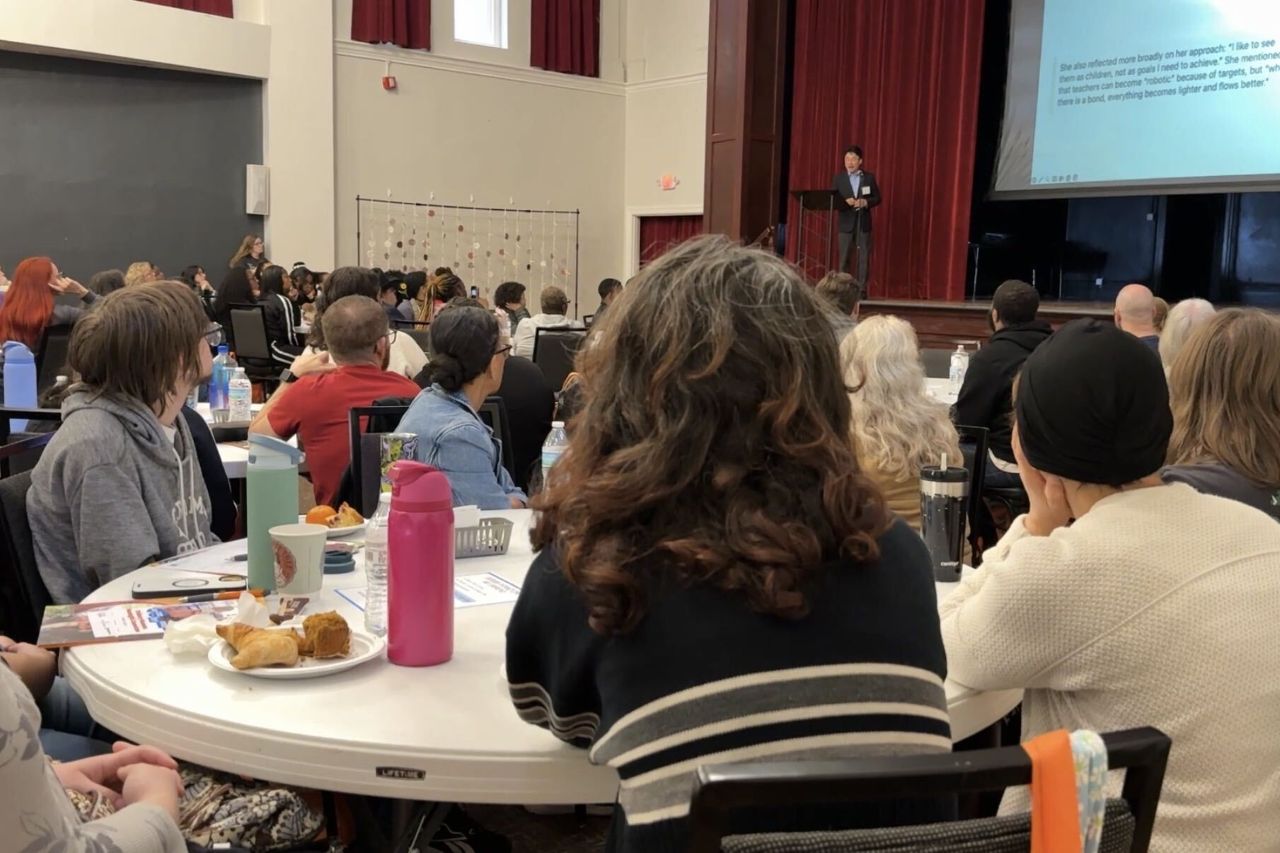
Start your day with a keynote presentation by Dr. Junlei Li, creator of the Simple Interactions approach and co-chair of Harvard’s Graduate Human Development and Education Department, which will be followed by dynamic and diverse morning and afternoon sessions. A light breakfast with coffee and tea and a boxed lunch will be provided as a part of the registration fee. Registration is required. Please register by September 28.
Please note: 4.5 PQAS and Act 48 credit hours are available.

Upon registering, select your first and second choices of preferred sessions for each of the session time slots.

Please review the session descriptions linked here.

FAQ’sHow Do I Register?Registration is now open and session names, descriptions, and times are included. The cost is $25 for the UnConference. Please register by September 28, 2026. Each session will have limited space, so we will try our best to accommodate your session requests. We encourage large groups to split between sessions.Registration checkout will time out after ten minutes; please have the following information ready before registering for you / your group:

  • Name/email
  • PD Registry Number and/or PPID, if applicable
  • Dietary needs
  • Accessibility requests
  • Session preferences

How Do I Receive Credit?If you have a PD Registry account, please include your PD Registry ID Number during registration.

To receive credits, participants must attend the UnConference and complete the post-event survey. Once completed, Trying Together will process your credits. Credits may take up to 8-10 weeks to show up in your account.

If you require ACT 48 credit, you will be asked for your PPID Number in the survey at the end. Credit will be processed and be viewable in your PERMS account 8-10 weeks after the UnConference. ACT 48 credit is specific to those who currently hold a Pennsylvania Teacher Certificate. For any questions regarding credits, please contact Amanda Murphy at amanda@tryingtogether.org

News

Early Intervention Toolkit: Tools and Resources for Allegheny County Early Care and Education Providers

Children benefit from a team of supports. When early childhood educators are aware of the support landscape, children thrive.
Trying Together’s Early Intervention (EI) Toolkit was created to help ECE educators develop an active understanding of their role in EI. The EI Toolkit aims to increase mutual understanding and collaboration between ECE, EI, and families with young children. In this condensed training, participants will discover how to navigate the EI Toolkit to access a variety of resources for both parents and educators.
Participants’ real world needs will be used to identify resources from the toolkit to apply in their classroom settings.
More Details:
  • When: Thursday, November 12 from 6 p.m. to 8 p.m.
  • Where: ZOOM
  • Cost: $20
  • Register now

News

Capturing Moments: Planning for and Conducting Classroom Observations

This session will introduce early education professionals to the importance and value of purposeful observation.

Through discussions and activities, instructors will describe and strategize ways to incorporate systematic and intentional observation into daily classroom experiences.

Participants will also discuss how observation can be used to support individual children and improve the overall quality of the learning environment.

More Details:

  • When: Thursday, December 8 from 6 pm. to 8 p.m.
  • Where: ZOOM
  • Cost: $20
  • Register now

News

Supervision 101

This session will give a foundational overview of supervision in licensed early childhood programs. Learning objectives will focus on the DHS Certification Regulations for child care in Pennsylvania.

Participants will be able to define supervision per the regulations. This session will also focus on ratio and discuss various scenarios for practical application.

This course is appropriate for both new early childhood professionals and those that might need a refresher on the vital importance of supervision.

More Details:

  • When: Thursday, September 10 from 6:30 p.m. to 7:30 p.m.
  • Where: ZOOM
  • Cost: $10
  • Register now